奈雪的茶

Search documents
食饮吾见 | 一周消费大事件(5.11-5.16)
Cai Jing Wang· 2025-05-16 08:47
Group 1: Guizhou Moutai - Guizhou Moutai announced the adjustment of the venue for the 2024 annual shareholder meeting due to the number of registered attendees exceeding the original venue capacity [1] Group 2: Zhangyu A - Zhangyu A's management acknowledged shortcomings in positioning and marketing, which contributed to the decline in performance, and emphasized the need for improvement [2] - The company aims to achieve 1 billion revenue from overseas wineries despite current challenges [2] Group 3: Huiquan Beer - Huiquan Beer discussed avoiding competition with Yanjing Beer, highlighting the importance of base market effects and sales radius in the beer industry [3] - The company plans to strengthen its market presence in Fujian and Jiangxi while expanding its overall market reach [3] Group 4: Dairy Industry - "Raising a Cow" launched a new children's brand "Moo Star" with three A2 type pure milk products targeting children aged 1-12 [4] Group 5: Food and Beverage - Qiaqia Foods clarified that it has no plans for a liquor business and is set to launch a new ice cream product next month [5] - Wahaha confirmed the termination of its contract with a co-packer due to quality issues found in some batches of bottled water [6] Group 6: Zhongju High-tech - Zhongju High-tech reported an expected improvement in sales for Q2 compared to Q1, with a decrease in inventory levels and recovery in sales across regions [7][8] Group 7: Farmer Spring - Farmer Spring introduced a new product, Chenpi White Tea beverage, on its Tmall flagship store [9] Group 8: Golden Dragon Fish - Golden Dragon Fish stated that its health products generally have higher profit margins than regular grain and oil products, which is expected to contribute to sales growth and profit [10] Group 9: Sanquan Foods - Sanquan Foods announced plans to absorb and merge its subsidiary Zhengzhou Fast Kitchen to optimize resource allocation and improve operational efficiency [11] Group 10: Laiyifen - Laiyifen addressed consumer concerns regarding a product issue, stating that they have taken swift action to investigate and resolve the matter [12] Group 11: Liziyuan - Liziyuan plans to focus on milk powder and dairy product production and sales while extending into the upstream supply chain [13] Group 12: Huiyuan Juice - Huiyuan Juice refuted negative online claims about its business, asserting that its operations have been improving since its restructuring in 2022 [14] Group 13: Walmart - Walmart reported Q1 2026 total revenue of $165.6 billion, with a 2.5% year-on-year increase, and a significant growth in its China e-commerce business [17]





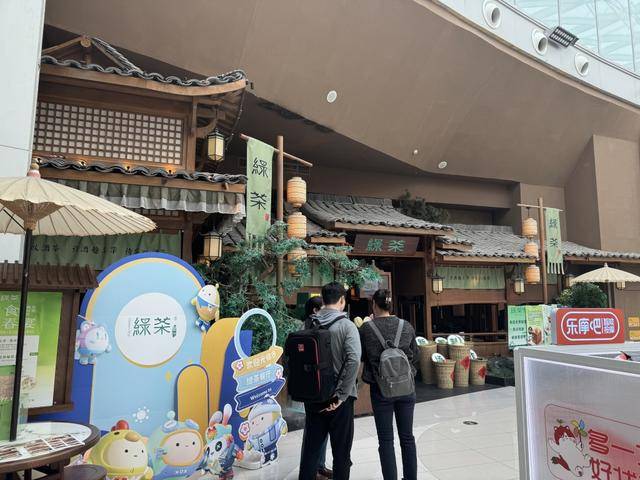
绿茶餐厅港股终局之战:四年五次IPO背后的“翻台率焦虑”与资本困局
Sou Hu Cai Jing· 2025-05-16 05:37
Core Viewpoint - The prolonged IPO attempts of Green Tea Restaurant reflect not only the survival anxiety of a single enterprise but also the collective transformation pain of the entire Chinese dining industry after the decline of traffic dividends [1][3][10]. Company Overview - Green Tea Restaurant has made four unsuccessful attempts to go public since March 2021, indicating a unique persistence in the Hong Kong dining sector [3]. - The restaurant was once a popular brand among young consumers, achieving a peak daily table turnover rate of 6-8 times per store, but has since seen a significant decline in customer traffic and profitability [1][3]. Financial Performance - The table turnover rate dropped from 3.48 times in March 2018 to 2.81 times in 2022, with a slight recovery to 3.30 times in 2023, before falling again to 3.00 times in 2024 [4][5]. - The average customer spending decreased from 62.9 RMB in 2022 to 56.2 RMB in 2024, indicating challenges in maintaining profitability amid rising costs [5][6]. Market Position and Competition - Compared to competitors like Haidilao and Jiumaojiu, Green Tea's brand positioning appears vague, lacking a distinct competitive edge [3]. - The restaurant's reliance on a single business model has made it difficult to sustain high growth expectations, prompting the need for diversification into areas like retail and delivery [6][10]. IPO and Shareholder Dynamics - Approximately 30% of the shares offered in the IPO were from existing shareholders, indicating a lack of confidence in the company's future prospects [7][9]. - The same-store sales declined by 10.3% in 2024, suggesting that growth is primarily driven by new store openings rather than improving existing store efficiency [9]. Industry Context - The dining industry has faced significant challenges, including the pandemic, consumer downgrade, and the rise of prepared food, leading to a reevaluation of investment strategies [3][10]. - The shift in investor focus from scale to metrics like single-store profitability and supply chain management reflects a broader trend in the capital market [9][10].

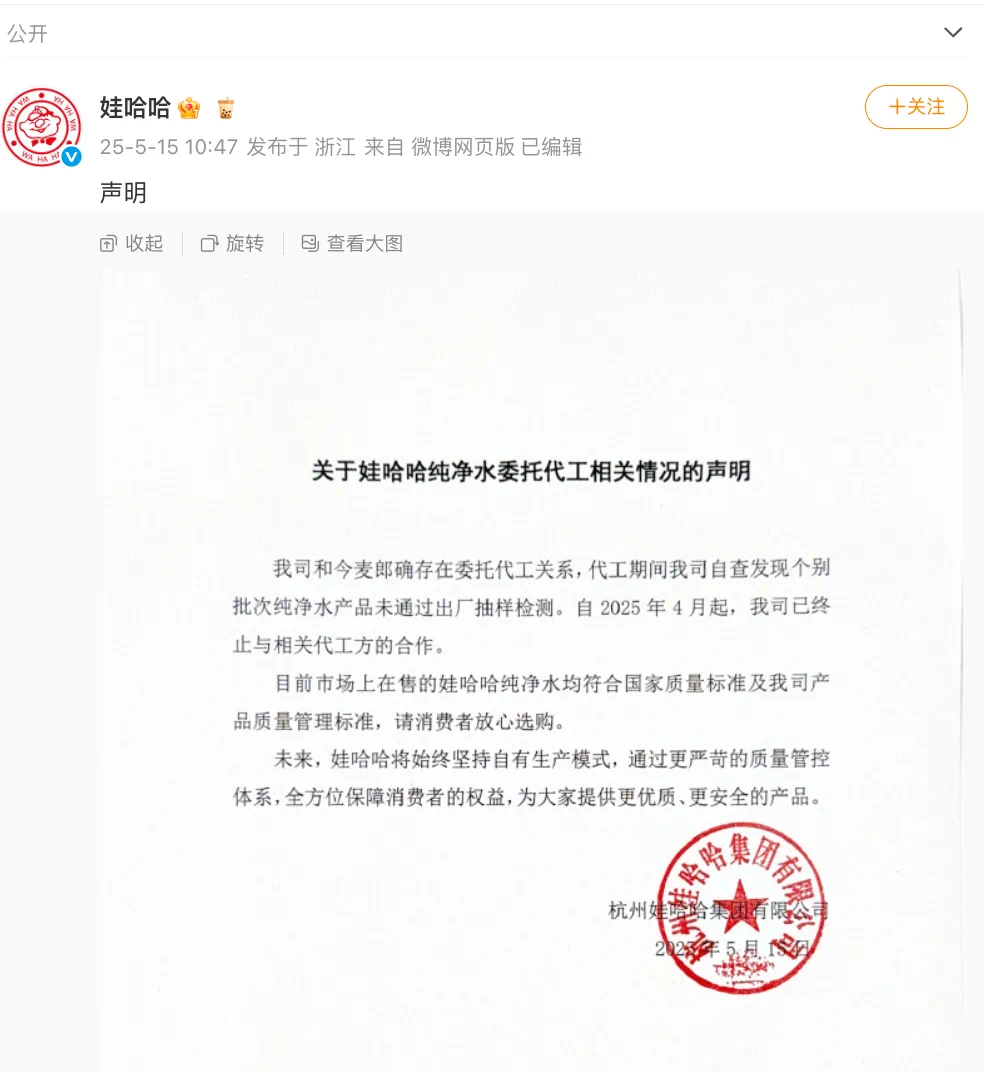
“娃哈哈纯净水由今麦郎代工”冲上热搜 代工模式在饮料行业常见吗?
Mei Ri Jing Ji Xin Wen· 2025-05-15 14:05
Core Viewpoint - The controversy surrounding Wahaha's bottled water being produced by Jinmailang highlights the common practice of contract manufacturing in the beverage industry, with Wahaha confirming its partnership with Jinmailang and announcing the termination of this relationship by April 2025 [1][4]. Group 1: Contract Manufacturing in the Beverage Industry - Contract manufacturing is a prevalent practice in the beverage and fast-moving consumer goods (FMCG) sectors, with many products in supermarkets being produced by third-party manufacturers [5]. - Companies like Wahaha resort to contract manufacturing when facing temporary capacity constraints, while others may use it to expand into new markets without the immediate need for their own production facilities [5][6]. - New and smaller brands often choose contract manufacturing to minimize costs and risks associated with entering the market, as establishing their own production facilities can be complex and costly [5][6]. Group 2: Major Players and Their Strategies - Major beverage companies, such as Coca-Cola and Pepsi, utilize contract manufacturing in China, partnering with local bottlers for production, which is part of their global strategy [6]. - The relationship between large companies and their contract manufacturers often evolves into a deep partnership, where manufacturers may exclusively produce for these brands [6][7]. Group 3: Advantages of In-House Production - While contract manufacturing is common, companies like Wahaha are investing in their own production facilities to ensure stable supply chains and maintain control over their products [7][8]. - Owning production facilities allows companies to protect proprietary recipes and reduce long-term costs compared to relying on contract manufacturers [7][8]. - The trend towards in-house production is evident in companies like Genki Forest, which has invested over 6 billion yuan in its own factories, moving away from contract manufacturing as their market stabilizes [7][8].




从茶饮到潮玩,消费企业逐鹿港股
2 1 Shi Ji Jing Ji Bao Dao· 2025-05-15 13:27
这其实是绿茶第三次通过港交所聆讯。 此前,绿茶曾在2022年两次通过聆讯,距离上市仅一步之遥,但由于市场环境等客观原因,绿茶未能顺 利登陆港交所,此次则是赶上了"好时机"——今年恒生指数延续去年的升势,加之消费股业绩和股价表 现具有想象力,绿茶才最终得以成行。 港股市场今年有不少消费企业刷新投资者认知的情况发生:2月26日,蜜雪集团港股公开发售正式结 束,其融资认购倍数高达5125倍,认购金额突破1.77万亿港元,刷新港股"冻资"纪录。 多次冲击资本市场未果的绿茶,终于要圆梦港交所了。 截至目前,绿茶集团已经停止认购,IPO融资认购倍数达到282.11倍,融资认购金额为341.51亿港元。 绿茶集团此次全球发行约1.7亿股,招股价为7.19港元/股,预计净集资额最高约12.1亿港元,其中30%是 老股发售。 如无意外,绿茶拟在5月16日正式在港交所挂牌上市,这是今年港股迎来的又一个消费赛道知名企业。 绿茶之前,蜜雪集团、沪上阿姨已经登录港交所并受到投资者的追捧:蜜雪集团超额认购倍数高达5125 倍,刷新了港股历史纪录;沪上阿姨认购倍数也近3400倍,是同期上市的"最热新股"之一。 消费赛道迎来IPO热潮之际, ...
推火了“喂猪菜”,喜茶却还没翻红
3 6 Ke· 2025-05-15 09:54
Core Insights - Kale has emerged as a trending superfood in 2024, with significant social media engagement and a dramatic increase in purchase prices, indicating a growing consumer interest [1][3] - The rise of kale is attributed to innovative marketing strategies by brands like Heytea, which launched kale-based drinks that quickly gained popularity [7][8] - Despite the initial success, the market is becoming saturated with similar products, leading to concerns about differentiation and sustainability for brands like Heytea [12][15] Group 1: Market Trends - In 2024, kale-related content on Douyin reached over 1.48 billion views, highlighting its popularity as a superfood [1] - The purchase price of kale surged from 0.8 yuan per jin in 2024 to 3.5 yuan per jin in March 2025, marking an increase of over 300% [1] - The tea beverage market is entering a phase of reduced growth, with predictions of a decline in market growth rate from 6.4% in 2024 to 1.5% by 2028 [14] Group 2: Brand Strategies - Heytea launched its first kale drink, "Champion Slimming Bottle," during the 2024 Paris Olympics, achieving sales of over 10 million bottles within a month and a half [7][8] - The brand has introduced the concept of "super plant tea," aiming to differentiate itself in a crowded market by focusing on unique ingredients [8][12] - In response to market saturation, Heytea has reduced its collaboration frequency, from 19 partnerships in 2023 to 14 in 2024, indicating a shift towards a more focused brand strategy [12] Group 3: Industry Challenges - The tea beverage industry is facing challenges such as high product homogeneity and declining profit margins, leading to a need for brands to innovate beyond price competition [15][16] - The rapid introduction of similar kale-based products by competitors suggests a trend of imitation rather than true innovation, raising questions about long-term brand differentiation [16][17] - Heytea's internal communications reflect a strategic pivot away from aggressive expansion and price wars, emphasizing the importance of brand value and consumer engagement [11][13]
新茶饮江湖风云再起:洗牌、突围与未来之战!
市值风云· 2025-05-14 12:53
Investment Rating - The report indicates a slowdown in the expansion of the new tea beverage industry, with a net decrease of 17,000 stores in the past year, highlighting a significant market consolidation [1][2]. Core Insights - The new tea beverage market in China has grown rapidly, with the market size increasing from RMB 187.8 billion in 2018 to RMB 517.5 billion in 2023, reflecting a CAGR of 22.5% [2]. - The competition among new tea brands is evolving from scale and price wars to a more complex, multifaceted competition focusing on product innovation and brand differentiation [1][2]. - The top five brands in the ready-to-drink tea market have increased their market share from 38.5% in 2020 to 46.8% in 2023, indicating a trend towards market concentration [1]. Summary by Sections Product Innovation and Marketing - New tea brands are focusing on health-oriented product innovations, with companies like沪上阿姨 launching over 100 new products annually [4][6]. - The marketing strategies of brands are diversifying, with successful collaborations and IP creations enhancing brand recognition and consumer engagement [8][15]. - The demand for healthier and higher-quality options is driving the evolution of ready-to-drink tea products, with brands prioritizing differentiation [7][19]. Franchise and Supply Chain Dynamics - The franchise model is becoming increasingly important, with 56.1% of tea beverage stores being part of a chain as of 2023, projected to rise to 72% by 2028 [17][20]. - The initial investment cost for opening a new store under沪上阿姨 is approximately RMB 275,000, which is lower than the industry average, making it attractive for potential franchisees [18]. - A robust supply chain is critical for maintaining product quality and customer loyalty, with沪上阿姨 achieving extensive national coverage for fresh ingredient delivery [21][19]. Market Trends and Future Outlook - The report highlights that the fastest growth in the ready-to-drink tea market is occurring in third-tier and lower cities, with沪上阿姨 having 49.4% of its stores in these areas as of 2023 [28][31]. - The overall revenue for沪上阿姨 in 2024 is projected to be RMB 3.28 billion, with 48.2% of this revenue coming from third-tier and lower cities [31]. - The industry is expected to continue evolving, with brands that can innovate and differentiate themselves likely to thrive, while those lacking in these areas may face significant challenges [39].
奈雪官宣战略升级,北上广深同步开30家轻饮轻食店
Xin Jing Bao· 2025-05-13 14:20
Core Insights - Nai Xue's Tea is undergoing a comprehensive health transformation, marked by a new logo, product launches, and the opening of new store formats [1][2] - The new logo incorporates elements of "snowflakes" and "fruits," reflecting the brand's core values of nature, art, and imagination [1] - The company has opened 30 new "green" stores in major cities, emphasizing healthy drinks and light meals, with a focus on low-calorie and nutritious options [1][2] Product and Store Innovations - The introduction of the "Feather Light Apple Green Bottle" and various energy bowls highlights the company's commitment to health [1] - The "Energy Beef Kimchi Bowl" exemplifies the balanced and diverse food offerings, appealing to young consumers and fitness enthusiasts [1] - Nai Xue's health strategy includes innovations such as sugar-free fruit tea and participation in nutrition grading trials [2] Strategic Direction - The company is shifting its focus from traditional tea products to a health-oriented approach, aiming to enhance nutritional elements in its offerings [2] - Nai Xue's founder has emphasized the need for both subtraction and addition in health products, indicating a forward-looking strategy for 2025 [2]
茶饮为外卖拉新,外卖帮茶饮拉涨
Hu Xiu· 2025-05-13 09:54
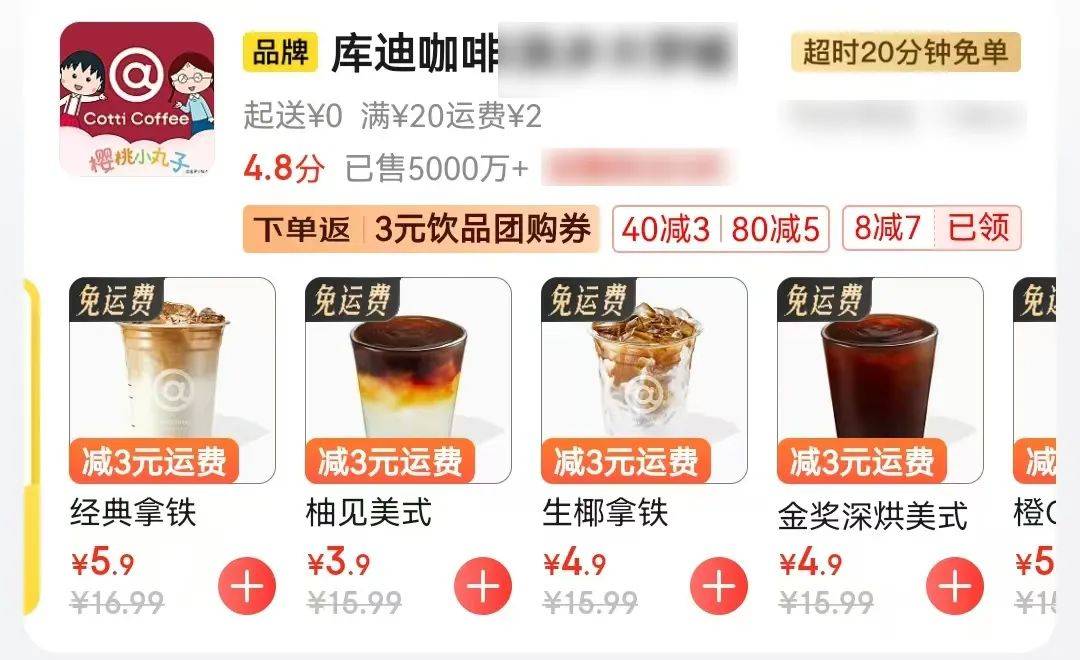
Core Viewpoint - The fierce competition among food delivery platforms has significantly benefited tea and coffee shops, leading to a surge in sales and market share for these brands [1][11]. Group 1: Sales Growth and Market Dynamics - A coffee shop in Beijing has seen its daily order volume increase from 200-300 cups to 500-600 cups recently [3]. - The new tea beverage segment is viewed as a key focus for major platforms due to its high frequency, high margin, and low decision-making threshold [4]. - As of May 7, Kudi Coffee's cumulative sales on JD's delivery platform exceeded 40 million orders, while Naixue's Tea saw a year-on-year order volume increase of over 200% on Ele.me [6][20]. Group 2: Competitive Strategies of Delivery Platforms - JD's initial foray into food delivery prioritized "coffee and tea," with Kudi Coffee receiving significant subsidies [5]. - Meituan has implemented a "100 billion subsidy" strategy, offering extremely low prices for popular drinks [28]. - Taobao Flash Sale and Ele.me launched a "100 million cups of free tea" campaign, further intensifying competition [29]. Group 3: Consumer Behavior and Market Trends - The low prices driven by platform subsidies have led consumers to order more frequently, with some users reporting a shift from homemade coffee to ordering from Kudi due to cost advantages [18]. - The social sharing aspect of tea and coffee drinks has contributed to increased user engagement and platform traffic [23]. - Data indicates that 70% of users participating in JD's 1 yuan tea promotion were first-time customers, highlighting the effectiveness of these promotional strategies [25]. Group 4: Financial Market Response - The capital market has responded positively to the tea beverage competition, with several brands experiencing stock price increases from early April to early May [10][46]. - For instance, the stock price of Mixue Ice City rose from 333 HKD to 533 HKD within a month, while Gu Ming's stock nearly doubled [46]. - The upcoming IPO wave in the tea beverage sector indicates a growing interest from investors, with major brands preparing for listings [44][45]. Group 5: Brand Participation and Strategy - Tea and coffee brands are actively participating in the delivery platform competition to secure market share and enhance brand visibility [32][38]. - The high margin nature of the tea beverage industry allows brands to share the cost of subsidies with platforms, facilitating sustained promotional efforts [35][36]. - As the weather warms up, brands are leveraging the delivery competition to prepare for the peak season in the tea beverage market [39].
A股汽车产业链全梳理:谁增长,谁乏力,谁将困境反转?丨南财号联播
2 1 Shi Ji Jing Ji Bao Dao· 2025-05-13 09:48
Currency and Financial Markets - The RMB exchange rate has significantly appreciated, recovering the 7.20 mark against the USD for the first time in nearly a month, with onshore RMB at 7.1991 and offshore RMB peaking at 7.1786 [1] - COMEX gold futures rebounded after hitting a recent low of 3220 USD/ounce, rising to 3260 USD/ounce, with related ETFs also showing signs of recovery [1] Investment Management - Renowned economist Deng Haiqing has stepped down as the fund manager of China Aviation Mixed Reform Selected Fund, which has seen a loss of 12.90% during his 1.5-year tenure, with a year-to-date decline of 5.71% and a six-month drop of 21.94% [1] Automotive Industry - In the A-share automotive sector, major holdings by public funds include BYD, Ninebot, Fuyao Glass, and others, with only three companies showing over 40% revenue growth: Ninebot, Bertel, and Longxin General [2] - The overall performance of the automotive sector has been stable but lacks standout companies, indicating a potential for mediocrity among most firms [2] Food and Beverage Sector - Coffee and tea have emerged as key players in the food delivery market, with platforms like Taobao and JD leveraging these products to attract consumers due to their low price points and high repurchase rates [2] Short Video and IP Market - The short drama trend is gaining momentum, with platforms like iQIYI entering the market, indicating a shift in how stories are adapted for new media [3] - The competition for market share and influence in defining the future of short dramas is intensifying among various industry players [3] AI in Downstream Markets - The impact of AI in lower-tier markets remains limited, with reported challenges in practical applications, such as AI tools for farmers failing to deliver accurate results [4] - There is a notable skepticism regarding AI's effectiveness, particularly among older demographics who have limited exposure to AI technologies [4]
奶茶原料为什么越来越“邪门”了?
3 6 Ke· 2025-05-13 02:35
Core Viewpoint - The article discusses the transformation of kale from a decorative plant to a "superfood" in the tea beverage industry, driven by marketing strategies and consumer health trends [3][4][5]. Group 1: Market Dynamics - In 2025, kale's price surged from 0.8 yuan per pound in 2024 to 3.5 yuan per pound, marking an increase of over 300% [3]. - The domestic market share of kale shifted from 5% to 55% as farmers pivoted from export to domestic sales due to increased demand from tea brands [4]. - The tea beverage industry has seen a trend of utilizing niche ingredients to create popular products, with kale being the latest example [26]. Group 2: Marketing Strategies - Tea brands have adopted a marketing approach that combines novelty, taste, and health benefits to elevate kale's status [15][24]. - The launch of "Champion Slimming Bottle" by Heytea in July 2024 marked the first major product featuring kale, coinciding with the Paris Olympics to enhance its appeal [16][21]. - The health narrative surrounding kale has been emphasized, with claims of its benefits such as weight loss and detoxification, appealing to health-conscious consumers [24]. Group 3: Historical Context - Kale has a long history, dating back to 600 BC, but its popularity in the U.S. surged only in the last decade, particularly after being featured in Beyoncé's music video in 2014 [6][7]. - Prior to its rise, kale was primarily used as animal feed or for decoration in restaurants, with its culinary use being limited [10][11]. Group 4: Competitive Landscape - The tea beverage market is characterized by high competition and product homogeneity, leading brands to continuously seek out unique ingredients to differentiate themselves [34]. - Following the success of kale, other tea brands quickly introduced their own kale-based products, indicating a trend of imitation within the industry [33]. Group 5: Financial Performance - In 2024, major tea brands reported varying revenue growth, with marketing expenses consistently increasing across the board, highlighting the importance of maintaining consumer interest [35].