
海尔智家

Search documents
2026大消费:看不清的市场,藏不住的增长
Tai Mei Ti A P P· 2026-01-05 00:40
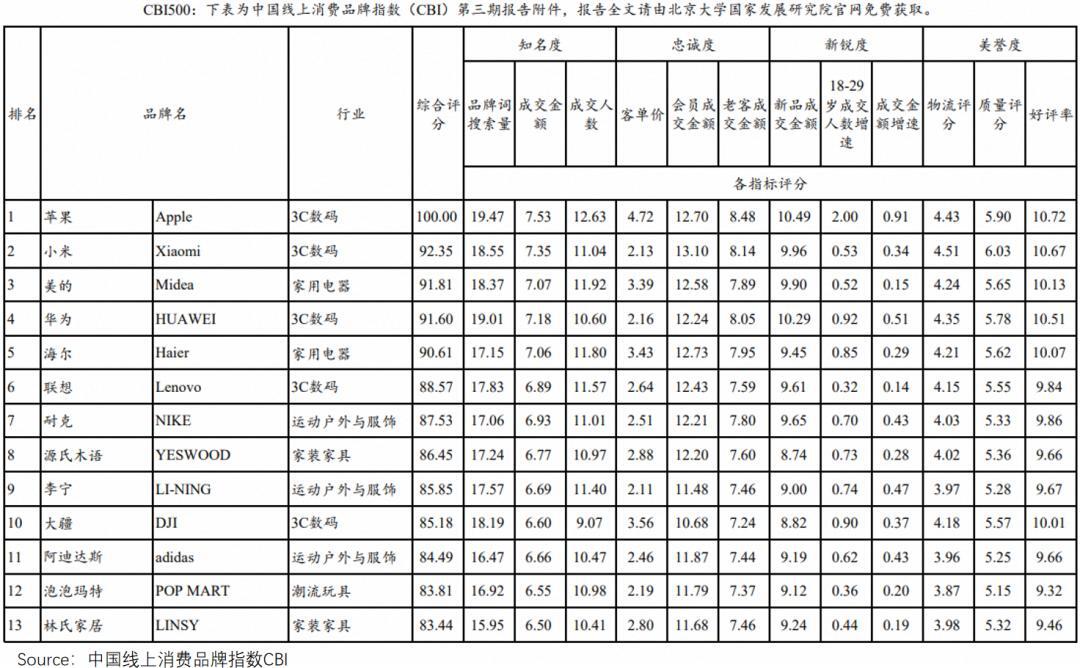
Group 1 - The consumer market in China is viewed as one of the biggest investment opportunities by 2026, but there are differing opinions on where and how to invest [1] - Traditional consumption sectors like liquor, apparel, and beauty have faced challenges, yet some brands have managed to achieve stock price increases of 30% to 50% [2] - The complexity of the consumer market requires investors to connect macro trends with micro behaviors to identify structural opportunities [3] Group 2 - The "China Online Consumption Brand Index" (CBI) and the "Global Brand China Online 500" list reveal significant shifts in consumer preferences, with traditional liquor brands like Moutai and Wuliangye declining while newer brands like Pop Mart are rising [3][4] - The CBI index reflects the performance of brands based on real consumer behavior, including sales, price, search volume, and reputation [4] - The liquor industry is undergoing a transformation, with brands like Jian Nan Chun and Shanxi Fenjiu adapting to new consumer preferences, particularly among younger demographics [6][7][13] Group 3 - The outdoor apparel market is shifting from niche enthusiasts to mainstream consumers, with brands like Berghaus gaining traction due to their stylish and affordable offerings [17] - Emerging brands in the cosmetics sector, such as Huazhi Xiao, are capitalizing on specific consumer trends and achieving significant growth in brand rankings [20][22] - The CBI index serves as a lens to identify changes in consumer demand and potential growth opportunities across various sectors [24] Group 4 - Pop Mart's financial performance shows a significant increase in overseas revenue, yet the stock has faced volatility due to market sentiment rather than fundamentals [26][28] - The brand maintains a leading position in the industry despite short-term fluctuations, indicating strong brand loyalty and potential for future growth [29][30] - The luxury gold market is experiencing challenges as competition increases, impacting customer loyalty and market positioning for brands like Laopufeng [40][35] Group 5 - The beauty industry is witnessing a resurgence for brands like Chanel and YSL as they adapt to new marketing channels and consumer preferences [22] - The investment landscape is influenced by varying investor strategies, with short-term traders reacting differently than long-term investors to market signals [34][41] - The Chinese consumer market is complex and requires a multifaceted approach to uncover hidden opportunities [42]


海尔智家截至12月末累计回购A股股份4282.57万股
Xin Lang Cai Jing· 2026-01-05 00:15
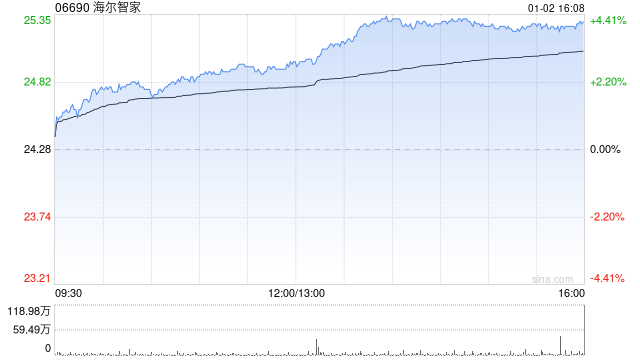
热点栏目 自选股 数据中心 行情中心 资金流向 模拟交易 客户端 热点栏目 自选股 数据中心 行情中心 资金流向 模拟交易 客户端 海尔智家(06690)发布公告,2025年12月当月,公司通过集中竞价交易方式已累计回购A股(下同) 股份192.32万股,占公司总股本的比例为0.021%,购买的最高价为27.54元/股、最低价为26.02元/股,支 付的金额为5163.83万元(不含手续费等,下同);本次回购实施起始日(2025年4月7日)至2025年12 月底,公司已累计回购股份4282.57万股,占公司总股本的比例为0.457%,购买的最高价为27.54元/股、 最低价为23.60元/股,支付的金额为10.8亿元。 海尔智家(06690)发布公告,2025年12月当月,公司通过集中竞价交易方式已累计回购A股(下同) 股份192.32万股,占公司总股本的比例为0.021%,购买的最高价为27.54元/股、最低价为26.02元/股,支 付的金额为5163.83万元(不含手续费等,下同);本次回购实施起始日(2025年4月7日)至2025年12 月底,公司已累计回购股份4282.57万股,占公司总股本的比例为0 ...

以后的空调制冷都不行了?铝代铜到底是升级还是减配?
36氪· 2026-01-04 23:59
Core Viewpoint - The article discusses the ongoing debate in the air conditioning industry regarding the use of aluminum instead of copper in key components, particularly heat exchangers, and the implications for performance and cost [5][12][31]. Group 1: Industry Trends - Major air conditioning brands, including Haier, Midea, and TCL, have formed an alliance to promote the use of aluminum in place of copper, while Gree has explicitly stated it will not adopt this practice due to concerns over quality and reliability [6][10][11]. - The shift to aluminum is driven by rising copper prices, which have surged to over $12,000 per ton, making copper increasingly expensive for manufacturers [38][59]. Group 2: Technical Considerations - The transition to aluminum involves replacing copper pipes in heat exchangers, which are critical for the cooling and heating functions of air conditioners [12][15]. - Aluminum has lower thermal conductivity (about 60% of copper's) and poorer corrosion resistance, which raises concerns about long-term reliability and performance [17][18]. - Innovations such as microchannel technology and specialized coatings are being developed to mitigate the disadvantages of aluminum [19][20][21]. Group 3: Economic Factors - The cost of copper constitutes approximately 30-40% of the total cost of air conditioning units, prompting manufacturers to seek alternatives like aluminum, which is significantly cheaper (1/12 the cost of copper) [36][62]. - The global demand for copper is increasing due to the expansion of AI data centers and electric vehicle production, further straining supply and driving prices up [47][52]. Group 4: Market Dynamics - The article highlights that the trend of replacing copper with aluminum is not unique to China; it is a global phenomenon across various industries, including home appliances and electrical sectors [27][29]. - Companies are under pressure to adapt to market conditions, including potential tariffs on copper imports, which could further escalate costs [55][58]. Group 5: Consumer Concerns - Consumers are primarily concerned about whether the switch to aluminum will compromise the performance of air conditioning units, particularly in terms of cooling efficiency and reliability [64][65]. - The article suggests that manufacturers should consider passing on cost savings to consumers through lower prices or extended warranties to build trust in the new technology [65].


A股股票回购一览:今日59家公司披露回购进展
Mei Ri Jing Ji Xin Wen· 2026-01-04 23:51
Group 1 - On January 5, 59 companies announced a total of 59 stock repurchase updates, with 3 companies disclosing repurchase plans for the first time, 54 companies reporting on the implementation of repurchase plans, and 2 companies completing their repurchase plans [1] - Among the newly disclosed repurchase plans, 2 companies announced repurchase amounts exceeding 10 million, with Century Huatong planning to repurchase up to 600 million, Dongcheng Pharmaceutical up to 200 million, and Guojijinggong up to 657,200 [1] - In terms of repurchase implementation progress, Haier Smart Home, COSCO Shipping Holdings, and Youngor reported the highest repurchase amounts, with 1.08 billion, 825 million, and 779 million respectively [1] Group 2 - Two companies, Xinhengcheng and Sanhua Intelligent Control, have completed repurchases exceeding 10 million, with completed repurchase amounts of 556 million and 303 million respectively [1] - As of January 5, two repurchase plans have been completed this year, involving two companies, both of which have completed repurchase amounts exceeding 100 million [1]





买手机最高省500元、买家电最高补贴1500元、AI眼镜首次入选!新一轮“国补”将持续激活产业和市场
Mei Ri Jing Ji Xin Wen· 2026-01-04 23:36
2026年,国家继续向消费者发"大红包"。 元旦前夕,国家发展改革委、财政部联合发布《关于2026年实施大规模设备更新和消费品以旧换新政策的通知》,明确了 2026年消费品以旧换新政策。与此同时,2026年第一批625亿元超长期特别国债支持消费品以旧换新资金计划已提前下达。 根据政策,本次以旧换新全国统一覆盖四大领域,包括汽车报废与置换更新、6类家电以旧换新及4类数码智能产品购新。其 中,个人消费者购买手机、平板、智能手表手环、智能眼镜等4类产品(单价不超过6000元),按产品销售价格的15%给予补 贴,每人每类产品可补贴1件,每件补贴不超过500元。 个人消费者购买冰箱、洗衣机、电视、空调等6类家电中1级能效或水效标准的产品,按产品销售价格的15%给予补贴,每人 每类产品可补贴1件,每件补贴不超过1500元。 对消费者而言,有真金白银的补贴,无疑又是一个入手的好机会。 "AI(人工智能)眼镜正式纳入'国补'目录,肯定对AI眼镜的推广有着非常大的积极作用。这不仅能直接降低用户的尝试门 槛,还会加速市场教育,推动整个产业链的成熟升级。"界环方面对《每日经济新闻》记者(以下简称每经记者)分析。 奥维云网(AVC) ...


坚持内需主导,建设强大国内市场
Xin Hua Wang· 2026-01-04 23:29
Group 1 - The core focus of the article is on the importance of domestic demand in driving economic growth and the establishment of a strong domestic market as a priority for the 2026 economic agenda [5][15] - The Chinese government has identified eight key tasks for economic work in 2026, with "insisting on domestic demand as the main driver" being the foremost task [5] - The "Two New" policies and "Two Heavy" project optimizations are set to enhance domestic consumption and investment, with a special bond plan of 625 billion yuan allocated for consumer goods replacement [5][15] Group 2 - The ice and snow economy is highlighted as a significant driver of consumption, with outdoor ski resort searches increasing over threefold year-on-year [6][7] - The implementation of the old-for-new policy has led to a 20% increase in sales for Haier's home appliances, with total sales related to this policy exceeding 2.6 trillion yuan in 2025 [7][8] - Equipment investment has shown a robust growth of 12.2% year-on-year, contributing to an overall investment increase of 1.8 percentage points [8] Group 3 - Experts believe that while challenges exist, the potential for expanding domestic demand remains significant, driven by consumption upgrades and digital economy innovations [10][11] - The article emphasizes the need for effective investment strategies, with a focus on technological upgrades and infrastructure projects, predicting that fixed asset investment will exceed 3.6 trillion yuan in 2025 [16][17] - The government aims to enhance consumer spending by improving social security systems and increasing residents' income, thereby expanding consumption capacity [16][17]

坚持内需主导,建设强大国内市场(稳中求进、提质增效 实现“十五五”良好开局)
Ren Min Wang· 2026-01-04 22:37
Group 1 - The core focus of the article is on the importance of expanding domestic demand as a primary driver for economic growth in China, emphasizing the need for a strong domestic market and effective investment strategies [8][19]. - The Central Economic Work Conference has identified eight key tasks for 2026, with "maintaining domestic demand as the main driver" being the top priority [8]. - The "Two New" policies and "Two Heavy" projects are set to optimize implementation, with a first batch of 625 billion yuan in special long-term bonds allocated to support consumer goods replacement programs [8]. Group 2 - The ice and snow economy is highlighted as a significant contributor to consumption and domestic demand, with outdoor ski resort search volumes increasing over three times since December 2025 [9]. - The "old for new" consumer goods policy has led to a notable increase in sales, with over 2.6 trillion yuan in sales related to this initiative in 2025, benefiting more than 360 million people [10]. - Investment in equipment and tools has seen a 12.2% year-on-year increase from January to November 2025, contributing to overall investment growth [11]. Group 3 - The article discusses the potential for consumption upgrades, with digital technologies and new consumption models driving significant retail growth, as evidenced by a network retail sales figure of 543.98 million yuan in a specific region [13]. - Effective investment opportunities remain vast, with companies like Tianjin Feixuan Technology Co., Ltd. benefiting from quick access to credit for technology upgrades [14]. - The article emphasizes the need for a robust domestic market, advocating for policies that enhance consumer spending and investment in infrastructure and public services [17][18].

坚持内需主导,建设强大国内市场——着力推进全年经济工作八大重点任务①(稳中求进、提质增效 实现“十五五”良好开局)
Ren Min Ri Bao· 2026-01-04 22:33
Group 1 - The core focus of the Central Economic Work Conference is to ensure a strong start for the "14th Five-Year Plan" by emphasizing the importance of domestic demand and building a robust domestic market [1] - In 2026, the government plans to implement eight key tasks, with the first being to "insist on domestic demand as the main driver and build a strong domestic market" [1] - The "Two New" policies and "Two Heavy" projects will be optimized for implementation, with a first batch of 625 billion yuan in special bonds allocated to support consumption [1] Group 2 - The ice and snow economy is becoming a significant driver of consumption and domestic demand, with outdoor skiing searches increasing over threefold since December 2025 [2] - The "old for new" consumption policy has led to a 20% increase in Haier's appliance sales, with home air conditioning sales rising over 50% [2] - In 2025, the sales of goods related to the "old for new" policy exceeded 2.6 trillion yuan, benefiting over 360 million people [2] Group 3 - Investment in equipment and tools has seen a rapid increase, with a 12.2% year-on-year growth in equipment purchases from January to November 2025 [3] - Key sectors such as electricity and internet services have experienced significant investment growth, with electricity production and supply up by 12.5% and internet services by 20.7% [3] - The domestic demand scale is continuously expanding, enhancing its support for economic growth [3] Group 4 - There is still substantial potential and space for expanding domestic demand, despite facing some challenges [4] - Digital technology and AI are driving new business models and consumption patterns, with immersive and experiential consumption scenarios emerging [6] Group 5 - Effective investment opportunities remain vast, with significant funding directed towards technology upgrades and modernization in various sectors [7] - Traditional industries are undergoing transformation, creating a strong demand for equipment renewal and technological advancements [7] Group 6 - The strategy to expand domestic demand must prioritize boosting consumption, with a focus on enhancing the supply of quality consumer goods and services [9] - The government is expected to maintain high levels of fixed asset investment, projected to exceed 3.6 trillion yuan in 2025 [10] - The government aims to stimulate private investment and create a stable and transparent environment for private enterprises to participate in major projects [10] Group 7 - The overarching goal is to convert China's large-scale market advantages into competitive strengths, laying a solid foundation for national rejuvenation and modernization [11]
国补落地及2026年消费趋势判断
2026-01-04 15:35
Summary of Conference Call Notes Industry Overview - The conference call primarily discusses the **automobile** and **home appliance** industries in China, focusing on government subsidy policies and their implications for market dynamics and consumer behavior [1][2][20]. Key Points on Government Subsidies - **2025 National Subsidy Funding**: The funding mainly comes from special government bonds, with a total government debt of **14 trillion RMB**. The narrow deficit is **5.66 trillion RMB**, and special bonds amount to **1.8 trillion RMB** [2][3]. - **Subsidy Strategy Changes**: The automobile industry will see a shift to a high-price, high-subsidy and low-price, low-subsidy model, which is expected to reduce demand. The subsidy for electric vehicles and traditional vehicles will be adjusted based on vehicle price [2][14]. - **Impact on Tax Revenue**: Consumer subsidies are expected to increase sales and tax revenues, but the tax revenue growth rate is projected to be **2%**, lower than the nominal GDP growth rate of **4%**, indicating fiscal pressure [9]. Automobile Industry Insights - **Market Trends**: The automobile sector is expected to face a decline in domestic demand by **3-4%** in 2026, but the penetration rate of new energy vehicles is anticipated to increase by **4-5%**. Exports are expected to grow by **15%**, with new energy vehicle exports increasing by **35%** [14][19]. - **Investment Opportunities**: Key growth areas include international expansion, high-end market development, and smart technology integration, particularly in L4 autonomous driving [15][17]. - **Consumer Behavior**: There is a significant consumer wait-and-see attitude, with **40-60%** of consumers hesitant to make purchases, leading to inventory buildup [19]. Home Appliance Industry Insights - **Subsidy Policy Changes for 2026**: The number of subsidized categories will be reduced from **12 to 6**, focusing on energy-efficient products. The maximum subsidy per product will decrease from **2000 RMB to 1500 RMB** [20]. - **Market Performance**: The home appliance sector showed mixed results in 2025, with overall sales growth in the first half but a decline in the second half due to tightening policies and high base effects [21]. - **Future Outlook**: If the government continues to provide **80 billion RMB** in subsidies, the home appliance market is expected to see modest growth, with air conditioning sales projected to increase by **4.7%** under reduced subsidy effectiveness [22]. Competitive Landscape - **Market Dynamics**: The competitive landscape in the home appliance industry is shifting towards larger companies like Midea and Haier, which are enhancing shareholder returns through dividends and stock buybacks. Emerging markets and new product exports are becoming crucial for growth [24]. - **Investment Potential**: The two-wheeler market and emerging products like robotic vacuums are highlighted as having strong investment potential due to resilient demand and low valuations [23]. Conclusion - The conference call emphasizes the cautious approach of the government in adjusting subsidy policies to stabilize investment and consumption while addressing fiscal pressures. The automobile and home appliance industries are adapting to these changes, with a focus on innovation and international expansion as key growth strategies.
电商家电专家空调铝代铜专家周日双交流
2026-01-04 15:35
Summary of Conference Call Notes Industry Overview - The conference call primarily discusses the home appliance industry, focusing on sales performance and trends in 2025 and projections for 2026 [2][4][5]. Key Points and Arguments Sales Performance in December 2025 - December 2025 recorded the lowest absolute sales for the year, with total payments for home appliances at 52.9 billion yuan, a year-on-year decrease of 8.3% [2]. - Specific category sales included: - Air conditioners: 13.2 billion yuan, down 9.7% - Washing machines: 8.5 billion yuan, down 5.1% - Refrigerators: 11.3 billion yuan, down 10.9% - Black electronics (e.g., TVs): 12.6 billion yuan, down 7.2% [3][2]. Market Trends and Projections - The overall home appliance market is expected to decline by 9% in Q4 2025, though the decline is not as severe as initially feared [4]. - For Q1 2026, a modest growth target of 4% is set, with expectations of maintaining low single-digit growth [8][2]. National Subsidy Policy Changes for 2026 - Starting January 1, 2026, the national subsidy policy will expand to over 20 provinces, covering six major categories of home appliances [5]. - Although the first quarter will have sufficient funding, the total annual budget is expected to be lower than in 2025 [5]. - Priority will be given to energy-efficient products, with local governments and platform merchants expected to increase subsidies [5][6]. E-commerce and Consumer Engagement - JD.com aims to break regional barriers and expand its reach into first-tier and rural markets, expecting to add 30-40 million new users to the subsidy program [7]. - Over 100 million users benefited from JD.com's promotional policies in the first half of 2025 [7]. Recent Sales Trends - Recent sales data shows a slight recovery, with home appliance sales reaching nearly 10 billion yuan in three days, a year-on-year increase of 1.4% [8]. - However, air conditioners and refrigerators are still experiencing negative growth [8]. Price Trends and Material Changes - The average price of air conditioners rose to 2,900 yuan in December, a month-on-month increase of nearly 12% [10]. - The shift from copper to aluminum in air conditioning units is being driven by rising raw material costs, with significant cost savings projected [13][15][21]. - The air conditioning industry is expected to see price increases due to ongoing material cost pressures, with Midea announcing a 3-4% price hike [21]. Aluminum-Copper Transition in Air Conditioning - Major manufacturers are transitioning to aluminum in air conditioning units, with North American markets leading the way [13][20]. - The use of aluminum is expected to save costs significantly, with potential for replacing 100,000 tons of copper annually in the industry [15][17]. - Concerns about product reliability have been addressed through improved testing standards, ensuring that aluminum does not compromise product lifespan [14]. Competitive Landscape - Major brands like Midea, Gree, and Haier are facing challenges with declining sales across various categories, with specific negative growth rates reported for each brand [9]. - The competitive landscape is shifting as companies adapt to new materials and market demands, with Gree's stance on aluminum usage being particularly noteworthy [20]. Additional Important Insights - The home appliance market is experiencing a significant transformation driven by material cost changes and evolving consumer preferences, with a focus on energy efficiency and sustainability [5][21]. - The impact of local government subsidies and e-commerce strategies will play a crucial role in shaping market dynamics in 2026 [7][5].
