洋河股份

Search documents
解读白酒“最差三季报”:至暗时刻的破与立(二)| 逆势增长4.54%,20家上市白酒企业合同负债达390亿元!渠道信心从何而来?
Mei Ri Jing Ji Xin Wen· 2025-11-07 02:35
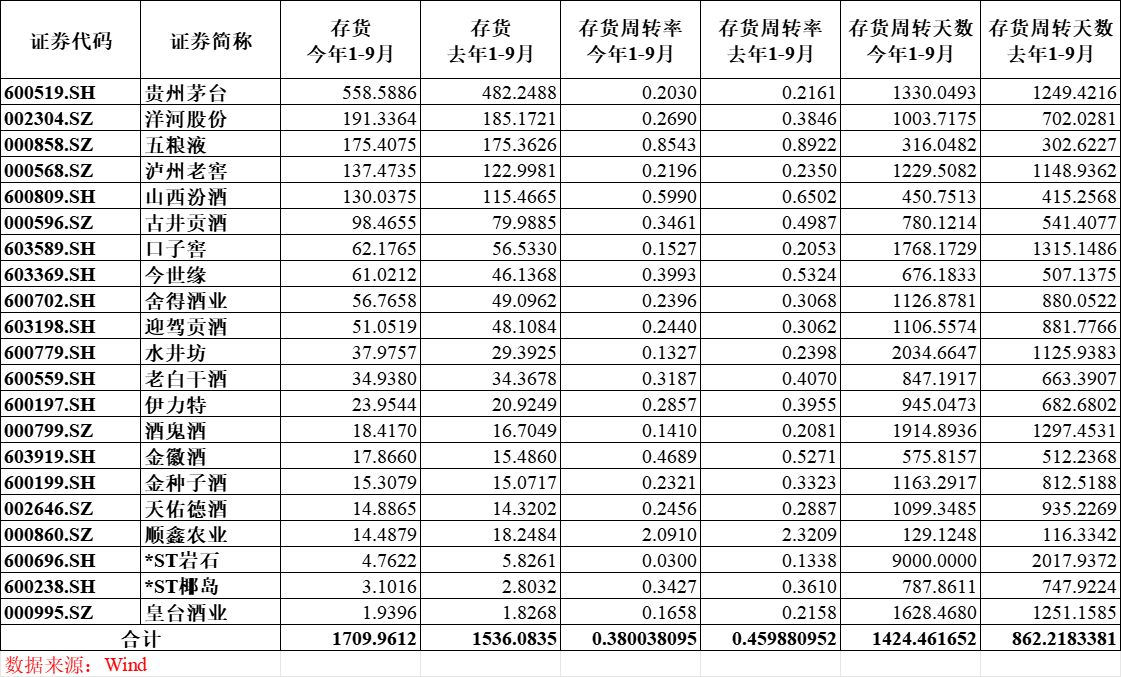
Core Viewpoint - The A-share liquor industry reported its worst performance in a decade for Q3 2025, with 20 listed companies (excluding Shunxin Agriculture) achieving a total revenue of 312.09 billion yuan and a net profit of 122.49 billion yuan, both down approximately 7% year-on-year [1][2] Financial Performance - The total revenue and net profit of the liquor industry have significantly declined, indicating a pronounced pressure on the industry [1] - Only Kweichow Moutai and Shanxi Fenjiu managed to maintain growth in both revenue and net profit amidst the overall decline [1] - The total contract liabilities for 20 liquor companies reached 39 billion yuan, reflecting a year-on-year increase of 4.54%, despite the overall performance downturn [1][6] Inventory and Turnover - The total inventory of 21 listed liquor companies rose to 170.99 billion yuan, a year-on-year increase of 11.32%, with an average inventory turnover period extending to 1424 days, up 65.21% from the previous year [2][4] - The increase in inventory turnover days signals significant pressure on channel inventory [4] Market Response - The market reacted calmly to the poor performance reports, with the China Securities Liquor Index rising by 1.72% on October 31, indicating that investors have already digested the performance pressures [1] - The stability in contract liabilities suggests that confidence in the industry and companies remains intact, despite the challenges [2][7] Channel Dynamics - The increase in contract liabilities is primarily driven by leading liquor companies, with four out of six major firms reporting year-on-year growth [7] - Companies are shifting from a simple sales model to a service-oriented approach, focusing on channel health and profitability for distributors [8][9] Innovative Sales Models - New sales models are emerging, such as the "Wan Shang Alliance" by Zhenjiu Li Du, which emphasizes no stockpiling and allows for returns, thereby reducing inventory risks [10][11] - The introduction of commission-based systems and unified pricing strategies aims to alleviate financial pressure on distributors and ensure transparent profit distribution [12] Conclusion - The growth in contract liabilities and the evolving relationships between manufacturers and distributors highlight the industry's resilience and potential for recovery, as companies prioritize channel health and collaborative strategies [12][13]






解读白酒“最差三季报”:至暗时刻的破与立(一)丨“老登”白酒迎最难拷问:业绩失速之下,股息率破纪录+低估值,最佳布局期来了?
Mei Ri Jing Ji Xin Wen· 2025-11-07 02:32
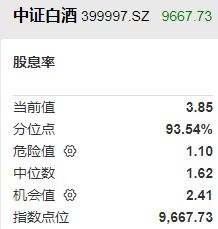
Core Viewpoint - The Chinese liquor industry is experiencing a significant downturn, with a 18% year-on-year decline in quarterly revenue, marking the worst performance since the 2012-2015 adjustment period, leading to a "de-inventory" phase across the sector [1][2]. Industry Performance - In Q3 2025, the liquor industry's revenue, net profit attributable to shareholders, and cash collection were 78.7 billion yuan, 28 billion yuan, and 83.9 billion yuan, respectively, reflecting declines of 18.4%, 22.2%, and 26.7% year-on-year [2][3]. - The high dividend yield of the liquor sector, which has reached 3.85% as of November 4, 2025, is seen as a stabilizing factor during this challenging period [3][5]. Market Sentiment - Market sentiment is fluctuating between "worry" and "expectation," with both corporate valuations and institutional holdings at historical lows [2][7]. - The current market environment is characterized by a significant withdrawal of capital, with public funds reducing their holdings in the liquor sector [1][11]. Dividend Insights - Over the past decade, the total cash dividends in the liquor industry have increased from 15.81 billion yuan in 2015 to 119.03 billion yuan in 2024 [4]. - Eleven liquor companies have a dividend yield exceeding 3%, with Yanghe Co. leading at 6.59% [5][6]. Valuation and Investment Outlook - The current price-to-earnings (P/E) ratio of the liquor index is 19.52, significantly lower than the 10-year average of 31.1, indicating a high safety margin for valuations [8][10]. - Analysts suggest that the liquor sector may no longer be viewed as a cyclical growth stock, with future price appreciation expected to come from stable earnings growth and dividends [7][10]. Fund Holdings and Strategy - As of Q3 2025, active equity funds have shown a trend of "overall reduction and structural differentiation" in their liquor stock holdings, with high-end liquor companies facing sell-offs while mid-tier brands gain traction [11][14]. - Notably, funds have increased their positions in companies like Luzhou Laojiao and Shanxi Fenjiu, while reducing holdings in leading brands like Kweichow Moutai and Wuliangye [14][17].
白酒两轮周期全扫描:行业家底更厚 头部抗跌能力更强
2 1 Shi Ji Jing Ji Bao Dao· 2025-11-07 01:56
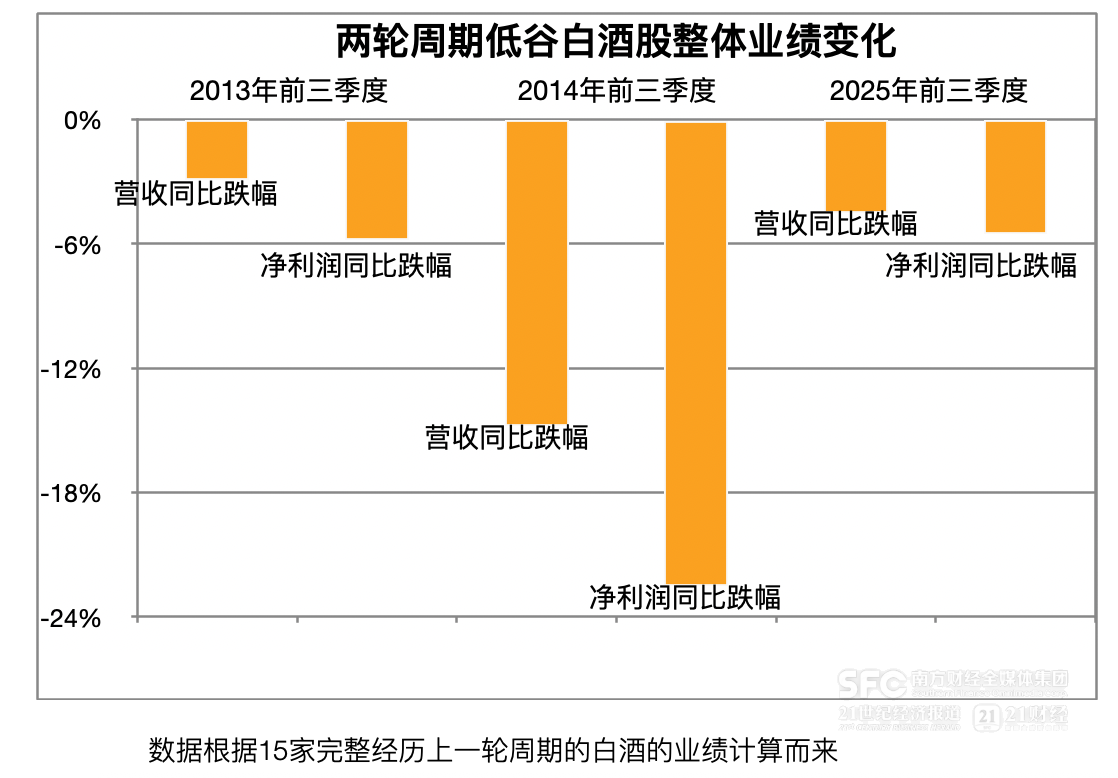
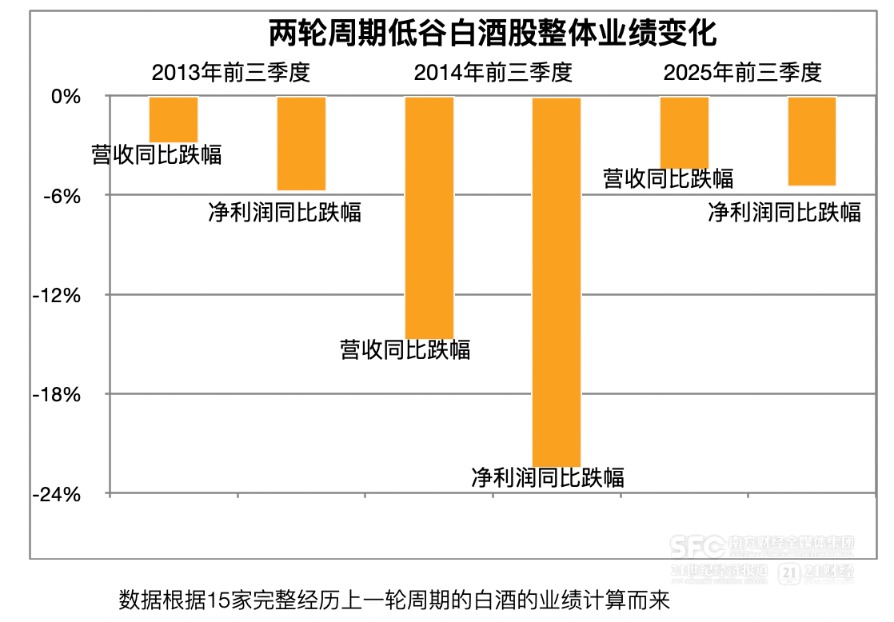
Core Viewpoint - The 2025 Q3 report for the liquor industry indicates a significant downturn, marking the worst quarter in the past decade, with most companies experiencing substantial profit declines, while only a few, like Kweichow Moutai and Shanxi Fenjiu, managed to maintain positive growth [1] Group 1: Performance Comparison - Among the 21 A-share liquor companies, only 15 have fully experienced the previous downturn, including Kweichow Moutai, Shanxi Fenjiu, and Wuliangye [2] - The overall resilience of these 15 companies has improved, with revenue and net profit declines of 4.5% and 5.5% respectively in 2025, compared to larger declines in the previous cycle [3] Group 2: Company-Specific Insights - In 2025, Kweichow Moutai and Shanxi Fenjiu are the only companies showing both revenue and profit growth, contrasting with the previous cycle where only one company managed to do so [6] - Wuliangye's net profit decline is limited to under 14%, while Shanxi Fenjiu has returned to positive growth [7] - Luzhou Laojiao has significantly improved its performance, with revenue and profit declines controlled to single digits in 2025, compared to much larger declines in the previous cycle [7][8] Group 3: Profitability and Financial Health - The total net profit of the 15 companies exceeded 1100 billion in 2025, significantly higher than the previous cycle's total of under 280 billion [10] - The accumulated undistributed profits of these companies reached 4688 billion, five times that of 2013, providing a strong financial cushion [13][15] - Kweichow Moutai's undistributed profits are seven times higher than in 2013, indicating robust financial health [15] Group 4: Cost Management - Many companies have reduced their sales expense ratios compared to the previous cycle, indicating a more restrained approach to spending [29] - Kweichow Moutai maintains a very low sales expense ratio, consistently around 3-4%, reflecting strong brand recognition and market confidence [33] Group 5: Channel Confidence and Cash Flow - The confidence of distributors in head companies has improved, with many reporting increases in contract liabilities, indicating better cash flow management [38] - However, some non-head companies are experiencing negative cash flow, with five companies reporting negative net cash flow from operating activities for two consecutive years [42]
21特写|白酒两轮周期全扫描:行业家底更厚 头部抗跌能力更强
2 1 Shi Ji Jing Ji Bao Dao· 2025-11-07 01:51
Core Viewpoint - The 2025 Q3 report for the liquor industry is the worst in the past decade, with most companies experiencing significant declines in performance, while only a few, like Kweichow Moutai and Shanxi Fenjiu, managed to maintain positive growth [1] Group 1: Performance Comparison - Among the 21 A-share liquor companies, only 15 have fully experienced the previous adjustment period, including Kweichow Moutai, Shanxi Fenjiu, and Wuliangye [2][3] - The overall decline in revenue and net profit for these 15 companies in 2025 Q3 was 4.5% and 5.5%, respectively, compared to larger declines during the previous cycle [4] - The number of leading liquor companies showing positive growth has increased, with Kweichow Moutai and Shanxi Fenjiu both achieving revenue and profit growth in 2025 Q3 [7] Group 2: Profitability and Financial Resilience - The total net profit for the 15 companies exceeded 110 billion yuan in 2025 Q3, significantly higher than the previous cycle's figures [12] - The accumulated undistributed profits for these companies reached 468.8 billion yuan, five times that of 2013, indicating a stronger financial cushion [13][15] - Kweichow Moutai's undistributed profits are seven times higher than in 2013, showcasing its robust financial health [15] Group 3: Cost Management and Sales Strategy - Liquor companies have learned from past experiences and are controlling sales expenses more effectively, with many reducing their sales expense ratios compared to the previous cycle [26][28] - Kweichow Moutai maintains a low sales expense ratio of around 3-4%, reflecting strong brand recognition and market confidence [31] Group 4: Channel Confidence and Cash Flow - The confidence of distributors has improved, with contract liabilities for the 15 companies increasing by 3.6% in 2025 Q3, contrasting sharply with the previous cycle's declines [33] - However, some non-leading companies are experiencing negative cash flow, with five companies reporting negative net cash flow from operating activities for two consecutive years [39]
围甲联赛:榜首大战苏泊尔杭州力克成都
Xin Hua Wang· 2025-11-07 00:47
Core Points - The Suzhou Hangzhou team defeated the Chengdu team 3:1 in the ninth round of the 2025 "Three Kingdoms Red Cliff Ancient Battlefield Cup" Chinese Go League, moving to the top of the standings [1] - The defending champion Suzhou Hangzhou team was previously ranked second, just 1 point behind Chengdu [1] - Key victories for Suzhou included Xie Ke defeating the new champion of the Quzhou Lanke Cup, Dang Yifei, and wins by Ding Hao and Li Qincheng against their respective opponents, ending Chengdu's unbeaten streak this season [1] Team Performance - The Shenzhen Nidao Hou team won 3:1 against the Henan Fengbo team, securing third place in the league [1] - The Chongqing Kanjie Go team is ranked fourth after a 3:1 victory over the Shandong Yinfeng team [1] - The Shenzhen Longhua team managed a 2:2 draw against Jiangsu Yanghe Co., with world champions Ke Jie and Mi Yuting competing, resulting in Ke Jie achieving two consecutive wins [1] Other Matches - Quzhou Lanke team lost 1:3 to Guizhou Renhuai Sauce team [1] - Shanghai Jushen Sports team achieved a 4:0 victory over Shanxi Yuangong Hongyi team [1] - Hangzhou Intellectual Sports team lost 1:3 to Zhejiang Zheshang Securities team [1] - Shanghai Qingyi team drew 2:2 with Fujian Citong Chess Academy team [1]

光瓶酒逆势预涨超10%
Nan Fang Du Shi Bao· 2025-11-06 23:10
Core Viewpoint - The Chinese liquor industry is undergoing a deep adjustment period, while the light bottle liquor segment is experiencing strong growth, with products like Guo Fen from Shanxi Fenjiu showing over 10% sales growth in the first three quarters of the year, indicating a shift in consumer preferences from "face consumption" to "substance consumption" [1][2]. Industry Overview - The market size of light bottle liquor has grown from 35.2 billion yuan in 2013 to over 150 billion yuan in 2024, with projections to exceed 200 billion yuan by 2025, reflecting a compound annual growth rate of 13.8% from 2013 to 2021 [1][2]. Company Performance - Shanxi Fenjiu is one of the few companies showing growth, with a reported revenue of 32.924 billion yuan in the first three quarters of the year, a 5% increase year-on-year, and a net profit of 11.405 billion yuan, a slight increase of 0.48% [1][2]. Product Contribution - The Guo Fen product line has been a significant contributor to Shanxi Fenjiu's growth, with analysts noting that it achieved over 10% growth in the first three quarters, contrasting with the declining sales of many other products [2][3]. Competitive Landscape - The rapid growth of the light bottle liquor market has attracted numerous companies to increase their investments in this segment, with brands like Yanghe and Luzhou Laojiao launching new products aimed at capturing market share [3][4]. Market Dynamics - Despite overall growth in the light bottle liquor market, there is increasing differentiation among brands. Traditional brands like Niulanshan are facing significant challenges, with reported revenue declines of nearly 20% year-on-year [4][5]. Consumer Trends - The shift in consumer behavior is evident, with younger consumers moving from luxury packaging to a focus on quality and cost-effectiveness, prompting companies to adapt their strategies to meet the demand for high-value products [3][6]. Future Outlook - The light bottle liquor segment is expected to continue expanding, but competition is intensifying, leading to a clear differentiation among brands. Companies that can adapt to changing consumer preferences and market conditions are likely to thrive [6][7].
茅台跌破1600元,终于承认自己只是瓶酒?
36氪· 2025-11-06 13:45
Core Viewpoint - The article discusses the significant decline in the price of Moutai, highlighting a shift in consumer behavior and market dynamics that have led to this change. The once-coveted status of Moutai as a "social currency" is diminishing as younger consumers prioritize different drinking experiences over traditional high-end liquor [5][16][18]. Price Decline of Moutai - The wholesale price of 53-degree Moutai has fallen below 1600 yuan, marking a historic low, down from a peak of around 3000 yuan in late 2021, representing a nearly 50% decrease in just four years [5][11]. - In early 2024, Moutai's price was stable at around 2900 yuan, but by April, it dropped to 2100 yuan, indicating a shift in market sentiment and consumer demand [9][11]. - By November 2024, the price had further declined to 1600 yuan, with reports of a 22% drop in high-end dining bottle opening rates [12][15]. Market Dynamics and Consumer Behavior - The decline in Moutai's price reflects broader changes in the white liquor market, including increased production capacity and a shift in consumer preferences towards lower-alcohol and flavored beverages [7][16][22]. - Young consumers are moving away from the traditional image of Moutai as a status symbol, favoring a more casual drinking experience that emphasizes atmosphere over prestige [4][18]. - The perception of Moutai as a "liquid gold" has shifted, with consumers now viewing it as just another product rather than an investment or a symbol of status [18][23]. Supply and Inventory Issues - Moutai's production capacity has significantly increased, with an estimated output of 57,200 tons in 2023, projected to reach 67,200 tons by 2025, leading to an oversupply situation [22][23]. - The total inventory, including social circulation stock, is estimated to be around 700 million bottles, which has contributed to the price decline as the market adjusts to this excess supply [22][24]. - The traditional consumption scenarios for Moutai, heavily reliant on government and high-end business banquets, are diminishing due to regulatory changes and economic conditions, further impacting demand [22][26]. Industry Challenges and Future Outlook - The entire white liquor industry is facing challenges, with many companies reporting high inventory levels and extended turnover days, indicating a slowdown in sales [25][26]. - Moutai is attempting to pivot towards "open bottle consumption" and targeting younger consumers, but these efforts have met with mixed results as younger demographics show little interest in high-alcohol products [26][27]. - The article concludes that while Moutai's price decline may be seen as a negative development for the brand, it could ultimately lead to a healthier market where genuine consumer demand drives sales rather than speculative investment [28][29].
白酒黄金时代终结?十年最差三季报来了
3 6 Ke· 2025-11-06 12:25
Core Viewpoint - The Chinese liquor industry, particularly the baijiu sector, is experiencing a significant downturn, with major companies reporting their worst third-quarter financial results in a decade, indicating a shift into a new cycle of challenges and market dynamics [1][6]. Industry Performance - In the first three quarters of the year, 20 A-share baijiu companies reported a total revenue of approximately 317.8 billion yuan, a year-on-year decline of 5.90%, and a net profit of about 12.26 billion yuan, down 6.93% [1]. - The overall revenue for the third quarter was around 77.98 billion yuan, reflecting an 18.47% year-on-year decrease, while net profit fell to approximately 28.01 billion yuan, a decline of 22.22% [1]. Market Dynamics - The baijiu industry is entering a phase of differentiation, with top brands like Moutai and Wuliangye showing weak growth, and regional brands experiencing severe declines in performance [3][4]. - The traditional strategies of price increases and inventory control are losing effectiveness as consumer preferences shift towards value and taste rather than brand prestige [4][5]. Consumer Behavior Changes - There is a notable decline in high-end gifting demand and a shift in consumer confidence, leading to reduced sales in high-end dining and business banquet scenarios [2][8]. - Younger consumers are increasingly favoring lower-alcohol beverages and are less inclined to participate in traditional drinking culture, with over 60% preferring non-alcoholic options in social settings [8][9]. Inventory and Pricing Issues - The industry is facing significant inventory challenges, with many companies reporting extended inventory turnover periods, leading to increased pressure on cash flow and necessitating promotional discounts [11][14]. - The reliance on price increases for profit has backfired as demand slows, resulting in a rapid erosion of previously established profit margins [12][13]. Future Outlook - The baijiu sector is transitioning from a period of guaranteed growth to a more competitive landscape where companies must adapt to changing consumer preferences and market conditions [6][10]. - The traditional high-margin structure of the industry is under threat, with many smaller brands struggling to survive amid rising costs and declining sales [14][15].


白酒2025年三季报总结:加速纾压,底部渐明
Soochow Securities· 2025-11-06 11:05
Investment Rating - The report maintains an "Accumulate" rating for the liquor industry [1] Core Viewpoints - The liquor industry is currently in a phase of pressure relief and clearing, with expectations for performance recovery in the future. The focus should be on companies that show early signs of a turning point and have leading growth elasticity [3] - The overall revenue of the liquor sector has declined, with a 5.5% year-on-year drop in total revenue for the first three quarters of 2025, and an 18.3% decline in Q3 alone. Net profit also saw a significant decrease of 21.9% in Q3 [12][24] - The high-end liquor segment is under pressure, with a need for macroeconomic recovery to achieve a balance in volume and price. Companies with strong brand positioning and national expansion potential are recommended for investment [3][12] Summary by Sections 1. Q3 Performance and Market Conditions - The Q3 performance of the liquor sector shows a slow recovery in consumption scenarios, with overall sales continuing to face pressure. The high-end and next-high-end liquor demand remains under pressure, particularly in business and personal dining scenarios [12][13] - The overall revenue for the liquor sector in Q3 dropped by 18.3% year-on-year, with net profit down by 21.9%, indicating a significant acceleration in the decline compared to previous quarters [12][24] 2. Revenue Trends - The liquor sector's revenue has been on a downward trend, with a 5.5% year-on-year decline in the first three quarters of 2025. The Q3 revenue decline is particularly sharp at 18.3% [12][24] - High-end liquor companies are experiencing a shift in their financial reports, with revenue declines driven by pressure on major brands like Moutai and Wuliangye [30][41] 3. Profitability Analysis - The gross profit margin for the liquor sector has decreased, with Q3 margins at 81.7%, down 0.7 percentage points year-on-year. The decline in profitability is attributed to structural issues and increased costs [2][3] - The report highlights that the majority of liquor companies have seen an increase in sales expenses, while management expenses have also risen slightly due to weaker revenue realization [2][3] 4. Investment Recommendations - The report suggests prioritizing investments in companies that are likely to recover first, such as Luzhou Laojiao and Shanxi Fenjiu, which have strong governance and dividend yields. Other companies to watch include Zhenjiu Lidu and Shede Liquor [3][12] - The focus should be on companies that can maintain channel stability and show early signs of marginal recovery, as the market is expected to support valuations for these firms [12][13]


白酒板块11月6日涨0.54%,贵州茅台领涨,主力资金净流出2873.04万元
Zheng Xing Xing Ye Ri Bao· 2025-11-06 08:51
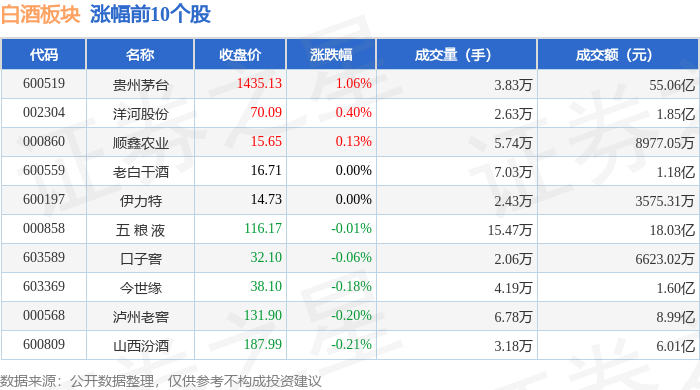
证券之星消息,11月6日白酒板块较上一交易日上涨0.54%,贵州茅台领涨。当日上证指数报收于4007.76,上涨0.97%。深证成指报收于 13452.42,上涨1.73%。白酒板块个股涨跌见下表: | 代码 | 名称 | 收盘价 | 涨跌幅 | 成交量(手) | 成交额(元) | | | --- | --- | --- | --- | --- | --- | --- | | 600519 | 贵州茅台 | 1435.13 | 1.06% | 3.83万 | | 55.06亿 | | 002304 | 洋河股份 | 70.09 | 0.40% | 2.63万 | | 1.85亿 | | 000860 | 顺鑫农业 | 15.65 | 0.13% | 5.74万 | | 8977.05万 | | 600559 | 老白干酒 | 16.71 | 0.00% | 7.03万 | | 1.18亿 | | 600197 | 伊力特 | 14.73 | 0.00% | 2.43万 | | 3575.31万 | | 000858 | 五粮液 | 116.17 | -0.01% | 15.47万 | | 18.03亿 | | ...