派特鲜生

Search documents
融资放缓、并购加速:2025年新消费正在换一种生长方式——年度投融资复盘
3 6 Ke· 2026-02-13 09:45
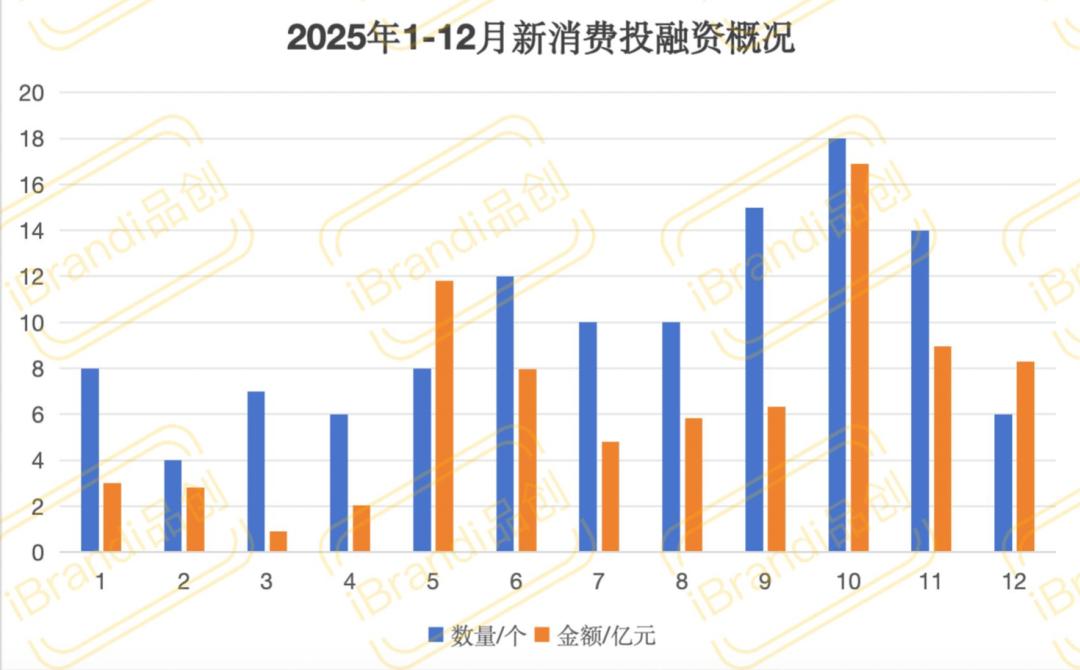
据iBrandi品创不完全统计,2025年全年共披露完成116起投融资项目,金额约80亿人民币。 其中,有25起为亿元级别项目。 当然,从表面上看,趋势依旧是"降温",无论从项目数量还是资金规模来看,这一数据都已是近五年的低位区间。 具体到几个关键品类来看——食品品类披露融资32起,金额约为15亿人民币;饮品品类披露融资16起,金额约为14亿人民币;美妆个护披露14起项目,金 额约为7.7亿人民币;宠物赛道披露完成9起项目,金额约为7亿人民币;智能生活(含AI硬件消费)披露18起,金额超20亿人民币。 具体来看,2025年的食品饮料行业,虽然并未出现需求断崖式下滑,但增长逻辑已经发生转向。就整体消费环境来看,消费者变得更加理性,对价格、稳 定供给与长期品质的关注明显提升;行业整体进入低增速阶段,新品牌突围难度显著加大。 在这样的背景下,资本对食品饮料的参与方式明显改变:对新品牌的早期下注减少;对功能食品、原料端、供应链体系的关注上升;并购、控股,开始比 融资更重要。 比如在2025年的食品饮料项目中,与供应链或是"创新健康食品"相关的有14起,几乎占据半壁江山。供应链层面,进口冻品产业互联网数字化交易平台 「 ...

市场规模达3126亿 宠物经济跨界融合掀热潮
Xin Lang Cai Jing· 2026-01-09 20:47
Core Insights - The pet industry in China is experiencing rapid growth and structural upgrades, with key themes including "human-pet friendliness," "full integration," and "value deepening" [1][3] - The pet exhibition market is booming, with events like the Asia Pet Expo and the Great Wall Pet Expo becoming significant industry indicators [2][3] - The pet consumption market is projected to reach 312.6 billion yuan in 2025, with a growth rate of 4.1% compared to 2024, and is expected to reach 405 billion yuan by 2028 [1] Industry Trends - The pet industry is undergoing a profound transformation characterized by boundary-breaking and elevation, with technology as a core driver and policy support providing unprecedented strategic opportunities [3] - The 2025 Asia Pet Expo highlights trends such as the integration of smart technology, refined feeding practices, and a new phase of brand building driven by emotional and value-based connections [2][3] - The industry is witnessing a new wave of expansion, with companies like Biedan Pet and Zhongchong Co. ramping up production, and external capital entering the market [4][5] Market Dynamics - The competition in the pet industry is intensifying, leading to a decline in the number of pet stores and their revenue, indicating a correction phase within the pet economy [6] - The pet consumption landscape is evolving, with a shift from basic feeding to fulfilling emotional and high-quality living needs for pets, leading to new service offerings and retail experiences [7][8] - The concept of "human-pet friendliness" is becoming a commercial infrastructure, influencing travel, hospitality, and social spaces, thereby enhancing consumer experiences [8] Future Outlook - The pet industry is expected to see breakthroughs in 2026, focusing on specialized consumer needs, professional nutrition, and continuous innovation in consumption scenarios [9]
暴利的宠物,大厂的坟墓
36氪· 2026-01-03 13:08
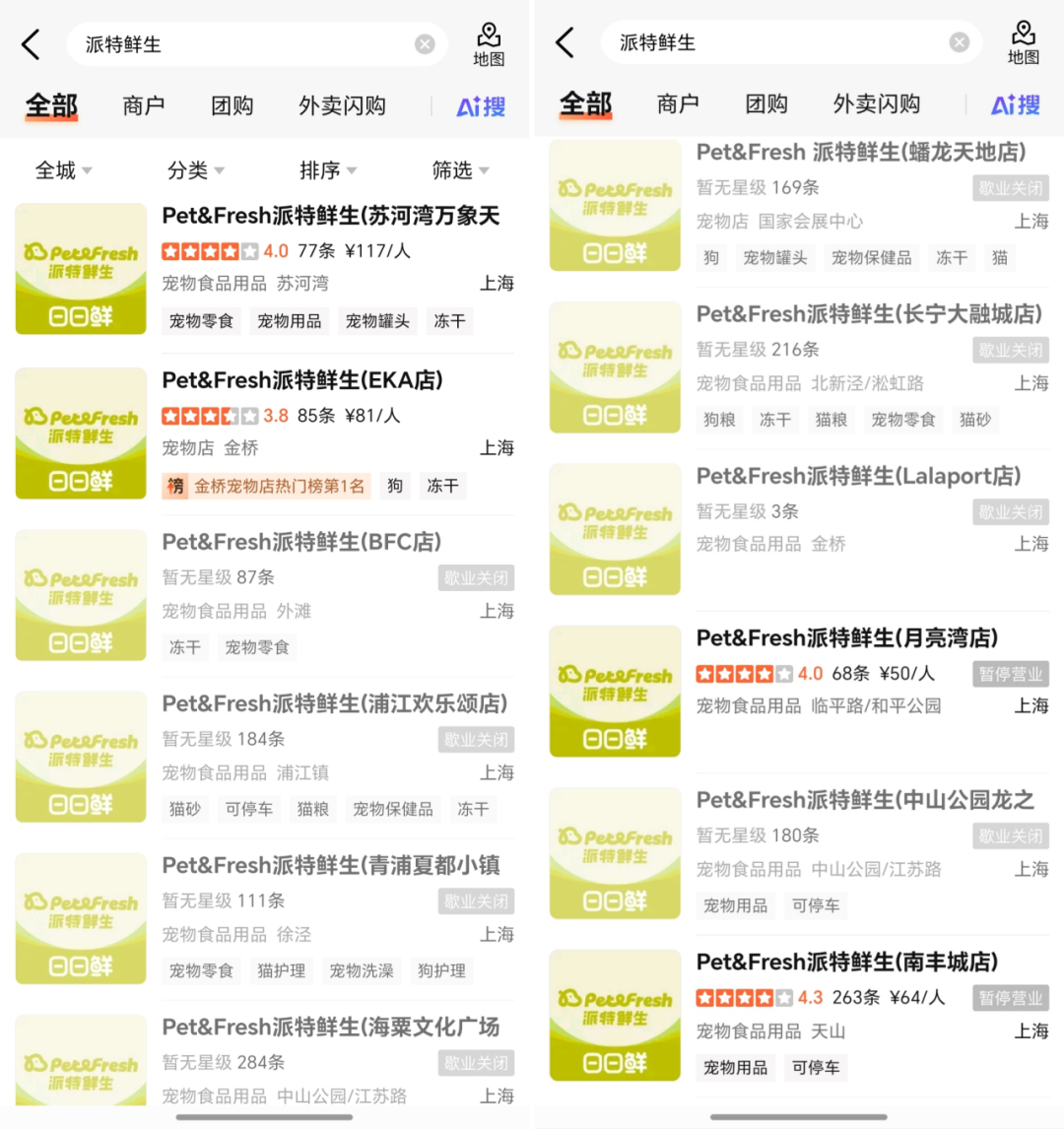
Core Viewpoint - The pet economy, while appearing lucrative with a market size of 300 billion and gross margins up to 50%, is not a profitable venture for large companies due to high operational costs and reliance on human capital rather than scalable business models [4][10][30]. Industry Overview - The pet economy is characterized by high gross margins, particularly in pet food, where domestic brands can achieve margins of 40%-50% [10][11]. - Service sectors such as grooming and veterinary care also show high potential margins, but the actual profitability for companies is often low due to high operational costs [10][15]. Company Performance - Major players like Pet Fresh and others have faced significant losses, with Pet Fresh closing 18 stores after burning through 178 million RMB in just nine months, averaging losses of over 200,000 RMB per store monthly [5][11]. - Companies like Zhongchong Co. and Petty Co. report low net profit margins, with Zhongchong's gross margin at 28.16% and net margin at only 9.33% [11][12]. Marketing and Sales Costs - The cost of acquiring customers through KOLs (Key Opinion Leaders) and marketing has skyrocketed, with sales expenses for companies like Guibao Pet increasing from under 100 million RMB in 2017 to 500 million RMB in 2024, leading to diminished net profit margins despite increased sales [13][14]. Challenges in Scaling - The pet economy is heavily reliant on personal relationships and trust between pet owners and service providers, making it difficult for large companies to replicate the success of smaller, independent businesses [27][30]. - The high costs associated with maintaining quality service and customer trust, such as expensive store locations and high employee wages, hinder profitability for larger firms [15][28]. Comparison with Other Industries - Similar challenges are observed in other high-margin industries like beauty and medical services, where the core value lies in skilled personnel rather than scalable business operations [19][20][24]. - The pet industry exemplifies a trend where the most profitable segments are those that rely on individual expertise and customer relationships, rather than mass-market strategies [30].


宠物经济,暴利的烂生意
Tai Mei Ti A P P· 2025-12-31 09:15
Core Insights - The pet economy, with a market size of 300 billion and gross margins reaching 50%, appears to be a lucrative business, but the reality is more complex and challenging for large companies [1][4]. Group 1: Market Dynamics - Major players like Hema have entered the pet market with high expectations, but have faced significant losses, exemplified by Pet Fresh's closure of 18 stores after just 9 months, with an average monthly loss exceeding 200,000 RMB per store [2][6]. - Despite the high gross margins in pet food, with domestic brands achieving 40%-50% margins, the actual profitability for many companies is low, with some reporting negative net margins [5][6]. Group 2: Cost Structure - The high gross margins in the pet industry are offset by substantial marketing and operational costs, particularly in advertising through KOLs (Key Opinion Leaders), which can consume a significant portion of revenue [8][10]. - Companies like Zhongchong and Peidi have shown that even leading firms struggle with profitability, with Zhongchong's gross margin at 28.16% and net margin at only 9.33% [6][9]. Group 3: Business Model Challenges - The pet economy is characterized by a reliance on personal relationships and trust between pet owners and service providers, making it difficult for large companies to replicate the success of smaller, independent operators [22][23]. - The expansion of large pet service providers often leads to operational inefficiencies and customer dissatisfaction, as seen with companies like Jichongjia, which faced closures after rapid expansion [22][24]. Group 4: Comparison with Other Industries - The challenges faced in the pet economy mirror those in other high-margin industries like beauty and medical services, where the core value often lies in individual expertise rather than scalable business models [14][20]. - The pet industry, much like the beauty and medical sectors, is fundamentally a "people-driven" business, where success is tied to individual skills and customer relationships rather than just operational efficiency [20][23].
2025,中产都抛弃了哪些消费品牌?
阿尔法工场研究院· 2025-12-30 00:02
Core Viewpoint - The article discusses the stark contrast in China's consumer market in 2025, highlighting a significant divide between thriving companies and those that have collapsed, marking a shift from a "growth at all costs" mentality to a focus on efficiency and sustainability in business models [5][6][11]. Group 1: Market Dynamics - In 2025, the consumer market experienced a "violent clearing," with many once-prominent unicorns collapsing, signaling the end of an era characterized by unsustainable growth strategies [6][8]. - The year 2025 is described as a "tombstone" for new consumption, as the last illusions surrounding high prices and influencer-driven brands were shattered, exemplified by the downfall of brands like Zhong Xuegao [8][9]. - The collapse of established giants like Christine and Xu Li Shan reflects a failure to adapt to changing consumer preferences and market conditions, leading to their eventual exit from the market [9][10]. Group 2: Survivors and New Trends - Despite the failures, a new wave of companies thrived in 2025, particularly in the new tea beverage sector, with brands like Mixue Ice City and Tea Baidao successfully going public [15][16]. - The success of these companies is attributed to their focus on supply chain efficiency and cost control, moving away from traditional notions of craftsmanship to a more industrialized approach [16][17]. - The "lipstick effect" emerged as consumers shifted spending from large purchases to small, affordable pleasures, benefiting brands like Bubble Mart and new tea beverage companies [18]. Group 3: Investment Landscape - The investment landscape in 2025 saw a dramatic reduction in financing activities, with only 74 rounds of funding compared to 133 in the previous year, indicating a shift away from reckless spending [23][24]. - The restaurant sector remained a focal point for investment, accounting for 45 out of the 74 financing rounds, as capital sought safety in high-frequency, essential consumer needs [24][26]. - Brands that demonstrated strong supply chain control and technological integration, such as those in the coffee sector, began to attract significant investment, reflecting a new focus on efficiency and innovation [27][28]. Group 4: Future Outlook - The article suggests that the consumer market in 2026 will prioritize global distribution over domestic expansion, as companies seek to leverage their efficiencies in international markets [31][32]. - The survival of brands in the coming years will depend on their ability to adapt to changing consumer behaviors and market conditions, emphasizing the importance of supply chain management and genuine consumer engagement [33][34].

2025,中产都抛弃了哪些消费品牌?
虎嗅APP· 2025-12-29 13:33
Core Viewpoint - The article discusses the contrasting dynamics of the Chinese consumer market in 2025, highlighting both the rise of successful brands and the collapse of previously celebrated companies, marking a significant shift in consumer behavior and business models [4][5][7]. Group 1: Market Dynamics - In 2025, the Chinese consumer market experienced a "violent cleansing," with many once-celebrated "unicorns" collapsing, signaling the end of an era characterized by "losses for scale" and "storytelling through valuation" [5][7]. - The downfall of brands like "Chongxuegao" and "Kristin" illustrates a collective failure of business models that relied heavily on marketing rather than product value, as consumers returned to rational purchasing behaviors [7][8]. - The year 2025 is described as a turning point, where the market bid farewell to high-priced, trendy brands that lacked a solid product foundation, leading to a significant shift in consumer expectations [7][8]. Group 2: Successful Brands - Despite the market downturn, certain brands thrived, such as "Mizhu Ice City" and "Bubble Mart," which capitalized on efficiency and emotional value, demonstrating resilience in a challenging environment [12][13]. - The success of these brands is attributed to their ability to adapt to consumer needs for affordable pleasure, with "new tea drinks" becoming a form of "cheap social currency" [16]. - The article highlights the importance of supply chain efficiency, with brands like "Mizhu Ice City" leveraging agricultural technology and logistics to maintain competitive pricing [14][15]. Group 3: Investment Trends - In 2025, the investment landscape saw a dramatic reduction in funding rounds, with only 74 financing events compared to 133 in the previous year, indicating a shift away from reckless spending [20][21]. - The restaurant sector remained a focal point for investment, accounting for over 60% of financing events, as capital sought safety in high-frequency consumer needs [22]. - Brands that demonstrated strong supply chain control and product differentiation, such as "Fulaiwei" and "Guifenghuang," began to attract investment, reflecting a new focus on sustainable business practices [22][23]. Group 4: Future Outlook - The article suggests that the future of consumer brands will hinge on their ability to integrate technology and maintain strong supply chains, with a shift towards global distribution becoming essential [25][26]. - The emergence of sectors like the silver economy and pet care indicates evolving consumer demographics and preferences, highlighting new opportunities for growth [25]. - The narrative concludes that the market will favor brands that respect consumer needs and focus on operational efficiency, marking a departure from the previous era of superficial marketing [27][28].

侯毅三度创业再战生鲜,亲自充当专业买手!直播间开播,赛道早已是“红海”…
Bei Jing Shang Bao· 2025-12-08 14:28
近日,侯毅的"老菜芮选"直播间开播,销售各类生鲜产品,价格从几十元至几百元不等。卸下实体店的 重资产包袱,侯毅以"老菜"IP为信任背书,亲自充当专业买手。生鲜市场已严重分化:一头是巨头们比 拼"即时达"与品质,另一头是本地化的基础供给,"中间地带"的品质需求仍旧长期悬空。直播红海厮杀 惨烈,生鲜尤其考验"信任溢价"与"复购率"。侯毅押注的正是他多年积累的选品与供应链能力,零售 的"尽头"未必是直播,但老兵转身让行业意识到零售业正在回归商品和效率。 全文共2965字,阅读大约需要7分钟 "老菜"是侯毅在阿里时的花名。根据侯毅在视频中的介绍,"老菜芮选"的模式在逻辑上与他在盒马时期 的选品理念相似,但在形式上有所不同。 北京商报记者丨王维祎 从盒马离任,几度创业沉浮,盒马鲜生前CEO侯毅再次站回起点。这次他选择最熟悉的战场——生鲜, 却换了最轻的武器——直播。 零售的"尽头"是直播? 自盒马离任以来,侯毅似乎一直走在创业的路上。如今,他的第三次创业已经开始了。"侯毅说"视频号 也为"老菜芮选"的带货直播进行预告。在近日的直播中,侯毅坦言,此举是为了将个人美食兴趣与创业 结合,通过自己的经验背书,为消费者优选食品。 ...


盒马前CEO侯毅再创业 派特鲜生黄了推出“老菜芮选”
Xi Niu Cai Jing· 2025-12-04 03:04
Core Insights - Hou Yi, the former CEO of Hema Fresh and founder of Pet Fresh, has officially launched "Lao Cai Rui Xuan" to enter the live-streaming e-commerce sector [1][4] Group 1: Company Developments - The product offerings in the "Lao Cai Rui Xuan" live-streaming room include categories such as baked goods, fruits, and seafood, featuring items like Tongxiang Snowflake Wulao Steamed Buns [4] - Hou Yi has transitioned from his role as CEO of Hema Fresh, a position he held since the company's inception in 2015, and is now focusing on new entrepreneurial ventures [4] Group 2: Recent Challenges - The pet food brand "Pet Fresh," founded by Hou Yi, has faced significant challenges, leading to a large-scale closure of its physical stores [4] - The first Pet Fresh store opened in February 2025 and quickly expanded to 10 locations, but the company has decided to exit the physical pet store market while retaining a small online presence [4] - Pet Fresh announced a successful $25 million angel round financing in May 2023, marking a record high for angel financing in the pet industry in recent years [4]
「宠物界盒马」将全部闭店,侯毅的宠粮生意为何匆匆收场? | 声动早咖啡
声动活泼· 2025-12-03 10:04
预计阅读时长 O mins 本文整理自播客「声动早咖啡」 侯毅对每日经济新闻表示,派特鲜生项目最大的局限在于,单一客户的消费极其有限,一只狗或一只猫,一个 月的食品消费顶多只需要 300 元,即使市场在不断增长,规模也不足以支撑起一家连锁公司。 ecoloire 鲜粮保质期 20 周、冷链烧钱、主粮占 60% 份 额,派特鲜生「性价比」救不了复购。 欢迎来到今天的轻解读。根据毕马威发布的报告,2015 年,中国的宠物市场规模还只有 978 亿元,随后整个 市场进入高速增长期,预计到今年将突破 8114 亿元。其中,按照细分业务来看,宠物食品占据了整个宠物赛 道一半以上的份额,是宠物经济的核心驱动力。而创业之初的侯毅,正是看到了这样的机会。这位盒马的创始 人曾对行业媒体表示,在成熟的宠物市场美国,已经跑出了 Freshpet 这样的宠物鲜粮公司,去年实现盈利,英 国也有类似的品牌 Butternut box,完成了多轮融资,而中国还没有出现对标的公司,但未来,国内消费者对于 天然、健康属性的宠物食品需求将会进一步释放,宠物鲜食赛道存在发展空间。 巴伦周刊的报道显示,成立于 2006 年的 Freshpet,实际 ...

61岁还折腾!盒马前CEO进军直播带货,第三次创业能成吗?
Sou Hu Cai Jing· 2025-12-01 10:29
Core Insights - The article discusses the recent entry of Hou Yi, the founder and former CEO of Hema Fresh, into the live-streaming e-commerce space with his new venture "Lao Cai Rui Xuan" [1][3] - Despite concerns about the timing of his entry, the article argues that Hou's extensive retail experience and understanding of consumer needs position him well for success in this competitive market [3][17] Company Overview - Hou Yi has over 40 years of retail experience and previously built Hema Fresh into a leading brand in the new retail sector [3] - His new venture focuses on selling fresh produce, baked goods, and seafood, targeting middle-class families with higher-priced, high-repeat purchase items [3][14] Market Context - The live-streaming e-commerce landscape has evolved, requiring hosts to possess skills in product presentation, quality control, and customer service [1][3] - The article highlights the importance of trust in live-streaming sales, emphasizing that successful hosts must prioritize product quality and consumer safety over mere entertainment [19] Previous Ventures - Since retiring from Hema, Hou Yi has attempted other entrepreneurial projects, including a pet food brand and a seafood barbecue restaurant, both of which faced challenges and closures [14][16] - Despite these setbacks, Hou's track record of building Hema from scratch suggests he has the capability to succeed in new ventures [14][16] Consumer Perspective - From a consumer standpoint, having an experienced figure like Hou Yi curating products can enhance trust and quality assurance in live-streaming sales [19] - The article concludes by inviting opinions on whether Hou Yi can achieve success in this new venture, reflecting the public's interest in his ability to adapt to changing market dynamics [19]