美银美林

Search documents
存储巨头四季报“五大关键点”:当前周期强度超越2017-18“云繁荣周期”
硬AI· 2026-02-17 03:59
若短缺持续至2027年,价格仍有上涨空间。 作者 | 龙 玥 编辑 | 硬 AI 随着存储巨头们四季度财报的披露,一个清晰的信号正在释放:存储行业不仅走出了低谷,更在AI浪潮的推动下,开启了一轮强度罕见的"超级周期"。 本周,美银美林团队总结了存储巨头财报电话会议的精华,并结合韩国半导体展(Semicon Korea)的一线见闻,指出当前市场正处于库存极低、价格 飙升且资本开支大幅扩张的强劲上升期。 美银美林指出,SK海力士库存周转天数降至127天的低位,成品库存仅剩2-3周。三星DRAM售价环比大涨40%,现货价格创25年新高。行业高管认 为,本轮周期强度已超越2017-18年的云繁荣期,若短缺持续至2027年,价格仍有上涨空间。 他进一步解释道,与高度定制化的晶圆代工不同,存储器仍被视为大宗商品(遵循JEDEC标准),这意味着如果短缺持续到2027年,价格还有进一步 上涨的空间。 美银的"存储指标"(Memory Indicator)也佐证了这一点。该指标在12月已回升至124的"上行周期"水平,而2025年上半年的平均值仅为103。 01 财报季"五大关键信号" 美银美林分析师Simon Woo团队在研 ...


美国“电荒”,中国“电卷”
创业邦· 2026-01-18 03:48
Core Viewpoint - The article contrasts the electricity pricing dynamics in the United States and China, highlighting the stark differences in how each country manages electricity supply and demand, leading to divergent pricing trends. Group 1: U.S. Electricity Market Dynamics - In the U.S., electricity shortages manifest through immediate price increases, reflecting a brutal pricing mechanism that signals supply constraints to consumers [10][12]. - The average electricity price in the U.S. has been rising over the past two years, driven by necessary infrastructure upgrades and capital expenditures [11]. - The pricing mechanism in the U.S. is designed to encourage investment in power generation and to prompt consumers to reduce usage during shortages [10][12]. Group 2: Chinese Electricity Market Dynamics - In contrast, China's electricity prices are experiencing a downward trend, with a reported 10% year-on-year decrease in purchasing prices as of early 2025 [6]. - The Chinese electricity market is characterized by a "passive clearing" process, where supply outpaces demand, leading to lower prices despite increasing electricity consumption from data centers and manufacturing [15][18]. - The integration of renewable energy sources in China has not raised costs as seen in Europe; instead, it has driven prices down due to near-zero marginal costs [16]. Group 3: Implications of Pricing Mechanisms - The U.S. model places the burden of rising costs on end-users, resulting in visible public discontent and protests against high electricity bills [20]. - Conversely, in China, the costs are absorbed by the supply side, with power generation companies and equipment manufacturers facing pressure to maintain low prices, leading to reduced profitability [21][22]. - The article suggests that the different approaches to electricity pricing reflect broader economic strategies, with the U.S. focusing on market-driven solutions and China prioritizing stability and accessibility [22].
美银美林2026年十大灰天鹅:铀价暴涨50%……英格兰夺喜夺世界杯?
Hua Er Jie Jian Wen· 2026-01-16 09:19
Group 1 - The core viewpoint of the report is that significant investment opportunities are often overlooked by the market, with predictions indicating a more optimistic economic outlook for the U.S. and potential shifts in various asset classes [1] - The U.S. economy is projected to grow by 2.6%, surpassing the market consensus of 2.1%, driven by regulatory easing, Fed rate cuts, and increased corporate investment [1][5] - The U.S. trade deficit has narrowed to $29 billion, the lowest level since 2009, indicating a potential improvement in trade dynamics [5] Group 2 - A weaker U.S. dollar is expected to lead to a rebalancing in global currency markets, with predictions of continued appreciation of the Chinese yuan, targeting 6.8 by year-end [3] - The equal-weighted S&P 500 index is anticipated to outperform the market, with a projected annualized return of +6% compared to -1% for the market-cap weighted index [8] - Uranium prices are forecasted to surge over 50% to $130 per pound, driven by increasing public policy support for nuclear energy [9][10] Group 3 - Emerging market bonds are expected to become the best-performing asset class in 2026, with an anticipated return of 11% and a low historical default rate [13][17] - The CLO ETF market is projected to outperform U.S. Treasuries, with strong demand expected in 2025, as investors seek attractive yields with low credit risk [15] - The global ETF market is set to grow by 32% in 2025, reaching a record $18.4 trillion in assets, potentially surpassing the market capitalization of G7 countries (excluding the U.S.) by the end of 2026 [20][21][22]
格林大华期货早盘提示-20260116
Ge Lin Qi Huo· 2026-01-15 23:38
1. Report Industry Investment Rating No relevant information provided. 2. Core View of the Report - On Thursday, the main indices of the two markets oscillated and adjusted to repair technical indicators, with the semiconductor equipment sector leading the gains. International investors are accelerating the allocation of Chinese assets, and multiple foreign - funded institutions are optimistic about the performance of Chinese assets in 2026. The Chinese stock market has a high probability of rising in 2026, and the growth - type indices are expected to end the adjustment and resume the upward trend on Friday or early next week. Long - term index futures positions should be held, and investors can choose to buy out - of - the - money long - term call options on the CSI 1000 Index [1][2][3] 3. Summary by Relevant Catalogs 3.1 Market Review - On Thursday, the trading volume of the two markets was 2.90 trillion yuan, showing a rapid contraction. The CSI 500 Index closed at 8223 points, down 4 points or - 0.05%; the CSI 1000 Index closed at 8240 points, down 16 points or - 0.20%; the SSE 50 Index closed at 3105 points, down 6 points or - 0.21%; the SHSZ 300 Index closed at 4751 points, up 9 points or 0.20%. The funds in stock index futures for the CSI 1000, SHSZ 300, CSI 500, and SSE 50 indices had net outflows of 7.1 billion, 4.4 billion, 3.6 billion, and 1.3 billion yuan respectively [1] - Among industry and theme ETFs, the top gainers were semiconductor equipment ETFs, while the top losers were satellite industry ETFs. Among the sector indices of the two markets, the glass - fiber, rubber, and other sectors led the gains, and the industrial Internet, aerospace equipment, and other sectors led the losses [1] 3.2 Important Information - The central bank lowered the interest rates of various structural monetary policy tools by 0.25 percentage points and will lower the minimum down - payment ratio for commercial housing mortgages to 30%. There is still room for reserve requirement ratio and interest rate cuts this year [1] - China's "demand shortage" is mainly "consumer demand shortage", with the consumption - to - GDP ratio about 20 percentage points lower than the global average, and this gap needs to be corrected [1] - More than 10 billion yuan of funds continuously entered the market through ETFs. From January 9th to 13th, the net subscription amount of equity ETFs exceeded 12 billion yuan for three consecutive trading days, with a total net subscription amount exceeding 47 billion yuan. On January 14th, the trading volume of many broad - based ETFs increased significantly, and many newly issued funds announced the early end of fundraising [1] - China shows strong R & D potential and a clear technology iteration path. The relaxation of the H200 export policy by the US indicates that it can no longer block China's technological take - off [1] - Nvidia's new AI inference context memory storage (ICMS) architecture is expected to significantly exacerbate the global shortage of NAND flash memory, bringing additional demand equivalent to 2.8% and 9.3% of the global total NAND demand in 2026 and 2027 respectively [1] - The global explosion in AI chip demand is constrained by TSMC's production capacity, with a supply - demand gap of three times for its most advanced processes. Although TSMC is adjusting production lines and expanding production globally, the shortage cannot be alleviated in the short term, and the advanced packaging link has become a key bottleneck [2] - Deutsche Bank believes that the cost gap between space deployment and ground construction is shrinking rapidly, and in the next decade, the cost of building a space data center will approach that of ground construction [2] - OpenAI signed a three - year agreement with Cerebras, promising to purchase up to 750 megawatts of computing power, all using Cerebras' wafer - scale chips, with a transaction value exceeding $10 billion [2] - Trump launched fiscal, monetary, and credit stimulus, which may lead to debt out - of - control, financial risk accumulation, and a future debt crisis and market crash [2] - Wall Street financial institutions are entering the prediction market, and this emerging market has evolved into a sports - contract - based betting platform [2] - Citi's research report indicates that the commodity market is at a turning point. Crude oil is driven by geopolitics in the short term with a target of $70, but faces long - term oversupply pressure. Precious metals are bullish, with a target of $100 for silver and $5000 for gold. Among industrial metals, the target for aluminum is $3400 - 3500, and the copper price is expected to reach $14000, but January may be the annual high [2] 3.3 Market Logic - International investors are accelerating the allocation of Chinese assets. Many foreign - funded institutions are optimistic about the performance of Chinese assets in 2026. The continuous improvement of corporate profits, continuous technological innovation breakthroughs, and increasing valuation attractiveness provide a solid foundation for the continuous rise of Chinese assets [2] - In 2025, the stock market had a net inflow of 2.26 trillion yuan. In 2026, insurance, wealth management, and pensions are expected to be the three major sources of incremental funds, with institutional incremental funds in the stock market reaching 3.1 trillion yuan, and the scale of public fixed - income + products at least doubling [2] - More international funds are turning their attention to the AI track outside the US. China's technology sector, with its valuation advantages, complete industrial ecosystem, and large - scale manufacturing capabilities, is becoming a new destination for global funds in the AI field [2][3] 3.4 Market Outlook - The trading - type investors are actively increasing their positions in Chinese assets, and the allocation - type investors are optimizing the weight of Chinese assets in the global portfolio. The application for satellite frequency and orbit resources has risen to the national strategic level, and the upward trend of the Chinese market is expected to continue in 2026 [3] - The risk of a significant rise in the Chinese stock market in 2026 is much higher than that of a significant decline. The acceleration of AI applications, anti - involution, and the re - allocation of domestic liquidity from deposits to the stock market are positive factors [3] - The return of the US to the Monroe Doctrine will accelerate the flow of global funds to the Chinese capital market. The Fed's interest rate cut and balance - sheet expansion, along with the appreciation of the RMB, will lead to the return of a large amount of US dollars held by foreign trade enterprises overseas, and funds will flow from enterprise accounts to resident accounts and then to securities accounts [3] - China's application for 200,000 low - orbit satellites has shocked the market, indicating that the Sino - US space infrastructure competition has become a key area of technological competition. The adjustment of growth - type indices is expected to end on Friday or early next week, and the upward trend will resume [3] 3.5 Trading Strategy - For stock index futures directional trading, the policy hopes for a bull market but also a slow one. With a large amount of off - market funds still flowing in, the upward trend driven by market funds remains unchanged. Long - term stock index futures positions should be held [3] - For stock index option trading, investors can choose to buy out - of - the - money long - term call options on the CSI 1000 Index [3]
美国“电荒”,中国“电卷”
投中网· 2026-01-15 06:23
Core Viewpoint - The article discusses the contrasting electricity pricing trends in the United States and China, highlighting the impact of different market mechanisms and regulatory environments on electricity costs and consumption [6][8][18]. Group 1: Electricity Pricing in the U.S. - In the U.S., electricity prices are driven by a market mechanism that reflects supply and demand, leading to significant price increases when demand outstrips supply [10][12]. - The average electricity price in the U.S. has been rising over the past two years, attributed to necessary infrastructure upgrades and the costs associated with transitioning to AI technologies [11][12]. - The pricing mechanism in the U.S. serves as a signal for investment in power generation and encourages consumers to reduce usage during peak times [10][12]. Group 2: Electricity Pricing in China - In contrast, China's electricity prices are experiencing a downward trend, with a reported 10% year-on-year decrease in purchasing prices since the beginning of 2025 [6][15]. - The decline in electricity prices in China is a result of aggressive supply-side expansions, particularly in coal and renewable energy sectors, without a corresponding surge in demand [15][16]. - The Chinese electricity market operates under a macroeconomic framework where electricity is treated as a public utility, leading to lower prices that benefit manufacturing but pressure power generation companies [19][20]. Group 3: Implications of Pricing Mechanisms - The article emphasizes that in the U.S., consumers bear the immediate costs of rising electricity prices, which can lead to public protests and demands for regulatory changes [18][20]. - In China, the burden of low electricity prices is shifted to the supply side, where power generation companies and equipment manufacturers face reduced profitability, impacting their operational viability [19][20]. - The contrasting approaches to electricity pricing reflect broader economic strategies, with the U.S. prioritizing market-driven signals and China focusing on maintaining low costs for consumers and industries [8][20].

美国“电荒”,中国“电卷”
华尔街见闻· 2026-01-14 10:40
Core Viewpoint - The article contrasts the electricity pricing dynamics in the United States and China, highlighting the stark differences in how each country manages electricity supply and demand, leading to divergent pricing trends [3][5][19]. Group 1: United States Electricity Market - In Loudoun County, Virginia, residents express concerns over rising electricity costs due to the influx of data centers, which are consuming significant power resources [2][8]. - The pricing mechanism in the U.S. is characterized by a transparent and immediate reflection of supply shortages, where electricity prices surge when reserve margins fall below safety thresholds [8][10]. - The average electricity price in the U.S. has been on the rise over the past two years, driven by necessary infrastructure upgrades to support increasing demand from AI and other sectors [9][10][11]. - The burden of higher electricity costs falls on end-users, who face immediate financial impacts, leading to public protests and calls for regulatory hearings [19][22]. Group 2: China Electricity Market - In contrast, China's electricity prices are experiencing a downward trend, with a reported 10% year-on-year decrease in purchasing prices since the beginning of 2025 [3][14]. - The Chinese electricity market is undergoing a "passive clearing" process, where supply-side expansions, particularly in coal and renewable energy, are outpacing demand growth, resulting in lower prices [14][16]. - The role of data centers in China is seen as beneficial, as they help absorb excess electricity generated from renewable sources, particularly in regions with surplus capacity [17][20]. - The financial burden of low electricity prices is shifted to the supply side, where power generation companies and equipment manufacturers face squeezed profit margins, leading to a "utility-like" operational model [20][21].

美国慌了?中国电池正在卡住五角大楼和AI巨头的脖子
Xin Lang Cai Jing· 2025-12-26 16:59
来源:环球零碳 来源:AI生成 摘要: 目前美军各类武器项目高度依赖中国供应链的电池零部件,为人工智能产业提供动力的大型数据中心也面临同样的问题。 撰文 | Penn 编辑 | 小雨 →这是《环球零碳》的第1815篇原创 在AI算力爆发与电力系统承压的双重背景下,美国最焦虑的,不只是芯片和用电问题,还包括电池。 美国地缘政治风险与供应链安全专家伊莱恩·K·德曾斯基指出:"当我们思考制造业和国防的未来,以及该如何保护关键供应链时,芯片是大脑,电池是心 脏。" 但美军关键武器系统和硅谷AI巨头发现,支撑AI与国防的那颗"心脏",并不在自己手中。 以锂电池为主的储能系统是电网的关键支撑。特斯拉创始人马斯克今年10月提出,通过大规模部署工业级电池储能系统,可将美国电网有效发电能力提升 一倍。 这一观点得到了多家华尔街研究机构和分析师的认同和验证。 瑞银预计,到2030年,储能需求将占电池总需求的22%至26%,其重要性正从"边缘变量"跃升为"核心变量"。这一需求爆发的背后,是全球能源结构变革 带来的电力供应缺口——美国电力需求年增速已达3%,而新增发电设施建设周期长达7至10年,储能系统成为弥合这一缺口的唯一现实选项 ...

1970年以来第39次,美元出现“金叉”,还是极为罕见的那种
Hua Er Jie Jian Wen· 2025-12-23 02:00
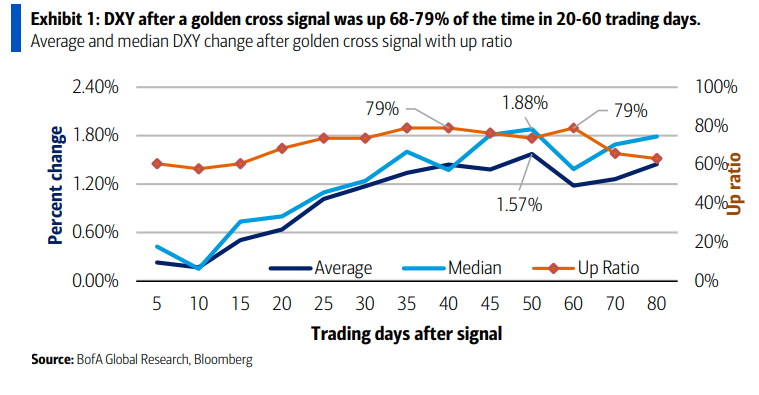
Core Viewpoint - The recent technical buy signal triggered by the US Dollar Index (DXY) suggests a potential upward trend for both US stocks and crude oil, with historical data indicating a strong likelihood of dollar appreciation following this signal [1][4]. Group 1: Dollar Index Analysis - The DXY experienced its 39th golden cross on December 19, indicating a bullish signal as the 50-day moving average crossed above the 200-day moving average [4][7]. - Historical data shows that after a golden cross, the dollar index has a 68-79% probability of rising within 20-60 trading days, with an average increase of approximately 1.22% [7][8]. - This particular golden cross is notable as it is the 16th occurrence since 1970 when the 200-day moving average was declining, leading to an 80% probability of dollar appreciation in the following days [3][8]. Group 2: Impact on Other Asset Classes - The S&P 500 index typically shows mixed performance in the initial phase after the golden cross, but tends to strengthen after 35 trading days, especially when the 200-day moving average is declining [11]. - Crude oil has a perfect record following the golden cross, with a 100% probability of rising 35 trading days later, averaging a gain of 9.07% [11]. - In contrast, gold and 10-year Treasury yields exhibit a neutral response to the dollar's golden cross, with approximately 50% probability of upward movement, indicating a divergence in traditional safe-haven assets [11].
全球金融巨头,把脉2026
中国基金报· 2025-11-30 06:25
【导读】金融巨头看好中国股市及美股前景,AI发展挑战与机遇并存 中国基金报记者 郭玟君 储是 市场将迎来崭新的2026年,全球各大金融巨头 近期 发布了他们对2026年投资机遇的展望, 中国股市、美股和AI成为巨头们热议的话题。 看好 中国股市前景 展望2026年,多家跨国巨头均表示看好中国股市走势,对中国科技行业,尤其是AI的发展, 及消费复苏高度关注。 在瑞银近期发布的展望报告中,瑞银财富管理全球首席投资总监Mark Haefele 表示,2025 年中国科技行业创新步伐加快,在人工智能全产业链取得显著突破。本土AI大模型展现技术领 导力,扶持政策持续增强产业生态韧性。尽管年内板块表现强劲, 但 当前估值仍较全球同业 存在显著折价,且低于历史高位,预示价值重估潜力。 瑞银预期2026年强劲的盈利增长将推动中国科技股走强,并将其视为全球股票投资中具有高 确定性 的主题。 Mark Haefele表示,除科技板块外,中国股市整体前景亦在改善。虽然经济增长可能保持温 和,但更强的国内流动性、稳健的企业盈利以及持续流入的散户资金将构成支撑。当前政府 刺激政策虽保持克制,但"十五五"规划有望加大对制造业与科技领域的 ...

仅剩3家!高盛、汇金重仓的5元军工股,两家已被套,是机会还是陷阱
Sou Hu Cai Jing· 2025-08-18 05:46
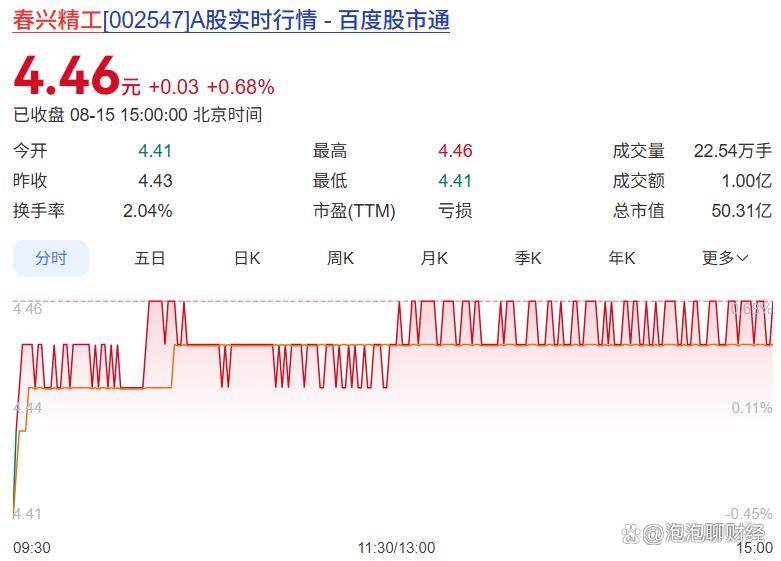
Core Viewpoint - The article discusses the investment landscape of low-priced military stocks in the A-share market, questioning whether they represent a value opportunity or an investment trap, especially in light of significant upcoming military events and the performance of specific companies in the sector [1]. Group 1: Company Analysis - China Shipbuilding Industry Corporation (中国重工) has leading R&D capabilities in naval weaponry and has achieved significant profit growth, with a Q1 net profit of 519.2 million yuan, up 280% year-on-year, and a mid-year net profit of 1.8 billion yuan, an increase of 237% [1]. - Tianqiao Crane (天桥起重) specializes in metallurgical cranes but is expanding into military applications, reporting a mid-year net profit of 46 million yuan, a 79% increase, and is the only company among the three that has not reported a loss in the past decade [2]. - Spring兴精工 has faced continuous losses over the past five years but holds military certifications through its subsidiary, which is involved in a key project for heavy equipment. However, its financial instability raises concerns about its short-term performance [2]. Group 2: Market Trends and Institutional Interest - Institutional investors are shifting focus from merely low-priced stocks to those with core technologies and high growth potential, as evidenced by investments in companies like Dayfa Precision (日发精机) and Yuanda Intelligent (远大智能) [3]. - Historical context is provided, noting that low-priced military stocks do not guarantee safety, as seen in the case of ST Shipbuilding, which faced delisting risks despite being a low-priced stock [3].