中国人经济

Search documents
杨元庆:发展“中国人经济”,以“中国+N”重塑中国全球经济竞争力
21世纪经济报道· 2026-02-11 04:56
文/杨元庆 联想集团董事长兼 CEO 春山可望,万象更新。2026年的初春,农历丙午新年的脚步日益临近,神州大地洋溢着迎新的喜 庆。置身于"十五五"开局之年,我们心潮澎湃,信心满怀。 回望刚刚收官的"十四五",中国经济彰显出难能可贵的高质量发展确定性,持续成为世界经 济增长的主要贡献者和稳定锚,不仅顶压前行,保持了年均5 . 4%的增长速度,继续领跑全球 主要经济体,更是稳中有进,经济总量实现"四连跳",突破1 4 0万亿元大关,展现出"向新向 优发展"的活力。 当前,面对2 0 3 5年基本实现社会主义现代化的发展目标,要确保"十五五"和"十六五"时期经 济保持4 . 1 7%以上的年均合理增速,我们必须在高质量发展的轨道上充分挖掘经济潜能。 在这一宏大背景下,一个极具战略深意的概念——"中国人经济"正成为官方与学界热议的焦 点 。 与 重 视 国 内 生 产 总 值 ( GDP ) 的 " 中 国 经 济 " 相 比 , " 中 国 人 经 济 " 关 注 的 是 国 民 总 收 入 (GNI),即中国人及企业在全球所创造的财富。进入"十五五"时期,中国式现代化道路要求 我国既重视"中国经济"也重视"中国 ...



“中国人经济”专题策划 发展“中国人经济”:以“中国+N”重塑中国全球经济竞争力
2 1 Shi Ji Jing Ji Bao Dao· 2026-02-10 23:09
Core Viewpoint - The concept of "Chinese People Economy" is gaining attention as a strategic focus, emphasizing the importance of Gross National Income (GNI) over Gross Domestic Product (GDP) in the context of China's modernization goals for 2035 [1][2] Group 1: Economic Growth and Development - China's economy has demonstrated remarkable high-quality growth, maintaining an average growth rate of 5.4% during the "14th Five-Year Plan" period, with the total economic output surpassing 140 trillion yuan [1] - The "15th Five-Year Plan" aims to ensure an average annual growth rate of over 4.17% while fully tapping into economic potential [1] Group 2: Strategic Importance of "Chinese People Economy" - The "Chinese People Economy" encourages enterprises to leverage domestic innovation and manufacturing capabilities to expand globally, enhancing control over global resources and markets [2][3] - This approach creates a virtuous cycle where the development of the "Chinese People Economy" can feed back into the domestic economy, promoting mutual growth [2] Group 3: Characteristics of Global Competitiveness - To foster the "Chinese People Economy," it is essential to cultivate globally competitive Chinese enterprises that possess resource allocation, technological innovation, and brand influence capabilities [3] - Companies should retain core capabilities in China, leveraging its unmatched industrial advantages and comprehensive supply chain systems [3][4] Group 4: Lenovo's Globalization Practices - Lenovo's journey exemplifies the integration of "Chinese Economy" and "Chinese People Economy," having grown into a global technology giant with over 500 billion yuan in annual revenue and operations in 180 markets [6][7] - Lenovo maintains approximately 80% of its manufacturing, 70% of its R&D personnel, and 60% of its workforce in China, emphasizing the importance of China as a base for global operations [7] Group 5: Future Strategies for "Chinese People Economy" - Lenovo plans to enhance its "China + N" strategy, optimizing supply chain layouts and supporting small and medium-sized enterprises in their global expansion [9] - The company aims to expand into emerging markets, particularly in the "Global South," with significant investments in regions like the Middle East [10] - Innovation, particularly in artificial intelligence, is identified as a core driver for the "Chinese People Economy," with Lenovo committed to making AI accessible globally [11]
商务部研究院彭波:发展“中国人经济”是突破增长瓶颈的关键
2 1 Shi Ji Jing Ji Bao Dao· 2026-02-10 23:09
Core Concept - The development of the "Chinese Economy" is a key strategy for China to overcome growth bottlenecks, facilitating bypassing trade barriers and addressing rising domestic factor costs through global resource allocation [1][4]. Group 1: Understanding "Chinese Economy" - The term "Chinese Economy" (GNI) emphasizes wealth and value creation by Chinese nationals and enterprises globally, shifting focus from domestic production (GDP) to global operations [2]. - This transition signifies a strategic elevation from "producing in China" to "operating globally," allowing Chinese enterprises to allocate resources and create value worldwide while benefiting domestic growth [2]. Group 2: Implications for the 14th Five-Year Plan - The 14th Five-Year Plan indicates a shift towards a dual circulation model of "capital going abroad + global creation + value return," emphasizing the importance of global supply chain control and cross-border governance [3]. Group 3: Strategic Value in Global Economic Restructuring - Developing the "Chinese Economy" is crucial for navigating the current global economic landscape characterized by regionalization and diversification, helping to stabilize external demand and mitigate domestic cost pressures [4]. - This model transforms Chinese enterprises from passive rule-takers to active chain leaders, enhancing their bargaining power in international supply chains and fostering innovation and new industries [4]. Group 4: Global Operations Rooted in China - The operational model of "revenue overseas, roots in China" leverages China's robust supply chain and manufacturing capabilities while mitigating market risks through diversified global revenue streams [6]. - This approach demonstrates that globalization can strengthen domestic manufacturing and R&D, serving as a best practice for upgrading domestic industries [6]. Group 5: Key Capabilities for Sustainable Globalization - Globalized enterprises must develop systematic capabilities in modern governance, cultural integration, ecosystem empowerment, and innovation compliance to effectively embody the "Chinese Economy" [7]. Group 6: "China + N" Resource Configuration - The "China + N" resource configuration model exemplifies successful practices of the "Chinese Economy," emphasizing the importance of maintaining core manufacturing and R&D in China while expanding global market reach [8][9]. - This model promotes a dual empowerment mechanism, linking domestic advantages with global resources to enhance competitiveness and operational efficiency [8]. Group 7: Ecological Expansion through Leading Enterprises - The "ecological expansion" led by chain enterprises is vital for enhancing the overall network of the "Chinese Economy," fostering collaboration among domestic suppliers and reducing barriers for smaller enterprises [10]. - This approach encourages the optimization of products and services across the supply chain, driving high-end upgrades and reinforcing the industrial foundation of the "Chinese Economy" [10].
把握未来五年中国经济蕴藏的新机遇
Jing Ji Ri Bao· 2025-12-30 23:58
Core Viewpoint - The "14th Five-Year Plan" outlines strategic opportunities and challenges for China's economic and social development, emphasizing high-quality growth and a focus on various key sectors [2][3]. Economic Opportunities - The plan identifies numerous new opportunities, including the development of a modern industrial system and the strengthening of the real economy, with specific mentions of sectors such as mining, metallurgy, chemicals, and advanced technologies [3]. - The goal is to achieve significant results in high-quality development, with economic growth maintained within a reasonable range and an increase in domestic consumption driving economic growth [2][3]. Economic Challenges - Challenges include unbalanced development, insufficient effective demand, and pressures on employment and income growth, which need to be addressed to convert challenges into opportunities [4]. - The plan sets a target for per capita GDP to reach the level of moderately developed countries by 2035, requiring an average annual GDP growth of approximately 4.17% from 2025 to 2035 [4]. Consumer Income and Spending - The plan aims to increase residents' income through various channels, including wage, operational, property, and transfer income, with a focus on enhancing the share of labor remuneration in national income distribution [7][11]. - There is an emphasis on improving the structure of income distribution to promote a more reasonable allocation of income among residents [7]. Investment and Consumption - The plan suggests that increasing government spending on social welfare and implementing direct consumer support policies will enhance residents' consumption capacity [8][11]. - The importance of stabilizing the stock market to increase residents' property income and subsequently boost consumption is highlighted [14]. Capital Market Development - The stability of the capital market is crucial for enhancing investor confidence and ensuring sustainable income growth, which in turn affects consumer behavior [14][15]. - Encouraging long-term funding sources for technological innovation is essential for fostering a robust capital market and supporting economic growth [15][18]. Technological Innovation and Global Competitiveness - The plan emphasizes the need for China to cultivate high-quality listed companies with international competitiveness, particularly in the technology sector, to participate in global competition [18]. - The focus is on creating a favorable investment environment for companies to grow and attract long-term capital into the market [18].
把握未来五年中国经济蕴藏的新机遇——对话全国政协委员尹艳林
Jing Ji Ri Bao· 2025-12-30 22:13
Core Viewpoint - The "14th Five-Year Plan" outlines strategic opportunities and challenges for China's economic and social development, emphasizing high-quality growth and a focus on various key sectors [2][3]. Economic Opportunities - The plan identifies numerous new opportunities in sectors such as modern industrial systems, technology innovation, domestic markets, and rural revitalization, highlighting the importance of strengthening the real economy [3]. - Specific industries mentioned include mining, metallurgy, chemicals, light industry, textiles, machinery, shipbuilding, new energy, aerospace, quantum technology, and more, indicating a broad spectrum of growth potential [3]. Economic Challenges - Challenges include unbalanced development, insufficient effective demand, and pressures on employment and income growth, which need to be addressed to maintain economic stability [4]. - The plan acknowledges the need for a transformation of old and new growth drivers and highlights risks in key areas [4]. GDP Growth Targets - The plan sets a target for per capita GDP to reach the level of moderately developed countries by 2035, requiring an average annual GDP growth of approximately 4.17% from 2025 to 2035 [4]. - The expected nominal GDP growth rate during the "14th Five-Year Plan" period is projected to be around 7%, considering a reasonable inflation rate of about 2% [4]. Consumer Income and Spending - The plan aims to implement a rural and urban resident income increase plan, focusing on enhancing various income sources, particularly wage income [7]. - It emphasizes the importance of a fair income distribution mechanism and encourages innovation as a means to increase income [7]. Investment in Human Capital - The plan stresses the need for a combination of investments in both physical and human capital, particularly in education, healthcare, and social security [11]. - New urbanization is highlighted as a key area for investment, which could significantly increase urban consumption [12]. Capital Market Development - The stability of the stock market is crucial for increasing residents' financial income and boosting consumption [14]. - Long-term funding sources are necessary for supporting technological innovation and ensuring the sustainable growth of income [15]. Regulatory Environment - The plan calls for reforms in the capital market to prevent speculative behaviors and ensure a stable investment environment [17]. - It emphasizes the need for a regulatory framework that supports genuine innovation while mitigating risks associated with market volatility [16]. High-Quality Companies - The plan aims to cultivate high-quality listed companies with international competitiveness, particularly in the technology sector, to enhance global market presence [18].
政策精准发力护航经济韧性,中国经济向新而行
Hua Xia Shi Bao· 2025-12-26 04:35
Group 1 - In 2025, China's economy is expected to achieve stable growth despite external pressures, with a projected annual GDP of approximately 140 trillion yuan, maintaining its position among the world's major economies [1] - International institutions have raised their growth forecasts for China in December, with the IMF and World Bank increasing their predictions by 0.2 and 0.4 percentage points, respectively [1] - The focus for the upcoming "15th Five-Year Plan" includes expanding domestic demand and leveraging technological development as new economic drivers, alongside implementing more proactive fiscal policies [1][2] Group 2 - China's economic resilience is highlighted by two main factors: diversification of trade partners and increased competitiveness of export products, particularly in the context of rising global demand for AI products [2] - The investment in high-tech industries remains robust, driven by breakthroughs in AI and increased government support for the private sector and technological innovation [2] - The government has initiated a comprehensive income increase plan for urban and rural residents, aiming to enhance consumption through fiscal investment and long-term capacity building [3] Group 3 - Predictions for 2026 indicate a rebalancing of China's economy, with a continued focus on expanding domestic demand and promoting innovation, alongside stable growth in consumption [4] - The macroeconomic policy will remain positive, with an emphasis on advanced manufacturing, new infrastructure, and quality consumption supply to support domestic supply-demand balance [5] - The fiscal policy direction for 2026 will align with that of 2025, with a clearer division of responsibilities between central and local governments, focusing on public welfare projects and emerging industries [6]
2026年宏观经济十大趋势展望
KPMG· 2025-12-23 01:08
Economic Growth Projections - China's GDP growth is expected to reach approximately 4.8% in 2026, with nominal GDP growth projected at around 4.6%[10] - The economic recovery is supported by a stable external environment and improved domestic consumption driven by policies promoting consumer spending[9] Macroeconomic Policy - The fiscal deficit rate is anticipated to remain around 4.0%, while the broad fiscal deficit rate is expected to rise slightly to 8.9%[13] - Monetary policy will continue to be moderately accommodative, with expected interest rate cuts of 10-20 basis points and a reserve requirement ratio reduction of 50 basis points[14] Consumption Trends - Service consumption is projected to be a significant driver of economic growth, supported by policies promoting consumption upgrades and the introduction of new consumption categories[22] - Digital consumption showed strong growth, with online retail sales increasing by 9.1% year-on-year in the first eleven months of 2025[22] Manufacturing Investment - Manufacturing investment is expected to rebound in 2026, driven by improved corporate expectations and ongoing industrial upgrades[26] - The focus on high-end manufacturing and technological innovation will be crucial for economic transformation during the 14th Five-Year Plan[27] Infrastructure Investment - Infrastructure investment is set to recover, with new projects under the 14th Five-Year Plan expected to commence in 2026[39] - The share of new infrastructure projects is anticipated to increase, particularly in areas like artificial intelligence and high-end computing[40] Real Estate Market - The real estate market is transitioning to a new stable state, with government policies aimed at stabilizing the market and improving housing quality[46] - The government is expected to initiate a new round of stockpiling of existing housing to enhance housing welfare[48] Cross-Border Trade and Investment - China's export share reached a historical high of 14.2% in the first half of 2025, with expectations for continued resilience in exports due to improved trade relations and demand for high-tech products[50] - The trend of Chinese enterprises enhancing their international operations is expected to continue, with a focus on high-value sectors and cross-border collaboration[52] Hong Kong's Strategic Position - Hong Kong's role as a strategic hub is expected to strengthen, with increased participation in high-value services and enhanced connectivity with mainland China[54] - The region is set to attract more multinational companies and professional services, bolstering its position in the Asia-Pacific trade and finance network[57]
年末调仓信号:机构正买入“全球化”与“硬科技”
Sou Hu Cai Jing· 2025-12-12 01:57
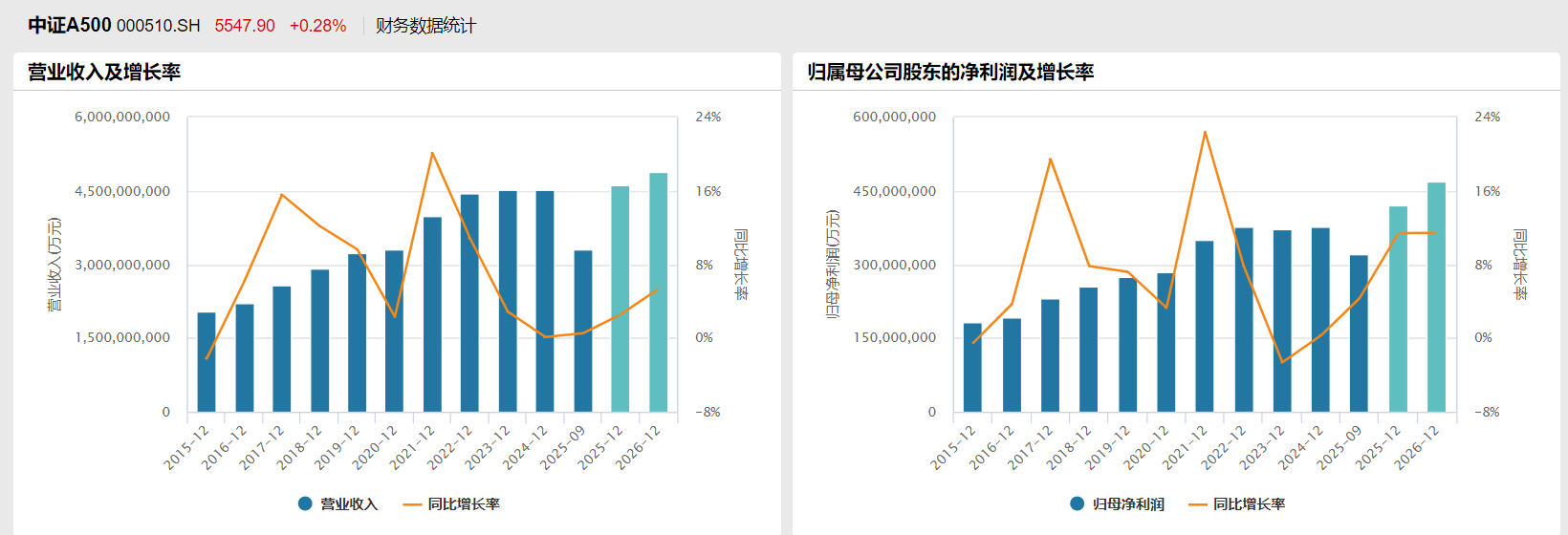
Group 1 - The recent active performance of the CSI A500-related ETFs and AI-related ETFs indicates a trend of institutional reallocation towards these assets as the year-end approaches, with the total scale of CSI A500 ETFs surpassing 200 billion yuan and the first batch of innovation-driven AI ETFs raising over 30 billion yuan during the issuance period [1][2] - The shift in development philosophy emphasizes both "Chinese economy" and "Chinese people's economy," indicating a transformation in development goals from focusing solely on domestic production scale to also considering the global income capabilities of citizens and enterprises [1][3][4] - The CSI A500 index reflects the globalization capabilities of Chinese enterprises, with nearly 70% of its constituent companies engaged in overseas business and over 40% of these companies deriving more than 20% of their revenue from abroad, showcasing a robust long-term performance [1][4][5] Group 2 - The combination of the CSI A500 and AI investments provides a complementary logic, where AI technology breakthroughs require global markets for validation and amplification, while the globalization of Chinese enterprises needs technological innovation to enhance competitiveness [2] - The CSI A500 index serves as a key tool for observing and investing in the transformation of Chinese enterprises from "world factory" to "global enterprises," focusing on their ability to integrate into global value chains and enhance their competitive positions [4][8] - The average overseas revenue growth rate of CSI A500 constituent stocks over the past five years reached 14.3%, outpacing the domestic revenue growth rate of 11.7%, indicating an acceleration in the expansion of Chinese enterprises in global markets [5][9] Group 3 - The AI sector is characterized by a significant divergence in stock performance, with some companies experiencing price corrections exceeding 40% due to a lack of core technological support, while leading firms with robust infrastructure and high-end chips continue to reach new highs [10][11] - The global AI market is projected to reach 500 billion dollars by 2027, with a compound annual growth rate exceeding 26%, driven by policy incentives, capital influx, and technological breakthroughs in China [14] - The main AI-related indices in the market exhibit distinct positioning, with the CS AI index covering the entire market, while others focus on specific sectors such as semiconductor and communication equipment, providing various investment tools for capturing opportunities in the AI industry [15][16] Group 4 - The top ten constituent stocks of the AI indices show significant differences in weightings, reflecting the varying focuses of each index, with the CS AI index heavily weighted towards semiconductor and computing sectors, while the innovation-driven AI indices emphasize communication equipment and software applications [18] - The E Fund AI ETF (159819) has surpassed 23 billion yuan in scale, with a three-year growth rate of 117.31%, making it the largest product tracking the CS AI index, while new AI ETFs have been launched to further enrich the product matrix for investors [19]
中央经济工作会议前瞻
GOLDEN SUN SECURITIES· 2025-11-30 07:33
Group 1: Economic Outlook - The December Politburo meeting will set the policy direction for 2026, emphasizing the importance of the "14th Five-Year Plan" and a GDP target of around 5%[1][5] - Economic performance in 2023 is expected to show resilience, with positive factors accumulating, but risks and challenges remain[3][4] - The overall policy tone for 2026 is anticipated to be proactive, expansionary, and stimulative, continuing to emphasize the significance of economic work[4][5] Group 2: Policy Implementation - There will be a strong focus on implementing policies effectively and mobilizing all parties' enthusiasm, particularly in the context of the "14th Five-Year Plan"[6] - Key areas of focus include strengthening industries, expanding domestic demand, and leveraging central government support through monetary and fiscal policies[7][10] - The fiscal deficit for 2026 is projected to be around 4%, with special bonds expected to reach 5 trillion yuan, up from 4.4 trillion yuan in 2025[7][16] Group 3: Monetary and Fiscal Policies - Monetary policy is expected to remain accommodative, with potential interest rate cuts of 50-100 basis points and reserve requirement ratio reductions of 1-2 times in 2026[7][16] - Fiscal policy will prioritize "investment in people" alongside traditional infrastructure investments, with total fiscal expenditure projected to reach approximately 43 trillion yuan, an increase of about 1 trillion yuan from 2025[7][16] - Consumer spending is targeted to increase, with a focus on service consumption and a potential continuation of the "old-for-new" policy, maintaining a budget of at least 300 billion yuan for 2026[9][16]
11月还没结束,中国经济巨变,出现三个反常现象,风向真的变了!
Sou Hu Cai Jing· 2025-11-18 16:11
Economic Trends - The current economic landscape in China is characterized by a significant increase in household savings, with total RMB deposits reaching 325.55 trillion, a year-on-year growth of 8%, and household deposits alone increasing by 11.39 trillion in October [2] - The phenomenon of citizens purchasing government bonds has intensified, with some bonds selling out within minutes of release, indicating a shift in consumer behavior towards saving rather than spending [4] Consumer Behavior Changes - There is a notable shift in attitudes towards luxury goods, with brands like Burberry and Coach experiencing sales growth exceeding 30%, despite a general trend of increased savings [6] - The luxury market is adapting by implementing stricter quality checks and offering discounts to boost sales, reflecting a change in consumer expectations and market dynamics [7][8] Automotive Market Dynamics - Sales of imported luxury vehicles such as Mercedes-Benz and Audi have declined, while domestic brands like BYD and Geely are gaining market share, indicating a shift in consumer preferences towards local products [9] Brand Perception and Global Influence - The transition from a focus on GDP growth to a more consumer-centric economy highlights the rising influence of Chinese brands globally, with a growing confidence among consumers in domestic products [11] - Chinese brands are increasingly recognized for their quality and innovation, with companies like Huawei and Xiaomi making significant inroads in international markets, showcasing the evolution of "Made in China" to a brand-driven economy [13][15]