
国内需求

Search documents
2025年我国批发和零售业增加值同比增长5.0%
Jing Ji Guan Cha Wang· 2026-01-23 12:36
Core Viewpoint - The wholesale and retail industry in China is projected to achieve a value-added output of 14.6 trillion yuan in 2025, marking a year-on-year growth of 5.0%, which is a historical high [1] Group 1: Industry Growth - The wholesale and retail sector is experiencing a positive growth momentum, contributing significantly to the expansion of domestic demand and the establishment of a robust domestic market [1] - Retail sales from warehouse membership stores and unmanned stores are maintaining double-digit growth [1]
2025年摩经济形势总体向好,贸易赤字进一步扩大
Shang Wu Bu Wang Zhan· 2025-12-30 10:46
Core Insights - Morocco's economy is projected to close 2025 with strong domestic demand, ongoing investment activities, and an expanding trade deficit [1] Economic Performance - Household consumption remains robust, with a low inflation rate of -0.3% as of November [1] - Remittances from overseas Moroccans have increased, contributing to rising consumer credit [1] - The third quarter saw the creation of 220,000 new jobs [1] - Government investment spending has increased, with equipment spending growing by 16.9% as of the end of November [1] - Foreign direct investment has improved, with investment amounts increasing by 28.2% as of the end of October [1] Sectoral Developments - Agricultural production is expected to benefit from favorable climate conditions for the 2025-2026 season, with dam water storage reaching 34.7% as of December 24 [1] - Agricultural exports increased by 7.3% as of the end of October [1] - Industrial activity shows mixed performance, with manufacturing output growing by 2.2% and mining increasing by 7.4% in the third quarter [1] - Electricity generation rose by 6.1% and cement sales increased by 10.6% as of the end of November [1] - The service sector continues to strengthen, with inbound tourism reaching 18 million visitors, a 14% year-on-year increase, and tourism revenue growing by 16.7% [1] Trade Dynamics - Despite positive domestic conditions, the trade deficit is under increasing pressure, with exports growing by 2.6% as of the end of October [2] - Key export sectors include phosphates and derivatives (up 16.7%), aerospace products (up 8.3%), and agricultural products and food (up 1.1%) [2] - Imports increased by 9.4%, with a notable decline in energy imports by 4.4% [2] - The trade deficit expanded by 19.6%, with the export coverage ratio dropping to 56.5% [2] - Foreign exchange reserves are sufficient to cover 5 months and 21 days of import needs [2]
CGTN: How does China set tone for economic work in 2026?
Prnewswire· 2025-12-12 04:16
Economic Agenda for 2026 - China's 2026 economic agenda emphasizes strengthening domestic demand, advancing innovation, and deepening high-level opening up, indicating renewed confidence for global development [1][3] - The annual Central Economic Work Conference serves as a compass for China's economic trajectory, with President Xi Jinping reviewing 2025's performance and outlining priorities for 2026, the first year of the 15th Five-Year Plan [2] Domestic Demand as Growth Engine - Increasing domestic consumption is identified as the main economic priority for 2026, with specific actions planned to boost spending and optimize policies to unlock service consumption potential [4] - In 2025, final consumption expenditure contributed 53.5% to GDP growth, a nine percentage point increase from the previous year, with retail sales of consumer goods exceeding 40 trillion yuan ($5.7 trillion), reflecting a 4.3% year-over-year increase [5][6] Innovation as a Growth Driver - Innovation is set to be a key driver of development, with plans to establish international innovation hubs in key regions and policies aimed at boosting enterprise-led innovation and strengthening intellectual property protection [7] - China ranked in the top 10 of the 2025 Global Innovation Index for the first time, with its high-tech sector projected to grow from 14.3% of GDP in 2023 to nearly 19% by 2026 [8] Opening Up for Global Certainty - The conference reaffirmed China's commitment to expanding institutional and autonomous opening in the services sector, optimizing free trade zones, and advancing the Hainan Free Trade Port [9] - From January to November 2025, China's foreign trade totaled 41.21 trillion yuan, reflecting a 3.6% increase from the previous year, demonstrating resilience despite global challenges [9] Global Perception of China's Economic Policies - A CGTN global survey indicated that 86.7% of respondents believe China's efforts to boost domestic consumption will create significant opportunities for international companies, while 89.1% believe the expansion of opening-up will generate broader development opportunities worldwide [10][11]


西太平洋银行:预计澳大利亚三季度GDP增速加快,国内需求将创2012年以来最强
Sou Hu Cai Jing· 2025-11-28 06:05
Core Insights - Westpac Bank anticipates a significant enhancement in Australia's economic growth momentum in Q3, with GDP expected to increase by 0.8% quarter-on-quarter and an annualized growth rate rising to 2.3%, slightly above the Reserve Bank of Australia's latest forecast of 2.0% [1] Economic Performance - The standout feature of the data is the strong performance of domestic demand, which is projected to surge by 1.5% quarter-on-quarter in Q3, marking the strongest quarterly growth since early 2012 [1] - The economic recovery is becoming increasingly broad-based, supported by multiple sectors rather than relying on individual areas for growth [1] Future Outlook - As the impact of exceptionally large capital expenditure projects, particularly aircraft purchases, gradually diminishes, overall economic growth rates are expected to slow in the coming quarters [1] - However, excluding these one-off factors, the underlying growth rate for the quarter is still projected to remain at a healthy level of 0.6%, indicating inherent economic resilience [1] Productivity and Labor Costs - A significant rebound in productivity is anticipated, with an annual increase of 0.9%, which will help slow the growth rate of nominal unit labor costs to approximately 2.5% (on a six-month annualized basis) [1] - This development is seen as a positive signal for the Reserve Bank of Australia as it weighs inflation prospects [1]

宏观点评:10月国内需求表现如何?-20251116
Bank of China Securities· 2025-11-16 11:49
Economic Performance - In October, the new social financing scale was 816.1 billion yuan, a decrease of 595.9 billion yuan compared to the same period last year[1] - Government bond financing fell due to the overall fiscal financing rhythm, with the first three quarters' issuance at 9,408 billion yuan, up 45,281 billion yuan year-on-year, accounting for 79.3% of the annual target[1] - New RMB loans in October were 220 billion yuan, down 280 billion yuan year-on-year, indicating a recovery in corporate loan demand but a weak performance in residential loans[4] Consumption Trends - The total retail sales of consumer goods in October reached 46,291 billion yuan, growing by 2.8% year-on-year, with non-automobile retail sales increasing by 4.0%[5] - Restaurant revenue grew by 3.8% year-on-year, accelerating by 2.9 percentage points compared to September, contributing 0.4 percentage points to the overall retail sales growth[5] - Automobile and online goods retail sales fell by 4.4% and 1.2% respectively, dragging down the overall retail sales growth by 0.4 and 0.3 percentage points[5] Investment Insights - From January to October, fixed asset investment decreased by 1.7% year-on-year, with real estate investment down 14.7%, further expanding the decline by 0.8 percentage points[10] - Manufacturing and infrastructure investments showed positive growth at 2.7% and 1.5% respectively, but both slowed down compared to the previous three quarters[10] - Key sectors contributing positively to fixed asset investment included textiles (1.7%), food processing (1.4%), and beverage manufacturing (1.1%) for the same period[13]
关于社零、投资、物价,国家统计局最新回应!
券商中国· 2025-11-14 09:39
Economic Overview - The national economy is maintaining a stable and progressive development trend, with production supply remaining stable, employment overall stable, and prices showing improvement [1][4] Consumption and Investment - In October, the total retail sales of consumer goods increased by 2.9% year-on-year, exceeding market expectations, with notable sales growth in upgraded products such as communication equipment and cultural office supplies [2][3] - Despite a slowdown in fixed asset investment growth, the physical workload of investments is increasing, and manufacturing investment continues to grow, indicating an ongoing optimization of investment structure [2][5] Price Trends - The Consumer Price Index (CPI) showed positive changes in October, with a month-on-month increase of 0.2% and a year-on-year increase of 0.2%, reversing the previous month's decline [7] - The Producer Price Index (PPI) also exhibited positive changes, with a month-on-month increase for the first time in October, driven by seasonal demand and rising international metal prices [8] Employment and Structural Changes - The employment situation remains generally stable, and there is a continuous trend of transformation and upgrading in various sectors [4][6] - The investment structure is optimizing, with traditional manufacturing undergoing upgrades and new manufacturing sectors expanding, supporting overall investment growth [5][6]
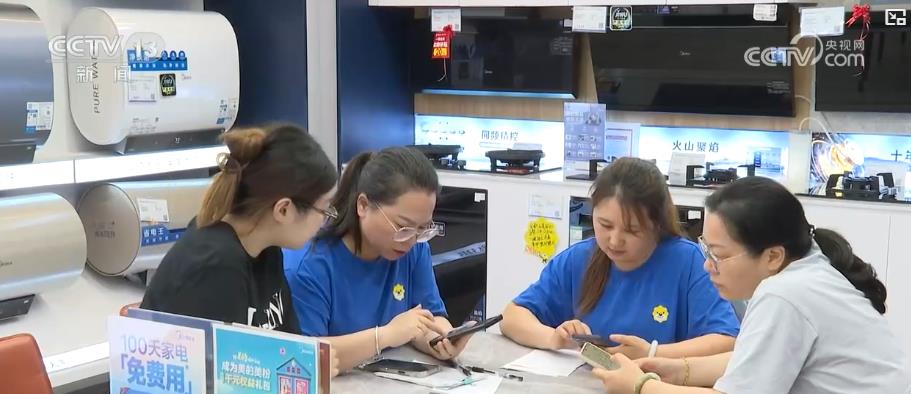
前三季度批发和零售业增加值同比增5.6% 多元业态与城乡市场齐增长
Yang Shi Wang· 2025-10-27 09:05
Core Viewpoint - The wholesale and retail industry in China has shown a positive trend with a year-on-year growth of 5.6% in value added from January to September, supporting the expansion of domestic demand and strengthening the domestic circulation [1] Group 1: Market Performance - The urban commercial sector is performing steadily, with foot traffic and sales in 78 monitored pedestrian streets increasing by 4.3% and 4.4% year-on-year respectively [3] - The rural e-commerce market is thriving, with online retail sales in rural areas growing by 7.7% and agricultural product online sales increasing by 9.6% year-on-year [3] Group 2: Profitability and Business Dynamics - The profit of key monitored commodity markets in the wholesale and retail sector has increased by 8.2% year-on-year [4] - The industrial consumer goods and production materials markets have seen profit growth of 17.9% and 6.4% respectively [4] - Emerging retail formats such as convenience stores, specialty stores, warehouse membership stores, and unmanned stores are experiencing double-digit growth in sales [4]
21社论丨发力国内需求,巩固经济回升向好势头
21世纪经济报道· 2025-08-16 03:56
Economic Overview - The national economy shows a steady development trend, with a need for macro policies to effectively release domestic demand potential and promote dual circulation [1][2] - In July, exports increased by 7.2% year-on-year, surpassing the previous value of 5.9%, while social retail sales grew by 3.7%, down from 4.8% in June [1][2] - Fixed asset investment from January to July grew by 1.6%, a decline of 1.2 percentage points compared to the first half of the year, with manufacturing, infrastructure, and real estate investments showing a slowdown [1][2] Industrial Performance - In July, the industrial added value for large-scale enterprises increased by 5.7% year-on-year, lower than the previous value of 6.8%, influenced by slowing investment and consumption growth [2] - The producer price index for industrial producers fell by 0.2% month-on-month, with a year-on-year decrease of 3.6% [2] Consumption and Policy Measures - Starting in August, measures to expand consumption include the introduction of childcare subsidies and the exemption of certain education fees, aimed at boosting consumer spending [3][4] - The third batch of 690 billion yuan in central fiscal consumption subsidies will be implemented, with a fourth batch expected to continue until the end of the year, supporting retail growth [2][3] Challenges and Future Outlook - The real estate sector and local infrastructure investment present ongoing challenges, requiring time to address accumulated issues [3][4] - Short-term factors such as extreme weather and adjustments in consumption subsidies have impacted July's economic data, but the introduction of macroeconomic policies in August is expected to promote effective investment and enhance domestic demand [4]

21社论丨发力国内需求,巩固经济回升向好势头
2 1 Shi Ji Jing Ji Bao Dao· 2025-08-15 22:35
Economic Overview - The national economy shows a steady development trend, requiring continued macro policy support to effectively release domestic demand potential and promote a stable and healthy economic development [1][2] - In July, exports increased by 7.2% year-on-year, surpassing the previous value of 5.9%, while social retail sales grew by 3.7%, lower than June's 4.8% and May's 6.4% [1] Consumption and Retail - Retail sales of consumer goods grew by 4.0% year-on-year in July, down from 5.3% previously, with significant growth in home appliances (28.7%), furniture (20.6%), communication equipment (14.9%), and cultural office supplies (13.8%) [1] - The restaurant sector showed weak performance, with growth of only 1.1% in July compared to 5.9% in May [1] Investment Trends - Fixed asset investment increased by 1.6% year-on-year from January to July, a decline of 1.2 percentage points compared to the first half of the year, with manufacturing, infrastructure, and real estate investments all showing a slowdown [1] - Manufacturing investment has decreased, while infrastructure projects, particularly "two heavy" projects, are expected to gain momentum in the second half of the year [1][3] Industrial Production - In July, the industrial added value for large-scale industries grew by 5.7% year-on-year, down from 6.8% previously, influenced by slowing investment and consumption growth [2] - Producer prices for industrial products fell by 0.2% month-on-month, with a year-on-year decline of 3.6% [2] Policy Measures - Starting in August, measures to expand consumption include the introduction of childcare subsidies and the exemption of fees for public kindergarten education for certain age groups [3] - The government is also encouraging service consumption through fiscal interest subsidies for personal consumption loans and service industry loans [3] Challenges and Outlook - The real estate sector and local infrastructure investment present ongoing challenges, requiring time to address accumulated issues [3] - Short-term factors such as extreme weather and adjustments in consumption subsidies have impacted July's economic data, but upcoming macroeconomic policies are expected to promote effective investment and release domestic demand potential [3]
发力国内需求,巩固经济回升向好势头
2 1 Shi Ji Jing Ji Bao Dao· 2025-08-15 22:08
Economic Overview - The national economy shows a steady development trend, requiring continued macro policy support to effectively release domestic demand potential and promote a stable and healthy economic development [1][2] Export and Consumption - In July, exports increased by 7.2% year-on-year, surpassing the previous value of 5.9% [1] - Social retail sales grew by 3.7% year-on-year in July, down from 4.8% in June and 6.4% in May, with retail sales of goods increasing by 4.0%, lower than the previous value of 5.3% [1] - The consumption upgrade policy continues to show effects, with significant growth in retail sales of home appliances (28.7%), furniture (20.6%), communication equipment (14.9%), and cultural office supplies (13.8%) [1] Fixed Asset Investment - From January to July, fixed asset investment increased by 1.6% year-on-year, a decline of 1.2 percentage points compared to the first half of the year [1] - Investment growth in manufacturing, infrastructure, and real estate showed a downward trend, decreasing by 1.3%, 1.4%, and 0.8% respectively [1] Industrial Production - In July, the industrial added value above designated size grew by 5.7% year-on-year, lower than the previous value of 6.8% [2] - The producer price index for industrial producers decreased by 0.2% month-on-month, with a year-on-year decline of 3.6% [2] Policy Measures - Starting in August, the government will implement measures to expand consumption, including childcare subsidies and the exemption of certain fees for public kindergartens [3] - The government aims to accelerate infrastructure investment and improve the efficiency of fund utilization through the issuance of government bonds [3] Short-term Influences - July's economic data was affected by short-term factors such as extreme weather and adjustments in consumption subsidies [3] - The introduction of macroeconomic policies in August is expected to promote effective investment and release domestic demand potential [3]