
全国统一大市场建设

Search documents
摒弃低价无序竞争 促进高质量发展——银行业积极投身全国统一大市场建设
Zheng Quan Ri Bao Zhi Sheng· 2025-07-13 16:18
Core Viewpoint - The recent Central Financial Committee meeting emphasized the need to advance the construction of a unified national market, with banks playing a crucial role in supporting enterprises to move away from low-price competition and enhance product quality [1] Financial Precision Empowerment - Low-price competition is a persistent issue hindering the development of certain industries in China, leading to profit sacrifices and quality declines [1] - Banks are optimizing credit resource allocation to guide enterprises towards investing in technological innovation and product upgrades, exemplified by the "Certification Loan" product from Bank of China, which links credit limits to quality certification results [2] - As of May, the Bank of China’s Luoyang branch provided 66.5 billion yuan in credit support to nearly 10,000 private enterprises, with over 30% of the funds directed towards certified quality enterprises [2] - Banks are also utilizing supply chain financial services to help core enterprises enhance supply chain stability and efficiency while providing financing support to upstream and downstream SMEs [2] - Differentiated credit policies are recommended, where banks could raise credit approval thresholds for companies relying on low-price competition while offering favorable terms to those focusing on innovation and quality [2][3] Promoting Industrial Upgrading - Product quality is vital for enterprise development and is a key support for the construction of a unified national market [4] - In Chongqing, the Bank of China provided 4.5 million yuan in loans to two processing enterprises in the local food industry to upgrade equipment and optimize processes, resulting in a 30% improvement in product uniformity [4] - The banking sector is supporting green transformation through green credit and bonds, aiding enterprises in energy conservation and resource recycling projects [4][5] - Collaboration with industry associations and research institutions is being pursued to provide technical support and consulting services to enterprises [4] Quality Improvement Initiatives - Banks are encouraged to provide long-term stable funding for quality improvement projects, addressing financial bottlenecks for enterprises [5] - Partnerships with quality testing and certification agencies are suggested to offer one-stop services for enterprises to enhance product quality [5] - Development of green financial products is essential, with banks urged to issue green bonds and optimize green credit systems to support projects in energy conservation and resource recycling [5]
建设全国统一大市场 银行业“挑大梁”才是担当
Zheng Quan Ri Bao· 2025-07-13 15:44
Core Viewpoint - The recent Central Financial Committee meeting emphasized the importance of advancing the construction of a unified national market, proposing the basic requirements of "five unifications and one openness" [1] Group 1: Unified Market Construction - The five unifications include: unified market basic systems, unified market infrastructure, unified government behavior standards, unified market regulatory enforcement, and unified factor resource markets [1] - The banking sector plays a crucial role in this unified market construction, particularly in areas such as property rights protection and market access [1] Group 2: Role of Banking Sector - Banks are expected to enhance financial technology investments and upgrade payment and clearing systems to ensure fast and secure online and offline payments [1] - The banking industry should actively participate in promoting the cross-border payment system for the renminbi, facilitating convenient settlement services for foreign trade enterprises [1] Group 3: Risk Management and Compliance - Banks should internalize regulatory requirements into institutional processes, establishing a collaborative mechanism for risk management, internal control, and internal audit [2] - There is a need for banks to conduct compliance reviews throughout the entire business process to prevent risks from the source [2] Group 4: Resource Allocation and Innovation - The unification of factor resource markets is essential for better resource aggregation and innovation encouragement, with banks acting as core resource allocators [2] - Banks should provide diversified credit products to support strategic emerging industries, technological innovation, and the transformation of traditional industries [2] Group 5: Expanding Openness - Continuous expansion of both domestic and international openness will leverage China's large-scale market advantages and contribute to the construction of a unified national market [2] - Banks should lower financing thresholds for domestic enterprises and enhance international service capabilities to support enterprises in going global [2]
沸腾了!引爆市场
Zhong Guo Ji Jin Bao· 2025-07-13 12:45
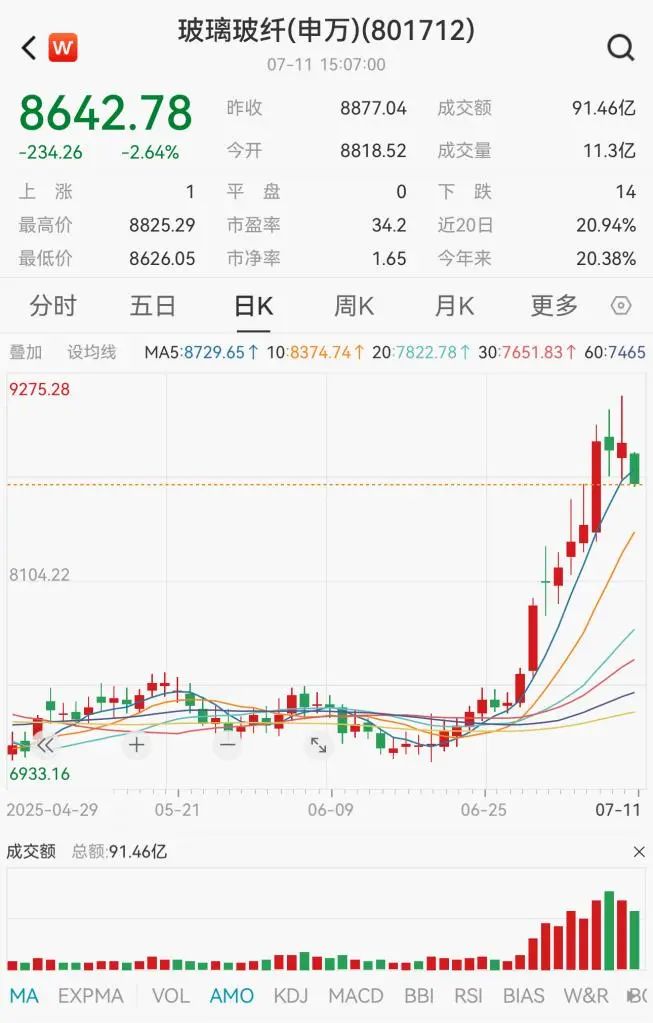
Core Viewpoint - The recent "anti-involution" policies in China aim to construct a unified national market, improve product quality, and promote high-quality economic development, with a focus on addressing low-price and disorderly competition [1] Market Performance - Since the announcement of "anti-involution" policies on July 1, the Shenyin Wanguo Glass Fiber sector has seen a cumulative increase of 14.2%, while the Shenyin Wanguo Steel and Photovoltaic Equipment sectors have risen by 11.36% and 9.73% respectively [1] Economic Implications - Comprehensive governance of "involution" is expected to enhance overall productivity by correcting low-price competition and overcapacity, thereby preventing "bad money from driving out good" [7] - The policies are anticipated to accelerate industry consolidation and improve corporate profit expectations, particularly in sectors like steel and cement [7][8] - The construction of a unified market is expected to reduce cross-regional transaction costs and stimulate domestic demand [7] Capital Market Impact - The governance of "involution" is likely to lead to the accelerated exit of outdated capacities, enhancing the market share and pricing power of leading companies, thus stabilizing profitability [8] - The "anti-involution" trend is seen as a long-term process that will create systematic investment opportunities as industry concentration increases [10] Sectoral Opportunities - Industries such as photovoltaic, new energy vehicles, steel, and cement are expected to benefit from the "anti-involution" policies [12] - In the photovoltaic supply chain, leading companies in silicon materials and glass are likely to benefit from price stabilization and capacity exit [12] - Traditional industries like steel and cement may see improved profitability through production limits and price stabilization [12][13] Investment Focus - Investors are advised to focus on sectors with real capacity exits and technological upgrades, avoiding speculative investments in companies without actual production cuts [13] - Key areas for investment include supply-demand optimization in steel and cement, technology barriers in photovoltaic and lithium battery sectors, and cost advantages in industries like pig farming [12][13]

沸腾了!引爆市场
中国基金报· 2025-07-13 12:37
Core Viewpoint - The article discusses the significance of the "anti-involution" policy in promoting high-quality economic development and the construction of a unified national market in China, emphasizing the need to address low-price disorderly competition and improve product quality [2][10]. Market Performance - Since the announcement of the "anti-involution" policies on July 1, the Shenyin Wanguo Glass Fiber sector has seen a cumulative increase of 14.2%, while the Shenyin Wanguo Steel and Photovoltaic Equipment sectors have risen by 11.36% and 9.73%, respectively [2]. Economic and Market Implications - Comprehensive governance of "involution" is expected to enhance overall productivity by correcting low-price competition and overcapacity, thereby preventing "bad money from driving out good" [10]. - The policy is anticipated to accelerate industry consolidation and improve corporate profit expectations, particularly in sectors like steel and cement [10]. - The construction of a unified market is expected to reduce cross-regional transaction costs and stimulate domestic demand [10]. Industry Beneficiaries - Industries likely to benefit from the "anti-involution" policies include photovoltaic, new energy vehicles, steel, and cement [16][18]. - In the photovoltaic supply chain, leading companies in silicon materials and glass are expected to benefit from price stabilization and capacity clearance [16]. - In the new energy vehicle sector, leading manufacturers are likely to restore profitability through production control and price stabilization [16]. Market Dynamics and Sustainability - The sustainability of the "anti-involution" market rally is contingent on demand-side support, with short-term market reactions driven by policy-induced supply reductions [13][14]. - Traditional industries like steel and coal are expected to see basic support for their market performance due to clear capacity constraints [14]. - The performance of related sectors will exhibit differentiation, with traditional industries benefiting from actual capacity reductions, while technology-intensive sectors will need to focus on innovation and efficiency [14][17]. Long-term Opportunities - Key opportunities include supply-demand optimization in sectors like steel and cement, technology barriers in photovoltaic and lithium battery sectors, and cost advantages in industries like pig farming [17]. - Companies with the ability to set technical standards within their supply chains are expected to achieve excess returns, highlighting the importance of long-term structural changes in the industry [17].

宏观周报:整治企业内卷式竞争-20250713
KAIYUAN SECURITIES· 2025-07-13 08:44
Economic Growth - The Central Financial Committee emphasized the need to deepen the construction of a unified national market and regulate "involution" competition among enterprises[3] - President Xi Jinping highlighted the importance of guiding enterprises to improve product quality and promoting the orderly exit of backward production capacity[3] - The State Council issued a notice to enhance employment support policies, including expanding special loans and increasing unemployment insurance return ratios[3] Infrastructure and Industry Policies - The China Cement Association released guidelines to promote "anti-involution" and "stable growth" in the cement industry, with many industries issuing production reduction notices[4] - A collective production cut of 30% was announced by leading photovoltaic glass companies to alleviate "involution" competition[4] - Some steel mills have received notices for production reduction and emission limits[4] Consumer Policies - Shanghai optimized the environment for outbound tax refunds, and Taobao launched a 50 billion RMB subsidy for consumer vouchers to stimulate consumption[4][16] - The initiative by Taobao is expected to benefit more small and medium-sized businesses and stimulate greater consumption[16] Financial Regulation - Recent financial regulatory policies focus on optimizing capital market mechanisms and exploring the development of RMB stablecoins in Shanghai and Hong Kong[19] - The government aims to guide insurance companies towards long-term stable investments[19] Trade Policies - The U.S. has lifted certain trade restrictions on China, including the requirement for government licenses for major chip design software suppliers[5][22] - The U.S. plans to implement new tariffs ranging from 10% to 70% on countries without trade agreements starting August 1[6][25] Overseas Macro Policies - The U.S. Federal Reserve members largely expect another interest rate cut later this year, with the "Big Beautiful Act" extending tax cuts set to expire in 2025, potentially increasing the fiscal deficit by 3 to 4 trillion USD over the next decade[6][25] - The U.S. Treasury plans to increase its cash reserves significantly, from approximately 313 billion USD to 500 billion USD by the end of July[27]



政策高频 | 中央财经委员会第六次会议召开(申万宏观·赵伟团队)
赵伟宏观探索· 2025-07-13 03:33
Group 1 - The Central Economic Committee emphasized the need to deepen the construction of a unified national market and promote high-quality development of the marine economy, focusing on legal governance of low-price competition and enhancing market systems [1][2] - The People's Bank of China proposed to strengthen monetary policy adjustments, maintain liquidity, and support financial institutions in increasing credit supply to stabilize economic growth [4][5] - The State Council issued a plan to improve the credit repair system, aiming to create a better social credit environment and facilitate the normal operation of restructured enterprises [6][7] Group 2 - The State Council highlighted the importance of accelerating technological breakthroughs and integrating technological innovation with industrial innovation to enhance competitiveness [8][9] - The National People's Congress Finance and Economic Committee reviewed the 2024 central budget, identifying issues in budget management and suggesting reforms to enhance fiscal policy effectiveness [11][12]
兴农评丨我们为何在意全国能否吃上新鲜荔枝
Nan Fang Nong Cun Bao· 2025-07-13 02:31
Core Viewpoint - The article emphasizes the importance of ensuring that fresh lychees are available nationwide, highlighting the cultural and economic significance of this fruit in China, particularly in Guangdong province [10][24]. Group 1: Cultural Significance - Fresh lychee is a summer delicacy that has sparked discussions among netizens, reflecting a deep-seated desire for access to this fruit across the country [4][5]. - Guangdong residents have a strong attachment to fresh lychee, not only wanting to enjoy it themselves but also wishing for others nationwide to experience it [8][10]. Group 2: Technological Advancements - Advances in planting and preservation technologies have allowed for the successful distribution of lychees across China and even globally, overcoming previous challenges in freshness [16][17]. - New varieties and preservation techniques, such as the "frozen dormancy" method, have been developed to extend the shelf life of lychees, achieving freshness retention for up to 35 days [16][17]. Group 3: Economic Implications - The push to market lychees nationwide represents a significant business opportunity for Guangdong, as it aims to enhance the distribution of local agricultural products [15][22]. - The successful model of lychee distribution can be replicated for other regional products, potentially strengthening the domestic market and promoting a unified national market [20][22]. Group 4: Broader Impact - Ensuring access to fresh lychees is not just about consumer satisfaction; it also reflects the hard work of farmers and the effectiveness of agricultural modernization driven by technological innovation [24][25]. - The efficient operation of national infrastructure is highlighted as a key factor in the successful distribution of agricultural products, contributing to the overall economic stability [25][26].

第七届中国粮食交易大会开幕
news flash· 2025-07-12 07:50
Core Points - The 7th China Grain Trade Conference opened in Shenyang, Liaoning Province, with over 4,000 enterprises and more than 20,000 industry personnel attending [1] - The conference focuses on grain circulation and aims to facilitate exchanges in products, technology, and services across the entire grain industry chain [1] - The event serves as a platform for enterprises to innovate and collaborate, contributing to the improvement of grain circulation quality and efficiency, and supporting the deepening of the national unified market construction [1]
申万宏观·周度研究成果(7.5-7.11)
申万宏源宏观· 2025-07-12 04:03
Group 1: Key Insights - The "One Big Beautiful Bill Act" signed by Trump on July 4, 2025, raises the debt ceiling and increases the deficit rate, legalizing "Trump economics" [7] - The act is projected to impact the nominal GDP of the year at $29.2 trillion, with a 10-year deficit effect of $3.9 trillion, accounting for 13% of the GDP [7] - The act's economic effects and potential to reignite "U.S. debt panic" are under scrutiny [7] Group 2: Inflation and Economic Trends - June inflation data shows a CPI of 0.1% year-on-year, with PPI at -3.6%, indicating a divergence in inflation trends [16] - The U.S. is shifting from equal tariffs to "discriminatory tariffs," with new tariffs set to take effect on August 1, 2025 [19] - Domestic travel intensity remains high, reflecting robust consumer activity [21] Group 3: Policy Developments - The Central Financial Committee's sixth meeting emphasized the need for orderly exit of outdated production capacity and regulation of low-price competition among enterprises [29] - The meeting also highlighted the importance of promoting high-quality development in the marine economy and enhancing marine ecological protection [29]

省委常委会召开会议认真学习贯彻习近平总书记重要讲话重要指示精神研究进一步做好红色教育、融入全国统一大市场建设、海洋经济高质量发展和审计监督等工作黄坤明主持会议
Nan Fang Ri Bao Wang Luo Ban· 2025-07-12 00:59
Group 1 - The meeting emphasized the importance of studying and implementing Xi Jinping's important speeches and directives, particularly regarding high-quality development and modernization efforts in Guangdong [2][3] - The need to enhance cooperation between Guangdong and Shanxi provinces was highlighted, focusing on energy resources and cultural tourism to strengthen economic ties [2][3] - The meeting called for a comprehensive approach to integrate into the national unified market, promoting both domestic and foreign trade [3] Group 2 - The meeting underscored the significance of auditing work, aiming to enhance the quality of audit supervision and ensure compliance with major policies and investment projects [4] - There is a focus on improving the effectiveness of audit supervision to safeguard the stable and healthy development of the economy and society [4] - The meeting discussed the necessity of addressing audit rectification responsibilities to enhance institutional improvements and mitigate risks [4]