
供给侧改革

Search documents
泰州市服务业一季度保持稳健向好态势
Sou Hu Cai Jing· 2025-05-26 23:10
Group 1: Economic Performance - In the first quarter, the service industry in Taizhou achieved a value-added of 964.8 billion yuan, with a year-on-year growth of 7.3%, accounting for 52.1% of GDP and contributing 62.3% to economic growth, driving GDP growth by 3.7 percentage points [1] - The total retail sales of social consumer goods reached 538.77 billion yuan, with a year-on-year growth of 7%, ranking fifth in the province [3] Group 2: Logistics and Financial Sector - Taizhou Port's cargo throughput reached 105 million tons, and container throughput was 111,000 TEUs, with a year-on-year growth of 4.3% [2] - The balance of loans from financial institutions in Taizhou increased by 13.3% year-on-year, ranking second in the province, with loan interest rates hitting historical lows [2] Group 3: Policy and Project Development - Taizhou is advancing key projects, including a 2 billion yuan investment in a national grain logistics core hub, expected to increase grain throughput by 5.9 million tons and generate over 1 billion yuan in tax revenue [4] - A total of 22 projects in Taizhou were selected as key provincial service industry projects, with a planned total investment of 290.8 billion yuan [4] Group 4: Future Development Strategy - Taizhou aims to enhance the modern service industry by integrating it with advanced manufacturing, focusing on urban characteristics, and increasing the influence of the "Taizhou Service" brand, targeting a service industry value-added of over 400 billion yuan by 2027 [5]
生育支持政策进入强效实施阶段,政策组合拳呈现力度与创新双突破
Mei Ri Jing Ji Xin Wen· 2025-05-23 02:18
政府工作报告中确立"生育促进三支柱"体系(政策补贴、托育扩容、服务优化),卫健委随即启动实施 细则制定。以呼和浩特政策创新试验区为例,其多维激励体系包含现金补贴、定向消费激励(乳制品消 费券)、教育特权(择校权优化)等组合工具,多元化刺激方式有助于形成实质性减负效应。 供需结构上,2024年市场受阶段性供给过剩冲击,乳品零售价格中枢持续下移。至2025Q1,生鲜乳收 购价仍处周期低位,全产业链加速推进产能出清与结构调整。财务数据显示,乳制品板块收入同比增速 从2024年-7.88%收窄至2025Q1的-0.04%,环比回升5.8pct,构筑触底回升信号。盈利能力方面,2024年 归母净利率同比下降0.93pct至6.12%,而2025Q1净利率环比大幅修复16.3pct至11.6%(同比仍降 2.5pct),反映行业盈利质量边际改善。 消费30ETF(510630)紧密跟踪上证主要消费行业指数,涵盖白酒、食品、美容护理、生物科技等细分 板块,其中乳品含量超16%,居全市场第一。 后续来看,乳制品行业迎来"政策供给×消费升级"双向赋能的关键转折期。《中国食物与营养发展纲要 (2025-2030)》明确重点任务" ...
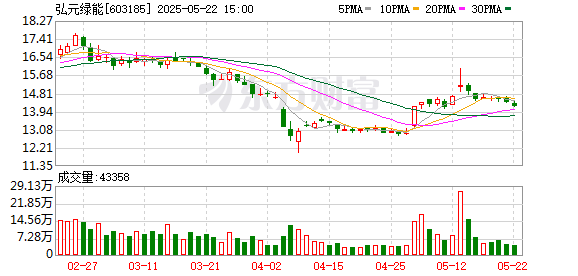
直击股东大会| 股价“折叠”,被吐槽“科技股变猪肉股”的弘元绿能回应光伏行业自律减产和重组兼并
Di Yi Cai Jing· 2025-05-22 07:30
Core Viewpoint - The company has experienced a significant decline in stock price, dropping over 90% from its historical peak, reflecting the cyclical nature of the technology sector, similar to that of the pork industry [2] Financial Performance - The company reported strong financial performance in 2021 and 2022, with a global silicon wafer shipment of 31.18 GW in 2022, ranking third globally [4][5] - In 2023, the company faced a revenue decline of 38.42% to 7.302 billion yuan and a net loss of 2.697 billion yuan, but showed signs of reduced losses in Q1 2025 with revenue of 1.657 billion yuan and a net loss of 61.8758 million yuan [7] Industry Context - The solar industry has been in a downturn for over a year and a half, with price reductions starting in Q4 2023 [7] - The company maintains a relatively low debt ratio of 58.15% in Q1 2025 compared to other integrated solar companies, which exceed 70% [7] Strategic Positioning - The company emphasizes its integrated development as a competitive advantage, allowing it to mitigate risks associated with low external sales prices by utilizing its products internally [8][10] - The company has increased its silicon material production efficiency from a designed capacity of 50,000 tons to 75,000 tons, benefiting from low production costs in Inner Mongolia [8] Market Outlook - The management expressed confidence in navigating the current downturn, stating that the company can accept breakeven or slight losses to maintain operations without risking financial stability [10] - The company is not planning to sell or participate in the restructuring of its silicon material capacity, focusing instead on self-use of its advanced production capacity [7][10]


摩根大通刘鸣镝:二季度市场区间震荡,港股在三季度有望突破
Hua Er Jie Jian Wen· 2025-05-21 13:14
作者 | 周智宇 编辑 | 张晓玲 二季度市场会"退一步进两步",若三季度贸易谈判取得实质性进展,港股有望突破当前区间。摩根大通 首席亚洲及中国股票策略师刘鸣镝在5月21日的"摩根大通全球中国峰会媒体见面会"上,就接下来的市 场走势给出如是判断。 短期来看,4月初贸易摩擦升温导致港股大幅回调,但随后市场逐步消化利空并反弹,当前处于区间震 荡。 此外,她也认为国资委及证监会对兼并重组的政策支持,有望推动材料、工业等板块的供给侧改革,这 一主题类似2016年的供给侧改革,但执行难度更大。对投资者而言,A股的机会在于从"估值博弈"转 向"盈利增长",关注具备内生扩张或并购潜力的企业,而非单纯依赖流动性驱动的中小盘标的。 刘鸣镝特别强调港股的独特优势。港股对上市公司业绩敏感度高,盈利增长明确的企业易获资金认可, 流动性虽不及A股但估值体系更趋理性;随着中概股回归及内地企业赴港上市,港股成为连接内地与全 球资本的桥梁。南下资金(港股通)交易量占比已达20%-25%,边际定价权显著提升,央行外管对港股 的政策倾斜进一步强化其地位。 此外,港股红利股对应美元资产收益,相比内地国债利率更具吸引力,成为稳健型资金的优选。 从全 ...

房企产品力进入“代际战”
3 6 Ke· 2025-05-21 02:33
何为二元"代际战"? 这种"代际领先",又让此刻还能增量拿地的头部央国企"强者恒强",进一步加剧头部房企市占率再提 升。 1,产品"代际战"开打 眼下,产品力是房企一道必答题。 但当下,房企产品力正陷入无奈的"代际战"。 即一方面是拥有新规优势的好房子高去化甚至高溢价,在全国各地热销甚至闪电售罄。而另一方面旧规 下的库存老房子无论如何卖就是卖不动,即使频频降价,也只能小量慢跑。 此刻,新规好房子PK旧规高库存,在销售上呈现出典型的"冰火两重天"割裂对立状态!此刻,全国新 规产品,正在"屠杀"、"秒杀"、"爆打"老库存产品。 老潘打个通俗的比方,新规好房子,就好像是华为苹果智能手机;老房子就好比诺基亚手机;新规好房 子,就好比是歼– 20第四代战斗机,老房子的"歼– 10"虽好却是第三代战机。 大家的差别,不是尺度差,不是功能差,而是代际之差。 更要命的是,今天新一代住宅凭借政策支持,土拍新规和市场叫座,正在全面冲击和碾压传统老旧产 品,形成"新房畅销VS旧房滞销"的无奈二元格局! "新规"虽好,但本来难销的"旧规"就更加雪上加霜了! 当然,反过来看,新规好房子叫好又叫做,也是一盘大棋。 即在今天市场下行期,光 ...
【申万宏观 | 热点思考】“反内卷”的新意?
赵伟宏观探索· 2025-05-20 16:01
Core Viewpoint - The article emphasizes the need for "anti-involution" measures in various industries due to increasing competition and supply-demand imbalances, particularly in the context of government policies aimed at fostering a more sustainable and efficient market environment [1][2][20]. Group 1: Reasons for Emphasizing "Anti-Involution" - The industrial sector in China is facing significant supply-demand imbalances, highlighted by a decline in capacity utilization and persistent negative growth in the Producer Price Index (PPI), which has been negative for 31 consecutive months as of April 2025 [2][8]. - Capacity utilization rates have dropped from 77.7% in Q3 2021 to 75.1% in Q1 2025, indicating underutilization of resources [2][8]. - Local governments are increasingly competing for investment, leading to "involution" in certain sectors, characterized by concentrated efforts in similar industries, aggressive policy competition, and a lack of sustainable project management mechanisms [2][14]. Group 2: Industries with Potential "Involution" Competition - The focus of the "anti-involution" policy is on four key industries: photovoltaic, e-commerce, automotive, and steel, with measures including industry regulations, anti-monopoly enforcement, and capacity adjustments [3][22]. - Based on data indicators, industries such as black metal smelting, electrical machinery, and non-metallic products are identified as having a high degree of "involution" competition due to low capacity utilization and negative PPI growth [4][24]. - Other industries potentially affected include coal mining, automotive manufacturing, chemical raw materials, and pharmaceutical manufacturing, which exhibit similar characteristics of "involution" [4][47]. Group 3: New Aspects of the Current "Anti-Involution" Measures - The current round of "anti-involution" emphasizes industry self-discipline and market mechanisms, contrasting with previous supply-side reforms that focused primarily on traditional heavy industries [5][49]. - There is a stronger emphasis on regional collaboration and technological upgrades, aiming to create a differentiated and complementary industrial development structure while promoting high-quality growth [6][49]. - The government aims to eliminate outdated capacity and improve inefficient production through targeted policies that leverage digital and green technologies [6][49].

专家解读民营经济促进法
2025-05-20 15:24
Summary of Key Points from the Conference Call Industry or Company Involved - The discussion revolves around the **Private Economy Promotion Law** in China, focusing on its implications for private enterprises and the overall economic environment. Core Points and Arguments - The **Private Economy Promotion Law** has been rapidly legislated, indicating the government's strong emphasis on private enterprises, aiming to provide a more stable and secure development environment for them [1][3][5] - Key amendments in the law address market issues, such as Article 24, which restricts financial institutions from unilaterally increasing loan conditions to prevent loan withdrawals; Article 52, which merges inspections to reduce arbitrary fines; and Article 53, which establishes a complaint mechanism to hold government departments accountable [1][3][4] - The law explicitly prohibits arbitrary fines and charges without legal basis, emphasizes the statute of limitations for prosecutions, and strengthens accountability measures against abuse of power in law enforcement [1][7][8] - Compared to the **Small and Medium Enterprises Promotion Law**, the Private Economy Promotion Law offers superior rights protection and clarity, particularly regarding large enterprises delaying payments to small and medium enterprises [1][8] - The law aims to protect vulnerable groups and ensure fair competition among various market entities, addressing issues of payment delays by large enterprises to smaller ones [1][10] Other Important but Possibly Overlooked Content - The share of private economy in fixed asset investment has decreased from approximately 54%-56% in 2020 to about 50% in 2024, primarily due to real estate issues; however, opening up access in various sectors could stabilize or enhance private investment [1][19] - Private enterprises are expected to perform better than anticipated in exports, with potential shifts in export directions influenced by future Sino-American relations, suggesting a possible role reversal where private enterprises may take a more prominent role in international trade [2][19][21] - The law's implementation is seen as a critical factor in enhancing the confidence and activity of private enterprises, although there are concerns about its effectiveness and the need for proper execution [11][12] - The ongoing market access negative list system is part of the measures to support private enterprises, aiming to eliminate barriers and enhance participation in various sectors [12][15] - The law's long-term goal is to enhance recognition of the private economy's role in exports, innovation, and employment, which is crucial for achieving national development goals by 2035 and 2050 [17][19]
美债危机,迫在眉睫!
2025-05-19 15:20
Summary of Key Points from Conference Call Industry and Company Involved - The discussion primarily revolves around the **U.S. Treasury and the implications of the U.S. debt crisis**. It also touches on the **impact of the Trump tax cuts** and the **potential of domestic computing power companies** in the context of globalization and economic uncertainty. Core Insights and Arguments - The **U.S. Treasury has not issued new debt**, leading to a **$2 trillion fiscal gap** that relies on the TGA account and unconventional measures. The Treasury Secretary warns that funds will be exhausted by August, necessitating a resolution before mid-July to avoid a repeat of the 2019 debt ceiling crisis [1][3] - The **Trump tax cuts** are compared to Reagan's supply-side reforms, with the assertion that their stimulative effect is weaker than direct fiscal spending. If the 2025 tax cuts lack fiscal support, it could lead to an economic downturn and potentially trigger a global financial crisis [1][4] - Three paths to alleviate the U.S. fiscal crisis are identified: **over-issuing U.S. debt, increasing tariffs, and debt default**. Each of these paths would exacerbate the debt crisis by increasing supply, reducing dollar trade volume, and lowering credit ratings, respectively [1][5] - In the current environment of increasing uncertainty, there is a recommendation to embrace **anti-fragile safe assets**, including **immediate net assets** (like gold and similar assets) and **future cash flows** from domestic computing power companies that have a certainty premium [1][6] Other Important but Possibly Overlooked Content - The **rise of de-globalization** is increasing environmental uncertainty, leading capital to seek certainty. Anti-fragile safe assets, such as gold and domestic computing power companies, are seen as more attractive due to their principal certainty and future cash flow premiums [1][7] - The focus on **AI domestic patents** is emphasized, as de-globalization makes computing chips non-tradable, thereby securing market share for domestic computing power companies and providing future cash flow certainty [2][6]
电力设备与新能源行业周报:输美锂电及储能系统或掀囤货潮,光伏供给侧困境反转见曙光
SINOLINK SECURITIES· 2025-05-19 03:00
Investment Rating - The report maintains a positive investment outlook on the photovoltaic and energy storage sectors, highlighting key companies such as Sungrow Power and Canadian Solar for continued recommendation [2][5]. Core Insights - The photovoltaic industry is transitioning from a state of excess supply to a more balanced market, driven by both policy support and self-initiated industry adjustments. The easing of US-China trade relations is expected to benefit large-scale energy storage [2][5]. - The wind power sector is witnessing significant contract wins, such as a €1 billion order for offshore wind foundations, indicating a robust pipeline for future projects [5][6]. - The electric grid sector is advancing with the integration of artificial intelligence, as outlined in the State Grid's white paper, which aims to enhance the digital transformation of the power industry [7][8]. Photovoltaic & Energy Storage - The photovoltaic sector is showing signs of recovery, with government policies aimed at addressing structural issues. The focus is shifting from forced interventions to voluntary industry cooperation [5]. - Key developments include the issuance of manufacturing standards by the Ministry of Industry and Information Technology and ongoing discussions about supply-side reforms [5]. - Companies to watch include Sungrow Power and Canadian Solar, which are expected to benefit from improved market conditions and technological advancements [5]. Wind Power - Major contracts, such as the €1 billion order from a European energy company, highlight the growth potential in the offshore wind market [5][6]. - The report anticipates nearly 20 GW of offshore wind projects to be tendered between 2025 and 2026, indicating a strong future demand for wind power infrastructure [5][6]. Electric Grid - The State Grid's white paper emphasizes the integration of AI in power production, which is expected to support the construction of a new type of power system [7][8]. - The upcoming high-voltage direct current projects are projected to commence in December 2025, reinforcing the growth trajectory of the electric grid sector [8]. New Energy Vehicles & Lithium Batteries - The report notes a decline in year-on-year growth for new energy vehicles, with a current growth rate of approximately 5%. However, a month-on-month increase of 30% indicates seasonal fluctuations are normal [3][9]. - The reduction of tariffs on lithium batteries is expected to boost exports to the US, with significant developments in solid-state battery technology being reported by companies like BETTERRY and Guoxuan High-Tech [3][11]. Hydrogen and Fuel Cells - The development of green liquid fuels is gaining momentum, with pilot projects being initiated in Jiangsu province to support the hydrogen economy [10][12]. - The report highlights the establishment of hydrogen highways, which are expected to facilitate the adoption of hydrogen vehicles and meet the goals set for the 14th Five-Year Plan [8][12].





中美关税博弈的经济逻辑与中国关键抓手!中邮证券黄付生专业解读
Sou Hu Cai Jing· 2025-05-16 05:49
Core Viewpoint - The recent joint statement from the China-US Geneva economic talks on May 12 is seen as a potential turning point in easing tensions between the two nations, with significant tariff reductions announced [1][2]. Economic Rebalancing - The joint statement indicates a notable decrease in tariffs, with China reducing tariffs on US goods from 125% to 10% within the first 90 days, while the US will lower tariffs on Chinese goods to 30% [2][3]. - A 24% tariff will be suspended for 90 days, allowing for negotiations before July [3]. US Economic Context - The US has historically maintained high tariffs, averaging around 30%, which has been a part of its economic development strategy [3]. - The current economic situation suggests that the US cannot revert to pre-April 2 conditions, with markets anticipating fiscal easing from China and tax cuts from the US [3]. US Fiscal Pressure - As of March 2025, the US national debt is projected to reach approximately $36.6 trillion, with a significant portion of low-interest bonds maturing between 2025 and 2027, leading to increased interest payments [4]. - The US government is using tariff increases as a means to alleviate fiscal pressure, with potential tariff revenues significantly exceeding current levels [4][5]. Chinese Economic Strategy - China is focusing on boosting domestic consumption, particularly in the service sector, to counteract economic pressures [9]. - The first quarter of 2023 saw a GDP growth rate of 5.4%, driven by strong exports and a gradual recovery in consumption [9]. Key Economic Drivers for 2025 - The "Two New" and "Two Heavy" initiatives are identified as critical for China's economic development in 2025, focusing on equipment upgrades and major strategic projects [10][11]. - The expected policy support for these initiatives could reach around 3 trillion yuan, with investment multipliers anticipated to be higher than in 2024 [11]. Stimulus Measures - Six potential measures to stimulate the economy include expanding fertility subsidies, injecting capital into state-owned banks, increasing consumer subsidies, advancing supply-side reforms, issuing special government bonds, and raising rural pension levels [12][13][14][15][16]. Market Outlook - The equity market is expected to enter a "long-cycle, structural bull market," with monetary policy supporting the stock market while fiscal measures are necessary for economic recovery [16]. - The bond market may face risks in the second half of the year, with a potential upward trend in yields as economic conditions stabilize [16].