新能源

Search documents
黄金大涨没赶上,白银呢?多方回应
Sou Hu Cai Jing· 2026-01-28 05:29
Core Insights - Silver has outperformed gold in the market, with silver prices rising significantly while gold has reached a historic high of $5000 per ounce [1][3]. Price Performance - Year-to-date, international gold futures have increased by over 17%, while silver has surged by 55% [2]. Market Dynamics - The current market trend has led to a substantial increase in investment in silver bars, making silver a focal point in the precious metals investment landscape, surpassing gold in attention [3]. - Factors contributing to this trend include ongoing global geopolitical risks and uncertainties in international politics, which have amplified gold's status as a safe-haven asset [3]. - The uncertainty surrounding the Federal Reserve's monetary policy and concerns about the long-term credibility of the US dollar have driven funds towards precious metals [3]. Industrial Demand - Silver's price increase is also supported by improved expectations for industrial demand, particularly in the context of the AI industry, where silver is a key material due to its excellent thermal and electrical conductivity [3]. - Silver is essential for chip packaging and internal circuit connections, making it a critical raw material in the AI supply chain and solar panel production [3]. Investment Caution - Despite the current bullish sentiment, there are warnings about potential short-term corrections in both gold and silver prices due to previous significant gains [4][6]. - Investors are advised to remain rational and avoid chasing high prices, as the current high premiums may not be sustainable [6]. - Ordinary investors are cautioned against leveraged trading, as silver's speculative nature could lead to significant losses [6].

科创板系列指数震荡调整,关注科创200ETF易方达(588270)、科创50ETF易方达(588080)等投资机会
Sou Hu Cai Jing· 2026-01-28 05:27
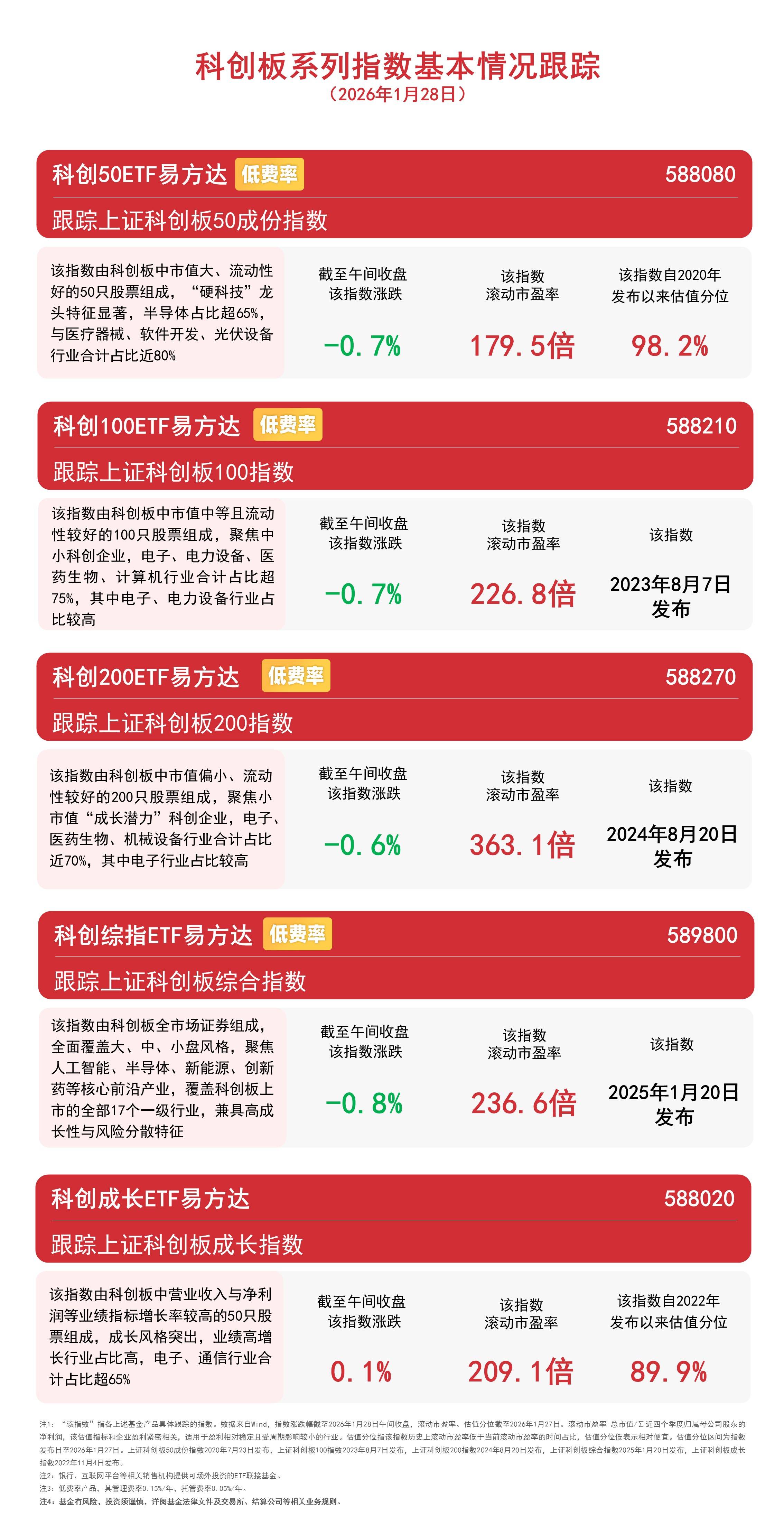
Group 1 - The STAR Market experienced a mixed performance with the STAR Growth Index rising by 0.1% while the STAR 200 Index, STAR 50 Index, and STAR 100 Index all declined by 0.6% and 0.7%, respectively, leading to an overall drop of 0.8% in the STAR Composite Index [1] Group 2 - The STAR 200 ETF, managed by E Fund, tracks the STAR 200 Index, which consists of 200 smaller-cap stocks on the STAR Market, focusing on "growth potential" companies, with the electronics and biopharmaceutical sectors accounting for nearly 70% of the index [5] - The STAR Composite Index ETF, also managed by E Fund, tracks the STAR Composite Index, which covers the entire market of the STAR Board, focusing on various sectors including artificial intelligence, semiconductors, and new energy [5]
意华股份2025年净利同比预增149.66%至214.09% 技术卡位高景气赛道
Zheng Quan Ri Bao Wang· 2026-01-28 05:26
Core Viewpoint - Yihua Co., Ltd. (002897) is expected to achieve a net profit of 310 million to 390 million yuan for the year 2025, representing a year-on-year growth of 149.66% to 214.09% [1] Group 1: Financial Performance - The net profit attributable to shareholders is projected to be between 310 million and 390 million yuan, with a significant increase compared to the previous year [1] - The net profit after deducting non-recurring gains and losses is expected to be between 282 million and 362 million yuan, also reflecting a substantial year-on-year growth of 149.40% to 220.15% [1] Group 2: Business Growth Drivers - The growth in performance is primarily attributed to the court-approved restructuring of client SOLTECENERGIASRENOVABLES, S.L.U., eliminating the need for large bad debt provisions compared to the previous year [1] - As a leading enterprise in the domestic communication connector sector, Yihua's product orders for communication connectors have increased, serving as a core engine for performance growth [1] Group 3: Market Position and Technology - With the acceleration of AI technology iterations, the demand for servers and data centers is rising, which in turn boosts the market demand for connectors and other core components [2] - Yihua is one of the few companies in China to achieve mass production of high-speed connectors and optical modules, having overcome several key industry technologies and accumulated numerous core patents [2] Group 4: Product Matrix and Supply Chain - Yihua has established a product matrix covering various high-speed connectors and optical modules, which have been delivered in bulk and are applied in critical scenarios such as data centers and servers [3] - The company actively integrates into the supply chain of high-quality downstream customers, utilizing a customized R&D production model to quickly respond to customer needs, thereby enhancing its competitive advantage [3] Group 5: New Energy Business - Yihua's new energy business, primarily through its subsidiary Yihua New Energy Technology Co., Ltd., has shown steady growth in shipment volumes, with a solid partnership with leading global photovoltaic manufacturer NEXTracker [4] - The company has established an efficient production and supply network through overseas factories in the U.S. and Thailand, enhancing supply chain resilience and market service efficiency [4] Group 6: Synergies and Future Outlook - There are synergies between Yihua's communication and new energy businesses, as both rely on precision manufacturing capabilities, which can lower costs through shared production equipment and technology [4] - The company is positioned in high-growth sectors of computing power and new energy, with potential for long-term growth as technology evolves and production capacity expands [4]
早间评论-20260128
Xi Nan Qi Huo· 2026-01-28 05:16
Report Industry Investment Ratings - Not provided in the document Core Views of the Report - The macro - economic recovery momentum needs to be strengthened, and monetary policy is expected to remain loose. Different futures varieties have different trends and investment suggestions based on their respective fundamentals and market conditions [6][10] - Overall, the market shows a complex situation with various factors such as supply - demand relationships, cost changes, and policy expectations influencing different industries Summary by Catalog Treasury Bonds - **Market Performance**: On the previous trading day, most treasury bond futures closed flat, with the 30 - year main contract down 0.33% at 112.09 yuan, and others remaining unchanged. The central bank conducted 402 billion yuan of 7 - day reverse repurchase operations, resulting in a net investment of 78 billion yuan. In 2025, the total profit of industrial enterprises above the designated size increased by 0.6% year - on - year [5] - **Outlook**: Treasury bond futures are expected to face some pressure, and a cautious attitude is recommended [6][7] Stock Index Futures - **Market Performance**: On the previous trading day, stock index futures showed mixed trends, with the CSI 300 futures (IF) main contract down 0.20%, the SSE 50 futures (IH) main contract unchanged, the CSI 500 futures (IC) main contract up 0.64%, and the CSI 1000 futures (IM) main contract up 0.55% [8] - **Outlook**: The domestic economy is stable, but the recovery momentum is weak. However, due to low asset valuations and economic resilience, along with increased market sentiment and inflow of incremental funds, the volatility center of stock index futures is expected to gradually rise, and previous long positions can be held [10][11] Precious Metals - **Market Performance**: On the previous trading day, the gold main contract closed at 1,148.38 with a 0.44% increase, and the silver main contract closed at 28,300 with a 4.02% increase [12] - **Outlook**: The global trade and financial environment is complex, which is beneficial to the allocation and hedging value of gold. However, due to a significant increase in precious metals recently and rising speculative sentiment, market volatility is expected to increase significantly. It is recommended to exit long positions and wait and see [13][14] Steel Products (Rebar, Hot - Rolled Coil) - **Market Performance**: On the previous trading day, rebar and hot - rolled coil futures showed weak oscillations. The spot prices of Tangshan billet, Shanghai rebar, and Shanghai hot - rolled coil were reported at certain ranges [15] - **Outlook**: In the medium term, the prices of steel products are dominated by industrial supply - demand logic. The demand for rebar is declining year - on - year, and the market will enter the off - season. Supply pressure is increasing, and inventory is rising. The prices of rebar and hot - rolled coil may continue to oscillate weakly. Investors can look for opportunities to go long on pullbacks and manage positions carefully [16][17] Iron Ore - **Market Performance**: On the previous trading day, iron ore futures had a slight pullback. The spot prices of PB powder and Super Special powder were reported at certain levels [18] - **Outlook**: The demand for iron ore is at a low level, and the supply is increasing. The port inventory is at a high level in the past five years. The supply - demand pattern has weakened. Technically, there are signs of stabilization. Investors can look for opportunities to go long on pullbacks and manage positions carefully [18][19] Coking Coal and Coke - **Market Performance**: On the previous trading day, coking coal and coke futures had obvious pullbacks. The production of domestic coking coal is stable, and the demand for coke is weak [20] - **Outlook**: The futures of coking coal and coke may continue to oscillate in the medium term. Investors can look for low - level buying opportunities and manage positions carefully [20][21][22] Ferroalloys - **Market Performance**: On the previous trading day, the manganese silicon main contract closed down 0.72% at 5,818 yuan/ton, and the silicon iron main contract closed down 0.99% at 5,604 yuan/ton [23] - **Outlook**: Since the fourth quarter of 2025, the production of ferroalloys has declined, and the demand is weak. The overall surplus pressure continues. Currently, the cost is at a low level, and the support at the low - level range is strengthening. After a decline, investors can consider long positions in the low - level range [23] Crude Oil - **Market Performance**: On the previous trading day, INE crude oil oscillated downward and closed near the 5 - day moving average. Speculators increased their net long positions in US crude oil futures and options, and the number of oil and gas rigs increased. The US imposed new sanctions on Iran [24][25] - **Outlook**: The CFTC data shows that US funds are still bullish on crude oil. The new sanctions on Iran and geopolitical risks have pushed up the price of crude oil. The price of crude oil is strong and has room to rise. Investors can focus on long opportunities in the main contract [26][27] Fuel Oil - **Market Performance**: On the previous trading day, fuel oil oscillated downward and was supported by the 5 - day moving average. Singapore's land - based fuel oil inventory dropped to a three - month low due to reduced imports and increased exports. The spot price difference has improved [28][29] - **Outlook**: Investors can focus on long opportunities in the main contract of fuel oil [30] Polyolefins - **Market Performance**: In the previous trading day, the PP market in Hangzhou had mixed price movements, and the LLDPE price in Yuyao was adjusted. The propane cost remains high, but demand is insufficient [31] - **Outlook**: This week, the polyolefin market will be in a tight supply - demand situation. The increase in crude oil prices and some production line overhauls may lead to a short - term price increase. The demand is stable, and the price is expected to oscillate upward. Investors can focus on long opportunities [31][32] Synthetic Rubber - **Market Performance**: On the previous trading day, the synthetic rubber main contract closed down 1.63%. The price in Shandong was adjusted downward, and the basis was stable [33] - **Outlook**: The market is expected to oscillate strongly. Key factors to watch include the price trend of butadiene, the recovery of downstream demand, and the implementation of January's plant overhauls [33][35] Natural Rubber - **Market Performance**: On the previous trading day, the natural rubber main contract closed down 0.31%, and the 20 - rubber main contract closed up 0.04%. The Shanghai spot price remained stable, and the basis was stable [36] - **Outlook**: The market is expected to show a wide - range oscillation. Supply is decreasing, demand is expected to be stable to weak, and inventory is increasing [36][37] PVC - **Market Performance**: On the previous trading day, the PVC main contract closed down 0.55%. The spot price remained stable, and the basis widened slightly [38] - **Outlook**: Although it is currently the traditional off - season for PVC, the market may oscillate strongly due to policy expectations. In the medium term, capacity clearance and increased exports may improve the supply - demand situation. Investors need to be vigilant about demand uncertainties [38][40] Urea - **Market Performance**: On the previous trading day, the urea main contract closed down 0.17%. The price in Shandong Linyi remained stable, and the basis was stable [41] - **Outlook**: The short - term price of urea is expected to oscillate strongly, mainly driven by export demand and cost support [41][42] PX - **Market Performance**: On the previous trading day, the PX2603 main contract fell 2.62%. The PXN spread was adjusted, and the short - flow profit was maintained [43] - **Outlook**: In the short term, the PXN spread and short - flow profit are stable. The PX start - up rate is declining. The market sentiment and cost (crude oil) may provide support. The market may oscillate and adjust. Investors can participate in the low - level range and be vigilant about the risk of external crude oil fluctuations [43] PTA - **Market Performance**: On the previous trading day, the PTA2605 main contract fell 3.17%. The PTA plant load remained stable, and the polyester load decreased [44] - **Outlook**: In the short term, the PTA processing fee has returned to the average level of previous years, and the upward space is limited. The inventory remains low. The supply side has little change, and the demand side has a seasonal decline. The market may oscillate. It is recommended to operate carefully and pay attention to oil price changes [44] Ethylene Glycol - **Market Performance**: On the previous trading day, the ethylene glycol main contract fell 1.6%. The overall start - up load decreased, and the port inventory increased [45] - **Outlook**: In the short term, the supply side is shrinking, and the market sentiment is boosted. However, the port inventory is increasing, and the downstream polyester is in the seasonal overhaul period. The price may have limited upward space. It is recommended to operate carefully and pay attention to port inventory and supply changes [45] Short - Fiber - **Market Performance**: On the previous trading day, the short - fiber 2603 main contract fell 1.97%. The short - fiber plant load increased, and the downstream terminal开工率 decreased [46] - **Outlook**: In the short term, the short - fiber supply remains at a relatively high level. The sales of polyester short - fiber have improved, and the inventory is at a low level, providing some support. The short - fiber may oscillate with the raw material price. It is necessary to control risks and pay attention to cost changes and downstream pre - holiday stocking [46] Bottle - Chip - **Market Performance**: On the previous trading day, the bottle - chip 2603 main contract fell 2.52%. The bottle - chip processing fee increased, and the plant load decreased [47] - **Outlook**: Recently, the bottle - chip load has slightly decreased, and there will be concentrated production cuts around the Spring Festival. The supply is expected to shrink. The export growth rate has increased, but the main logic lies in the cost side. The bottle - chip is expected to oscillate with the cost side. Investors can participate cautiously at low levels and pay attention to the implementation of overhaul devices [47] Soda Ash - **Market Performance**: On the previous trading day, the main 2605 contract of soda ash closed at 1,194 yuan/ton, down 0.25%. The supply is at a high level, and the demand is weak [48] - **Outlook**: The market is in a loose situation, and the price is stable for the time being. In the short term, there is a lack of substantial support, and the price will be adjusted stably. It is recommended to be cautious [48][49] Glass - **Market Performance**: On the previous trading day, the main 2605 contract of glass closed at 1,066 yuan/ton, down 0.93%. The production line remained unchanged, and the inventory increased [50] - **Outlook**: The market is in a loose situation. The price is expected to oscillate before the Spring Festival. It is necessary to pay attention to the risk of returning to the fundamentals [50] Caustic Soda - **Market Performance**: On the previous trading day, the main 2603 contract of caustic soda closed at 1,951 yuan/ton, up 0.46%. The production is high, the demand is low, and the inventory is high [51] - **Outlook**: The seasonal characteristics are significant. Affected by the price fluctuation of alumina and the cost range of the futures, the trading sentiment may fluctuate before the Spring Festival, and the futures may oscillate. However, considering that the fundamentals of the middle and lower reaches have not improved significantly, it is recommended to be cautious [51][52] Pulp - **Market Performance**: On the previous trading day, the main 2605 contract of pulp closed at 5,342 yuan/ton, down 0.22%. The inventory continued to increase, and the spot trading was light [53] - **Outlook**: The market sentiment is pessimistic due to the approaching end of downstream procurement and the continuous increase in port inventory. The futures may have a short - term technical rebound, and investors should treat it rationally [53][54] Lithium Carbonate - **Market Performance**: On the previous trading day, the lithium carbonate main contract rose 1.5% to 179,600 yuan/ton. The supply and demand are both strong, and the inventory is decreasing [55] - **Outlook**: The price has strong support below, but the short - term fluctuation may increase. It is necessary to control risks [55] Copper - **Market Performance**: On the previous trading day, the Shanghai copper main contract closed at 101,560 yuan/ton, down 1.18%. The US economic data is mixed, and the Fed's long - term monetary policy is expected to be loose [56][57] - **Outlook**: The price is expected to be adjusted at a high level. The global copper concentrate supply is tight, and the demand is suppressed by high prices. The inventory is increasing [56][57][58] Aluminum - **Market Performance**: On the previous trading day, the Shanghai aluminum main contract closed at 24,350 yuan/ton, up 0.43%, and the alumina main contract closed at 2,766 yuan/ton, up 1.62%. The alumina market is in surplus, and the aluminum demand is suppressed by high prices [59] - **Outlook**: The price is expected to be adjusted at a high level. The supply - demand of the aluminum industry chain is under pressure in the short term [59][60] Zinc - **Market Performance**: On the previous trading day, the Shanghai zinc main contract closed at 25,025 yuan/ton, up 0.1%. The supply is increasing, and the demand is in the off - season [61][62] - **Outlook**: The zinc price is expected to oscillate and adjust. It lacks the momentum to continue rising and is unlikely to fall sharply [62][63] Lead - **Market Performance**: On the previous trading day, the Shanghai lead main contract closed at 17,000 yuan/ton, down 0.21%. The supply and demand are both weak [64] - **Outlook**: The lead price is expected to oscillate within a range. The fundamentals have no obvious contradictions [64][65] Tin - **Market Performance**: On the previous trading day, the Shanghai tin main contract rose 0.41% to 436,450 yuan/ton. The supply is tight, and the demand has some resilience [66][67] - **Outlook**: The tin price is expected to oscillate strongly. The supply is tight, and the demand has support from emerging fields. The inventory is decreasing [66][67] Nickel - **Market Performance**: On the previous trading day, the Shanghai nickel main contract fell 1.96% to 143,420 yuan/ton. The cost is rising, and the demand is weak [68] - **Outlook**: The nickel price is under pressure. The supply - demand situation is complex, and the inventory is at a relatively high level [68] Soybean Oil and Soybean Meal - **Market Performance**: On the previous trading day, the soybean meal main contract remained flat at 2,766 yuan/ton, and the soybean oil main contract rose 1.03% to 8,258 yuan/ton. The US dollar is weakening, and the soybean export competitiveness is increasing [69] - **Outlook**: The demand for soybean meal is growing moderately, and investors can look for long opportunities in the low - cost support range. The demand for soybean oil has improved slightly, and investors can consider taking profits on rallies [69][70] Palm Oil - **Market Performance**: The Malaysian palm oil continued to rise. The export data is good, and the production is declining. The domestic palm oil inventory is decreasing [71] - **Outlook**: Investors can consider long opportunities after a pullback [71][72] Rapeseed Meal and Rapeseed Oil - **Market Performance**: The Canadian rapeseed closed almost flat. The domestic rapeseed meal inventory is decreasing, and the rapeseed oil inventory is increasing [73][74] - **Outlook**: It is recommended to wait and see for now [73][74][75] Cotton - **Market Performance**: The domestic Zhengzhou cotton oscillated slightly. The USDA cotton supply - demand report is positive, and the domestic cotton production is increasing, but the inventory increase is lower than expected [76][77] - **Outlook**: The medium - term cotton price is expected to be strong, but the short - term domestic price is under pressure due to the large price difference between domestic and foreign markets. Investors can buy on pullbacks [76][77][78] Sugar - **Market Performance**: The Zhengzhou sugar oscillated, and the overseas raw sugar rebounded slightly. India's sugar production is expected to increase significantly, and the domestic sugar supply
5天14亿,10天21亿!“化工牛”盘中再涨2.8%冲击新高,资金抢筹大提速
Ge Long Hui· 2026-01-28 04:22
Group 1 - The chemical sector is experiencing a resurgence, with the Chemical ETF (516020) showing a price increase of over 2.8% and potentially reaching a new three-year closing high [1] - The Chemical ETF has attracted significant capital inflow, with a net subscription of 1.422 billion yuan in the last five days and 2.14 billion yuan in the last ten days, indicating strong buying momentum [1] - According to Guangfa Securities, the chemical industry typically follows a five-year cycle, and the current phase is characterized by a recovery in profitability and improved demand expectations [1] Group 2 - The Chemical ETF (516020) and its linked fund (012537) track the CSI segmented chemical industry theme index, with nearly 50% of its holdings concentrated in large-cap leading stocks such as Wanhua Chemical and Salt Lake Industry [2] - The remaining 50% of the portfolio includes leading stocks in sub-sectors like phosphate fertilizers, fluorochemicals, and nitrogen fertilizers, allowing for comprehensive investment opportunities in the chemical sector [2] Group 3 - Looking ahead, Zhongyin Securities projects that the chemical industry's prosperity will be at a low point in 2025, with potential recovery in profitability expected by 2026 due to measures like "anti-involution" and rapid development in new materials [1]
连续逼空!有色为何不回调?
Sou Hu Cai Jing· 2026-01-28 03:58
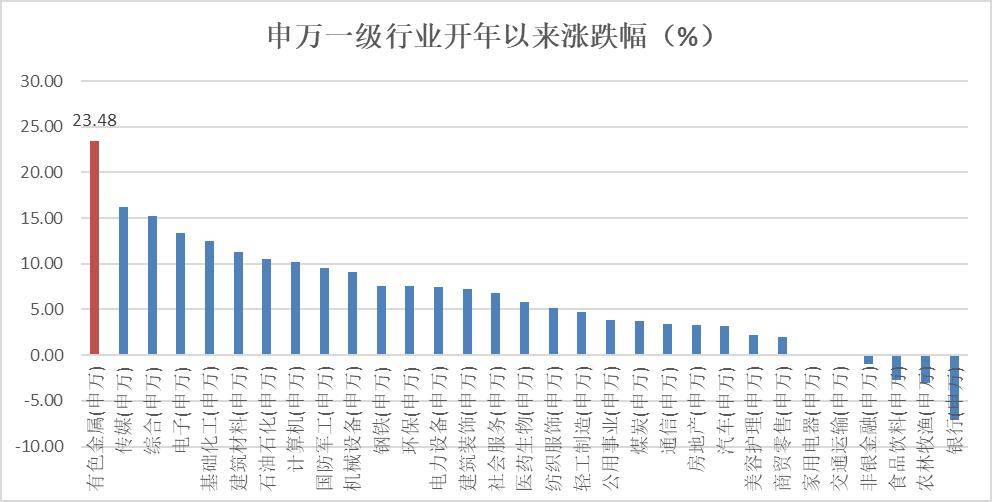
Group 1 - The core viewpoint of the article highlights the strong performance of the non-ferrous metals sector, which has been the "champion of growth" since the beginning of the year, with significant interest from investors [1][3] - The non-ferrous metals ETF (159690) has seen a year-to-date increase of 33.62% and a cumulative increase of over 156% in the past 250 days, indicating strong market confidence [1][3] - The current rally in the non-ferrous sector is driven by three main factors: expectations of global liquidity easing, rigid supply constraints for certain commodities, and long-term support from downstream demand in sectors like renewable energy [3][4] Group 2 - The supply chain vulnerabilities for copper and the entire non-ferrous sector remain significant, with global copper inventories at historically low levels and ongoing supply disruptions from South American mines [4] - The demand narrative is shifting from macroeconomic trends to micro-level confirmations, with more downstream companies engaging in hedging against future price increases, reflecting confidence in long-term demand [6] - The financial and commodity attributes of metals are rebalancing, with precious metals currently attracting investment due to risk aversion, but historical trends suggest a return to mean for the "gold-copper ratio" once macro conditions stabilize [6]
内蒙华电20260127
2026-01-28 03:01
Summary of Inner Mongolia Huadian Conference Call Company Overview - **Company**: Inner Mongolia Huadian - **Industry**: Power Generation and Coal Industry Key Points Financial Performance and Projections - The company is expected to achieve a dividend yield of 4.8% by 2026, potentially reaching 5% under favorable conditions [2][5] - Forecasted net profit attributable to shareholders is projected to grow by 7.2% year-on-year in 2026 [3][21] - A decrease in electricity prices by 0.05 CNY per kWh in North China and the Mongolian West region could reduce net profit growth by 1% and 2.8% respectively [3][15] Operational Strengths - The integrated coal and power operation model mitigates risks associated with coal price fluctuations [2] - High proportion of controlled coal-fired desulfurization units enhances profitability [6] - The Weijiaomao power plant is expected to achieve a net profit of 0.2 CNY per kWh in 2023-2024 due to lower fuel costs from self-owned coal mines [11] Market Dynamics - The pricing model is flexible, adjusting based on market prices in different provinces, which helps to hedge against price declines [9] - The company has signed contracts in high-price provinces to offset potential revenue losses from price drops in other areas [10] Growth Opportunities - Recovery of Weijiaomao's calorific value could add approximately 180 million CNY to net profit [7][8] - The introduction of wind power assets is expected to significantly enhance overall profitability, with ROE projected between 20%-30% [7][17] - The implementation of ultra-supercritical technology is anticipated to reduce fuel costs and increase net profit by 0.042 CNY per kWh [18] Risk Factors - The decline in Weijiaomao's calorific value was a significant factor in the company's performance drop in early 2025 [7] - The complexity of the settlement mechanism in the Mongolian West region poses challenges, although the company has demonstrated strong trading capabilities [12] Future Outlook - The company is expected to maintain a stable dividend payout ratio above 60% [6] - The overall market for electricity in Inner Mongolia is showing signs of recovery after reaching a bottom [12] - The company’s ability to manage external coal price fluctuations is limited, with only 17% of its coal demand affected by market prices [14] Valuation and Investment Considerations - The market reacted cautiously to the announcement of wind power asset acquisitions, but the valuation appears attractive compared to market peers [17] - The company’s stock is considered a solid long-term investment due to its stable operations and high dividend yield potential [22] Conclusion - Inner Mongolia Huadian presents a compelling investment opportunity with its robust operational model, strategic growth initiatives, and favorable market positioning, despite facing certain risks and market dynamics.

景津装备20260127
2026-01-28 03:01
Summary of the Conference Call for Jingjin Equipment Company Overview - **Company**: Jingjin Equipment - **Industry**: Filtration and Separation Equipment Key Points Industry and Market Dynamics - Mining revenue accounted for 30% of total revenue in the first half of the year, with good demand for non-ferrous metals and stable coal demand [2][3] - The chemical industry is expected to recover by 2025, with investments in Xinjiang potentially providing support [2] - Product prices are at a low point, with limited room for further decline [2] Financial Performance and Strategies - The company's pricing strategy has significantly impacted gross margins, with expectations of a recovery in gross margins around Q1 or Q2 of 2027 [2][4] - The company has been actively lowering prices to ensure cash flow and secure orders, particularly in sectors with weak demand [3] - The overall gross margin is expected to decline further in 2025 due to the predominance of lower-priced orders [4] Competitive Landscape - The filtration industry is experiencing a clearing of smaller companies, while Jingjin Equipment, as a market leader, continues to maintain profitability [5][6] - Many competitors are facing significant operational pressures due to high accounts receivable and longer payment terms [5][6] Raw Material Costs - Raw material costs, particularly for polypropylene and steel, are stable with no significant upward trends [7] - The company does not have plans to raise prices unless there is a significant increase in raw material costs or a surge in orders [7] Business Segments - The complete equipment business has seen rapid growth, with a revenue increase of approximately 30% in the first half of 2026 [8] - The company aims to provide a diverse range of products and services, focusing on complete production line equipment [8] International Expansion - International business is a key strategic direction, with actual growth exceeding reported figures due to increased orders from domestic clients in countries like Indonesia [9][10] - The company is expanding its number of agents and increasing direct sales to drive international business growth [9][10] - There are no plans for overseas capacity acquisitions [11] Sector-Specific Insights - The mineral processing industry is under close watch, especially in the non-ferrous metals sector for 2026 [12] - The environmental sector is showing signs of recovery, but the extent remains uncertain [13] - The new energy sector is expected to see recovery driven by downstream customer expansions and project implementations, particularly in lithium battery recycling [15][16] Future Outlook and Capital Expenditure - The company plans to invest 200-300 million annually over the next two years in the filtration complete equipment phase three project, which will not affect dividends [20] - The company aims to maintain a stable dividend ratio to continuously reward investors [20] Emerging Opportunities - The filtration equipment is versatile and can adapt to new industries such as new materials and synthetic biology, which may drive future demand [21]
ETF盘中资讯|暴力拉升!化工ETF(516020)盘中涨超2%,资金持续加码!机构:化工有望开启新一轮高成长
Sou Hu Cai Jing· 2026-01-28 02:58
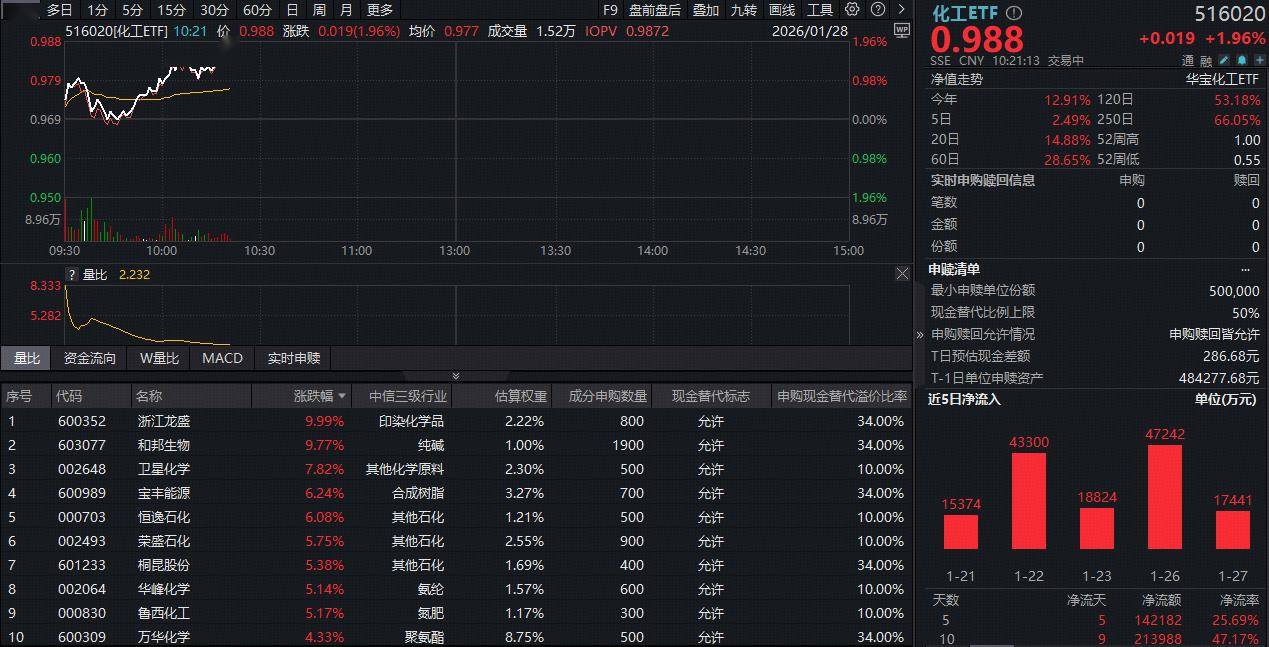
Group 1 - The chemical sector has regained momentum, with the chemical ETF (516020) experiencing a rise of 1.96% after a brief fluctuation at the opening [1][2] - Key stocks in the sector include Zhejiang Longsheng, which hit the daily limit, and other notable gainers such as Hebang Biotechnology, Satellite Chemical, Baofeng Energy, and Hengyi Petrochemical, all showing significant increases [1][2] - The chemical ETF (516020) has attracted substantial investment, with net subscriptions of 1.422 billion yuan over the past five days and 2.14 billion yuan over the past ten days [1][2] Group 2 - Recent advancements in the basic chemical industry include breakthroughs in green refrigeration technology and key technologies for the industrialization of high-performance liquid crystal polyarylate fibers [3] - Looking ahead, the chemical industry is expected to experience low prosperity in 2025, with potential recovery in profitability driven by measures against "involution" and rapid growth in new materials due to downstream demand [3] - Investment opportunities in the large chemical sector are viewed positively, particularly in leading companies and sub-industries facing supply changes or significant pressure [3]


马云最新露面谈AI;DeepSeek开源全新OCR模型;理想汽车否认网传“关闭100家门店”;“杰出女企业家”熊海涛被留置调查...
Sou Hu Cai Jing· 2026-01-28 02:52
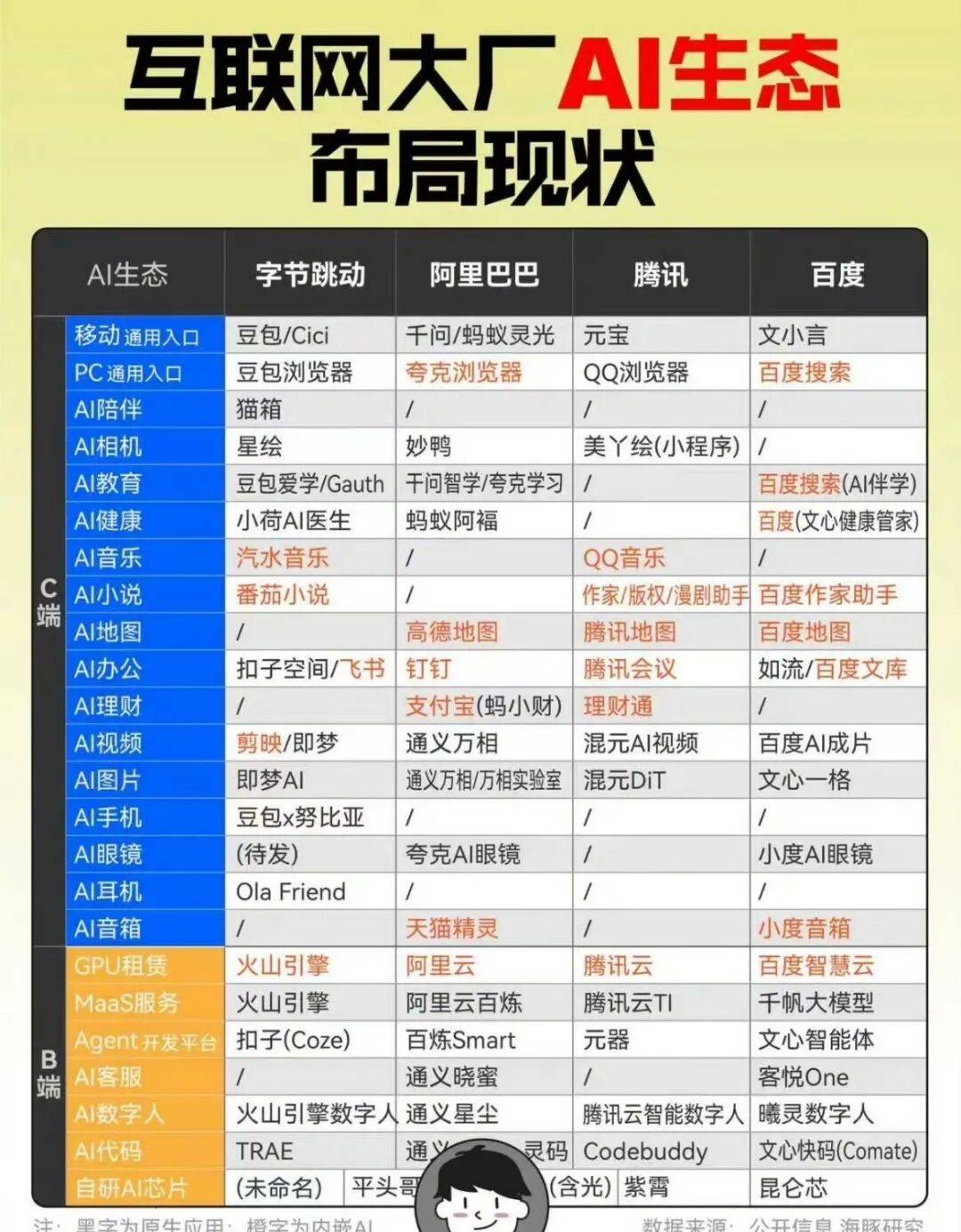
Group 1: AI Ecosystem Developments - The AI ecosystem is rapidly evolving with major players like ByteDance, Alibaba, Tencent, and Baidu developing various AI applications across multiple domains such as education, health, finance, and entertainment [1] - ByteDance's AI offerings include Doubao for education and health, while Alibaba's Qianwen focuses on financial services and education [1] - Tencent and Baidu are also expanding their AI capabilities, with Tencent offering services like QQ Browser and Baidu focusing on AI health and education [1] Group 2: Market Changes in Electricity Pricing - A significant market reform in China's electricity sector is underway, with nine regions canceling fixed time-of-use electricity pricing, marking a shift towards market-driven pricing [4] - The National Development and Reform Commission's new rules will eliminate government-set time-of-use pricing starting March 1, 2026, allowing market forces to dictate pricing [4] Group 3: AI Funding and Valuation Trends - Anthropic is planning to raise approximately $20 billion, doubling its initial target, reflecting strong investor interest and pushing its valuation to $350 billion [7][8] - The demand for investment in AI startups is surging, with investor interest reportedly reaching 5 to 6 times the original target [8] Group 4: New AI Models and Innovations - DeepSeek has released a new OCR model, DeepSeek-OCR 2, which utilizes a novel architecture to enhance AI's visual processing capabilities [7] - Alibaba has launched its flagship reasoning model, Qwen3-Max-Thinking, which surpasses leading models in performance and enhances its tool-calling capabilities [13] Group 5: Corporate Developments and Acquisitions - Anta Sports is planning to acquire a 29.06% stake in Puma for €1.5 billion, aiming to enhance its global market position [22] - DeepWay has completed a Pre-IPO financing round of ¥1.177 billion, marking a significant investment in the autonomous driving sector [23]