人工智能泡沫

Search documents
林毅夫:制定十五五时期的增长目标,关键要突破几个认识误区
Sou Hu Cai Jing· 2025-12-02 09:41
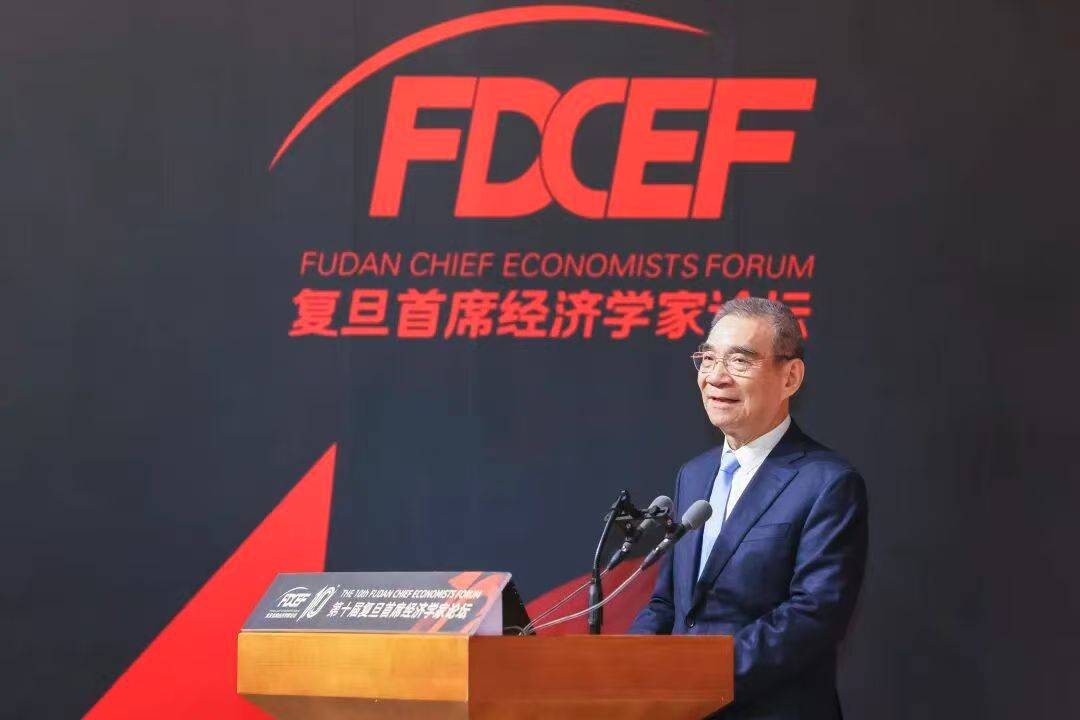
Core Viewpoint - The speech by Professor Lin Yifu at the Fudan Chief Economist Forum highlights the potential economic challenges faced by developed countries, particularly the U.S., and emphasizes the need for China to focus on its own development to counter external pressures [1][5][12]. Group 1: Economic Outlook - Developed countries are likely to experience a "lost 20 years" since the 2008 financial crisis, with the U.S. GDP growth rate declining from an average of 3.3% (1960-2008) to 2.1% (2008-2024) [5][7]. - The Eurozone's average growth rate has dropped from 3.1% (1960-2008) to 1.1% (2008-2024), indicating a significant slowdown [5][6]. - The U.S. stock market, exemplified by the Dow Jones index reaching over 46,000 points, suggests a potential bubble similar to the 2000 internet bubble and the 2008 housing market crash [10][11]. Group 2: U.S.-China Relations - The U.S. is likely to continue its strategy of suppressing China's growth due to its perception of China as a rising threat, particularly as China's GDP approaches that of the U.S. [12][13]. - The U.S. may reconsider its stance when China's per capita GDP reaches half of that of the U.S., which would signify a significant shift in economic power [13][14]. Group 3: China's Economic Potential - China has the potential for an 8% economic growth rate before 2035, driven by its "latecomer advantage" and the opportunities presented by the Fourth Industrial Revolution [18][19]. - The current per capita GDP of China is approximately one-fourth of that of the U.S., indicating a substantial room for growth [16][18]. Group 4: Factors Affecting Growth - The decline in China's actual growth rate is attributed to external pressures from the U.S. and a lack of economic confidence, rather than internal systemic issues [21][22]. - Misconceptions about the causes of economic slowdown, such as the belief that state-owned enterprises are crowding out private enterprises, need to be addressed to restore confidence [22][24]. Group 5: Policy Recommendations - To achieve faster economic growth, China should adopt more aggressive monetary and fiscal policies, breaking away from traditional theoretical constraints that limit such actions [28][29]. - Historical examples demonstrate that proactive fiscal policies can effectively stimulate economic growth and should be leveraged to address current challenges [33].

产业评论:AI,阳光下的泡沫?
新财富· 2025-12-02 09:21
Core Viewpoint - The article discusses the ongoing debate about whether the AI industry is experiencing a bubble, highlighting the impressive financial performance of Nvidia and the broader implications for the AI sector [2][4]. Group 1: Nvidia's Financial Performance - Nvidia reported a record revenue of $57 billion for Q3 2025, a 62% year-over-year increase, with a net profit of $31.9 billion, up 65% [2]. - The data center segment was the primary revenue driver, contributing $51.2 billion, a 66% increase year-over-year, accounting for nearly 90% of total revenue [8]. - Nvidia's GPU business generated $43 billion, serving as the foundation for AI training and inference, while the networking business contributed $8.2 billion [8]. Group 2: Market Sentiment and Bubble Concerns - Despite Nvidia's strong performance, nearly 50% of fund managers believe there is a bubble in AI stocks, a significant increase of over 30 percentage points from three months prior [9]. - The article emphasizes that assessing the existence of a bubble requires looking at the entire industry rather than just one company, noting that historical technological revolutions often accompany capital bubbles [10]. Group 3: Comparison with the Internet Bubble - Nvidia has faced capital withdrawal from investors, including notable figures like Peter Thiel, indicating a cautious attitude towards AI valuations [12]. - The article argues that the current AI landscape differs from the 2000 internet bubble, as AI valuations are still based on real revenue growth and companies possess fundamental support [13]. - AI is now directly involved in transforming production processes and decision-making systems, unlike the internet bubble, which primarily focused on information dissemination [14]. Group 4: AI Market Growth in China - The AI chip market in China is projected to exceed 150 billion yuan in 2024 and reach nearly 1.5 trillion yuan by 2030, with a compound annual growth rate of over 50% [18]. - Domestic companies like Cambricon are experiencing significant revenue growth, with a reported increase of nearly 2400% year-over-year [19]. - The demand for AI capabilities is rapidly increasing, particularly in sectors like automotive and pharmaceuticals, indicating a robust market for AI applications [24]. Group 5: Long-term Viability and Investment Considerations - OpenAI's revenue is expected to grow significantly, but it also faces substantial losses due to high operational costs, indicating a reliance on external financing for the foreseeable future [26]. - The article suggests that the current market correction is more about recalibrating short-term valuations rather than denying the underlying industry logic [27]. - Investors should focus on identifying companies with technological barriers and sustainable cash flow capabilities, as these will be the winners in the long run [28].

“末日博士”展望2026年美国经济:“金发姑娘”式软着陆成基准情景!
Jin Shi Shu Ju· 2025-12-02 08:59
Core Viewpoint - The U.S. economy is expected to face volatility in 2025, with significant growth in AI-related investments, but uncertainty from tariffs and policies may suppress growth in the latter half of the year, compounded by the longest government shutdown in history affecting employment and inflation data [2][3] Group 1: Economic Scenarios - The baseline scenario predicts a few months of growth recession followed by recovery, with inflation gradually declining to the Federal Reserve's 2% target, termed the "Goldilocks scenario" [2][3] - The second scenario involves a shallow recession lasting several quarters, with a slower recovery compared to the first scenario [3] - The third scenario, termed "no landing," suggests strong growth without inflation returning to target levels [3] Group 2: Factors Influencing Recovery - A strong recovery in mid-2026 could be driven by further monetary easing from the Federal Reserve, ongoing fiscal stimulus, robust household and corporate balance sheets, a loose financial environment, and strong capital expenditures related to AI [3][4] - The easing of tariff effects and productivity improvements driven by technology may lead to a decline in inflation after peaking in the following year [4] Group 3: Risks and Considerations - The possibility of a shallow recession with slow recovery is considered lower than the baseline scenario, but trade policies may still push inflation higher, eroding real wages and consumer confidence [4][5] - Concerns about an AI bubble could impact corporate confidence, potentially leading to a significant stock price correction and weak capital expenditures [4] - The "no landing" scenario remains a possibility, as recent indicators suggest the U.S. economy may be more resilient than previously thought, with tight labor and product markets driving wage increases and overall growth [4][5] Group 4: Global Economic Outlook - If the U.S. economy recovers in 2026 and China maintains resilience with close to 5% growth, the global outlook could improve, with both developed and emerging markets expected to achieve stronger growth compared to 2025 [5]
突然崩了!全线暴跌,超27万人爆仓!白银,再创新高
Qi Huo Ri Bao· 2025-12-01 23:53
Cryptocurrency Market - The cryptocurrency market experienced a significant sell-off, with Bitcoin dropping nearly 8% and Ethereum falling close to 10%, leading to a reduction in their price declines by the time of reporting [1] - Over the past 24 hours, a total of 272,437 individuals faced liquidation in the cryptocurrency market, with a total liquidation amount of $993 million [3] - Major cryptocurrencies such as Solana and XRP also saw declines of over 10%, with Solana down 12.1% and XRP down 10.8% [2] Stablecoin Assessment - S&P Global Ratings downgraded the stability assessment of the largest stablecoin, USDT, to the lowest level, warning that a decline in Bitcoin prices could lead to insufficient collateral for the token [4] - Analysts noted that the downgrade of USDT's rating, along with warnings from the People's Bank of China, has heightened investor concerns regarding the cryptocurrency market [4] Macro Economic Factors - The potential increase in interest rates by the Bank of Japan has led to a rise in the two-year Japanese government bond yield to its highest level since 2008, contributing to downward pressure on risk assets, including cryptocurrencies [5] - Analysts suggest that the rising yield on Japanese government bonds may accelerate the unwinding of yen carry trades, which historically tends to depress valuations of global risk assets, including cryptocurrencies [5] Silver Market - Silver prices reached a new historical high, with spot silver rising over 4% to $58.67 per ounce, driven by a tightening supply in the physical market and a favorable macroeconomic environment [5] - Analysts expect silver prices to continue to rise due to ongoing supply constraints and potential trade policy restrictions, which may enhance its performance compared to gold [5]

德银:月产5000万只!当Labubu不再稀缺,泡泡玛特拿什么接棒?
美股IPO· 2025-12-01 10:38
Group 1: Availability Paradox and Market Dynamics - Deutsche Bank warns that Pop Mart is facing an "Availability Paradox" as its production capacity aggressively expands to 50 million units per month by year-end, leading to Labubu transitioning from a scarce trendy IP to a mass consumer product, which may signal a decline in popularity for trend-driven toys [1] - If Labubu's popularity peaks in 2026 without new hit products, valuation pressure on Pop Mart will increase significantly [1] Group 2: Copper Market Supply and Price Forecast - Deutsche Bank indicates that the global copper market is experiencing a supply squeeze, with severe supply disruptions pushing copper prices close to historical highs [3] - The report predicts a decline in mine supply by 2025, with only a 1% rebound expected the following year, resulting in a "clear deficit" in the market [3] - As a result, Deutsche Bank raises its copper price forecast for 2026 to $10,600 per ton, with potential peaks exceeding $11,000 per ton in the first half of 2026 [3][6] Group 3: Key Company Updates and Investment Focus - Glencore is set to hold its first Capital Markets Day (CMD) in two years, aiming to restore market confidence in its operational capabilities, while Rio Tinto focuses on business simplification and capital discipline [4][9] - Deutsche Bank lists Anglo Teck, Glencore, and Freeport as preferred stocks, adjusting ratings for Boliden to "Buy" and First Quantum to "Hold" [7] - Glencore's CMD on December 3 is highly anticipated, with expectations that it will provide guidance on copper production and capital expenditures, while also addressing potential M&A discussions [8] Group 4: Rio Tinto's Strategic Focus - Rio Tinto's CMD on December 4 is expected to emphasize capital discipline, business simplification, and divestment of non-core assets, with a projected annual capital expenditure guidance of $10-11 billion [10] - The market will closely monitor production guidance for the Simandou project, amid concerns of potential oversupply [10]



德银预警:严重供应中断+行业大整合,明年铜市赤字状态恐将持续
Hua Er Jie Jian Wen· 2025-12-01 07:23
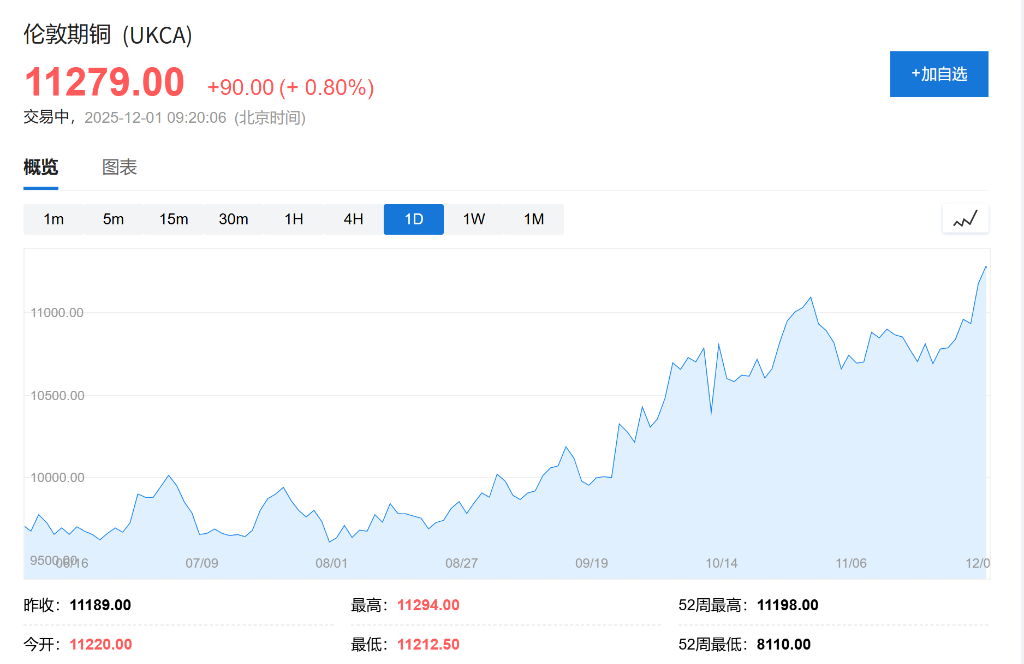
Core Viewpoint - Deutsche Bank's analysis indicates a supply squeeze in the global copper market, driven by severe supply disruptions and accelerated industry consolidation, pushing copper prices close to historical highs [1][3]. Group 1: Copper Market Outlook - As of December 1, copper prices reached $11,279 per ton, marking a historical peak [2]. - Deutsche Bank forecasts a decline in mine supply by 2025, with only a 1% rebound expected the following year, leading to a "clear deficit" in the market [1][3]. - The long-term drivers for copper prices include the electrification and digitalization trends, with global electricity demand growth outpacing GDP growth in 2024 [3]. Group 2: Company Recommendations - Deutsche Bank has identified Anglo American, Glencore (GLEN), and Freeport-McMoRan (FCX) as preferred stocks in the copper sector [3][6]. - The report has upgraded Boliden (BOL) to a "buy" rating while downgrading First Quantum (FM) to "hold" [3]. Group 3: Glencore's Capital Markets Day - Glencore is set to hold its first Capital Markets Day since 2022 on December 3, aiming to restore investor confidence in its operational capabilities and showcase growth options in its copper business [4][6]. - If Glencore limits its 2026 production guidance to copper and maintains its recovery targets for 2027/28, the market is likely to respond positively [4]. - The potential for mergers and acquisitions (M&A) discussions during the event is a significant focus, with Glencore reportedly in talks to sell its Kazzinc business [4]. Group 4: Rio Tinto's Focus - Rio Tinto will host its Capital Markets Day on December 4, emphasizing business simplification, capital discipline, and divestment of non-core assets [7]. - The company is expected to reaffirm its annual capital expenditure guidance of $10-11 billion and may introduce cost targets while updating plans to sell smaller divisions [7]. Group 5: Investor Implications - Deutsche Bank has raised its 2026 copper price forecast to $10,600 per ton, with expectations that prices could peak above $11,000 per ton in the first half of 2026 [6]. - Investors are advised to closely monitor upcoming Capital Markets Days from major mining companies, particularly Glencore's M&A activities and its attractive projected free cash flow yield of 10% for 2026 [6].
ChatGPT问世三周年,AI已经发展成了一场泡沫?
Feng Huang Wang· 2025-12-01 00:57
凤凰网科技讯 北京时间12月1日,据科技网站TechCrunch报道,美国当地时间11月30日,ChatGPT迎来 问世三周年纪念日。这款聊天机器人引爆了生成式AI市场,但是或许也催生出了一场泡沫。 2022年11月30日,OpenAI向世界推出了一款新产品,并轻描淡写地将其描述为"一个名为ChatGPT的模 型,它能以对话方式互动"。 这种格局导致市场呈现出更为极端的头部集中现象。标普500指数是按市值加权的,而这七家公司如今 占指数权重的35%,相比三年前的大约20%有显著上升。 泡沫? 这股热潮还能持续多久?除了英伟达CEO黄仁勋(Jensen Huang)外,越来越多的AI企业高管开始承认, 行业可能正身处泡沫之中。 "有人会在AI领域损失惨重。"OpenAI CEO萨姆·奥特曼(Sam Altman)在8月与记者共进晚餐时表示。 同样地,Sierra CEO兼OpenAI董事长布雷特·泰勒(Bret Taylor)也认为行业正处于"泡沫"之中,并将其与 上世纪90年代末的互联网泡沫相提并论。他预测,虽然个别公司可能会失败,"但AI将重塑经济格局, 就像互联网一样,未来必将创造巨大的经济价值"。 再过 ...
substack.com-泡沫的主要标志供给侧的贪婪 --- The Cardinal Sign of a Bubble Supply-Side Gluttony
2025-12-01 00:49
Summary of Key Points from the Conference Call Industry Overview - The discussion revolves around the concept of market bubbles, particularly focusing on the technology sector and historical parallels with the dot-com bubble of the late 1990s and early 2000s [6][7][24]. Core Insights and Arguments - **Innovation and Folly**: The U.S. is characterized by a culture of innovation that often leads to "creative destruction," where companies innovate themselves to failure, resulting in mass bankruptcies and job losses [3][5][6]. - **Historical Context**: The analysis begins with a retrospective on the "profitless dot-com" bubble of the 1990s, emphasizing that many misinterpret the nature of that era, which was driven more by infrastructure investment than by profitless companies [7][8][14]. - **Market Dynamics**: The NASDAQ index's performance during the late 1990s was largely influenced by profitable large-cap companies, contrary to the narrative that it was primarily driven by unprofitable dot-coms [10][14]. - **Investment Patterns**: A significant amount of capital was funneled into data transmission infrastructure, with companies like AT&T and MCI investing billions annually, which created an overbuilt supply without sufficient demand [17][21][20]. - **Current Trends**: The current AI boom is drawing parallels to past bubbles, with major companies like Microsoft, Google, and Nvidia committing substantial investments in AI infrastructure, raising concerns about sustainability and potential overvaluation [43][44][48]. Important but Overlooked Content - **Capital Cycle Theory**: The concept of Capital Cycle Theory is introduced, suggesting that stock market peaks often occur midway through investment booms, indicating a pattern that may repeat in the current market [50]. - **Stock-Based Compensation**: There is a notable increase in stock-based compensation today compared to 25 years ago, which may exacerbate the effects of market bubbles [30][31]. - **OpenAI's Financials**: OpenAI's commitment to $1.4 trillion in spending over the next eight years, with revenues and losses significantly lower than this figure, highlights the speculative nature of current investments in AI [45][46]. - **Nvidia's Role**: Nvidia is positioned as a central player in the current AI landscape, with its technology being critical across various applications, suggesting a potential for significant market influence [48][49]. Conclusion - The analysis emphasizes the cyclical nature of market bubbles, the importance of understanding historical precedents, and the potential risks associated with current investment trends in technology and AI sectors [50][51].



Stocks drift back towards record highs as the final month of 2025 gets underway: What to watch this week
Yahoo Finance· 2025-11-30 12:27
The final month of the year gets underway on Monday, and investors will be looking for a smoother month to round out the year after choppy November trading saw the Nasdaq Composite (^IXIC) snap a seven-month winning streak while the S&P 500 (^GSPC) moved back to within 1% of a record high. On Friday, markets ended the week by notching a fifth straight session of gains to close out the up-and-down month in a holiday-shortened trading session. And despite snapping its monthly winning streak, the Nasdaq is a ...
美国人对AI警告充耳不闻,或将面临比2008年更严重的危机
财富FORTUNE· 2025-11-28 13:52
Core Viewpoint - The article discusses the views of Albert Edwards, a global strategist and extreme bear market advocate, who warns of a potential bubble in the U.S. stock market driven by high valuations in technology and AI stocks, suggesting that the current market conditions may lead to a more severe economic downturn than previous cycles [3][5][10]. Group 1: Market Conditions and Predictions - Asian stock markets are down, European markets are flat, but U.S. investors are optimistic about a potential interest rate cut by the Federal Reserve in December, leading to a rise in major stock indices [2]. - The probability of a December rate cut by the Federal Reserve has increased to 75.5%, according to speculators, despite previous predictions suggesting a delay until January [3]. - Edwards believes that the current market is in a dangerous bubble, similar to the late 1990s, but with key differences that could lead to a more severe outcome [5][10]. Group 2: Economic Risks and Concerns - Edwards highlights the absence of a typical catalyst for bubble bursts, such as tightening monetary policy, as the Fed is expected to lower rates instead [6][10]. - He warns that the lack of hawkish policies could lead to further inflation of the bubble, making the eventual collapse more destructive [7]. - The concentration of wealth among the top 20% of the population, who significantly influence consumer spending, raises concerns about the broader economic impact if the market experiences a significant downturn [8][10]. Group 3: Historical Context and Comparisons - Edwards draws parallels between the current market and the tech bubble of the late 1990s, noting that high valuations are supported by compelling growth narratives [5]. - He recalls his past accurate predictions of market downturns, including the internet bubble, while also acknowledging some of his more extreme forecasts that did not materialize [4][9]. - The article discusses the long-term inflation risks driven by fiscal irresponsibility in the West, suggesting that the U.S. may be entering a prolonged period of economic stagnation similar to Japan's experience [10][11]. Group 4: Investment Strategies and Advice - Edwards advises investors to remain cautious and to be aware of potential warning signs, suggesting a balanced approach to investing during uncertain times [13]. - He emphasizes the importance of being prepared for market corrections, indicating that significant downturns of 30% or even 50% are plausible [8][12].