期货套保

Search documents
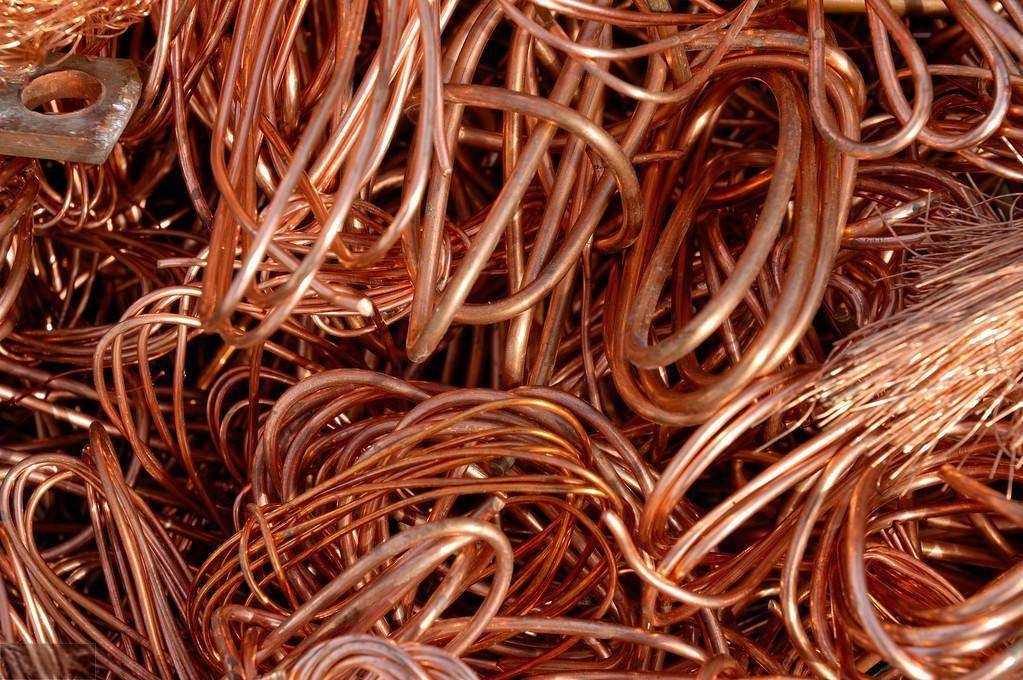
多地价格同步上涨!今日国内废铜回收市场最新价格,供参考
Sou Hu Cai Jing· 2025-07-18 13:59
Core Viewpoint - The waste copper market experienced significant price fluctuations over a week, driven by futures market dynamics, supply chain adjustments, and policy changes [2][6]. Group 1: Price Fluctuations - On July 10, the price of bright copper dropped by 200 yuan/ton to 72,200 yuan/ton, with a nationwide average falling to 65,000 yuan/ton, marking a single-day decline of 600 yuan, the lowest of the year [2]. - The futures market saw the main copper contract (CU888) drop over 500 yuan/ton from July 9 to 10, leading to panic selling in the waste copper market [2]. - By July 16, the main copper contract stabilized at 78,020 yuan/ton, prompting a recovery in waste copper prices, with the national average rising to 70,630 yuan/ton [2]. Group 2: Regional Price Competition - As of July 17, the price of bright copper wire in Nanyang and Xi'an reached 70,690 yuan/ton, only 10 yuan lower than Shanghai, with a previous price difference of 150 yuan a month prior [4]. - The transportation time for waste copper from North China to East China decreased from 5 days to 3 days, reducing transportation costs by 30 yuan/ton [4]. - The competition reshaped price tiers, with Nanyang and Xi'an in the top tier (70,680-70,690 yuan/ton) due to strong demand from local motor manufacturing [5]. Group 3: Quality Differentiation - On July 17, the average price of bright copper wire was 70,645 yuan/ton, while crushed yellow brass was priced at 68,230 yuan/ton, showing a price difference of 2,415 yuan [5]. - High-purity waste copper, such as bright copper wire, is increasingly viewed as "hard currency" in the market due to its critical role in battery-grade copper foil production [5]. Group 4: Market Dynamics and Policy Impact - The relationship between futures and waste copper prices is defined as: waste copper price = futures copper price × 90% - processing fee ± regional premiums [6]. - The implementation of new recycling regulations in Shanghai benefits compliant companies through a VAT refund policy, saving 420 yuan per ton of waste copper [6]. - Technological advancements, such as the use of laser sorting machines, have significantly improved waste copper recovery efficiency and purity, further driving up prices for high-grade copper [6].

纯苯:苯乙烯风险管理日报-20250718
Nan Hua Qi Huo· 2025-07-18 13:00
Industry Investment Rating - No relevant content provided Core Views - Fundamentally, the near - term surplus pattern of pure benzene remains unchanged, but new downstream production news strengthens the expectation of improved future demand for pure benzene. Styrene ports have significantly accumulated inventory, large traders started to sell near - month goods this week, and the near - month basis has weakened rapidly. Also, there have been frequent news of styrene plant overhauls this week, disturbing market sentiment. The pure benzene and styrene futures generally showed a volatile and weakening trend [4] Summary by Related Catalogs Price Forecast and Hedging Strategies - The monthly price forecast for pure benzene is 5800 - 6400 yuan/ton, and for styrene is 6900 - 7500 yuan/ton. The current 20 - day rolling volatility of styrene is 29.40%, and its historical percentile over 3 years is 85.8% [3] - For inventory management with high finished - product inventory and concerns about styrene price drops, it is recommended to short styrene futures (EB2509) with a 25% hedging ratio at an entry range of 7250 - 7350 yuan/ton to lock in profits and compensate for production costs. Also, sell call options (EB2509C7500) with a 50% hedging ratio at 70 - 90 to collect premiums and reduce capital costs [3] - For procurement management with low regular inventory and the need to purchase based on orders, it is recommended to buy styrene futures (EB2509) with a 50% hedging ratio at an entry range of 7050 - 7150 yuan/ton to lock in procurement costs in advance. Also, sell put options (EB2509P7100) with a 75% hedging ratio at 80 - 110 to collect premiums and reduce procurement costs [3] Core Contradiction Analysis - The near - term surplus of pure benzene remains, but future demand improvement is expected. Styrene port inventory has increased, large traders sold near - month goods, and the near - month basis weakened. Frequent plant overhaul news disturbed the market, and the overall trend of the two futures was volatile and weak [4] 利多解读 (Positive Factors) - There was a problem with Shenghong's fluidized bed, resulting in a 30% reduction in reforming and atmospheric - vacuum distillation loads, a decrease of 10,000 tons in pure benzene output and 30,000 tons in PX output, and the planned overhaul will last until the end of the month [5] - There were market rumors this week that the POSM unit of Zhejiang Petrochemical had a malfunction, resulting in a loss of 10,000 tons of styrene, and Jieyang Petrochemical's styrene plant will start an overhaul at the end of August, expected to last for half a month [5] - The prices of coking coal and coke were strong today, providing strong cost - side support [5] 利空解读 (Negative Factors) - As of July 14, 2025, the styrene inventory at Jiangsu ports was 138,500 tons, an increase of 27,000 tons or 24.22% from the previous period. Styrene inventory has significantly increased this week, large industrial traders started to sell near - month goods, and near - term liquidity has improved [6] - The styrene downstream has entered the seasonal off - season, and downstream factories mainly purchase raw materials for rigid demand without the intention to stockpile [6] - The latest production schedules of three major white - goods have been significantly revised down compared to the previous period, and the terminal's consumption demand expectation for the third quarter is pessimistic [8] Basis and Spread Analysis - The daily changes in the pure benzene basis showed a weakening trend, such as the华东 - BZ03 basis changing from - 202 to - 244, a decrease of 42 [8] - The daily changes in the styrene basis also showed a weakening trend, such as the华东 - EB07 basis changing from 140 to 50, a decrease of 90 [8] - The pure benzene - styrene industrial chain spreads showed various changes, for example, the styrene spot - pure benzene spot spread increased from 1450 to 1520 yuan/ton [8] Price Data - Brent crude oil price was 69.65 dollars/barrel, unchanged from the previous day and down from 70.63 dollars/barrel last week [9] - Among various pure benzene prices, the FOB Korea price was 722 dollars/ton, down 2 dollars/ton from the previous day [9] - Among styrene prices, the EB2507 price was 7350 yuan/ton, up 90 yuan/ton from the previous day [9] - The profits of related products showed different trends, such as the EB non - integrated profit remaining at - 51.4985 yuan/ton, and the EPS profit decreasing from 429 to 329 yuan/ton [9]
纯苯苯乙烯日报:硬胶库存压力持续-20250718
Hua Tai Qi Huo· 2025-07-18 02:39
1. Report Industry Investment Rating No information provided in the content. 2. Core Viewpoints of the Report - BZ futures maintain a certain premium, with strong downstream demand for pure benzene, leading to a decline in pure benzene port inventory from a high level. High开工 rates of styrene and CPL support demand, and the increase in polymer MDI开工 drives up aniline开工. However, the sustainability of high CPL开工 is questionable due to the decline in PA6 and nylon filament开工. On the supply side, the pressure of South Korean exports to China remains, and domestic开工 is still high, resulting in the continued weak consolidation of pure benzene processing fees. - For styrene, port inventory is rising rapidly, and the EB basis is further weakening. Domestically, EB maintains a high开工 rate. In terms of demand, EPS开工 is increasing, but there is still inventory pressure on PS and ABS, suppressing their开工 rates. - The recommended trading strategies are to remain on the sidelines for pure benzene, and to sell short styrene at high prices for hedging. For basis and inter - period spreads, conduct reverse hedging for near - month BZ paper goods against distant - end BZ2603 futures at high prices; conduct reverse inter - period spreads for EB2508 - 2509 and EB2509 - 2510. For cross - variety spreads, narrow the EB - BZ spread at high prices [3]. 3. Summary According to Relevant Catalogs 3.1 Pure Benzene and EB's Basis Structure and Inter - period Spreads - Pure benzene: The main basis of pure benzene is - 202 yuan/ton (+4), and the spread between East China pure benzene spot and M2 is - 85 yuan/ton (+5 yuan/ton). The spread between the first - month contract and the third - month contract is also provided in the figures [1][11]. - Styrene: The main basis of styrene is 116 yuan/ton (- 61 yuan/ton), and the inter - period spreads between EB2508 - 2509 and EB2509 - 2510 are recommended for reverse hedging [1][3]. 3.2 Production Profits and Internal - External Spreads of Pure Benzene and Styrene - Pure benzene: The CFR China processing fee is 160 dollars/ton (+2 dollars/ton), and the FOB South Korea processing fee is 143 dollars/ton (+2 dollars/ton). The price difference between the US and South Korea is 128.9 dollars/ton (- 24.1 dollars/ton). Downstream production profits include - 1818 yuan/ton (+42) for caprolactam, - 667 yuan/ton (+0) for phenol - acetone, - 97 yuan/ton (+74) for aniline, and - 1428 yuan/ton (- 14) for adipic acid [1]. - Styrene: The non - integrated production profit is - 54 yuan/ton (- 87 yuan/ton), and it is expected to gradually compress. The EB - BZ spread is recommended to be narrowed at high prices [1][3]. 3.3 Inventory and Operating Rates of Pure Benzene and Styrene - Pure benzene: The port inventory is 16.40 million tons (- 1.00 million tons), and the开工 rate of downstream products such as caprolactam is 91.72% (- 4.00%), phenol is 81.00% (+3.00%), aniline is 75.86% (+4.96%), and adipic acid is 64.80% (- 0.90%) [1]. - Styrene: The East China port inventory is 138,500 tons (+27,000 tons), the East China commercial inventory is 45,000 tons (+6,000 tons), and the开工 rate is 78.3% (- 0.9%) [1]. 3.4 Operating Rates and Production Profits of Styrene Downstream - EPS production profit is 324 yuan/ton (+119 yuan/ton), and the开工 rate is 53.18% (+2.12%). - PS production profit is - 126 yuan/ton (+69 yuan/ton), and the开工 rate is 50.60% (- 0.50%). - ABS production profit is 490 yuan/ton (+77 yuan/ton), and the开工 rate is 65.90% (+0.90%). The downstream开工 is at a seasonal low [2]. 3.5 Operating Rates and Production Profits of Pure Benzene Downstream - Caprolactam开工 rate is 91.72% (- 4.00%), and the production profit is - 1818 yuan/ton (+42). - Phenol - acetone开工 rate is 81.00% (+3.00%), and the production profit is - 667 yuan/ton (+0). - Aniline开工 rate is 75.86% (+4.96%), and the production profit is - 97 yuan/ton (+74). - Adipic acid开工 rate is 64.80% (- 0.90%), and the production profit is - 1428 yuan/ton (- 14) [1].
南华期货碳酸锂企业风险管理日报-20250717
Nan Hua Qi Huo· 2025-07-17 11:52
Report Summary 1. Industry Investment Rating No industry investment rating is provided in the report. 2. Core Views - The lithium mining, lithium salt, and battery cell markets are under significant inventory pressure, and the de - stocking process is slow. The medium - to - long - term supply - demand imbalance has not been substantially alleviated [3]. - There are two short - term logics in the market. In the price decline cycle, there is a negative feedback loop of "lithium salt price drop - mining price loosening - lithium salt price drop again". When the futures rebound, a "futures rise - capacity release - increased ore consumption - mining price increase" chain is formed, but it will return to the oversupply fundamentals under weak demand [3]. - The futures market in the second half of the year is expected to be divided into two stages: the futures price will oscillate upward at the beginning of the third quarter due to improved macro - sentiment, supply disturbances, and better - than - expected off - season performance; it will oscillate downward in the fourth quarter due to the end of technical upgrades and increased production [3]. - Strategy suggestions: Pay attention to the long - short spread trading opportunity between LC2509 and LC2511; look for opportunities to short LC2511 at high prices [3]. 3. Summary by Directory Futures Data - **Price Range Forecast**: The price of the lithium carbonate futures main contract is expected to oscillate between 63,000 - 70,000 yuan/ton, with a current 20 - day rolling volatility of 21.5% and a historical percentile of 28.1% over three years [2]. - **Contract Price and Volume Changes**: The closing price of the lithium carbonate main contract is 67,960 yuan/ton, up 1,540 yuan (2.32%) from the previous day and 3,780 yuan (5.89%) from the previous week. The trading volume is 826,939 lots, up 348,825 lots (72.96%) from the previous day and 428,917 lots (107.76%) from the previous week. The open interest is 363,676 lots, up 23,058 lots (6.77%) from the previous day and 39,993 lots (12.36%) from the previous week [10]. - **Month - spread Changes**: The LC08 - 11 month - spread is 880 yuan/ton, up 120 yuan (15.79%) from the previous day and 280 yuan (46.67%) from the previous week; the LC09 - 11 month - spread is 780 yuan/ton, up 200 yuan (34%) from the previous day and 520 yuan (200%) from the previous week; the LC11 - 12 month - spread is - 320 yuan/ton, down 80 yuan (33%) from the previous day and unchanged from the previous week [13]. Spot Data - **Lithium Ore Prices**: The average price of lithium mica (Li2O: 2 - 2.5%) is 1,465 yuan/ton, up 15 yuan (1.03%) from the previous day and 60 yuan (4.27%) from the previous week. The average price of lithium spodumene (Li2O: 6%, Brazilian CIF) is 702.5 US dollars/ton, up 7.5 US dollars (1.08%) from the previous day and 32.5 US dollars (4.85%) from the previous week [18]. - **Carbon/Hydrogen Lithium Prices**: The average price of industrial - grade lithium carbonate is 63,350 yuan/ton, unchanged from the previous day and up 1,300 yuan (2.10%) from the previous week. The average price of battery - grade lithium carbonate is 64,950 yuan/ton, unchanged from the previous day and up 1,300 yuan (2.04%) from the previous week [21]. - **Lithium Industry Chain Spot Spreads**: The battery - grade lithium carbonate - industrial - grade lithium carbonate spread is 1,600 yuan/ton, unchanged from the previous day and the previous week; the battery - grade lithium hydroxide - battery - grade lithium carbonate spread is - 2,380 yuan/ton, unchanged from the previous day and down 1,300 yuan (120.37%) from the previous week [23]. - **Downstream Product Prices**: The average price of power - type lithium iron phosphate is 31,345 yuan/ton, unchanged from the previous day. The average price of low - end energy - storage type lithium iron phosphate is 27,660 yuan/ton, unchanged from the previous day [25]. Basis and Warehouse Receipt Data - **Lithium Carbonate Basis**: The basis quotes of different lithium carbonate brands for the LC2507 contract range from - 400 to 500 yuan/ton, with most remaining unchanged [29]. - **Lithium Carbonate Warehouse Receipts**: The total number of warehouse receipts is 10,239 lots, a decrease of 416 lots from the previous day. Some warehouses such as Wugang Wuxi, Jiuling Lithium Industry (Yichun Fengxin), and Jiuling Lithium Industry (Yichun Yifeng) have seen a decrease in warehouse receipts [34]. Cost and Profit The report shows the production profit trends of lithium carbonate from purchased lithium spodumene concentrate (Li₂O: 6%) and lithium mica concentrate (Li₂O: 2.5%), as well as the theoretical delivery profit and import profit trends of lithium carbonate, but no specific numerical analysis is provided [32].
港口库存兑现明显累积
Hua Tai Qi Huo· 2025-07-17 04:58
Report Summary 1. Report Industry Investment Rating There is no information about the industry investment rating in the provided content. 2. Core Viewpoints - Overseas methanol production is operating at a high level, leading to significant arrival pressure in China and a rapid accumulation of port inventories. The short - term situation at ports remains weak. Meanwhile, the Xingxing MTO maintenance plan is yet to be implemented, and attention should be paid to the progress of Nanjing Chengzhi's maintenance or load - reduction plan in late July [2]. - In the inland region, short - term maintenance of coal - based methanol has reduced supply. Although the formaldehyde industry is in a seasonal off - peak period, the operating rates of MTBE and acetic acid are acceptable. There is still sufficient demand resilience inland, and the inventory pressure on inland methanol factories is not significant. The inland market is stronger than the port market [2]. 3. Summary by Directory I. Methanol Basis & Inter - period Structure - The report presents multiple charts showing methanol basis and inter - period spreads, including methanol Taicang basis and main contract, basis of different regions' spot - main futures, and spreads between different methanol futures contracts [6][22]. II. Methanol Production Profit, MTO Profit, and Import Profit - Charts are provided to display the production profit of Inner Mongolia coal - based methanol, the profit of East China MTO (PP&EG type), the import spread between Taicang methanol and CFR China, and the price differences between CFR Southeast Asia, FOB US Gulf, FOB Rotterdam, and CFR China [26][34]. III. Methanol Operation and Inventory - Data shows that the total port inventory of methanol is 790,200 tons (+71,300 tons), with Jiangsu port inventory at 454,000 tons (+59,000 tons), Zhejiang port inventory at 180,000 tons (+4,500 tons), and Guangdong port inventory at 106,000 tons (-6,000 tons). The downstream MTO operating rate is 85.15% (+0.55%). The inland factory inventory is 352,340 tons (-4,560 tons), and the northwest factory inventory is 218,000 tons (-10,000 tons). The inland factory's pending orders are 243,119 tons (+21,879 tons), and the northwest factory's pending orders are 113,600 tons (+13,600 tons) [1][2]. IV. Regional Price Differences - The report lists various regional price differences, such as the difference between northern Shandong and the northwest (-280 spread - 3 yuan/ton, +3 yuan/ton), the difference between Taicang and Inner Mongolia (-550 spread - 141 yuan/ton, -1 yuan/ton), etc. [2]. V. Traditional Downstream Profits - There are charts showing the production profits of traditional downstream products, including Shandong formaldehyde, Jiangsu acetic acid, Shandong MTBE isomerization etherification, and Henan dimethyl ether [55][60]. 4. Strategies - Unilateral: Hedge by short - selling the 09 contract at high prices. - Inter - period: Conduct reverse arbitrage on the MA09 - 01 inter - period spread at high prices. - Cross - variety: No strategy is provided [3].
股市必读:西部矿业(601168)7月14日董秘有最新回复
Sou Hu Cai Jing· 2025-07-14 17:40
Core Viewpoint - The company is facing significant investor concerns regarding its hedging strategies and financial performance amid rising copper prices, with calls for a reassessment of its risk management approach [2][3][10]. Financial Performance - As of July 14, 2025, the company's stock closed at 16.41 yuan, down 0.55%, with a turnover rate of 1.54% and a trading volume of 366,800 hands, amounting to a transaction value of 604 million yuan [1]. - The company has reported substantial losses from hedging activities, totaling over 1 billion yuan in the past two years, raising questions about its financial stability and strategy [7][11]. Hedging Strategy - Investors have expressed concerns that the company's hedging strategy has not effectively mitigated risks, particularly during periods of rising copper prices, leading to losses instead of profits [2][3][5]. - The company acknowledges the need to optimize its hedging strategies and has indicated a willingness to adjust its approach based on market conditions and risk assessments [3][10][11]. Market Conditions - Recent data indicates a significant decline in copper inventories, with LME copper stocks dropping to 9.3 million tons and SHFE copper stocks at 2.1 million tons, raising concerns about potential supply shortages and price volatility [4][9]. - The company is monitoring market dynamics closely, particularly the risks associated with potential short squeezes in the copper futures market, and is considering adjustments to its hedging ratios [5][10][11]. Investor Relations - The company has been responsive to investor feedback, acknowledging concerns about its hedging practices and the impact on shareholder value, and has committed to enhancing transparency and communication [3][6][10].

纯苯:苯乙烯风险管理日报-20250710
Nan Hua Qi Huo· 2025-07-10 02:38
Report Summary 1. Industry Investment Rating No investment rating is provided in the report. 2. Core View Entering the third quarter, pure benzene faces a situation of increasing supply and demand. Several large downstream plants are expected to be put into operation, bringing an opportunity for the phased repair of pure benzene valuation due to the mismatch in the commissioning of upstream and downstream. Fundamentally, the supply - demand pattern of styrene has weakened. However, in the near - term, due to continuous stockpiling by industrial giants, the basis of styrene in late July has not yet fallen back to the normal level. Subsequently, attention should be paid to the change of the near - term basis, and short - selling on rallies can be considered [3]. 3. Other Key Points Price Forecast - The price range of pure benzene in the monthly forecast is 5800 - 6200 yuan/ton, and that of styrene is 6800 - 7600 yuan/ton. The current 20 - day rolling volatility of styrene is 29.40%, and its historical percentile in the past 3 years is 85.8% [2]. Hedging Strategies - **Inventory Management**: For enterprises with high finished - product inventory worried about styrene price decline, they can short styrene futures (EB2508) with a 25% hedging ratio at an entry range of 7350 - 7400 yuan/ton to lock in profits and cover production costs; they can also sell call options (EB2508C7400) with a 50% hedging ratio at a range of 60 - 80 to collect option premiums and reduce capital costs, and lock in the spot selling price if styrene prices rise [2]. - **Procurement Management**: For enterprises with low regular procurement inventory planning to purchase according to orders, they can buy styrene futures (EB2508) with a 50% hedging ratio at an entry range of 7150 - 7200 yuan/ton to lock in procurement costs in advance; they can also sell put options (EB2508P7200) with a 75% hedging ratio at a range of 30 - 50 to collect option premiums and reduce procurement costs, and lock in the spot purchase price if styrene prices fall [2]. Market Analysis - **Likely Positive Factors**: Crude oil has been running strongly this week, providing strong support at the cost end. There is a long - short game in the styrene paper cargo for late July, making it difficult for the basis of late July against the 08 contract to decline [4]. - **Likely Negative Factors**: As of July 7, 2025, the port inventory of pure benzene in Jiangsu was 17.7 tons, a month - on - month increase of 1.69%, and the port inventory of styrene was 11.15 tons, an increase of 1.27 tons or 12.85% from the previous period. Both pure benzene and styrene have seen inventory accumulation. It is rumored that Jingbo may start a cracking unit at the end of July, and its 670,000 - ton/year styrene unit may produce products in mid - to - early August. Guoen Chemical (Dongming)'s 200,000 - ton/year styrene unit plans to start production in August and then operate long - term, which will significantly increase styrene supply in August. The latest production scheduling data of three major white - goods have been significantly revised down, indicating a pessimistic consumption demand expectation for styrene terminals in the third quarter [5]. Price and Basis Changes - **Pure Benzene Basis**: The basis of East China - BZ03 on July 9, 2025, was - 195 yuan/ton, East China - BZ04 was - 205 yuan/ton, East China - BZ05 was - 204 yuan/ton, and East China - BZ06 was - 175 yuan/ton [8]. - **Styrene Basis**: The basis of East China - EB07 on July 9, 2025, was 136 yuan/ton, East China - EB08 was 285 yuan/ton, East China - EB09 was 372 yuan/ton, and East China - EB10 was 447 yuan/ton [8]. - **Industrial Chain Price Spread**: The price spreads between different periods of pure benzene and styrene paper cargo, and between styrene and pure benzene at different time points and contracts have changed to different degrees. For example, the spread between styrene spot and pure benzene spot on July 9, 2025, was 1735 yuan/ton, an increase of 30 yuan/ton from the previous day [8]. Industry Chain Prices - **July 9, 2025 Prices**: Brent crude oil was 70.18 dollars/barrel, and the price of pure benzene in the East China market was 5905 yuan/ton, an increase of 30 yuan/ton from the previous day. The price of styrene in the East China market was 7635 yuan/ton, an increase of 30 yuan/ton from the previous day. EB2508 was 7350 yuan/ton, an increase of 74 yuan/ton from the previous day [9][10].
鸡蛋期货交割创纪录!586手配对破历史新高,现货跌至五年最低
Sou Hu Cai Jing· 2025-07-09 05:51
Core Insights - The egg futures market has reached a significant milestone with the 2507 contract rolling delivery volume hitting 290 lots and the number of delivery pairs exceeding 586 lots, marking a historical high for single contract deliveries in China's egg futures market [1] - The delivery participants show distinct characteristics, with sellers primarily consisting of large-scale domestic egg-laying enterprises and trading companies, while buyers are mainly institutional investors from Zhejiang [1] Market Context for High Delivery Volume - The 2507 egg futures contract remains in a contango structure, but the price gap between futures and spot prices is narrowing due to recent price declines, allowing egg-laying enterprises to hedge and lock in sales prices through futures [3] - Compared to the spot market's average transaction price of 2.50 yuan per jin, futures hedging has provided enterprises with a profit of approximately 0.30 yuan per jin, serving as an important risk management tool [3] - As of July 8, the basis for the 2508 egg futures contract relative to the national average was -995 yuan per 500 kg, with futures premiums at historically high levels for the same period [3] - On July 7, the main egg futures contract saw a decline of 3.74%, reaching a near five-year low, while egg prices in Handan, Hebei, dropped to 2.44 yuan per jin, also a five-year low, driven primarily by production capacity pressures [3] Supply and Demand Imbalance Driving Price Decline - Supply-side pressures are evident, with the national laying hen stock reaching approximately 1.34 billion birds in June, a month-on-month increase of 0.45% and a year-on-year increase of 6.77%, leading to an oversupply of eggs [4] - The average monthly price of eggs in major production areas was 2.76 yuan per jin, reflecting a month-on-month decline of 10.39% and a year-on-year decline of 26.79% [4] - Despite a significant decrease in the age of culling hens in May and June, the stock of laying hens remains high, with expectations of continued production capacity increases in July, estimated at around 1.35 billion birds [4] - Demand appears weak, as the current season is characterized by reduced school procurement due to summer vacations, shifting to household consumption, while high temperatures hinder egg storage, leading to cautious downstream purchasing [4] - Low-price zones are experiencing delivery and cold storage behaviors, which limit price declines, but this inventory may face selling pressure around September, potentially suppressing the market ahead of the Mid-Autumn Festival [4]

纯苯期货正式上市,有何影响?
券商中国· 2025-07-08 11:29
Core Viewpoint - The listing of pure benzene futures and options on the Dalian Commodity Exchange (DCE) is expected to enhance risk management tools for the chemical industry, supporting the transition from a "chemical power" to a "chemical strong country" in China [2]. Group 1: Market Performance - On the first trading day, all four pure benzene futures contracts closed up by approximately 0.5%, with a trading volume of 26,900 lots and a total transaction value of 4.788 billion yuan [3]. - The benchmark price for the contracts was set at 5,900 yuan per ton, with a total open interest of 5,419 lots [3]. Group 2: Industry Impact - The introduction of pure benzene futures and options will create a combination of hedging tools alongside styrene futures and options, providing effective means for enterprises to manage price risks and secure production profits during expansion cycles [2]. - Major industry players, including China Petroleum International Company and Xuyang Group, participated in the first day of trading, indicating strong interest from key stakeholders across the supply chain [4]. Group 3: Risk Management and Operational Efficiency - Companies like Xuyang Group and Hengshen Group emphasized that the new futures and options will allow for more proactive and refined management of raw material procurement and sales risks, enhancing operational stability and market competitiveness [4][6]. - The listing is expected to improve inventory management and reduce holding costs, thereby increasing capital efficiency for enterprises [5]. Group 4: Delivery Mechanism - The delivery method for pure benzene futures involves a physical delivery system with both factory and warehouse options, with a delivery unit of 30 tons [7]. - Jiangsu, Zhejiang, and Shanghai have been designated as the benchmark delivery locations due to their status as major production and trading areas for pure benzene [7].

锌供应链企业巧用基差增利润
Qi Huo Ri Bao Wang· 2025-07-08 00:59
Group 1 - In March 2024, strong expectations for a Federal Reserve interest rate cut in June and favorable domestic policy expectations led to a rise in zinc prices, with the main contract reaching a two-year high of 25,365 yuan/ton [1] - By the second quarter of 2024, the trading logic shifted from interest rate cuts to concerns about secondary inflation in Europe and the U.S., causing further increases in zinc prices [1] - The volatility in zinc prices significantly increased operational risks for companies, making futures hedging essential [1] Group 2 - As of the end of March 2024, despite a rapid increase in zinc prices, downstream demand did not improve significantly, leading to a continuous accumulation of social inventory [2] - From July 2024, the spot premium in South China began to rise, peaking at 240 yuan/ton in mid-September before falling back to 15 yuan/ton [2] - The fluctuation of basis affects the effectiveness of futures hedging, making it crucial for companies to determine the basis accurately [2] Group 3 - In 2023, several overseas mines faced production halts, exacerbating the tight supply of zinc concentrate and leading to a decline in processing fees [3] - The supply issues for zinc concentrate worsened in 2024, resulting in a significant reduction in smelting profits and subsequent production cuts by smelters [3] Group 4 - A supply chain management company established in April 2023 focuses on zinc concentrate and zinc ingot procurement and sales, facing challenges due to price volatility [6] - The company engages in high-frequency trading to improve capital turnover and mitigate risks associated with price fluctuations [6] Group 5 - A futures company developed a hedging strategy for the supply chain company, prioritizing spot purchases and short futures when the basis is negative, and pre-selling spot and long futures when the basis is positive [7] - This strategy effectively hedges against single-sided risks in spot trading while capturing basis profits [7] Group 6 - On October 14, 2024, the supply chain company purchased 30 tons of spot zinc at an average price of 24,953 yuan/ton and sold futures at an average price of 25,250 yuan/ton, resulting in a total profit of 4,560 yuan [8] - On October 28, 2024, the company pre-sold 30 tons of zinc ingots at an average price of 24,860 yuan/ton and established long futures, achieving a total profit of 11,010 yuan [8] Group 7 - The case study illustrates that companies should not mechanically follow procurement and sales plans but should anticipate spot premiums or basis changes to enhance hedging effectiveness and increase trade profits [9]