
滞胀风险

Search documents
7月美联储议息会议点评:美股似乎开始计入9月不降息预期
CMS· 2025-07-31 01:39
Monetary Policy - The Federal Reserve maintained the federal funds target rate at 4.25%-4.50% and kept the balance sheet reduction pace unchanged at $50 billion per month for U.S. Treasuries and $35 billion per month for MBS[5] - Powell expressed concerns about stagflation risks, indicating that as long as the inflation gap exceeds the employment gap, the Fed will find it difficult to lower interest rates[7] Inflation and Tariffs - As of May, the actual tariff rate for the U.S. was approximately 9.6%, with potential increases to 15%-16% after new tariffs take effect on August 1, and possibly up to 18%-19% when considering specific goods[2] - The effective tariff rate could pose an inflation risk of 30-60 basis points, with the impact on inflation data expected to manifest in September and further affect October-November figures[2] Market Outlook - Short-term volatility in U.S. stocks is anticipated, but the medium-term outlook remains bullish due to trade agreements and supportive government policies[3] - The market currently prices a 45.2% probability of a rate cut in September, indicating that the risk-free rate is no longer a positive factor[8] Economic Indicators - The U.S. economy grew by 1.2% in the first half of the year, down from 2.5% the previous year, with consumer spending slowing and real estate remaining weak[4] - Labor market conditions are showing synchronized declines in demand and supply, with a focus on the unemployment rate as a key indicator[6]
招商宏观:只要通胀缺口高于就业缺口美联储就难以降息
news flash· 2025-07-30 23:47
Core Viewpoint - The report from招商宏观 indicates that as long as the inflation gap remains higher than the employment gap, the Federal Reserve will find it difficult to lower interest rates [1] Group 1: Inflation Concerns - Powell expresses significant concern over inflation risks, suggesting that the current inflation is above target levels [1] - The Federal Reserve's forward guidance in June highlighted concerns about stagflation, which continued into July [1] Group 2: Employment Situation - Employment is currently at target levels, which contrasts with the elevated inflation, leading to a need for a moderately restrictive policy [1] - The focus on inflation over employment suggests a prioritization of controlling price levels in the current economic environment [1] Group 3: Policy Implications - The necessity for Powell to confirm that tariff-induced inflation impacts are fully reflected in the current economic assessments [1]
黄金亚盘延续反弹微涨,追多或上方承压空单布局
Sou Hu Cai Jing· 2025-07-30 03:36
Group 1 - The core viewpoint of the articles revolves around the fluctuations in gold prices, influenced by multiple factors including the upcoming Federal Reserve interest rate decision, U.S.-China trade negotiations, and global risk sentiment [1][3][4] - Gold prices experienced a rebound, reaching a peak of $3333.93 per ounce before closing at $3326.35, reflecting a 0.36% increase after a drop to $3302, the lowest since July 9 [1] - The Federal Reserve is expected to maintain interest rates in the 4.25%-4.50% range, but there are indications of potential dovish signals in the policy statement due to mixed economic data [3] Group 2 - The U.S.-China trade talks have led to an extension of the tariff truce, with China confirming efforts to push for the suspension of certain tariffs, although the negotiations are expected to be complex and lengthy [4] - Recent trade agreements between the U.S. and the EU, as well as Japan, may influence the Federal Reserve's decisions, potentially reducing external risks and creating space for a dovish shift [4] - The current gold market is at a critical turning point, with strong support at the $3300 level and resistance around $3350, influenced by both global trade tensions and expectations of a shift in Federal Reserve policy [5]


综合晨报:美日协议详细版本公布,美7月PMI创半年新低-20250725
Dong Zheng Qi Huo· 2025-07-25 00:44
Report Industry Investment Rating No relevant content provided. Core Viewpoints of the Report - The US economy shows mixed data with manufacturing facing stagflation risks but services remaining resilient. Market risk preferences are generally high, and various asset prices are affected by factors such as trade agreements, policy expectations, and supply - demand fundamentals [13][21]. - The European Central Bank maintains interest rates and is in a wait - and - see mode, which impacts the short - term trends of the euro and the US dollar index [16][17]. - In the commodity market, different commodities have different trends and investment outlooks based on their own supply - demand situations, policy impacts, and other factors [3][28][30]. Summary by Directory 1. Financial News and Comments 1.1 Macro Strategy (Gold) - Eurozone central bank interest rates meet market expectations, and the ECB does not provide forward - looking guidance due to unclear tariff policies. The US 7 - month Markit manufacturing PMI drops to 49.5, while the service and composite PMIs reach new highs since December last year. Gold prices are weak in a shock, and short - term gold lacks upward momentum and remains in a shock state [12][13][14]. 1.2 Macro Strategy (Foreign Exchange Futures - US Dollar Index) - Trump's allies sue the Fed, and the ECB maintains interest rates. The US dollar index is expected to fluctuate in the short term as the euro gets a short - term boost [15][16][18]. 1.3 Macro Strategy (US Stock Index Futures) - The US and Japan reach a detailed agreement, and South Korea plans to use corporate investment in the US as a bargaining chip. The US stock market is driven by performance, and the short - term market risk preference remains high but may face callback risks [19][20][21]. 1.4 Macro Strategy (Stock Index Futures) - The Shanghai Composite Index stands above 3600 points, and it is recommended to allocate assets evenly [22][24][25]. 1.5 Macro Strategy (Treasury Bond Futures) - The central bank conducts reverse repurchase operations with a net withdrawal of funds. The market risk preference is strong, and short - term treasury bond futures should be treated with a defensive mindset [26][27]. 2. Commodity News and Comments 2.1 Agricultural Products (Soybean Meal) - The USDA weekly export sales report meets expectations. CBOT soybeans continue to fluctuate, and it is recommended to maintain a shock - based approach and pay attention to weather and Sino - US relations [28][29]. 2.2 Agricultural Products (Sugar) - Issues such as insufficient US sugar production, drought in Russia, and Indian sugar exports are present. Zhengzhou sugar is expected to fluctuate mainly, and attention should be paid to the resistance level of 5900 [30][32][33]. 2.3 Agricultural Products (Soybean Oil/Rapeseed Oil/Palm Oil) - Forest fires in Indonesia may affect palm oil production, and palm oil prices may rise further [34]. 2.4 Black Metals (Rebar/Hot - Rolled Coil) - Steel inventories show a slight decrease, and steel prices are supported by policies but may face risks. It is recommended to be cautious in the short term and pay attention to hedging opportunities [35][37][38]. 2.5 Agricultural Products (Corn Starch) - The port inventory of cassava starch decreases, and the price difference with corn starch slightly widens. Starch enterprises may continue to face losses, and the operating rate is expected to remain low [39][40]. 2.6 Agricultural Products (Corn) - Corn consumption and inventory of deep - processing enterprises both decline. New - crop short positions can be held, and attention should be paid to rebound and additional - position opportunities [41][42]. 2.7 Black Metals (Steam Coal) - Coal prices are expected to remain strong due to policy and seasonal factors, and attention should be paid to whether the price can reach 700 yuan [43]. 2.8 Black Metals (Iron Ore) - Anglo American's iron ore production and sales in Q2 show differences. Iron ore prices are expected to fluctuate in the short term, and it is recommended to wait and see [44][45]. 2.9 Agricultural Products (Pigs) - New Wufeng's pig sales are reported. The pig market has a complex supply - demand situation, and it is necessary to be cautious about chasing long positions [46][47][48]. 2.10 Non - ferrous Metals (Copper) - Issues such as increased maintenance costs of the Panama copper mine and US copper tariffs are present. Copper prices are expected to fluctuate at a high level in the short term, and it is recommended to wait and see [49][52][53]. 2.11 Non - ferrous Metals (Polysilicon) - There are plans to revise the energy - consumption standard for polysilicon. It is recommended to gradually take profits on long positions and consider short - term light - position shorting through options [54][55]. 2.12 Non - ferrous Metals (Industrial Silicon) - Industrial silicon inventory decreases, and production capacity may increase. It is recommended to take a short - term bullish view and pay attention to the resumption of production by large factories [56][57]. 2.13 Non - ferrous Metals (Nickel) - LME nickel inventory decreases. Nickel prices may follow the non - ferrous sector to be strong in the short term and decline in the medium term. It is recommended to wait and see in the short term and look for short - selling opportunities at high prices [58][59]. 2.14 Non - ferrous Metals (Lithium Carbonate) - Tesla's new plans and supply - side uncertainties affect lithium carbonate prices. It is recommended to wait and see [60][61]. 2.15 Energy and Chemicals (Liquefied Petroleum Gas) - The weekly commodity volume of LPG decreases, and inventory shows different trends. LPG prices are expected to fluctuate weakly [62][63][64]. 2.16 Energy and Chemicals (Carbon Emissions) - The CEA price fluctuates slightly, and it is recommended to wait and see in the short term [65][66]. 2.17 Energy and Chemicals (Natural Gas) - US natural gas inventory increases. NYMEX natural gas is expected to fluctuate in the short term [67][68]. 2.18 Energy and Chemicals (Caustic Soda) - The price of caustic soda in Shandong rises locally. The upward momentum of the caustic soda futures contract may weaken [69][70]. 2.19 Energy and Chemicals (Pulp) - The price of imported wood pulp is mostly stable. Investors should be aware of the risks of pulp being hyped by funds [71]. 2.20 Energy and Chemicals (PVC) - The price of PVC powder mostly rises. Investors should be aware of the risks of PVC being hyped by funds [72][73]. 2.21 Energy and Chemicals (Bottle Chips) - Bottle chip factories are implementing production - cut plans. It is recommended to pay attention to the opportunity of expanding processing fees by buying low and rolling [74][75]. 2.22 Energy and Chemicals (Soda Ash) - Soda ash inventory decreases. The short - term futures price may fluctuate greatly, and it is recommended to operate carefully [76][77][78]. 2.23 Energy and Chemicals (Float Glass) - The price of float glass rises. It is recommended to operate cautiously on a single side and focus on the arbitrage strategy of buying glass and shorting soda ash [79][80]. 2.24 Shipping Index (Container Freight Rates) - US port container imports decline for two consecutive months. It is recommended to pay attention to short - selling opportunities in the short term [81][82].
瑞达期货宏观市场周报-20250718
Rui Da Qi Huo· 2025-07-18 10:15
Report Summary 1. Report Industry Investment Rating No industry investment rating is provided in the report. 2. Core Viewpoints - The overall economic data is positive, which drives the stock market to rise. The A - share major indexes and stock index futures all increased this week, with small and medium - cap stocks outperforming large - cap blue - chip stocks. The bond market is under pressure due to the strong performance of the equity market, but the long - term bullish foundation of the bond market remains intact considering the weak economic fundamentals, balanced and loose capital, and low inflation [6]. - The U.S. dollar may rebound in the short - term but is likely to remain weak in the medium - term due to factors such as tariff - related inflation risks, profit compression of enterprises, and structural contradictions. The recovery momentum of the eurozone and Japan is different, and trade frictions have affected market confidence [10]. - China's economic growth in the first half of the year exceeded expectations, with manufacturing and domestic demand driving the economy. Fixed - asset investment is stable, but the real estate market needs further improvement [11]. 3. Summary by Directory 3.1 This Week's Summary and Next Week's Allocation Suggestions - **Stock**: The A - share major indexes and four stock index futures all increased this week, with small and medium - cap stocks stronger than large - cap blue - chip stocks. The release of positive economic data promoted the rise of the stock market. The allocation suggestion is to watch cautiously [6]. - **Bond**: This week, the bond futures showed a pattern of short - term strength and long - term weakness. The equity market's strength suppressed the bond market sentiment, but the long - term bullish foundation of the bond market remains. The allocation suggestion is to watch cautiously [6]. - **Commodity**: The commodity market may strengthen further due to factors such as the GDP growth meeting expectations and the approaching Politburo meeting. The allocation suggestion is to buy on dips [6]. - **Foreign Exchange**: The U.S. dollar is in a volatile and slightly stronger trend, while the euro and the euro - dollar futures decreased. The short - term pressure on the euro and yen is affected by the U.S. dollar's rebound. The allocation suggestion is to watch cautiously [6]. 3.2 Important News and Events - **Domestic**: China's macro - policies have achieved results, and the economic growth in the first half of the year exceeded expectations. The Ministry of Finance issued a notice to guide long - term and stable investment of insurance funds, which is beneficial to the capital market [11][14]. - **International**: Trump announced tariffs on Canadian goods, and the U.S. and Indonesia reached a tariff agreement. The EU prepared to impose counter - tariffs on U.S. goods, and the Fed's "Beige Book" showed a slightly pessimistic economic outlook [16]. 3.3 This Week's Domestic and International Economic Data - **China**: In June, the export and import rates improved, the M1 and M2 money supply increased, the second - quarter GDP growth rate was 5.2%, and the industrial added value increased by 6.8%. However, the growth rate of fixed - asset investment and social consumption decreased [17]. - **U.S.**: In June, the CPI met expectations, the PPI decreased, and the initial jobless claims in the week ending July 12 were lower than expected [17]. - **EU**: In May, the industrial output increased, and the June CPI remained stable [17]. - **UK**: In June, the retail price index increased, and the unemployment rate slightly rose [17]. 3.4 Next Week's Important Economic Indicators and Economic Events - Next week, important economic data such as China's one - year loan prime rate, U.S. existing home sales, eurozone central bank deposit rate, and UK consumer confidence index will be released [82]. 3.5 Central Bank's Open Market Operations This week, the central bank conducted 172.68 billion yuan of reverse repurchase operations, with 52.57 billion yuan of reverse repurchase maturing, resulting in a net injection of 120.11 billion yuan [19].

东海证券晨会纪要-20250717
Donghai Securities· 2025-07-17 04:02
Group 1 - The report emphasizes the solid global dominance of the rare earth industry, highlighting growth opportunities in high-end applications, particularly in sectors like new energy vehicles, wind power, and industrial robots [5][6][10] - The report outlines strict mining and smelting quotas in China, with the first batch of rare earth quotas for 2025 expected to remain stable or slightly increase, indicating no comprehensive relaxation of controls [5][6] - Export controls are tightening, particularly for heavy rare earths, which may lead to increased demand for domestic resources and support for leading companies in the industry [6][10] Group 2 - The report notes that the tightening of export controls on medium and heavy rare earths is expected to pressure downstream supply, with potential instability in imports from Myanmar [8] - It highlights the dual driving forces of new energy and high-end manufacturing, with a focus on increasing the export share of high-end permanent magnets while reducing low-value product exports [8][11] - The report suggests that leading companies may receive policy support for priority mining, which could alleviate the current shortage of rare earth resources [6][10] Group 3 - The report discusses the impact of U.S. inflation data, indicating that the June 2025 CPI data aligns with expectations, with a year-on-year increase of 2.7% and a core CPI of 2.9% [12][13] - It highlights that inflation is influenced by rising energy prices, tariff transmission, and expectations from new fiscal policies, which may lead to increased "stagflation" risks in the U.S. economy [13][16] - The report indicates that the core service inflation remains stable, primarily affected by the housing market, while other core services like medical and transportation show moderate increases [15][16] Group 4 - The report provides insights into the A-share market, noting a slight decline in the Shanghai Composite Index, with a closing value of 3503 points, indicating a mixed market performance [20][21] - It mentions that the chemical pharmaceutical sector showed the highest increase among industry sectors, while energy metals and steel sectors faced declines [22][23] - The report emphasizes the importance of monitoring key support levels in the index, particularly the 10-day moving average, to gauge short-term market trends [20][21]
美股怎么了? 三大“灰犀牛”正在逼近
Qi Huo Ri Bao Wang· 2025-07-17 00:46
Group 1: Market Reactions and Economic Indicators - On July 7, Trump announced a new round of tariff measures, leading to a muted reaction in financial markets, with the S&P 500 and Nasdaq indices down by only 0.79% and 0.92% respectively [1] - The U.S. stock market rebounded in the first half of the year due to factors such as TACO trading, fiscal expansion, resilient job market, and stock buybacks, despite facing four instances of simultaneous declines in stocks, bonds, and currencies [1] - Historical data suggests that U.S. monetary tightening or economic stagflation poses the greatest threat to the stock market, although the potential for the Federal Reserve to restart rate cuts may provide support [1] Group 2: Liquidity and Debt Issuance - The U.S. Treasury's resumption of debt issuance in Q3 is expected to create a "drain" effect on dollar liquidity, potentially forcing the Federal Reserve to release liquidity by slowing down quantitative tightening or cutting rates [2] - The net debt issuance by the U.S. Treasury is projected to be around $1 trillion in Q3, partly to refinance maturing debt and meet other financing needs [2] Group 3: Inflation and Tariff Impact - Recent tariff threats from the Trump administration could raise the effective tariff rate from 13.4% to 14.9%, with a potential increase to 18%-20% in a "no deal" scenario, raising concerns about stagflation risks in the U.S. economy [5][6] - There are indications that inflationary pressures from tariffs are beginning to manifest, with a survey showing the highest percentage of small businesses planning to raise prices since March 2024 [6] Group 4: Corporate Earnings and Market Volatility - The second quarter earnings season for U.S. stocks has begun, with expectations of a significant slowdown in profit growth, largely influenced by tariff uncertainties [9] - According to FactSet, S&P 500 companies are expected to see only a 5% profit growth in Q2, marking the slowest growth since Q4 2023, with six out of eleven sectors projected to grow year-over-year [9] - The technology sector, particularly large tech companies, is expected to drive earnings growth, but any decline in tech stock performance could lead to increased pressure on the broader market [9][10]
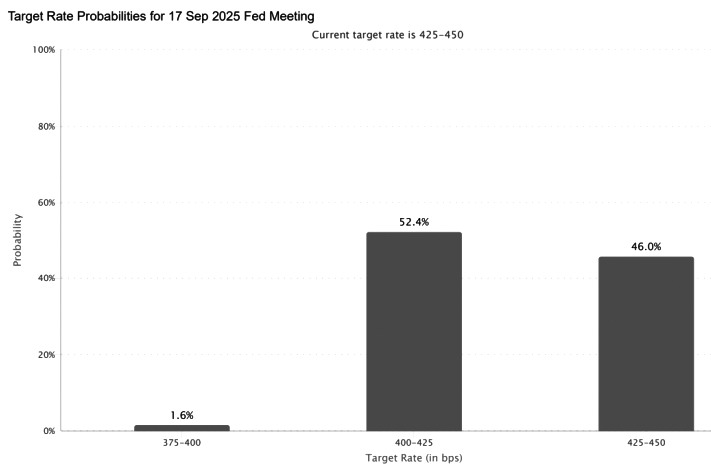
6月CPI年率如期抬头,关税引发的通胀就此开始?7月美联储降息预期或彻底落空,9月还有希望吗?
news flash· 2025-07-15 13:24
Group 1 - The core viewpoint of the article highlights the current Consumer Price Index (CPI) trends and their implications for monetary policy, particularly regarding the Federal Reserve's interest rate decisions [13][17]. - The overall CPI stands at 2.7%, with specific categories showing varied inflation rates, such as food at 5.6% and energy at -0.8% [4][7]. - The article discusses the regional CPI variations, with the South region showing the lowest CPI at 2.3% and the New England region at 3.1% [10][12]. Group 2 - Analysts express skepticism about the CPI report prompting the Federal Reserve to lower interest rates before September, citing the impact of upcoming tariffs [16][18]. - The article notes that the average effective tariff rate in the U.S. has risen significantly from 2.4% in January to 20.6% by mid-July, the highest level since 1910, which may contribute to inflationary pressures [17]. - There are indications of economic weakness, with some service prices showing signs of consumer confidence fragility, despite certain goods experiencing price increases [18].

关税冲击显现!美国6月CPI小幅上升
Jin Shi Shu Ju· 2025-07-15 12:59
Group 1 - The core viewpoint of the articles indicates that the inflation rate in the U.S. has slightly accelerated due to the impact of tariffs, with the June CPI year-on-year rate reaching 2.7%, the highest since February, and the core CPI at 2.9%, also the highest since February but below the expected 3% [1][4] - The increase in tariffs has led to a significant rise in the average effective tariff rate in the U.S., from 2.4% in January to 20.6% by July 14, marking the highest level since 1910 [4] - Analysts express concerns that the latest consumer price index may not fully reflect the impact of tariffs on inflation, suggesting that the risk of stagflation remains a significant drag on the dollar [4] Group 2 - Following the inflation data release, there was significant volatility in the gold market and the U.S. dollar index, indicating market sensitivity to inflation figures [2] - The likelihood of the Federal Reserve cutting interest rates this month remains low, but there is a high probability of a 25 basis point cut in September, amidst ongoing trade tensions [5] - The lower-than-expected core CPI has raised questions about the extent to which tariffs will affect consumer prices, with some companies absorbing additional costs to shield consumers from price increases [6]
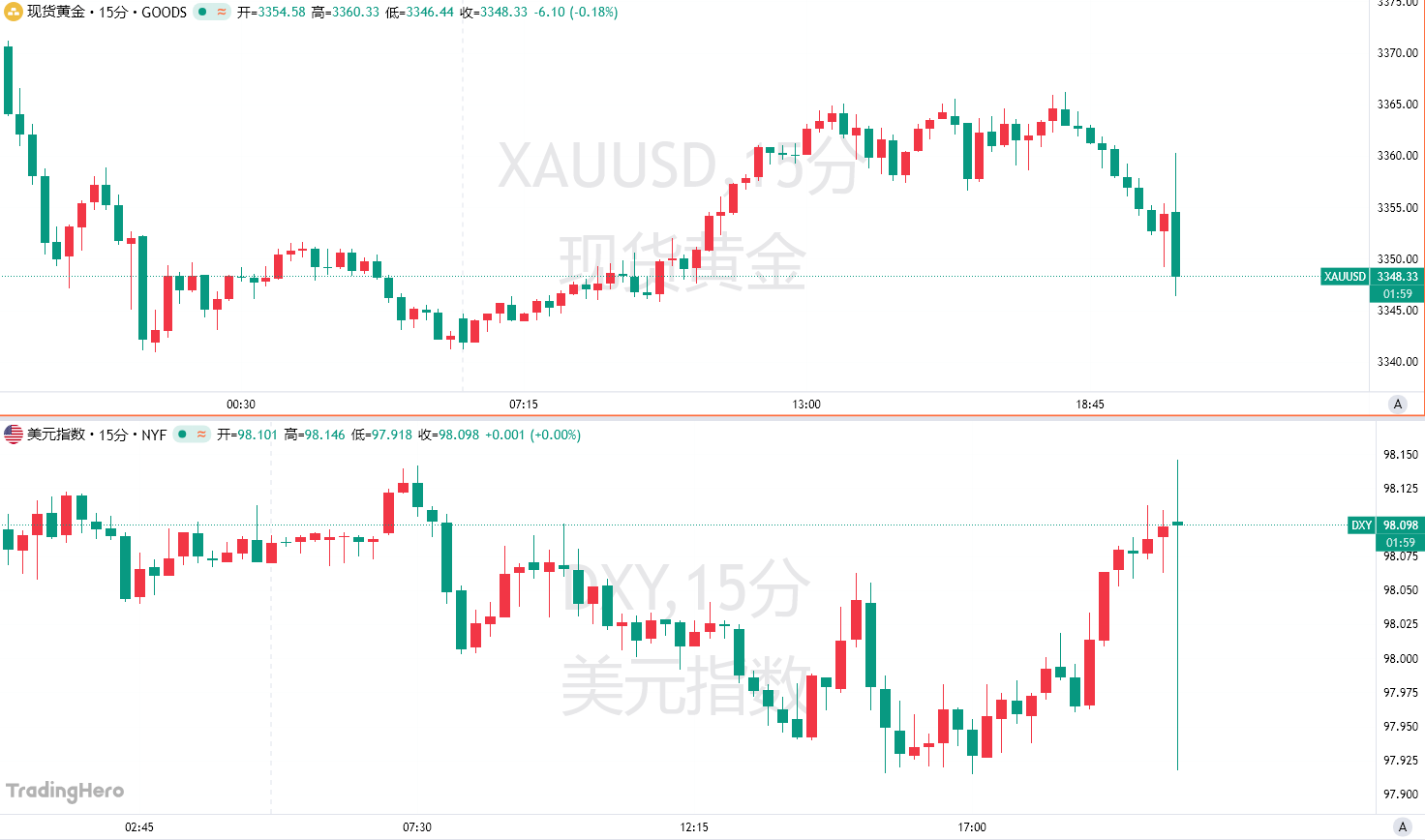
BBH:怀疑CPI数据并未充分反映关税对通胀的影响
news flash· 2025-07-15 12:50
Core Viewpoint - The analysis from Brown Brothers Harriman suggests skepticism regarding the Consumer Price Index (CPI) data's reflection of tariff impacts on inflation, indicating that the inflationary pressure from rising tariffs remains moderate [1] Summary by Relevant Categories Tariff Impact - The average effective tariff rate in the U.S. has increased from 2.4% in January to 20.6% as of July 14, marking the highest level since 1910 [1] Inflation Concerns - The potential for stagflation remains a significant concern, which is identified as a major factor dragging down the U.S. dollar [1]