
经济软着陆

Search documents
美联储降息后,投资者的下一个焦点是啥?
Sou Hu Cai Jing· 2025-09-25 07:20
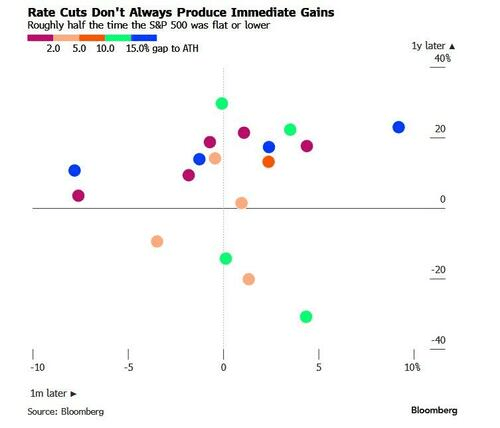
Core Viewpoint - The Federal Reserve's recent interest rate cut has shifted investor focus from whether rates will be lowered to the stability of the U.S. economy and its impact on the stock market's performance at historical highs [3]. Group 1: Economic Outlook - The Fed's decision to cut rates was supported by Chairman Powell, overcoming internal disagreements, and the market anticipates up to three more cuts by March next year [3]. - A recent Bank of America survey indicates that 67% of fund managers believe in a "soft landing" for the economy, while only 10% fear a recession [4]. Group 2: Historical Context - Historical data shows that global and European stock markets typically benefit from Fed rate cuts, especially when no recession follows, leading to stronger stock performance [5]. - Barclays' strategist Emmanuel Cau found that in past instances of rate cuts without subsequent recession, European stocks often outperformed U.S. stocks [5]. Group 3: Market Sentiment and Concerns - Despite overall optimism, some market participants express caution regarding the sustainability of the current market rally, noting that rate cuts do not guarantee immediate stock market gains [6]. - Concerns arise about the sources of upward momentum in the market, as institutional investors are heavily invested, and stock buybacks are slowing down [7]. - The current market rally is largely driven by a few "star stocks," indicating a narrow breadth of market participation, which raises concerns about overall market health [8]. Group 4: Investment Strategy Recommendations - Strategists suggest diversifying investments beyond the U.S. market, as historical trends indicate that global markets benefit from Fed rate cuts [9]. - There is a recommendation to consider European and other international stocks as potential opportunities, especially given their performance relative to U.S. stocks during similar economic conditions [9].

周度经济观察:国内财政力度减弱,海外降息周期重启-20250923
Guotou Securities· 2025-09-23 09:35
Group 1: Economic Overview - In August, general public budget revenue growth was 2.0%, a decrease of 0.6 percentage points from the previous month, indicating a weakening fiscal expansion[4] - August public budget expenditure growth was 0.8%, down 2.2 percentage points from the previous month, marking the second-lowest level of the year[6] - Government fund revenue in August fell by 6.0%, a significant drop of 15.4 percentage points from the previous month, primarily due to declining land transfer income[7] Group 2: Market Trends - The bond market is experiencing rising yields, influenced more by risk appetite and trading behavior rather than fundamental economic data[2] - The U.S. Federal Reserve has initiated a rate cut cycle, with expectations for further cuts in October and December, which may support a strong performance in the U.S. stock market[2][17] - The S&P 500 index has been fluctuating around 3800, with TMT sectors showing strong performance while dividend-paying sectors lag behind[11] Group 3: Future Outlook - The effectiveness of growth stabilization policies in the fourth quarter remains uncertain, particularly in the real estate, manufacturing, and consumption sectors[10] - The ongoing liquidity environment and fiscal expansion are expected to provide a basic support for the equity market, especially benefiting small-cap stocks[11][21] - The anticipated U.S. rate cuts and tax reduction policies may further bolster the U.S. economy, leading to a continued strong performance in the stock market[21]
【迈科宏观经济及贵金属周报】美联储货币政策预期宽松,贵金属延续偏强走势丨2025.09.23
Sou Hu Cai Jing· 2025-09-23 00:54
Core Viewpoint - The Federal Reserve's monetary policy expectations are leaning towards easing, which supports a bullish trend in precious metals [1] Group 1: Precious Metals Market - Last week, precious metal prices experienced a strong upward trend, driven by expectations of a loose monetary policy from the Federal Reserve ahead of the interest rate meeting [2] - Following the Federal Reserve's announcement of the September interest rate meeting results, precious metal prices saw a brief adjustment but rebounded due to increased risk aversion, maintaining an overall bullish trend [2][49] - The initial jobless claims in the U.S. slightly decreased to 231,000 from 264,000, alleviating concerns about the labor market, although it remains above the average levels of July and August, indicating potential weakness [4] Group 2: Economic Indicators - The U.S. retail sales data showed a year-on-year increase of 5.0% and a month-on-month increase of 0.63% in August, indicating a significant improvement compared to the second quarter [8] - The Federal Reserve raised its GDP growth forecast for 2025 and 2026 by 0.2 percentage points to 1.6% and 1.8%, respectively, while maintaining the inflation forecast for 2025 [14] - The Federal Reserve's dot plot indicates a consensus for two more rate cuts within the year, with expectations for cuts in October and December [15] Group 3: Market Sentiment and Risks - The market sentiment remains cautious due to concerns over U.S. government funding and trade risks between the U.S. and China, which could lead to short-term volatility [2][49] - The SPDR gold ETF holdings increased by 19.76 tons to 994.56 tons, reflecting a bullish sentiment in the market as gold prices rise [28] - The SLV silver ETF holdings rose by 135.53 tons to 15,205.14 tons, indicating a recovery in market sentiment following a period of decline [31]

无法承受的失败
Hu Xiu· 2025-09-22 23:34
Group 1 - The article discusses the potential return to a level of globalization similar to the 1990s by the mid-21st century, using the song "Eyes On Me" by Faye Wong as a metaphor for global cultural connections [1] - It highlights the stark political divisions that arise after significant political events, such as assassinations, and the two contrasting responses: either a call for unity or an escalation of conflict [2][3] - The article references historical examples, such as the assassination of Yitzhak Rabin and Olof Palme, to illustrate how political polarization often persists despite calls for peace [4][5] Group 2 - The discussion shifts to economic implications, particularly in the context of interest rate cuts, emphasizing the confusion and uncertainty that typically follows such decisions [12] - It raises concerns about the possibility of a hard landing for the economy, which will influence short-term risk preferences [13] - The long-term outlook focuses on the next economic expansion cycle, questioning whether inflation or actual growth will be more favorable, which will determine investment strategies [14] Group 3 - The article suggests that in a politically polarized environment, there is a low tolerance for failure, which could lead to higher inflation rates [15] - It reflects on a previous economic outlook titled "Unbearable Recession," emphasizing that in a politically divided world, failure is particularly hard to accept [16] - The conclusion encourages preparation for upcoming challenges while appreciating the calm before potential turmoil [17]
宏观与资产论(20250921):“重启”降息,对资产有何影响?
Western Securities· 2025-09-21 06:41
Monetary Policy Impact - On September 17, the Federal Reserve "restarted" interest rate cuts, lowering the federal funds rate target range by 25 basis points to between 4.0% and 4.25%[2] - This 25 basis point cut was anticipated due to recent economic indicators showing a slowdown, particularly in non-farm employment[2] - The Fed's cautious stance suggests a likelihood of another 25 basis point cut in October, while December's expectations remain uncertain[2] Historical Context - The Fed has previously experienced seven instances of "hawkish rate cuts" after pausing, often in response to confirmed economic weakness or crisis events[2] - The current rate cut is categorized as a "preventive rate cut," similar to historical instances in 1985, 1995, and 2002, which reflect economic uncertainty but aim for a soft landing[3] Market Reactions - Historical analysis shows that "preventive" rate cuts tend to positively influence emerging market stocks, growth stocks, and commodities, while the dollar may weaken[3] - Following the Fed's rate cut, global stock performance is likely to depend on the U.S. economic fundamentals, with past instances showing varied outcomes based on economic conditions[3] Economic Indicators - The Fed's median projections for GDP growth from 2025 to 2027 have been revised upward to 1.6%, 1.8%, and 1.9%, respectively, while unemployment rates are expected to stabilize around 4.5%[11] - The core PCE inflation forecast remains stable, with projections of 3.0%, 2.6%, and 2.1% for the same period[11] Sector Performance - In the wake of the rate cut, sectors such as real estate and consumer goods are showing signs of recovery, with increased transaction volumes in first-tier cities and improved car sales[4] - Commodity prices, particularly for coking coal and industrial silicon, have seen upward trends, indicating a potential shift in market dynamics[4]
基金研究周报:美股新高,黄金续涨(9.15-9.19)
Wind万得· 2025-09-20 22:30
Market Overview - The A-share market exhibited a structurally differentiated pattern driven by policy expectations and technology themes from September 15 to September 19, with the Shanghai Composite Index and Shanghai 50 under pressure, while the ChiNext Index and STAR 50 showed strong performance, indicating continued market preference for technology sectors [2] - The ChiNext 50 led with a 2.84% increase, and the STAR 50 rose by 1.84%, reflecting concentrated capital allocation in areas like new energy batteries, energy storage, and semiconductors [2] - The Shanghai Composite Index fell by 1.30%, while the Shenzhen Index rose by 1.14%, and the ChiNext Index increased by 2.34% [2] Industry Performance - The average decline across Wind's primary sectors was 0.57%, with 60% of the Wind Top 100 concept indices showing gains [2] - Coal, electric equipment, and electronics performed relatively well, with increases of 3.51%, 3.07%, and 2.96% respectively, while non-bank financials, non-ferrous metals, and banking sectors saw significant declines of 3.66%, 4.02%, and 4.21% respectively [2] Fund Issuance - A total of 55 funds were issued last week, including 27 equity funds, 6 mixed funds, 21 bond funds, and 1 QDII fund, with a total issuance of 748.28 billion units [3][15] Global Market Review - Global asset classes showed a structurally active pattern, with U.S. stock indices continuing their strong performance; the Nasdaq rose by 2.21%, the S&P 500 surpassed 6500, and the Dow Jones reached 46000, reflecting optimism about the resilience of tech giants' earnings and a soft landing for the economy [3] - European stock markets displayed mixed results, while most Asian markets closed higher, with the Hang Seng Tech Index leading with a 5.09% increase, benefiting from marginal improvements in China's internet sector policies [3] Commodity Market - Gold prices on COMEX reached a new high of $3700 per ounce, driven by rising expectations of interest rate cuts by the Federal Reserve, while silver prices also increased [4] Domestic Fund Market - Market sentiment remained active, with trading volumes fluctuating; the average daily trading volume was approximately 2.3 trillion yuan, slightly down from previous levels [7]

鲍威尔“大战”特朗普,11:1赢得一场独立性之战
Hu Xiu· 2025-09-20 09:00
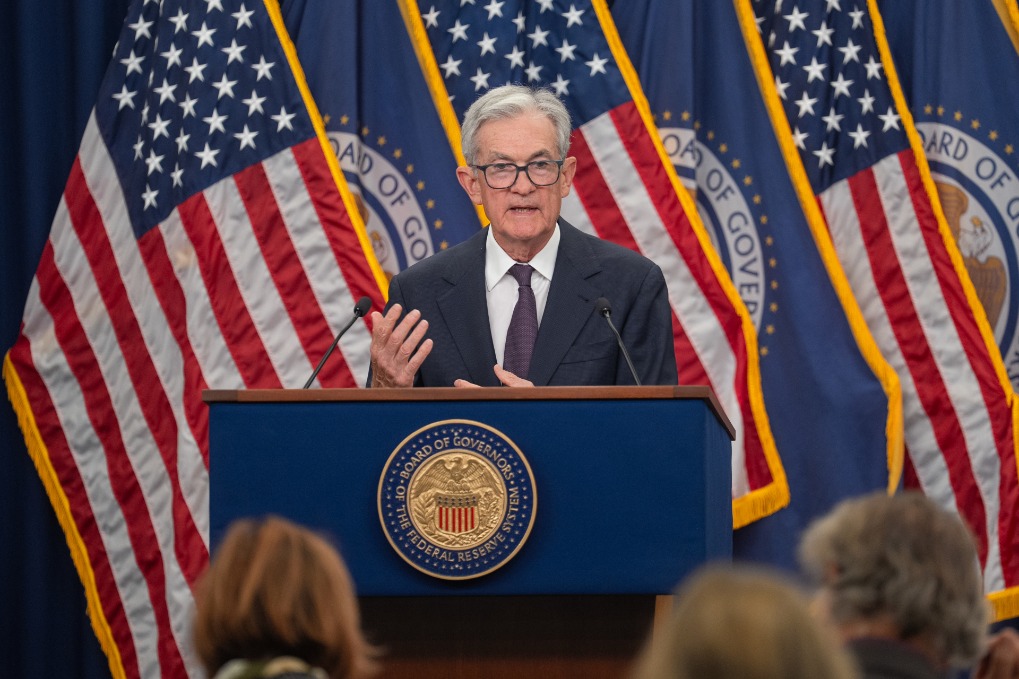
Core Viewpoint - The Federal Reserve has initiated a rate cut, reflecting its "survival wisdom" under political pressure from the White House, particularly from Trump, who has remained unusually silent on the matter [1][4][6]. Group 1: Federal Reserve's Decision - The Federal Reserve's decision to cut rates by 25 basis points was passed with a surprising 11-1 vote, showcasing unexpected unity within the institution despite external pressures [2][10]. - Powell characterized the rate cut as a "risk management decision," indicating that the Fed believes its policies have been on the right track this year [6][19]. - The recent adjustment comes amid a backdrop of significant downward revisions in non-farm employment data, with a reduction of 910,000 jobs, highlighting the economic challenges faced [7][19]. Group 2: Political Dynamics - The meeting was described as a "showdown" between the Federal Reserve and the White House, with Powell managing to maintain internal unity despite the political climate [9][10]. - The vote reflected a temporary victory for the Fed's independence, as the majority of members supported the rate cut despite potential pressures from Trump [10][12]. - The only dissenting vote came from a newly appointed member who advocated for a more aggressive 50 basis point cut, indicating ongoing divisions within the Fed [11][13]. Group 3: Economic Implications - The rate cut is seen as a preventive measure to safeguard economic growth before a potential recession, with Powell acknowledging signs of a weakening job market [18][19]. - Historical precedents for preventive rate cuts have led to varied outcomes, including soft landings, recessions, and high inflation, raising questions about the current economic trajectory [21][26]. - Analysts express concerns that the current economic issues stem from rising costs rather than insufficient demand, suggesting that excessive monetary easing could exacerbate inflation [27][28].
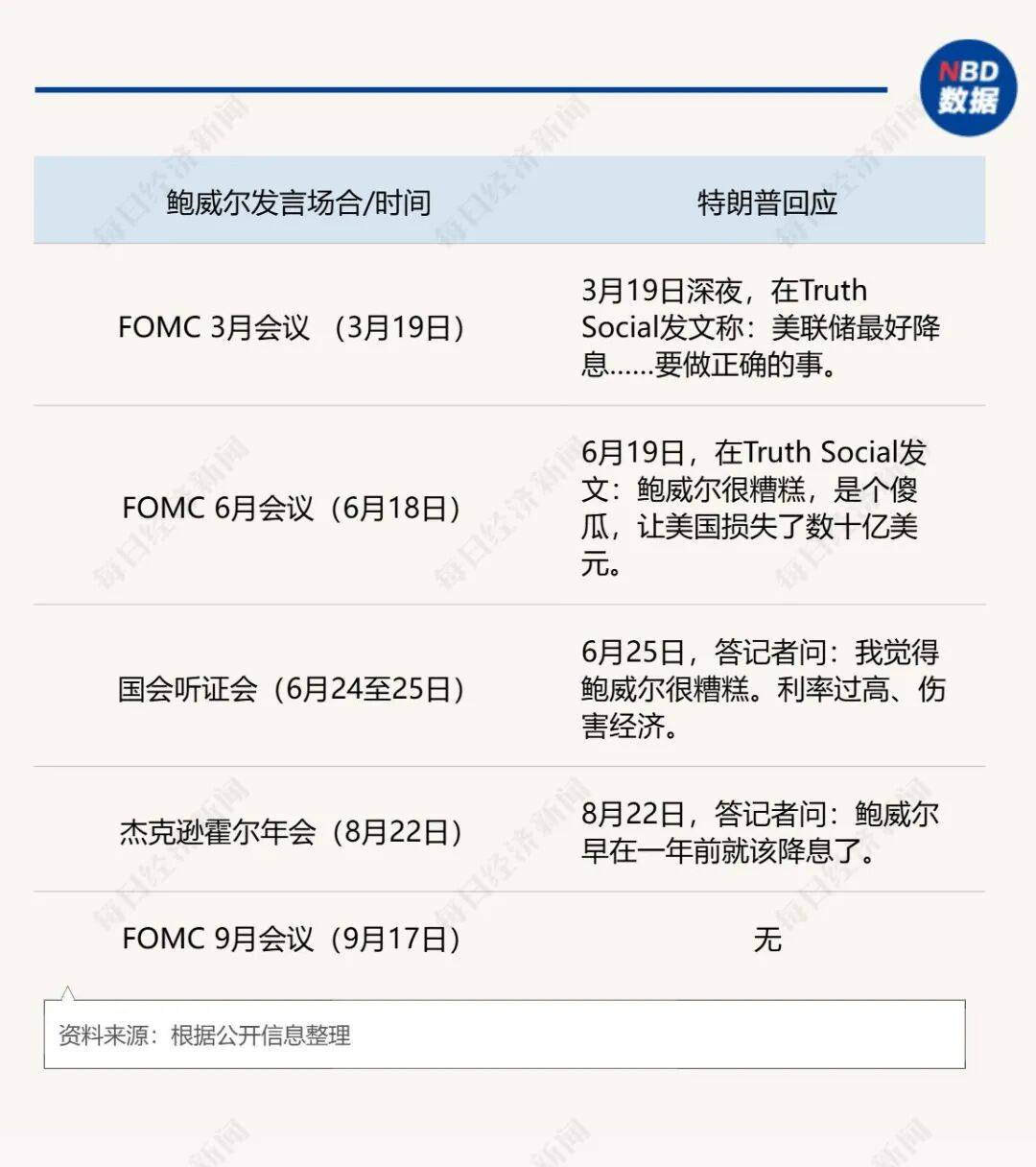
特朗普的“沉默48小时”:揭秘美联储降息背后 鲍威尔如何赢得一场11:1的独立性之战
Mei Ri Jing Ji Xin Wen· 2025-09-20 03:08
Core Viewpoint - The Federal Reserve has initiated a rate cut, reflecting its "survival wisdom" under political pressure from the White House, particularly from Trump, who has remained unusually silent on this decision [1][3]. Group 1: Federal Reserve's Decision - The Federal Reserve's decision to cut rates by 25 basis points was passed with a surprising 11-1 vote, showcasing unexpected unity within the institution despite external pressures [1][7]. - The rate cut is characterized as a "preemptive cut" aimed at managing risks before a potential economic downturn occurs [14][18]. - Powell's statements during the announcement emphasized that the rate cut was a "risk management decision" and downplayed expectations for rapid adjustments to interest rates [6][18]. Group 2: Economic Context and Implications - Recent adjustments to employment data, with a downward revision of 911,000 jobs, indicate a weakening labor market, prompting the Fed's decision to cut rates to prevent further economic decline [6][10]. - Historical precedents of preemptive rate cuts have led to varied outcomes, including soft landings, recessions, and high inflation, raising questions about the potential consequences of the current cut [15][17]. - The current economic environment is marked by persistent inflation pressures, particularly in the service sector, complicating the Fed's decision to lower rates [17][23]. Group 3: Market Reactions - Following the rate cut announcement, gold prices initially surged to a historical high before retreating, indicating market reactions to the Fed's signals [18][24]. - The dollar index fell to its lowest point since February 2022 but began to recover after Powell's remarks, suggesting a complex market response to the Fed's actions [18][23]. - Analysts predict that the 10-year Treasury yield will stabilize around 4.4% in the coming years, with the Fed expected to gradually lower the federal funds rate [23].
美联储降息后,投资者的下一个焦点:衰退能否避免?
Sou Hu Cai Jing· 2025-09-19 12:45
Group 1 - The core focus has shifted to whether the US economy is resilient enough to support further stock market gains after reaching record highs, following the Federal Reserve's interest rate cut [1] - Market expectations suggest that the Fed may not be finished with its rate-cutting cycle, with three more cuts anticipated by March next year [1] - A significant 67% of surveyed investors expect a "soft landing" for the economy, which supports the stock market, while only 10% foresee a recession [1][2] Group 2 - Historical data indicates that stock markets tend to perform better when the Fed cuts rates without a subsequent recession, with past instances showing positive stock performance during economic expansions [2] - Barclays strategists believe that European stocks will outperform as investors broaden their investment scope, citing historical patterns where European markets excelled post-Fed rate cuts without economic downturns [2] - The current rate-cutting cycle is viewed as different from previous ones, as the overall economy remains "fundamentally okay" despite some weakness in the labor market [2] Group 3 - Some market participants express caution regarding the short-term outlook and the health of the market rally, noting that the immediate effects of rate cuts are debatable [3] - Concerns arise that the market's upward momentum has already been priced in, with a slowdown in stock buybacks and high valuations [3] - There is a focus on a limited number of "winners" in the market, such as major tech stocks, while other sectors appear stagnant or losing attention [3] Group 4 - In light of uncertainties in the US market and concentrated risks, some strategists recommend expanding investment horizons beyond the US [6] - Historical evidence suggests that a more dovish Fed tends to uplift global markets, not just the US [6] - Citigroup strategists anticipate that as investors increase their risk exposure, European markets will likely outperform US markets, aligning with historical trends during Fed rate cuts without economic recessions [6]
美股宏观策略:美国重启降息:美国经济韧性仍在,但就业市场随时恶化
Guosen International· 2025-09-19 08:28
Group 1: Macroeconomic Overview - The Federal Open Market Committee (FOMC) has decided to lower the federal funds rate target range by 25 basis points to 4.0%-4.25%, marking the first rate cut since December of the previous year [1] - The FOMC's latest economic projections indicate that most members expect an additional 50 basis points of rate cuts this year, with further cuts of 25 basis points anticipated in 2026 and 2027, reflecting a continued accommodative stance [1][2] - The U.S. GDP growth forecast for 2025 has been revised upward to 1.6%, up from 1.4% previously, indicating resilience in the economy despite high interest rates [2] Group 2: Consumer Behavior and Spending - Retail sales in August increased by 0.6%, significantly exceeding market expectations, with core retail sales (excluding autos and gas) rising by 0.7% [2] - Online shopping saw a growth rate of 2.0%, and dining out also increased, suggesting that high-income households are driving current consumer spending [2] - However, the University of Michigan's consumer confidence index fell to 55.4 in September, indicating a decline in households' outlook on future income and employment [2] Group 3: Inflation Trends - The Consumer Price Index (CPI) rose by 0.38% in August, the fastest increase this year, with core CPI increasing by 0.35%, both surpassing market expectations [3] - Inflationary pressures are shifting from goods to services, with significant increases in housing-related rents and travel costs [3] - The market may need to adjust its expectations regarding economic weakness, as core inflation is driven by strong service demand rather than just goods prices [3] Group 4: Labor Market Dynamics - August employment data showed a significant decline, with non-farm payrolls increasing by only 22,000, well below the expected 75,000 [4] - The unemployment rate rose to 4.32%, indicating a weakening labor market, with most industries experiencing job losses [4] - The FOMC is closely monitoring labor market risks, and if conditions worsen, there may be further room for policy response [4][12] Group 5: Investment Opportunities - The report suggests focusing on ETFs related to housing, digital currencies, and gold, such as ITB.US, IBIT.US, and GLD.US, as potential investment opportunities in the current economic climate [5][13] - Given the ongoing economic resilience, sectors sensitive to interest rates, such as housing and construction, are expected to benefit from the current environment [13]