量化宽松

Search documents
白银全球暴跌!发生了什么?
Sou Hu Cai Jing· 2026-01-30 12:11
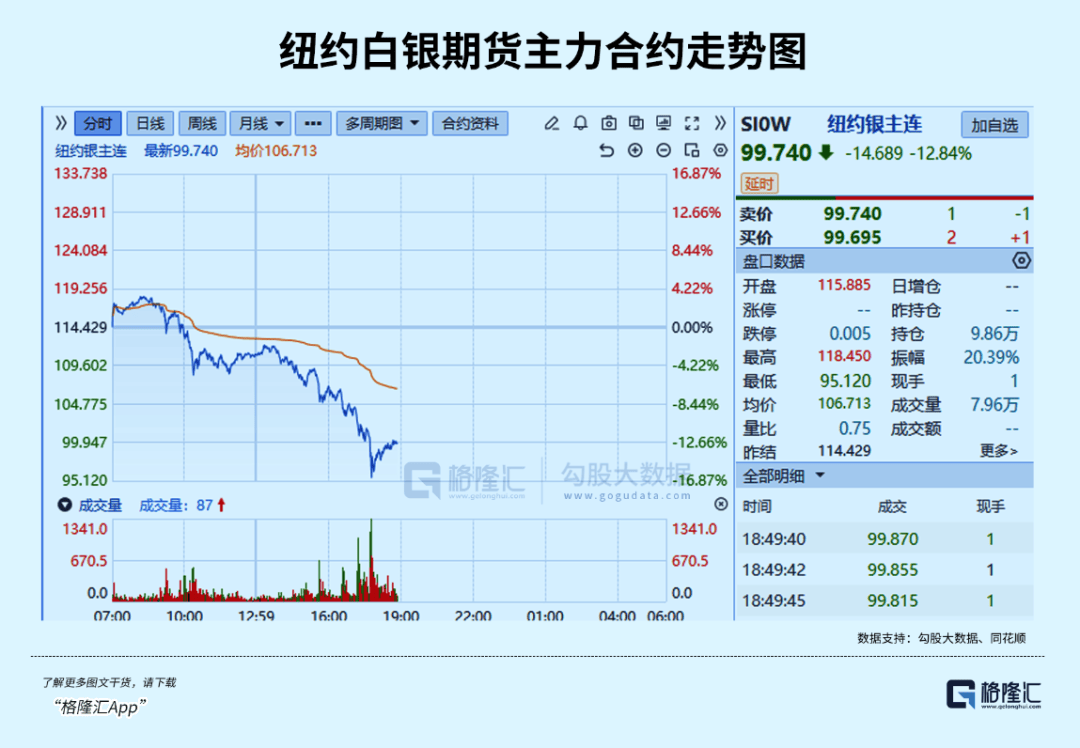
来源:格隆汇 1月30日,全球资本市场迎来了2026年的第一个"黑色星期五"。 (来源:格隆汇APP) 失控狂涨的贵金属,突然轰然砸出一个深坑。 截至A股收盘,黄金期货主力合约也大跌4.71%,白银暴跌6.03%创下自2025年4月8日以来最大单日跌幅;钯金、铂金更是双双暴跌近12%,同时在股市里 的贵金属概念股同样几乎集体跌停; 美国市场方面,截至发文时间,纽约白银主力合约一度大跌近17%,美股白银ETF指数盘前暴跌超14%,同时美股纳指盘前也一度下跌了超1%。 就在昨晚,重磅消息传出,特朗普将提名凯文·沃什执掌美联储主席,并在今晚官宣! 在此前,沃什一直被视为美联储偏鹰派候选人,市场预期他如果上任美联储的降息节奏将更慢、甚至可能在降息同时推进缩表,收紧长期流动性。 目前沃什在博彩网站的胜出概率瞬间已飙升到了93%,这意味着,美联储已很有可能开始进入"沃什时代"。 这会是今天贵金属突然暴跌的导火索吗? 01 白银全球暴跌之谜 回顾近几个月来,随着全球资金持续疯狂涌入,最终使得以白银为首的贵金属出现"史诗级"飙涨行情,甚至到达接近失控的程度。 其中纽约白银期货主合约从2025年4月的低点27.55美元/盎司开 ...

白银全球暴跌!发生了什么?
格隆汇APP· 2026-01-30 11:45
作者 | 哥吉拉 数据支持 | 勾股大数 据(www.gogudata.com) 1月30日,全球资本市场迎来了2026年的第一个"黑色星期五"。 失控狂涨的贵金属,突然轰然砸出一个深坑。 截至A股收盘,黄金期货主力合约也大跌4.71%,白银暴跌6.03%创下自2025年4月8日以来最大单日跌幅;钯金、铂金更是双双暴跌近 12%,同时在股市里的贵金属概念股同样几乎集体跌停; 美国市场方面,截至发文时间,纽约白银主力合约一度大跌近17%,美股白银ETF指数盘前暴跌超14%,同时美股纳指盘前也一度下跌了超 1%。 就在昨晚,重磅消息传出,特朗普 将提名 凯文·沃什执掌美联储主席,并在今晚官宣! 在此前, 沃什一直被视为美联储偏鹰派候选人,市场预期他如果上任美联储的降息节奏将更慢、甚至可能在降息同时推进缩表,收紧长期流动 性。 目前沃什在博彩网站的胜出概率瞬间已飙升到了93%,这意味着,美联储已很有可能开始进入"沃什时代"。 这会是今天贵金属突然暴跌的导火索吗? 01 白银全球暴跌之谜 回顾近几个月来,随着全球资金持续疯狂涌入,最终使得以白银为首的贵金属出现"史诗级"飙涨行情,甚至到达接近失控的程度。 其中纽约白银 ...

机构:市场视沃什为“温和鹰派”与独立性守护者
Sou Hu Cai Jing· 2026-01-30 07:33
格隆汇1月30日|澳大利亚联邦银行高级经济学家兼高级货币策略师Kristina Clifton表示,美元似乎确实 因此消息上涨,我认为这是因为市场普遍觉得沃什可能比另一位候选人哈塞特略微不那么鸽派。所以今 日的市场波动只是一个基于此的小幅波动,而且沃什或许会比一些其他候选人更能维护美联储的独立 性。我们还没听到他太多言论,但他曾发表过一些评论,大意是希望严格遵守美联储控制通胀的职责。 他也曾担任美联储理事,而且也不支持量化宽松,所以或许这再次表明他比其他一些潜在候选人略偏鹰 派。 来源:格隆汇APP ...
听说大家今天都在抄底?不过,今晚确实会有大事发生
表舅是养基大户· 2026-01-30 06:14
Group 1 - The market experienced a significant pullback, with the Wind All A index dropping over 2.5%, marking the largest decline in the past two and a half months since mid-November last year [1] - The article discusses the potential for a short-term reversal in the market, suggesting that investors may consider rebalancing their portfolios by selling high-performing assets and buying undervalued ones [3][6] - The volatility in precious metals, particularly gold and silver, has triggered a wave of buying interest, with significant price fluctuations observed [8][12] Group 2 - The article highlights a notable phenomenon where the decline in gold stocks coincided with a rise in other sectors, indicating a strategic shift in investor focus [13][14] - The recent volatility in precious metals is attributed to upcoming significant events, particularly related to the Federal Reserve's decisions and potential leadership changes [16][24] - The potential appointment of a hawkish Federal Reserve chair could lead to a strengthening of the dollar and tightening liquidity, negatively impacting high-valuation growth stocks and increasing volatility across various asset classes [28]

今晚官宣!特朗普拟提名沃什执掌美联储,市场押注其胜率飙至95%
美股IPO· 2026-01-30 04:28
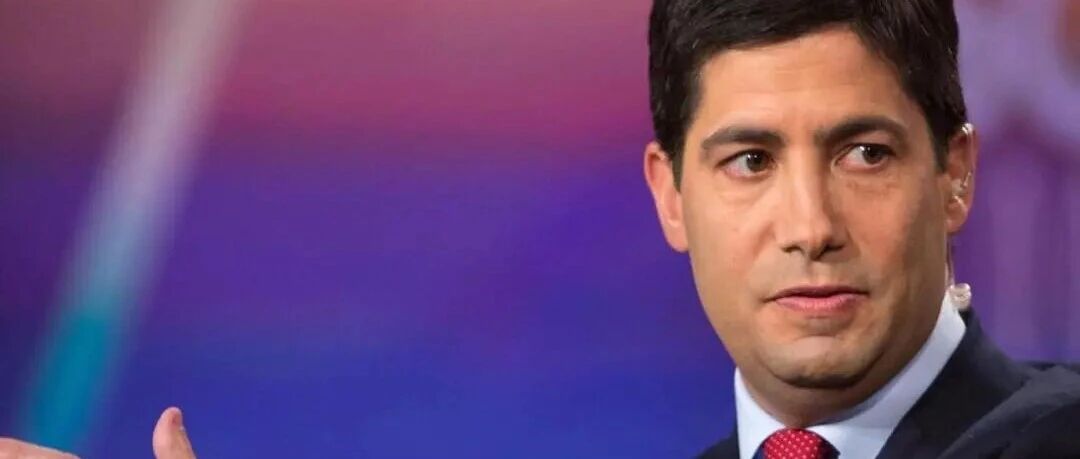
Core Viewpoint - The article discusses the potential nomination of Kevin Warsh as the new Chairman of the Federal Reserve by President Trump, highlighting the implications of his monetary policy approach, which may include a unique combination of interest rate cuts and balance sheet reduction [1][10][12]. Group 1: Nomination and Market Reactions - Kevin Warsh's probability of being nominated as the new Federal Reserve Chairman has surged to 95% according to Polymarket [5]. - Trump is reportedly preparing to nominate Warsh, who is well-respected in the financial community, as a candidate to replace Jerome Powell, whose term ends in May [3][9]. - Following the news of Warsh's potential nomination, the stock market reacted negatively, with U.S. stocks declining, bond yields rising, and the dollar strengthening [7]. Group 2: Warsh's Background and Policy Implications - Warsh has extensive experience in both public and private sectors, having served as a Federal Reserve Governor from 2006 to 2011 during the global financial crisis [10]. - Deutsche Bank predicts that if Warsh is appointed, his policy may feature a combination of interest rate cuts and balance sheet reduction, contingent on regulatory reforms that lower banks' reserve requirements [10][12]. - Warsh has emphasized that inflation is the responsibility of the Federal Reserve and has criticized the notion of attributing it to external factors [13][20]. Group 3: Critique of Current Federal Reserve Policies - Warsh has been critical of the Federal Reserve's recent policies, arguing that the central bank has strayed from its core mission of maintaining price stability and has engaged in excessive quantitative easing [17][20]. - He advocates for a restoration of the Federal Reserve's original mandate, suggesting that the institution needs to reform rather than undergo a complete overhaul [16][20]. - Warsh's approach includes a call for a clear delineation of responsibilities between the Federal Reserve and the Treasury, aiming to prevent fiscal irresponsibility [21][22]. Group 4: Economic Outlook and Future Prospects - Despite his critiques, Warsh remains optimistic about the U.S. economy, believing that advancements in AI and deregulation could lead to a productivity boom similar to the 1980s [23]. - He argues that controlling inflation through balance sheet reduction could create space for lower interest rates, which is crucial for supporting the real economy [14][18]. - Warsh's vision for the Federal Reserve includes a focus on practical monetary policy that aligns with the administration's goals of reducing borrowing costs [14][19].
美联储换帅在即 特朗普版“房改”能否奏效?
Di Yi Cai Jing· 2026-01-28 04:54
Core Viewpoint - The Trump administration has implemented measures aimed at reducing housing costs, including ordering Fannie Mae and Freddie Mac to purchase $200 billion in mortgage-backed securities and limiting large institutional investors from buying single-family homes. However, these actions are viewed as short-term solutions rather than addressing the underlying structural issues in the housing market [1][3]. Group 1: Housing Market Trends - As of November 2025, U.S. home prices increased by 0.6% month-over-month and 1.9% year-over-year, with significant regional variations in price changes [1]. - The current housing inventory in the U.S. is at a 4-month sales level, which is below the 6-month balance point, and 20% lower than pre-pandemic levels in 2019, indicating a persistent shortage of 4 million homes [2]. - The average rate for a 30-year fixed mortgage is currently 6.09%, down from a peak of 8.0% two years ago, following a significant drop in rates after the announcement of the $200 billion mortgage purchase [2][5]. Group 2: Economic Factors Influencing Housing - The Federal Housing Finance Agency (FHFA) reported that the Pacific Coast region saw a 0.4% decline in home prices over the past year, while the Northeast Central region experienced the highest annual increase at 5.1% [1]. - Economic conditions, including inflation, have led to a decrease in purchasing power for average consumers, impacting their ability to buy homes despite some areas experiencing price increases [3]. - Analysts predict that if mortgage rates drop to around 5.5%, it could significantly impact the market by encouraging first-time homebuyers and alleviating the "lock-in effect" for current homeowners [4]. Group 3: Regional Market Dynamics - The U.S. housing market is fragmented, with varying affordability and supply-demand dynamics across different regions. The Northeast and Midwest face tight inventory and construction constraints, while the South and West are experiencing affordability pressures despite more active building [6][7]. - Cities like Chicago, New York, and Cleveland have seen the highest year-over-year price increases, while cities such as Phoenix, Dallas, and Tampa have experienced declines [7]. - Dallas is highlighted as a potential investment hotspot due to its rapid population growth and economic development, including the establishment of the Texas Stock Exchange [8].
美联储换帅在即,特朗普版“房改”能否奏效
第一财经· 2026-01-28 04:31
Core Viewpoint - The article discusses the recent measures taken by the Trump administration to lower housing costs in the U.S., including the purchase of $200 billion in mortgage bonds by Fannie Mae and Freddie Mac, and the restriction on large institutional investors from buying single-family homes. However, experts believe these measures are short-term solutions and do not address the underlying structural issues in the housing market [3][4]. Group 1: Housing Market Trends - As of November 2025, U.S. home prices increased by 0.6% month-over-month and 1.9% year-over-year, with significant regional variations in price changes [3]. - The Pacific Coast region saw a 0.4% decline in home prices over the past year, while the Northeast Central region experienced the highest annual increase at 5.1% [3]. - The current housing inventory in the U.S. is at a 4-month sales level, which is below the 6-month balance point, indicating a persistent shortage of approximately 4 million homes [4]. Group 2: Interest Rates and Mortgage Trends - The average rate for a 30-year fixed mortgage is currently at 6.09%, down from a peak of 8.0% two years ago, following Trump's announcement to purchase $200 billion in mortgages [5]. - Economists suggest that if mortgage rates drop to 5.5%, it could significantly impact the market by encouraging first-time homebuyers and alleviating the "lock-in effect" for current homeowners [7]. - Predictions indicate that mortgage rates could fall to between 5% and 5.5% in 2026, potentially accelerating home price increases by 2% to 5% [8]. Group 3: Regional Market Dynamics - The U.S. housing market is fragmented, with varying affordability and supply-demand dynamics across different regions. The Northeast and Midwest face inventory constraints, while the South and West are experiencing affordability pressures despite more active construction [10][11]. - Cities like Chicago, New York, and Cleveland saw the highest year-over-year price increases, while cities such as Phoenix, Dallas, and Tampa experienced declines [11]. - Dallas is highlighted as a potential hotspot for real estate investment in 2026, driven by its status as a major financial center and significant population growth [12].

银行都在疯抢黄金,现在还能上车吗?五次历史暴跌告诉你,2026年买黄金必须看懂这三个信号
Sou Hu Cai Jing· 2026-01-27 12:02
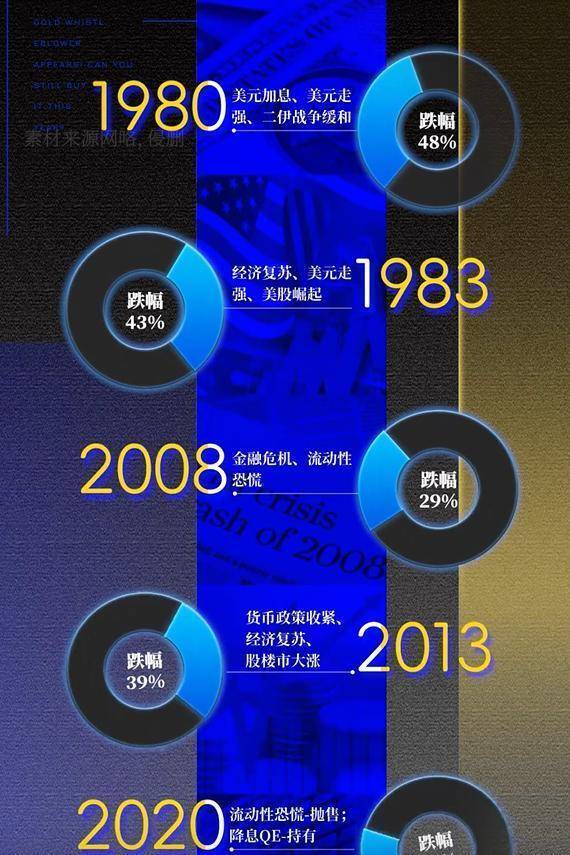
Core Viewpoint - The current surge in gold prices has led to increased public interest and discussions about whether now is the right time to invest in gold, with concerns about potentially buying at a peak price [1] Historical Context - Gold prices reached a historical high of $850 per ounce in 1980 amid economic stagnation and rising inflation in the U.S., similar to current conditions [1] - The appointment of Paul Volcker as the new Federal Reserve Chairman marked a turning point, as he implemented aggressive interest rate hikes, raising the federal funds rate from around 11% to 20%, leading to a significant drop in gold prices [3] - Following the initial drop, gold prices continued to decline, reaching as low as $300 per ounce by the early 2000s, marking a prolonged bear market lasting nearly two decades [4] Economic Influences - The recovery of the U.S. economy in the 1990s, characterized by low inflation and a booming stock market, diminished the demand for gold as a safe-haven asset [4] - The 2008 financial crisis saw a temporary drop in gold prices due to widespread asset liquidation, but subsequent monetary easing by central banks led to a resurgence in gold prices starting in 2009 [6] - The market experienced another significant drop in early 2020 due to the COVID-19 pandemic, but rapid monetary stimulus led to a quick recovery and subsequent price increases [8] Key Factors Affecting Gold Prices - U.S. monetary policy, particularly Federal Reserve interest rate decisions, has been a primary driver of gold price fluctuations, with aggressive rate hikes typically leading to sharp declines in gold prices [9] - The overall health of the global economy influences investor risk appetite, with stronger economic conditions leading to reduced demand for gold [9] - Unexpected events, such as financial crises or pandemics, initially trigger panic selling across asset classes, including gold, but later monetary easing can enhance gold's appeal as a hedge against inflation [9] Current Market Dynamics - The current market is influenced by a combination of factors, including a Federal Reserve in a rate-cutting cycle, a fragile global economic recovery, and ongoing geopolitical tensions, which bolster gold's appeal as a safe haven [11] - Central banks have significantly increased gold purchases since 2022, with net purchases expected to exceed 1,000 tons annually, indicating a long-term strategic shift towards gold as a reserve asset [11] Future Observations - Key observations for the gold market in 2026 include the trajectory of the Federal Reserve's interest rate policy and the potential for a new leadership direction, which could impact gold holding costs [11] - Historical data suggests that after gold prices surpass historical highs, the market seeks new psychological resistance levels, with some analysts eyeing the $4,800 per ounce mark as a significant threshold [11] - The sustainability of central bank gold purchases will be crucial in determining the strength of price support for gold [11]
悦读|量化宽松是什么?
Xin Lang Cai Jing· 2026-01-26 08:41
转自:经济日报 经济日报3分钟带你读一本好书。今天我们来介绍一本解谜美联储如何运作的纪实文学作品,书名叫作 《宽松货币之王》。作者是美国作家、知名商业记者克里斯托弗·伦纳德。 (来源:经济日报) 配音/韩叙 剪辑/赵以纯 作者/韩叙 编辑/韩叙 ...
游戏结束,中方大量抛售美债,欧洲也跟进?特朗普急忙除名反华派
Sou Hu Cai Jing· 2026-01-25 20:51
Group 1 - The core message highlights a significant shift in global financial dynamics, with China reducing its holdings of U.S. Treasury bonds to below $700 billion, the lowest since 2008, while European pension funds are also divesting from U.S. debt [1][2] - In January 2026, Danish and Swedish pension funds announced plans to liquidate their U.S. Treasury holdings, citing concerns over the U.S. as a reliable credit entity and the unsustainable fiscal situation of the U.S. government [2] - The U.S. federal debt surpassed $36 trillion in 2025, with interest payments exceeding military spending for the first time, raising alarms about fiscal sustainability [4] Group 2 - The U.S. Treasury Department's report indicated that China sold $11.8 billion in U.S. Treasury bonds in October 2025, reducing its holdings to $688.7 billion, nearly half of its peak in 2011 [1][4] - Global central banks increased their gold reserves significantly, with a record 1,136 tons added in 2022, indicating a trend towards de-dollarization [6] - The U.S. bond market experienced a severe sell-off in April 2025, with 10-year Treasury yields rising sharply, leading to liquidity issues and a negative correlation between bond and stock markets [8][9] Group 3 - The Trump administration's recent personnel changes, including the dismissal of key officials involved in technology restrictions against China, suggest a potential shift in U.S.-China relations ahead of a planned visit to China [13] - The U.S. Treasury's budget office warned of a potential debt default in 2025 if the debt ceiling is not adjusted, highlighting the precarious fiscal situation [4][16] - The trend of reducing U.S. Treasury holdings while increasing gold reserves reflects a broader strategy among countries like China and Russia to mitigate reliance on the U.S. dollar [14][16]