
去美元化

Search documents
金价5100美元关口告破,贵金属高位波动率拉满,风险信号全面升级
Sou Hu Cai Jing· 2026-01-27 02:02
Core Insights - The recent surge in gold prices, surpassing the $5100 per ounce mark, reflects a significant phase in the current bull market for precious metals, characterized by extreme volatility and rapid price movements [3][4][7] - The divergence in price movements between gold and silver indicates a complex interplay of supply and demand dynamics, with silver experiencing a much higher volatility compared to gold [4][6] Market Dynamics - The international gold price rose from approximately $4300 per ounce at the beginning of 2026 to a peak of $5111.17 per ounce, marking a 16.28% increase within a month [3] - Historical trends show that the speed of gold price increases has accelerated, with the latest surge from $5000 to $5100 occurring in less than three months, indicating extreme market enthusiasm [3][4] Domestic Market Response - The domestic market mirrored international trends, with significant price increases in silver and gold futures, and notable gains in the A-share gold sector [4] - The price of silver in the domestic market saw a year-to-date increase of over 50%, significantly outpacing gold's 17% rise, driven by supply-demand imbalances and speculative trading [4][6] Volatility Factors - The high volatility in precious metals is attributed to a combination of short-term risk aversion, mid-term supply-demand dynamics, and long-term monetary policy considerations [5][6] - Recent geopolitical tensions and financial risks have heightened market fear, as reflected by the VIX index surpassing the 20 mark [5] Risk Signals - There are emerging risk signals indicating potential short-term corrections in gold prices, as the rapid price increases lack fundamental support [7][8] - The accumulation of leveraged positions in the market raises concerns about potential "long squeeze" scenarios, particularly in silver, where extreme price fluctuations have been observed [7][8] Regulatory Environment - Regulatory measures have been implemented to curb excessive speculation in the precious metals market, including trading limits and margin adjustments [8] - The upcoming Federal Reserve meeting may influence liquidity conditions, potentially impacting the current pricing environment for precious metals [8] Long-term Considerations - The long-term outlook for gold prices is supported by factors such as "de-dollarization" and central bank purchases, but uncertainties remain regarding geopolitical stability and economic recovery [9][10] - The sustainability of silver's industrial demand is contingent upon the growth of emerging industries, which could affect future price stability [6][9]

银河期货每日早盘观察-20260127
Yin He Qi Huo· 2026-01-27 01:39
Report Industry Investment Rating There is no information about the report's industry investment rating in the provided content. Core Viewpoints of the Report The report provides a comprehensive analysis of various futures markets, including financial derivatives, agricultural products, black metals, non - ferrous metals, shipping, and energy chemicals. It details the market trends, influencing factors, and trading strategies for each sector. For example, in the financial derivatives market, the stock index futures show a style reversal, and the bond market has narrow - range fluctuations. In the agricultural product market, different products have different supply - demand situations and price trends [20][23][26]. Summary by Relevant Catalogs Financial Derivatives - **Stock Index Futures**: The market style reversed. The Shanghai 50 and CSI 300 indexes rebounded, while the CSI 500 and CSI 1000 indexes weakened. The trading volume of futures contracts increased, and the market is expected to remain stable with a medium - term upward trend [20][21]. - **Bond Futures**: The bond futures closed mostly lower. The central bank's net withdrawal of short - term liquidity led to a slight convergence of the money market. The short - term direction of the bond market depends on the risk - asset trend [23]. Agricultural Products - **Protein Meal**: The production remains high, and the market is under pressure. Although the demand has slightly improved and the South American weather has some impact, the overall supply - demand is relatively loose [26][27]. - **Sugar**: The international sugar price is expected to oscillate at the bottom. The domestic sugar market is in the peak crushing period, with supply pressure, but the decline space is limited [33]. - **Oilseeds and Oils**: The soybean supply is sufficient, and the rapeseed trade may be disturbed. The palm oil is expected to continue to reduce production and inventory, and the short - term oil market will fluctuate widely [35][36]. - **Corn/Corn Starch**: The North Port spot is strong, and the futures price rises and then falls. The US corn report shows an increase in yield, but the Argentine weather is dry, and the domestic corn has short - term stability and long - term pressure [38][40]. - **Hogs**: The supply pressure increases, and the spot price continues to decline. The overall inventory is high, and the supply pressure remains [42]. - **Peanuts**: The spot price is stable, and the futures price oscillates at the bottom. The import volume decreases, and the oil mill has profits [45][46]. - **Eggs**: As the Spring Festival approaches, the egg price rises. The egg - laying hen inventory is decreasing, but the 03 contract's upward space is limited [49][50]. - **Apples**: The pre - festival sales accelerate, and the inventory is low. The 5 - month contract is expected to be strong [53][54]. - **Cotton - Cotton Yarn**: The cotton sales progress is fast, and the market sentiment is optimistic. The short - term price is expected to oscillate within a range [57]. Black Metals - **Steel**: The demand is weakening, and the steel price continues to oscillate. The steel production and inventory have different trends, and the cost has support [60]. - **Coking Coal and Coke**: The fundamentals are lackluster, and the market is affected by capital. The supply is not tight, and the downstream demand for winter storage is not strong [62][63]. - **Iron Ore**: The terminal demand is at a low level, and the ore price oscillates. The supply is increasing, and the demand is weak, and the high valuation is difficult to maintain [65][67]. - **Ferroalloys**: The valuation is low and needs to be repaired. The short - term trend is slightly strong. The supply and demand of silicon - iron and manganese - silicon are relatively stable, and the cost has support [68]. Non - Ferrous Metals - **Gold and Silver**: The market shows a "roller - coaster" trend. The short - term price is affected by news and technical adjustments. Gold is relatively stable, while silver is in a sensitive stage [70][71]. - **Platinum and Palladium**: The precious - metal market has a "roller - coaster" trend. Platinum has a stronger upward drive than palladium [72][73]. - **Copper**: The copper price is consolidating at a high level. The macro and fundamental factors are contradictory. The long - term upward trend remains [74][76]. - **Alumina**: It mainly oscillates at a low level. The supply has short - term maintenance and production reduction, and the demand has a small increase [78][82]. - **Electrolytic Aluminum**: It oscillates at a high level with macro - hedging expectations. The supply will increase in the future, and the price is affected by financial attributes [83][86]. - **Cast Aluminum Alloy**: It oscillates at a high level with macro - hedging expectations. The scrap - aluminum supply is tight, and the cost supports the price [87]. - **Zinc**: Attention should be paid to the change of domestic social inventory. The supply of zinc concentrate is short, and the demand is different. The short - term price is strong [89][91]. - **Lead**: There may be support at the bottom. The supply and demand are weak, and the price oscillates within a range [93][94]. - **Nickel**: The long - term expectation leads to the rise of the nickel price. The short - term reality is weak, and the long - term expectation is optimistic [95][96]. - **Stainless Steel**: The supply and demand are tight, and the cost supports the price. The supply is short, and the inventory is decreasing [98]. - **Industrial Silicon**: The production - reduction news affects the market, and the short - term trend is slightly strong. The demand is weak, but if the production reduction is implemented, the price may rise [100][101]. - **Polysilicon**: The spot price is falling, and the short - term futures are under pressure. The high inventory and weak demand may lead to a decline in the spot price [103]. - **Lithium Carbonate**: The regulatory measures cool the market, and attention should be paid to when the price stabilizes. The short - term price is affected by regulation, and the long - term trend is positive [106][107]. - **Tin**: The tin price rises and then falls. The supply is increasing, and the demand is weak. Attention should be paid to the resumption of production in Myanmar and consumption [109]. Shipping - **Container Shipping**: The SCFIS index is lower than expected. The spot freight rate is in the off - season decline, and the export - tax - rebate - driven rush of shipments is less than expected. The 04 contract has a discount, and attention should be paid to the geopolitical situation [111][113]. Energy Chemicals - **Crude Oil**: The market weighs long and short factors, and the geopolitical situation is still tense. The international oil price is expected to oscillate strongly [116][117]. - **Asphalt**: The cost supports the price, and the asphalt market price oscillates at a high level. The demand is weakening, and the price is stable [118][121]. - **Fuel Oil**: The fundamental situation is weak, and the geopolitical factor is the main bullish driver. The high - sulfur fuel oil has a weak fundamental situation, and the low - sulfur fuel oil has an increase in supply [123][125]. - **LPG**: The price fluctuation is intensified by geopolitical factors. The international LPG is tight, and the demand of downstream chemical enterprises is weak [127][129]. - **Natural Gas**: The LNG price has limited room for further increase. The US HH price is volatile near the delivery date. The European market is affected by cold weather, and the long - term market is loose [129][132]. - **PX & PTA**: The capital attention increases, and the polyester demand decreases seasonally. The PX supply is high, and the PTA supply and demand are weak [133][135]. - **BZ & EB**: The supply - demand pattern of styrene is improving. The supply is affected by device failures and overseas maintenance, and the price is strong [136][137]. - **Ethylene Glycol**: The Saudi Arabian maintenance may lead to a decline in imports. The near - month contract is strong, and the import is expected to decrease [140]. - **Short - Fiber**: The supply is sufficient, and the terminal demand is weak. The short - fiber load is expected to decrease, and it follows the cost - side trend [142][144]. - **Bottle Chips**: The maintenance accelerates in mid - January, and it follows the cost - side trend. The production is expected to decrease, and the price is strong [145]. - **Propylene**: The cost of propane is strong, and the propylene load continues to decline. The supply is affected by device maintenance, and the market has support [147][148]. - **Plastic PP**: The maintenance of L plastic decreases marginally. The L and PP prices rise, but the downstream demand is weak [150]. - **Caustic Soda**: The caustic - soda price is weakening. The supply is sufficient, the demand is weak, and the inventory has pressure [153]. - **PVC**: It oscillates and consolidates. The supply is high, the demand is affected by the festival, and the price is expected to be strong [156]. - **Soda Ash**: It shows a strong trend this week. The supply is stable, the demand is stable, and the price is expected to rise [159][160]. - **Glass**: It shows a strong trend this week. The price is affected by the market sentiment, and the high - inventory pressure needs to be considered [161][163]. - **Methanol**: The geopolitical situation eases, and the methanol price falls from a high level. The international supply is affected by device shutdowns, and the domestic supply is loose [164][167]. - **Urea**: It oscillates at a high level. The domestic production is at a high level, the international price is rising, and the domestic demand is weak [168][170]. - **Pulp**: The pulp price continues to oscillate widely. The supply is greater than the demand, and the demand support is insufficient [171][172]. - **Offset Printing Paper**: The high inventory suppresses the paper price. The supply is still abundant, the demand is weak, and the inventory is increasing [176]. - **Logs**: The supply is tight due to natural disasters in New Zealand, and the spot price is stable and slightly strong. The price is affected by supply and demand in different regions [179][180]. - **Natural Rubber and No. 20 Rubber**: The inventory in the bonded area decreases, and the inventory outside the area increases. The demand of the US auto industry has a slight negative impact on the rubber price [182][184]. - **Butadiene Rubber**: The profit recovery of butadiene is less than that of last year. The capacity utilization rate and profit of butadiene and butadiene rubber have different trends [185][186].
金价站上每盎司5100美元 高波动或成贵金属投资常态
Xin Hua Cai Jing· 2026-01-27 01:34
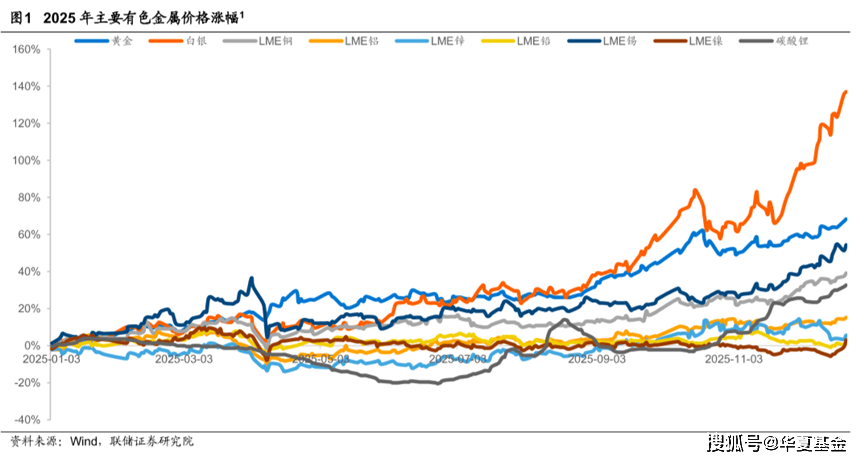
Core Viewpoint - Gold has entered a historic phase with prices surpassing $5,100 per ounce, driven by systemic concerns over the stability of sovereign currency credit systems, evolving from traditional safe-haven trading to a "currency devaluation trade" [1][3] Group 1: Gold Price Trends - International gold prices have seen a significant increase, with a 70% rise in 2025, marking the largest annual increase since the 1979 oil crisis, and a further 15% increase in 2026 [2] - The speed of gold price increases has accelerated, with the time taken to rise from $4,000 to $5,000 being just over three months, compared to longer durations for previous price increases [2] - Analysts indicate that the current gold price dynamics are challenging traditional valuation models, as the dollar's credit foundation is being undermined [5][6] Group 2: Market Drivers - Three main factors are driving the current rise in gold prices: ongoing geopolitical risk premiums, increased uncertainty in U.S. policies, and a weakening dollar due to selling pressure on U.S. Treasuries [3] - The trend of de-dollarization is accelerating, with the dollar's share in global foreign exchange reserves dropping significantly, indicating a shift in global capital markets [4] Group 3: Company Performance - Gold mining companies are experiencing substantial profit increases due to rising gold prices, with companies like Zhaojin Gold and Hunan Gold projecting significant profit growth for 2025 [4] - Major gold mining firms are seeing their stock prices rise sharply, driven by both valuation recovery and performance expectations [4] Group 4: Analyst Predictions - Analysts are raising gold price forecasts, with Goldman Sachs increasing its year-end target from $4,900 to $5,400 per ounce, and Bank of America projecting a target of $6,000 per ounce [6] - Historical patterns suggest that gold prices could continue to rise significantly, with potential targets reaching $6,600 per ounce by 2026 [6] Group 5: Investment Strategy - The current market environment suggests that high volatility in precious metals may become the norm, with prices reflecting strategic capital behavior rather than just fundamental supply and demand [8] - Investors are advised to maintain a cautious approach, particularly in light of potential market corrections and the need for strategic asset allocation [8]
宝城期货贵金属有色早报(2026年1月27日)-20260127
Bao Cheng Qi Huo· 2026-01-27 01:25
Report Industry Investment Rating - Not provided in the content Core Viewpoints of the Report - The short - term decline of gold and copper is due to factors such as profit - taking by funds and technical overbought conditions, and the medium - term trend remains strong. It is recommended to wait and see for both gold and copper [1][3][5] Summary by Related Catalogs Gold - **Price Trends**: Short - term is volatile, medium - term is strong, and intraday is weak. The reference view is to wait and see [1] - **Core Logic**: Yesterday's night session saw overseas gold and silver prices rise and then fall, with silver dropping nearly 10% from its high. This is due to multiple factors including profit - taking, technical overbought, and the approaching Chinese New Year holiday. The short - term fluctuation risk has increased, but the long - term macro - logic remains unchanged [3] - **Main Inducing Factors**: - **Profit - taking Pressure**: In the past month, New York gold has risen by over 15% and silver by over 50%, leading to strong profit - taking demand from institutions and investors. Large funds have reduced their positions [3] - **Technical Overbought**: The gold - silver ratio dropped to 44, the lowest since 2011, indicating obvious short - term overbought signals for silver and a need for technical adjustment [3] - **Pre - holiday Effect**: With the Chinese New Year holiday approaching, some investors choose to take profits to avoid uncertainties [3] Copper - **Price Trends**: Short - term is volatile, medium - term is strong, and intraday is weak. The reference view is to wait and see [1] - **Core Logic**: Last night, copper prices rose and then fell. The recent rise in precious metals has driven the bullish sentiment in the non - ferrous sector, but there has been a significant divergence between precious metals and non - ferrous metals since January. The rise of non - ferrous metals is limited due to industrial constraints. The fall of precious metals last night may lead to a lower opening this morning. As copper prices rebound, the willingness to replenish inventory is expected to decline again, and the monthly spread has weakened significantly. Attention can be paid to the Fed's interest rate meeting at the end of the month [5]
东吴期货:三方面因素推动金银价格攀升
Qi Huo Ri Bao· 2026-01-27 01:22
1月26日,黄金和白银价格再创新高。伦敦现货黄金价格盘中一度突破5100美元/盎司,年内涨幅超 18%;伦敦现货白银价格盘中一度突破110美元/盎司,年内涨幅超50%。今年以来,贵金属价格震荡 走高,笔者认为,核心驱动来自贸易冲突、全球央行购金、地缘风险三方面。 首先,贸易冲突再次升级,美欧关税风波又起。美国总统特朗普1月17日表示,除非美国获准购买格陵 兰岛,否则将自2月1日起对丹麦、挪威、瑞典、法国、德国、荷兰、芬兰和英国的商品加征10%额外进 口关税。虽然之后特朗普宣称暂时停止加征关税,但贸易摩擦概率陡然上升。另外,欧盟可能考虑采取 反制措施,整体环境仍对美元不利。整体来看,贸易冲突对美元构成负面影响。投资者权衡美欧贸易紧 张局势重燃以及美国最高法院可能就关税合法性作出裁决的潜在影响,以及市场担忧美欧贸易战可能造 成破坏性影响,一定程度上有利于贵金属的避险溢价。 其次,全球央行购金刺激需求,美债遭抛售利空美元。丹麦养老基金AkademikerPension近日表示,将 在月底前出售其持有的所有国债,理由是特朗普总统任内的信用风险上升。该基金首席投资官表示,美 国总体上信用状况不佳,从长远来看,美国政府的 ...
“伽马挤压”引爆金市:突破5000美元后,交易员疯狂买入5500-6000看涨期权
智通财经网· 2026-01-27 01:11
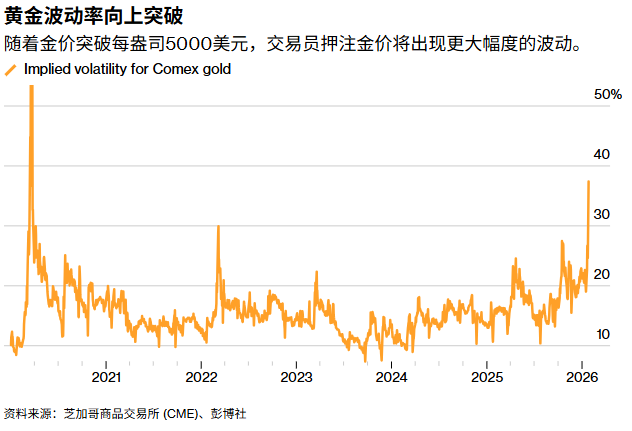
Core Viewpoint - The global commodity market reached a milestone on January 26, 2026, as both spot gold and COMEX gold futures prices surpassed the psychological threshold of $5,000 per ounce, marking the highest record in financial history. This breakout has led to aggressive buying in the options market, indicating strong consensus among market players for a "bull market second half" in gold [1]. Group 1: Market Dynamics - On the day of the price surge, gold prices increased by 2.5%, surpassing the $5,100 mark, which also boosted the entire metal sector. This rally is partly attributed to the resumption of "fiat currency devaluation trades," as investors shift from sovereign bonds and currencies to hard assets like gold and silver for safety [1]. - The breakthrough of the $5,000 level triggered a rare "gamma squeeze" effect in the options market, forcing many volatility sellers to cover their positions in both spot and futures markets, further driving up gold prices [4]. - The implied volatility of gold futures on the New York Mercantile Exchange has reached its highest level since the onset of the global pandemic in March 2020, with significant activity in call spreads indicating bullish sentiment among traders [4]. Group 2: Investment Strategies - Investors are actively buying call spreads on SPDR Gold Shares, including approximately 70,000 contracts for the September 590/595 spread and 37,000 contracts for the March 510/515 spread, indicating a low-cost strategy to position for further price increases in the coming months [5]. - According to analysts, if the ETF price rises by 10.1%, the potential return on the March position could reach 420% [5]. Group 3: Institutional Inflows - In January, the U.S. listed gold ETF sector saw a total inflow of $4.7 billion, with over half directed towards SPDR Gold Shares, reflecting strong institutional inflows and proactive long positions by market makers in anticipation of the $5,000 breakthrough [6]. - The ongoing geopolitical risks and expectations of dollar depreciation are driving demand for gold, as institutional investors increase their allocation to gold in their asset portfolios to historical highs [9]. Group 4: Future Outlook - Major Wall Street banks have quickly raised their price targets for gold in 2026, with Goldman Sachs indicating that the $5,000 breakthrough signifies a "sovereign value revaluation" phase, raising its year-end target to $5,400. Bank of America is even more optimistic, predicting that gold could reach $6,000 if geopolitical tensions do not ease [9]. - Despite the bullish sentiment, analysts caution that entering the "vacuum zone" above $5,000 may lead to increased volatility, necessitating vigilance against potential high-level fluctuations driven by momentum trading [9].
期铜攀升至逾一周高位,锡触及纪录高点后回落【1月26日LME收盘】
Wen Hua Cai Jing· 2026-01-27 01:07
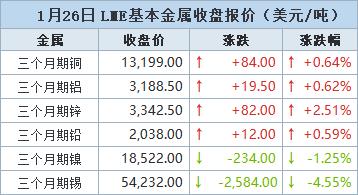
1月26日(周一),伦敦金属交易所(LME)铜价升至一周多以来的最高点,因为市场重新关注需求强 劲和供应中断的预期,而锡价在触及纪录高点后回落,因中国出台持仓限额相关政策。 伦敦时间1月26日17:00(北京时间1月27日01:00),LME三个月期铜上涨84美元,或0.64%,收报每吨 13,199.0美元,盘中曾触及13,311美元,为1月14日以来最高。 | | 1月26日 LIE基本金属收盘报价(美元/吨) | | | | --- | --- | --- | --- | | 金屋 | 收盘价 | 茶跌 | 张默帽 | | 三个月期铜 | 13,199.00 ↑ | +84.00 ↑ +0.64% | | | 三个月期铝 | 3,188.50 1 | +19.50 ↑ +0.62% | | | 三个月期锌 | 3,342.50 ↑ | +82.00 ↑ +2.51% | | | 三个月期铅 | 2,038.00 1 | +12.00 ↑ +0.59% | | | 三个月期镇 | 18,522.00 | -234.00 -1.25% | | | 三个月期锡 | | 54,232.00 -2,584.00 ...
如何拥抱金属周期?一份真诚的有色金属ETF基金投资手记
Sou Hu Cai Jing· 2026-01-27 00:59
Core Insights - The article discusses the significant role of non-ferrous metals in modern society, highlighting their importance in various applications from electronics to renewable energy [1][3] - Recent price surges in metals like gold and copper indicate a unique phase in the economic cycle, driven by structural forces rather than traditional market dynamics [2][4] Group 1: Gold - Gold has seen a remarkable increase, starting from $1,614 per ounce in September 2022 to over $5,000, marking a more than 200% increase [4] - Factors such as geopolitical instability, the U.S. debt crisis, and the Federal Reserve's interest rate decisions are influencing gold prices, but the extent of the price increase suggests deeper structural changes [7][10] - The trend of "de-dollarization" and rising global uncertainties are leading to a renewed interest in gold as a non-sovereign store of value [7][10][13] Group 2: Copper and Aluminum - Copper prices have risen by 43% over the past year, currently hovering around 100,000 yuan per ton, driven by demand from energy transition, AI, and large-scale grid investments [14][17] - Supply constraints, including declining ore grades and limited new capacity, are exacerbating the supply-demand imbalance for copper [17][18] - Aluminum prices have reached a four-year high due to production caps and changing demand dynamics, particularly in high-end manufacturing sectors [19][21] Group 3: Strategic Resources - Rare earth metals are increasingly important in the context of U.S.-China trade tensions, with China holding a complete supply chain advantage [22][24] - Tungsten has seen a nearly 200% price increase, driven by its critical role in high-end manufacturing and defense industries [24][26] - Other metals like tin, lithium, and cobalt are also gaining attention due to their connections to AI, energy transitions, and national security considerations [26] Group 4: Investment Strategies - The article suggests that investors should consider diversified exposure to the non-ferrous metals sector through ETFs, rather than attempting to predict individual metal price movements [27][33] - The Zhongzheng Segmented Non-Ferrous Metal Industry Theme Index offers a systematic approach to investing in this sector, covering 50 listed companies related to non-ferrous metals [28][35] - This index allocates approximately 45% to industrial metals, 13% to gold, and the remainder to strategic resources, providing a balanced investment perspective [35][37]
帮主郑重早间观察:北交所打新冻万亿!黄金闪崩稀土爆雷,今天该咋操作?
Sou Hu Cai Jing· 2026-01-27 00:59
Group 1 - The North Exchange's new share subscription has frozen 1.0588 trillion yuan, setting a record, attracting significant cash due to its cash subscription model, which differs from the lottery-based model of the Shanghai and Shenzhen exchanges [3] - The recent volatility in precious metals, with gold briefly rising to $5,110 before falling below $5,000 and silver experiencing a 14% surge followed by a decline, is seen as normal short-term fluctuation, with long-term trends remaining intact [4] - The U.S. government's investment of $1.6 billion in domestic rare earth companies, acquiring a 10% stake, highlights the strategic value of rare earths, reinforcing the importance of companies like China Rare Earth and Northern Rare Earth in the global market [4] Group 2 - The recent surge in active equity funds, with a notable 7 billion yuan in new subscriptions, indicates a shift in market sentiment, suggesting renewed confidence in fund managers' stock-picking abilities [5] - The acquisition of overseas gold assets by Zijin Mining for 28 billion yuan signals a bullish outlook on gold prices, reflecting confidence in the long-term value of the gold sector [6] - The focus on "resource products + high technology" as key investment themes suggests that investors should concentrate on sectors like rare earths and humanoid robotics for future opportunities [6]

原油周报:风险偏好增强,地缘影响持续-20260127
Yin He Qi Huo· 2026-01-27 00:55
原油周报:风险偏好增强,地缘影响持续 研究员:赵若晨 期货从业证号:F03151390 投资咨询证号:Z0023496 目录 第一章 综合分析与交易策略 2 第二章 核心逻辑分析 4 | | | GALAXY FUTURES 1 227/82/4 228/210/172 181/181/181 87/87/87 文 字 色 基 础 色 辅 助 色 137/137/137 246/206/207 68/84/105 210/10/16 221/221/221 208/218/234 综合分析与交易策略 【综合分析】 本周原油走势相对平稳,市场情绪好转,交易仍然主要围绕着地缘波动。包括总统特朗普软对伊朗的表态,在格 陵兰问题上的博弈,以及乌克兰-俄罗斯和平谈判的可能。叠加其余如哈萨克斯坦Tengiz油田短暂中断的扰动以及 欧美寒潮的支撑,增加了油价的波动,总体盘面偏平稳。后期来看,地缘扰动可能进一步走强,军事集结本身就 是最大的不确定性,为油价提供了间歇性的、事件驱动型的上涨动力。 【策略】 181/181/181 87/87/87 文 字 色 基 础 色 辅 助 色 单边:震荡偏强。 套利:观望。 期权:观望。 ...