资产配置

Search documents
上市银行大类资产配置跟踪:信贷投放稳健,债券配置灵活性提升
Ping An Securities· 2025-11-07 08:10
Industry Investment Rating - The investment rating for the banking sector is "Outperform" [1] Core Insights - The proportion of corporate loans has increased, while retail demand recovery is being monitored. As of mid-2025, the proportion of corporate loans among listed banks rose by 1.65 percentage points from the end of 2024 to 60.2%. The manufacturing sector's loans accounted for 18.5% of corporate loans, reflecting a recovery in the operations of manufacturing enterprises [3][12] - The flexibility in bond allocation has increased, with bond trading helping to stabilize market fluctuations. In the first half of 2025, listed banks saw a significant decline in other comprehensive income and fair value changes due to interest rate fluctuations. Some banks, primarily state-owned, increased bond trading to enhance investment returns and stabilize net profit growth [3][6] - Asset quality pressure is manageable, with a focus on risks in the retail sector. The overall asset quality remains stable, with the non-performing loan (NPL) ratio for A-share listed banks holding steady at 1.15% as of Q3 2025. However, the average NPL ratio for retail loans increased by 15 basis points to 1.58% compared to the end of 2024 [3][6] Summary by Sections Corporate Loan Structure - The overall asset structure of listed banks shows an increase in loan allocation, with the loan proportion rising by 0.1 percentage points from the end of 2024. State-owned banks increased interbank asset allocation, while small and medium-sized banks focused more on loan issuance [12][19] - Corporate loans remain the primary focus of credit allocation, with corporate loans accounting for 91.1% of all new loans in the first nine months of 2025. Short-term corporate loans made up 33.7% of new corporate loans [17][18] Bond Investment Preferences - The preference for flexible bond allocation has increased, with banks primarily investing in government bonds and central bank bills. The proportion of OCI accounts has risen, indicating a shift towards more flexible investment strategies [6][3] Asset Quality and Risk Monitoring - The asset quality of the banking sector is stable, with a non-performing loan ratio of 1.15% as of Q3 2025. The retail loan sector has shown slight increases in NPL ratios, necessitating ongoing monitoring of risks in this area [3][6]




就业数据强劲金价仍狂飙!贵金属集体开挂,就业利好竟成推手?
Sou Hu Cai Jing· 2025-11-07 08:09
Core Viewpoint - The recent rise in gold prices, despite strong U.S. employment data, highlights the dominance of safe-haven demand over traditional market logic, which typically sees gold prices pressured by positive economic indicators [1][6][12]. Market Performance - On Wednesday, gold prices increased by 1.2%, reaching $3977.94 per ounce, while December gold futures rose by 0.7% to $3989.80 per ounce [3]. - The entire precious metals sector showed synchronized gains, with silver up 1.9% at $47.98 per ounce, platinum rising 1% to $1550.60 per ounce, and palladium surging 2.2% to $1421.96 per ounce [3]. Employment Data Impact - The ADP report indicated an increase of 42,000 private sector jobs, significantly above the expected 28,000, which typically would suggest a stronger economy and potentially higher interest rates, negatively impacting gold [4][8]. - Despite the positive employment data, gold prices rose due to a shift in market sentiment towards risk aversion, as investors moved funds from the stock market to gold [6][12]. Market Sentiment and Risk Aversion - The decline in U.S. stock prices from recent highs raised concerns about overvaluation, prompting a shift in capital towards traditional safe-haven assets like gold [6][12]. - Analysts noted that the current market environment, characterized by stock volatility and geopolitical uncertainties, has reinforced gold's appeal as a safe-haven asset [12][14]. Federal Reserve and Interest Rate Expectations - Following a recent interest rate cut by the Federal Reserve, expectations for further cuts have diminished, with the probability of a December rate cut now at 70%, down from over 90% [8]. - The reduction in rate cut expectations has not deterred gold's price increase, further emphasizing the prevailing safe-haven demand [8][12]. Trade Policy Uncertainty - The U.S. Supreme Court's hearings on the legality of tariffs could impact future trade policies, adding another layer of uncertainty that supports gold prices [9]. Conclusion - The recent performance of gold amidst favorable employment data serves as a reminder for investors to maintain a balanced asset allocation, particularly in volatile market conditions [14].


全国社保基金理事会原副理事长王忠民:低息差环境下,风险资产的吸引力正在上升
Mei Ri Jing Ji Xin Wen· 2025-11-07 07:45
11月7日,每日经济新闻主办的"2025金融发展年会"在北京召开。全国社保基金理事会原副理事长王忠民围绕"低息差时代的金融强国之路"发表了主题演 讲。 王忠民表示,在当前低息差环境下,无风险资产的利差收窄,吸引力下降。这促使投资者为增厚收益而重新进行资产配置,将高风险资产市场作为主要的配 置方向,进而驱动其快速成长。 (文章来源:每日经济新闻) 全国社保基金理事会原副理事长王忠民主办方供图 ...

十年国债ETF(511260)近5日净流入超6亿元,债市情绪回暖或受内外因素推动
Sou Hu Cai Jing· 2025-11-07 07:09
Group 1 - The core viewpoint indicates a significant contraction in domestic demand in October, with the manufacturing PMI dropping to 49.0, reflecting a short-term impact on the economy due to uncertainties in China-US trade relations [1] - New orders and production indices have declined sharply, suggesting that while high growth in export activities may continue, the situation of insufficient domestic demand is unlikely to improve significantly [1] - The real estate sector is expected to take a longer time to reach the bottom, and the process of lowering mortgage rates may be relatively mild [1] Group 2 - In the bond market, expectations of the central bank resuming bond purchases have led to a decline in yields, with short-term rates falling significantly and the yield curve becoming steeper, although the mid-term adjustment process may not be over yet [1] - The Ten-Year Treasury ETF (511260) has consistently achieved new net value highs since its inception, with historical performance remaining robust; as of the end of Q2, the one-year return rate reached 5.88%, the three-year return rate was 16.13%, the five-year return rate was 22.41%, and the cumulative return since inception was 36.68% [1] - The Ten-Year Treasury ETF has maintained positive returns every year since its establishment, making it a potential asset allocation tool for navigating bull and bear cycles [1]
养老理财将迎扩容,存量产品三季度表现亮眼
Huan Qiu Wang· 2025-11-07 06:45
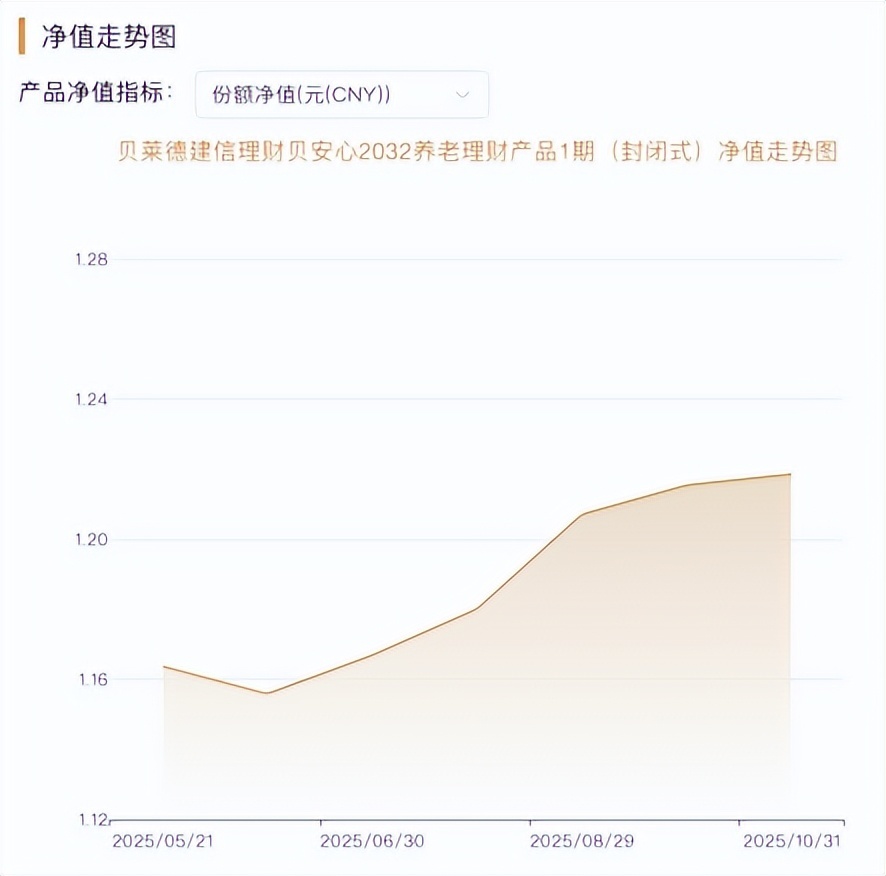
Core Insights - The expansion of the pension financial management market is anticipated following the release of the notice by the National Financial Supervision Administration, which allows the pilot areas for pension financial products to extend nationwide [1] - The notice encourages the issuance of long-term pension financial products, specifically those with a duration of 10 years or more, to align with the investment cycles of the pension industry [2][3] - The overall design aims to enhance the long-term capital allocation function and promote a stable pension asset allocation system, thereby increasing investor confidence [2][3] Group 1: Market Expansion and Product Design - The number of existing pension financial products stands at 51, with no new products launched in 2023, but the expansion of the pilot program is expected to restart issuance [1] - The notice emphasizes the need for diverse product forms, encouraging the issuance of long-term pension financial products with a minimum holding period of 5 years [2] - Regulatory incentives will be provided to companies with a higher proportion of long-term products in their portfolios, promoting a shift from short-term financial management to lifelong wealth management [3] Group 2: Liquidity and Risk Management - The establishment of transfer and pledge mechanisms for pension financial products is proposed to address liquidity needs in emergencies, such as serious illnesses [2][4] - This design reflects a regulatory consideration for a more humane approach to pension finance, balancing the need for long-term returns with risk management [4] - The focus on long-term products aims to mitigate the mismatch risk of short-term funds being invested in long-term projects [3] Group 3: Performance and Asset Allocation - In the third quarter, many pension financial products increased their allocation to equity assets, resulting in net value growth, showcasing effective active management [5] - Specific products, such as "BlackRock Jianxin Pension 2032 Phase 1," reported a cumulative net value growth rate of 21.84%, with a quarterly increase of 4.16% [5][7] - The report indicates that while some companies reduced their bond allocations, others, like ICBC Wealth Management, opted to increase bond investments, achieving annualized returns of 14.35% and 12.97% for their pension products [9][10] Group 4: Future Outlook - The pension financial management market is poised for significant development opportunities as the pilot policies are fully implemented and product issuance resumes [10] - Companies are encouraged to adopt scientific asset allocation models to dynamically adjust the equity-bond ratio and utilize derivatives for risk hedging [10][11] - Emphasis is placed on designing mechanisms for smoothing returns and enhancing liquidity through regular dividends and periodic redemption options [11]
每日钉一下(个人投资的四类常见资产,牛熊周期分别有多长?)
银行螺丝钉· 2025-11-06 14:13
Group 1 - The article highlights that most investors are familiar with stock index funds but have limited knowledge about bond index funds and their investment strategies [2] - A free course is offered to educate investors on how to invest in bond index funds, along with supplementary materials like course notes and mind maps for efficient learning [2] Group 2 - The article discusses the market cycles of different asset classes, categorizing them into four main types based on their bull and bear market cycles [5] - Bond assets typically have a bull-bear market cycle of 3-5 years, aligning with interest rate cycles [5] - Stock assets experience longer bull-bear cycles, with shorter cycles lasting 3-5 years and longer cycles extending to 7-10 years [5] - Gold also has a bull-bear market cycle comparable to stocks, with a notable 5-year bear market from 2011 to 2016 [5] - Real estate has the longest bull-bear market cycle, averaging 15-20 years, with the last bear market bottoming in 2008 and a bull market starting around 2018 [5]

不投资也是一种下注:你在重仓做空未来,这才是人生最大的冒险
雪球· 2025-11-06 13:00
Core Viewpoint - The article emphasizes the importance of participating in stock market investments as a means of asset allocation and personal growth, suggesting that early involvement can lead to better learning experiences and financial outcomes [3][10][22]. Investment Philosophy - The stock market is portrayed as a necessary arena for asset allocation, where holding only cash equates to betting against future economic growth [5]. - Real estate investment, particularly through high leverage, is framed as a long-term bet on regional prosperity and population inflow [6]. - Continuous education and skill acquisition are discussed as investments that may depreciate over time, highlighting the risks of relying solely on a single skill [7][8]. Learning Through Experience - The article argues that engaging in stock market trading enhances cognitive and analytical skills, allowing individuals to better navigate societal scams and emotional manipulations [8][9]. - It posits that financial market investment serves as a rapid path to personal development and understanding of the complex interplay of economic, political, and social factors [9]. Importance of Early Involvement - Early participation in the stock market is encouraged, as the cost of mistakes is lower when financial stakes are smaller [10][11]. - The analogy of children learning to walk is used to illustrate that early failures lead to quicker recovery and learning [10]. Feedback and Adaptation - Successful investment is linked to the ability to learn from failures and adapt strategies accordingly, emphasizing the importance of feedback in the learning process [12][13]. - The article warns against the pitfalls of not utilizing past experiences, comparing it to a robot learning to walk through trial and error [14]. Resilience and Growth - The narrative stresses that resilience in the face of setbacks is crucial for personal and professional growth, with a focus on maintaining a positive attitude during challenges [18]. - It highlights that true strength is demonstrated by how one responds to adversity, rather than merely achieving success [18]. Experience vs. Talent - The article contrasts fields where youthful talent thrives, such as mathematics and programming, with those where experience is paramount, like law and management [19][20]. - It concludes that trading is an experience-based field where understanding risk and managing investments is critical for long-term success [22]. Asset Allocation Strategy - The "雪球三分法" (Snowball Three-Part Method) is introduced as a strategy for asset allocation, advocating for diversification across assets, markets, and time to optimize returns and manage risks [24][25]. - This method aims to achieve a balanced investment portfolio that can withstand market fluctuations and provide long-term growth [25].

侃股:单一股票策略将逐渐远去
Bei Jing Shang Bao· 2025-11-06 12:22
Core Insights - The "14th Five-Year Plan" emphasizes the steady development of futures, derivatives, and asset securitization, elevating the strategic position of the derivatives market, which is significant for capital market development [1] - The A-share market is expected to mature, moving away from single stock strategies towards more complex combinations and strategies, raising the knowledge threshold for investors [1][3] Group 1: Market Dynamics - In international markets, stock trading activity is lower than in the A-share market, with many listed companies having an annual turnover rate of less than 100%, primarily due to the limited direct stock holdings by retail investors [1] - Retail investors typically invest through mutual funds, which handle stock transactions via subscription and redemption, offsetting these transactions before executing stock trades [1][2] Group 2: Role of Derivatives - Mutual funds prioritize using financial derivatives to manage equity changes, minimizing direct stock trading to maintain portfolio stability [1][2] - Financial products like leveraged funds, bull and bear certificates, and index futures/options allow funds to achieve asset allocation without directly buying or selling stocks [2] Group 3: Future Investment Landscape - The future landscape will see institutional investors and funds as the primary shareholders, focusing on company fundamentals rather than stock price fluctuations, leading to a decrease in retail investor participation [2][3] - Investment strategies will shift from simple stock trading to utilizing derivatives for implied volatility, strike prices, and arbitrage opportunities, resulting in lower expectations for direct stock trading returns [3]
港股强势延续,宏观经济稳中有进,财富之锚如何重塑?
中国基金报· 2025-11-06 12:11
Group 1 - The article emphasizes the increasing demand for investment and financial literacy among residents in the Guangdong-Hong Kong-Macao Greater Bay Area, driven by the diversification of asset management services and the active capital market [1] - The "Guangdong-Hong Kong-Macao Greater Bay Area Investment Open Class" series is launched to enhance investor confidence and market activity, in collaboration with industry associations and financial institutions [1] Group 2 - The capital market in 2025 is expected to present structural opportunities, with a gradual recovery in the domestic economy and stabilization in corporate profits, alongside a shift in manufacturing investment towards structural optimization [3] - The Hong Kong stock market has shown strong performance, with the Hang Seng Index ranking among the top global markets in the first three quarters of 2025, and the Hang Seng Technology Index demonstrating significant growth potential [3] Group 3 - The upcoming "Guangdong-Hong Kong-Macao Greater Bay Area Investment Open Class" will address investor concerns regarding asset allocation in a stable macroeconomic environment, focusing on balancing safety and returns [4] - The event will feature discussions on "Fixed Income +" investment strategies and the outlook for the Hong Kong stock market, with insights from fund managers at Dachen Fund [5] Group 4 - The event will be broadcasted across multiple media platforms, including the official video account of China Fund News, APP, Weibo, Douyin, and others, ensuring wide accessibility for participants [6]

中泰资管天团 | 唐军:配置是个“体力活”
中泰证券资管· 2025-11-06 11:39
Core Viewpoint - Asset allocation is a complex and multi-dimensional task, often referred to as "physical labor" due to the extensive research required to achieve effective configurations [1][2][27]. Group 1: Passive vs. Active Allocation - Passive allocation, which relies on diversification to reduce volatility, faces challenges in practice, particularly for domestic investors due to limited asset classes and the poor performance of key assets like A-shares [5][9][27]. - Active allocation aims to enhance returns beyond passive strategies by making informed predictions about expected returns, addressing the shortcomings of passive allocation [2][27]. Group 2: Issues with Passive Allocation - Determining expected returns using historical data can lead to "chasing performance," where investors favor assets that have recently performed well, skewing allocation models [5][9]. - The correlation between assets is not stable; for instance, the historical negative correlation between U.S. stocks and bonds has weakened since the 2008 financial crisis, impacting the effectiveness of diversification [6][9]. - The performance of passive allocation is heavily dependent on the underlying assets' returns and their correlations, which can be problematic in markets with limited asset classes [9][27]. Group 3: The Complexity of Active Allocation - Active allocation involves timing decisions, which many investors find challenging, leading to skepticism about its feasibility [17][19]. - While achieving a high accuracy rate in timing is difficult, even a modest success rate can significantly enhance investment returns when combined with sound risk management [18][19]. - The macroeconomic drivers influencing asset performance can change, necessitating continuous adjustments to research frameworks and strategies [21][27]. Group 4: Multi-Dimensional Decision Making - Effective asset allocation requires multiple low-correlation return streams to improve the probability of successful outcomes, as relying on a single asset is often insufficient [22][23]. - A structured decision-making framework that incorporates both strategic and tactical allocations can enhance the robustness of investment strategies [23][24]. - Strict risk budgeting is essential to ensure that asset allocations align with the overall risk tolerance of the portfolio, preventing forced liquidations during market fluctuations [24][25].