
经济数据

Search documents
Vatee外汇:外汇大盘点 美元兑日元枢轴点在哪里?汇率走势转折?
Sou Hu Cai Jing· 2025-08-20 06:28
Core Viewpoint - The USD/JPY currency pair is a focal point for investors, reflecting economic conditions in the US and Japan, and influencing global capital flows. Recent performance has sparked widespread market discussion and predictions about its future trajectory [1]. Group 1: Market Dynamics - The USD/JPY exchange rate is influenced by multiple factors, including the Federal Reserve's monetary policy, Bank of Japan's policy adjustments, global economic growth, and geopolitical uncertainties. The Fed's commitment to combating inflation and reducing asset purchases supports a stronger dollar, pushing USD/JPY towards key resistance levels [1][4]. - The Japanese economy is experiencing mild inflation, leading to a continued loose monetary policy, which puts downward pressure on the yen [1]. Group 2: Technical Analysis - Key pivot points for USD/JPY are identified at 110.00 and 112.00, serving as strategic resistance and support levels. Market participants closely monitor trading volume and price behavior as the exchange rate approaches these levels [2]. - Technical indicators such as moving averages, RSI, and MACD can provide early warnings of potential price movements. For instance, a MACD crossover near resistance could indicate bullish momentum, while a rebound in RSI near support may signal a reversal [7]. Group 3: Economic Data Impact - Economic data, including US employment figures, inflation metrics, and GDP growth, play a crucial role in shaping market expectations. Positive data could lead to a rebound in the dollar, while disappointing figures may prompt a pullback [4][8]. - Future monetary policy directions will be a significant variable affecting market conditions. A faster tightening pace by the Fed could strengthen the dollar, while unexpected economic data or policy shifts could lead to adjustments in the USD/JPY exchange rate [8]. Group 4: Market Sentiment and Risk Factors - Market sentiment and risk appetite are critical, with global uncertainties such as geopolitical conflicts and pandemic developments potentially impacting the dollar's performance [5]. - The current market environment is characterized by a "box range" between 110.00 and 112.00, with potential for a breakout or reversal depending on economic indicators or unforeseen events [5][9]. Group 5: Strategic Considerations for Investors - Investors are advised to stay alert to market dynamics and prepare for potential pivot point changes. Understanding these points is essential for future investment strategies [6]. - Setting reasonable stop-loss levels is crucial for risk management, regardless of whether a breakout or reversal occurs. Observing market volume and price behavior near key pivot points can help assess the validity of breakouts [8].

渤海证券研究所晨会纪要(2025.08.20)-20250820
BOHAI SECURITIES· 2025-08-20 01:20
Macro and Strategy Research - The economic data for July 2025 shows that the industrial added value increased by 5.7% year-on-year, lower than the expected 6.0% and previous value of 6.8% [3] - Retail sales of consumer goods grew by 3.7% year-on-year, below the expected 4.6% and previous value of 4.8% [4] - Fixed asset investment cumulative year-on-year growth is at 1.6%, also below expectations [4] Company Research: Huayou Cobalt Co., Ltd. (603799) - In the first half of 2025, the company achieved operating revenue of 37.197 billion yuan, a year-on-year increase of 23.78%, and a net profit attributable to shareholders of 2.711 billion yuan, up 62.26% [15] - Nickel product shipments increased significantly, with nickel product output reaching 139,400 tons, a year-on-year growth of 83.91% [16] - The company has made significant progress in cost reduction and efficiency improvement, with a sales net profit margin of 9.33%, an increase of 1.44 percentage points year-on-year [16] Industry Research: Metal Industry - Frequent bidding by major magnetic material manufacturers is expected to boost the price of praseodymium and neodymium oxide [10] - The steel industry is facing supply constraints due to tightened production policies, but demand may be impacted by construction site shutdowns [11] - Copper prices are expected to fluctuate due to insufficient fundamental support, with potential demand driven by seasonal inventory accumulation [11] - The rare earth market is seeing improved inquiry conditions, with light rare earth prices expected to be supported in the short term [12]

2025年8月18日,国内黄金9995价格多少钱一克?
Sou Hu Cai Jing· 2025-08-18 00:54
Core Viewpoint - The recent fluctuations in gold prices are influenced by multiple factors, including calls for interest rate cuts by the U.S. Treasury Secretary, tariff policies, geopolitical tensions, and economic data performance [3][4]. Group 1: Gold Price Movements - Domestic gold price (99.95%) is quoted at 775.08 CNY per gram, down 0.01% [1]. - International gold price is reported at 3,385.0 USD per ounce, up 0.07% [2]. Group 2: Influential Factors - U.S. Treasury Secretary's call for interest rate cuts has heightened market expectations for a rate reduction next month, which typically supports non-yielding gold prices [3]. - Tariff policies and geopolitical issues, including statements from Trump regarding tariffs on semiconductors and pharmaceuticals, as well as tensions in regions like Israel and Ukraine, have increased market risk aversion, impacting gold prices [3]. - Economic data, such as the July CPI showing moderate inflation, supports the expectation for a rate cut by the Federal Reserve, influencing gold investment demand [3]. Group 3: Price Outlook - Short-term outlook suggests that expectations for a September rate cut by the Federal Reserve may support gold prices, although rising U.S. stock markets and easing geopolitical tensions could limit safe-haven demand [4]. - Long-term factors such as global economic uncertainty, geopolitical risks, and central bank gold purchases are likely to drive gold prices higher, although improvements in U.S. economic data or unexpected Federal Reserve policy changes could restrict price increases [4].
2×2框架下的供需矛盾变化——7月经济数据点评
一瑜中的· 2025-08-17 15:09
Core Viewpoint - The article focuses on the supply-demand contradictions in the economy, particularly in the manufacturing sector, analyzing changes in both supply and demand sides and their implications for future economic trends [1][2]. Group 1: Supply-Demand Contradiction Changes - A 2x2 analytical framework is constructed to examine the supply side (upstream and midstream manufacturing) and the corresponding demand (infrastructure and real estate for upstream; equipment purchase, electromechanical exports, and durable goods consumption for midstream) [4][12]. - In 2024, the investment growth rate in equipment manufacturing decreased from 9% to 4.8% in the first seven months, while the combined demand growth rate increased from 9% to 10.7% during the same period [5][6]. - Upstream investment growth has rapidly declined, with a notable drop in real estate and infrastructure investments, which saw a faster decline in July [6][17]. Group 2: Midstream Manufacturing - The midstream sector shows two positive changes: demand growth remains high, with electromechanical exports growing at 8.1%, equipment purchase at 15.2%, and durable goods consumption at 9.0%, leading to a combined growth rate of 10.7% [5][14]. - Supply-side investment growth in the midstream sector has started to decline, with equipment manufacturing investment growth dropping to 4.8% from 6.3% [5][14]. Group 3: Upstream Manufacturing - The upstream sector presents a mixed picture: while investment growth has rapidly declined, with raw material investment growth at -0.1%, demand from real estate and infrastructure remains weak, with infrastructure investment growth at 3.2% and real estate investment at -12% [6][17]. - Historical observations from 2013-2017 indicate that upstream supply typically declines before demand recovers, suggesting that current upstream price recovery may depend on future demand increases [2][18]. Group 4: July Economic Data Overview - In July, industrial production growth was 5.7%, while service sector production index growth was 5.8%, indicating a strong supply side [20][22]. - Consumer demand and investment growth have declined, with retail sales growth at 3.7% and fixed asset investment growth at -5.3% [20][41]. - Real estate sales area decreased by 7.8% in July, and fixed asset investment growth has shown a significant decline across various sectors [27][41]. Group 5: Employment and Consumer Trends - The urban survey unemployment rate in July was 5.2%, reflecting a seasonal increase [23]. - Retail sales growth has shown resilience in lower-tier categories, with limited impact from fixed asset investment declines on middle and low-income groups [24][25].

7月经济数据点评:供需双承压,但债市仍谨慎
Shenwan Hongyuan Securities· 2025-08-16 13:48
Group 1 - The report highlights that consumer spending has weakened since peaking in May-June 2025, with retail sales growth for January to July 2025 at 4.8%, down 0.2 percentage points from the previous period, significantly impacted by the restaurant sector, which saw a growth rate of 3.8% [2][3] - Industrial value-added growth for July 2025 was 6.3%, a decline of 0.1 percentage points from June, with production in "anti-involution" sectors like automotive and photovoltaic experiencing notable decreases [3][4] - Fixed asset investment growth has accelerated its decline, with a cumulative year-on-year growth rate of 1.6% in July 2025, down 1.2 percentage points from June, driven by weak performance in real estate, infrastructure, and manufacturing sectors [3][5] Group 2 - The bond market has shown a weakening in pricing based on fundamentals, with the yield curve flattening, indicating pessimistic expectations for the economy despite weak demand in the real sector [3] - The report anticipates that the 10-year government bond yield will range between 1.65% and 1.80% in August and September 2025, with conditions for further yield declines being more stringent [3] - The report notes that August is a peak supply month for government bonds, and if market adjustments worsen, there is a possibility that the central bank may restart bond purchases [3]
股指期货周报-20250815
Rui Da Qi Huo· 2025-08-15 10:21
Industry Investment Rating - No information provided in the report Core Viewpoints - A-share major indices rose significantly this week, with the ChiNext Index and the Science and Technology Innovation 50 Index up over 5%. The four stock index futures also increased collectively, with small and medium-cap stocks outperforming large-cap blue-chip stocks. In terms of gains, IM > IC > IF > IH. The market trading activity increased significantly compared with last week, with the trading volume of the Shanghai and Shenzhen stock markets exceeding two trillion yuan for three consecutive trading days, and the trading amount of northbound funds exceeding one trillion yuan for four consecutive weeks. Although some economic data weakened in July, it did not have much negative impact on the market. The market is currently focused on the semi-annual reports of listed companies, and the net profit growth rates of the four broad-based indices are all positive. It is recommended to buy on dips with a light position in the medium and long term [8][104] Summary by Directory 1. Market Review - Futures: IF2509 rose 3.09% this week, IH2509 rose 2.19%, IC2509 rose 4.88%, and IM2509 rose 5.21%. - Spot: The Shanghai and Shenzhen 300 Index rose 2.37%, the Shanghai Stock Exchange 50 Index rose 1.57%, the China Securities 500 Index rose 3.88%, and the China Securities 1000 Index rose 4.09% [11] 2. News Overview - CPI: In July, the CPI rose 0.4% month-on-month, turning from a decline of 0.1% last month, and was flat year-on-year. The core CPI excluding food and energy prices rose 0.8% year-on-year, with the increase expanding for three consecutive months. - PPI: In July, the PPI fell 0.2% month-on-month, with the decline narrowing by 0.2 percentage points from last month, and fell 3.6% year-on-year, the same as last month. - Social financing scale: In the first seven months of this year, the cumulative increase in social financing scale was 23.99 trillion yuan, 5.12 trillion yuan more than the same period last year; RMB loans increased by 12.87 trillion yuan. At the end of July, M2 increased 8.8% year-on-year, M1 increased 5.6%, and the stock of social financing scale increased 9%. - Fixed asset investment: From January to July 2025, the national fixed asset investment (excluding rural households) was 28822.9 billion yuan, a year-on-year increase of 1.6%. Among them, private fixed asset investment decreased 1.5% year-on-year. From a month-on-month perspective, fixed asset investment (excluding rural households) decreased 0.63% in July. From January to July, national real estate development investment was 5358 billion yuan, a year-on-year decrease of 12.0%. - Social consumer goods retail: In July, the total retail sales of social consumer goods were 3878 billion yuan, a year-on-year increase of 3.7%; from January to July, the total retail sales of social consumer goods were 28423.8 billion yuan, an increase of 4.8%. - Industrial added value: In July, the added value of industrial enterprises above designated size increased 5.7% year-on-year in real terms. From a month-on-month perspective, in July, the added value of industrial enterprises above designated size increased 0.38% from the previous month. From January to July, the added value of industrial enterprises above designated size increased 6.3% year-on-year [14] 3. Weekly Market Data - Domestic major indices: The Shanghai Composite Index rose 1.70%, the Shenzhen Component Index rose 4.55%, the Science and Technology Innovation 50 Index rose 5.53%, the SME 100 Index rose 3.11%, and the ChiNext Index rose 8.58%. - Overseas major indices (as of Thursday): The S&P 500 rose 1.24%, the UK FTSE 100 rose 0.90%, the Hang Seng Index rose 1.65%, and the Nikkei 225 rose 3.73%. - Industry sector performance: Most industry sectors rose, with the communication, electronics, and non-bank financial sectors rising significantly, and the banking sector weakening significantly. - Industry sector main fund flow: The main funds in the industry were generally net outflows, with significant net outflows in the machinery equipment, national defense and military industry, and non-ferrous metals sectors. - SHIBOR short-term interest rate: The SHIBOR short-term interest rate was stable, and the capital price was low. - Restricted share lifting and northbound capital: This week, major shareholders had a net reduction of 6.239 billion yuan in the secondary market, and the market value of restricted shares lifted was 233.12 billion yuan. The total trading volume of northbound funds was 1026.01 billion yuan. - Basis and net positions: The basis of the main contracts of IF, IH, IC, and IM all converged [18][19][23] 4. Market Outlook and Strategy - Market outlook: Although some economic data weakened in July, it did not have much negative impact on the market. The market is currently focused on the semi-annual reports of listed companies, and the net profit growth rates of the four broad-based indices are all positive. However, it is necessary to be vigilant about the drag on the index performance caused by the profit decline of companies that have not released their financial reports. At the same time, in the case of high valuations in the US stock market, A-shares with reasonable valuations continue to attract foreign capital inflows, injecting incremental funds into the market. - Strategy: It is recommended to buy on dips with a light position in the medium and long term [104]

长江期货市场交易指引-20250815
Chang Jiang Qi Huo· 2025-08-15 02:02
1. Report Industry Investment Ratings 1.1 Macro Finance - Index Futures: Bullish on dips [1][6] - Treasury Bonds: Sideways [1][6] 1.2 Black Building Materials - Rebar: Hold off for now [1][8] - Iron Ore: Sideways [1][8] - Coking Coal and Coke: Sideways [1][10] 1.3 Non - Ferrous Metals - Copper: Range trading or hold off [1][13] - Aluminum: Buy on dips after pullbacks [1][15] - Nickel: Hold off or short on rallies [1][17] - Tin: Range trading [1][17] - Gold: Range trading [1][18] - Silver: Range trading [1][18] 1.4 Energy and Chemicals - PVC: Sideways [1][20] - Soda Ash: Short 09 and long 05 arbitrage [1] - Caustic Soda: Sideways [1][22] - Styrene: Sideways [1][24] - Rubber: Sideways with a bullish bias [1][27] - Urea: Sideways [1][31] - Methanol: Sideways [1][32] - Polyolefins: Wide - range sideways [1][33] 1.5 Cotton Textile Industry Chain - Cotton and Cotton Yarn: Sideways with a bullish bias [1][37] - Apples: Sideways with a bullish bias [1][38] - Jujubes: Sideways with a bullish bias [1][38] 1.6 Agriculture and Animal Husbandry - Hogs: Bearish on rallies [1][40] - Eggs: Bearish on rallies [1][42] - Corn: Wide - range sideways [1][43] - Soybean Meal: Range - bound [1][46] - Oils and Fats: Sideways with a bullish bias [1][47] 2. Core Views of the Report - The overall futures market shows a diversified trend, with different investment strategies recommended for various sectors based on their supply - demand fundamentals, macro - economic factors, and policy impacts. For example, in the macro - finance sector, the index futures are expected to rise in the medium - term due to policy support and capital inflows, while the treasury bonds are constrained by the strong performance of the equity market. In the non - ferrous metals sector, copper is likely to maintain a high - level sideways trend due to a combination of factors such as economic data and inventory levels [6][13]. 3. Summaries According to Relevant Catalogs 3.1 Macro Finance - **Index Futures**: The US inflation data has affected the Fed's interest - rate cut expectations. The index has strengthened due to policy support, capital inflows, and event catalysts. After reaching a short - term high, it may consolidate, but the medium - term upward trend remains. Investors with positions can hold or lock in profits on pullbacks, while those without positions can consider buying on dips [6]. - **Treasury Bonds**: The bond market is currently constrained by the strong performance of risk assets. Although the equity market has ended its eight - day winning streak, the adjustment is limited, and the current equity - dominant pattern may continue to suppress the bond market in the short term. Attention should be paid to the upcoming economic data to see if it can support the bond market [6]. 3.2 Black Building Materials - **Rebar**: The rebar futures price has continued to decline. The cost is at a neutral level, and the supply - demand contradiction is not significant. The market should pay attention to the implementation of crude - steel production limits and the resumption of coking - coal production. It is expected to remain sideways in the short term, and investors can hold off or engage in short - term trading [8][9]. - **Iron Ore**: The iron - ore futures price has been weak. The supply and demand are in a state of weak balance. Considering the possible macro - positive factors in the fourth quarter, the iron - ore price is expected to be sideways with a bullish bias. It can be considered as a long leg when shorting other black - building materials [8][9]. - **Coking Coal and Coke**: The coking - coal market has limited supply growth and stable demand, with no prominent supply - demand contradictions. The coke market is in a tight supply - demand pattern, but the weak steel sales and high iron - water production are in a game. Attention should be paid to factors such as production - limit policies, iron - water production changes, and raw - material price fluctuations [11]. 3.3 Non - Ferrous Metals - **Copper**: The Chinese economic data is positive, and the Fed's possible interest - rate cut has supported the copper price. However, the domestic copper industry is in the off - season, and the downstream demand is weak. The inventory is expected to accumulate, but the decline in the copper price is limited. It is expected to remain sideways in the short term, with the Shanghai copper running in the range of 78,000 - 79,500 yuan/ton [13]. - **Aluminum**: The production capacity of alumina and electrolytic aluminum is increasing, while the downstream demand is affected by the off - season. The inventory has increased. Although there are still some positive factors such as interest - rate cut expectations, the short - term is expected to be sideways. Investors can consider buying on dips in August [15]. - **Nickel**: In the medium - to - long term, the nickel industry has an oversupply situation. The price of nickel ore is falling slowly, and the stainless - steel price is expected to be strong. It is recommended to short on rallies moderately [17]. - **Tin**: The domestic refined - tin production has increased, and the supply of tin ore is gradually improving. The semiconductor industry is expected to recover, and the inventory is at a medium level. It is recommended to conduct range trading, with the Shanghai tin 09 contract running in the range of 255,000 - 275,000 yuan/ton [17]. - **Gold and Silver**: The new US tariffs and weak employment data have increased the market's interest - rate cut expectations, and the precious - metal prices have rebounded. However, the Fed's hawkish remarks have also put pressure on the prices. It is expected that the prices of gold and silver will have support at the bottom and are recommended for range trading [18][19]. 3.4 Energy and Chemicals - **PVC**: The cost is at a low - profit level, the supply is high, and the demand is affected by the real - estate market and export factors. The inventory is slightly lower than last year, and the export sustainability is questionable. It is expected to be sideways in the short term, with the 09 contract focusing on the range of 4,900 - 5,100 yuan/ton [20][21]. - **Caustic Soda**: The supply is abundant, the demand has rigid support but the growth rate is slowing down. The 09 contract is expected to be sideways in the range of 2,400 - 2,550 yuan/ton, and investors can consider buying on dips for the peak - season contracts [22][23]. - **Styrene**: The cost is affected by factors such as oil prices and pure - benzene production. The supply is expected to increase, and the demand is weakening. The macro - environment is improving slightly. It is expected to be sideways, with the price focusing on the range of 7,100 - 7,400 yuan/ton [24][26]. - **Rubber**: After a continuous rise, the rubber price has slightly corrected, but the cost support remains strong, and the inventory has decreased. It is expected to be sideways with a bullish bias, focusing on the range of 15,200 - 15,600 yuan/ton [27][28]. - **Urea**: The supply has decreased slightly, the agricultural demand is sporadic, and the compound - fertilizer demand is increasing. The price is expected to be range - bound, with support at 1,700 - 1,730 yuan/ton and resistance at 1,800 - 1,830 yuan/ton [31]. - **Methanol**: The supply has decreased slightly, the demand from the methanol - to - olefins industry is stable, and the traditional demand is weak. The inventory in the port area has increased rapidly. The methanol price is expected to be sideways with a bearish bias [32][33]. - **Polyolefins**: The supply has tightened slightly, the downstream demand has a replenishment need, but the recovery rate of the operating rate is slower than the same period. The polyolefin price is expected to be sideways in the short term, with the L2509 contract focusing on the range of 7,200 - 7,500 yuan/ton and the PP2509 contract focusing on the range of 6,900 - 7,200 yuan/ton [33][34]. - **Soda Ash**: The impact of the relevant policies on production is limited. The supply is increasing, and the inventory is expected to accumulate. The 09 contract is expected to face pressure, and it is recommended to short the 09 contract [36]. 3.5 Cotton Textile Industry Chain - **Cotton and Cotton Yarn**: According to the USDA report, the global cotton supply - demand situation has improved. With the approaching of the peak season and the tight spot market, the cotton price is expected to be sideways with a bullish bias [37]. - **Apples**: The early - maturing apples in the western region have limited trading, and the inventory apples in the Shandong region have slow sales. The price of early - maturing apples is weak, and the inventory apples are stable. With the upcoming supply increase of early - maturing paper - bag Gala apples, attention should be paid to the quality and price trends. The apple price is expected to remain high and sideways [38]. - **Jujubes**: The jujube - fruit is in the swelling period, and the price in the sales area has increased. The jujube price is expected to rise sideways in the near future [38]. 3.6 Agriculture and Animal Husbandry - **Hogs**: In the short term, the supply is increasing, and the demand is in the off - season. The pig price is expected to continue to bottom out. In the medium term, the price may rebound due to improved consumption, but the rebound height is limited. In the long term, the supply will continue to increase, and the price will be under pressure. The 09 contract can be observed, and investors can consider shorting the 11 and 01 contracts on rallies and pay attention to the long 05 and short 03 arbitrage [40][41]. - **Eggs**: The current egg price is at a low level, and the demand may increase during the Mid - Autumn Festival and school - opening periods. However, the supply is sufficient, and the high - supply situation in the long term is difficult to reverse. It is recommended to short on rallies for the main 10 contract, and consider going long on dips for the 12 and 01 contracts if the culling process accelerates [42]. - **Corn**: The spot price fluctuates slightly, and the 09 contract is expected to be range - bound between 2,250 - 2,300 yuan/ton. Attention should be paid to policies and substitute products [44][45]. - **Soybean Meal**: The US soybean supply has tightened, and the price has a rising trend, but the increase is limited. The domestic soybean and soybean - meal inventories are accumulating, and the spot - price increase is restricted. In the medium - to - long term, the price may be strong. Investors can hold long positions in the M2511 and M2601 contracts and reduce positions on rallies [46][48]. - **Oils and Fats**: The short - term prices of soybean, palm, and rapeseed oils are expected to be sideways with a bullish bias. The 01 contracts of these oils have support and resistance levels, and it is recommended to buy on dips. Attention should be paid to the rapeseed - oil 11 - 01 reverse arbitrage [47][55].
外汇汇率受什么因素影响?
Sou Hu Cai Jing· 2025-08-14 07:16
Group 1 - Economic data plays a crucial role in foreign exchange rate fluctuations, with macroeconomic indicators such as GDP, inflation rate, and unemployment rate directly reflecting the health and development trends of an economy [1] - Strong GDP growth indicates economic prosperity, attracting foreign investors and increasing demand for the currency, thus pushing the exchange rate up; conversely, weak economic growth may lead to decreased currency demand and downward pressure on the exchange rate [1] - Inflation rates significantly impact exchange rates, with high inflation eroding purchasing power and causing currency depreciation, while stable low inflation helps maintain currency value [1] Group 2 - Interest rates are a key factor influencing foreign exchange rates, as differences in interest rates between countries can lead to international capital flows [1] - Higher interest rates attract foreign investors seeking better returns, increasing demand for the currency and pushing the exchange rate up; lower interest rates may result in capital outflows, increasing currency supply and decreasing demand, leading to a drop in the exchange rate [1] - Central banks adjust interest rates to achieve monetary policy goals, directly affecting supply and demand in the foreign exchange market and thus impacting exchange rate trends [1] Group 3 - Political stability, policy consistency, and diplomatic relations significantly affect foreign exchange rates, with political turmoil or sudden policy changes creating uncertainty that may lead investors to reduce holdings in that currency, causing depreciation [2] - A stable political environment and transparent policies enhance investor confidence, providing support for the exchange rate [2] - Geopolitical conflicts, such as wars and trade disputes, disrupt economic order and affect investor sentiment and market expectations, leading to significant impacts on foreign exchange rates [2] Group 4 - Market expectations and speculative behavior also have a notable influence on foreign exchange rates, as investors' anticipations regarding future economic data, policy directions, and international events are often reflected in the market [2] - Positive expectations about economic improvement or central bank rate hikes may lead investors to buy the currency in advance, pushing the exchange rate up; negative expectations can result in currency sell-offs and declines in exchange rates [2] - Speculative trading in the foreign exchange market can significantly increase exchange rate volatility in the short term due to large-scale trading based on predicted trends [2]
金晟富:8.14黄金震荡筑底短线偏强!日内黄金行情分析参考
Sou Hu Cai Jing· 2025-08-14 02:29
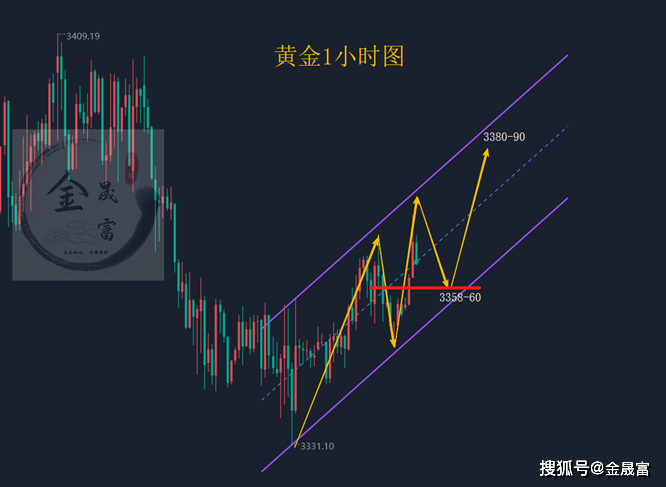
Group 1 - The core viewpoint of the articles revolves around the impact of potential interest rate cuts by the Federal Reserve on gold prices, with a consensus forming around a possible 50 basis point cut in September [1][2][3] - The weakening of the US dollar, driven by expectations of rate cuts and political pressure from the Trump administration, has lowered the cost for overseas buyers of gold, stimulating demand [1][2] - Geopolitical tensions and the performance of the US stock market are influencing gold's safe-haven demand, with a potential easing of these tensions possibly dampening gold's upward momentum [2][3] Group 2 - Technical analysis indicates that gold prices have shown resilience, with recent trading around $3370 per ounce, and a focus on key support levels at $3355 and resistance at $3380 [3][5] - Strategies for trading gold include taking short positions on rebounds near $3385-$3390 and long positions on pullbacks around $3358-$3360, with specific stop-loss and target levels outlined [4][5] - The upcoming economic data releases, including the Producer Price Index and initial jobless claims, are critical for validating the anticipated rate cut path and could influence gold prices significantly [2][3]
海外宏观周报:美国降息预期升温-20250811
Ping An Securities· 2025-08-11 03:48
Group 1: US Economic Policy - Trump signed an executive order imposing an additional 25% tariff on Indian goods, raising the total tariff rate to 50%[1] - The US trade deficit in June shrank significantly by 16% to $60.2 billion, the lowest level since September 2023[1] - The probability of a 25 basis point rate cut in September increased from 80.3% to 88.9%[1] Group 2: Economic Indicators - The ISM non-manufacturing index for July fell from 50.8 to 50.1, below the expected 51.5[1] - The GDPNow model predicts a 2.5% annualized growth rate for Q3 2023[1] - Initial jobless claims rose to 226,000, the highest level in a month, exceeding economists' expectations[1] Group 3: Global Economic Trends - Eurozone's composite PMI for July rose to 50.9, a four-month high, but below the initial estimate of 51[1] - The Bank of England cut rates by 25 basis points to 4%, aligning with market expectations[1] - Japan's nominal wages increased by 2.5% year-on-year in June, up from a revised 1.4% the previous month[1] Group 4: Market Reactions - Global stock markets showed recovery, with the S&P 500, Dow Jones, and Nasdaq rising by 2.4%, 1.3%, and 3.9% respectively[1] - Gold prices increased by 1.4%, while Brent and WTI crude oil prices fell by 4.4% and 5.1% respectively[1] - The US dollar index declined by 0.43% to 98.27, influenced by concerns over the job market and rate cut expectations[1]