人民币国际化

Search documents
俄总理访华报喜,中俄“去美元化”取得重大战果,中国是俄罗斯最大的对外贸易伙伴
Sou Hu Cai Jing· 2025-11-04 07:33
Core Insights - The share of US dollars and euros in China-Russia trade settlements has dropped to "statistical error levels," indicating a significant shift towards local currency transactions [1][3] - In 2022, the proportion of trade settled in local currencies reached 50%, and by 2023, it surged to nearly 95%, reflecting a major transition in economic cooperation [3] - The increasing use of the Chinese yuan in trade signifies a growing trust from Russia, driven by the stability of the Chinese market and the need to reduce reliance on Western currencies [4] Economic Cooperation - The shift to local currency settlements is not just a numerical change but represents a critical step towards financial security and autonomy for both nations [3] - The cooperation in energy and raw materials trade has accelerated the exploration of local currency settlements, potentially reshaping global energy market pricing logic [4] - The ongoing Russia-Ukraine conflict has provided a unique context for the yuan's internationalization, prompting other countries to consider incorporating the yuan into their trade systems [4][6] Global Financial Order - The move towards de-dollarization by China and Russia poses a challenge to the existing global financial order, serving as a warning to countries reliant on the US dollar [6] - There are indications that this trend is spreading to other nations, with Russia beginning to request payments in yuan for oil from India, highlighting the yuan's expanding international role [6] - The de-dollarization wave is likely to continue as more countries recognize the risks of dollar dependency, leading to broader adoption of the yuan [6][8] Future Implications - The visit of Russian Prime Minister Mishustin symbolizes substantial progress in the de-dollarization efforts between China and Russia, with promising prospects for the yuan's internationalization [8] - This shift may accelerate the rebalancing of the global financial system and have profound geopolitical implications, as countries adapt to the changing economic landscape [8] - Nations that proactively adjust their economic structures in response to these changes may better position themselves for future uncertainties [8]


一场不容错过的对话!两个“看多中国的人”深谈稀土博弈、制度韧性与中美格局重估……
聪明投资者· 2025-11-04 07:10
Core Viewpoint - The dialogue between Wang Guohui and Ma Kaishuo at the APS 30th anniversary forum provides insights into the evolving dynamics of the US-China relationship, particularly in the context of the "Thucydides Trap" and the potential for investment opportunities in China despite geopolitical tensions [2][3][4]. Group 1: Investment Perspective - Wang Guohui highlights that the US's multi-dimensional containment strategy against China is showing signs of fatigue, while China's structural advantages in areas like rare earths and supply chain capabilities are being revalued by the market [3][4]. - APS has shifted its investment strategy to focus entirely on China, believing that market concerns were already priced in, leading to a favorable investment environment [11][12]. - The Chinese stock market has experienced a bull market for 13 consecutive months, and the bond market has rebounded for 24 months, indicating resilience in the face of external pressures [17]. Group 2: Geopolitical Dynamics - The dialogue addresses the critical moment in US-China competition, with both parties acknowledging the need to not underestimate the US's capabilities and the importance of China's institutional stability and technological accumulation [4][19]. - The US has engaged in systematic competition with China across five fronts: trade, technology, finance, public opinion, and geopolitical influence, but signs suggest that these strategies may be failing [16][19]. - The discussion emphasizes the significance of rare earths in the geopolitical landscape, with China controlling 90% of global rare earth processing, which is crucial for military and high-tech sectors [18][25]. Group 3: Future Outlook - Both Wang and Ma express optimism about China's long-term growth potential, with Ma suggesting that China's economic rise could continue for at least another century, driven by its historical resilience and civilizational strength [54][58]. - The conversation anticipates that the US will continue to view China's rise as a threat, leading to ongoing competition, but also hints at the possibility of cooperation in certain areas [33][49]. - The dialogue concludes with reflections on the need for stability and predictability in China, as well as the recognition that the US will need to engage with the global community, including China, to address shared challenges [32][40].

中企出海,有了新的表述
第一财经· 2025-11-04 03:02
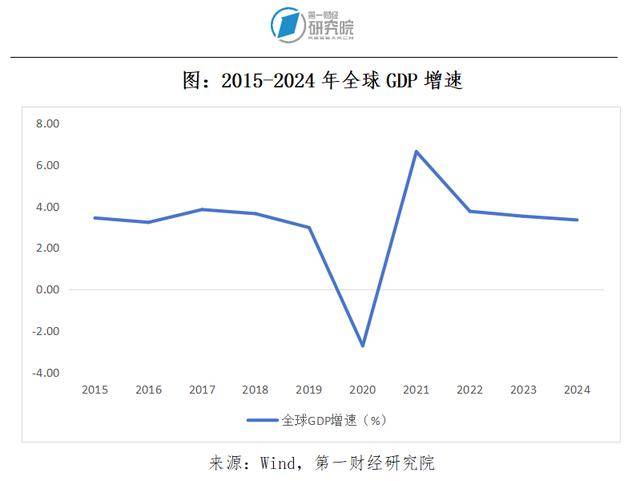
Core Viewpoint - The article discusses the key points from the "Suggestions for Formulating the 15th Five-Year Plan for National Economic and Social Development" released by the Central Committee, focusing on the implications for Chinese enterprises going global during the "15th Five-Year" period [6][9]. Group 1: External Environment and Challenges - The "15th Five-Year" period is characterized by significant changes in the historical context and external development environment compared to the "14th Five-Year" period [7]. - The international economic landscape is marked by slow growth, with the IMF predicting global GDP growth rates of 3.2% and 3.1% for 2025 and 2026, respectively, which are relatively low compared to the past decade [9]. - Geopolitical factors continue to negatively impact international trade, with rising protectionism and unilateralism posing challenges for Chinese enterprises seeking to expand abroad [8][9]. Group 2: Opportunities for Globalization - Despite challenges, the "Suggestions" highlight that Chinese enterprises possess favorable conditions to actively shape the international environment and expand globally [11][13]. - The report emphasizes the importance of cultural export, encouraging more cultural enterprises and products to reach international markets, thereby enhancing China's soft power [15]. - The traditional industries are expected to strengthen their global positions, with a focus on upgrading key sectors such as mining, metallurgy, and machinery [16][17]. Group 3: Infrastructure and Connectivity - The article underscores the need for improved international logistics and infrastructure, which is crucial for supporting trade during the "15th Five-Year" period [18]. - The "Suggestions" call for the establishment of a resilient international transportation system and the enhancement of initiatives like the Belt and Road Initiative [18]. Group 4: Service Trade and Financial Development - The "Suggestions" place greater emphasis on the development of service trade, aiming to expand market access and improve service trade standards [20][21]. - The plan also highlights the importance of advancing the internationalization of the Renminbi and building a self-controlled cross-border payment system, which is essential for facilitating trade and reducing risks for Chinese enterprises [22].

“十五五”规划建议里那些有关中企出海的表述 | 跨越山海
Sou Hu Cai Jing· 2025-11-04 02:27
Core Viewpoint - The "15th Five-Year Plan" emphasizes the importance of China's globalization efforts amid a complex international environment, highlighting both challenges and opportunities for Chinese enterprises in their overseas expansion. Group 1: External Environment and Challenges - The "15th Five-Year Plan" acknowledges the intensified international competition and challenges posed by unilateralism, protectionism, and geopolitical tensions, which affect Chinese enterprises' overseas operations [2][3]. - The International Monetary Fund forecasts global GDP growth rates of 3.2% and 3.1% for 2025 and 2026, respectively, indicating a relatively slow economic growth environment [2]. - Changes in trade policies, such as new tariffs imposed by countries like Mexico on imports from China, complicate the export landscape for Chinese companies [3]. Group 2: Opportunities for Globalization - The "15th Five-Year Plan" introduces new proposals for Chinese enterprises to actively shape international environments and leverage their advantages in global supply chains [4]. - Chinese enterprises are increasingly demonstrating strong global market competitiveness, particularly in sectors like electric vehicles and 5G technology, despite geopolitical pressures [5]. Group 3: Cultural and Traditional Industry Development - The plan emphasizes the importance of enhancing the influence of Chinese culture globally, encouraging cultural enterprises to expand overseas [7][9]. - There is a focus on optimizing and upgrading traditional industries, with specific mentions of enhancing the global competitiveness of sectors such as mining, metallurgy, and textiles [10]. Group 4: Infrastructure and Connectivity - The plan highlights the need for robust international logistics and infrastructure, aiming to improve trade facilitation through diversified and resilient transportation networks [12]. - The ongoing geopolitical factors affecting trade are acknowledged, yet the overall trend towards globalization remains strong, necessitating improved logistics to enhance competitiveness [12]. Group 5: Service Trade and Financial Integration - The "15th Five-Year Plan" places greater emphasis on the development of service trade, aiming to expand market access and improve service trade standards [15]. - The plan also stresses the importance of advancing the internationalization of the Renminbi and building a self-controlled cross-border payment system, which will facilitate trade and reduce risks for Chinese enterprises [16].
陈镇喜:多层次推动金融高水平开放
Jing Ji Ri Bao· 2025-11-04 00:04
持续完善资本市场制度型开放和互联互通机制,从准入、运营、退出全链条优化制度供给。制度型 开放的本质是促进国内外高标准规则对接,对此应深化准入制度"双向对等"改革,构建"安全可控"的跨 境规则衔接机制,落实金融数据跨境流动"白名单"制度,将符合条件的跨境支付、投资等日常经营所需 的数据纳入豁免评估范围,推动会计准则与税收制度统一。在此基础上,继续扩容互联互通范围,将北 交所股票全面纳入沪深港通,为"专精特新""小巨人"等成长型、创新型企业引入更多耐心资本。 在推进金融高水平开放过程中,必须统筹发展与安全,对违法违规行为"长牙带刺",对金融创新规 范引导。以强监管为金融高水平开放保驾护航,形成"放得开、激得活、管得好"的良好局面。 (本文来源:经济日报 作者系华南理工大学经济与金融学院副院长、教授、博士生导师 陈镇喜) 客观上看,尽管我国金融高水平开放已取得显著成效,但在向更高层次迈进过程中依然面临一些难 题。比如,人民币国际化水平有待提升。根据SWIFT今年8月份数据,尽管人民币已跻身全球第六大支 付货币,全球支付占比为2.93%,但与美元(46.94%)、欧元(25.61%)的占比相比,差距仍然明显。又 如, ...
21社论丨中国正以更自信的态度推动开放
21世纪经济报道· 2025-11-03 23:28
Core Viewpoint - The "15th Five-Year Plan" emphasizes the importance of expanding domestic demand and building a strong domestic market, while also promoting international circulation and sharing opportunities with the world [1][3]. Group 1: Domestic Market and Demand - The plan highlights the strategic importance of expanding domestic demand, leveraging China's large population of over 1.4 billion and more than 400 million middle-income groups, which contribute nearly 50 trillion RMB in consumption and over 20 trillion RMB in imports annually [1]. - The "15th Five-Year Plan" aims to further enlarge China's super-large market, promoting a strong domestic circulation [1]. Group 2: International Trade and Investment - The plan advocates for a balanced development of trade and investment, focusing on market diversification and the integration of domestic and foreign trade [3]. - It proposes to enhance bilateral investment cooperation, attract foreign investment, and promote orderly cross-border layout of industrial and supply chains [3]. - The plan also emphasizes the internationalization of the RMB and the establishment of a self-controlled cross-border payment system, reflecting a proactive approach compared to previous plans [3]. Group 3: Service Trade Development - Service trade is identified as a key area for development, with a focus on expanding market access and encouraging service exports [2]. - The plan aims to improve the management of cross-border service trade and enhance the standardization of service trade [2]. - China's service industry is currently lagging behind in comparison to its global trade and manufacturing sectors, but recent efforts are being made to relax restrictions in telecommunications, internet, education, culture, and healthcare [2]. Group 4: Global Economic Engagement - China is adopting a more confident approach to opening its market, providing development opportunities for other countries while also increasing outbound investments [4]. - The country aims to share its market and technological advantages with the world, promoting a fair and cooperative international economic order [5].

中国正以更自信的态度推动开放
2 1 Shi Ji Jing Ji Bao Dao· 2025-11-03 23:11
Group 1 - The "15th Five-Year Plan" emphasizes the importance of expanding domestic demand and building a strong domestic market, leveraging China's large population and consumption capacity to create opportunities for both domestic and international investors [1] - The plan highlights the need for China to actively expand its autonomous opening-up, focusing on high-standard international trade rules and enhancing market access in the service sector [2] - The strategy includes promoting balanced development in trade and investment, optimizing goods trade, and encouraging foreign investment while managing outbound investments effectively [3] Group 2 - Service trade is identified as a key area for development, with initiatives to enhance market access, encourage service exports, and improve the management of cross-border service trade [2] - The plan aims to promote the internationalization of the Renminbi and enhance the openness of capital projects, reflecting a proactive approach in response to global financial instability [3] - China is committed to a more confident approach to opening up its market, sharing its market and technology with the world, and promoting a fair and cooperative international economic order [4]
多层次推动金融高水平开放
Jing Ji Ri Bao· 2025-11-03 22:35
党的二十届四中全会明确提出,扩大高水平对外开放,积极扩大自主开放。作为国民经济血脉,金融部 门在整个经济体系中占据举足轻重的地位。通过促进境内外金融要素自由流动与高效整合,优化整体资 源配置效率,金融高水平开放将为实体经济高质量发展提供更高效支持。 "十四五"以来,我国金融高水平开放显著加快。据中国人民银行和国家外汇局公告,截至今年7月末, 境外主体持有境内人民币股票、债券等资产10万亿元;907家机构获QFII资格;80多个国家和地区的央 行或货币当局将人民币纳入外汇储备。 进一步健全跨境市场基础设施,扎实推进跨国公司本外币一体化资金池业务试点的扩围工作。打通"人 民币盈余—外币负债"直联通道,形成人民币对外币负债的替代,推动人民币从"贸易项"走向"投融资 项"。简化银行客户跨境资金调配流程,便利跨国企业运用人民币进行全球资金调度、贸易结算及资产 负债管理,增强人民币对跨国公司的吸引力,为人民币国际化注入新动能。 持续完善资本市场制度型开放和互联互通机制,从准入、运营、退出全链条优化制度供给。制度型开放 的本质是促进国内外高标准规则对接,对此应深化准入制度"双向对等"改革,构建"安全可控"的跨境规 则衔接机 ...
你制你的裁,我出我的售!数据表明:中国再抛美债,美方计划落空
Sou Hu Cai Jing· 2025-11-03 19:42
"这根本不可能发生!中国不会抛售美债,他们不敢,他们需要我们!"2025年4月的一个清晨,前美国财政部官员杰克· 帕里哈皮蒂亚(Jack Parrikapitiya)在X平台上的紧急发言震惊了全球金融市场。随后,美国国债收益率飙升,金融市场 一片混乱。而彼时,中国似乎正在用实际行动宣示着自己的立场——我们并非离不开谁。 世界第一大经济体与第二大经济体之间的金融博弈,再次成为全球关注的焦点。数据显示,中国正在悄然减持美国国 债,而这一举动似乎让美国方面有些坐不住了。两大经济体之间的金融棋局,究竟谁能笑到最后? 通过对比美国财政部的数据可以发现,就在刚刚过去的3月份,中国持有的美国国债规模已经从2月的7840亿美元减少至 7650亿美元,减少了190亿美元。这是中国持续多年来的减持美债策略中的又一次"出手"。 我们不禁要问:美国为何会对中国减持美债如此敏感?中国减持美债的背后又有怎样的战略考量?这场国际金融博弈会 给全球经济带来怎样的影响? 美债持有量首次被英国超越,中国退居第三 根据美国财政部2025年5月16日公布的最新数据,中国持有的美国国债在3月底已降至7650亿美元,比前一个月减少了近 190亿美元。与 ...
规划建议及部委文章中的“增量”
一瑜中的· 2025-11-03 14:34
Core Viewpoint - The article emphasizes the key points from the "15th Five-Year Plan" and related documents, highlighting economic growth, technological advancement, and the importance of domestic demand and income growth. Group 1: "15th Five-Year Plan" Key Information - The main goals include maintaining economic growth within a reasonable range, improving total factor productivity, and significantly increasing the resident consumption rate [3][4] - Specific industries are identified for consolidation and enhancement, including mining, metallurgy, chemicals, and emerging strategic industries like new energy and quantum technology [3][4] - The plan emphasizes "extraordinary measures" to achieve breakthroughs in key technologies across various sectors [3] - Domestic demand is prioritized with a focus on increasing public service spending and government investment in livelihood projects [3] - New approaches to resident income include promoting collective wage negotiations and improving minimum wage adjustment mechanisms [3] Group 2: Auxiliary Documents Key Information - The "Guidance Questions" document outlines a target for per capita GDP to exceed $20,000 by 2035, requiring an average annual GDP growth of 4.17% during the 15th and 16th Five-Year Plans [5][26] - Financial and capital market reforms are highlighted, including the restructuring of small financial institutions and the completion of financial legislation [5][6] - The real estate sector is addressed with measures to promote the sale of existing homes and regulate pre-sale fund supervision [7] - State-owned enterprises are encouraged to consolidate and avoid redundant construction, while also improving the wage determination mechanism [7] Group 3: Recent Noteworthy Events - The recent meeting between the Chinese and U.S. presidents resulted in agreements to adjust tariffs and suspend certain export controls, which may impact trade dynamics [8][24] - The introduction of new financial regulations aims to enhance the performance of investment funds and restrict certain financial practices [9][29] - The National Development and Reform Commission reported on local government debt limits and the allocation of funds to support various projects, emphasizing investment in digital economy and infrastructure [9][22]