自主可控

Search documents
恒坤新材IPO暂缓背后:收入确认是否成障碍?毛利率异常 贸易业务贡献利润
Xin Lang Zheng Quan· 2025-08-05 07:46
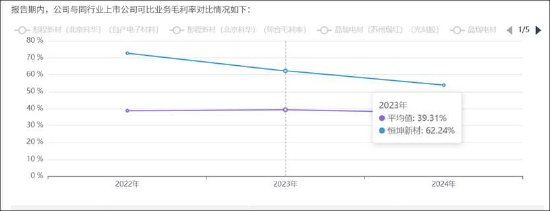
出品:新浪财经上市公司研究院 文/夏虫工作室 核心观点:在自主可控大背景下,为何恒坤新材此次IPO闯关遭遇暂缓审议?审议暂缓背后又折射出上 市委何种隐忧?值得注意的是,公司申报材料毛利率不仅异于同行,也与冲刺上市前差异较大,其报表 质量是否可能构成此次上市障碍?此外,公司依赖贸易业务贡献了大部分毛利。 恒坤新材曾为新三板挂牌上市企业。我们发现,公司毛利率科创板IPO上市前后毛利率差异也巨大。 Wind数据显示,公司2019年及之前,毛利率维持在20%至25%之间左右;而2021年后,即公司科创板冲 刺上市披露的毛利率却飙涨至53%至72%左右。 公司毛利率为何远超同行?为何毛利率科创板上市前后差异如此巨大? 恒坤新材成为今年首单IPO上会被暂缓审议公司引发市场关注。 公开资料显示,恒坤新材致力于集成电路领域关键材料的研发与产业化应用,据称为国内少数具备12英 寸集成电路晶圆制造关键材料研发和量产能力的创新企业之一。 公司所从事光刻材料和前驱体材料等产品的研发、生产和销售,旨在解决集成电路制造领域关键材料自 主可控。在自主可控大背景下,为何公司此次IPO闯关遭遇暂缓审议?审议暂缓背后又折射出上市委何 种隐忧? ...

收盘丨沪指涨近1%重回3600点,上纬新材涨停突破110元关口
Di Yi Cai Jing· 2025-08-05 07:25
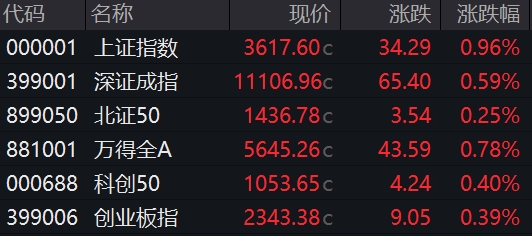
Market Performance - The Shanghai Composite Index rose by 0.96% to close above 3600 points, while the Shenzhen Component Index increased by 0.59% and the ChiNext Index gained 0.39% [1][2][3] - Over 3900 stocks in the market experienced gains, indicating a broad-based rally [3] Trading Volume - The total trading volume in the Shanghai and Shenzhen markets approached 1.6 trillion yuan [4] Sector Performance - PEEK materials, brain-computer interfaces, high-speed copper cable connections, and banking sectors showed significant gains, with PEEK materials leading the charge [5] - Notable stocks included Xinhan New Materials, which hit a 20% limit up, and other companies like Huami New Materials and Fuchun Dyeing & Weaving also reached their limit up [5] - The consumer electronics sector also performed well, with stocks like Langte Intelligent and Furi Electronics hitting their limit up [5] Fund Flow - Main funds saw net inflows into sectors such as automotive, banking, and electronics, while there were net outflows from computer, pharmaceutical, and media sectors [7] - Specific stocks with net inflows included Dongxin Peace, Innovation Medical, and Zhangjiang Hi-Tech, while stocks like Shanhe Intelligent and Hanyu Pharmaceutical faced significant sell-offs [7] Institutional Insights - According to Citic Securities, the A-share market is entering a consolidation phase, but the medium to long-term upward trend remains intact, supported by improving performance and inflows of new capital [8] - The strategy suggested is to maintain a dynamic balance between high-growth sectors and defensive assets, focusing on quality stocks during the current adjustment period [8] - Qianhai Bourbon Fund noted that most indices, except for the Sci-Tech Innovation Board, have reached new highs since October 8 of last year, indicating a need for adjustment in the Sci-Tech sector [8]

北美云厂资本开支再次上修,AI景气度强化
Huafu Securities· 2025-08-05 05:26
Investment Rating - The industry rating is "Outperform the Market" indicating that the overall return of the industry is expected to exceed the market benchmark index by more than 5% over the next 6 months [14]. Core Insights - The report highlights a significant increase in capital expenditures among major North American cloud providers, with Q2 capital expenditures reported as follows: Google at $22.4 billion (+70% YoY), Microsoft at $24.2 billion (+27% YoY), Meta at $17 billion (+101% YoY), and Amazon at $32.2 billion (+83% YoY) [3]. - The upward revisions in capital expenditure forecasts for 2025 by these companies reflect strong demand for cloud products and services, with Google increasing its forecast from $75 billion to $85 billion, Microsoft expecting over $30 billion in the next quarter, Meta adjusting its range from $64-72 billion to $66-72 billion, and Amazon indicating that Q2 expenditures represent the level for the second half of the year [3]. - The report emphasizes the ongoing competition and iteration in AI models, suggesting that capital expenditures related to computing power will remain high, further reinforced by the strong Q2 earnings reports and future guidance [3]. Summary by Sections Industry Dynamics - The report notes a substantial increase in inference computing power consumption, which has seen a multiplicative growth this year, driven by the demand for training-related computing power. As of May 2025, the daily token usage for the Doubao large model exceeded 16.4 trillion, a 137-fold increase from the previous year [4]. - Google reported that the monthly token processing volume reached 980 trillion, doubling from April's figure, indicating significant growth in user engagement and demand for AI applications [4]. Investment Recommendations - The report suggests that the AI industry trend has been reinforced this year, driven by a substantial increase in inference demand, leading to sustained growth in AI capital expenditures. It highlights the importance of PCB in the AI hardware supply chain, with a recommendation to focus on companies such as Huadian Co., Shenghong Technology, Shennan Circuit, and others due to expected benefits from supply-demand dynamics [5]. - Additionally, it recommends monitoring server manufacturing firms like Industrial Fulian and liquid cooling supply chain companies such as Invec and Sihua New Materials [5].




半日成交额破亿,航空航天ETF(159227)聚焦军工空天力量,长城军工涨停
Mei Ri Jing Ji Xin Wen· 2025-08-05 05:14
Core Viewpoint - The military industry sector is experiencing heightened activity and investor interest ahead of the upcoming military parade on September 3, with expectations for accelerated order demand due to the execution of the "14th Five-Year Plan" [1] Group 1: Market Performance - On August 5, the A-share market showed slight fluctuations, with the aerospace ETF (159227) experiencing a decline of 0.34% and a trading volume of 110 million yuan, maintaining the highest market share among similar products [1] - Key stocks in the military sector, such as Longcheng Military Industry, saw a surge, with other companies like Hualichuantong, Construction Industry, Yaguang Technology, Aerospace Electronics, and Hailanxin also experiencing gains [1] Group 2: Industry Outlook - The military industry is expected to see a recovery in overall industry chain prosperity, driven by the upcoming military parade and the critical phase of capability delivery in the "14th Five-Year Plan" [1] - The aerospace ETF (159227) closely tracks the National Aerospace Index, focusing on core military aerospace sectors, with a high concentration of 97.86% in the first-level military industry [1] - The ETF's component stocks have a significant weight of 66.8% in aerospace equipment, surpassing other military and defense indices [1] Group 3: Investment Opportunities - According to Shenwan Hongyuan Securities, there are potential short-term opportunities in the self-controlled and national defense military sectors leading up to the military parade [1] - Historical data indicates that major military parade events have a significant catalytic effect on military stocks, with market expectations continuing to rise as the event approaches [1]

就市论市丨A股迎来突破窗口?哪些优质标的值得关注?
Di Yi Cai Jing· 2025-08-05 04:24
Core Viewpoint - The A-share market is currently in a period of consolidation, digesting performance discrepancies and external disturbances, but the medium to long-term upward trend remains intact, supported by improved performance logic and inflow of incremental capital [1] Group 1: Market Outlook - Short-term market dynamics indicate a phase of oscillation and energy accumulation [1] - The long-term upward trend is reinforced by performance improvements and new capital inflows [1] Group 2: Investment Strategy - A dynamic balance between high-elasticity growth sectors and defensive assets is recommended [1] - The current adjustment period presents an opportunity to invest in quality targets, focusing on sectors with performance certainty such as capacity clearance, AI, pharmaceuticals, and self-sufficiency [1] - Emphasis on capturing undervalued rebound opportunities [1]
超3300家个股上涨
第一财经· 2025-08-05 04:14
Market Overview - The Shanghai Composite Index rose by 0.53% to 3602.13 points, while the Shenzhen Component Index increased by 0.14% to 11056.69 points. The ChiNext Index, however, fell by 0.26% to 2328.36 points [2][3]. Sector Performance - High-end materials, including PEEK and ultra-hard materials, saw significant growth. The consumer electronics, photolithography, and robotics sectors performed actively, while military stocks experienced a pullback. The AI industry chain collectively adjusted, with hardware sectors like CPO showing high opening but low closing, and the intelligent agents sector saw widespread declines [3]. Capital Flow - Main capital inflows were observed in the automotive, banking, and electronics sectors, while there were outflows from the computer, pharmaceutical, and media sectors. Notable inflows included Longcheng Military Industry (11.69 billion), Zhangjiang Hi-Tech (10.9 billion), and Dongxin Peace (7.99 billion). Conversely, significant outflows were seen in Xinyisheng (10.06 billion), Zhongji Xuchuang (7.52 billion), and Dingjie Zhizhi (4.29 billion) [5]. Institutional Insights - According to Jin Jun, Investment Director at Qianhai Bourbon Fund, various indices, except for the Sci-Tech Innovation Board, have reached new highs since October 8 of last year. Despite a quick pullback, the indices found support at the 10-day and 20-day moving averages. It is anticipated that the overall floating capital will require 2-4 weeks to digest, maintaining a judgment of box oscillation for August. The recommendation is to avoid chasing prices and to focus on buying on dips, emphasizing the rotation of underperforming sectors [6]. Investment Strategy - Wu Yinchao from Caitong Securities suggests that the A-share market is entering a period of consolidation, accumulating momentum while digesting performance discrepancies and external disturbances. The long-term upward trend remains intact, supported by improved performance logic and inflows of incremental capital. The strategy should balance between high-growth sectors and defensive assets, avoiding chasing prices. The current adjustment period is seen as an opportunity to invest in quality stocks, focusing on sectors with performance certainty such as capacity clearance, AI, pharmaceuticals, and self-sufficiency, while seizing undervalued rebound opportunities [7].

短期调整不改长期趋势,创业板ETF天弘(159977)盘中回调,机构:科技成长板块在月底前或将继续活跃
2 1 Shi Ji Jing Ji Bao Dao· 2025-08-05 03:41
Group 1 - The ChiNext Index opened high but experienced fluctuations and a decline on August 5, with the Tianhong ChiNext ETF (159977) down by 0.33% [1] - Among the constituent stocks, Watson Bio rose over 4%, with other stocks like Jingjia Micro, Guanghong Technology, Huace Navigation, and Lens Technology also seeing gains [1] - As of August 5, the Tianhong ChiNext ETF (159977) had a circulating scale exceeding 8.3 billion yuan, ranking among the top three in similar products [1] Group 2 - According to the Economic Reference Daily, brokerages have released optimistic strategies for August, viewing the market's recent pullback as a temporary adjustment influenced by policy support, improved corporate earnings, and new capital inflows [2] - Huatai Securities noted that the current market's profit effect has returned to mid-July levels, suggesting that the A-share market may enter a period of increased volatility with active local hotspots [2] - Everbright Securities highlighted that the recent positive news in innovative drugs has led to a surge in pharmaceutical stocks, driving the ChiNext Index higher, and expects a continuation of a structural market trend [2]




FZ 8月十大金股
2025-08-05 03:19
Summary of Conference Call Records Industry or Company Involved - A-shares market and various sectors including semiconductor, AI, OLED materials, biopharmaceuticals, and consumer goods Key Points and Arguments A-shares Market Outlook - The current downward risk in the A-shares market is considered low, supported by favorable statements from the political bureau meeting [1] - Historical price-performance ratio indicates a good position for investment despite recent gains in equity [1] Semiconductor Industry - Domestic chip manufacturing capabilities are improving, with significant advancements in AI-related chips [2] - The demand for domestic supply chains is increasing, leading to high processing rates for local manufacturers [2][3] OLED Materials - The penetration rate of OLED materials is increasing due to performance advantages over LCDs and new technologies addressing previous lifespan issues [9] - Domestic manufacturers are gaining market share as global OLED production capacity shifts to China [10] - Future growth is expected from domestic panel manufacturers expanding production and the introduction of new consumer electronics [11][12] Biopharmaceuticals - China National Pharmaceutical has made strategic acquisitions to enhance its pipeline, including a significant collaboration with a major pharmaceutical company [16][17] - Expected revenue growth from 2025 to 2027 is projected at 32.4 billion to 43.8 billion RMB, with substantial profit increases [18] Consumer Goods - The company "粉笔" (Fenbi) is positioned well in the online education sector, with plans to introduce AI-driven products to boost revenue [31][32] - "若与诚" (Ruoyucheng) is expanding its product lines in health and wellness, with expected revenue growth driven by new brand launches [33][34] Investment Recommendations - Various companies have been highlighted as "gold stocks" for August, including 中芯国际 (SMIC), 莱特光电 (Lite-On), and others, based on their growth potential and market positioning [3][8][12][29] Other Important but Possibly Overlooked Content - The overall economic environment is showing signs of recovery, which may positively impact various sectors [1] - The potential for new product launches in consumer electronics and the healthcare sector is significant, with expected high demand in the coming years [11][27] - The impact of geopolitical factors, such as tariffs, on market dynamics is acknowledged, particularly in the context of the U.S.-China trade relationship [25] This summary encapsulates the key insights from the conference call records, highlighting the optimistic outlook across various sectors and the strategic positioning of recommended companies.



化工行业周报20250803:国际油价上涨,环氧丙烷、纯MDI价格上涨-20250805
Bank of China Securities· 2025-08-05 01:28
Investment Rating - The report rates the chemical industry as "Outperforming the Market" [1] Core Views - The report highlights the impact of rising international oil prices on the prices of epoxy propane and pure MDI, suggesting a focus on mid-year report trends, the influence of "anti-involution" on supply in related sub-industries, and the importance of self-sufficiency in electronic materials companies [1][8] - It recommends a long-term investment strategy centered on the sustained high demand in the oil and gas extraction sector, the rapid development of downstream industries, and the recovery of demand supported by policy [1][8] Industry Dynamics - As of August 3, the TTM price-to-earnings ratio for the SW basic chemical sector is 24.08, at the 78.12 percentile historically, while the price-to-book ratio is 2.04, at the 40.81 percentile historically [1][8] - The SW oil and petrochemical sector has a TTM price-to-earnings ratio of 11.00, at the 17.99 percentile historically, and a price-to-book ratio of 1.15, at the 20.31 percentile historically [1][8] - The report notes significant impacts from tariff policies and fluctuations in oil prices on the industry this year [1][8] Investment Recommendations - The report suggests focusing on companies with stable dividend policies in the energy sector, as well as those in the electronic materials sector that are increasingly important for self-sufficiency [1][8] - It identifies key investment themes, including the high profitability of the oil and gas extraction sector, the growth potential in new materials, and the resilience of leading companies in the face of policy-driven demand recovery [1][8] Price Changes and Market Trends - In the week of July 28 to August 3, 39 out of 100 tracked chemical products saw price increases, while 31 experienced declines, and 30 remained stable [7][32] - The average price of epoxy propane increased by 7.47% to 7,925 CNY/ton, while pure MDI rose by 4.76% to 17,600 CNY/ton [2][32] - The report notes that the average price of lithium carbonate for battery-grade increased by 15.68% compared to July 1, reaching 71,333.33 CNY/ton [32]


【申万宏源策略】周度研究成果(7.25-8.3)
申万宏源研究· 2025-08-05 01:16
Core Viewpoint - The market is currently in a correction phase, returning to a volatile state, with the main structural breakthrough yet to be established. The market will digest the expected economic growth slowdown in the second half of 2025 and the policy focus on structural adjustments [4]. Group 1: Market Dynamics - The focus on self-sufficiency and defense industry presents a potential opportunity, with a "barbell strategy" (high dividend + micro-cap stocks) likely to see a rebound [4]. - The main catalyst for future upward movement is the trend against "involution," which is expected to improve the profitability of midstream manufacturing in the long term, although short-term momentum may face resistance [4]. Group 2: Sector Insights - The pharmaceutical and computer sectors (IT services, software development) are highlighted as key areas of interest [5]. - In the short term, consumer goods are expected to have a rebound potential, following the recent activity in Hong Kong's cyclical stocks, indicating a time window for revaluation of consumer goods [8]. - In the medium term, the probability of a reversal in the consumer goods sector is increasing, with the rise in consumer goods prices expected to solidify the current valuation of new consumption sectors [9]. Group 3: Policy and Economic Outlook - The recent meeting of the Central Committee of the Communist Party of China focused on the development of the 15th Five-Year Plan, emphasizing the need for a stable and active capital market [11]. - The policy mentions the attractiveness and inclusivity of the Chinese capital market, reflecting ongoing attention to its healthy development [12]. - Non-manufacturing PMI remains above the threshold but shows signs of marginal slowdown, with input prices performing better than sales prices [15].