
国产替代

Search documents
南侨食品:预计2025年归属净利润3626.37万至4351.64万元,将加大新品投入
Cai Jing Wang· 2026-01-21 08:26
Core Viewpoint - The company expects a significant decline in net profit for 2025, projecting a decrease of 78.39% to 81.99% compared to the previous year, primarily due to rising raw material costs and a decrease in the proportion of high-margin products [1] Group 1: Financial Performance - The projected net profit for 2025 is estimated to be between 36.26 million to 43.52 million yuan [1] - The decline in profit is attributed to increased prices of key raw materials, leading to higher production costs and a decrease in overall gross and net profit margins [1] Group 2: Raw Material Costs - Key raw materials include palm oil, soybean oil, coconut oil, and natural cream, all of which have seen significant price increases [1] - Palm oil prices have shown notable fluctuations, while coconut oil prices have reached historical highs, contributing to cost pressures [1] Group 3: Competitive Landscape - The company faces intensified industry competition, which has resulted in product price increases lagging behind raw material cost hikes, further pressuring profit levels [1] Group 4: Strategic Initiatives - The company plans to monitor raw material price trends and adjust procurement strategies dynamically to mitigate cost impacts [2] - Efforts will be made to enhance operational efficiency through process optimization, automation, and supply chain management [2] - The company aims to drive revenue growth through a dual approach of market expansion and product innovation, focusing on retail and emerging channels [2] - Product offerings will be diversified to meet various market demands, with an emphasis on upgrading to clean label and high-end products [2]

天禄科技:拟终止原募投项目并变更部分募集资金用于TAC膜及反射式偏光增亮膜项目
2 1 Shi Ji Jing Ji Bao Dao· 2026-01-21 07:59
Core Viewpoint - Tianlu Technology plans to terminate its original fundraising project "Expansion of Large-Sized Light Guide Plate Project" to improve the efficiency of fundraising usage, reallocating the remaining funds to its subsidiaries' TAC film project and reflective polarizing film project [1] Group 1: Company Strategy - The company aims to extend its business horizontally into the display industry's niche areas by leveraging its light guide plate business as a foundation [1] - The focus on TAC film and reflective polarizing film projects is part of the company's strategy to create a second growth curve [1] Group 2: Industry Context - Both optical film projects are categorized under domestic substitution, addressing the industry's "bottleneck" issues [1]
数观丨2026年半导体集成电路产业融资分析
Sou Hu Cai Jing· 2026-01-21 07:56
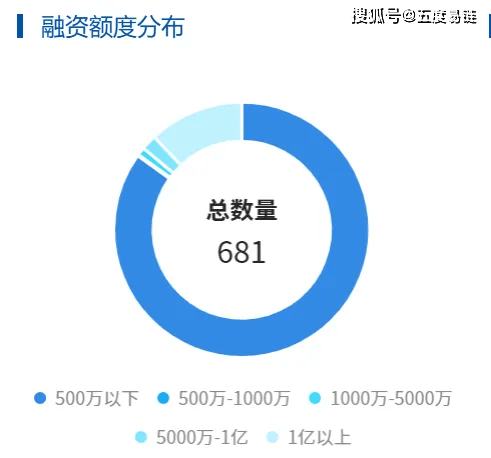
Core Insights - The domestic semiconductor integrated circuit industry is experiencing a financing boom from July 2025 to January 2026, characterized by frequent capital layouts, focused sectors, and regional clustering [1] - The industry is entering a critical phase of deep integration of capital and technology, driven by domestic substitution efforts and a global surge in computing power demand [1] National Financing Overview - A total of 681 financing events occurred across 610 companies, with 1,130 investment institutions participating, indicating a strong capital interest in the semiconductor sector [2] - There were 82 financing events exceeding 1 billion yuan, highlighting significant capital concentration in capital-intensive fields, with leading companies like Longxin Technology and Moer Thread attracting substantial investments [2] - The financing structure shows a "small amount dense, large amount concentrated" pattern, with over 84.9% of events being under 5 million yuan, providing essential funding for innovation [2] Financing Round Distribution - Strategic financing dominated with 307 events, accounting for 45.1%, followed by A rounds (156 events, 22.9%) and B rounds (59 events, 8.7%), indicating accelerated industry consolidation [4] - The high proportion of strategic financing reflects the trend of industry chain integration, with resources being allocated efficiently towards mature enterprises and high-potential early-stage projects [4] Regional Financing Landscape - The financing landscape is characterized by three major clusters: the Yangtze River Delta, the Guangdong-Hong Kong-Macao Greater Bay Area, and the Beijing-Tianjin-Hebei region, collectively accounting for over 80% of financing events [6] - The Yangtze River Delta leads with 377 financing events and 53.205 billion yuan, benefiting from a complete semiconductor industry chain [6] - The Guangdong-Hong Kong-Macao Greater Bay Area focuses on packaging, testing, and automotive electronics, while the Beijing-Tianjin-Hebei region excels in high-performance computing chips and semiconductor materials [6][8] Benchmark Enterprises Layout - Key enterprises in each region leverage their technological advantages and capital support to position themselves in core sectors, driving industry development [9] - In the Beijing-Tianjin-Hebei region, companies focus on high-end computing chips, while the Yangtze River Delta hosts firms covering storage and computing core sectors [12] - The Greater Bay Area's financing vitality relies on leading investment institutions targeting specialized chips and advanced materials [12] Industry Trend Summary - The financing market from July 2025 to January 2026 is characterized by high frequency, strong concentration, and precise sector focus, with capital supporting high-performance and domestic substitution sectors [15] - The industry is accelerating technology implementation and supply chain integration through capital empowerment, with a focus on companies possessing core technologies and production capabilities [15]


发生了什么?沪指午后一度翻绿 这只ETF成交额超169亿元 创10年以来天量
Mei Ri Jing Ji Xin Wen· 2026-01-21 07:50
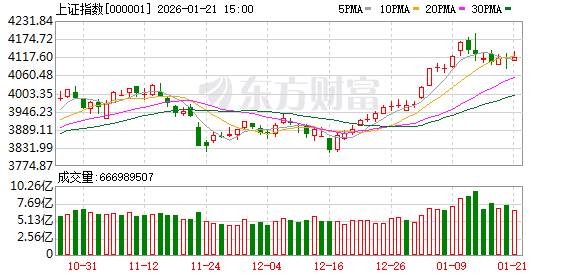
Market Overview - The market experienced fluctuations with the Shanghai Composite Index closing up 0.08%, the Shenzhen Component Index up 0.7%, and the ChiNext Index up 0.54% [2] - Over 3,000 stocks in the market rose, with a total trading volume of 2.6 trillion yuan, a decrease of 177.1 billion yuan from the previous trading day [2] - The A-share market has shown a retreat since last Wednesday, with large funds redeeming from broad-based ETFs, leading to a pause in significant upward movement while maintaining levels above 4,100 points for the Shanghai Composite Index [2] Sector Performance - Active sectors included precious metals, semiconductor industry chain, lithium mining, and oil and gas, while the consumer sector, particularly liquor, saw declines [2] - Precious metals have shown significant growth, with a rise of over 23% in the last five trading days, indicating a new leading sector [11] ETF Trading Activity - The trading volume of major ETFs has fluctuated, with the total trading volume for four large-scale CSI 300 ETFs recorded at 435 billion yuan, 674 billion yuan, 390 billion yuan, 363 billion yuan, and 693 billion yuan over recent days [5] - The trading volume of the SSE 50 ETF exceeded 16.9 billion yuan, marking the highest volume since July 2015 [7] Investment Trends - Investors are advised to focus on performance-driven sectors as the earnings season approaches, shifting from previous popular themes to those with solid fundamentals [13][18] - The semiconductor sector is experiencing growth due to rising demand for storage chips and AI server procurement, with significant price increases noted in DDR5 memory chips [19] Future Outlook - Analysts suggest that the market may continue to favor technology and non-ferrous metal sectors, especially with the upcoming Chinese New Year in mid-February, which may limit rapid shifts in market focus [18] - The potential for gold prices to reach 5,000 USD per ounce in the first half of the year is highlighted, driven by concerns over the independence of the Federal Reserve [13]
天禄科技(301045) - 2026年1月21日投资者关系活动记录表
2026-01-21 07:48
Group 1: Fundraising and Project Adjustments - The company announced a change in fundraising strategy, terminating the "Expansion of Large-Sized Light Guide Plate Project" to improve fund utilization efficiency. Remaining funds will be allocated to the TAC film project and the reflective polarizing film project [1] - The TAC film and reflective polarizing film projects are aimed at addressing domestic supply chain issues, with TAC film currently monopolized by Japanese suppliers and reflective polarizing film primarily supplied by American and Japanese companies [2] Group 2: TAC Film Project Progress - As of June 2025, Anhui Jiguang has obtained the construction permit for the factory, and construction is progressing steadily [3] - Major equipment for the TAC film project is expected to arrive and undergo testing in the first half of 2026 [3] - Laboratory test samples have been sent to downstream polarizer and panel manufacturers for evaluation, with results aligning closely with Anhui Jiguang's internal assessments [3] Group 3: Financing and Stakeholder Support - Anhui Jiguang has received support from various stakeholders, including Sanlipu (representing the polarizer segment) and Beijing Electric Control Investment (representing panel manufacturers), ensuring comprehensive industry participation [4] - The company has secured multiple rounds of financing and government subsidies, resulting in sufficient funding for project advancement [4] Group 4: Production Capacity Planning - The first phase of the TAC optical film production line is designed to produce approximately 60 million square meters annually [4] - Future expansion plans will depend on the progress of the initial project phase [4]
芯联集成:2025年营收81.90亿元,净利润同比减亏40.02%
Xin Lang Cai Jing· 2026-01-21 07:45
芯联集成公告称,2025年公司预计实现营业收入81.90亿元,同比增长25.83%;归属于母公司所有者的 净利润约-5.77亿元,同比减亏40.02%;扣非净利润约-10.94亿元,同比减亏22.41%。业绩增长主要因全 球半导体行业发展,国产替代进程推进,公司产能利用率高,四大应用领域收入快速增长,一站式系统 代工平台商业模式效能释放。此外,并购重组优化管理,提升了运营效率与盈利能力。 ...

供需失衡催化CPU板块上行,算力迎普涨,集成电路ETF(159546)大涨超5%
Mei Ri Jing Ji Xin Wen· 2026-01-21 07:11
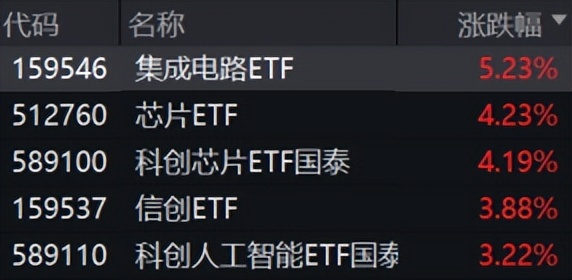
Core Viewpoint - Intel and AMD have raised server CPU prices by 10% to 15% due to supply-demand imbalance, positively impacting the computing chip sector and leading to a surge in related ETFs [1] Group 1: Market Impact - The integrated circuit ETF (159546) increased by 5.23%, the chip ETF (512760) rose by 4.23%, and other related ETFs also saw significant gains [2] - The demand for data center server CPUs is expanding, driven by the rise of generative AI and the need for cloud vendors to upgrade their server architectures [3][4] Group 2: AI and Semiconductor Growth - The global semiconductor market is expected to reach a historical high of $700.9 billion in 2025, with a projected growth of 11% year-on-year [5] - AI is identified as the core growth engine for the semiconductor industry, with AI-related semiconductor revenue expected to increase from less than 10% to 48% by 2030 [6] Group 3: Domestic CPU Development - Domestic next-generation server CPUs are being successfully deployed in various sectors, with improvements in performance and software compatibility [4] - The market share of domestic server CPUs is anticipated to grow due to increasing demand and supportive policies [4]
存储芯片涨价预期强烈!芯片概念股盘中爆发,电子ETF(159997)盘中涨超3%
Mei Ri Jing Ji Xin Wen· 2026-01-21 07:09
Group 1 - A-shares opened lower but rebounded, with technology sector stocks leading the gains, particularly in the chip concept stocks, such as Longxin Zhongke rising by 20% and Haiguang Information and Lanke Technology increasing by over 11% [1] - The electronic ETF (159997) rose by over 3%, while the Tianhong Sci-Tech Innovation ETF (589860) increased by over 2% [2] - AMD and Intel have recently raised server CPU prices by 10% to 15%, with 2026 production capacity nearly fully booked, indicating a price increase trend that is being transmitted to the domestic market [2] Group 2 - The storage sector in the U.S. stock market saw a collective rise, with SanDisk increasing by over 9% to reach a new historical high, and Citigroup raised its target price for SanDisk from $280 to $490 and for Seagate Technology from $320 to $385, reflecting optimism about the supply-demand dynamics in the storage industry [2] - Counterpoint Research reported that the global storage market has surpassed the 2018 peak, with prices expected to rise by 40% to 50% in Q1 2026 and an additional 20% in Q2, indicating a strengthening seller's market [2] - Analysts suggest that due to the explosive demand for AI and supply-side contractions, the storage chip market is currently in a price uptrend, leading to a performance surge for global storage industry companies [2]
父女带队,深圳百亿独角兽要IPO了
投中网· 2026-01-21 06:47
Core Viewpoint - The article highlights the rapid growth and significant valuation of the semiconductor company Hongxin Yu, which is preparing for an IPO amid a booming semiconductor industry in China [5][6][10]. Group 1: Company Overview - Hongxin Yu, founded in 2018 by Wu Yisheng and his daughter Wu Jiamin, has quickly established itself in the semiconductor market, achieving a valuation exceeding 10.7 billion yuan [5][11]. - The company specializes in storage products, including embedded storage, solid-state drives, and mobile storage, and has seen its revenue surpass 1 billion USD in 2020 [8][10]. - By 2023 and 2024, Hongxin Yu's revenue is projected to exceed 8.7 billion yuan, with over 7.7 billion yuan in the first nine months of 2025 [9]. Group 2: Market Context - The semiconductor industry in China is experiencing significant growth, with multiple companies like Moer Thread, Muxi Co., and others either going public or preparing for IPOs [6][16]. - The article notes that the valuation of unicorn companies in the Meilin area of Shenzhen has reached 45.6 billion USD, accounting for 29% of Shenzhen's total unicorn valuation [9]. Group 3: Investment and Financial Performance - Hongxin Yu has attracted substantial investment, including 6.5 billion yuan from Qunlian Electronics, and has received over 360 million yuan from various investors [13][14]. - The company transitioned from a loss of 1.17 billion yuan in 2023 to a profit of 4.83 billion yuan in 2024, indicating a successful turnaround [14]. - Qunlian Electronics, as the largest shareholder with a 22.5% stake, has seen its investment value rise to approximately 2.4 billion yuan, yielding a return exceeding 3.6 billion yuan [14]. Group 4: Future Prospects - Hongxin Yu is expanding its product offerings to include automotive-grade storage solutions and high-performance storage products for AI servers and terminals [14]. - The article emphasizes the favorable policies and market demand that are facilitating the growth and IPO opportunities for semiconductor companies in China [18].
闪迪美股涨超9%再创新高,花旗上调目标价!科创50ETF(588000)成交额破60亿,存储涨价预期强烈!
Mei Ri Jing Ji Xin Wen· 2026-01-21 06:22
科创50ETF(588000)追踪科创50指数,指数持仓电子行业超70%,与当前人工智能、机器人等前沿产 业的发展方向高度契合。同时涉及半导体、医疗器械、软件开发、光伏设备等多个细分领域,硬科技含 量高,看好中国硬科技长期发展前景的投资者建议持续关注。 相关ETF:科创50ETF(588000) 1月21日,A股三大指数延续上行走势,科创50ETF(588000)强势企稳,截至发文,涨幅达3.84%,成 交额超60亿元,交投活跃度显著提升。盘面上,龙芯中科涨停,海光信息上涨13.39%,创历史新高; 澜起科技涨幅扩大至11.98%,中控技术上涨9.38%,恒玄科技上涨6.96%。 消息面上,隔夜美股存储板块集体走强,闪迪涨超9%,再创历史新高。花旗集团将闪迪目标股价从280 美元上调至490美元,将希捷科技目标股价从320美元上调至385美元,看好存储行业供需格局改善与价 格上行周期。Counterpoint Research最新报告显示全球存储行情已超2018年高点,预计2026年Q1价格再 涨40%—50%,Q2续涨约20%,卖方市场格局强化。 展望后市,中信建投认为,受AI需求爆发、供给侧收缩等多重因素 ...