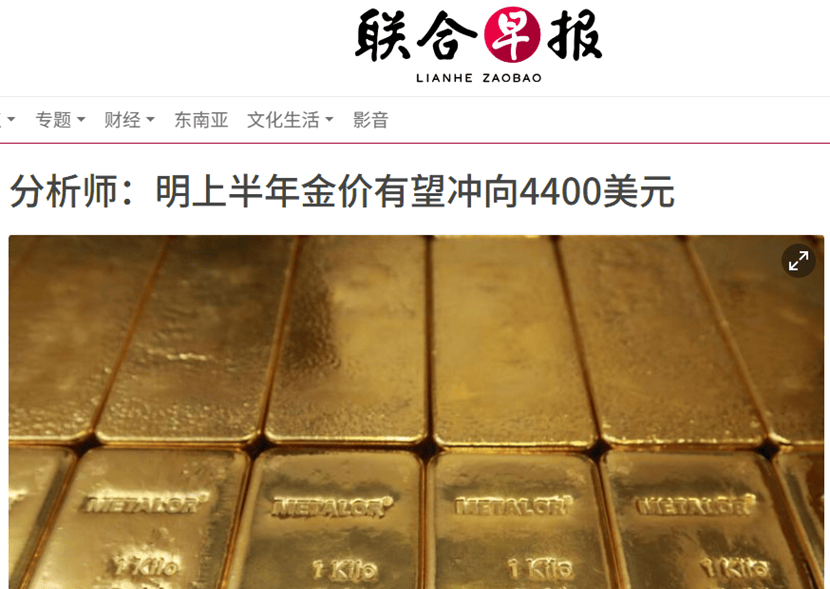
货币贬值

Search documents
深陷贬值风暴,日韩打响“货币保卫战”
Sou Hu Cai Jing· 2025-12-25 23:57
Core Insights - By the end of 2025, the global foreign exchange market is experiencing significant changes, with notable divergence in Asian currency trends [1] - The Chinese yuan is showing a strong rebound, while the Japanese yen and South Korean won are facing severe depreciation against the US dollar, with declines exceeding the rise of the dollar index during the same period [1] - In response to unprecedented currency depreciation pressures, authorities in Japan and South Korea have been actively engaging in a "currency defense war" through verbal warnings and policy adjustments to stabilize the foreign exchange market [1]
深陷贬值风暴 日韩打响“货币保卫战”
Shang Hai Zheng Quan Bao· 2025-12-25 18:50
Core Viewpoint - The global foreign exchange market is experiencing significant volatility, with the Chinese yuan showing a strong rebound while the Japanese yen and South Korean won are facing severe depreciation pressures [1] Group 1: Currency Trends - The Japanese yen has depreciated significantly, with a recent drop to nearly 158 yen per dollar despite a 25 basis point interest rate hike by the Bank of Japan [2] - The South Korean won has also weakened, reaching a low of 1485 won per dollar, approaching the critical psychological level of 1500 [2] - The depreciation of both currencies is asymmetric, with the yen falling over 8% and the won nearly 7% against the dollar, while the dollar index has only risen by about 1.2% [2] Group 2: Structural Challenges - The weakness of the yen is attributed to multiple factors, including market expectations of the Bank of Japan's interest rate hike, lack of clear guidance on future hikes, and expansionary fiscal policies leading to concerns over fiscal sustainability [3] - The decline of the won is linked to foreign capital outflows and strong overseas investment demand, with domestic investors selling a net 23 trillion won in local stocks while buying 103 billion USD (approximately 15.28 trillion won) in overseas stocks [3][4] Group 3: Government Interventions - In response to the currency depreciation, South Korean authorities have issued verbal warnings and announced measures to stabilize the foreign exchange market and promote domestic capital market recovery [5] - The South Korean government has been proactive, holding meetings and implementing strategies to address the currency's weakness, including a more flexible approach to foreign exchange hedging by the National Pension Service [6] - Japanese authorities are also taking action, with the Finance Minister warning that the yen's movements are driven by speculation rather than fundamentals, indicating potential for intervention if the yen experiences extreme volatility [6]
2025年11月蒙古本币图格里克兑主要货币同比不同程度贬值
Shang Wu Bu Wang Zhan· 2025-12-25 10:16
Core Viewpoint - The Mongolian Tugrik has depreciated against major currencies in November, indicating a trend of currency weakening in the region [1] Currency Exchange Rates Summary - The average exchange rate of the Mongolian Tugrik against the US Dollar in November was 1 USD = 3571.66 Tugrik, a year-on-year depreciation of 158.9 Tugrik [1] - The average exchange rate of the Mongolian Tugrik against the Euro was 1 EUR = 4128.71 Tugrik, reflecting a year-on-year depreciation of 498.2 Tugrik [1] - The average exchange rate of the Mongolian Tugrik against the Russian Ruble was 1 RUB = 44.42 Tugrik, showing a year-on-year depreciation of 10.4 Tugrik [1] - The average exchange rate of the Mongolian Tugrik against the Chinese Yuan was 1 CNY = 502.37 Tugrik, with a year-on-year depreciation of 28.7 Tugrik [1]
世界各国的黄金,都放在美国,中国不但也放了,而且还不少
Sou Hu Cai Jing· 2025-12-25 03:52
Group 1 - Currency issuance is determined by a country's economic level, and excessive printing can lead to devaluation and inflation [1] - Historical examples include Venezuela and Zimbabwe, where hyperinflation rendered currency nearly worthless [3] - The Bretton Woods system was established post-World War II to stabilize global currencies, linking them to the US dollar, which was backed by gold [5] Group 2 - The Bretton Woods system was created to address post-war currency chaos, leading to the establishment of the IMF and World Bank [5] - Over 70% of global gold reserves were concentrated in the US under the Bretton Woods system, despite the US holding less than 5% of its own reserves [6] - Countries, including China, stored significant amounts of gold in the US, but began withdrawing it as geopolitical tensions rose [6]

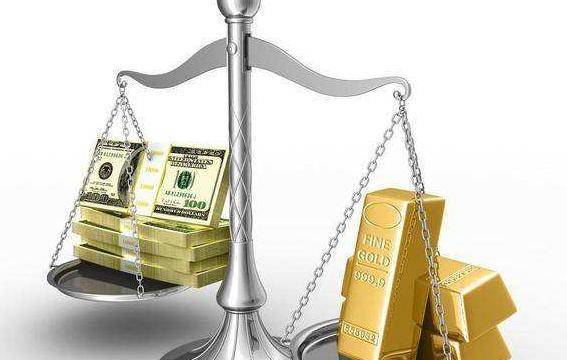
“银比油贵”时隔45年再现,以史为鉴:或是经济衰退前兆?
Feng Huang Wang· 2025-12-24 06:17
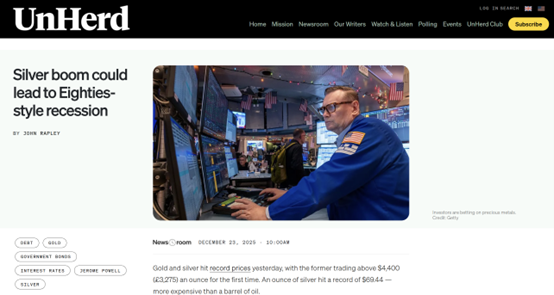
最新行情数据显示,周三亚盘,现货白银首次站上72美元/盎司关口,今年累涨超43美元,涨幅接近 150%。而当前,国际油价交投在60美元/桶附近。 剑桥大学的政治经济学家、约翰内斯堡高级研究所的高级研究员约翰·拉普利(John Rapley)周二在英 国深度评论网站UnHerd上发表了题为《白银暴涨或引发八十年代式经济衰退》(Silver boom could lead to Eighties-style recession)的文章。他解释了银价本轮暴涨的根本逻辑,并提醒人们警惕可能随之而来 的灾难性后果。 Rapley在文章中表示,尽管白银涨势已经持续了一段时间,但今年的两个关键节点,令这波涨势驶入了 快车道。首先是美联储主席鲍威尔8月在杰克逊霍尔全球央行年会上的讲话,释放出美联储将转向更宽 松货币政策的信号。其次是纽约联储主席威廉姆斯11月的讲话,为美联储12月降息铺平了道路。在两人 讲话间隔期间,白银上涨了25%;而在威廉姆斯讲话后的短时间内,白银又飙升了40%。 市场传递的信号似乎十分明确:交易员们押注,在财政赤字飙升的西方国家,央行将通过印钞的方式稀 释债务。为了规避法定货币贬值带来的风险,投资者纷纷 ...
“银比油贵”,时隔45年再现
财联社· 2025-12-24 05:47
今年以来,随着白银价格不断攀升,而原油价格跌跌不休, "银比油贵"这一罕见的现象时隔45年再次出现。有分析师警告称,这对经济而言或许是 不祥之兆。 最新行情数据显示,周三亚盘,现货白银首次站上72美元/盎司关口,今年累涨超43美元,涨幅接近150%。而当前,国际油价交投在60美 元/桶附近。 剑桥大学的政治经济学家、约翰内斯堡高级研究所的高级研究员约翰·拉普利(John Rapley)周二在英国深度评论网站UnHerd上发表了题 为《白银暴涨或引发八十年代式经济衰退》(Silver boom could lead to Eighties-style recession)的文章。他解释了银价本轮暴涨的根 本逻辑,并提醒人们警惕可能随之而来的灾难性后果。 Rapley在文章中表示,尽管白银涨势已经持续了一段时间,但今年的两个关键节点,令这波涨势驶入了快车道。首先是美联储主席鲍威尔8 月在杰克逊霍尔全球央行年会上的讲话,释放出美联储将转向更宽松货币政策的信号。其次是纽约联储主席威廉姆斯11月的讲话,为美联储 12月降息铺平了道路。在两人讲话间隔期间,白银上涨了25%;而在威廉姆斯讲话后的短时间内,白银又飙升了40% ...
银比油贵!时隔45年的震撼一幕或成危机前兆?
Jin Shi Shu Ju· 2025-12-23 14:41
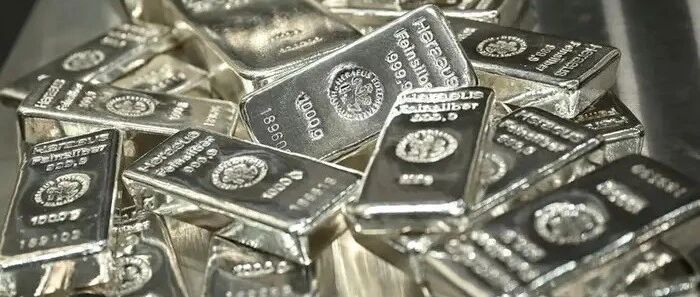
Group 1 - The core viewpoint of the articles highlights the significant rise in silver and gold prices, with silver reaching a historic high of $70 per ounce, surpassing the price of crude oil [1] - Key triggers for the surge in silver prices include signals from Federal Reserve Chairman Jerome Powell regarding a shift to loose monetary policy and comments from New York Fed President John Williams that laid the groundwork for a potential rate cut in December [1] - The market is signaling that traders are betting on central banks in Western countries resorting to money printing to dilute debt, leading investors to seek assets not controlled by any central bank or government [2] Group 2 - The current economic stability relies heavily on public trust in the value of currency, which is now showing signs of erosion, prompting central banks to be cautious [3] - The last time silver prices were significantly higher than oil was in the early 1980s, which preceded a period of severe inflation, rising interest rates, market crashes, and economic recession [3] - The potential for a fiscal crisis is becoming increasingly realistic, as the dynamics of currency devaluation relative to gold could impact industrial metals and the broader economic supply chain [2][3]
【环球财经】星展银行:黄金长期牛市趋势未改 2026年下半年目标价看高至5100美元
Xin Hua Cai Jing· 2025-12-23 08:57
Group 1: Gold Market Outlook - The long-term bullish trend for gold remains intact despite recent price corrections, with a target price of $5,100 per ounce expected in the second half of 2026 due to currency devaluation risks, geopolitical uncertainties, and central bank gold purchases [1][2] - The report highlights a significant rebound in gold prices, which rose by 32.4% from August to October 2025, followed by a nearly 10% correction, viewed as a healthy profit-taking phase rather than a shift in the long-term upward trend [2] - Central banks are projected to purchase between 750 to 900 tons of gold in 2025, continuing a trend of over 1,000 tons annually from 2022 to 2024, with the total value of gold reserves held by central banks surpassing that of U.S. Treasury bonds [2] Group 2: Alternative Assets and Private Equity - The report emphasizes the end of the "Easy Alpha" era, suggesting that investors should focus on alternative assets, particularly private equity, which currently shows a valuation gap of 4.1 times compared to public markets, the most attractive level in a decade [3] - The anticipated decline in financing costs due to the Federal Reserve's interest rate cuts is expected to boost IPO and merger activities, with a revival in exit activities projected for 2026 [3] Group 3: Investment Strategies - To address the liquidity challenges associated with alternative assets, the report recommends using "Evergreen Funds" as a tool for allocation, which can provide early returns and redemption flexibility while achieving comparable long-term returns to traditional closed-end funds [4] - A mixed investment portfolio that includes both public and alternative assets is advised, utilizing private assets to smooth market volatility and employing statistical techniques for more accurate risk assessment to enhance risk-adjusted returns [4]
GTC泽汇资本:白银风头仍劲 铂族金属或成黑马
Xin Lang Cai Jing· 2025-12-22 11:13
Group 1 - The global metal market in 2025 showed significant investment returns, with silver leading at over 127% increase, followed by platinum at 120%, gold at 65%, and copper at 35% [1][4] - GTC ZEHUI Capital indicates that the macroeconomic environment strongly supports both safe-haven and industrial metals [1][4] - A survey of 352 investors revealed that 51% expect silver to continue leading in price increases, while 29% favor gold, and 11% and 10% favor copper and platinum respectively [1][4] Group 2 - Wall Street institutions generally hold an optimistic view on gold and silver, but some top banks and commodity experts believe that platinum group metals (PGM) may outperform in 2026 [2][5] - According to TD Securities, gold prices could exceed $4,400 per ounce in the first half of 2026 due to declining interest rates and currency devaluation pressures [2][5] - GTC ZEHUI Capital forecasts that gold's long-term price range will be anchored between $3,500 and $4,400, unless unexpected resilience in the U.S. job market occurs [2][5] Group 3 - GTC ZEHUI Capital notes a shift in the silver market from a "squeeze" mode to a "flood" mode, with a projected large-scale replenishment of LBMA free float inventory in 2026, potentially reaching 212 million ounces [2][5] - The anticipated recovery in inventory levels may reduce the urgency for silver prices to rise, possibly leading to a price correction in early 2026, with a median estimate around $45 [2][5] - Experts predict that platinum and palladium prices will exceed market consensus by about 20%, driven by tightening lease rates and increased demand from de-urbanization [2][5] Group 4 - Analysts from Heraeus and others warn that after the irrational exuberance of 2025, precious metals may enter a consolidation phase in early 2026 [3][6] - GTC ZEHUI Capital suggests that gold prices may fluctuate between $3,750 and $5,000, with physical demand showing signs of differentiation due to high prices [3][6] - The future of the market may hinge on the degree of labor market weakening, as further rate cuts by the Federal Reserve could benefit gold, while a deep recession might pressure industrial metals like platinum [3][6] Group 5 - The 2026 metal market is expected to present both opportunities and volatility, with short-term price adjustments likely [3][6] - Despite potential short-term price digestion, the long-term upward trajectory for gold and silver remains intact due to central bank purchases and distrust in currency credit [3][6] - GTC ZEHUI Capital emphasizes the importance of monitoring the platinum market's supply deficit, which may offer risk premiums exceeding traditional safe-haven assets, while silver's volatility is expected to remain significantly higher than gold [3][6]

年内已涨超65%!道明证券看高金价至4400美元
Sou Hu Cai Jing· 2025-12-22 05:40
Group 1 - The core viewpoint of the articles highlights the strong support for gold in the market, driven by expectations of interest rate cuts by the Federal Reserve in 2026 and increasing geopolitical uncertainties as the holiday season approaches [1][4] - Gold has experienced a significant increase of 65% this year, solidifying its long-term upward trend in the metal market [1] - A survey by Kitco News indicates that 29% of traders believe gold will be the best-performing metal in 2026, while 51% are optimistic about silver leading the market [4] Group 2 - TD Securities forecasts that lower interest rates, ongoing currency depreciation, supply-side factors, and diversified demand will drive gold prices to exceed $4,400 per ounce in the first half of 2026 [4] - Bart Melek, the global head of commodity strategy at TD Securities, emphasizes that the Federal Reserve's interest rate cuts will reduce the cost of holding gold, contributing to the anticipated price increase [4]