
M1

Search documents
新增社融连续8个月同比多增,金融支持实体经济力度较大
Xin Lang Cai Jing· 2025-08-13 13:06
Core Insights - The People's Bank of China reported that in the first seven months of this year, RMB loans increased by 12.87 trillion yuan, which is a decrease of 660 billion yuan compared to the same period last year [1] - The total social financing scale increased to 23.99 trillion yuan, which is an increase of 5.12 trillion yuan year-on-year [1] - In July, RMB loans decreased by 50 billion yuan, marking the first negative growth since August 2005 [1] - New social financing in July was 1.16 trillion yuan, an increase of 389.3 billion yuan year-on-year, continuing a trend of year-on-year growth for eight consecutive months [1] Group 1: Loan and Financing Trends - Analysts attribute the weak credit performance in July to factors such as overdraft effects, local government hidden debt replacement, and adjustments in the real estate market [1] - The loan balance at the end of July showed a year-on-year growth of 6.9%, significantly higher than the nominal economic growth rate, indicating stable support from credit to the real economy [1] - The average new loan amount for June and July combined was approximately 1.1 trillion yuan, which is consistent with the previous year's average of 1.2 trillion yuan, suggesting stable credit performance when smoothing out short-term effects [1][2] Group 2: Monetary Policy and Economic Support - The increase in social financing in July was primarily supported by government bond financing, indicating a significant scale of hidden debt replacement [2] - Analysts emphasize the importance of monitoring broader financial indicators such as social financing scale and M2, which provide a more comprehensive view of financial support for the real economy [2] - As of the end of July, M1 grew by 5.6% year-on-year, and M2 grew by 8.8%, both showing an acceleration in growth rates compared to the previous month [2] Group 3: Future Outlook and Policy Measures - Analysts expect that after the short-term disturbances from overdraft effects diminish, new credit in August will return to positive values, with social financing remaining at a high level [2][3] - The introduction of new personal consumption loan subsidies is anticipated to lower borrowing costs for residents, potentially stimulating credit demand [3] - The central bank's recent actions to lower interest rates on new corporate loans to approximately 3.2% and personal housing loans to about 3.1% reflect a commitment to maintaining a supportive monetary policy stance [3][4]
存款搬家持续!7月居民存款减少万亿,非银存款增加超2万亿
Nan Fang Du Shi Bao· 2025-08-13 12:08
Group 1 - As of the end of July, the broad money supply (M2) reached 329.94 trillion yuan, with a year-on-year growth of 8.8% [2][5] - The narrow money supply (M1) stood at 111.06 trillion yuan, showing a year-on-year increase of 5.6%, marking a continuous acceleration for three months [2][5] - The total RMB deposits amounted to 320.67 trillion yuan, reflecting a year-on-year growth of 8.7% [5][6] Group 2 - In July, household deposits decreased by 1.11 trillion yuan, which is a reduction of 780 billion yuan compared to the same month last year [5] - Non-bank financial institutions saw an increase in deposits of 2.14 trillion yuan in July, reaching a near ten-year high and surpassing the level of 1.81 trillion yuan in the same period of 2015 [5][6] - The rise in M1 growth is attributed to multiple factors, including a low interest rate environment, accelerated fiscal spending, and improved cash flow for enterprises [5]

X @外汇交易员
外汇交易员· 2025-08-13 09:57
Monetary Policy & Economic Analysis - The People's Bank of China (PBOC) via Financial Times suggests that single-month loan data is insufficient to accurately reflect economic activity in the high-quality development stage [1] - The PBOC advises against over-interpreting or sensationalizing fluctuations in single-month credit growth figures when analyzing economic and financial conditions [1] Money Supply Data (July) - M2 money supply year-on-year growth rate is 88%, exceeding the expected 83% and previous value of 83% [2] - M1 money supply year-on-year growth rate is 56%, exceeding the expected 52% and previous value of 46% [2] - M0 money supply year-on-year growth rate is 118%, compared to the previous value of 12% [2]
X @外汇交易员
外汇交易员· 2025-08-13 09:13
Monetary Supply - M2 money supply year-on-year rate was 8.8%, exceeding the expected 8.3% and the previous value of 8.3% [1] - M1 year-on-year rate was 5.6%, exceeding the expected 5.2% and the previous value of 4.6% [1] - M0 year-on-year rate was 11.8%, compared to the previous 12% [1] Social Financing - In the first seven months, the increase in social financing scale was 23.99 trillion yuan (2399 billion yuan), with a year-on-year increase of 5.12 trillion yuan (512 billion yuan) [1] RMB Loans - RMB loans increased by 12.31 trillion yuan (1231 billion yuan) in the first seven months, with a year-on-year decrease of 69.4 billion yuan (69400 million yuan) [1] - RMB loans decreased by 43 billion yuan (43000 million yuan) in July, marking the first negative value in July since 2005 [1]
核心指标释放积极信号 经济复苏态势渐显
Jing Ji Guan Cha Wang· 2025-07-23 08:47
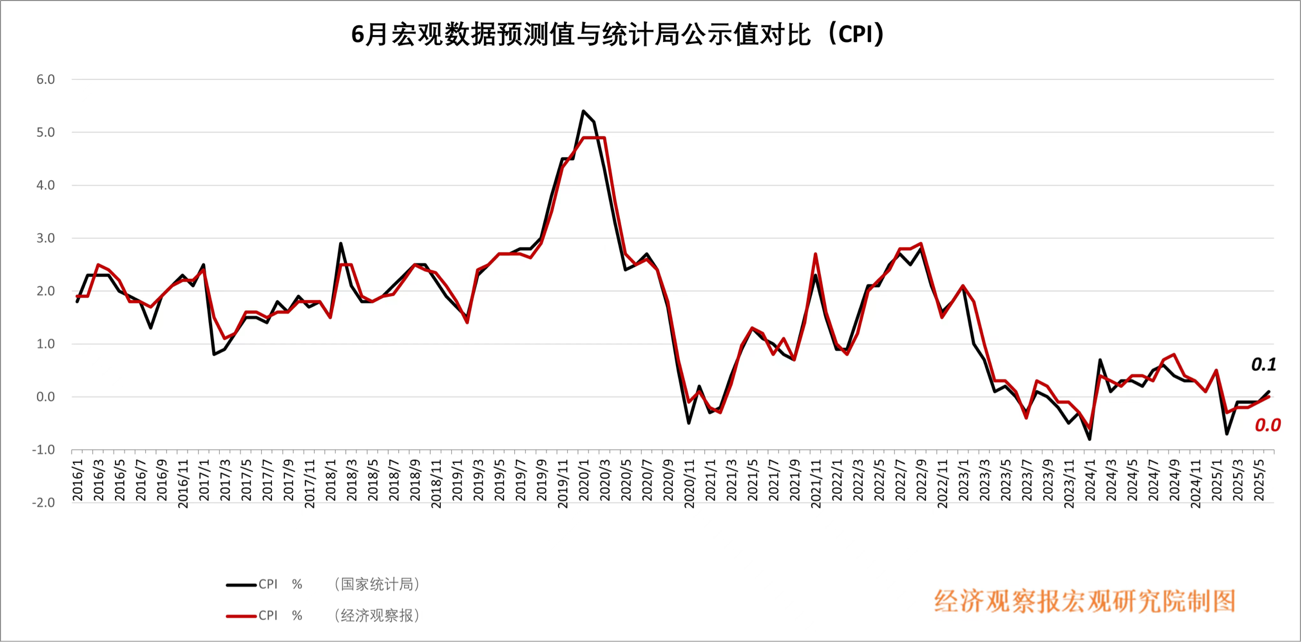
Group 1: Economic Indicators - The core price level is gradually recovering, with financial support for the real economy increasing, indicating a gradual accumulation of internal economic momentum under policy support [1] - In June 2025, the CPI rose from -0.1% to 0.1%, while the PPI decreased from -3.3% to -3.6% [1] - The manufacturing PMI increased from 49.5% to 49.7%, showing slight improvement in manufacturing activity [1] Group 2: CPI Analysis - The core CPI growth has been continuously recovering, with a year-on-year increase of 0.7% in June, the highest in nearly 14 months [4] - Factors contributing to the core CPI recovery include rising gold prices, the "old-for-new" policy supporting durable goods prices, and a moderate rebound in service prices [4] Group 3: PPI Analysis - The PPI fell by 3.6% year-on-year in June, with the decline widening by 0.3 percentage points compared to the previous month [7] - The decrease in PPI is attributed to slower construction in real estate and infrastructure, as well as an oversupply of industrial raw materials [7] Group 4: PMI Insights - The PMI for June was reported at 49.7%, a 0.2 percentage point increase from the previous month, indicating seasonal recovery [10] - Among 21 surveyed industries, 11 are in the expansion zone, reflecting improved manufacturing sentiment [10] Group 5: Fixed Asset Investment - Fixed asset investment in June showed a year-on-year increase of 2.8%, down from 3.7% in May, with real estate development investment declining by 12.9% [13] - The decline in real estate sales and investment growth is contributing to a negative feedback loop with falling housing prices and PPI [13] Group 6: Credit Performance - New RMB loans in June amounted to 22.4 billion yuan, significantly higher than the previous month's 6.2 billion yuan [16] - The strong credit performance is driven by multiple factors, including seasonal increases in lending and effective financial policies [16] Group 7: M2 Growth - M2 growth accelerated to 8.3% in June, the highest in nearly 15 months, with a notable narrowing of the M1-M2 gap [20] - The increase in M2 and M1 indicates improved financial support for the real economy, although M1 growth remains relatively low [20]
滕泰:什么政策能避免通缩长期化
Di Yi Cai Jing· 2025-07-22 06:47
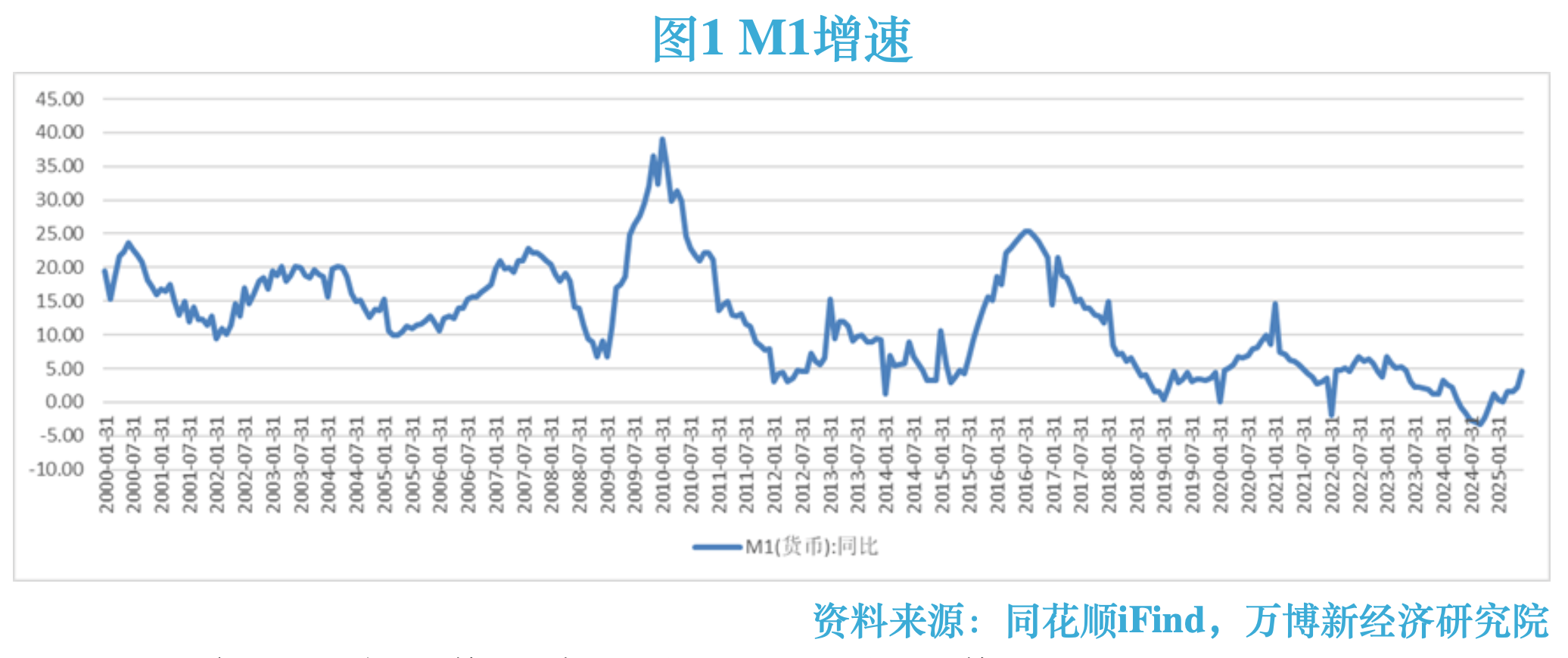
Group 1 - The central bank's continued interest rate cuts can significantly reduce the cost of existing debt for households, businesses, and the government, leading to substantial savings in interest payments each year [1][5] - As of June, the broad money supply (M2) grew by 8.3% year-on-year, while the narrow money supply (M1) increased by 4.6%, indicating positive changes in financial data [1] - M1 is considered a leading indicator of economic activity, as it reflects the liquidity available for consumption, investment, and trading [1][2] Group 2 - A further increase in M1 growth to between 5% and 10% is necessary for true monetary easing and to stimulate consumption, stabilize housing prices, and revitalize the stock market [2][4] - The net financing of government bonds in the first half of the year reached 7.66 trillion yuan, which is 4.32 trillion yuan more than the previous year, benefiting from the low-interest environment [4] - The corporate bond net financing was 1.15 trillion yuan, a decrease of 256.2 billion yuan year-on-year, indicating a need for improved business investment confidence and further interest rate cuts [4] Group 3 - The current household debt in China amounts to approximately 80 trillion yuan, and a 1% reduction in interest rates could save households around 800 billion yuan in interest payments annually [5] - Non-financial enterprises owe about 150 trillion yuan to banks, and a 1% interest rate cut could result in an additional 1.5 trillion yuan in profits for these companies [5] - The total government debt, including hidden debts, is over 100 trillion yuan, and a 1% interest rate reduction could save the government more than 100 billion yuan in interest payments each year [5] Group 4 - There is a viewpoint that emphasizes the importance of not deliberately devaluing the currency to enhance export advantages, suggesting that market forces should dictate currency value [8] - Concerns about interest rate cuts leading to currency devaluation and capital outflow are seen as misplaced, as the primary goal of monetary policy should be to stabilize domestic economic growth and employment [8][9] - Historical examples from Japan and the U.S. demonstrate that aggressive monetary policies, including zero and negative interest rates, can successfully stimulate economic recovery [9][10]
瑞达期货股指期货全景日报-20250721
Rui Da Qi Huo· 2025-07-21 10:06
Report Summary 1. Report Industry Investment Rating No industry investment rating information is provided in the report. 2. Core View of the Report - A-share major indexes rose collectively, with the Shanghai Composite Index up 0.72%, the Shenzhen Component Index up 0.86%, and the ChiNext Index up 0.87%. The trading volume in the Shanghai and Shenzhen stock markets rebounded significantly, and over 4,000 stocks rose. Industry sectors generally increased, with building materials, building decoration, and steel sectors strengthening significantly while bank stocks fell against the market [2]. - In the domestic economic fundamentals, the Q2 GDP grew 5.2% year-on-year, meeting market expectations. However, the growth rates of social retail sales and fixed - asset investment declined significantly, and the real estate market continued to decline. Exports improved due to the easing of Sino - US trade relations. In financial data, the year - on - year growth rates of M1 and M2 in June accelerated compared to May, with the M1 growth rate rising significantly and the M2 - M1 gap narrowing, indicating improved investment and consumption willingness of residents and enterprises [2]. - The LPR quotes in July remained unchanged. The Q2 GDP meeting expectations alleviated the urgency of LPR cuts. The profit performance of listed companies that have announced semi - annual performance forecasts is differentiated. Overall, the real estate market still drags down fixed - asset investment growth, and the support of the trade - in policy for social retail sales has weakened. However, the effectiveness of loose monetary policies has emerged, which may be reflected in subsequent economic indicators. As the Politburo meeting approaches at the end of July, market bulls may pre - arrange, and stock indexes still have long - term upward potential. It is recommended to buy on dips with a light position [2]. 3. Summary by Related Catalogs 3.1 Futures Disk - **Contract Prices**: IF (2509) was at 4064.8 (+29.6), IH (2509) at 2771.2 (+8.0), IC (2509) at 6055.6 (+62.4), and IM (2509) at 6463.2 (+59.4). The prices of secondary contracts also increased [2]. - **Contract Spreads**: The spreads between different contracts had various changes, such as the IF - IH spread up 17.8, the IC - IF spread up 32.0, etc. [2]. - **Quarter - to - Month Spreads**: The spreads between quarterly and monthly contracts of different varieties had different trends, with some rising and some falling [2]. 3.2 Futures Positions - The net positions of the top 20 in IF decreased by 130.0 to - 28,974.00, while those in IH increased by 1811.0 to - 15,786.00. The net positions of the top 20 in IC and IM also increased [2]. 3.3 Spot Prices - The spot prices of the CSI 300, SSE 50, CSI 500, and CSI 1000 all rose, and the basis of corresponding futures contracts changed, mostly decreasing [2]. 3.4 Market Sentiment - A - share trading volume was 17,271.35 billion yuan, up 1338.16 billion yuan. Margin trading balance decreased by 20.66 billion yuan to 19,023.36 billion yuan. Northbound trading volume increased by 99.31 billion yuan to 1946.21 billion yuan [2]. - The proportion of rising stocks was 73.92%, up 25.91 percentage points. Shibor was 1.366%, down 0.096 percentage points. The closing prices and implied volatilities of call and put options changed, and the 20 - day volatility of the CSI 300 index increased [2]. 3.5 Wind Market Strength and Weakness Analysis - All A - shares, technical, and capital indicators in the Wind analysis showed upward trends, with increases of 1.50, 2.60, and 0.50 respectively [2]. 3.6 Industry News - As of July 18, 1540 A - share listed companies announced 2025 semi - annual performance forecasts, with 674 pre - optimistic, a pre - optimistic ratio of about 43.77% [2]. - On July 21, the 1 - year and 5 - year - plus LPR remained unchanged at 3.0% and 3.5% respectively [2]. 3.7 Key Points of Attention - Key economic data and events to watch include the July SPGI manufacturing PMI preliminary values of France, Germany, the Eurozone, and the UK on July 24, the European Central Bank interest rate decision, US initial jobless claims, and the US July SPGI manufacturing PMI preliminary value, as well as China's June industrial enterprise profits on July 27 [3].
热点关注 | 关于M1、M2剪刀差收窄的要点解读
Xin Lang Cai Jing· 2025-07-21 08:43
Group 1 - The core viewpoint of the articles indicates that the acceleration of M1 and M2 growth rates signals a positive trend in financial support for the real economy, with M1 growth reaching its highest level in nearly 25 months at 4.6% [1][3] - The narrowing of the M1 and M2 differential by 1.9 percentage points to 3.7 percentage points suggests improved investment and consumption activities among enterprises and residents [1] - The increase in short-term loans to enterprises by 1.16 trillion yuan in June, a year-on-year increase of 490 billion yuan, directly contributes to the growth of enterprise demand deposits [3] Group 2 - The regulatory authorities are expected to continue guiding banks to increase credit supply to the real economy, which will enhance investment and consumption activities in the second half of the year [2] - The issuance of local government bonds for replacing hidden debts has led to an increase in demand deposits among city investment enterprises [3] - The growth of residents' demand deposits by 7.0% year-on-year, with an acceleration of 2.3 percentage points, reflects the impact of increased consumption promotion efforts [3]
金融数据超预期修复——6月金融数据点评
Sou Hu Cai Jing· 2025-07-19 03:06
Core Viewpoint - The financial data for June indicates a significant increase in M1 and M2 growth rates, reflecting heightened liquidity and economic activity, primarily driven by government financing and seasonal factors, while consumer confidence remains cautious [1][2][3]. Group 1: Monetary Data - In June, the new social financing scale reached 4.2 trillion yuan, an increase of 900 billion yuan year-on-year, with a year-on-year growth rate of 8.9% for the social financing stock, up from 8.7% [1][2]. - M1 growth accelerated from 2.3% in May to 4.6% in June, while M2 increased from 7.9% to 8.3%, indicating improved liquidity and economic activity [1][3]. - The M2-M1 gap narrowed to 3.7% from 5.6% in the previous month, suggesting a more optimistic market outlook and enhanced production and consumption investment intentions [1][3]. Group 2: Financing Data - Government bond issuance remains robust, with net financing of 1.3548 trillion yuan in June, a year-on-year increase of 507.2 billion yuan, contributing to a total issuance of 7.66 trillion yuan in the first half of the year, which is 65% of the annual target [2][4]. - Corporate loan demand showed signs of recovery, with new corporate loans in June totaling 1.77 trillion yuan, an increase of 140 billion yuan year-on-year, indicating a strong seasonal performance [4][5]. - Resident loans increased moderately, with short-term loans rising due to seasonal consumption patterns, but overall performance remains weak compared to historical averages [5].
6月金融数据点评:新增社融及信贷均超预期
Tai Ping Yang Zheng Quan· 2025-07-18 02:43
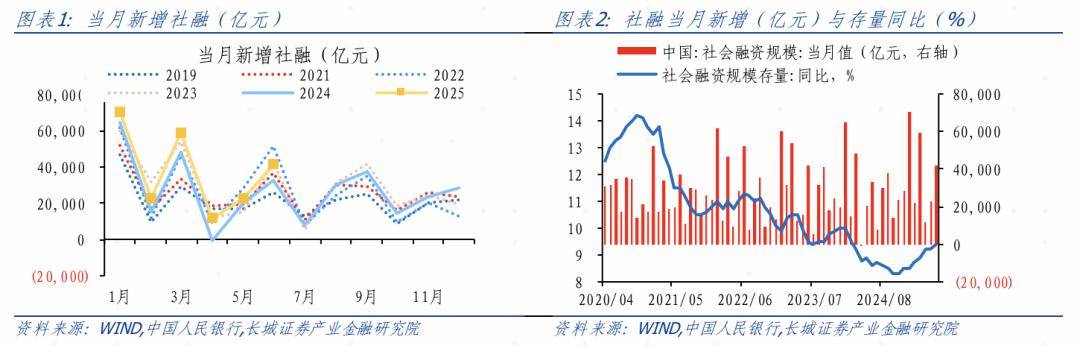
Group 1: Financial Data Overview - In June, China's social financing scale increased by 41,993 billion RMB, exceeding the expected 37,051 billion RMB and the previous value of 22,870 billion RMB[6] - New RMB loans in June amounted to 22,400 billion RMB, surpassing the expected 18,447 billion RMB and the previous value of 6,200 billion RMB[6] - M2 growth in June was 8.3%, higher than the expected 8.1% and the previous value of 7.9%[4] Group 2: Credit and Financing Trends - New credit in June was 22,400 billion RMB, with a year-on-year increase of 1,100 billion RMB, although still below seasonal averages[11] - Short-term loans contributed significantly to the increase, with a year-on-year rise of 1,334 billion RMB[16] - Government bond financing in June reached 13,508 billion RMB, a year-on-year increase of 5,032 billion RMB, supporting overall social financing[35] Group 3: M1 and M2 Analysis - M1 increased by 4.6% year-on-year, a significant rise of 2.3 percentage points from the previous month[37] - Total deposits in June increased by 32,100 billion RMB, with a year-on-year increase of 7,500 billion RMB[37] - Resident deposits rose by 3,300 billion RMB year-on-year, while non-financial corporate deposits increased by 7,773 billion RMB[37]