
即时零售

Search documents
阿里巴巴-W(09988):FY26Q1业绩点评报告:电商业务确定性边际改善,AI驱动云业务成长
ZHESHANG SECURITIES· 2025-09-03 13:13
Investment Rating - The investment rating for the company is "Buy" (maintained) [4] Core Views - The company's smart revenue increased by 26% year-on-year to 33.398 billion yuan, exceeding Bloomberg consensus expectations by 4.86%. Adjusted EBITA margin was 8.8%, with adjusted EBITA profit of 2.954 billion yuan, also above expectations by 14.18%. Quarterly capital expenditure was 38.629 billion yuan, exceeding expectations by 32.52% [1] - The cloud business is driven by the explosion of AI demand, with AI-related revenue in Alibaba Cloud achieving triple-digit growth over the past eight quarters. As AI penetration deepens across various industries, the demand for cloud services as foundational infrastructure is expected to continue to grow rapidly [1] - The Chinese e-commerce group is in a high investment phase, but the overall investment pace is slowing, leading to improved certainty. E-commerce revenue reached 118.577 billion yuan, a year-on-year increase of 9%, driven mainly by an increase in monetization rates [1][2] Summary by Sections Cloud Business - The cloud business's short-term profit margins are influenced by both upward and downward drivers. In the long term, the upward drivers are expected to outweigh the downward ones, leading to a significant increase in profit margins [1][8] - The company anticipates that the growth rate of its intelligent cloud business will further improve in the next two quarters [1] E-commerce Business - Customer management revenue reached 89.252 billion yuan, growing by 10% year-on-year, primarily driven by an increase in monetization rates. The company is focusing on market share, with GMV growth matching retail sales growth [1] - Instant retail revenue reached 14.784 billion yuan, a year-on-year increase of 12%. The company has made strategic moves in instant retail, including significant subsidies and the integration of its platforms [2][3] Financial Projections - The company adjusted its profit forecasts due to significant investments in instant retail, projecting revenues of 1,070.734 billion yuan, 1,172.096 billion yuan, and 1,285.874 billion yuan for FY2026-2028, with year-on-year growth rates of 7.5%, 9.5%, and 9.7% respectively [10] - The adjusted net profit attributable to ordinary shareholders is projected to be 147.205 billion yuan, 173.274 billion yuan, and 223.998 billion yuan for FY2026-2028, with year-on-year growth rates of -6.8%, 17.7%, and 29.3% respectively [10]

平台即时零售硝烟未散,销冠会长啥样?
Sou Hu Cai Jing· 2025-09-03 12:52
Group 1 - Moutai has initiated a deep collaboration with Meituan, launching over 900 stores on the Meituan flash purchase platform, marking its entry into the instant retail sector [1][3] - Other liquor brands such as Wuliangye and Guojiao are also participating, with high-value products achieving an average delivery time of just 28 minutes during the "618" shopping festival [2][5] - The instant retail sector is seeing a surge in food and beverage products, with companies like Yiming attracting orders through instant delivery, reporting a revenue of 1.401 billion yuan in the first half of the year, a year-on-year increase of 2.12% [1][8] Group 2 - Xiangpiaopiao is transforming its business model to focus on ready-to-drink tea, with a pop-up store trial that has led to an 8% increase in ready-to-drink revenue, now accounting for 30% of total income [1][14] - Nai Si has launched a home cleaning kit with a one-hour delivery service, with cleaning products now making up over 10% of sales through instant retail channels [1][14] - The competition in instant retail is reshaping channel dynamics, with companies needing to adapt to new consumer demands and delivery expectations [9][15]


阿里巴巴-W(09988):淘宝闪购与电商主站协同效应显著,云业务收入增长超预期
Great Wall Securities· 2025-09-03 11:36
Investment Rating - The report maintains a "Buy" rating for Alibaba Group [4] Core Views - Alibaba's collaboration between Taobao Flash Sale and its main e-commerce platform shows significant synergy, leading to a notable increase in user engagement and transaction volume [2] - The cloud business revenue growth exceeded expectations, driven by advancements in AI applications and the development of new AI chips [3] - The company is expected to achieve substantial revenue growth in the coming years, with projected revenues of 1.06 trillion, 1.18 trillion, and 1.30 trillion yuan for FY2026, FY2027, and FY2028 respectively [8] Financial Summary - For FY2024A, the company is projected to have a revenue of 941.17 billion yuan, with a year-on-year growth rate of 8.34% [9] - The adjusted net profit for FY2024A is estimated at 79.74 billion yuan, reflecting a year-on-year growth of 9.97% [9] - The company plans to maintain a capital expenditure (CAPEX) of 380 billion yuan over the next three years, indicating a strong commitment to investment in growth [3] - The cloud business achieved a revenue of 333.98 billion yuan in FY26Q1, marking a year-on-year increase of 25.80% [3] User Engagement and Market Position - Taobao Flash Sale has reached a peak daily order volume of 120 million, significantly boosting the overall user activity on the Taobao platform [2] - The monthly active users for Flash Sale have grown by 200% since its launch, indicating strong market penetration [2] - The report highlights that Alibaba is uniquely positioned among domestic competitors with a comprehensive layout in chips, cloud computing, large models, and downstream applications [3]
美股最新评级 | 招商证券(香港)给予阿里巴巴“增持”评级,目标价163美元
Xin Lang Cai Jing· 2025-09-03 08:09
Group 1: Alibaba (BABA.N) - Company received a "Buy" rating from招商证券(香港) with a target price of $163, driven by a 2% year-on-year revenue growth in Q2, a 10% increase in Chinese commercial revenue, and a 26% growth in cloud business [1] - 申万宏源 maintained a "Buy" rating, reporting a 2% year-on-year revenue increase to 247.7 billion yuan in Q1 FY26, with a 10% growth on a same-entity basis after excluding disposed businesses [1] - The company is focusing on AI and instant retail investments, enhancing user engagement and ecosystem synergy, despite short-term pressure on EBITA [1] Group 2: Bawang Tea (CHA.O) - Company maintained an "Outperform" rating from海通国际 with a target price of $22.7, reporting a 10% year-on-year revenue increase to 3.33 billion yuan in Q2 [2] - The number of stores in Greater China expanded to 7,038, a 41% increase year-on-year, while overseas GMV grew by 77% [2] - Profit forecasts for 2025 were lowered due to reduced delivery subsidies and overseas expansion costs, leading to a target valuation of $4.2 billion [2] Group 3: Tesla (TSLA.O) - Company maintained a "Buy" rating from第一上海, focusing on global expansion of FSD and the launch of Cybertruck in South Korea [3] - Subscription model optimization is expected to enhance penetration rates, with significant expansions in Robotaxi services [3] - Despite short-term delivery challenges in China, ongoing technology iterations and product upgrades are expected to strengthen long-term competitiveness [3] Group 4: Marvell Technology (MRVL.O) - Company received an "Overweight" rating from华泰证券 with a target price of $71.20, reporting strong performance in data center business and high demand for optical interconnect products [4] - ASIC business guidance for Q3 FY26 is weak, but long-term benefits are anticipated from the AI custom chip market expansion [4] - The company has secured 18 XPU projects, expected to contribute billions in revenue over the next 18-24 months [4]

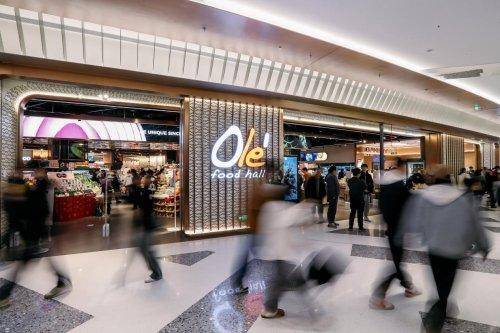
供应链差异化突围:Olé精品超市的高端业态进阶之路
Sou Hu Cai Jing· 2025-09-02 15:17
Core Insights - The article highlights the strategic evolution of Olé, a high-end supermarket brand under China Resources, as it prepares for its 20th anniversary in 2024, focusing on three product lines: Olé Lifestyle, Olé Food Hall, and Olé Supermarket [2][3] - The shift in consumer expectations from price competition to quality experience is emphasized, with a need for agile supply chains becoming a core competitive advantage for retail businesses [2][7] Product Line Matrix and Supply Chain Challenges - Olé's three product lines are designed to cater to different consumer needs, with Olé Lifestyle targeting premium experiences in first-tier cities, Olé Food Hall focusing on health and convenience, and Olé Supermarket providing quality ready-to-eat meals [3][4] - The expansion strategy includes opening new stores in key regions such as Nanjing, Hohhot, and Zhengzhou by mid-2025, indicating a focus on high-line cities and landmark projects [3][4] Supply Chain Strategy - Olé's supply chain strategy is characterized by a "global + local" approach, requiring capabilities in global sourcing, national coordination, and local integration to meet diverse consumer demands [4][8] - The company has established over 10 high-standard fresh produce bases across China, enhancing its short-chain system from production to retail [9] Own Brand Development and Green Supply Chain - Olé is actively developing its private label products, with over 500 items launched, focusing on health and quality, particularly through the Original series [16] - The company is also committed to a green supply chain, with over 2,000 eco-friendly products available, responding to the increasing consumer demand for sustainable and organic options [17][20] Digital Transformation and Organizational Efficiency - Olé is enhancing its supply chain efficiency through digital upgrades, including a traceability system for fresh products, which improves food safety and inventory management [20] - The organizational structure is being optimized to support a unified supply chain system, allowing for rapid decision-making and execution in response to market demands [22][24] Industry Perspective - Olé's approach illustrates a broader trend in the retail industry, where physical stores are evolving into experiential spaces rather than mere sales points, emphasizing the importance of supply chain strength in delivering quality lifestyle experiences [23][24]

滔搏20250902
2025-09-02 14:41
Company and Industry Summary Company Overview - The company discussed in the conference call is 滔搏 (Tao Bo), which operates in the retail and sportswear industry, focusing on both online and offline sales channels [2][3]. Key Points and Arguments Industry Performance - The discount rate in Q2 deepened year-on-year, with online growth driven by efficiency improvements and exploration of new sales scenarios such as instant retail and Xiaohongshu, while offline traffic remains under pressure [2][3]. - Inventory management remains robust, with a stock-to-sales ratio maintained at 4-5 months, although the age structure of inventory needs improvement [2][3]. - The company is not participating in ineffective online price competition but aims to connect online capabilities with offline foundations through initiatives like the "one store at a time" plan [2][5]. Online and Offline Sales Dynamics - Online sales have shown rapid growth, contrasting with the slower performance of offline channels, leading to increased overall discount pressure [3][4]. - The company has achieved significant progress in instant retail, connecting over 3,000 stores across major platforms [2][6]. - The overall discount situation is influenced by various factors, including channel inventory and the opening of online functionalities in stores [4]. Market Trends and Consumer Preferences - The U.S. market is recovering, with functional and professional products regaining consumer interest. The company has introduced new versions of its products, such as the 麦柔 18 series, which includes color iterations and a Plus version [7]. - The running market has substantial growth potential, with user demand evolving towards a mix of everyday cushioning shoes and racing shoes. The competition is fierce, with a focus on balancing functionality and fashion [8]. New Brand Collaborations - The company has signed new running brands like Lily, which emphasizes both functionality and distinctive design, reflecting a trend where consumers are willing to pay a premium for unique styles [9][10]. - New brands such as Norda, Sore, Norona, and Sally are being introduced, primarily through online sales and pop-up stores to maximize profit efficiency [10]. Store and Channel Strategy - The company plans to dynamically adjust its store count, expecting to reduce the number of stores by a few hundred by the end of the year, targeting a total of approximately 4,600 to 4,700 stores [11]. - The retail industry is facing rapid changes, necessitating flexible strategies to adapt to evolving consumer behaviors and market conditions [12]. Future Growth Expectations - The company maintains its growth expectations for FY2025, projecting net profit to remain flat year-on-year while improving net profit margins [16]. Additional Important Insights - The company is focusing on enhancing its interaction with sports communities through innovative store types and multi-brand product offerings [9][10]. - The competitive landscape in the running market is characterized by low technological barriers, making it essential for brands to combine functionality with stylish elements to meet diverse consumer needs [8].

外卖竞局尚未撤席,AI牌局开场已酣
Qi Lu Wan Bao Wang· 2025-09-02 10:56
Core Insights - The intense competition in the food delivery industry is highlighted by the recent financial reports from major players like Alibaba, Meituan, and JD.com, indicating a fierce battle for market share and user engagement [1][2][4] Financial Performance - Alibaba's Taobao Flash reported a peak daily order volume of 120 million in August, with a monthly active user count reaching 300 million, reflecting a 200% increase since April [2] - Meituan's Q2 revenue was 91.84 billion yuan, a year-on-year growth of 11.7%, with monthly active users surpassing 500 million [2] - JD.com's total revenue for the first half of the year was 356.7 billion yuan, showing a year-on-year increase of 22.4%, with its food delivery business driving a 199% growth in new business revenue [4] Strategic Moves - Alibaba has integrated Ele.me and Fliggy into its China e-commerce group, indicating a strategic restructuring to enhance its core e-commerce operations [2][3] - Meituan's CEO emphasized the company's commitment to maintaining its market leadership while exploring new business opportunities [4] - JD.com is focusing on integrating its supply chain advantages into food delivery and hospitality services, positioning instant retail as a critical battleground [4] AI and Technology Investments - Meituan has launched several AI applications and announced a significant investment exceeding 10 billion yuan annually in AI development [5] - Alibaba's new AI framework, AgentScope 1.0, aims to outperform competitors in both technology and commercial application [6] - JD.com is advancing its AI strategy with a focus on creating world-class capabilities and has made substantial investments in robotics and AI technologies [8] Offline Retail Expansion - The competition is extending into offline retail, with both JD.com and Meituan launching new supermarket formats aimed at community needs [9][10] - JD.com's discount supermarkets emphasize direct sourcing and private label products, targeting lower-tier markets with competitive pricing strategies [10] - The shift in offline retail strategies reflects a broader adjustment among internet giants to capture market share in various consumer segments [10]

华尔街投行看好淘宝闪购 认为“阿里巴巴将迈入新里程碑”
Zheng Quan Ri Bao Wang· 2025-09-02 08:12
Core Insights - Alibaba Group's Q1 FY2026 financial report shows strong performance, leading to target price upgrades from major Wall Street banks, particularly highlighting the growth potential of its Taobao Flash Sales business [1][2][4] Financial Performance - Alibaba's CMR revenue from its e-commerce business reached 892.52 billion yuan, a 10% year-on-year increase, surpassing Bloomberg analysts' expectations [2] - The company is expected to achieve double-digit revenue growth, with cloud computing projected to grow over 20% and international business in the mid-double digits [1][2] Market Reactions - JPMorgan raised Alibaba's target price from $140 to $170, anticipating a reduction in losses from the Taobao Flash Sales business by Q4 2025 [1] - Citigroup increased its target price from $148 to $187, noting significant progress in Taobao Flash Sales, including peak daily orders reaching 120 million [1][2] Business Strategy - Taobao Flash Sales is projected to contribute an additional 2-3 percentage points to CMR growth in the coming quarters, with expectations of a 10% year-on-year increase in the next quarter [2] - The service has shown strong user engagement, with monthly active users increasing by 200% year-on-year to 300 million [1][2] Competitive Landscape - Goldman Sachs predicts that Taobao Flash Sales could capture 45% of the market share in the food delivery sector, indicating a significant shift in market dynamics [3] - Third-party data shows that Taobao's daily active user count increased by 17% year-on-year, strengthening its competitive position against other e-commerce platforms [3] Future Outlook - Alibaba's CEO of the China e-commerce division highlighted that Taobao Flash Sales is exceeding expectations in various metrics, and the service is expected to generate an additional 1 trillion yuan in transaction volume over the next three years [3][4] - The company is focusing on ecosystem integration and membership upgrades, with the 88VIP membership growing to 53 million, enhancing user engagement across its platforms [4]

阿里市值暴涨4000亿,“外卖大战”目前受伤最深的是美团
Zhong Guo Jing Ying Bao· 2025-09-02 08:11
Core Viewpoint - The recent earnings reports from Alibaba, Meituan, and JD.com reveal a competitive landscape in the food delivery market, characterized by rising marketing expenses and a struggle for profitability despite revenue growth [3][5][6]. Group 1: Earnings Performance - Alibaba reported Q1 FY2026 revenue of 247.65 billion yuan, a 2% year-on-year increase, and saw its market value rise by over 400 billion HKD on September 1 [2][3]. - Meituan's Q2 FY2025 revenue reached 91.84 billion yuan, reflecting an 11.7% year-on-year growth, but its stock fell significantly post-earnings release [2][3]. - JD.com achieved Q2 FY2025 revenue of 356.66 billion yuan, a 22.4% increase year-on-year, with relatively stable stock performance compared to its peers [2][3]. Group 2: Marketing Expenses - JD.com significantly increased its marketing expenses to 27.01 billion yuan in Q2 FY2025, up 127.63% from the previous year [3][4]. - Alibaba's marketing expenses rose to 53.18 billion yuan, a 62.64% increase year-on-year, with the expense ratio climbing from 13.4% to 21.5% of revenue [3][4]. - Meituan's marketing spending reached 22.52 billion yuan, a 51.8% increase, but it faced the most significant profit decline among the three companies [4][5]. Group 3: Competitive Dynamics - The food delivery market is experiencing intense competition, with JD.com initiating a subsidy war that prompted Alibaba and Meituan to respond [3][6]. - Meituan's market share has been pressured, leading to a forced entry into the subsidy battle, while JD.com and Alibaba view food delivery as a means to enhance their core retail businesses [6][7]. - Analysts suggest that the long-term impact of the subsidy war will be more detrimental to Meituan, as food delivery is its core business, while for JD.com and Alibaba, it is a supplementary service [6][7]. Group 4: AI and Future Investments - Alibaba's cloud revenue surged by 26% to 33.40 billion yuan, with a commitment to invest 380 billion yuan in AI over the next three years [8][9]. - Meituan has also made strides in AI, recently open-sourcing its self-developed model, indicating a competitive push in this area [8][9]. - The capital market perceives Alibaba and ByteDance as stronger players in AI, while Meituan and JD.com are still developing their capabilities [9].

顺丰同城(09699):2025年半年报点评:业绩超预期,看好即时配送业务加速增长
Soochow Securities· 2025-09-02 06:19
Investment Rating - The report maintains a "Buy" rating for the company [1][11] Core Views - The value of instant delivery services is increasingly highlighted in the logistics sector, with significant revenue growth in the last-mile delivery business in the first half of 2025. The revenue from last-mile delivery services reached 4.457 billion yuan, a year-on-year increase of 56.9%, driven by an increase in penetration within SF Holding's express delivery volume [3] - The company's overall revenue from subsidiaries of SF Holding grew by 63% year-on-year in the first half of 2025, indicating strong performance and operational efficiency [3] - The company is actively expanding services such as "same-day delivery" and multi-scenario urban logistics services, which are expected to continue driving rapid growth in the last-mile business [3] Financial Summary - The company's total revenue for 2023 is projected at 12.39 billion yuan, with a year-on-year growth of 20.69%. By 2025, revenue is expected to reach 21.485 billion yuan, reflecting a growth rate of 36.44% [1] - The net profit attributable to the parent company is forecasted to be 50.6 million yuan in 2023, increasing to 254.27 million yuan by 2025, representing a substantial year-on-year growth of 91.96% [1] - The latest diluted EPS is expected to rise from 0.06 yuan in 2023 to 0.28 yuan in 2025, indicating a positive trend in earnings per share [1] - The company's gross margin remains stable, while the sales, research and development, and management expense ratios have decreased, contributing to a net profit margin increase of 0.4 percentage points to 1.3% in the first half of 2025 [4] - The report projects a significant increase in net profit for 2025-2027, with estimates adjusted to 254 million yuan, 373 million yuan, and 497 million yuan respectively [11]