
国产替代

Search documents
多宁生物三闯港交所终见盈利
Xin Lang Cai Jing· 2026-01-20 16:47
Core Viewpoint - The company, Duoning Biotechnology, is attempting to enter the capital market with a narrative of "profit turning point" after years of losses, reporting a net profit of 14.257 million yuan in the first three quarters of 2025, marking its first profitable period [1][3] Financial Performance - In 2023 and 2024, Duoning Biotechnology reported revenues of 814 million yuan and 843 million yuan, with net losses of 315 million yuan and 27.5 million yuan respectively; however, in the first three quarters of 2025, the company achieved a revenue of 658 million yuan and a net profit of 14.257 million yuan [3][6] - The company's main business segments include biological process solutions and laboratory products and services, with the former contributing over 70% of revenue in recent years [4] Business Segments - The biological process solutions segment generated revenues of 626 million yuan, 638 million yuan, and 507 million yuan from 2023 to September 2025, accounting for 77%, 75.7%, and 77.1% of total revenue respectively; the revenue from reagents and consumables significantly increased, making up 55.4% of total revenue in 2025, up from 44.1% in 2023 [4] - The overseas market has been a key growth driver, with revenues from international operations reaching 69.52 million yuan, 95.304 million yuan, and 112 million yuan from 2023 to September 2025, with the overseas revenue contribution rising from 9.8% to 17.1% [5] Strategic Expansion - Duoning Biotechnology plans to use part of the IPO proceeds to expand its global market presence, including establishing local production lines and hiring overseas personnel [5][9] - The company has a history of aggressive acquisitions, having acquired nine companies between 2019 and 2022, which has led to a significant goodwill of 843 million yuan as of September 2025 [8][9] Market Position and Risks - The transition to profitability is seen as a significant advantage for the company's IPO, aligning with market valuation logic and reducing investment risks; however, the sustainability of this profitability is questioned due to low net margins and high goodwill [6][9] - The company is positioned in a promising sector with substantial domestic replacement potential, but it must address risks related to goodwill impairment and ensure compliance with regulatory disclosures [9]


2月北京站:头部智驾企业“盲盒”、天工机器人——芯之所驱 形之所塑
泽平宏观· 2026-01-20 16:06
以下文章来源于泽平宏观商学 ,作者泽平宏观商学 泽平宏观商学 . 前沿科技企业实战研学 读万卷书行万里路 014> 盲盒:头部智能驾驶企业 当前正处于从 L2 到 L4 自动驾驶迭代、从汽车向 通用机器人跨越的历史拐点。智驾芯片及解决方案市 场正以接近 50% 的年复合增长率奔向万亿规模。公司 凭借国产替代与技术普惠的双重红利,占据了中国智 驾市场的"半壁江山"。 在物理AI加速落地浪潮与国产替代加速的双重β 下,公司作为国产中大型算力芯片头部企业及具备软 硬一体能力的供应商,推动汽车从"功能"迈向"智 能",让机器更懂人类,让出行更安全、更自由。 天工机器人:北京人形机器人创新中心 国家战略级平台,定义全栈自主新高度 北京人形机器人创新中心于2023年11月成立,是 国内首个省级人形机器人创新中心,也是国内首家具 身智能软硬件全栈科技公司,全面覆盖人形机器人大 脑、小脑、本体与数据的研发攻关并且构建了良好的 开源生态。 目前已推出自主研发的全国产化"具身天工"系 列人形机器人和"天轶"系列轮式人形机器人,可覆 盖工业制作、特种作业、物流分拣、商业导览等多元 场景,在人形机器人半马、运动会等多项行业竞赛中 以 ...

2026先进尼龙产业创新与应用开发大会(3月19-20日 广州)
DT新材料· 2026-01-20 16:05
Group 1 - The global nylon market is expected to exceed $47 billion, driven by advancements in applications such as electric vehicles, electronics, low-altitude economy, embodied robots, smart terminals, and medical devices [2] - The nylon industry is entering a critical period of structural adjustment due to energy system restructuring, trade environment changes, and energy-saving and carbon reduction goals, presenting both challenges and strategic opportunities [2] - The "2026 Advanced Nylon Industry Innovation and Application Development Conference" will be held on March 19-20, 2026, in Guangzhou, focusing on technology innovation, application development, cost reduction, and market expansion [2][4] Group 2 - The conference will gather over 300 domestic and international nylon enterprises and industry chain participants for effective resource matching [5] - More than 20 experts, entrepreneurs, and scholars will share insights on industry innovation paths [5] - The event will feature over 30 end-user companies presenting material application needs to facilitate upstream and downstream cooperation [5] Group 3 - The agenda includes sessions on terminal trends and material demands, innovations in nylon applications in the automotive and electronics industries, and case studies on nylon materials for low-altitude flying vehicles and embodied robots [7][8] - Specialized activities such as thematic salons, exchange visits, and demand matching will be organized to meet industry needs [5][10] - The conference will initiate the development of industry group standards for advanced nylon materials in key application areas like electric vehicles and robotics [5][10]
汽车与零部件行业周报:中汽协预计2026年中国汽车总销量同比+1%,长城汽车发布归元平台-20260120
Shanghai Securities· 2026-01-20 15:03
Investment Rating - The industry investment rating is "Hold" [2] Core Views - In 2025, the automotive production and sales reached 34.53 million and 34.40 million units respectively, marking a historical high and maintaining the position as the world's largest market for 17 consecutive years. Domestic sales were 27.30 million units, a year-on-year increase of 6.7%, while traditional fuel vehicle sales decreased by 4% to 13.43 million units. Exports exceeded 7 million units, reaching 7.10 million, with a year-on-year growth of 21.1%, and new energy vehicle exports doubled to 2.62 million units [6] - The China Association of Automobile Manufacturers (CAAM) forecasts total automotive sales in China for 2026 to be 34.75 million units, a year-on-year increase of 1%, with new energy vehicle sales expected to reach 19 million units, growing by 15.2% [6] Summary by Sections Market Summary - The automotive sector saw a weekly increase of 0.39%, with the best-performing sub-sector being automotive services, which rose by 4.51%. The overall A-share market increased by 0.38%, placing the automotive sector 11th among 31 primary industries [4] Company Performance - The top five companies in terms of weekly performance were Aikelan (+40.53%), Jiaoyun Shares (+39.32%), Kuntai Shares (+18.45%), Xinquan Shares (+16.24%), and Zhejiang Huayuan (+15.99%). Conversely, the bottom five were Taotao Automotive (-10.99%), Aerospace Science and Technology (-12.92%), Yueling Shares (-15.40%), Czhixin (-18.81%), and Tianpu Shares (-25.33%) [5] Investment Recommendations - The report suggests focusing on companies related to intelligent vehicle technology, those with potential in overseas sales, and component manufacturers benefiting from domestic substitution effects. Specific recommendations include Baic Blue Valley for complete vehicles and Bertley, Yinlun Shares, Longsheng Technology, and others for components [8][10]
【公告臻选】航空航天+国防军工+隐身材料+自主可控!公司签订3亿元航空发动机用特种功能材料销售合同
第一财经· 2026-01-20 14:26
Core Viewpoint - The article emphasizes the importance of efficiently filtering and interpreting key announcements in the investment landscape, providing insights into potential investment opportunities and market trends [1] Group 1: Selected Review - On January 4, the article highlighted the potential of domestic CPU, chips, AI, quantum technology, and autonomous driving, noting that Guoxin Technology (688262) experienced a significant price increase of 7.18% on January 5, followed by a further rise of 7.43% on January 20, reaching a nearly one-year high with an intraday surge of nearly 15% [2] - On January 19, the article pointed out the developments in photolithography, semiconductors, OLED, electronic chemicals, and domestic substitution, mentioning that Jianghuai Microelectronics (603078) saw a limit-up on January 20 after the controlling shareholder changed to the Shanghai State-owned Assets Supervision and Administration Commission [2] Group 2: Today's Highlights - In the aerospace and defense industry, a company signed a sales contract worth 328 million yuan for special functional materials used in aircraft engines [3] - In the semiconductor sector, a company has successfully entered the mass production phase for its memory chip production line, focusing on advanced packaging and testing [3] - In the rare metals and high-end manufacturing sectors, a subsidiary of a company has increased its reserves by 91,700 tons of tungsten metal and other resources [3]

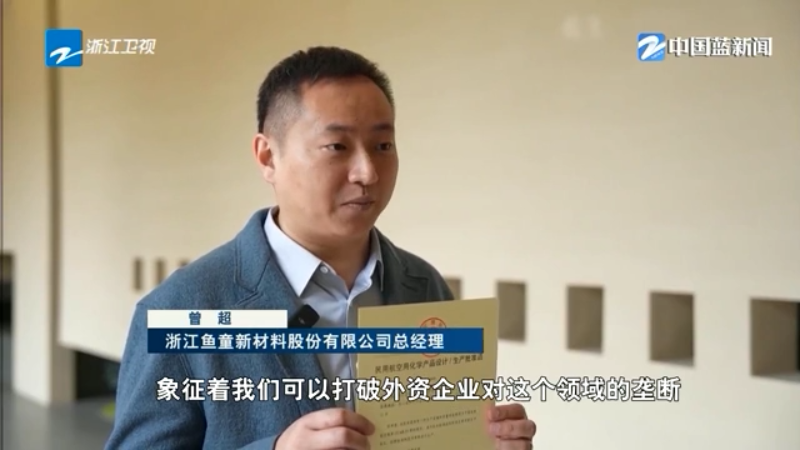
浙产航空涂料拿下全国首张“适航证” 国产大飞机将穿上“中国防护服”
Xin Lang Cai Jing· 2026-01-20 13:41
Core Viewpoint - A company in Wenling has received the first civil aviation chemical product design and production approval from the Civil Aviation Administration of China, allowing it to supply coatings for domestic aircraft like the C919, breaking the foreign monopoly in this sector [1][9]. Group 1: Company Achievements - The approval certificate signifies a major achievement for the company, indicating its capability to produce high-end aviation coatings [3][11]. - The company has invested nearly 10 million yuan in overcoming technical challenges over six years, testing hundreds of raw materials and developing over a hundred formulations [5][13]. Group 2: Product Development and Cost Efficiency - The company has optimized its production process, resulting in a 20% reduction in product costs and a decrease in delivery time from six months to half a month [9][17]. - The company plans to focus on three key areas: civil aviation maintenance, low-altitude economic derivative markets, and supporting products for domestic large aircraft [17].
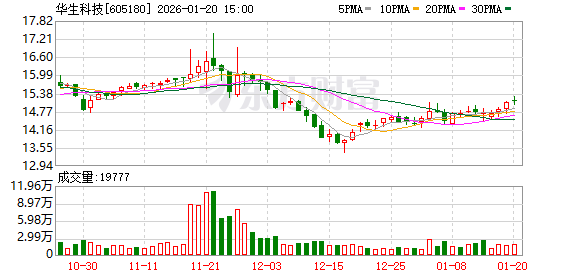
华生科技:公司电容薄膜项目在技术、品质等方面仍在稳步推进
Zheng Quan Ri Bao· 2026-01-20 12:10
Group 1 - The core viewpoint of the article highlights that Huasheng Technology is actively engaged in the dynamic and diverse process of domestic substitution, indicating a positive outlook for its capacitor film project in terms of technology and quality [2] - The company emphasizes that the market potential for its products remains considerable, suggesting ongoing confidence in future growth opportunities [2]

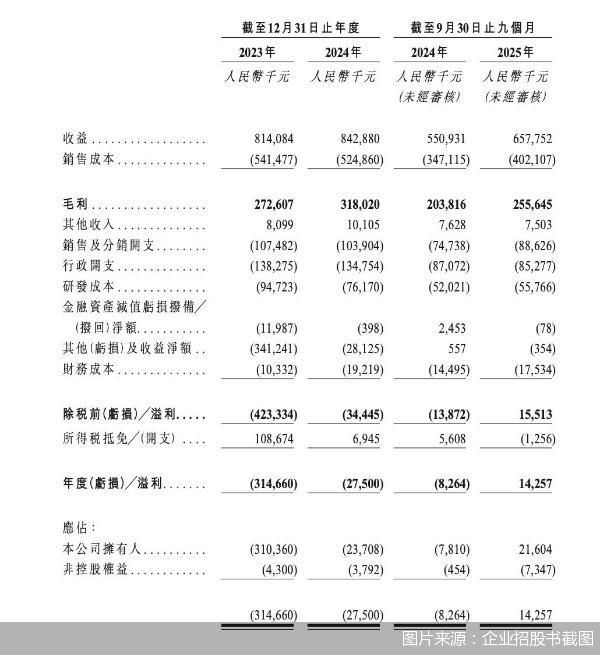
三闯港交所终见盈利,多宁生物尚未跨过8亿元商誉“暗雷”
Bei Jing Shang Bao· 2026-01-20 12:05
Core Viewpoint - Doning Biotechnology is attempting to enter the capital market with a narrative of "profit turnaround," having reported a net profit of 14.257 million RMB in the first three quarters of 2025 after consecutive losses from 2019 to 2022, although it faces challenges due to high goodwill from aggressive acquisitions totaling 843 million RMB [1][3][7]. Financial Performance - In 2023 and 2024, Doning Biotechnology reported revenues of 814.084 million RMB and 842.88 million RMB, with net losses of 314.66 million RMB and 27.5 million RMB respectively [2][3]. - For the first three quarters of 2025, the company achieved a revenue of 658 million RMB and a net profit of 14.257 million RMB, marking its first profitable period [3][5]. Business Segments - The company's operations are primarily divided into two segments: biological process solutions and laboratory products and services, with the former contributing over 70% of revenue in recent years [3][4]. - Revenue from biological process solutions was 626 million RMB in 2023, 638 million RMB in 2024, and 507 million RMB in 2025, maintaining a revenue share of approximately 75-77% [4]. Growth Drivers - A significant increase in overseas market contributions has been a key driver for the company's turnaround, with revenues from international markets growing from 69.52 million RMB in 2023 to 112 million RMB in 2025, increasing its share from 9.8% to 17.1% [4][5]. - The company plans to use part of the IPO proceeds to expand its global market presence, including establishing local production lines and hiring overseas personnel [5][8]. Acquisition Strategy - Doning Biotechnology has engaged in aggressive acquisitions, integrating nine companies from 2019 to 2022, which has led to a substantial goodwill of 843 million RMB on its balance sheet [7][8]. - The company is currently focusing on digesting and integrating its new acquisitions while also expressing intentions for selective strategic acquisitions to enhance its product and service offerings [8]. Market Position and Risks - The company operates in a favorable market for biological process solutions, with significant potential for domestic substitution and support from the WuXi Biologics supply chain [8]. - Despite the positive profit turnaround, concerns remain regarding the sustainability of profits, potential goodwill impairment, and compliance with related party transactions [5][8].
埃科光电接待81家机构调研,包括淡水泉投资、星石投资、中银基金、九方资本等
Jin Rong Jie· 2026-01-20 12:04
Core Viewpoint - The company is actively developing advanced optical sensing technologies, focusing on product innovation and collaboration with leading industry players to enhance its competitive edge in the market. Group 1: Product Development and Technology - The company's autofocus and line-spectral confocal systems are in the customer validation and introduction phase, with the autofocus system progressing rapidly [1][3] - These products differ significantly in value compared to standard industrial cameras due to their complexity and integration, with the line-spectral confocal system having the highest value [3] - The company is building a diversified product and technology system centered on measurement, extending its core optical sensing technology into related fields [4] Group 2: Market Position and Strategy - In the lithium battery sector, the company is experiencing rapid revenue growth and has established close partnerships with leading terminal manufacturers, making it a key growth driver [2][7] - The demand for detection cameras is increasing, particularly in mature processes, driven by the need for domestic supply chain security and advancements in packaging technology [8] - The company is focusing on core technology development, product reliability, and collaboration with industry leaders to enhance key technology iterations and product development [8] Group 3: Competitive Landscape - The company faces challenges compared to foreign enterprises in areas such as interdisciplinary technology integration, high-end talent resources, and continuous scenario iteration [9] - In the domestic market, the company is leveraging close cooperation with local equipment manufacturers to build engineering experience and technical understanding, establishing industry recognition barriers [9] - The verification cycle for new entrants into the semiconductor supply chain can take six months to a year if products meet customer requirements, but may extend significantly for companies lacking industry experience [9]

反直觉!春节前哪些业绩线能成为强压下的“避风港”?
Xin Lang Cai Jing· 2026-01-20 11:42
Core Viewpoint - The market is becoming increasingly cautious as the Spring Festival approaches, with a focus on performance as a safe haven for investments, rather than speculative stories [1][2] Group 1: Investment Strategy - Investors should avoid the misconception that good performance guarantees profits; key factors include valuation, institutional holdings, and industry trends [1][2] - The correct investment logic involves looking for marginal performance improvement, low valuation (below 30% percentile), concentrated institutional holdings, and industry catalysts [2] Group 2: Key Sectors to Explore - **AI Power and Computing Infrastructure**: Strong demand driven by energy supply constraints; significant investments expected during the "14th Five-Year Plan" period [1][2] - **Semiconductors and AI Applications**: Anticipated market growth to $697 billion in 2025, with a focus on companies with solid order backlogs [6] - **Robotics**: Institutions are increasing allocations in this sector, with a focus on core components and automation penetration [6] - **Non-bank Financials**: Valuation recovery potential in brokerage firms, with a projected net profit of 30.05 billion yuan for CITIC Securities in 2025 [11] - **CXO in Pharmaceuticals**: Focus on companies with solid order books and revenue growth, particularly in ADC segments [16] - **Cash Flow Stable and Dividend Stocks**: High dividend yield stocks with stable cash flow are essential for risk management [18] - **Overseas Expansion**: Companies with strong overseas channels and brand power are positioned to benefit from global market growth [20] Group 3: Stock Selection Criteria - Stocks should have substantial orders, performance support, and clean ownership structures, avoiding those reliant solely on concepts without fundamentals [7] - Prioritize stocks with marginal performance improvement, low valuations, and institutional accumulation, while confirming the resolution of negative factors [20]
