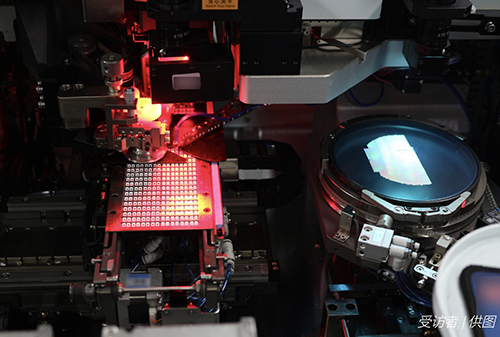
国产替代

Search documents
1300+份新材料报告下载:做新材料领域的「攻坚者」
材料汇· 2026-01-18 15:29
Core Viewpoint - The article discusses the rapid growth and investment opportunities in the advanced packaging materials sector, highlighting the potential for domestic companies to replace foreign imports in critical areas of technology [7][8]. Market Overview - The global market for advanced packaging materials is projected to reach $2.032 billion by 2028, with the Chinese market expected to grow to 9.67 billion yuan by 2025 [8]. - Specific materials such as PSPI and Al-X photoresist are highlighted, with PSPI's market size in China estimated at 7.12 billion yuan in 2023 [8]. Investment Opportunities - The article identifies 14 key advanced packaging materials that are critical for the semiconductor industry, emphasizing the potential for domestic companies to capture market share from established foreign players [7][8]. - Companies like 鼎龙股份, 国风新材, and 三月科 are mentioned as potential leaders in the domestic market for advanced packaging materials [8]. Growth Projections - The market for conductive adhesives is expected to reach 3 billion yuan by 2026, while the chip bonding materials market is projected to grow from approximately $4.85 billion in 2023 to $6.84 billion by 2029 [8]. - The epoxy encapsulation materials market is anticipated to grow to $9.9 billion by 2027, indicating strong demand in the coming years [8]. Competitive Landscape - The article outlines the competitive landscape, noting that foreign companies like Fujifilm, Toray, and Dow currently dominate the market, but domestic firms are increasingly positioned to challenge this dominance [8]. - The need for innovation and investment in R&D is emphasized for domestic companies to successfully compete against established international players [8].

策略周报:走势回归健康,坚定中盘蓝筹-20260118
Orient Securities· 2026-01-18 14:44
Core Views - The market is returning to a healthy state, and a steady oscillation is essential for long-term sustainability, with a focus on mid-cap blue chips and themes aligned with national strategies [10][11]. Market Analysis - The index experienced a pullback after a high this week, confirming the expectation of a stable market after a short-term emotional release. The regulatory body's work meeting outlined five key tasks for 2026, reinforcing confidence among domestic and international investors and stabilizing the current downward trend in market risk assessment [3][11]. - The regulatory body's precise management of market expectations has effectively mitigated the risk of a market frenzy, leading to a shift in risk preferences. High-risk investors are likely to lower their risk appetite, while low-risk investors are gaining confidence, resulting in an overall movement towards a balanced risk preference [3][11]. Industry Comparison - The report emphasizes a focus on mid-cap blue chips, particularly in the cyclical chemical sector. The previous trends in technology and dividends are seen as reaching their peak, with future investment opportunities expected to arise in stocks with moderate risk characteristics. The mid-cap blue chip market is anticipated to rise, especially in the chemical sector, where profit improvements are expected due to optimized supply structures and marginally improving demand [12][3]. Thematic Investments - Attention is directed towards the semiconductor, robotics, and aerospace satellite sectors. The semiconductor industry is experiencing an upward shift in expectations, with TSMC's positive outlook potentially leading to a revaluation of the sector. Domestic wafer manufacturers are expected to expand production this year, and the capital processes of domestic memory chip leaders are advancing, aligning with national strategies for self-sufficiency [13][3]. - In robotics, significant industry milestones are anticipated in the first quarter, including the release of Tesla's V3 version and its mass production by year-end. The robotics sector is also expected to gain visibility during major events like the Spring Festival [4][13]. - The aerospace satellite sector remains a key focus for national support, with expectations for progress in catching up with international advancements. Investment should focus on companies with genuine performance release expectations or those significantly involved in national aerospace initiatives [4][13]. - The nuclear fusion sector is projected to experience a series of industrial catalysts, transitioning from theoretical research to engineering practice, which is expected to generate substantial investment demand in the future [14][3]. - Short-term price increases are anticipated, with structural growth in demand and supply constraints providing upward price elasticity for related commodities, particularly in non-ferrous metals and chemicals [14][3].
帮主郑重:下周A股,紧盯这个关键点位!
Sou Hu Cai Jing· 2026-01-18 14:11
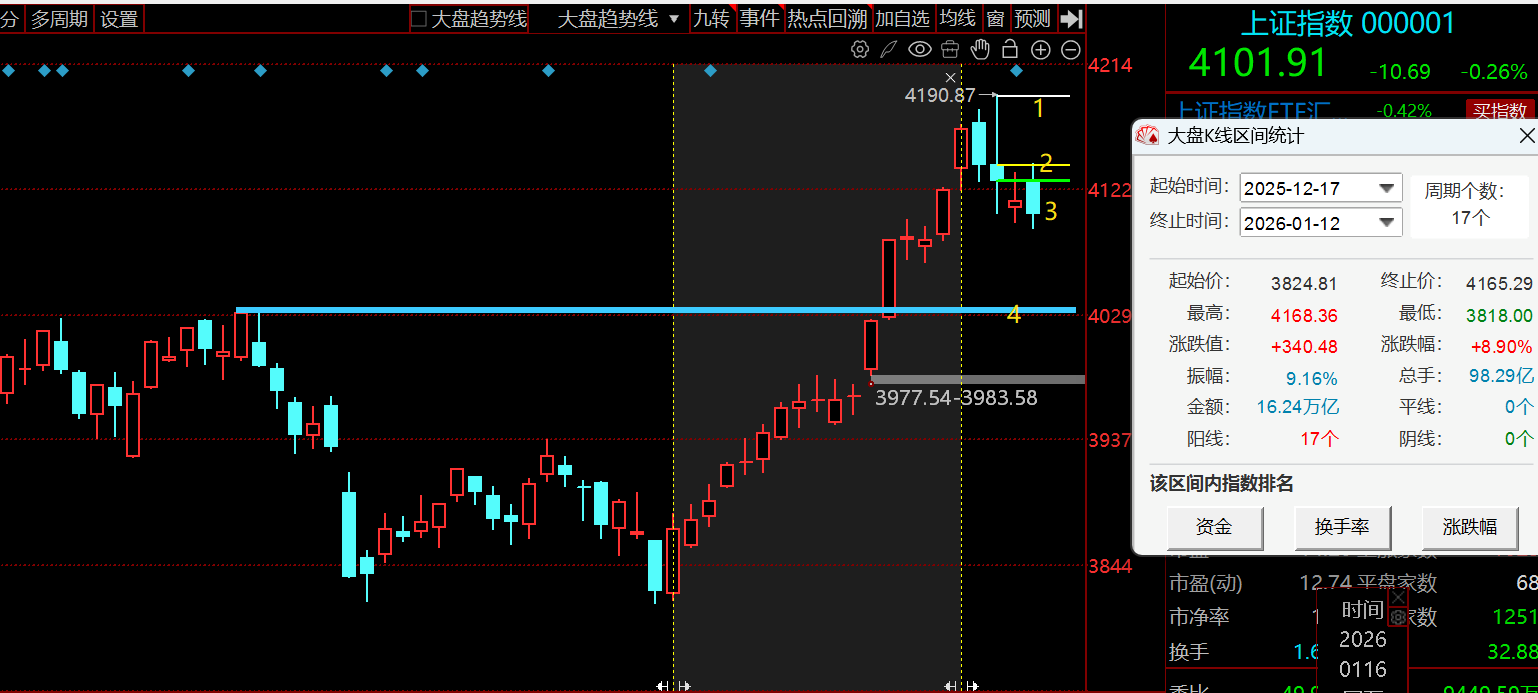
Core Viewpoint - The A-share market is experiencing a "slow bull" phase, with current fluctuations indicating a transition from a "general rise" to "structural differentiation" in investment opportunities [5] Market Analysis - The Shanghai Composite Index is engaged in a "tug-of-war" around the 4100-point mark, with recent regulatory measures aimed at cooling down an overheated market [3] - The average stock price across the A-share market has risen for six consecutive weeks, indicating that capital is not retreating but rather reallocating towards sectors with solid fundamentals [3] - Northbound capital recorded a net inflow of 8.6 billion, totaling over 50 billion for the year, primarily flowing into electronics (especially semiconductors) and power equipment [3] Sector Focus - The semiconductor sector is benefiting from global capital expenditure trends and accelerated domestic substitution, with specific attention on storage chips and advanced packaging [4] - The power equipment sector aligns with national policies on new power systems, focusing on high-voltage and energy storage technologies [4] - Commercial aerospace and industrial AI remain long-term investment themes, but investors should focus on companies with core technologies rather than those merely riding trends [4] Defensive Strategies - Investors are advised to consider undervalued "stabilizers" such as banks and insurance companies, which offer attractive dividend yields and stability during market fluctuations [4] - Leading companies in essential consumer goods, particularly in food and beverage, are also recommended as safe havens in a volatile market [4] Market Outlook - The market's ability to maintain support around the 4100-point level, particularly the 10-day moving average, will be crucial for future movements, with a warning of potential adjustments if it falls below 4020 points [3] - The current market environment is conducive to the emergence of high-quality companies' true value, benefiting rational investors [5]
航天隔热瓦,火箭可复用关键材料!| 0118
Hu Xiu· 2026-01-18 14:09
Market Overview - The market experienced a bifurcation last week, with indices initially rising before cooling down due to the China Securities Regulatory Commission's (CSRC) policy to increase margin requirements, indicating a commitment to curb speculative trading [1] - Key sectors such as commercial aerospace, AI healthcare, and AI marketing began to correct after previous highs [1] - Technical analysis suggests that if the Shanghai Composite Index can regain a certain resistance level, it may signal a resumption of the upward trend [1] Semiconductor Industry - The semiconductor supply chain continued to strengthen, with NAND flash memory leading the gains. SanDisk has proposed a unique supply contract requiring 100% cash prepayment from clients to secure storage chip allocations for the next 1 to 3 years [3] - Baiwei Storage forecasted a net profit of 850 million to 1 billion yuan for 2025, representing a year-on-year increase of 427.19% to 520.22% [3] - Major global cloud service providers are placing large purchase orders, indicating strong demand in the sector [3] Regulatory Environment - The CSRC held a meeting to summarize 2025's work and plan for 2026, emphasizing the need to maintain market stability and prevent excessive speculation [5] - The adjustment of margin requirements is not expected to affect the overall upward trend of the market but will influence market structure and increase competition among thematic sectors [5] Photovoltaic Market - The photovoltaic market has seen multiple companies announcing price increases for components, leading to delivery delays and instances of contract breaches, impacting downstream companies [10][11] - The surge in component prices is attributed to the impending cancellation of export tax rebates and rising costs of key materials like silver and aluminum, which have significantly increased production costs [12][13] - The silver price has skyrocketed from 7,600 yuan per kilogram at the beginning of 2025 to 23,688 yuan per kilogram by year-end, with its cost share in photovoltaic components rising from 17% to 30% [13] Aerospace Industry - Domestic efforts in commercial aerospace are advancing, with the China Aerospace Science and Industry Corporation summarizing its work and setting goals for 2026 [6] - The U.S. and Japan have upgraded their space military alliance, with new agreements that could trigger mutual defense obligations in the event of attacks on satellites [7] - Japan's defense budget has reached a record high of 9.04 trillion yen for the 2026 fiscal year, reflecting a strategic shift towards enhancing its military capabilities in the region [8] Reusable Rocket Technology - SpaceX's Falcon 9 rocket has achieved significant cost reductions through the reuse of its first stage, with marginal costs dropping to approximately $1.5 million per launch compared to $50 million for new rockets [14] - The Falcon 9 has demonstrated high recovery rates, with a successful recovery rate of 98.5% in 2024, showcasing the effectiveness of reusable technology [15] - The development of fully reusable rockets is a key focus for both domestic and international aerospace companies, with various projects underway to achieve this goal [25][26] Advanced Packaging Materials - New Henghui is focusing on the etching lead frame, a critical component in the semiconductor industry, with a low domestic production rate and high demand for localization [37] - The etching lead frame technology allows for more precise and complex designs compared to traditional stamping methods, making it essential for high-performance chips [40] - Companies like New Henghui and Kangqiang Electronics are positioned as key players in the domestic market for etching lead frames, competing against established international firms [42]
上行趋势下的震荡,耐心掘金结构
Haitong Securities International· 2026-01-18 12:03
Investment Focus - Since the beginning of 2026, the Shanghai Composite Index has broken above the 4,000 and 4,100 thresholds and is approaching 4,200, indicating signs of market overheating with significant inflows into commercial aerospace and AI application sectors, leading to a record turnover of RMB 3.6 trillion [1][26] - Margin financing inflows reached RMB 91.2 billion over the first four trading days of the week, with outstanding margin balances exceeding RMB 2.7 trillion, reflecting a strong inflow intensity comparable to the cyclical highs of August-September 2025 [1][26] - Retail investor inflows have been consistently rising, indicating increased participation from individual investors [1][26] Regulatory Environment - On January 15, 2026, the China Securities Regulatory Commission emphasized a "stability-first" approach to consolidate market momentum and prevent extreme fluctuations, including raising the minimum margin financing collateral ratio from 80% to 100% [2][27] - A significant net outflow of RMB 66.809 billion was recorded in broad-based A-share ETFs on January 15, marking the highest outflow on record, with the Huatai-PineBridge CSI300 ETF experiencing a net outflow of RMB 20.157 billion [2][27] - The relocation of high-frequency traders' servers is expected to enhance trading fairness and curb excessive speculation, which may dampen short-term speculative sentiment but not alter the medium-term market trend [2][27] Market Outlook - The market may enter a phase of consolidation as regulatory cooling measures take effect, particularly affecting previously leading sectors like commercial aerospace, which saw significant declines [3][28] - Despite short-term fluctuations, a slow-bull trend remains a common goal for both regulators and long-term capital, suggesting that the spring rally is not over but may require a "washout" for a healthier uptrend [3][28] Investment Strategy - During the consolidation phase, it is recommended to remain patient while maintaining a medium-term bullish outlook, focusing on identifying Chinese assets with strong medium-to-long-term value [3][29] - A-shares and Hong Kong equities are expected to complement each other, with Hong Kong tech stocks likely to outperform A-shares in the near term due to upcoming AI product launches [3][29] - Investors are advised to align with regulatory intentions to curb speculative trading and focus on structural opportunities in sectors such as semiconductors, innovative drugs, and Hong Kong tech leaders [3][30] Sector Highlights - **Semiconductors**: TSMC's 2026 capex guidance is set at USD 52-56 billion, exceeding 100% of its previous year's operating cash flow, indicating strong demand driven by AI [3][30] - **Innovative Drugs**: The healthcare sector has seen a net outflow of RMB 4.3 billion over the past four months, contrasting sharply with previous inflows, while remaining in a favorable policy environment with new drug listings [3][32] - **Hong Kong Tech Leaders**: Companies like Alibaba and Tencent are integrating AI into their ecosystems, with strong growth in overseas business for Alibaba Cloud and potential upgrades for Baidu's listing status [3][33] - **Optical Modules**: Following significant gains, the sector is now in a consolidation phase, with a shift towards earnings certainty as A-shares enter the annual results pre-announcement window [3][34]
建筑行业周报:海外持续景气叠加国产替代提速,继续看多洁净室-20260118
GF SECURITIES· 2026-01-18 10:46
Core Viewpoints - The report maintains a bullish outlook on cleanroom segments due to ongoing overseas demand and accelerated domestic substitution in the construction and decoration industry [1][4]. Group 1: Semiconductor Capital Expenditure - TSMC and Micron are significantly increasing their capital expenditures in 2026, with TSMC's actual capital expenditure expected to reach $40.9 billion, a 37% increase from $29.8 billion in 2025, marking a historical high for the company [12][16]. - Micron has raised its capital expenditure forecast for the 2026 fiscal year to $20 billion, up from an initial estimate of $18 billion, indicating strong growth in the semiconductor sector [12][17]. - Domestic semiconductor companies, including Changxin Technology and SMIC, are also in critical phases of expansion and technological upgrades, with capital expenditures expected to grow significantly [12][18]. Group 2: IDC Construction and Internet Companies - The construction of domestic IDC projects is progressing, with major internet companies and operators accelerating their investments. For instance, China Mobile's data center project in Hohhot is valued at CNY 5.244 billion, while China Telecom's smart cloud base project is valued at CNY 880 million [22][23]. - Leading internet companies like Alibaba and ByteDance are planning substantial investments in AI-related infrastructure, with Alibaba set to invest CNY 380 billion over the next three years [22][24]. - The report suggests that construction companies can leverage their resources to participate in IDC operations and maintenance, enhancing their value-added services [22][24]. Group 3: Coal Chemical Projects and Steel Prices - Coal chemical projects are steadily advancing, with significant contracts being awarded, such as the CNY 1 billion contract for the Shenhua Yulin project [26][27]. - Steel prices have seen a slight decline, with the average price of medium and thick plates at CNY 3,359 per ton, down 0.6% week-on-week, indicating a stable but low pricing environment [28][29].


工信部透露“国产光刻胶最新进展” ,2026年相关行业国产替代或大提速
仪器信息网· 2026-01-18 09:01
Core Viewpoint - The article highlights significant advancements in China's photolithography resin industry, emphasizing the reduction of reliance on foreign imports and the successful development of domestic products [1][2]. Group 1: Industry Developments - The Minister of Industry and Information Technology announced the successful development of a glass bottle for photolithography resin, which prevents contamination during transportation and storage, marking a shift from nearly 100% foreign dependency [1]. - Domestic companies have overcome 23 key technologies related to ArF photolithography resin, achieving a stable product yield of over 92% [2]. - The self-sufficiency rate of KrF photolithography resin in the domestic market is approaching 50% [2]. Group 2: Market Dynamics - The demand for photolithography resin is driven by the expansion plans of domestic wafer fabs, with an estimated consumption of about 5 tons of photolithography resin for every 10,000 12-inch wafers produced [2]. - By 2025, the domestic production capacity for 12-inch wafers is expected to reach 1.2 million pieces per month, leading to a projected demand for over 6,000 tons of photolithography resin [2]. - The market anticipates a significant acceleration in the domestic photolithography resin replacement process, with 2026 expected to be a breakout year for domestic products [2]. Group 3: Government Support - The National Integrated Circuit Industry Investment Fund's third phase has a scale of 160 billion yuan, with approximately 18% of the funds allocated to photolithography resin and semiconductor materials [1]. - Local governments, such as Shanghai, have implemented targeted subsidy policies, offering a 10% subsidy for wafer fabs purchasing domestic photolithography resin [1].

金融产品周报20260118:情绪过热后略有降温,但大方向依旧乐观-20260118
Soochow Securities· 2026-01-18 05:45
证券研究报告·宏观报告·宏观周报 金融产品周报 20260118 情绪过热后略有降温,但大方向依旧乐观 2026 年 01 月 18 日 [Table_Summary] 基金规模统计:(2026.1.12-2026.1.16) 市场行情展望:(2026.1.19-2026.1.23) ◼ 观点:情绪过热后略有降温,但大方向依旧乐观。 基金配置建议: 证券分析师 芦哲 执业证书:S0600524110003 luzhe@dwzq.com.cn 证券分析师 唐遥衎 执业证书:S0600524120016 tangyk@dwzq.com.cn 相关研究 《特朗普的"通胀焦虑"与上中下策》 2026-01-17 《特朗普 IEEPA 关税判决前景四问》 2026-01-17 东吴证券研究所 1 / 19 请务必阅读正文之后的免责声明部分 [Table_Tag] ◼ 权益类 ETF 基金规模变化统计:排名前三名的权益类 ETF 类型分别为: 主题指数 ETF(311.11 亿元),跨境主题指数 ETF(62.12 亿元),行 业指数 ETF(28.42 亿元)。 ◼ 权益类 ETF 产品基金规模变化:规模增加排名前三名 ...
帮主郑重:A股“冰火两重天”!当泡沫与黄金并存,你站哪边?
Sou Hu Cai Jing· 2026-01-18 05:42
朋友们,最近的A股市场,是不是让你有种精神分裂的感觉?这边厢,科创100、科创50这些指数的估 值,已经冲到了170倍、甚至200倍以上;那边厢,红利指数、大盘价值的市盈率,却还趴在10倍以下。 更震撼的是,就在过去一周,近2000亿的资金从宽基ETF里汹涌流出,创下了历史记录。冰与火,狂热 与冷静,正在同一个市场里激烈对撞。我是帮主郑重,二十年来看过太多市场的极端时刻,今天咱们就 聊聊,面对这种史无前例的分化,作为中长线投资者,我们的眼睛到底该看向哪里? 那么,这股巨量资金流向何方了呢?信号同样清晰:它们流向了半导体、芯片、有色金属等行业主题 ETF。这揭示了一个关键逻辑:资金厌恶的并非"成长"本身,而是脱离基本面的"泡沫式成长"。监管层 的"降温"组合拳,意图也非常明确:不是要给科技创新"泼冷水",而是要精准打击"蹭热点"的伪成长, 把资金引导到有真正技术、有扎实业绩的"硬科技"领域。所以,市场的分化,本质是一次残酷而必要 的"选美比赛",目的是让资源更有效地配置。 面对如此复杂的局面,我的策略建议是三个词:警惕、坚守、聚焦。第一,对估值已处历史极端高位的 品种,必须保持高度警惕。贪婪在此时的风险远大于收 ...
资本逐“芯”
Jing Ji Wang· 2026-01-18 05:07
Core Insights - The debut of Moore Threads, known as the "first domestic GPU stock," on the A-share market on December 5, saw its stock price surge by 468.78% on the opening day, closing at 600.50 yuan per share, resulting in a potential profit of 243,100 yuan for investors holding a single lot of 500 shares [1] - The listing of Moore Threads and the simultaneous subscription of another domestic GPU company, Muxi, highlights the ongoing enthusiasm in the A-share market for semiconductor stocks, particularly in the GPU sector [1][3] - The semiconductor sector has become a focal point in the A-share market, with over nine companies in the chip industry reaching a market capitalization of over 100 billion yuan as of December 5 [3] Market Dynamics - The semiconductor sector has seen significant liquidity, with the total trading volume in the sector exceeding 290 billion yuan on August 25, indicating strong investor interest [3] - The "chip tide" in the capital market reflects a broader trend of investment in high-growth sectors, driven by the demand for AI and advanced computing technologies [11][12] - The market is witnessing a shift towards domestic chip manufacturers, with a notable increase in the market share of domestic AI accelerator cards, projected to reach 50% by 2025 [17] Investment Trends - The establishment of over 130 public funds focused on chips and semiconductors indicates a strong institutional interest in the sector [4] - The rapid approval of new technology-focused funds, including AI and semiconductor ETFs, demonstrates the market's eagerness to capitalize on the growth potential in these areas [4][21] - The influx of foreign capital into the Chinese tech sector has reversed, with increased recognition of the innovation potential within the domestic semiconductor industry [6] Technological Advancements - The rise of AI applications has significantly increased the demand for high-performance GPUs, with companies like Moore Threads positioning themselves to compete with established players like NVIDIA [11][12] - The development of domestic EDA design software and advancements in GPU technology signify a shift towards self-sufficiency in the semiconductor supply chain [16] - The competitive landscape is evolving, with domestic companies gaining ground against NVIDIA, whose market share has dropped from over 90% to below 40% [17] Future Outlook - The semiconductor industry is expected to continue its growth trajectory, driven by both domestic demand and advancements in technology [26] - The potential for a "winner-takes-all" scenario in the semiconductor market suggests that companies establishing technological leadership will dominate [30] - The focus on building a robust software ecosystem alongside hardware development will be crucial for the success of domestic chip manufacturers [31]