
通胀

Search documents
局势再升级,黄金酝酿下一轮爆发!
Sou Hu Cai Jing· 2026-01-06 09:33
隔夜,货黄金高开高走,一度站上4450美元关口,创一周新高,最终收涨2.74%,最终收报于4449.04美元。今日亚市时段,黄金一度震荡上涨0.5%,刷新 一周高点至4473美元,延续前两个交易日涨势,目前在4456美元附近徘徊。 美联储向世界预告! 隔夜,美国三大股指全线收涨,截至收盘,道指涨1.23%、创历史新高,纳指涨0.69%,标普500指数涨0.64%。 消息面上,第一个交易日美联储官员的讲话。 隔夜,明尼阿波利斯联储主席卡什卡利在接受 CNBC 采访时表示:"我认为通胀风险在于其持续性,这些关税影响需要数年时间才能在系统中消化,而我 确实认为失业率可能会从目前的水平跳升。" 要知道,卡什卡利历史上以"偏鹰"著称,不轻易替降息站台。当一个"曾经的鹰派"开始公开强调"通胀正在缓慢下降,但失业率仍有可能跳升",这在联储 内部语言里,已经是明显偏鸽。 而且,此次讲话的时间点也极其敏感,选在了非农之前。 联储官员在非农前发声,通常只有两个目的,要么,压住市场过度解读非农的方向性风险;要么,提前校准预期,避免数据出来后市场剧烈波动。这次, 明显是第二种。卡什卡利选择强调"失业率可能跳升",等于是在说如果非农不 ...

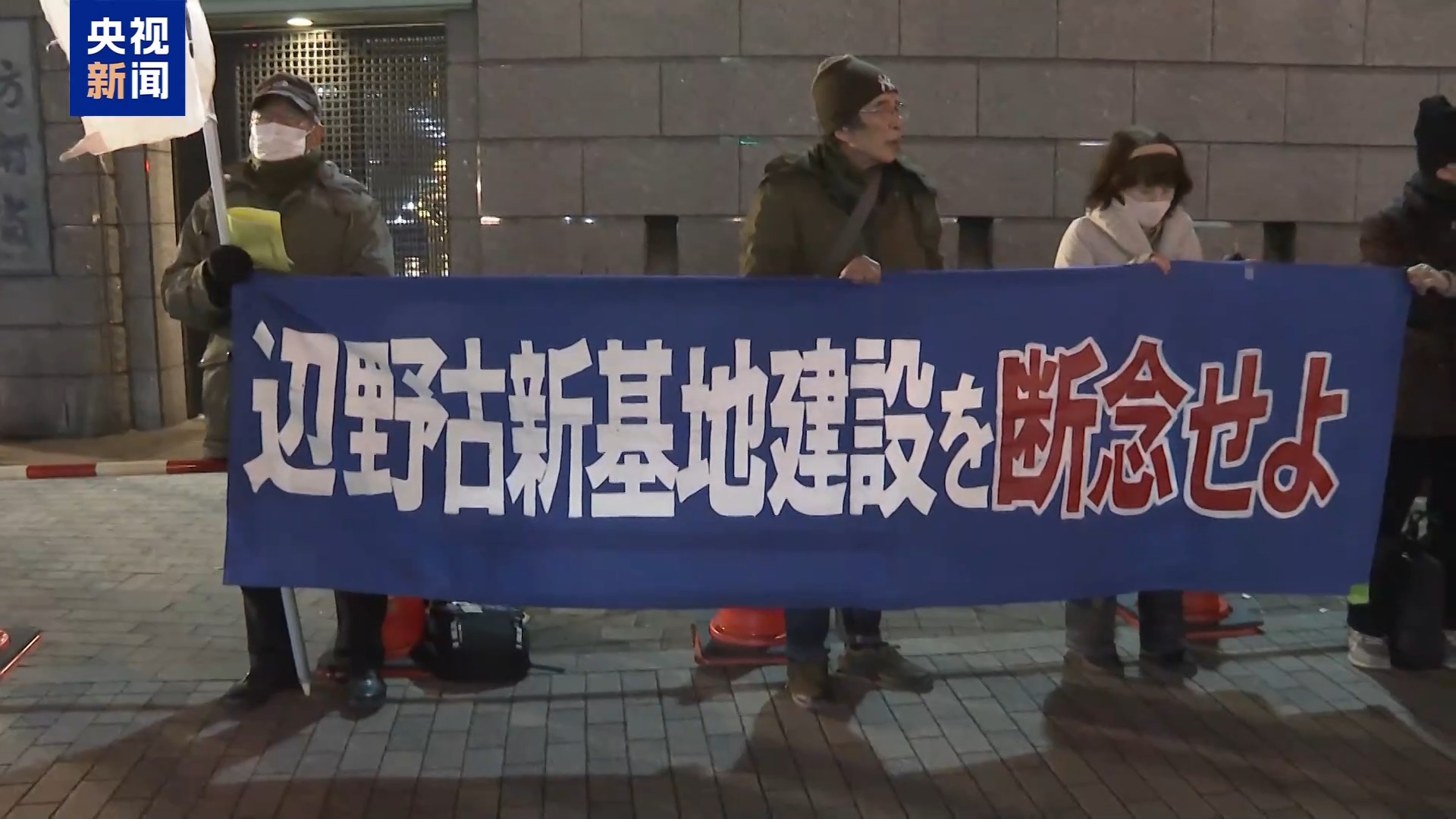
日本民众举行集会 抗议政府防卫政策
Yang Shi Xin Wen· 2026-01-06 08:14
1月5日晚,日本民众自发在日本防卫省门前举行集会,反对高市内阁大幅增加防卫支出, 反对日本政府强行推进驻日美军边野古基地建设。 0:00 / 2:14 集会参加者:日本境内70%以上的美军基地被强加在冲绳,一边说着减轻负担,却又把新的基地继续压在冲绳身上,这是绝对不能容许的。我们要与冲 绳民众一起,坚决阻止建设这个基地。认为通过积累武力就能保卫国家,这种想法本身就存在根本性问题。 抗议民众表示,日本政府无视民众对于民生的诉求,大规模推进防卫产业,这种做法不会给日本社会带来任何好处。抗议民众表示,高市早苗此前的涉 台错误言论十分危险,日本政府应正视历史,并及时纠正错误言行。 集会参加者:政府以"反击能力""对敌基地攻击能力"为名,彻底扭转了日本以往的防卫方针,将其变成了侵略战争体制。为此政府扩大防卫预算,包括 修改"安保三文件"、推进武器出口等。我们要把这些问题一一提出来, 用民众的声音表示反对。 集会参加者:这可以说是非常离谱的发言。高市发言完全否定了迄今为止日本的防卫政策,这是一种极其危险的动向。 集会参加者:日本政府说日本这30多年经济持续低迷、长期通缩,于是就要转向通胀。但结果却变成只有物价在不断上涨, ...
央行的货币政策工具主要有哪些
Jin Tou Wang· 2026-01-06 03:46
Core Viewpoint - The central bank's monetary policy tools are categorized into general, selective, and unconventional tools, primarily aimed at regulating market liquidity, influencing interest rates, and subsequently controlling economic growth and inflation [1]. Group 1: General Monetary Policy Tools - These tools, known as the "three major weapons," affect the entire financial market, influencing overall credit scale and money supply [2]. - The reserve requirement ratio refers to the proportion of deposits that financial institutions must hold as reserves with the central bank. An increase in this ratio tightens market liquidity, while a decrease releases liquidity and lowers financing costs for businesses and households [3]. - The rediscount rate is the interest rate at which commercial banks can discount their bills with the central bank. An increase in this rate raises the financing costs for banks, leading them to tighten credit, while a decrease lowers costs and encourages lending [4]. - Open market operations involve the central bank buying and selling securities (such as government bonds) in the financial market to adjust money supply and market interest rates. Buying securities injects funds into the market, while selling them withdraws funds, thus tightening liquidity. This is the most commonly used and flexible monetary policy tool [5]. Group 2: Selective Monetary Policy Tools - These tools are more targeted, primarily regulating credit and funding flows in specific areas [6]. - Consumer credit control involves restrictions on down payment ratios and repayment terms for consumer installment purchases, thereby regulating the scale of consumer credit and influencing consumption demand [7]. - Securities market credit control adjusts the margin requirements for margin trading, controlling the scale of credit funds flowing into the securities market to prevent excessive speculation [8]. - Real estate credit control manages the down payment ratios and interest rates for real estate loans issued by financial institutions, regulating the flow of funds into the real estate market and stabilizing prices [9]. Group 3: Unconventional Monetary Policy Tools - These tools are employed when conventional tools become ineffective (e.g., when benchmark interest rates approach zero) to address special economic conditions [10]. - Quantitative easing (QE) involves the central bank purchasing large amounts of government bonds and mortgage-backed securities to inject liquidity into the market, lowering long-term interest rates and stimulating economic recovery. Conversely, quantitative tightening (QT) involves reducing or halting reinvestment in maturing bonds or directly selling assets to withdraw liquidity from the market and tighten money supply [11]. - Forward guidance is a strategy where the central bank publicly communicates the future direction of monetary policy (e.g., maintaining interest rates for a certain period) to guide market expectations and stabilize investment and consumption behaviors of economic entities [12].
2026年汇市展望:美日货币政策分化延续 利差仍是汇率核心驱动力
Xin Lang Cai Jing· 2026-01-05 23:40
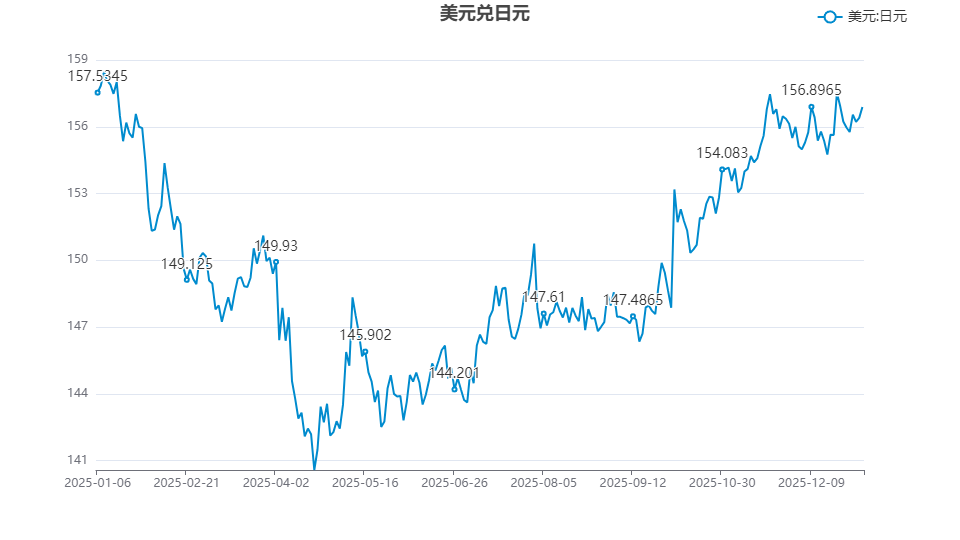
Core Viewpoint - The USD/JPY exchange rate experienced a significant "V-shaped" trend in 2025, ending a four-year upward trajectory, with year-end trading above 156, approaching the intervention threshold of 160 set by Japanese authorities [1][2]. Exchange Rate Dynamics - At the beginning of 2025, the USD/JPY continued its strong performance from 2024, reaching a peak of 158.88. However, it quickly fell to a low of 139.88 in late April due to multiple policy risks, including tariffs announced by Trump and concerns over the independence of the Federal Reserve [2][4]. - The mid-year saw the USD/JPY fluctuate between 140 and 150, influenced by ongoing policy uncertainties and the Bank of Japan's (BOJ) ambiguous stance on future rate hikes [4][10]. Monetary Policy Normalization - 2025 marked a historic turning point for Japan's monetary policy, with the BOJ raising interest rates twice, culminating in a year-end rate of 0.75%, the highest since 1995. This shift was driven by persistent inflation above the 2% target and signs of wage growth [5][6]. - The BOJ's communication strategy evolved from a cautious approach to proactive guidance, confirming the sustainability of inflation and indicating a clear path towards normalization [9][10]. Economic Performance - Japan's economy is projected to achieve a 1.0% real GDP growth in 2025, significantly higher than the 0.1% growth in 2024, primarily driven by domestic demand [10][12]. - Private consumption is expected to be the main growth driver, with a contribution rate of 101.25% to GDP growth in Q3, supported by wage increases and government energy subsidies [10][11]. Structural Challenges - Despite the monetary policy shift, Japan's economy faces structural challenges, including high fiscal deficits and trade imbalances, which continue to weaken the yen's fundamental support [4][10]. - The labor market remains tight, with an unemployment rate around 2.5%, but the number of bankruptcies among small and medium-sized enterprises has reached a 12-year high, highlighting ongoing structural pressures [10][12]. Future Outlook - The divergence in monetary policy between the US and Japan is expected to continue influencing the USD/JPY exchange rate in 2026, with the potential for long-term investment opportunities in this currency pair [12][13]. - Japan's government is likely to maintain an expansionary fiscal stance, which may stimulate short-term growth but could exacerbate fiscal pressures, posing significant uncertainties for the macroeconomic landscape in 2026 [12][13].

海外高频 | 开年行情港股大涨(申万宏观·赵伟团队)
申万宏源宏观· 2026-01-05 15:48
Group 1: Major Asset Performance - The Hang Seng Index and other major indices saw mixed performance, with the Hang Seng Index rising by 2.0% and the DAX increasing by 0.7%, while the NASDAQ and S&P 500 fell by 1.5% and 1.0% respectively [2][8] - In the US, the S&P 500 sectors mostly declined, with energy and utilities up by 3.3% and 0.9%, while consumer discretionary and information technology fell by 3.2% and 1.5% [8] - Emerging market indices showed positive trends, with the Korean Composite Index rising by 4.4% and the Ho Chi Minh Index by 3.2% [2] Group 2: Bond Yields and Currency Movements - Developed countries' 10-year bond yields mostly increased, with the US yield rising by 5.0 basis points to 4.19% [19] - Emerging market 10-year bond yields also saw increases, particularly in Turkey, which rose by 133.0 basis points to 29.06% [22] - The US dollar index increased by 0.4% to 98.46, while other currencies depreciated against the dollar, including the euro and the British pound [25][35] Group 3: Commodity Prices - Commodity prices showed mixed results, with WTI crude oil rising by 1.0% to $57.3 per barrel, while gold and silver prices fell significantly, with gold down by 5.0% to $4317.8 per ounce and silver down by 10.3% to $70.7 per ounce [40][46] - The prices of base metals increased, with LME copper rising by 2.4% to $12510 per ton and LME aluminum by 1.8% to $3010 per ton [46] Group 4: Geopolitical Events and Economic Policies - The US military conducted airstrikes in Venezuela, escalating tensions in the region, as part of a broader strategy against the Maduro regime [56] - Japan's government announced a record-high budget for the fiscal year 2026, totaling 122.3 trillion yen, marking a 6.3% increase from the previous year [61] - The US postponed tariff increases on furniture and semiconductor imports, maintaining the current 25% tariff rate for an additional year [66]

委内瑞拉变局的中期红利:专家称其有望成为全球“结构性通缩因素”
Xin Lang Cai Jing· 2026-01-05 15:37
Core Viewpoint - The direct consequence of the arrest of Venezuelan President Maduro primarily impacts the oil market, but the true economic effects are a medium-term issue [1] Group 1: Economic Implications - The eventual easing of energy tensions may lead to a decrease in inflation and allow for lower interest rates [1] - Political stability, along with a gradual return of foreign investment, could enable Venezuela to become a structural deflationary factor in the global economy [1] Group 2: Geopolitical Insights - Significant geopolitical shocks do not necessarily lead to inflation in the long term [1]
美联储12月会议纪要显示降息意见分歧加大:一季度降息预期下降
Haitong Securities International· 2026-01-05 15:21
Rate Decision Insights - The Federal Reserve's December FOMC minutes revealed a significant internal split, with a 9-3 vote to cut the federal funds rate by 25 basis points to a target range of 3.5%-3.75%[1] - The dissenting votes included two members advocating for no change and one member calling for a more aggressive 50 basis point cut[1] - The majority favored the rate cut due to increased downside risks to employment and stable inflation risks, suggesting further cuts may be appropriate if inflation trends downward[2] Economic Conditions - Overall PCE inflation and core PCE inflation both stood at 2.8%, with goods inflation influenced by tariffs and service inflation showing signs of moderation[2] - The unemployment rate increased slightly to 4.4%, indicating a softening labor market, while hiring activity remained weak[2] Market Expectations - Prior to the meeting, options markets anticipated a 25 basis point cut and projected two additional cuts in 2026[2] - Following the release of the minutes, equity markets experienced a slight decline, with traders increasing bets on a potential rate cut in April[4] Future Policy Guidance - All participants agreed that future policy decisions will depend on incoming data and evolving economic conditions, with no predetermined path[9] - The uncertainty surrounding the selection of the next Fed Chair adds additional variables to the Fed's independence and future policy direction[10]
美联储卡什卡利:就业市场明显降温,利率已经接近中性水平
Sou Hu Cai Jing· 2026-01-05 13:53
"这让我判断,当前的货币政策可能已经非常接近中性水平,"卡什卡利说。 2026年FOMC票委、明尼阿波利斯联储主席卡什卡利(Neel Kashkari)表示,目前美国利率水平可能已 接近对经济既不产生刺激、也不形成抑制的"中性利率",未来美联储的政策走向将取决于最新经济数 据。 卡什卡利周一在接受 CNBC 采访时表示,过去几年里,市场和政策制定者一度普遍认为美国经济将明 显放缓,但事实证明,经济表现远比他此前预期得更具韧性。他指出,既然经济在高利率环境下仍能保 持较强增长,说明货币政策对经济的下行压制作用可能并不明显。 卡什卡利表示,美联储需要更多数据来判断,究竟是通胀因素还是劳动力市场变化对经济的影响更为主 导,"然后再从中性立场出发,朝必要的方向调整政策"。 他同时指出,就业已经明显降温,通胀面临的主要风险在于其持续性——关税等因素对物价的影响可能 需要数年时间才能完全传导;而在他看来,失业率从当前水平进一步上升的风险同样不容忽视。尽管通 胀有所回落,但下降速度仍然较慢,中低收入群体的焦虑情绪主要来源于通胀压力。 在谈及美联储人事问题时,卡什卡利表示,他并不清楚美联储主席鲍威尔在主席任期结束后是否会继续 ...
【周报】全球地缘政治风险凸显 国际金价震荡走高
Sou Hu Cai Jing· 2026-01-05 13:39
Group 1: Market Overview and Trends - International gold prices opened at $4532.41 per ounce last week, peaked at $4550.52, and closed at $4332.51, marking a 4.41% decline, ending a three-week upward trend [2] - The decline in gold prices was influenced by margin increases and position limits imposed by the Shanghai Futures Exchange, Guangzhou Futures Exchange, and Chicago Mercantile Exchange [2] - The Federal Reserve's recent discussions highlighted tightening liquidity in the U.S. money market, with rising repo rates and increased use of standing repo facilities to maintain adequate reserve levels [3] Group 2: Labor Market and Inflation Insights - The Federal Reserve expressed concerns over reduced hiring due to economic uncertainty and insufficient labor supply, leading to a rise in unemployment rates [4] - Inflation pressures in the U.S. have decreased compared to early 2025, with tariffs identified as a key factor in rising core goods inflation [4] Group 3: Geopolitical Events Impacting Gold Prices - The U.S. airstrike on Venezuela and the arrest of President Maduro are expected to drive gold prices higher due to increased safe-haven buying and concerns over strategic metal supply disruptions [5] - Historical patterns suggest that gold prices may experience volatility following military actions, but the current geopolitical landscape may reinforce gold's status as a risk-free asset [5]

汇丰策略师:对美股接近最大程度超配
Xin Lang Cai Jing· 2026-01-05 13:24
Group 1 - HSBC's Max Kettner and team maintain an "aggressive risk appetite" stance, nearing maximum overweight in US equities [1][2] - The stock market is currently near record highs following the passage of key risk events in December [1][2] - Mixed US economic data is favorable for the stock market, provided inflation remains neither too cold nor too hot, and bond yields stay away from levels that would be concerning for risk assets [1][2] - Kettner notes that the team's confidence and positioning are slowly approaching overbought territory [1][2]