
地缘政治风险

Search documents
避险宽松推黄金冲1016新高 中期趋势存技术回调险
Jin Tou Wang· 2025-12-23 06:10
摘要今日周二(12月23日)亚盘时段,现货黄金目前交投于1016元附近,截至发稿,现货黄金最新报 1012.36元/克,涨幅0.85%,最高上探至1016.31元/克,最低触及1003.67元/克。目前来看,现货黄金短 线偏向看涨走势。黄金在段延续涨势,价格再创历史新高。因地缘政治风险升温,市场敏感度显著增 强,资金加速涌入避险资产,推动金价走高。 今日周二(12月23日)亚盘时段,现货黄金目前交投于1016元附近,截至发稿,现货黄金最新报1012.36 元/克,涨幅0.85%,最高上探至1016.31元/克,最低触及1003.67元/克。目前来看,现货黄金短线偏向看 涨走势。黄金在段延续涨势,价格再创历史新高。因地缘政治风险升温,市场敏感度显著增强,资金加 速涌入避险资产,推动金价走高。 【要闻速递】 近期多地局势趋紧,直接威胁能源与航运安全,令全球经济前景更添变数,为黄金构筑稳固需求底座。 【最新现货黄金行情解析】 从日线级别观察,黄金依旧维持强势多头格局。价格稳稳运行于100日指数移动均线之上,中期向上的 趋势清晰可见;布林带持续扩张,表明趋势性行情仍在推进。 动能指标方面,14日RSI已攀升至70以上 ...
假期前金价温和调整 关注降息预期与地缘风险演变
Jin Tou Wang· 2025-12-23 05:58
摘要今日周二(12月23日)亚盘时段,黄金市场短期回调,国内外同步温和调整,但整体强势未改。截至 今早9时10分,伦敦金现报4478.24美元/盎司,涨0.41%;Au(t+d)报972.3元/克,跌0.88%,沪金主连失守 短期支撑。圣诞假期临近交投清淡,获利了结致回调,但降息预期、地缘风险及央行购金等核心支撑仍 在,中长期上行逻辑稳固。 【要闻速递】 最新市场数据显示,黄金呈现"内外分化、实物与期货同步调整"特征。国际方面,伦敦金现小幅收涨但 盘中波动加剧,折射假期前市场谨慎情绪;国内回调更明显,人民币计价黄金品种普跌,各地金店实物 金价同步下行:北京周大福足金999报1360元/克(日跌8元),上海老凤祥1358元/克(跌0.51%),广州中国 黄金(600916)1248元/克(议价空间扩大);银行投资金条跟调,建行928元/克、中行926元/克、工行929 元/克,较前日跌6-7元,回调温和无恐慌抛售,深圳水贝批发价1125元/克显实物需求支撑。 美联储政策仍是核心变量:12月FOMC降息25基点至3.50%-3.75%,但3张反对票(2019年来最多)显内部 分歧,短期1月维持利率概率升至79%抑 ...
太疯狂!金价彻底爆了!有人拖行李箱抢购,“下午刚买的,还没发货就赚了……”
Xin Lang Cai Jing· 2025-12-23 04:58
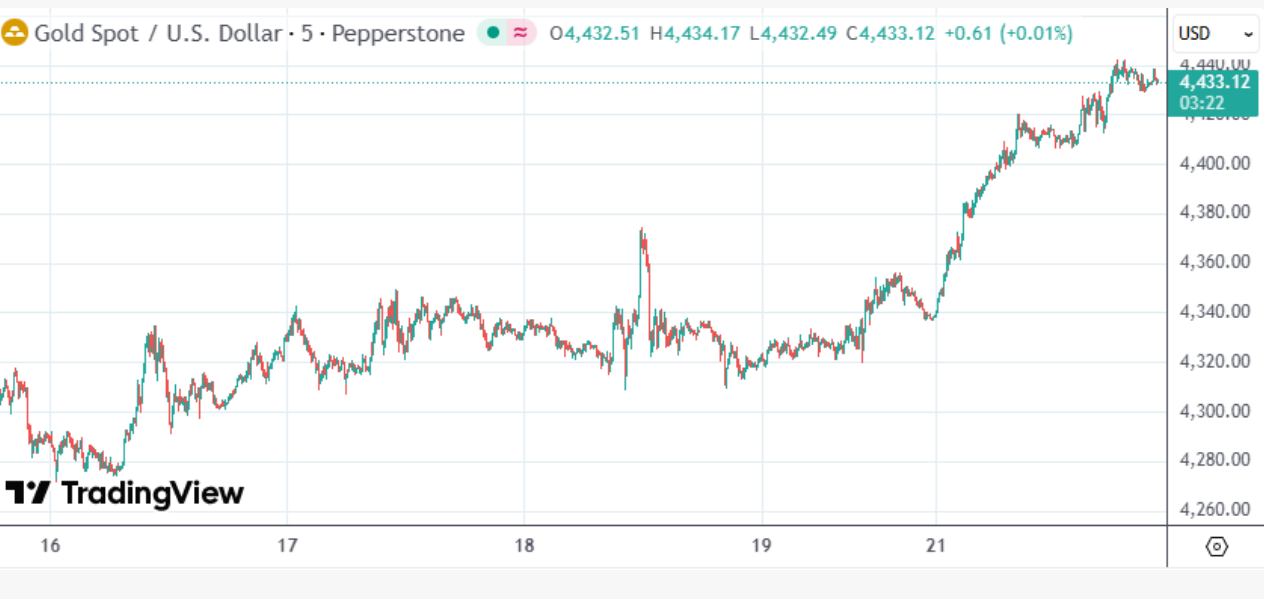
现货黄金5分钟图 具体行情显示,现货黄金日内一度涨超2.3%报每盎司4442.22美元,现货白银一度涨3.3%报每盎司69.46美元,双双刷新历史纪录,年内金银分别累涨69%和 137%,势将创下1979年以来的最大年度涨幅。 现货黄金日线图 周一(12月22日)纽约时段,现货黄金价格加速上涨,日内涨幅扩大至2%,有望与现货白银一同录得逾四十年来最强劲的年度表现。 12月23日消息,国际金银续创新高。COMEX黄金期货涨2.13%,报4480.6美元/盎司;COMEX白银期货涨2.37%,报69.09美元/盎司。 根据每天更新的价格,12月23日黄金实物价格如下: | 国内现货 | 国际现货 | 黄金实物 | | | --- | --- | --- | --- | | 品牌 | 银行 回收 | | | | 品牌 | | 价格(元/克) | 日涨跌幅 | | 周大福 | | 1368 | +0.59% | | 老凤祥 | | 1365 | +0.22% | | 周六福 | | 1319 | +0.53% | | 周生生 | | 1367 | +0.59% | | 六福珠宝 | | 1366 | +0.59% | ...

光大期货能化商品日报-20251223
Guang Da Qi Huo· 2025-12-23 03:12
1. Report's Industry Investment Rating - All the energy - chemical products covered in the report, including crude oil, fuel oil, asphalt, polyester, rubber, methanol, polyolefin, and polyvinyl chloride, are rated as "volatile" [1][2] 2. Report's Core View - On Monday, the price center of crude oil shifted upwards, with WTI February contract rising by $1.49 to $58.01 per barrel (2.64% increase), Brent February contract rising by $1.60 to $62.07 per barrel (2.65% increase), and SC2601 closing at 439.7 yuan per barrel (1.71% increase). China's crude oil imports in November 2025 were 50.891 million tons, with a month - on - month increase of 5.2% and a year - on - year increase of 4.9%. The geopolitical situation has heated up, pushing up oil prices [1]. - The fuel oil market showed an increase on Monday. The low - sulfur fuel oil market structure strengthened slightly, and the high - sulfur fuel oil market also had some support. The supply of low - sulfur fuel oil from the Western market is expected to decline in December and may rebound in January. The high - sulfur fuel oil market is supported by downstream demand [2]. - The asphalt price increased on Monday. Affected by the tense relationship between the US and Venezuela, the cost - side support is strong, but the terminal demand is weak. Considering the limited supply increase and low factory inventory, the downward price space is limited [2]. - In the polyester market, TA605 rose by 3.24% and EG2605 fell by 0.08%. Some MEG and PTA devices have restarted or are expected to restart. The demand is in the off - season, and although the upstream has good expectations for the 2026 supply - demand pattern, the terminal demand support for prices is limited [2][4]. - In the rubber market, on Monday, the main contract of natural rubber showed a mixed trend. The inventory in Qingdao increased. Domestic rubber production has entered the off - cutting period, overseas raw materials are expected to increase, and downstream demand weakens at the end of the year, so the rubber price is expected to fluctuate [4][6]. - The methanol market showed a bottom - oscillating trend. The supply of domestic overhaul devices is stable at a high level, and the Iranian supply remains low. The demand of MTO devices is expected to weaken, and the inventory may fluctuate in the future [6]. - The polyolefin market is expected to show a weak - oscillating trend. The production will remain at a high level, and the downstream orders and start - up rate are weakening [6]. - The PVC market is expected to be at the bottom and oscillate. The supply is expected to decline slightly, and domestic demand will slow down as the real estate construction slows down [8]. 3. Summary According to Relevant Catalogs 3.1 Research Views - **Crude Oil**: On Monday, oil prices rose, and China's crude oil imports increased. The geopolitical situation, including the Russia - Ukraine issue and the US - Venezuela issue, has an impact on oil prices, and the short - term rhythm needs attention [1]. - **Fuel Oil**: The prices of the main contracts of high - sulfur and low - sulfur fuel oil increased. The low - sulfur fuel oil supply may change, and the high - sulfur fuel oil is supported by demand. The absolute price may follow the oil price, and the cracking spread may remain stable and rise [2]. - **Asphalt**: The asphalt price increased. The cost - side is supported by geopolitics, but the terminal demand is weak. Considering supply and inventory, the downward space is limited, and it may follow the oil price [2]. - **Polyester**: The price of TA605 rose, and EG2605 fell slightly. Some devices have restarted, the demand is in the off - season, and the price of PX and TA may rebound in the short - term with limited space, while the upward pressure on the ethylene glycol price is high [2][4]. - **Rubber**: The prices of different rubber varieties showed a mixed trend. The inventory in Qingdao increased, and considering production and demand, the rubber price is expected to oscillate [4][6]. - **Methanol**: The methanol price is expected to oscillate at the bottom. Domestic supply is stable at a high level, Iranian supply is low, MTO demand weakens, and inventory may fluctuate [6]. - **Polyolefin**: The polyolefin market is expected to be weak and oscillating. Production remains high, and downstream demand weakens [6]. - **Polyvinyl Chloride**: The PVC price is expected to oscillate at the bottom. The supply may decline slightly, and domestic demand will slow down [8]. 3.2 Daily Data Monitoring - **Base - price Information**: The report provides the base - price data of various energy - chemical products on December 23, 2025, including the spot price, futures price, base price, base - price rate, and their changes compared with previous periods. For example, the base price of crude oil (SC) was - 8.76 yuan per barrel, and the base - price rate was - 2.02% [9]. 3.3 Market News - **Geopolitical News**: The Russia - Ukraine issue is still being watched. The tripartite meeting between Russia, the US, and Ukraine has not been seriously discussed, and Ukraine launched a drone attack on a Russian - related oil tanker. The US Coast Guard is chasing an oil tanker near Venezuela, and the US has announced a blockade of Venezuelan oil tankers [11]. 3.4 Chart Analysis - **Main Contract Price**: The report shows the closing price charts of the main contracts of various energy - chemical products from 2021 to 2025, including crude oil, fuel oil, asphalt, etc. [13][14][15] - **Main Contract Base Price**: The base - price charts of the main contracts of various products, such as crude oil, fuel oil, etc., are presented, showing the base - price changes over time [30][32][35] - **Inter - period Contract Price Difference**: The price - difference charts of inter - period contracts of various products, such as fuel oil, asphalt, etc., are provided, showing the price - difference changes between different contracts [43][44][45] - **Inter - variety Price Difference**: The price - difference and ratio charts between different varieties, such as crude oil internal - external price difference, fuel oil high - low sulfur price difference, etc., are shown [60][62][65] - **Production Profit**: The production - profit charts of LLDPE and PP are presented [68] 3.5 Team Member Introduction - **Research Team Members**: The report introduces the members of the energy - chemical research team, including their positions, educational backgrounds, honors, and professional experiences. For example, Zhong Meiyan is the assistant director and energy - chemical director, with rich experience in the futures derivatives market [73]
黄金股继续上涨,招金矿业涨3.9%,降息预期+地缘冲突
Ge Long Hui· 2025-12-23 03:05
Core Viewpoint - The Hong Kong gold stocks continue to rise, driven by increasing gold prices and favorable market conditions, with significant gains observed in various companies [1] Group 1: Market Performance - Shandong Gold increased by over 4%, Zhaojin Mining by 3.9%, Lingbao Gold by 3%, and several other gold companies also saw gains of over 2% [2] - The spot gold price accelerated its rise, reaching a new historical high of $4,490.88 per ounce, with an annual increase of over 71% [1] Group 2: Market Drivers - The recent surge in gold prices is attributed to traders betting on the Federal Reserve lowering interest rates twice in 2026, alongside President Trump's advocacy for a looser monetary policy [1] - Geopolitical risks have further enhanced the safe-haven appeal of gold and silver [1] Group 3: Future Predictions - Goldman Sachs and other banks predict that gold prices will continue to rise, with a baseline forecast of $4,900 per ounce by 2026, indicating greater upside risks [1] - ETF investors are beginning to compete with central banks for limited physical supply of gold [1]

疯狂的贵金属!金银一色,铂钯齐飞,短期一个大风险“近在眼前”
Hua Er Jie Jian Wen· 2025-12-23 02:56
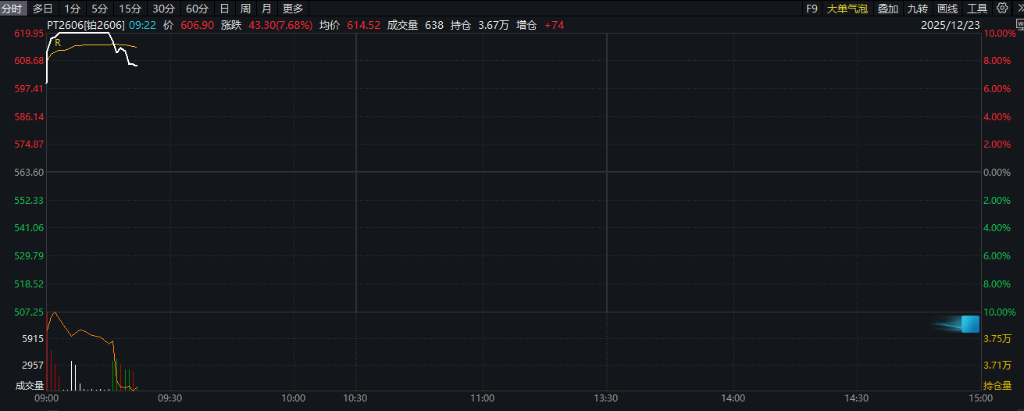
Core Viewpoint - The precious metals market is experiencing a historic surge, driven by expectations of monetary easing and geopolitical risks, but a significant risk of forced selling looms due to the upcoming rebalancing of the Bloomberg Commodity Index in January 2026 [1][7][19]. Group 1: Market Performance - Precious metals are on track for their strongest annual performance since 1979, with gold prices nearing a 70% increase and silver prices soaring nearly 140% year-to-date [8]. - Platinum and palladium have also seen remarkable gains, with platinum rising to over $2,075 per ounce, marking a nearly 130% annual increase, and palladium reaching approximately $1,802 per ounce, with an expected annual increase of over 95% [12]. Group 2: Influencing Factors - The macroeconomic backdrop includes a weakening US dollar and widespread expectations of two interest rate cuts by the Federal Reserve in 2026, despite officials predicting only one [10]. - Increased military activity near Venezuela has added geopolitical risk premiums to the market [10]. - Chinese trading activity has significantly contributed to the surge in platinum prices, with trading volumes on the Guangzhou Futures Exchange surpassing those of the New York Mercantile Exchange [11][13]. Group 3: Risks and Upcoming Events - JPMorgan warns of a potential technical sell-off during the January 2026 rebalancing of the Bloomberg Commodity Index, as gold and silver have significantly outperformed the market over the past three years [7][19]. - Passive funds tracking the index, with over $60 billion in assets, may be forced to sell approximately 9% of the total open contracts in silver and about 3% in gold during the rebalancing period [20][21]. - The upcoming sell-off could counteract the traditional seasonal strength typically seen in precious metals at the beginning of the year, leading to potential market volatility [21].
港股异动丨黄金股继续上涨,招金矿业涨3.9%,降息预期+地缘冲突
Ge Long Hui· 2025-12-23 02:54
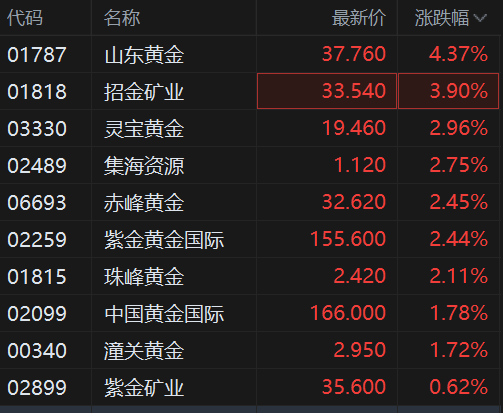
消息上,周一纽约时段,现货黄金价格加速上涨,亚洲早盘,现货黄金涨超1%,最高至4490.88美元/盎 司,续创历史新高,年内累涨超71%。分析认为,最新一波上涨源于交易员押注美联储将在2026年降息 两次,美国总统特朗普也公开主张较宽松的货币政策,利率下行通常会给不用支付利息的贵金属提供支 撑。与此同时,地缘政治风险也强化了黄金和白银的避险属性。 港股黄金股继续上涨行情,其中,山东黄金涨超4%,招金矿业涨3.9%,灵宝黄金涨3%,赤峰黄金、紫 金黄金国际、珠峰黄金涨超2%,中国黄金国际、潼关黄金涨1.7%。 | 代码 | 名称 | 最新价 | 涨跌幅 √ | | --- | --- | --- | --- | | 01787 | 山东黄金 | 37.760 | 4.37% | | 01818 | 招等矿业 | 33.540 | 3.90% | | 03330 | 灵宝黄金 | 19.460 | 2.96% | | 02489 | 集海资源 | 1.120 | 2.75% | | 06693 | 赤峰黄金 | 32.620 | 2.45% | | 02259 | 紫金黄金国际 | 155.600 | 2.44% ...
中辉能化观点-20251223
Zhong Hui Qi Huo· 2025-12-23 02:46
1. Report Industry Investment Rating - Overall, the report presents a cautious and bearish outlook on the energy and chemical industries, with some potential for short - term rebounds [1][3][6] 2. Report's Core View - The report analyzes various energy and chemical products, including crude oil, LPG, L, PP, PVC, PTA, MEG, methanol, urea, LNG, asphalt, glass, and soda ash. It provides core views on each product, such as short - term rebounds or long - term bearish trends, based on factors like supply - demand dynamics, geopolitical events, and cost changes [1][3][6] 3. Summary by Product Crude Oil - Core View: Short - term rebound due to rising South American geopolitical uncertainty, but long - term bearish due to oversupply in the off - season [1][9] - Market Performance: WTI, Brent, and SC rebounded overnight, with WTI rising 2.64%, Brent rising 2.55%, and SC rising 1.22% [7][8] - Fundamental Analysis: South American geopolitical uncertainty increased as the US seized Venezuelan oil tankers. Demand is expected to increase in 2025 and 2026, but US inventories showed mixed changes in the week ending December 12 [9][10] - Strategy: Hold short positions. Focus on the range of [435 - 445] for SC [11] LPG - Core View: Short - term rebound supported by the cost side, but long - term bearish [1][12] - Market Performance: On December 22, the PG main contract closed at 4100 yuan/ton, down 0.12% [14] - Fundamental Analysis: Supply increased as refinery operations rose, and downstream chemical demand was resilient. Inventories decreased both at ports and in factories [15] - Strategy: Hold short positions. Focus on the range of [4050 - 4150] for PG [16] L - Core View: The market returned to a weak state after the commissioning of a new device [17] - Market Performance: L05 closed at 6320 yuan/ton, down 2.4% [18] - Fundamental Analysis: The commissioning of a 500,000 - ton new device by BASF increased supply pressure. The off - season for agricultural films led to decreased demand, and inventory faced de - stocking pressure [20] - Strategy: Partially close short positions in the short term. Wait for a rebound to go short in the long term. Hold short positions on the LP05 spread. Focus on the range of [6250 - 6400] for L [20] PP - Core View: High inventory constrained the rebound space, and the market oscillated at a low level [21] - Market Performance: PP05 closed at 6213 yuan/ton, down 1.1% [22] - Fundamental Analysis: Total commercial inventory remained at a high level. Demand entered the off - season in December, and the de - stocking pressure was high [24] - Strategy: Reduce short positions. Wait for a rebound to go short in the long term. Short the MTO05 spread. Focus on the range of [6150 - 6300] for PP [24] PVC - Core View: The market rebounded from the bottom supported by low valuation [25] - Market Performance: V05 closed at 4652 yuan/ton, down 1.2% [26] - Fundamental Analysis: Although the upper - middle stream inventory was high and supply reduction was insufficient, many domestic devices had cash - flow losses, and some marginal devices started to reduce loads [28] - Strategy: Go long in the short term. Wait for continuous inventory de - stocking to go long on dips in the long term. Industrial customers should hedge at high prices. Focus on the range of [4600 - 4800] for V [28] PTA - Core View: The supply - demand pattern was good, and consider buying on dips [29] - Market Performance: TA05 closed at 4674 yuan/ton, down 48 [29] - Fundamental Analysis: Supply decreased as many domestic devices were under planned maintenance, and overseas devices were partially increased in load. Downstream demand was good but expected to weaken. There was a risk of inventory accumulation in January [30] - Strategy: Consider buying TA05 on dips. Focus on the range of [4980 - 5100] for TA [31] MEG - Core View: Supply - demand weakened, and there was an expectation of inventory accumulation. Consider shorting on rebounds [32] - Market Performance: EG05 closed at 3619 yuan/ton, down 56 [32] - Fundamental Analysis: Domestic device loads increased, and overseas devices were expected to reduce loads. Downstream demand was good but expected to weaken, and port inventories were rising [33] - Strategy: Consider shorting EG05 on rebounds. Focus on the range of [3680 - 3770] for EG05 [34] Methanol - Core View: Port inventory decreased, but demand was under pressure. Be cautious about chasing long positions [35] - Market Performance: Not specifically mentioned in a prominent way [37] - Fundamental Analysis: Spot prices in Taicang weakened slightly, and the negative basis strengthened. Supply pressure remained as the arrival volume in December was estimated to be about 1.3 million tons, and demand weakened slightly [37] - Strategy: Do not chase long positions. Consider buying methanol 05 on dips [39] Urea - Core View: Supply - side pressure was expected to increase, and the market oscillated weakly [40] - Market Performance: URO5 closed at 1697 yuan/ton [40] - Fundamental Analysis: Gas - based urea device operations decreased significantly, but overall load was still high. Demand was expected to weaken, and inventory was at a relatively high level [41][42] - Strategy: The market is expected to oscillate weakly. Consider buying UR05 on dips. Focus on the range of [1670 - 1690] for UR05 [43] LNG - Core View: Supply was sufficient, and gas prices were under downward pressure [44] - Market Performance: On December 19, the NG main contract closed at 3.984 dollars/million British thermal units, up 1.94% [46] - Fundamental Analysis: Demand support decreased due to mild weather in the US, and supply was relatively abundant [47] - Strategy: Although there is demand support in the consumption season, gas prices are under downward pressure due to sufficient supply. Focus on the range of [3.895 - 4.260] for NG [47] Asphalt - Core View: South American geopolitical uncertainty vs. weak supply - demand, the market oscillated within a range [48] - Market Performance: The main contract (2602) closed at 2909 yuan/ton, down 1.46% [48] - Fundamental Analysis: Supply was relatively sufficient, and demand entered the off - season. The cracking spread and BU - FU spread were returning to normal but still had room for compression [50] - Strategy: Partially close short positions due to South American geopolitical uncertainty. Focus on the range of [2950 - 3050] for BU [51] Glass - Core View: Factory inventory ended a three - week decline, and the market oscillated at a low level [52] - Market Performance: FG05 closed at 1041 yuan/ton, down 2.0% [52] - Fundamental Analysis: High inventory constrained the rebound space. The melting volume remained stable, and demand was weak. Process profits turned negative [54] - Strategy: Partially close short positions in the short term. Wait for a rebound to go short in the long term. Focus on the range of [1000 - 1050] for FG [54] Soda Ash - Core View: Warehouse receipts increased, and the market oscillated weakly [55] - Market Performance: SA05 closed at 1176 yuan/ton, down 1.4% [56] - Fundamental Analysis: Warehouse receipts continued to increase, and although short - term supply pressure was relieved by maintenance, long - term supply was expected to be loose due to the planned commissioning of a new device. Demand support was insufficient [58]
金晟富:12.23黄金今年第50天刷新纪录疯狂爆涨!还会跌吗
Sou Hu Cai Jing· 2025-12-23 02:34
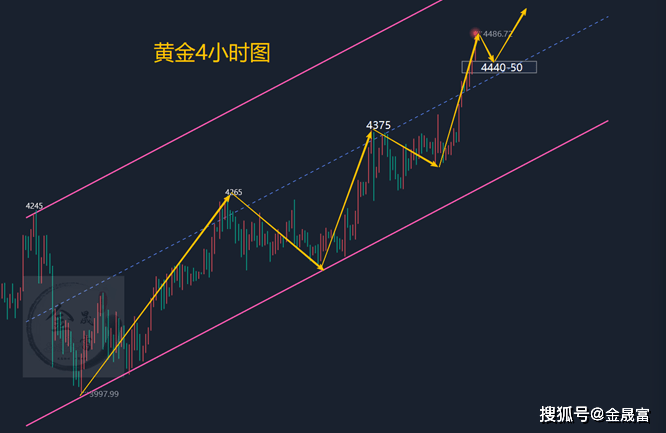
前言: 市场中最可怕的不是没有行情,不是没有机会,而是茫然,乱下单,一个不知道去哪里的人,面朝哪个 方向都是逆向,任何一个方向吹来的风将都是逆风!同样不懂交易的人,不管做多做空,行情一旦波 动,就是无妄之灾!这里没有华丽的语言,只有实实在在的交易,以及明明郎朗的操作,市场只有一个 方向,不是多头也不是空头,而是做对的方向。合理的风控+好的回报,让每个散户找到真正交易的乐 趣,而不再是自己每天苦苦的交易却换来亏损的不断加大。我一直相信选择比努力更重要,一个好的指 导老师,一个好的技术团队除了给客户带来盈利以外,更应该对客户负责任。个人交易者,凭一己之力 面对市场,很容易出现当局者迷的情况,遇见暴涨暴跌而措手不及,而如果能够有一个人在圈外看清楚 情形,给出方向,就可以做的更好。 近期有哪些消息面影响黄金原油走势?后市黄金多空该如何研判? 周二(12月23日)亚市早盘,现货黄金再度大幅攀升,金价刚刚触及4490.75美元/盎司,创下历史新高, 金价日内飙升逾46美元。随着投资者在评估不断升级的地缘政治紧张局势以及美国进一步降息的前景, 周二,黄金价格升至历史新高,这也是今年第50天刷新纪录。在2025年岁末之际,全 ...
易方达黄金ETF布局贵金属跨年行情
Sou Hu Cai Jing· 2025-12-23 02:16
Group 1 - The A-share precious metals sector showed strong performance, with the precious metals index rising by 2.6%, particularly driven by the gold sub-sector [1] - Internationally, the London spot gold price reached a three-month high of $4,320 per ounce during Asian trading hours, with silver prices also increasing [1] - The strong performance of the sector is supported by multiple macro factors, including expectations of the Federal Reserve starting a rate cut cycle in the first half of 2026 and a continued weak dollar index, which provides upward momentum for gold priced in dollars [1] Group 2 - The E Fund Gold ETF continued its strong performance with an intraday increase of 0.85%, reflecting sustained market demand for safe-haven assets; it has accumulated a 27.31% increase over the past six months and a year-to-date return of 60.54%, leading among commodity ETFs [2] - The ETF has seen a net inflow of 180 million yuan over the last ten trading days, with its latest scale growing to 35.56 billion yuan and a year-to-date net inflow of 12.754 billion yuan, indicating strong long-term allocation intentions [2] - The fund closely tracks the Shanghai Gold Exchange Au99.99 spot contract, directly linked to high-purity physical gold prices, and benefits from global central bank gold purchases, rising Fed rate cut expectations, and geopolitical risk premiums, reinforcing gold's position as a key asset for inflation hedging and risk avoidance [2]