
贸易战

Search documents
里昂证券:美股对贸易战风险“极度自负” 盈利预期恐难兑现
news flash· 2025-05-22 10:10
Core Viewpoint - The article highlights that U.S. stock investors are exhibiting "extreme complacency" regarding the impact of the trade war on corporate earnings, suggesting that current market expectations may be overly optimistic [1] Economic Indicators - Corporate capital expenditure willingness has shown negative growth for the fourth time this century [1] - The University of Michigan Consumer Sentiment Index has reached a multi-decade low [1] - Two-thirds of American households anticipate an increase in unemployment over the next year [1] Market Sentiment - The article emphasizes that the confidence of businesses and households has been significantly impacted during the tariff period, making it difficult for market sentiment to return to levels seen in December of the previous year [1] - Current market expectations project earnings growth of 10% and 14% for the S&P 500 index over the next two years, which is substantially higher than the historical compound annual growth rate of approximately 6.7% over the past 40 to 50 years, indicating a clear overvaluation [1] Analyst Behavior - Sell-side institutions are reluctant to highlight these risks due to reputational damage from previous inaccurate recession forecasts for 2022-2023, leading to a hesitance to speak against prevailing market trends [1]
瑞达期货集运指数(欧线)期货日报-20250522
Rui Da Qi Huo· 2025-05-22 09:57
| | 集运指数(欧线)期货日报 | | 2025/5/22 | | | --- | --- | --- | --- | --- | | 项目类别 | 数据指标 最新 环比 最新 | 数据指标 | 环比 | | | EC主力收盘价 | 1768.000 29.8↑ EC次主力收盘价 2206 | | | -21.20↓ | | 期货盘面 | EC2506-EC2508价差 -438.00 +5.90↑ EC2506-EC2510价差 316.10 | | | +58.50↑ | | EC合约基差 | -502.70 -90.80↓ | | | | | 期货持仓头寸(手) EC主力持仓量 | 22184 0↑ | | | | | SCFIS(欧线)(周) | 1265.30 1,455.31 -37.32↓ SCFIS(美西线)(周) | | | 134.62↑ | | | 1479.39 134.22↑ 集装箱船运力(万标准箱) 1,227.97 SCFI(综合指数)(周) | | | 0.07↑ | | 现货价格 | CCFI(综合指数)(周) 1104.88 -1.50↓ CCFI(欧线)(周) 1,43 ...
暂停降息呼声渐起!关税冲击恐打乱欧洲央行宽松步伐
Jin Shi Shu Ju· 2025-05-22 09:54
欧洲央行预计将在6月再次降息,但随着经济表现好于预期,以及通胀挑战可能在未来重新显现,后续 暂停降息的呼声渐高。 欧洲央行在过去一年中迅速放松货币政策,因此前失控的消费者通胀如今已得到有效控制,政策重点也 随之转向疲软的经济增长。全球贸易战、美国政策的不确定性,以及欧洲内部根深蒂固的低效率问题, 都加剧了经济增长的困境。 欧洲央行在过去八次会议中已进行了七次降息,这为经济发展提供了一定的喘息空间。然而,政策制定 者现在必须协调短期与长期经济前景之间的差异。 在接下来的几个月里,通胀可能会进一步下降,甚至低于欧洲央行设定的2%目标。这不禁让人回想起 新冠疫情前的十年,当时欧洲央行曾试图推动物价上涨至目标水平,但最终未能成功。 但从长远来看,政府支出的大幅增加、逆全球化趋势、贸易壁垒,以及劳动年龄人口减少导致的劳动力 市场压力,都有可能对物价形成上行压力。 一些政策制定者表示,目前的讨论焦点并非6月的降息决定,因为这一决策已基本在市场预期之中。鉴 于长期风险的存在,后续几个月的政策信号才是关键所在。 欧洲央行执委、直言不讳的政策鹰派人物伊莎贝尔·施纳贝尔(Isabel Schnabel)明确呼吁暂停降息,她 指出 ...
【黄金期货收评】贵金属延续偏强震荡 沪金日内上涨1.22%
Jin Tou Wang· 2025-05-22 07:57
【黄金期货最新行情】 | 5月22日 | 收盘价(元/克) | 当日涨跌幅 | 成交量(手) | 持仓量(手) | | --- | --- | --- | --- | --- | | 沪金主力 | 780.10 | 1.22% | 307542 | 224049 | 打开APP,查看更多高清行情>> 【基本面消息】 数据显示,5月22日上海黄金现货价格报价779.8元/克,相较于期货主力价格(778.78元/克)升水1.02 元/克。 亚特兰大联邦储备银行总裁博斯蒂克周二表示,美国企业可能已经耗尽应对更高进口税的策略,无法再 推迟调整价格或雇佣状况,经济可能正处于新一轮价格上涨的边缘。 他目前预计,美联储今年只会进行一次25个基点的降息,之后还需要几个月的时间,特朗普政府政策的 效果才会明朗化。圣路易斯联储总裁穆萨莱姆周二表示,即使近期中美贸易关系缓和,劳动力市场似乎 仍可能走弱,物价将上涨。 不过,如果贸易局势缓和势头持续,美联储当前的货币政策立场可能"仍然合适"。美国总统特朗普推动 的减税法案陷入僵局。 目前,市场关注的焦点是美国众议院计划于本周末进行的一次关键投票。众议院的共和党领导人表示, 尽管税收法 ...
关税政策冲击美国内河货运动脉,运营商最怕朝令夕改
Xin Lang Cai Jing· 2025-05-22 04:06
美国政府的关税政策对其国内经济的冲击在逐步显现,内河的货物运输量开始下滑。 尽管Marty Shell表示能理解特朗普政府试图实现的贸易目标,但他们应该用手术刀,而不是电锯一刀 切。他在接受采访时说,关税对经济和进出口的影响最大,几乎等同于对美国人民的征税,使得美国企 业和消费者面临着艰难抉择。 美国陆军工程兵部队(USACE)近日发布的数据显示,受关税政策影响,今年前4个月,阿肯色河沿线 总货运量约为380万吨,同比减少15%;其中,4月单月同比降幅达21%。 水运以其运能大、成本低、污染小、占地少的显著优势,在促进美国经济繁荣和区域互联发挥关键力 量。密西西比河水系以其庞大的规模和广泛的覆盖范围,占据了美国内河航道通航总里程的75%。其中 的阿肯色河航运系统是美国内河航道网的重要组成部分,主要负责运输农产品、木材、石油和煤炭等资 源,支撑流域经济发展。 管理阿肯色河沿岸范布伦港和史密斯堡港驳船交通运营的Marty Shell曾在2月特朗普上台前后预测,如 果特朗普的关税既广泛又有深度,吨位将受到打击。USACE的最新报告发布后,他进一步表示,由于 关税的不确定性,供应链陷入了一定程度的瘫痪。他们最怕的是, ...

迈克尔·斯宾塞:美国误判了自身的影响力
Sou Hu Cai Jing· 2025-05-22 00:41
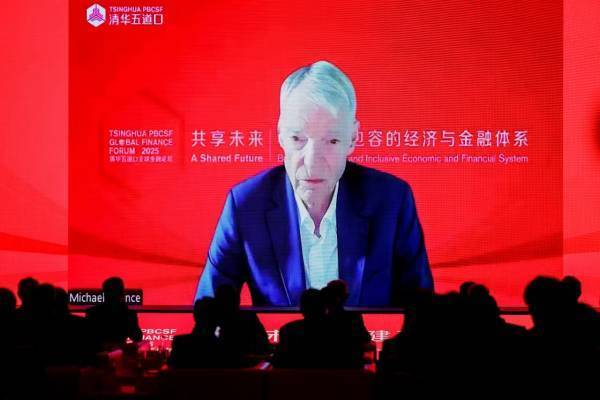
编者按:2025清华五道口全球金融论坛于5月17-18日举办。在开幕式上,2001年诺贝尔经济 学奖得主迈克尔·斯宾塞通过视频连线形式发表主旨演讲,并参与讨论了此次贸易战对全球 经济的影响、AI对于金融和经济发展的作用等议题。观察者网经清华大学五道口金融学院 授权,整理、刊载迈克尔·斯宾塞的发言。 【对话/迈克尔·斯宾塞,整理/观察者网 唐晓甫】 主持人:想先问您一个问题:中美部分关税在90天内的临时性暂停执行,我们看到这一消息提振了全球 股市,并受到市场广泛欢迎。这是一个积极的进展,但也仅仅是一个开始。我认为所有人都想知道,中 美贸易在90天之后,最差与最好的情况会是如何?我们的未来将去向何方? 迈克尔·斯宾塞:我们正处于一个充满不确定性的时代,中美刚刚达成一个短期共识,这无疑是非常积 极的进展。没有人愿意在相互伤害的道路上越走越远,这一协议也许将有助于推动双方进一步谈判并带 来更多改变。 在取消那些不合理的措施后,美方的目标或将更加聚焦于核心领域的直接投资,这或能在美国经济结构 中发挥作用,助力相关行业保持甚至提升竞争力。 4月2日掀起的关税战的最大问题在于缺乏针对性,几乎对所有领域一并征税。这种做法对美 ...

市场遭遇三方合围 PTA价格或持续低谷徘徊
Zhong Guo Chan Ye Jing Ji Xin Xi Wang· 2025-05-21 22:24
Core Viewpoint - The PTA industry is facing significant challenges due to ongoing trade wars and uncertainty in trade policies, leading to a drop in prices to near four-year lows. The high cost of raw material PX is expected to erode profits, and the overcapacity in the industry, combined with weak downstream demand, suggests that PTA prices may remain low for the foreseeable future [1]. Group 1: Market Supply and Capacity - China's PTA industry has seen significant capacity expansion, becoming the world's largest PTA producer with a total capacity of 86.2 million tons as of March [2]. - The rapid rise of private enterprises in the PTA sector has intensified industry transformation, leading to a more integrated competitive landscape where major suppliers have established a "PX-PTA-Polyester" supply chain [2]. - Despite the gradual increase in domestic PTA demand due to downstream polyester projects, the growth rate of PTA capacity is outpacing that of polyester, resulting in a buyer-dominated market [2]. Group 2: Raw Material Prices - The PX market has experienced a slowdown in capacity expansion after a rapid release phase, with domestic PX capacity expected to remain at 43.48 million tons in 2024, with no new projects planned for that year [3]. - The supply of PX is expected to remain tight, making it difficult for prices to decrease, which will further squeeze the profit margins of downstream products like PTA [4]. Group 3: Demand Challenges - The polyester industry, a key downstream consumer of PTA, holds 70% of global capacity, but the growth rate of new polyester capacity is slowing, leading to an oversupply crisis [5]. - The uncertainty in the international trade environment has negatively impacted overseas orders, particularly affecting exports to the U.S. and Europe, which is significant for the home textile industry [5]. - Many weaving enterprises are currently facing a dilemma of "high costs and low demand," leading some smaller companies to implement production cuts to maintain prices [5][6].
“对等关税”后的全球市场
2025-05-21 15:14
Summary of Conference Call Records Industry or Company Involved - The discussion primarily revolves around the impact of tariffs on the global market, particularly focusing on the U.S.-China trade relations and their implications for various asset classes and economic indicators. Core Points and Arguments 1. **Current Tariff Levels and Expectations** Current tariff levels are better than expected, with a 10% reciprocal tariff seen as a short-term optimal state. The effective tax rate in the U.S. has decreased, but increased trade volume has expanded the base, necessitating attention to potential agreements before exemptions expire [3][5][6]. 2. **U.S. Urgency to Lower Tariffs** The U.S. is eager to reduce high tariffs to alleviate supply shortages and inflation pressures while maintaining trade with China. The Trump administration has employed negotiations, tax cuts, and pressure on the Federal Reserve to address economic challenges [6][7]. 3. **Impact of the U.S.-China Trade War on Exports** The trade war has led to a significant decline in Chinese exports to the U.S., prompting China to seek alternative markets. The reduction in tariffs has improved China's port transportation business, although risks from potential U.S. export restrictions remain [8]. 4. **Performance of Alternative Assets** Following the implementation of reciprocal tariffs, alternative assets like Bitcoin and gold have performed strongly, with some funds flowing back to Europe. Emerging markets, particularly India, have shown similar trends, while commodities have suffered due to recession fears [9]. 5. **Market Reactions to Tariff Adjustments** U.S. stocks rebounded faster than Hong Kong stocks during tariff escalations, driven by liquidity shocks and better-than-expected performance from major tech companies [10]. 6. **Liquidity Shocks and Investment Opportunities** Liquidity shocks, often triggered by unexpected events, provide significant buying opportunities as central banks typically intervene to stabilize markets [11]. 7. **U.S. Economic Resilience Amid Tariff Pressures** Despite tariff pressures, the U.S. economy shows resilience, with no clear signs of recession. The Federal Reserve may lower interest rates to alleviate pressure, but supply-side inflation remains a concern [12][14]. 8. **Inflation Expectations** Current inflation pressures in the U.S. have eased, with projections for the Personal Consumption Expenditures (PCE) index around 4% and the Consumer Price Index (CPI) at approximately 3.5% by year-end [15]. 9. **Federal Reserve Policy Outlook** The Federal Reserve's future policy direction may differ from market expectations, with potential for small rate cuts in the fourth quarter, contrary to the belief that rising tariffs would necessitate immediate cuts [16]. 10. **Challenges Facing U.S. Financial Markets** The U.S. financial markets face challenges from a peak in government bond maturities and debt ceiling issues, leading to increased supply of government bonds and pressure on bond yields [17]. 11. **Dynamic Balance of U.S. Accounts** The U.S. maintains a dynamic balance through its current account deficit, which facilitates global capital inflows to purchase U.S. assets, impacting the overall economic landscape [26]. 12. **Sector Allocation Strategies** Investment strategies should focus on sectors that are less reliant on external demand, such as technology and domestic consumption, while maintaining a balance between dividend and growth stocks [30][31]. Other Important but Possibly Overlooked Content 1. **Market Sentiment and Future Trends** Market sentiment has improved, reducing the likelihood of strong reactions to positive data. Investors are advised to manage positions carefully to withstand potential volatility [28]. 2. **Impact of Tariff Reductions on Chinese Markets** Tariff reductions have lessened the negative impact on Chinese markets, with projections for Hong Kong stock earnings to grow by 4-5% in 2025 [27]. 3. **Long-term Macro Logic vs. Short-term Operations** While long-term macro logic is important, overemphasis on it can lead to misjudgments in short-term trading strategies [21]. 4. **Recent Trends in Southbound Capital Flows** Recent weakness in southbound capital flows is attributed to individual investors and trading funds, rather than institutional investors, indicating a return to normal levels [33]. 5. **Real Estate Market Performance** The real estate market has shown weakness due to demand and investment return rate discrepancies, necessitating further monetary policy adjustments [36]. 6. **Technological Developments and Economic Expectations** Advances in technology, such as DeepSeek, have improved economic expectations, but fiscal stimulus is still needed to address challenges from private sector leverage and tariff impacts [38]. This summary encapsulates the key insights from the conference call, highlighting the intricate dynamics of tariffs, market reactions, and economic indicators.
当前时点,A股与港股怎么看?
2025-12-17 15:50
Summary of Key Points from Conference Call Records Industry Overview - The current focus is on the A-share and Hong Kong stock markets, with expectations for A-share earnings to stabilize despite trade war impacts not yet materializing. The market is anticipated to adjust upwards towards the half-year line, suggesting that annual earnings forecasts should not be overly downgraded [1][2]. Core Insights and Arguments - **Market Dynamics**: The A-share market lacks a dominant investment theme, leading to rapid sector rotations. The trade truce between China and the U.S. may boost demand in the port and shipping sectors as U.S. importers accelerate stockpiling [1][3]. - **Commodity Prices**: Commodity prices, particularly oil and industrial metals, are under pressure but may rebound due to geopolitical changes and recovering demand. Current low prices present a potential investment opportunity [1][5]. - **Public Fund Regulations**: New regulations for public funds are causing market disturbances, with a shift in focus towards underrepresented sectors such as banking, non-banking financials, public utilities, and biomedicine, while overrepresented sectors like electronics may face challenges [1][6]. - **Investment Opportunities**: The new consumption sector is viewed positively, although traditional consumption policies may have limited short-term effects. June is anticipated to be a more favorable time for policy impacts [1][9]. - **Sector Preferences**: Favorable sectors include banking, non-banking financials, consumer staples, biomedicine, public utilities, oil and gas, and shipping, indicating strong investment opportunities [1][10]. Additional Important Insights - **Foreign and Domestic Investment Trends**: The Hong Kong market has seen significant volatility, with foreign investment remaining cautious despite short-term optimism. Domestic institutions are the primary market drivers, with a notable shift in focus from technology stocks to new consumption and banking dividend stocks [1][11][14]. - **Market Sentiment**: The sell-short ratio in the Hong Kong market reflects investor sentiment, with peaks indicating pessimism during trade war impacts. The current sentiment is less volatile compared to previous years [1][15]. - **Long-term Outlook**: The long-term competitiveness of Chinese manufacturing in the global supply chain is expected to improve post-crisis, with a focus on self-sufficient industrial development driving demand for industrial metals [1][4]. - **Valuation Comparisons**: The Hong Kong market is currently seen as undervalued, particularly in high-dividend stocks, which remain attractive compared to A-shares. This valuation disparity is expected to persist as long as the interest rate differential between China and the U.S. remains stable [1][25]. Conclusion - The A-share and Hong Kong markets are navigating a complex landscape influenced by trade dynamics, regulatory changes, and shifting investor preferences. Key sectors are poised for growth, particularly in new consumption and underrepresented industries, while commodity prices and market sentiment remain critical factors to monitor.
美债进入破产前夜!特朗普愿前往北京求援,刚刚取消一项禁令
Sou Hu Cai Jing· 2025-05-21 10:57
结束中东之行后,特朗普表态愿前往北京求援,并且刚刚取消一项禁令。特朗普在接受美国福克斯新闻 访问时谈到,称自己愿意访问中国,亲自到北京和中方就贸易问题和外交问题进行商讨,并且还强调, 中美关系至关重要。特朗普主动释放访华的信号,显然是对华伸出橄榄枝,暗示希望中方给他一个台阶 下,促成中美元首会晤。至于特朗普想谈的话题,显然并不只是贸易和外交问题,而是在美债等金融问 题上寻求援手,帮助美国稳定金融市场。例如,开放资本市场,增持美债,至少不要继续大幅抛售美 债。 目前,中方尚未正面回应特朗普的访华意愿,显然是在评估他的诚意。因此,他不仅大谈中美就关税问 题上达成协议对"统一与和平"非常有利,而且刚刚还取消了针对人工智能发展所用半导体芯片出口禁 令,从而维持对华销售。这是特朗普政府一次重大政策转向,其目的是希望中方伸出援手,最主要的是 帮助美国度过下个月的难关。但特朗普想要获得中方的支持或配合,可能还需要展现更多的诚意,特别 是要明确表态反对"台独",支持中国人民的统一事业。 同时,特朗普寄望于全球性的贸易战引发资本恐慌,促使各国资本将美国视为"避风港",大量涌入美国 投资,以此缓解美国债务压力,巩固美元的国际地位 ...