
AI算力

Search documents
破解“散热天花板”:金刚石铜复合材料的百亿征程(附分析报告)
材料汇· 2025-12-14 15:00
Core Viewpoint - The article emphasizes the critical role of heat dissipation technology in high-power and high-density electronic devices, highlighting the emergence of diamond-copper composite materials as a key solution to overcome traditional thermal management limitations [1][3]. Group 1: Heat Dissipation Technology's Core Position - Heat dissipation systems have evolved from being performance optimization items to core constraints on product performance, driven by exponential increases in heat flow density [4][11]. - Traditional thermal management solutions, such as heat pipes, face significant limitations as heat flow density exceeds 300W/cm², necessitating breakthroughs in high-performance composite materials [4][11]. Group 2: Performance Parameters and Economic Implications - The performance of heat pipes is often overstated, with real-world applications revealing a significant gap between theoretical and practical performance, presenting opportunities for new materials [7]. - The economic implications of heat dissipation are stark, with data indicating that a 10°C increase in temperature can lead to a 50% decrease in reliability, and that 40% of energy consumption in AI centers is dedicated to heat dissipation [13]. Group 3: Diamond-Copper Composite Materials - Diamond-copper composite materials are characterized by their exceptional thermal conductivity and adaptability, achieved through microstructural design that combines the high thermal conductivity of diamond with the workability of copper [18][22]. - The thermal conductivity of diamond can reach 2200 W/m·K, significantly surpassing that of copper, and the composite can achieve thermal conductivities exceeding 1000 W/m·K [22]. Group 4: Market Size and Growth Trends - The global market for diamond-copper composites is projected to grow from approximately $1.4 billion in 2024 to over $3.85 billion by 2031, with a compound annual growth rate (CAGR) of 12.4% [37]. - The Chinese market is expected to expand from 12.8 billion yuan in 2024 to 50 billion yuan by 2031, driven by domestic substitution and the expansion of application scenarios [37][38]. Group 5: Competitive Landscape - The competitive landscape is characterized by international giants dominating high-end markets while domestic companies accelerate local substitution, with Japan's Sumitomo Electric holding a significant market share [45]. - Chinese manufacturers are making strides in the diamond-copper sector, achieving thermal conductivities of 600-800 W/(m·K) and reducing costs by 30%-40% compared to imports [45]. Group 6: Future Development Trends - Future advancements in the diamond-copper sector will likely stem from technological breakthroughs and the expansion of application scenarios, with a focus on high-performance and extreme environment stability [53]. - The industry is expected to mature through the standardization of processes and the localization of equipment, which are essential for large-scale commercialization [53].



解码光模块“三剑客”发家史
Xin Lang Cai Jing· 2025-12-14 13:06
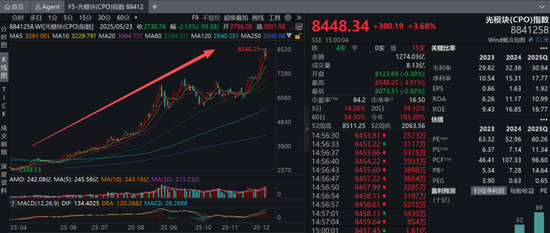
Core Viewpoint - The AI industry is experiencing significant growth, driven by advancements in AI computing power and the increasing demand for optical modules, which are essential for data transmission in AI applications. Major companies in the sector, including Google, Amazon, and Nvidia, are contributing to this momentum, leading to a surge in the stock prices of key players in the optical module market [1][3][13]. Industry Overview - The optical module sector is witnessing a robust expansion, with the CPO index reaching new highs, reflecting the high demand driven by AI computing needs. The leading companies in the A-share market, namely Zhongji Xuchuang, Xinyi Sheng, and Tianfu Communication, have all achieved market capitalizations exceeding 100 billion yuan [1][3][13]. - The global optical module industry is accelerating its upgrade towards 800G and 1.6T technologies, fueled by the explosive growth in AI computing power [1][3]. Company Highlights Zhongji Xuchuang - Zhongji Xuchuang transformed from a traditional manufacturing company to a leading global optical module provider through a strategic acquisition of Suzhou Xuchuang for 2.8 billion yuan in 2017, which significantly enhanced its market position [4][17]. - The company has successfully capitalized on the global 5G rollout and the upgrade of data centers, achieving a market-leading position in 800G optical modules, with a global market share exceeding 40% in 2024 [5][6][18][19]. - The projected net profits for Zhongji Xuchuang in 2027 are expected to reach 25.12 billion yuan, with a corresponding P/E ratio of 25.75 [3][16]. Xinyi Sheng - Xinyi Sheng began as a trading company and evolved into a manufacturer, achieving significant growth by focusing on high-speed optical modules. The company has strategically shifted its product line towards 100G and 400G solutions, aligning with the rising demand from cloud service providers [7][20]. - The company is set to scale up its 800G product line in the second half of 2024, with 1.6T products expected to contribute significantly to revenue by 2025 [9][21]. - Despite facing regulatory challenges, Xinyi Sheng continues to innovate and expand its technological capabilities, positioning itself as a strong competitor in the optical module market [8][20]. Tianfu Communication - Tianfu Communication has established a strong foothold in the optical communication sector by focusing on the production of critical components, achieving a gross margin exceeding 50% [11][22]. - The company has adopted a vertically integrated model, controlling the entire production process from raw materials to packaging, which allows it to maintain competitive pricing [12][23]. - Tianfu Communication is also advancing its capabilities in next-generation CPO technology, positioning itself as a key player in the AI-driven optical interconnect market [12][23].
解码光模块“三剑客”发家史
财联社· 2025-12-14 13:04
Core Viewpoint - The AI industry is experiencing significant growth, driven by advancements in AI computing power and the increasing demand for optical modules, which are essential for data transmission in AI applications [3][6]. Group 1: AI Industry Developments - Google's new TPU model has shown remarkable performance improvements, contributing to the diversification of chip platforms from GPUs to ASICs, which in turn increases the demand for optical modules [6]. - Major companies like NVIDIA, Alibaba, and AMD have publicly denied the existence of an AI bubble, reinforcing confidence in the sector's sustainable growth [3]. Group 2: Optical Module Market Growth - The optical module sector in A-shares has seen a resurgence, with the optical module (CPO) index reaching new highs, reflecting the robust demand driven by AI computing needs [3]. - The market capitalization of leading optical module companies, including Zhongji Xuchuang, Xinyi Sheng, and Tianfu Communication, has surpassed 100 billion yuan, indicating high market enthusiasm [3]. Group 3: Company Performances - Zhongji Xuchuang's market capitalization has reached 646.7 billion yuan, while Xinyi Sheng and Tianfu Communication have market caps of 425.4 billion yuan and 167.3 billion yuan, respectively, showcasing their strong positions in the market [3]. - The expected net profits for 2027 for Zhongji Xuchuang, Tianfu Communication, and Xinyi Sheng are projected to be 25.12 billion yuan, 3.873 billion yuan, and 2.067 billion yuan, respectively, with corresponding P/E ratios of 25.75, 43.19, and 20.58 [6]. Group 4: Competitive Landscape - The entry of numerous players into the high-speed optical module market has intensified competition, raising concerns about price wars that could erode profit margins [6]. - Companies must accurately navigate technological directions to avoid risks associated with existing capacity and technological reserves being disrupted [6]. Group 5: Company Strategies - Zhongji Xuchuang has transformed from traditional manufacturing to a global leader in optical modules through strategic acquisitions and technological advancements, achieving significant growth in market share [7][9]. - Xinyi Sheng has successfully transitioned from a trading company to a manufacturer, focusing on high-speed optical modules and leveraging its technological advantages to capture market opportunities [11][12]. - Tianfu Communication has adopted a vertically integrated model, controlling the entire production process, which allows it to maintain competitive pricing and meet the rising demand for optical modules driven by AI [14][15].

事关A股!重要调整,明日生效!
证券时报· 2025-12-14 12:56
Index Adjustments - The Shenzhen Stock Exchange announced sample adjustments for several indices, including the Shenzhen Component Index and the ChiNext Index, effective December 15, 2025. The Shenzhen Component Index will replace 17 stocks, including 7 from the main board and 10 from the ChiNext [2] - The ChiNext Index will replace 8 stocks, with new additions including Shuanglin Co., Changshan Pharmaceutical, and Fulian Precision [2] - The CSI 300 Index will replace 11 stocks, with new entries such as Guolian Minsheng and Guangqi Technology, while removing stocks like FAW Jiefang and Oppein Home [3] - The CSI 500 Index will replace 50 stocks, including Dongfang Yuhong and Heertai, while removing stocks like China Great Wall and Semir Garment [3] - The CSI 1000 Index will replace 100 stocks, with new additions including Fenghua High-Tech and Shijia Photon [3] - The CSI A50 Index will replace 4 stocks, including Zhongji Xuchuang and Huagong Technology, while removing stocks like ZTE and Shanghai Airport [4] - The CSI A100 Index will replace 6 stocks, with new entries such as Dongfang Fortune and Huagong Technology, while removing stocks like Shanghai Airport and CITIC Securities [4] - The CSI A500 Index will replace 20 stocks, including Zhongtian Technology and Genesis [4] Economic Policies - The Central Economic Work Conference indicated that China’s economic indicators for 2025 are expected to exceed expectations, with a projected GDP of around 140 trillion yuan. Incremental policies will be introduced in 2026 based on changing circumstances [6] - The Ministry of Commerce, the People's Bank of China, and the Financial Regulatory Bureau issued a notice to enhance collaboration between commerce and finance to boost consumption, outlining 11 policy measures [7] - The Ministry of Finance emphasized the need for fiscal policies to support investment stabilization, including the issuance of long-term special bonds and optimizing local government bond usage [8] Financial Market Updates - The People's Bank of China announced a continuation of moderately loose monetary policy, focusing on stabilizing economic growth and ensuring liquidity [10] - Social financing (社融) increased by 33.39 trillion yuan in the first 11 months of 2025, with a year-on-year growth rate of 8.5% [11] - The Financial Regulatory Bureau stressed the importance of risk prevention and supporting the stability of the real estate market [12] Market Strategies - CITIC Securities suggested focusing on both domestic and foreign demand, indicating a shift in investor sentiment towards domestic consumption [18] - Zhongxin Jian Investment noted that the market has completed its adjustment phase and anticipates a new wave of market activity, particularly in sectors like non-ferrous metals and AI computing [19] - Guotai Junan recommended a balanced asset allocation strategy, emphasizing the importance of risk management amid potential market volatility [20]

策略周报:聚焦AI算力和商业航天双主线-20251214
Bank of China Securities· 2025-12-14 09:28
Core Insights - The report emphasizes the initiation of a "spring surge" market, led by technology sectors, particularly focusing on AI computing power and commercial aerospace as dual main lines for investment opportunities [3][13][37] - The transition from a policy-driven market to one driven by fundamental earnings growth is highlighted, with expectations of a stable macroeconomic environment supporting this shift [13][22] - The report identifies key sectors for investment, including TMT (Technology, Media, and Telecommunications) and high-end manufacturing, while traditional sectors like real estate and energy remain under pressure [22][37] Policy and Economic Outlook - The Federal Reserve's recent interest rate cut and balance sheet expansion have positively impacted global risk assets, creating a favorable environment for A-shares to remain in an upward trajectory [12][13] - The Central Economic Work Conference has set priorities for 2026, emphasizing domestic demand and technological development, which are expected to bolster market confidence [12][13] Sector Performance - The technology sector, particularly AI hardware, is noted for its resilience and growth potential, with specific attention to the TPU (Tensor Processing Unit) supply chain and related components like optical modules and storage chips [27][31][32] - The commercial aerospace sector is experiencing a significant policy boost, with the establishment of a dedicated commercial aerospace department and supportive government actions expected to enhance market confidence and growth prospects [37] Market Trends - Recent market movements show a preference for growth-oriented sectors, with notable gains in communications and electronics, while traditional sectors face declines [22][34] - The report indicates a strong inflow of funds into electronic and communication sectors, reflecting investor confidence in these areas [34][35] Investment Recommendations - The report suggests focusing on the TPU industry chain, particularly in light of anticipated shortages in optical communication chips and the expected price increases in 2026 [28][31][32] - Key stocks in the TPU supply chain have shown significant price increases, indicating strong market performance and potential for further growth [32]
模型的迭代远未结束
GOLDEN SUN SECURITIES· 2025-12-14 06:32
Investment Rating - The report maintains an "Overweight" rating for the industry, indicating a positive outlook for investment opportunities [6]. Core Insights - The global top AI models are in a phase of rapid iteration, with continuous advancements in technology and capabilities [1]. - Google's Gemini 3 Pro excels in multimodal understanding and long-term planning, showcasing superior performance in various data types [1][13]. - OpenAI's GPT-5.2 is designed for professional knowledge work, demonstrating significant improvements in complex document handling and project management [1][14]. - The DeepSeek V3.2 series from domestic developers shows innovation through sparse attention mechanisms and extensive post-training, although it acknowledges limitations in pre-training [1][16][19]. - The transition from NVIDIA's Hopper architecture to Blackwell represents a generational leap in AI computing power, enhancing performance and efficiency [2][20]. - ByteDance's Doubao mobile assistant marks a significant breakthrough in user interaction, initiating a new era of edge-side agents [4][26]. Summary by Sections AI Model Development - The report highlights the ongoing evolution of AI models, with significant advancements in multimodal capabilities and planning skills, particularly with models like Gemini 3 Pro and GPT-5.2 [1][14][16]. - DeepSeek V3.2's innovations include sparse attention mechanisms and aggressive post-training strategies, which enhance its performance in reasoning tasks [17][19]. Computing Power Transition - The shift to Blackwell architecture is characterized by substantial improvements in computational performance across various precision levels, memory capacity, and interconnect bandwidth [2][21][23]. - Blackwell's enhancements allow for larger batch sizes in training, improving gradient stability and convergence quality, which are crucial for developing more complex models [3][24][25]. User Interaction Innovations - The Doubao mobile assistant integrates advanced AI capabilities into mobile operating systems, allowing users to perform tasks with simple voice commands, thus transforming mobile interaction paradigms [4][26][28]. - Despite initial resistance from certain applications, the assistant's potential to streamline user interactions signifies a major advancement in AI application deployment [4][27][28]. Investment Focus Areas - The report suggests focusing on companies involved in computing power, such as Cambrian, Haiguang Information, and others, as well as those developing AI agents like ByteDance and Google [5][29].


小心!这种心理正在让你亏钱
Sou Hu Cai Jing· 2025-12-14 02:51
Market Overview - Global markets showed divergence this week with a cooling risk appetite; the Dow Jones increased by 1.05% while the Nasdaq fell by 1.62%, indicating a shift of funds away from overvalued growth stocks [1] - European stocks remained weak, while Asian markets, particularly in China, Japan, and South Korea, saw gains; Hong Kong stocks slightly declined by 0.42% [1] - In the commodity sector, oil prices decreased, while gold and copper prices strengthened [1] A-Share Market Dynamics - The A-share market exhibited structural fluctuations, with the ChiNext Index rising by 2.74% and the Sci-Tech 50 Index increasing by 1.72%, showcasing resilience in the technology growth sector; however, the CSI 300 and Shanghai Composite Index experienced slight declines [1] - Market turnover shrank, leading to a focus on small and mid-cap growth sectors amid a stock game [1] Sector Performance - Industry performance showed increasing divergence, with sectors such as telecommunications, military, and electronics leading gains driven by policy support; the telecommunications sector saw a rise of 6.27% [1] - Conversely, cyclical sectors like coal, oil and petrochemicals, and real estate experienced notable pullbacks [1] Policy Environment - The Central Economic Work Conference set the tone for "seeking progress while maintaining stability, improving quality and efficiency," emphasizing support for technological innovation and new productive forces, and mentioned the flexible use of interest rate cuts [1] - The expectation of interest rate cuts by the Federal Reserve also reinforced global liquidity easing [1] Outlook - Looking ahead to next week, the structural market trend in A-shares is expected to continue, supported by internal policy expectations and external liquidity conditions; the technology growth theme is likely to remain dominant, with continued attention on telecommunications, electronics, semiconductors, and military sectors [1] - Hong Kong stocks may benefit from improved liquidity and valuation advantages, with a potential recovery in technology and financial sectors [1] Investment Strategy - It is recommended to focus on sectors with clear industrial trends and strong policy support, such as AI computing power, domestic substitution, and high-end manufacturing, while avoiding chasing high valuations and emphasizing strategic positioning during pullbacks [1]
基金研究周报:黄金白银再度走强(12.8-12.12)
Wind万得· 2025-12-13 22:23
Market Overview - The A-share market exhibited a structurally differentiated pattern last week, with the ChiNext Index rising by 2.74%, indicating resilience in the growth sector after adjustments [1] - The CSI 300 and SSE 50 indices fell by 0.08% and 0.25% respectively, while the CSI Dividend Index dropped by 2.36%, reflecting weaker performance in heavyweight value sectors [1] - The Wind Micro-cap Index saw a significant decline of 5.02%, highlighting short-term pullback pressure on small-cap stocks [1] Industry Performance - The A-share market showed clear differentiation among sectors, with most declining. The Information Technology sector led with a 2.42% increase, benefiting from the ongoing demand for AI computing power and accelerated domestic production [1][11] - Conversely, the Energy sector faced a notable decline of 3.06% due to significantly lower energy prices [1][11] Fund Issuance - A total of 23 funds were issued last week, including 10 equity funds, 3 mixed funds, 5 bond funds, 1 QDII fund, and 4 FOF funds, with a total issuance of 18.218 billion units [1][16] Fund Performance - The Wind All-Fund Index rose by 0.33% last week, with the ordinary equity fund index increasing by 0.61% and the equity-mixed fund index rising by 0.71%, indicating better performance in equity funds compared to bond funds [1][5] - The bond fund index saw a slight increase of 0.08%, while the overall sentiment in the fund market remained positive, focusing on technology and resource sectors [1][6] Global Market Trends - The global equity markets displayed a mixed pattern, with the Dow Jones rising by 1.05% and the Nikkei 225 and KOSPI increasing by 0.68% and 1.64% respectively, while the NASDAQ fell by 1.62% and the S&P 500 decreased by 0.63% [2] - Commodity markets experienced significant volatility, with energy prices plummeting, particularly natural gas which fell by 22.46% and coking coal which dropped by 12.75%, while gold and silver saw increases of 2.05% and 5.13% respectively [2]

热门数据中心概念股Fermi差点“一日腰斩”,其联创系前特朗普政府能源部长
硬AI· 2025-12-13 12:45
Core Viewpoint - Fermi, a prominent AI energy infrastructure company, experienced a significant stock price drop of 46% after announcing that its major client would withdraw a $150 million investment commitment for a large AI park in West Texas [3][7]. Group 1: Client Withdrawal Impact - The announcement of the client's withdrawal from the $150 million investment agreement led to a sharp decline in Fermi's stock price, which has now retreated 70% from its peak since its IPO in October [7]. - Fermi's management attempted to reassure investors by stating that negotiations regarding lease terms are still ongoing and have not completely broken down [7]. Group 2: Market Sentiment and Analyst Ratings - Despite the negative news, all nine Wall Street firms covering Fermi maintain a "buy" rating, while approximately 38% of the company's float is currently shorted [9]. - Fermi's investment advisor, Ocean Wall, downplayed the impact of the client withdrawal, emphasizing that the underlying logic of "power shortages" in AI computing remains unchanged [9]. Group 3: Political Connections and Ambitious Plans - Fermi has strong political ties, co-founded by former Energy Secretary Rick Perry, and has plans to name its energy center after Donald Trump [11]. - The company aims to build the world's largest energy and data park in Amarillo, Texas, with an estimated cost exceeding $50 billion, including four Westinghouse AP1000 nuclear reactors, targeting a total power generation capacity of 11 gigawatts [11].
AI算力新十年:技术革新、生态协同与商业闭环,共探「下一个寒武纪」之路丨GAIR 2025
雷峰网· 2025-12-13 12:05
Core Viewpoint - The article discusses the evolution of computing power as a fundamental infrastructure and explores the necessary technological paths, ecological strategies, and business logic to navigate through cycles and occupy the top of the future value chain [1][3]. Group 1: Current State and Future of Computing Power - The GAIR 2025 conference focuses on the core of intelligent systems—computing power, examining its architecture, ecosystem, tools, and industrialization for the next decade [2]. - The conference features discussions on the current state and future of domestic computing power, emphasizing the need for a unified approach to overcome existing challenges [6][10]. Group 2: Key Insights from Experts - Tang Zhimin, a prominent figure in the microelectronics field, emphasizes the importance of software-defined computing power to break through chip technology barriers and highlights the critical role of software ecology in the computing chip industry [4][6][8]. - Liu Fangming discusses the challenges faced by domestic large models, advocating for a shift from "barbaric growth" to a more systematic and open ecosystem [10][12]. - Li Xingyu from Suiruan Technology points out that the domestic computing power industry is entering a phase of elimination, where software ecology will be a key determinant of success [14][16]. Group 3: Technological Innovations and Trends - Wang Hua from Moore Threads highlights the necessity of large-scale clusters for training large models, presenting data that shows significant reductions in training time with increased cluster size [19][21]. - Luo Yi from Yuntian Lifei predicts a pivotal shift in AI chip consumption from training to inference by 2025, driven by the explosive demand for inference capabilities [25][27]. - Zhao Zhanxiang from IO Capital discusses the need for diverse technological paths in the face of export controls, emphasizing the importance of system-level architecture and process innovation [30][32]. Group 4: Future Directions and Industry Consensus - The article concludes with a call for continued exploration and innovation in the computing power ecosystem, emphasizing the importance of collaboration among academia, industry, and investment sectors to shape the future landscape [35][39].
