制造业回流

Search documents
中金:受益于“大而美”法案的“小而美”行业,关注美国工程机械租赁需求提升
中金点睛· 2025-09-18 23:37
Core Viewpoint - The U.S. construction equipment rental industry is benefiting from the Inflation Reduction Act, manufacturing reshoring, and potential interest rate cuts by the Federal Reserve, with minimal direct impact from tariffs. The expected Fed rate cuts and the Inflation Reduction Act are anticipated to stimulate overall construction demand in the U.S., driving growth in both equipment manufacturing and rental businesses [2][7]. Industry Characteristics - Rental companies procure equipment (e.g., aerial work platforms, forklifts) from manufacturers, reducing costs through bulk purchasing and establishing specialized maintenance teams to ensure equipment reliability. They typically charge customers on a daily/weekly/monthly basis, catering to temporary needs and lowering capital expenditure thresholds for clients. The U.S. equipment rental market has seen a CAGR of approximately 5% over the past 20 years, with an estimated market size of $78 billion in 2024 [2][12]. Major Players - **United Rentals**: Founded in 1997, projected revenue of $15.4 billion in 2024, holding about 15% market share in the U.S. equipment rental market. The company has 1,433 rental locations across all 50 states and 253 international locations. Equipment rental and used equipment sales account for 85% and 10% of revenue, respectively, with a revenue CAGR of 16% from 2020 to 2024 [3]. - **Ashtead**: Established in 1947, operates under the "Sunbelt Rentals" brand in North America. It holds approximately 11% market share in the U.S. equipment rental market, with a projected revenue CAGR of 14% from FY21 to FY25 [4]. - **Herc Rentals**: Founded in 1965, it holds about 4% market share in North America. The company has a projected revenue CAGR of 20% from 2020 to 2024 [4]. Downstream Market Cycles - **Industrial Sector**: Benefiting from the Chips Act, IIJA, and IRA, with strong demand in the power sector. The U.S. manufacturing PMI returned above 50 in August, indicating potential growth in industrial production [4][29]. - **Residential Construction**: Currently in a down cycle due to interest rate pressures, with expectations for spending growth to bottom out in 2025. The residential segment accounts for a small portion of rental companies' revenue [30][32]. - **Non-Residential Construction**: Expected to accelerate due to large projects, with significant growth in spending anticipated [34]. Growth Drivers - The manufacturing support legislation is expected to boost construction demand, with large projects providing incremental opportunities for the equipment rental market. The Biden administration's infrastructure investment acts are projected to drive $350 billion in actual investment from 2024 to 2026, creating approximately $2.3 billion in annual incremental market space for the rental industry [17][18]. Financial Conditions and Valuation - The valuation of rental companies is positively correlated with financial conditions; as financial conditions become more accommodative, the EV/EBITDA valuation of rental companies tends to increase [10][13].


国际关系专家谈:中美四轮谈判后关注什么?
2025-09-18 14:41
Summary of Key Points from the Conference Call Industry or Company Involved - The discussion primarily revolves around the U.S.-China trade relations, with a specific focus on the TikTok framework agreement and its implications for bilateral economic ties. Core Points and Arguments 1. **TikTok Framework Agreement**: The agreement reached during the fourth round of U.S.-China trade talks is seen as a significant step towards stabilizing bilateral economic relations, although specific implementation details remain to be finalized [2][7][21]. 2. **Focus Areas for Future Negotiations**: Future U.S.-China trade negotiations will concentrate on tariffs, technology exports (especially semiconductor controls), and agricultural product purchases [4][8][21]. 3. **U.S. Domestic Reactions**: There is a mixed response within the U.S. regarding the trade negotiations. Some officials view the TikTok agreement as a mere delay of the crisis rather than a substantial breakthrough [6][21]. 4. **Impact of Fentanyl Tariffs**: The issue of fentanyl tariffs and related chemical exports complicates negotiations, with the U.S. blaming China for drug-related deaths while China emphasizes its strict export controls [9][8]. 5. **Technological Competition**: Technology export controls, particularly regarding semiconductors, and China's control over rare earth resources are critical areas of competition and potential cooperation between the two nations [10][11]. 6. **Artificial Intelligence Strategies**: There are notable differences in AI development strategies, with China focusing on industrial applications and the U.S. on general AI, indicating potential areas for collaboration in non-military applications [11][12]. 7. **Manufacturing and Tariff Policies**: The Trump administration is committed to bringing manufacturing back to the U.S., even at the cost of some agricultural exports, maintaining high tariffs on China [3][14][15]. 8. **High-Level Diplomatic Engagements**: Future high-level meetings between U.S. and Chinese leaders are anticipated to play a crucial role in advancing negotiations and reducing tensions [5][16][21]. 9. **Long-term Economic Relations**: The long-term economic relationship between the U.S. and China is expected to gradually diminish, with a shift towards reduced interdependence [23][24]. Other Important but Possibly Overlooked Content 1. **Political Dynamics**: The U.S. domestic political environment, including pressures from various factions and upcoming elections, significantly influences the government's approach to China [24]. 2. **Potential for Conflict over Taiwan**: The Taiwan issue remains a potential flashpoint that could impact trade negotiations, with the risk of conflict being acknowledged but deemed manageable through diplomatic efforts [25][24]. 3. **Legal Challenges to Tariff Policies**: Trump's tariff policies face legal challenges, particularly regarding the legality of bypassing Congress to impose tariffs, which could affect future trade strategies [20].
广发证券:从加息周期步入降息周期 看好全球制造业投资上行
智通财经网· 2025-09-18 03:20
Group 1 - The global manufacturing investment is expected to rise, with a focus on overseas resource products, industrial goods, consumer goods in Europe and the US, and supply chain companies [1] - Resources with global pricing power include oil and gas, marine engineering, mining, and shipbuilding sectors [1] - Industrial goods with increasing overseas market share include engineering machinery, forklifts, and high-tech equipment [1] - Consumer goods, particularly hand tools in the US, showed significant performance during the last interest rate cut cycle [1] - Companies deeply involved in the global industrial supply chain are also highlighted as potential investment opportunities [1] Group 2 - The global PMI reached a 14-month high in August, with 18 out of 33 countries showing growth, particularly in Southeast Asia, Europe, and the US [2] - Germany's fiscal stimulus has significantly impacted its manufacturing sector, with the manufacturing PMI rising above the 50 mark for the first time in August [2] - The US is promoting manufacturing return through external tariffs and internal tax cuts, leading to increased construction spending, with a focus on traditional industries like metal manufacturing [2] Group 3 - US manufacturing inventory levels are at historical lows, initiating a replenishment cycle after 20 months of active destocking [3] - Retailers are leading the destocking process, which is now transitioning into a replenishment trend, positively affecting manufacturing and wholesale sectors [3] - Different sub-sectors of machinery are experiencing varying levels of expansion, with construction machinery showing the strongest recovery [3] - The recovery in industrial goods is expected to be resilient and sustainable, while consumer goods are more sensitive to interest rates and have a stronger recovery potential [3]

9月美联储议息会议传递的信号:风险管理式降息,宽松预期未必一帆风顺
ZHESHANG SECURITIES· 2025-09-18 01:24
Group 1: Federal Reserve Actions - The Federal Reserve lowered interest rates by 25 basis points (BP) and indicated the possibility of two more rate cuts within the year[1] - Powell described the rate cut as a "risk management" decision, suggesting a more hawkish stance and uncertainty about future rate cuts[1][3] - The dot plot indicates two potential rate cuts remaining this year, but the actual implementation may be uncertain[6] Group 2: Economic Indicators - The GDP growth forecast for 2025 was slightly revised up from 1.4% to 1.6%, driven by investment rather than consumption[3][17] - The unemployment rate is projected to remain stable at 4.5% for 2025, indicating a weak supply-demand balance in the labor market[4][17] - The year-end PCE inflation forecast is maintained at 3.0%, with core PCE inflation also stable[6][17] Group 3: Market Implications - The current economic transition from consumption to investment may lead to structural changes in employment data, with a potential decline in non-farm employment central tendency[7] - The tightening liquidity in the dollar system may prompt the Fed to end balance sheet reduction earlier than expected, with a potential threshold reached by Q4[8][9] - The outlook for major assets suggests a bullish trend for both the RMB and the USD index, with expectations of continued appreciation for the RMB against the USD[10]
Village Farms International Expands Cultivation Capacity In Delta, British Columbia
Yahoo Finance· 2025-09-16 14:29
Core Insights - Village Farms International, Inc. (NASDAQ:VFF) is recognized as one of the 12 best marijuana stocks to buy according to analysts [1] - The company is expanding its cannabis production capacity by converting 550,000 square feet of greenhouse space, which will increase annual production by 40 metric tonnes [1][2] - The expansion project, costing $10 million CAD, is expected to be fully operational by Q1 2027 and will be financed with available funds [1] Group 1 - The conversion will result in a total of 2.2 million square feet of cannabis production space, marking a 33% increase and positioning the company among the largest cannabis producers globally [2] - CEO Michael A. DeGiglio emphasized a strategic approach to growth, leveraging nearly 40 years of experience in controlled environment agriculture to support profitable growth in both Canadian and international markets [2]

中国反制有多狠?欧美承担不起联合对中国大帨加征关税的代价!
Sou Hu Cai Jing· 2025-09-15 09:13
Group 1 - The core argument is that the likelihood of the US and EU jointly imposing high tariffs on China is low due to the significant economic repercussions they would face domestically [1][10][11] - China's manufacturing sector holds a dominant position globally, accounting for approximately 33% of global manufacturing output, which is about $5.7 trillion, surpassing both the US and EU individually [3][4] - Historical context shows that previous tariff increases led to significant market reactions, with the US stock market declining and China’s stock market rebounding, indicating the interconnectedness of their economies [4][6] Group 2 - The internal conflicts between the US and EU complicate their ability to unite against China, as evidenced by the EU's dissatisfaction with trade agreements that favor the US [6][8] - Both the US and EU rely heavily on Chinese goods, with overlapping demand for key products, making it difficult to find alternative suppliers [8][9] - The ongoing high inflation in the US and EU poses a significant risk; imposing tariffs could exacerbate inflation, leading to public discontent and political repercussions [10][11] Group 3 - China's strong relationships with ASEAN and other regions provide it with a robust economic backing, contrasting with the US and EU's interdependent and often conflicting relationship [7][8] - The time required to rebuild manufacturing capabilities in the US and EU means they are not prepared to sever ties with China, as establishing new production facilities takes years [9][10]
欧盟投降,欧美达成协定,冯德莱恩给美国送1.35万亿,中国危险了
Sou Hu Cai Jing· 2025-09-14 13:00
Core Viewpoint - The article discusses the recent trade agreement between the EU and the US, highlighting the implications for global trade dynamics, particularly concerning China and the potential shift away from the WTO framework [1][3][5]. Group 1: Trade Agreement Details - The EU and the US reached a trade agreement where the US will impose a 15% tariff on EU goods, while the EU commits to investing $600 billion in the US and purchasing $750 billion in energy products [3][5]. - Ursula von der Leyen, the President of the European Commission, indicated that the 15% tariff was the best outcome achievable for Europe [3][5]. Group 2: Implications for Global Trade - The agreement signifies a shift towards a "might makes right" approach in global trade, potentially undermining the WTO's authority and allowing the US to set unilateral trade policies [5][7]. - The alignment of major economies like the EU, Japan, and Southeast Asian countries with US trade policies could lead to a reconfiguration of global supply chains and technology systems, posing risks for China [7][9]. Group 3: Economic Impact and Future Outlook - The article suggests that while the trade agreements may reduce trade deficits and benefit the military-industrial complex and energy sectors in the US, they may not significantly boost high-end manufacturing jobs [9][11]. - The long-term sustainability of these trade agreements is questioned, as they may not effectively address the underlying issues of trade deficits and the dollar's role in global trade [11].

EMCOR (NYSE:EME) FY Conference Transcript
2025-09-12 16:32
Summary of EMCOR Conference Call Company Overview - **Company Name**: EMCOR - **Industry**: Skilled trades and construction services - **Key Segments**: - Mechanical and electrical services (70-75% of revenue) - Building services (75% of building services revenue) - Industrial services (focused on oil and gas) - Facility services in the UK - **Revenue Projection**: Expected to generate between $16.3 billion and $16.9 billion in revenue for the year [15] Core Business Insights - **Business Model**: EMCOR operates as a contractor, adapting to customer demand rather than creating it [6] - **Workforce**: The company employs skilled tradespeople including plumbers, electricians, and HVAC technicians [4] - **Safety Standards**: EMCOR emphasizes safety, achieving a Total Recordable Incident Rate (TRIRR) of less than one, which is significantly better than industry standards [9] Growth Drivers - **Data Centers**: Significant growth in data center construction, with revenues more than doubling from previous years [23] - **Reshoring**: The company has invested in expanding its footprint in the Southeast and Midwest, anticipating growth from reshoring trends [18][21] - **Healthcare and Manufacturing**: Healthcare revenues are up 40% year-to-date, and traditional manufacturing revenues have increased by over 30% year-over-year [23][21] Financial Performance - **Revenue Growth**: EMCOR has experienced a compound annual growth rate (CAGR) of approximately 9.5% to 10% over the past five years, while headcount growth has only been 3% to 3.5% [51] - **Capital Allocation**: The company maintains a balanced approach to capital allocation, with a focus on reinvestment, M&A, and shareholder returns [57] Workforce Strategy - **Training and Development**: EMCOR invests heavily in training its workforce, with a focus on leadership development and safety [53][55] - **Retention Rates**: Retention of key leadership is over 85%, indicating strong employee satisfaction and loyalty [55] Regulatory Environment - **Impact of Legislation**: The company adapts to changing regulatory environments, benefiting from favorable conditions under Democratic administrations, such as the CHIPS Act [31][30] - **Union Workforce**: EMCOR's construction workforce is primarily unionized, which aids in recruitment and training [31] M&A Strategy - **Recent Acquisition**: EMCOR acquired Miller Electric, enhancing its presence in the Southeast and aligning with its strategic focus on electrical and mechanical services [58] - **Acquisition Criteria**: The company prioritizes firms that can execute well in the field and share similar values, avoiding those with poor reputations [62][64] Conclusion - **Market Position**: EMCOR is well-positioned to capitalize on growth in data centers, reshoring, and healthcare, while maintaining a disciplined approach to capital allocation and workforce development [16][57]

54秒撬动2万亿!特朗普白宫大摆“鸿门宴”
首席商业评论· 2025-09-12 05:13
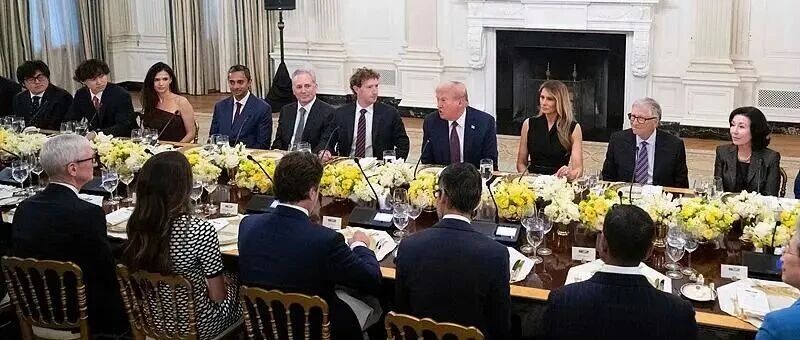
Core Points - The article discusses a high-profile dinner hosted by President Trump at the White House, attended by CEOs of major tech companies, which is likened to a modern "Huangmen Banquet" [3][5] - The dinner was framed as a platform for tech leaders to make significant investment commitments in the U.S., with promises totaling nearly $2 trillion made in just 54 seconds [10][12] - Trump's approach combines both pressure and incentives, aiming to bolster U.S. manufacturing and AI infrastructure while addressing energy supply challenges [12][13] Group 1: Dinner Dynamics - The dinner featured prominent tech leaders, including Mark Zuckerberg, Tim Cook, and Bill Gates, who praised Trump's leadership while making substantial investment commitments [3][5] - The event was initially planned for an outdoor setting but was moved indoors due to rain, highlighting the orchestrated nature of the gathering [6] - Trump directly questioned attendees about their investment plans, leading to significant commitments from several CEOs, including Zuckerberg's $600 billion by 2028 and Cook's $600 billion over four years [8][10] Group 2: Investment Commitments - Tech giants collectively pledged nearly $2 trillion in investments, with commitments from Google for $250 billion and OpenAI's vague promise of "super many" billions [10][12] - The commitments are seen as a strategic move to gain favor with the administration, as companies seek to secure favorable policies and avoid tariffs [15][21] - Trump's signing of an executive order prioritizing data center construction indicates a push for rapid infrastructure development to support AI and energy needs [13][15] Group 3: Political and Economic Implications - Trump's dual strategy of regulatory pressure and investment incentives reflects a complex relationship with tech companies, viewing them as both competitors and partners [20][21] - The article warns of potential risks, including the fragmentation of global tech supply chains and heightened U.S.-China tech competition, as companies may be forced to choose sides [23][24] - The absence of key figures like Elon Musk and Jensen Huang from the dinner suggests underlying tensions and differing approaches to engagement with the administration [26][27] Group 4: Future of AI and Global Competition - The article emphasizes the importance of AI education and infrastructure as foundational for future competitiveness, with initiatives announced to train millions in AI skills by 2030 [30][32] - It highlights the need for countries, including China, to focus on self-sufficiency in core technologies while remaining open to global collaboration [33][35] - The evolving landscape of AI power dynamics suggests that the true competition lies in creating sustainable and inclusive innovation ecosystems [35]




美银重磅报告:AI “卖水人”正在胜出!全球资金下一步可能流向哪里?
Zhi Tong Cai Jing· 2025-09-11 14:19
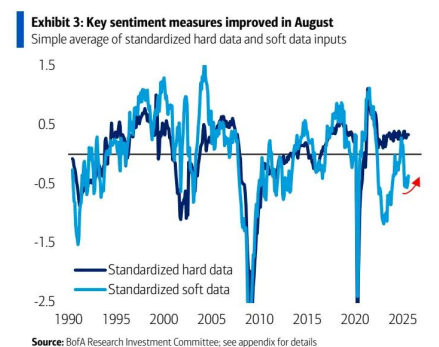
Macro Background - The Federal Reserve is expected to cut interest rates twice this year and three more times by 2026, bringing rates down to around 3.25% [1] - U.S. households currently hold $19 trillion in cash, which is 30% higher than pre-pandemic levels, and this cash is being eroded by inflation and taxes, necessitating better investment options [1] - Economic indicators show a "weak recovery but not recession" trend, with soft data slightly improving and hard data remaining stable [1] AI Enablers - "AI enablers" refer to sectors that provide foundational support for the AI industry, including utilities, industrials, nuclear energy, and pipeline MLPs [4] - Over the past two years, these sectors have outperformed the Nasdaq 100, with significant absolute returns and better risk-adjusted returns in some areas [4] - However, the correlation between these "AI enablers" and tech stocks has reached new highs, indicating potential risks if AI spending slows [7][4] Sector Analysis Energy - Natural gas is experiencing a "double benefit" with increased demand from data centers and the lifting of LNG export bans, leading to a reevaluation of natural gas sector valuations [8] - The construction of LNG export facilities is accelerating, creating a second growth curve for the natural gas sector over the next five years [8] - Government policies are becoming more favorable towards the energy sector, with recent approvals for pipeline projects in the Appalachian region [9] Industrials - The industrial sector is driven by AI and manufacturing reshoring, with record order growth expected in the next 2-3 years, particularly in semiconductors, pharmaceuticals, and defense [10] - AI contributes approximately 20-25% to the increase in electricity demand, with the majority coming from electrification policies and the rise of electric vehicles [10] Utilities - The utility sector is projected to grow at 6-8%, driven by increased industrial electricity demand and aging infrastructure [11] - Regulated utility companies are expected to see growth rates rise from 2-4% to 6-8%, with a total annualized return potential of 10% [11] Nuclear Energy - Nuclear energy is favored for its low correlation with tech stocks and long-term growth potential, especially in the context of carbon neutrality goals [13] - The market for small modular reactors (SMRs) is expected to reach $1 trillion by 2050, meeting about 25% of global electricity demand [13] Investment Recommendations - Two core ETFs are highlighted for investors: AIRR (small-cap industrials) and PAVE (infrastructure), both offering high returns with lower volatility [16] - For nuclear energy, URA (uranium ETF) and NLR (nuclear ETF) are recommended due to their low correlation with tech stocks and strong performance metrics [17]