春季行情

Search documents
早盘直击|今日行情关注
申万宏源证券上海北京西路营业部· 2026-01-19 02:28
Core Viewpoint - The spring market is entering a transitional phase, with increased volatility and a slowdown in the inflow of incremental capital, indicating that the rapid pace of the current rally is unsustainable [1] Market Performance - The market experienced a significant pullback after reaching a new high on Wednesday, with the Shanghai Composite Index closing below the ten-day moving average [1] - The Shenzhen Component Index outperformed the Shanghai market, maintaining a closing price above the five-day moving average [1] - Average daily trading volume exceeded 34 trillion yuan this week, continuing to increase compared to the previous week [1] Sector Focus - The main market hotspots this week were concentrated in the non-ferrous metals and TMT (Technology, Media, and Telecommunications) sectors [1] - The normalized ratio of the CSI 2000 to the CSI 300 rose to 1.44, indicating a continued recovery compared to last week [1] - Small-cap and technology stocks led the gains throughout the week [1] Technical Analysis - The Shanghai Composite Index faced technical resistance after a series of rebounds, with a notable decline in trading volume potentially impacting the upward trend [1] - The index began its upward trend in mid-December and encountered adjustments after reaching a new high on Wednesday, necessitating attention to the support levels of lower moving averages [1]


港股开盘:恒指跌0.76%、科指跌0.77%,科网股及生物医药股走低,有色金属概念股活跃,锂电池板块走高
Jin Rong Jie· 2026-01-19 01:30
Market Overview - The Hong Kong stock market opened slightly lower on January 19, with the Hang Seng Index down 0.76% at 26,641.6 points, the Hang Seng Tech Index down 0.77% at 5,777.07 points, the State-Owned Enterprises Index down 0.76% at 9,151.07 points, and the Red Chip Index down 0.4% at 4,122.65 points [1] - Major tech stocks experienced declines, including Alibaba down 2.53%, Tencent down 0.65%, JD.com down 0.53%, Xiaomi down 1.29%, NetEase down 0.83%, Meituan down 1.2%, Kuaishou down 1.53%, and Bilibili down 2.69% [1] - The non-ferrous metals sector was active, with Zijin Mining rising over 3%, while the lithium battery sector saw most stocks increase, with BYD rising over 1% [1] - Some domestic property stocks fell, with Country Garden down over 10%, and the biopharmaceutical sector opened lower, with Tigermed down over 2% [1] Company News - China Shenhua (01088.HK) expects coal sales volume in 2025 to be 431 million tons, a year-on-year decrease of 6.4% [2] - New China Life Insurance (01336.HK) anticipates cumulative original insurance premium income in 2025 to reach 195.899 billion yuan, a year-on-year increase of 15% [3] - Yongjia Group (03322.HK) projects a revenue growth rate of approximately 16% for its high-end fashion retail business in the fourth quarter of 2025 [4] - Ronshine China (03301.HK) expects total contract sales in 2025 to be approximately 3.777 billion yuan, a year-on-year decrease of 50.96% [5] - Tianhong International Group (02678.HK) issued a profit warning, expecting a net profit increase of about 60% for the 2025 fiscal year due to a recovery in domestic and international market orders [5] - Qizhi Group (00917.HK) anticipates turning a profit in 2025, with net profit estimated between 270 million to 330 million yuan, compared to a loss of 1.663 billion yuan in the previous year [5] - October Rice Field (09676.HK) issued a profit warning, expecting adjusted net profit of approximately 550 million to 590 million yuan in 2025, a year-on-year increase of about 57.6% to 69.1% [5] - China Boton (03318.HK) issued a profit warning, expecting goodwill impairment losses of no less than approximately 750 million yuan for its tobacco flavor business in 2025 [5] Strategic Insights - Guojin Securities suggests that the Hong Kong stock market is entering a "spring market" at the beginning of 2026, likely to continue until mid-year, driven by domestic and international easing expectations and policy collaboration [9] - Galaxy Securities anticipates narrow fluctuations in the Hong Kong stock market due to reduced short-term interest rate cut expectations from the Federal Reserve and increased global geopolitical uncertainties [9] - GF Securities views the chemical industry as a typical cyclical sector, predicting a "dawn" phase for the chemical industry amid capital expenditure growth turning negative and a focus on domestic demand expansion [9]

每周研选|“稳市”信号落地后,谁将接棒主线?
Xin Lang Cai Jing· 2026-01-19 01:21
Core Viewpoint - The A-share market is experiencing high volatility with a cooling market sentiment, as indicated by the recent adjustments in financing margin ratios and the focus on performance indicators as the annual report forecast period approaches [1][8]. Group 1: Market Trends - The A-share market has shown a high-level oscillation pattern, with previous leading sectors experiencing increased volatility [1][8]. - The China Securities Regulatory Commission emphasized the need for timely counter-cyclical adjustments to prevent significant market fluctuations [1][8]. - The market is expected to shift focus from narrative-driven trends to performance-based evaluations as annual report forecasts are released [9][10]. Group 2: Investment Strategies - Citic Securities suggests constructing portfolios based on "resources + traditional manufacturing pricing weight estimation," focusing on sectors like chemicals, non-ferrous metals, power equipment, and new energy [9]. - Investors are advised to increase allocations in non-bank sectors (securities, insurance) and consider high-growth sectors such as semiconductor equipment to enhance returns [9]. - Guotai Junan highlights the importance of focusing on sectors with high growth or recovery potential, particularly in technology and industries benefiting from price increases due to policy changes [15][16]. Group 3: Market Outlook - Multiple securities firms, including GF Securities and Industrial Securities, predict that the market will see opportunities from late January to mid-March, coinciding with the annual report forecast disclosures [10][11]. - The spring market rally is expected to continue, with structural adjustments rather than systemic risks being the primary concern [11][12]. - The market is anticipated to enter a phase of "spring excitement," focusing on companies with solid fundamentals and performance exceeding expectations [12][13]. Group 4: Sector Focus - The technology sector, particularly AI applications, is expected to shift from broad-based gains to a more focused performance on companies with strong fundamentals [16]. - The rise in commodity prices is seen as a significant trend, driven by global supply chain changes and resource revaluation, with sectors like non-ferrous metals and new energy materials being highlighted [16][15].
六家机构 研判A股后市
Zhong Guo Zheng Quan Bao· 2026-01-18 14:35
Market Overview - The A-share market is experiencing high volatility with a potential for a stable transition into the second phase of the spring market, supported by favorable factors that have not changed [1][6] - The upcoming earnings announcements are expected to increase the importance of performance indicators, with high-quality companies showing solid fundamentals likely to yield excess returns [1][6] Investment Strategies - The investment focus remains on "anti-involution + technology," with sectors such as AI applications, chemicals, non-ferrous metals, and power equipment gaining attention for their investment value [1][10] - Citic Securities suggests constructing investment portfolios based on "resource + traditional manufacturing pricing re-evaluation," including sectors like chemicals, non-ferrous metals, and new energy [5] - Dongwu Securities emphasizes that the market is likely to stabilize, with a focus on companies with strong fundamentals and exceeding performance expectations [6] Regulatory Developments - The People's Bank of China and the National Financial Regulatory Administration have adjusted the minimum down payment ratio for commercial property loans to no less than 30%, allowing local authorities to set lower limits based on local conditions [2] - The China Securities Regulatory Commission is seeking public opinion on the draft regulations for derivative trading, aiming to manage risks and support the real economy while limiting excessive speculation [3] Sector Insights - Open-source Securities highlights three main investment lines: recovery within the technology sector, benefiting from "anti-involution" policies in non-ferrous metals and chemicals, and maintaining gold and high-dividend assets as long-term holdings [7] - Fortune Fund identifies four key investment themes for 2026: embracing technology trends, enhancing the influence of Chinese manufacturing overseas, capturing cyclical rebound opportunities, and benefiting from the appreciation of the RMB in the non-bank financial sector [8] - Huatai Bairui Fund anticipates increased attention on resource and energy sectors due to improving domestic and foreign policy environments, which may lead to enhanced corporate profitability [9]
六家机构,研判A股后市
Zhong Guo Zheng Quan Bao· 2026-01-18 14:31
Market Overview - The A-share market is experiencing high volatility with a potential for a stable transition into the second phase of the spring market, supported by favorable factors that have not changed [1][6] - The upcoming earnings announcements are expected to increase the importance of performance indicators, with high-quality companies showing solid fundamentals likely to yield excess returns [1][6] Investment Strategies - The investment focus remains on "anti-involution + technology," with sectors such as AI applications, chemicals, non-ferrous metals, and power equipment gaining attention for their investment value [1][10] - Citic Securities suggests constructing investment portfolios based on "resource + traditional manufacturing pricing re-evaluation," including sectors like chemicals, non-ferrous metals, and new energy [5] - Dongwu Securities emphasizes that the market will focus on performance indicators, with high-quality companies expected to outperform in the latter half of the spring market [6] Regulatory Developments - The People's Bank of China and the National Financial Regulatory Administration have adjusted the minimum down payment ratio for commercial property loans to no less than 30%, allowing local authorities to set lower limits based on local conditions [2] - The China Securities Regulatory Commission is seeking public opinion on the draft regulations for derivative trading, aiming to manage risks and support the development of derivatives for risk management [3] Sector Focus - Open-source Securities highlights three main investment lines: recovery within the technology sector, sectors benefiting from PPI improvements and "anti-involution" policies, and gold and high-dividend assets as long-term holdings [7] - Fortune Fund identifies four main lines for investment: technology sector trends, the impact of Chinese manufacturing going global, cyclical recovery opportunities, and non-bank financial sectors benefiting from RMB appreciation [8] - Huatai-PB Fund anticipates increased attention on resource and energy sectors due to positive domestic and international policy environments, with expectations for improved corporate profitability [9]
李立峰、张海燕:再论当前“春季行情”下的三条投资主线
Sou Hu Cai Jing· 2026-01-18 14:18
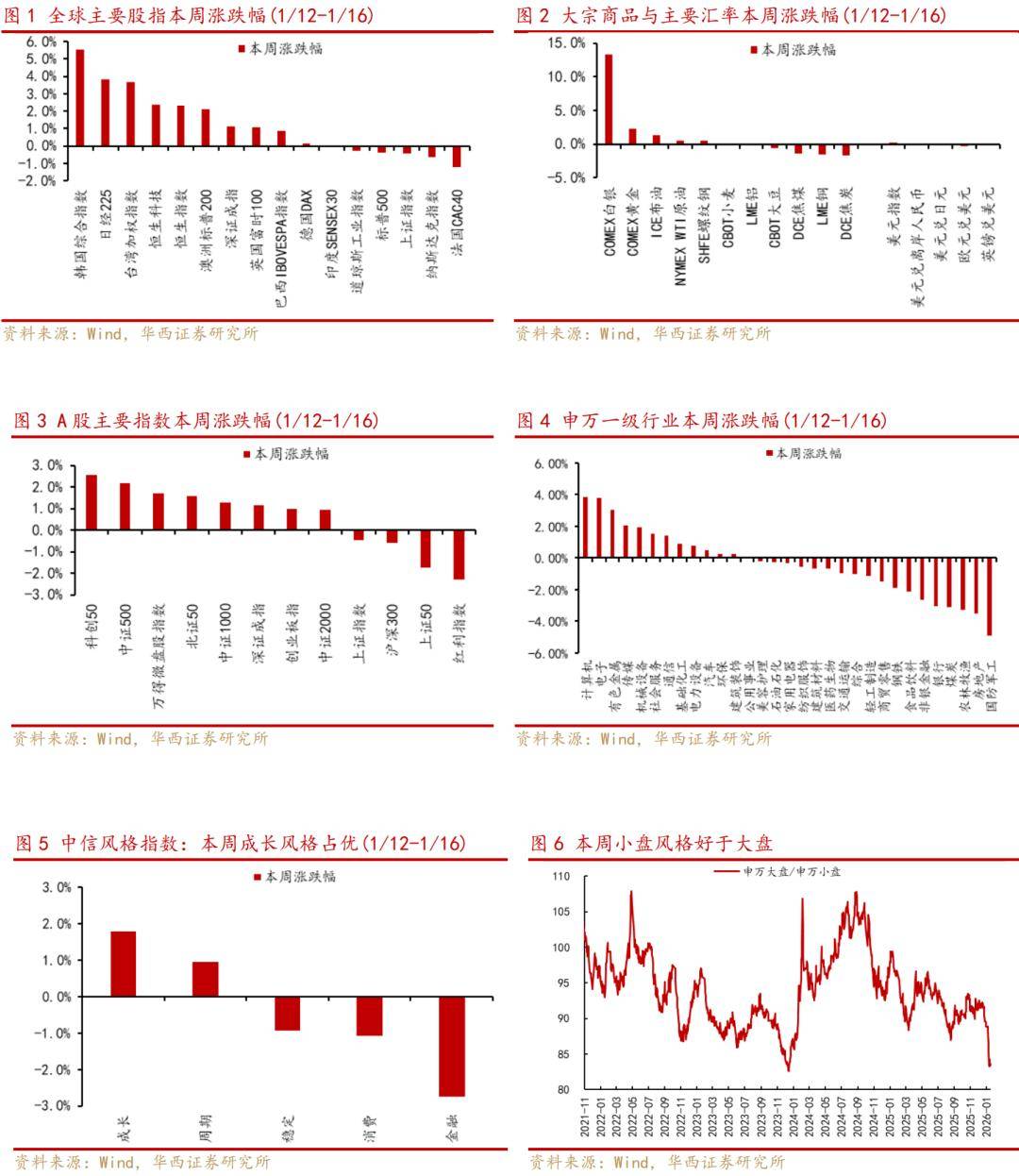
Market Review - The A-share market experienced a significant increase followed by a period of volatility, driven by a rapid rise in risk appetite among investors, particularly in small-cap and growth sectors. On January 14, the total trading volume across all A-shares reached a historic high of 3.99 trillion yuan, with margin financing balances hitting new records. However, regulatory adjustments to margin requirements led to a cooling off in trading activity, and the previously strong momentum in technology indices began to slow down. Commodities such as precious metals and crude oil saw price increases, while copper prices fluctuated at high levels and domestic coking coal prices declined. The US dollar index rose, and the offshore yuan appreciated against the dollar [1][2]. Market Outlook - Regulatory measures aimed at "counter-cyclical adjustment" are expected to support a "slow bull" market for A-shares. Following a surge in trading activity and margin financing, regulators signaled a need to mitigate risks by increasing the minimum margin requirement from 80% to 100%. This is part of a broader strategy to maintain market stability and prevent excessive volatility. Despite these measures, the overall valuation of A-shares remains reasonable, supported by macroeconomic policies, long-term capital inflows, and a moderate recovery in corporate earnings. As the end of January approaches, the focus will shift to earnings forecasts, particularly in technology sectors and areas experiencing price increases [2][3]. Key Focus Areas - The spring market rally has seen a rapid increase in trading activity, but regulatory signals have shifted the Shanghai Composite Index from a one-sided rise to high-level fluctuations. Since the rally began on December 17, various sources of capital have entered the market, including institutional funds and foreign investments, leading to a peak trading volume of nearly 4 trillion yuan. The margin financing balance surpassed 2.7 trillion yuan, indicating potential overheating risks. Regulatory interventions have prompted a transition to a more stable trading environment, while the overall trading volume remains high, reflecting sustained investor confidence [1][2]. Risk Premium and Valuation - As of January 16, the equity risk premium (ERP) for the CSI 300 index stood at 5.2%, close to the median level over the past decade. Compared to previous peaks in January 2018 and February 2021, the current ERP suggests that A-share valuations are relatively reasonable, although some sectors may be experiencing overheating. The sectors with the highest margin buying activity include electronics, power equipment, computers, military, and communications. Attention should be paid to the potential impact of reduced financing in high-volatility sectors [3][4]. Earnings Forecasts - The trend of a slow bull market for A-shares is expected to continue, with a focus on earnings forecasts as companies prepare to disclose their annual results. Macroeconomic policies are expected to support risk appetite, with the central bank implementing targeted monetary policies. The anticipated recovery in corporate earnings, particularly as the Producer Price Index (PPI) declines, will be crucial for market support. Key sectors to watch include technology, chemicals, and healthcare, especially those with high growth or turnaround potential in their earnings forecasts [4].
再论当前“春季行情”下的三条投资主线
HUAXI Securities· 2026-01-18 12:29
Market Review - The A-share market experienced a significant increase followed by a period of volatility, with a notable rise in trading volume driven by a strong profit-making effect, particularly in small-cap and growth styles. On January 14, the total trading volume reached a historical high of 3.99 trillion yuan, with margin financing balances hitting new records. However, following regulatory adjustments to margin requirements, market activity showed signs of cooling, and the previously strong technology index began to stabilize [1][2]. Market Outlook - Regulatory measures aimed at "counter-cyclical adjustment" are expected to support a "slow bull" market for A-shares. The recent surge in trading activity has prompted regulators to signal a need for cooling, leading to a shift from a one-sided increase to high-level fluctuations in the Shanghai Composite Index. Despite this, the overall valuation of A-shares remains reasonable, supported by macro policies, medium to long-term capital inflows, and a mild recovery in corporate earnings. The upcoming earnings announcements in late January are likely to refocus investor attention on performance-driven sectors, particularly in technology and industries benefiting from price increases [2][3]. Counter-Cyclical Adjustment Policies - The recent increase in the minimum margin requirement for financing from 80% to 100% is part of a broader strategy to prevent systemic risks in the market. The regulatory emphasis on maintaining market stability and preventing extreme fluctuations is evident, as seen in the significant net outflow of 142.3 billion yuan from equity ETFs in January, marking the largest monthly outflow since 2021. This counter-cyclical adjustment is viewed as a necessary measure to sustain the bull market trend while mitigating overheating risks [3][4]. Risk Premium and Sector Focus - As of January 16, the equity risk premium (ERP) for the CSI 300 index stands at 5.2%, which is near the median level for the past decade. Compared to previous peaks in January 2018 and February 2021, the current risk premium indicates that A-share valuations are relatively reasonable, although some sectors may experience capital withdrawal due to overheating. Key sectors attracting financing include electronics, power equipment, computers, military, and communications, with a need to monitor the impact of reduced financing on high-volatility stocks in these areas [4][5]. Investment Strategy - The slow bull trend in A-shares is expected to continue, with a focus on sectors showing high growth or improving conditions as companies prepare to announce their 2025 earnings. Key factors supporting this outlook include proactive macro policies, the influx of medium to long-term capital, and a narrowing decline in the Producer Price Index (PPI), which suggests a mild recovery in corporate earnings. Investors should pay attention to sectors such as technology (AI applications, robotics), commodities benefiting from price increases, and industries with anticipated high earnings growth [5].
兴证策略张启尧团队:春季行情仍会有新高
Xin Lang Cai Jing· 2026-01-18 09:58
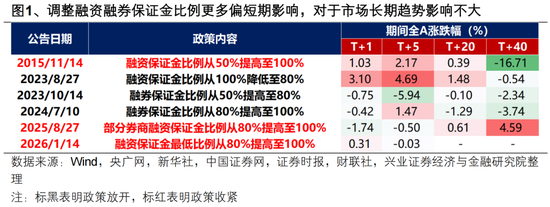
Group 1 - The current spring market is expected to reach new highs despite recent short-term cooling, driven by liquidity and risk appetite, with a focus on structural opportunities rather than systemic risks [1][11][33] - Historical adjustments to margin ratios have shown that their impact is typically short-term, with long-term trends being influenced more by fundamentals, policy, and market sentiment [2][34] - The ongoing spring market has seen significant gains, with the Shanghai Composite Index, CSI All A, and ChiNext Index rising by 7.24%, 10.33%, and 9.24% respectively since December 17, indicating that the market is still in its early stages [3][34] Group 2 - The fundamental support for the spring market remains intact, with a low base for earnings forecasts and structural highlights expected to boost market sentiment [6][12] - Recent earnings forecasts show significant growth potential in sectors such as electronics, new energy, and healthcare, with companies like SAIC Motor and Baidu Storage projecting net profit growth rates exceeding 500% [8][15] - The market is currently undergoing a structural rebalancing, with a shift towards sectors with confirmed earnings, while previously overheated areas like media and aerospace are experiencing corrections [9][11] Group 3 - February is anticipated to be a key period for market activity, with a focus on earnings disclosures and a potential return to risk appetite as liquidity increases ahead of the Spring Festival [19][22] - The upcoming earnings season is expected to drive market adjustments, with a focus on sectors that have shown resilience and growth potential [12][19] - Historical patterns suggest that February is one of the strongest months for market performance, particularly for small-cap and growth stocks [19][22]
华金证券:春季行情未完 继续聚焦成长
Xin Lang Cai Jing· 2026-01-18 06:33
Group 1 - The core viewpoint is that the A-share market may continue to strengthen after a volume increase in the spring market, influenced by policies, external events, liquidity, and sentiment [1][8] - Historical data shows that in the past 16 spring markets since 2010, there were 11 instances where the total A-share trading volume increased by over 100% from the low to the high, and in 9 of those instances, the Shanghai Composite Index continued to rise [1][8] - Key factors affecting whether A-shares can continue to rise after a volume increase include policies and external events, liquidity, and sentiment of leading sectors prior to the volume increase [1][8] Group 2 - Currently, the A-share market is expected to continue a strong but volatile trend, with the spring market not yet over [2][9] - Short-term policies remain positive, with a dual easing of fiscal and monetary policies, and external risks are relatively limited, particularly in US-China relations and Middle Eastern geopolitical risks [2][9] - Short-term liquidity expectations are still loose, with the macro liquidity likely to remain accommodative, and the central bank has already implemented structural interest rate cuts [2][9] Group 3 - In the spring market, sectors that are likely to outperform include technology growth and certain cyclical industries, with historical trends indicating that sectors with low valuation sentiment may experience a rebound after a volume increase [3][10] - Current sectors expected to perform well include pharmaceuticals, machinery, and new energy, while media, military, and electronics may experience slight corrections before continuing to rise [3][10] - The ongoing trends in AI and commercial aerospace are expected to support the upward movement of related sectors such as TMT and military [3][10] Group 4 - Short-term recommendations suggest accumulating positions in technology growth and certain cyclical sectors that are currently undervalued [4][11] - Sectors such as machinery (robots), electronics (semiconductors, AI hardware), and pharmaceuticals (innovative drugs) are highlighted for their positive policy and industry trends [4][11] - Non-bank financials and consumer sectors (food, retail, and services) are also suggested for potential rebound and marginal improvement in fundamentals [4][11]
投顾周刊:银行理财规模创历史新高
Wind万得· 2026-01-17 22:20
Group 1 - The scale of bank wealth management reached a historical high, with 14 wealth management companies managing over 10 trillion yuan, an increase of nearly 3 trillion yuan from the beginning of 2025, peaking at 34 trillion yuan in November 2025 [2] - The central bank implemented a "combination punch" to support high-quality economic development, including a 0.25 percentage point reduction in re-lending and rediscount rates, and an increase of 500 billion yuan in re-lending for agriculture and small enterprises [2] - The Shanghai, Shenzhen, and Beijing stock exchanges raised the minimum margin ratio for financing to 100%, aimed at reducing leverage and protecting investors' rights [3] Group 2 - Three departments are regulating the competition order in the new energy vehicle industry to resist disorderly "price wars," enhancing cost investigations and price monitoring [4] - As of January 14, 2026, 30 QDII funds have issued warnings about premium risks, indicating a market characterized by both heat and risk [5] - Insurance companies are focusing on refined services as they continue to downsize, with several companies approved to exit the market [6] Group 3 - The recent week saw a mixed performance in global stock markets, with the Shanghai Composite Index down 0.45% and the Shenzhen Component Index up 1.14% [8] - Recent trends in government bond yields showed a decline in 1-year, 5-year, and 10-year Chinese government bond yields, while the 10-year U.S. Treasury yield increased [11] - The recent week saw a stable performance in the Wande Fund Index, with various fund categories showing positive growth [12] Group 4 - In the commodity market, precious metals saw significant gains, with COMEX gold rising by 2.23% and silver by 13.37%, while international oil prices continued to rise [14] - The recent week saw solid performance in fixed-income funds, with 398 "fixed income plus" funds dominating the market, accounting for 56.70% of the total number of products [16] - Bank wealth management subsidiaries have become the core force in fundraising, with 561 subsidiaries participating in product issuance, accounting for 79.91% of all institutions [18]