
债市投资

Search documents
债市“低性价比”时代,“羊群效应”消失了
2 1 Shi Ji Jing Ji Bao Dao· 2026-01-11 23:14
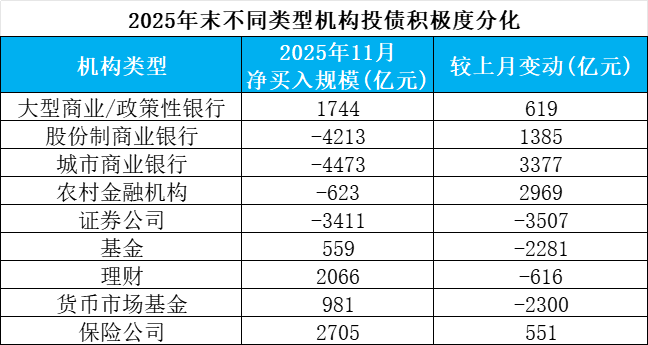
Core Insights - The bond market in 2025 faced significant challenges, characterized by high volatility and low yield environments, leading to increased operational difficulties for investment institutions [1][2] - The market dynamics shifted towards short-term sentiment driven by external factors rather than fundamental analysis, reflecting intense institutional competition and pressure for returns [1][2] - The differentiation in investment strategies among various types of institutions became more pronounced, with some actively seeking opportunities while others adopted a more cautious approach [6][7] Group 1: Market Conditions - The bond market experienced a notable decline in interest rates, with the 10-year government bond yield dropping nearly 1 percentage point compared to the end of 2024, leading to a correction phase [2] - By the end of 2025, the 10-year government bond yield fluctuated, reaching a high of approximately 1.92% in September before stabilizing towards year-end [2][3] - The yield curve showed steepening trends, with long-term bonds like the 30-year government bond rising by 8 basis points in December, while shorter maturities saw slight declines [3] Group 2: Institutional Behavior - Different types of institutions displayed varied levels of engagement in the bond market, with large commercial and policy banks showing strong net buying activity, while others like city commercial banks and securities firms were net sellers [6][7] - The net buying figures for November 2025 indicated a stark contrast, with large banks net buying 1,744 billion and insurance companies 2,705 billion, while securities firms and funds were significantly reducing their positions [6][7] - The behavior of institutions was influenced by year-end performance assessments, with some locking in profits while others adjusted their portfolios for the upcoming year [3][5] Group 3: Future Outlook - As 2026 begins, the bond market is expected to open with a 10-year government bond yield of around 1.85%, with potential for policy easing anticipated in the first quarter [8][9] - There is a consensus among market participants that monetary policy may become more accommodative, with expectations for 1-2 rate cuts throughout 2026, although the timing and extent remain uncertain [9][10] - The market is likely to continue experiencing volatility, with institutions preparing for a challenging environment while seeking to optimize their strategies for better performance [11][12]

2025年债市不再“躺赢” 久期分化加剧 中长期债基收益上限明显高于短债
Mei Ri Jing Ji Xin Wen· 2026-01-05 17:26
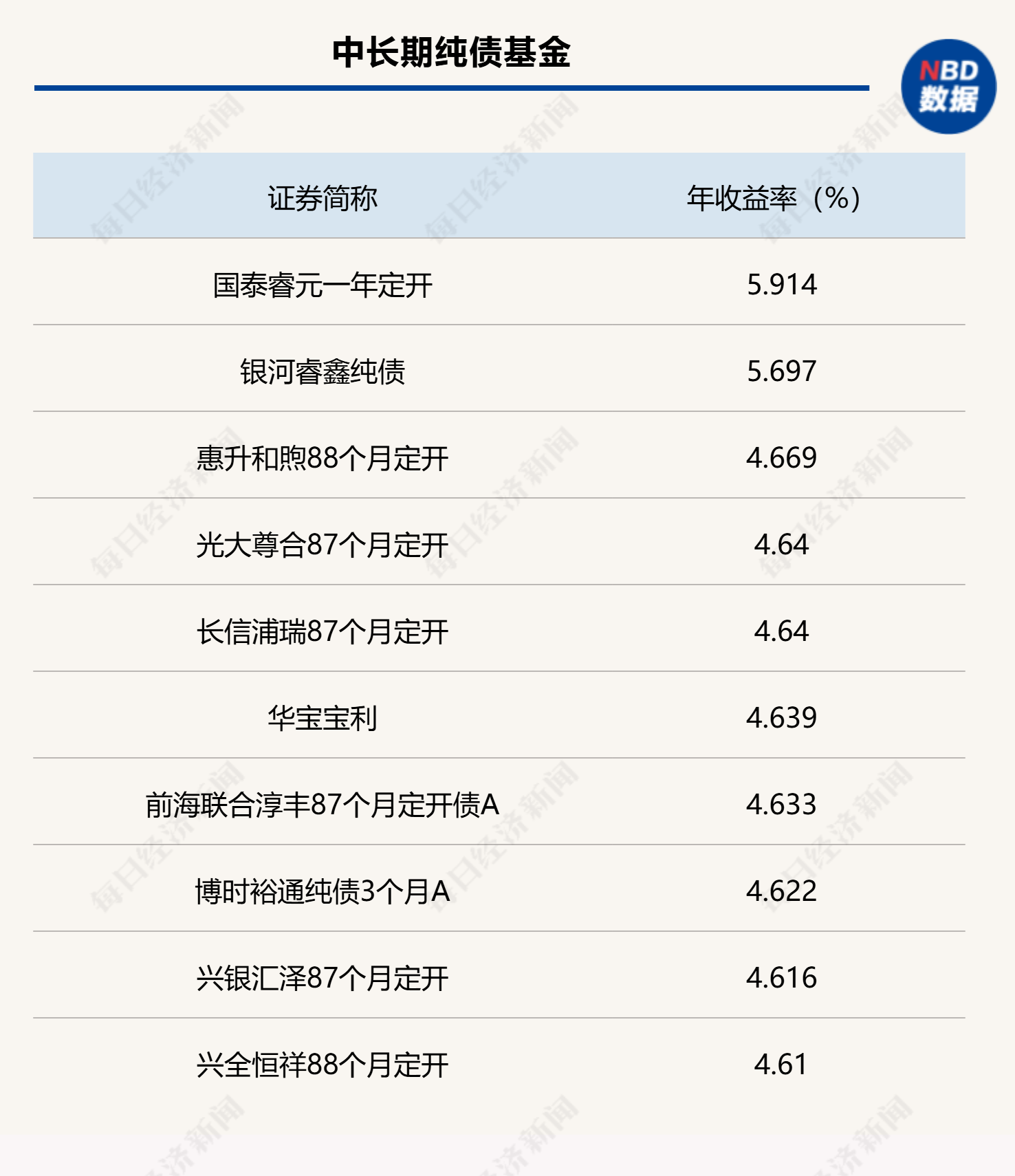
Core Insights - The bond market in 2025 is characterized by a long-term downward trend in interest rates, yet bond investment returns are not favorable, with many pure bond funds showing negative annual returns [1][2] - The average annual return for medium to long-term pure bond funds is significantly higher than that of short-term bond funds, indicating a shift in market dynamics [2][3] Group 1: Market Trends - The bond market in 2025 is experiencing unique conditions, where the attractiveness of bonds is diminished despite a long-term decline in interest rates [2] - The average return for medium to long-term pure bond funds is 1.02%, while short-term bond funds average 1.49%, marking a departure from the previous 4% return era [2][3] - The macroeconomic environment shows a slow recovery, with monetary policy remaining stable and slightly accommodative, limiting the potential for significant interest rate declines [2] Group 2: Fund Performance - Medium to long-term pure bond funds are seen as a source of "yield elasticity," with top-performing products achieving returns over 5%, while short-term funds serve as stabilizers with returns concentrated between 1% and 3% [3] - The performance of medium to long-term funds is more variable, with increased standard deviation and extreme value ranges, indicating higher net asset value volatility [3] Group 3: Pricing Dynamics - The pricing power of long-term bonds is shifting from trading to allocation, influenced by supply pressures and changing market conditions [4][5] - Recent regulatory changes are further pushing the pricing power of long-term bonds towards allocation, as liquidity conditions improve for short-term bonds [5] Group 4: Future Outlook - The market is expected to maintain a neutral duration strategy, with a focus on high coupon assets and long-duration assets as valuable investment opportunities [5]
关注十年国债ETF(511260)投资机会,市场预期与政策博弈下的债市走向
Sou Hu Cai Jing· 2026-01-05 03:48
Core Viewpoint - The ten-year government bond ETF (511260) has experienced a pullback of over 0.1%, with market expectations and policy dynamics influencing the direction of the bond market [1] Economic Indicators - The PMI significantly declined in October, indicating economic pressure, but improved slightly in November and surged to 50.1 in December, the highest since April, reflecting effective policy measures [1] - December's raw material inventory is at a historical low, suggesting a potential for restocking that may drive economic recovery [1] Bond Market Outlook - The target range for the ten-year government bond is set between 2-3%, with a central tendency around 2.5% [1] - The ten-year government bond ETF (511260) tracks the Shanghai Stock Exchange's ten-year government bond index, selecting bonds with a remaining maturity of 7 to 10 years [1] Fund Performance - Since its inception, the ten-year government bond ETF has consistently achieved positive annual returns over seven complete years from 2018 to 2024, positioning it as a potential asset allocation tool across market cycles [1] - As of the end of Q3, the fund reported a one-year return of 4.17%, a three-year return of 14.04%, a five-year return of 23.39%, and a cumulative return of 35.77% since inception [1]
国金资管:2026年权益投资机会或更具广度和纵深
Zhong Zheng Wang· 2025-12-25 12:57
Core Viewpoint - Guojin Asset Management forecasts that the investment opportunities in the equity market for 2026 may be broader and deeper, while the bond market yields are expected to continue fluctuating widely [1] Equity Market Outlook - The current liquidity and regulatory environment is improving, with a continuous inflow of long-term capital, which, combined with structural economic highlights, is expected to drive the fundamental performance of certain industries upward, creating structural opportunities in the equity market [1] Bond Market Outlook - Positive fiscal policies are likely to continue, and central bank liquidity may remain accommodative to support the implementation of fiscal policies, suggesting that bond market yields may continue to experience wide fluctuations in 2026 [1] CTA Strategy - Guojin Asset Management maintains a neutral stance on CTA strategies, primarily due to the lack of significant investment trends or comprehensive monetary easing opportunities similar to past experiences. While some individual products have certain industrial logic support, the overall structure may appear somewhat singular in the context of portfolio investment, and the risk-reward ratio needs further observation [1]
十年国债ETF(511260)近20日净流入超6亿元,债市或迎边际利好
Sou Hu Cai Jing· 2025-12-23 08:21
Group 1 - The core viewpoint indicates that domestic total demand is still in need of repair, and the foundation for inflation recovery remains unstable, which marginally benefits the bond market [1] - The widening yield spread is unfavorable for monetary policy transmission, but under a loose liquidity environment, the decline in short-term interest rates is expected to transmit to long-term rates [1] - Long-term bonds still hold allocation value in the long run, considering the relatively controllable fiscal pressure for the next year and the pending implementation of broad monetary tools [1] Group 2 - The 10-Year Government Bond ETF (511260) tracks the Shanghai Stock Exchange 10-year government bond index, selecting bonds with a remaining maturity of 7 to 10 years listed on the exchange [1] - Since its inception, the 10-Year Government Bond ETF has consistently achieved new net value highs, with a one-year return of 4.17%, a three-year return of 14.04%, a five-year return of 23.39%, and a cumulative return of 35.77% since inception [1] - The ETF has maintained positive annual returns for seven complete natural years from 2018 to 2024, positioning it as a potential asset allocation tool across market cycles [1]
十年国债ETF(511260)近10日净流入超6.1亿元,债市供给压力有所缓和
Mei Ri Jing Ji Xin Wen· 2025-12-17 06:37
根据wind数据,十年国债ETF(511260)盘中净流入2000万份,资金抢筹布局。 相关机构表示,从供给端来看,未来一段时间的供给压力有所缓和,同时随着利差变化,供给端期限存 在调整可能,长端利率压力有望减轻。从需求端看,银行指标压力阶段性缓和,年初银行或获得新的资 本补充,减持趋势将转为增持。此外,交易型机构仓位的下降意味着抛售力量正在逐渐下降,市场企稳 之后交易型机构补仓反而有望推动市场企稳。 (文章来源:每日经济新闻) 十年国债ETF(511260)跟踪上证10年期国债指数,选取剩余期限7到10年且在上交所挂牌的国债作为 样本,久期恒定。从过往表现来看,十年国债ETF(511260)成立以来净值屡创新高,历史业绩持续稳 健。根据基金定期报告,截止三季度末,近1年回报率达4.17%,近3年回报率达14.04%,近5年回报率 达23.39%,成立至今累计回报率达35.77%。 值得关注的是,十年国债ETF成立以来经历了2018-2024年共计7个完整自然年度,均保持每年正收益, 有望成为穿越牛熊周期的资产配置利器。 ...
华源晨会精粹20251201-20251202
Hua Yuan Zheng Quan· 2025-12-02 05:44
Fixed Income - The manufacturing PMI showed a slight rebound in November, but corporate profits remain under pressure, indicating potential economic downturn in Q4 [2][7] - Industrial profits fell significantly in October, with a year-on-year decline of 5.5%, reflecting a slowdown in economic growth compared to Q1 and Q2 [2][8] - The bond market is expected to perform well, with a forecasted decline in bond yields, driven by the necessity for policy interest rate cuts [10] Real Estate - Vanke's bond extension has negatively impacted the secondary market valuations of other real estate companies, although the overall effect is limited [13][18] - Vanke's financial situation remains precarious, with reliance on external financing for debt repayment, raising concerns about potential defaults [12][18] Transportation - The shipping industry is experiencing record high earnings, with VLCC daily earnings reaching $120,248 in November, the best performance since 2004 [20][23] - The logistics sector is seeing advancements in automation, with companies like Yunda and Jitu implementing automated sorting systems and unmanned delivery vehicles [20][21] Energy - The energy sector is focusing on the development of new storage capacity and pricing mechanisms, with provinces like Hubei and Heilongjiang advancing their storage system plans [4][10] Media - The film industry is witnessing a resurgence, with "Zootopia 2" grossing over 1.3 billion yuan, indicating strong market demand for quality films [4][6] Healthcare - Microelectrophysiology company has received approval for its self-developed PFA catheter, expanding its product matrix in the electrophysiology market [5][6] Consumer Goods - Bosideng reported a revenue increase of 1.4% in the first half of FY2025/26, driven by strong performance in its core down jacket business [5][6]
融资需求相对平稳,关注债市投资机会
China Post Securities· 2025-11-17 06:07
Group 1: Economic Financing Demand - The financing demand in the real economy remains relatively stable, with a focus on observing total financial indicators rather than single credit data fluctuations[1] - In October, the new social financing (社融) scale was 8,150 billion yuan, a year-on-year decrease of 5,970 billion yuan, primarily due to a decline in credit and government bond issuance[8] - Excluding the impact of government bond issuance timing, the social financing data showed only a minor decrease of 378 billion yuan compared to the previous year[9] Group 2: Household Credit and Confidence - In October, new household credit data turned negative at -3,604 billion yuan, marking the fourth negative turn this year, reflecting a contraction in household balance sheets[12] - The decline in new short-term loans was -2,866 billion yuan, indicating that repayments exceeded new loans, which suggests weakened consumer confidence[12] - The new medium- and long-term loans also decreased by -700 billion yuan, indicating early repayment of mortgages by households[12] Group 3: Savings and Investment Trends - In October, new household deposits decreased by -13,400 billion yuan, a year-on-year decline of 7,700 billion yuan, while non-bank financial institutions saw an increase of 18,500 billion yuan in deposits[13] - The bank wealth management market has grown to 31.6 trillion yuan, with a month-on-month increase of 0.36 trillion yuan, indicating a shift towards more stable asset allocations[13] - The new fund-raising scale in October was 910.49 billion yuan, a decrease of 40.14% from the previous month, with bond funds and mixed funds showing significant contributions[13] Group 4: Monetary Supply and Price Index - In October, M1 grew by 6.2% year-on-year, while M2 grew by 8.2%, indicating a divergence in monetary supply growth rates[15] - The negative differential between M1 and M2 growth rates has ended, with a current differential of -2%[15] - If subsequent data does not improve, there may be risks of weakening in the Producer Price Index (PPI) growth rate in the short term[15] Group 5: Future Outlook and Investment Opportunities - The demand for financing in the real economy is expected to remain stable, with a focus on consumption recovery and potential investment opportunities in the bond market[17] - The anticipated peak yield for 10-year government bonds is projected at 1.85%, suggesting a favorable environment for bond investments[17] - Key investment directions include service consumption and emerging sectors such as emotional economy, camping economy, and pet economy[17]
成交额超1亿,国债ETF5至10年(511020)交投活跃
Sou Hu Cai Jing· 2025-11-13 01:37
Group 1 - The probability of a comprehensive reserve requirement cut is low in the current economic cycle, with the central bank likely to use a combination of liquidity management tools instead of solely relying on reserve cuts [1] - The mechanism for creating base currency has shifted from passive foreign exchange reserve injection to active central bank injection, indicating limited future potential for reserve increases [1] - Reserve cuts are viewed as a scarce tool for releasing medium to long-term liquidity, making it a valuable option compared to short-term policy rate tools [1] Group 2 - The window for interest rate cuts is expected to open between Q4 of this year and Q1 of next year, with the bond market typically pricing in expectations of monetary easing in advance [1] - It is suggested to seize opportunities before the implementation of interest rate cuts rather than speculating on the timing of the cuts, with expectations for the 10Y government bond yield to decline to 1.65%-1.7% [1] Group 3 - As of November 12, 2025, the active bond ETF for 5-10 year government bonds has seen a 0.02% increase, with a cumulative increase of 3.21% over the past year [2] - The latest size of the 5-10 year government bond ETF reached 1.656 billion, marking a six-month high, with recent inflows balancing out [3] - The 5-10 year government bond ETF has shown a net value increase of 21.99% over the past five years, ranking in the top 16.57% among index bond funds [3] Group 4 - The maximum drawdown for the 5-10 year government bond ETF over the past six months is 1.09%, with a relative benchmark drawdown of 0.46% [4] - The management fee for the 5-10 year government bond ETF is 0.15%, and the custody fee is 0.05% [5] Group 5 - The tracking error for the 5-10 year government bond ETF over the past month is 0.024%, closely tracking the index of active government bonds with maturities of 5, 7, and 10 years [6]
央行重启国债买卖操作,长端利率债、“固收+”理财有望受益
Zhong Guo Ji Jin Bao· 2025-11-10 06:12
Core Insights - The People's Bank of China has resumed public market treasury bond trading operations in October after a suspension earlier in the year, indicating a shift in monetary policy [1] - In October, the central bank injected 20 billion yuan into the market, which is seen as a positive signal for the bond market [1] - Market experts believe that the resumption of operations will benefit long-term interest rate bonds and "fixed income+" investment products, suggesting that investors should seize the investment opportunities [1]