分红回购

Search documents
前三季度近八成上市公司盈利 分红回购频次稳步提升
Jing Ji Ri Bao· 2025-11-03 23:36
Core Insights - The overall performance of listed companies in China's stock market continues to improve, with significant contributions from technology-driven enterprises, and an increase in dividend and buyback activities, indicating a solid step towards high-quality development [1][2] Group 1: Financial Performance - In the first three quarters, listed companies achieved a total operating revenue of 53.46 trillion yuan and a net profit of 4.7 trillion yuan, representing year-on-year growth of 1.36% and 5.5% respectively [1] - A total of 4,183 listed companies reported profits, with nearly 80% of companies profitable; 3,182 companies experienced revenue growth, and 2,467 companies saw an increase in net profit, with 1,957 companies achieving both revenue and net profit growth [1] Group 2: Technology Sector Growth - The revenue and net profit growth of technology enterprises is notable, with the ChiNext, STAR Market, and Beijing Stock Exchange companies reporting revenues of 32,486.28 billion yuan, 10,142.07 billion yuan, and 1,450.68 billion yuan, and net profits of 2,446.61 billion yuan, 441.25 billion yuan, and 92.03 billion yuan respectively; the growth rates for both revenue and net profit in the ChiNext exceeded 10% [1] - The overall market capitalization reached 107.32 trillion yuan, with the electronics sector leading at 12.42% of the total, an increase of nearly 3 percentage points since the beginning of the year [1] Group 3: Dividend and Buyback Activities - As of October 31, 1,033 listed companies announced cash dividend plans for the first quarter, half-year, and third quarter, an increase of 141 companies compared to the same period last year; 38 companies executed multiple dividend distributions [2] - The total cash dividend amount across the market reached 734.9 billion yuan, with 89 companies distributing over 1 billion yuan in dividends within the year [2] - A total of 1,195 companies released 1,525 buyback plans for 2025, with 899 plans completed; 253 companies announced multiple buyback plans [2]
两百余家上市公司披露三季度分红方案
Zhong Guo Zheng Quan Bao· 2025-10-30 21:11
Core Viewpoint - The enthusiasm for dividend distribution among listed companies is increasing, reflecting a recovery in profitability and a strong willingness to return value to shareholders and boost market confidence [1][3][4]. Group 1: Dividend Distribution Trends - As of October 30, 214 listed companies in A-shares have announced third-quarter profit distribution plans across various industries, including media, electronics, pharmaceuticals, machinery, and agriculture [1]. - Notable companies like Gigabit plan to distribute a cash dividend of 60.00 yuan per 10 shares, totaling approximately 431 million yuan [1]. - Dahua Technology intends to distribute 1.85 yuan per 10 shares, amounting to around 602 million yuan [1]. Group 2: Performance of Newly Listed Companies - Several companies on the Beijing Stock Exchange, such as Dingjia Precision and Shichang Co., have also announced dividend plans, with Dingjia Precision proposing a cash dividend of 6 yuan per 10 shares [2]. - Dingjia Precision reported a revenue of 334 million yuan for the first three quarters, a year-on-year increase of 12.26%, and a net profit of 54.31 million yuan, up 30.53% year-on-year, indicating robust growth [2]. Group 3: Regulatory Influence and Long-term Return Mechanisms - The China Securities Regulatory Commission has encouraged companies to enhance investor returns and adopt measures like "cancellation-based buybacks" to promote sustainable dividend distributions [3]. - Nanshan Aluminum announced a special dividend of 2.584 yuan per 10 shares, with a total payout exceeding 3 billion yuan, reflecting a strong financial foundation [3]. - Since its listing, Nanshan Aluminum has distributed a total of 13.076 billion yuan in dividends, surpassing its total fundraising in the capital market [3]. Group 4: Established Companies and Their Dividend Policies - Hikvision has maintained a strong dividend policy, with cumulative cash dividends of approximately 68.5 billion yuan since its listing, achieving a dividend payout ratio close to 50% [4]. - Hengli Petrochemical has implemented a "annual + interim" dividend system, with total cash dividends reaching 26.1 billion yuan, significantly exceeding the funds raised from the capital market [4]. - Over the past five years, listed companies have distributed over 10.6 trillion yuan through dividends and buybacks, which is 2.07 times the amount raised through IPOs and refinancing [4].




分红回购创新高折射积极信号
Shen Zhen Shang Bao· 2025-09-22 23:13
Core Insights - The awareness of listed companies in China to return profits to investors has significantly increased, with over 10.6 trillion yuan distributed through dividends and buybacks during the "14th Five-Year Plan" period, representing an 80% increase compared to the "13th Five-Year Plan" [1] - In 2023, cash dividends from listed companies reached a historical high of 2.13 trillion yuan, and this is expected to rise to 2.4 trillion yuan in 2024, alongside a buyback amount of 910.3 billion yuan, both setting new records [1] Internal Factors - The improvement in profitability and the heightened awareness of returns among listed companies are key internal drivers. In 2024, 75% of listed companies reported profits, with nearly half showing positive net profit growth, and over 500 companies experiencing net profit increases exceeding 100% [2] - The increase in dividends and buybacks, even amidst a slight decline in total net profit for A-shares last year, indicates a significant enhancement in the companies' commitment to returning value to investors [2] External Factors - Regulatory policies have played a crucial role in this transformation. The new "National Nine Articles" introduced on April 12, 2024, aims to systematically reshape the foundational systems and regulatory logic of the capital market, including strengthening cash dividend regulations for listed companies [3] - The introduction of measures to encourage buybacks and the combination of dividend policies with risk warning systems have effectively increased the willingness and action of listed companies to distribute dividends [3] Investor Confidence - The confidence of investors is largely driven by the profit-making effect, with dividends providing a tangible sense of gain. The trend of buybacks has shifted towards more frequent cancellations of repurchased shares, which directly enhances earnings per share and benefits all shareholders [4] - A robust capital market with significant profit-making effects boosts investor confidence and reinforces the value investment philosophy, thereby enhancing the financing capabilities of listed companies and promoting their growth [4]
贵州上市公司2025年中期成绩单出炉
Sou Hu Cai Jing· 2025-09-03 01:34
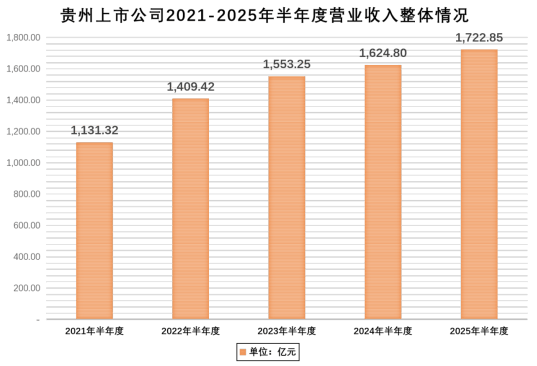
Core Insights - Guizhou listed companies have shown strong performance in the first half of 2025, with 25 companies reporting profits and 19 companies achieving year-on-year revenue growth, leading to the highest compound growth rates in net profit and revenue nationally over the past five years [1][5] Revenue Growth - Guizhou listed companies achieved a total revenue of 172.85 billion yuan in the first half of 2025, marking a year-on-year increase of 6.03%, ranking 4th nationally and 3rd in the western region, surpassing the provincial GDP growth by 0.73 percentage points [2] - The revenue has maintained continuous positive growth from 2021 to 2025, with a compound growth rate of 11.09%, ranking 2nd nationally [2] Individual Company Performance - Among Guizhou listed companies, 18 firms reported revenues exceeding 1 billion yuan, and 6 companies surpassed 5 billion yuan, with Kweichow Moutai leading at 89.39 billion yuan [4] - 19 companies reported year-on-year revenue growth, with 8 companies achieving double-digit growth; Andar Technology led with a 126.80% increase [4] Profitability - Guizhou listed companies reported a total net profit of 50.26 billion yuan in the first half of 2025, ranking 9th nationally and 2nd in the western region, reflecting a year-on-year growth of 5.37% and a 60.45% increase compared to 2021 [5] - 25 companies reported profits, with Kweichow Moutai again leading at 45.40 billion yuan; 11 companies experienced year-on-year profit growth [6] Research and Development Investment - A total of 33 Guizhou listed companies disclosed R&D expenditures amounting to 2.52 billion yuan, a slight increase of 0.04% year-on-year, and a 70.18% increase compared to 2021 [9] - 24 companies exceeded the national average R&D intensity of 2.12%, with 8 companies surpassing 5% [10] International Expansion - 13 companies reported overseas business income totaling 18.29 billion yuan, a year-on-year increase of 18.66%, with both the number of participating companies and revenue scale reaching new highs [14] - Zhongwei Co. achieved 10.78 billion yuan in overseas revenue, ranking 7th among western listed companies [15] Shareholder Returns - In the first half of 2025, Guizhou listed companies showed a significant increase in mid-term dividend announcements, with 7 companies disclosing plans totaling 591 million yuan, nearly quadrupling from the previous year [17] - 8 companies engaged in share buybacks, investing a total of 7.14 billion yuan, ranking 6th nationally and 1st in the western region [18] Notable Corporate Actions - Kweichow Moutai announced plans to buy back shares worth between 3 billion and 3.3 billion yuan, demonstrating confidence in its long-term value [21] - Guizhou Tire's major shareholder committed to not reducing their stake in the company for twelve months [21]


贵州上市公司2025年上半年营收规模持续扩大 头部企业引领增长
Zheng Quan Shi Bao Wang· 2025-09-02 14:43
Core Insights - Guizhou listed companies have shown significant growth in both revenue and net profit, with 25 companies reporting profits and 19 companies achieving year-on-year revenue growth in the first half of 2025 [1][2][3] Revenue Performance - In the first half of 2025, Guizhou listed companies achieved a total revenue of 172.85 billion yuan, representing a year-on-year increase of 6.03% and a 52.29% increase compared to the same period in 2021 [2] - The revenue growth rate of Guizhou listed companies is ranked 4th nationally and 3rd in the western region, surpassing the GDP growth rate of Guizhou by 0.73 percentage points [2] - Among these companies, 18 have revenues exceeding 1 billion yuan, and 6 have revenues exceeding 5 billion yuan, with Kweichow Moutai leading at 89.39 billion yuan [2] Profitability - Guizhou listed companies reported a total net profit of 50.26 billion yuan in the first half of 2025, ranking 9th nationally and 2nd in the western region, with a year-on-year increase of 5.37% and a 60.45% increase compared to 2021 [3] - 71.43% of the companies reported profits, with Kweichow Moutai again leading at 45.40 billion yuan [3] Innovation and R&D - A total of 33 Guizhou listed companies disclosed R&D expenditures, totaling 2.52 billion yuan, a slight increase of 0.04% year-on-year and a 70.18% increase compared to 2021 [4] - 6 companies reported R&D expenditures exceeding 100 million yuan, with Zhongwei Co. leading at 545 million yuan [4] International Business - 13 companies reported overseas business income totaling 18.29 billion yuan, reflecting an 18.66% year-on-year increase, with Zhongwei Co. achieving 10.78 billion yuan in overseas revenue [5] Investor Returns - In the first half of 2025, 7 Guizhou listed companies announced interim dividend plans, with a total dividend amount of 591 million yuan, nearly quadrupling from the previous year [7] - 8 companies engaged in share buybacks, investing a total of 7.14 billion yuan, ranking 6th nationally [7]



央企发挥分红示范引领作用,13家公司分红超百亿,纯央企投资标的:国企共赢ETF备受关注
Sou Hu Cai Jing· 2025-09-02 05:45
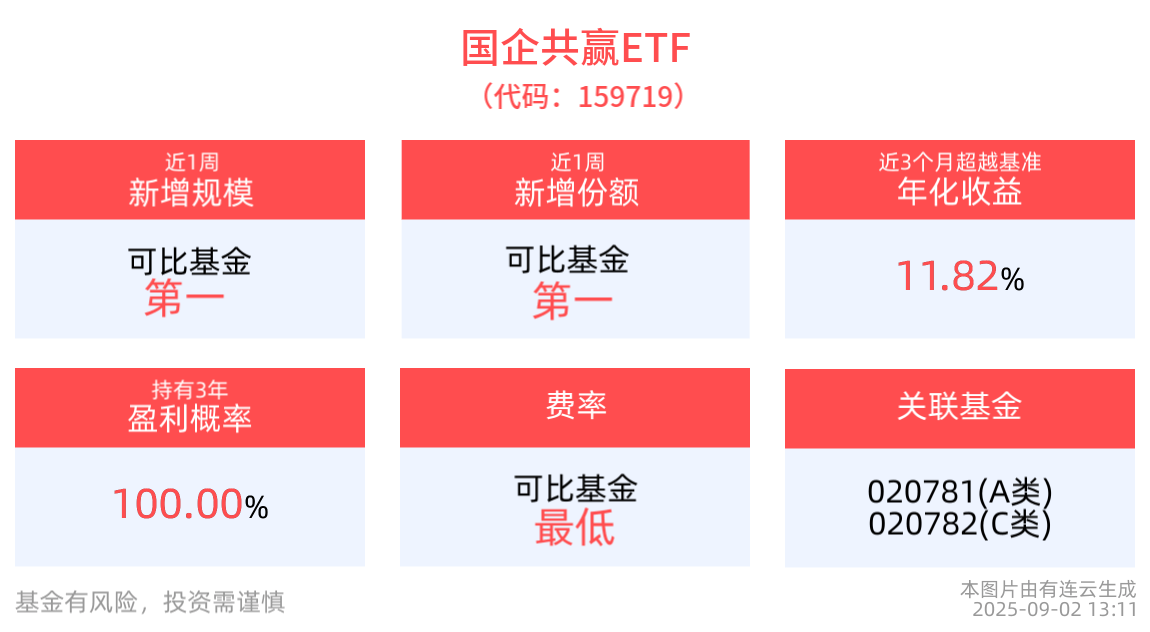
Core Viewpoint - The National Enterprise Win ETF (159719) has shown a positive performance with a recent increase of 0.63%, reflecting a broader trend of rising profits and dividends among Chinese listed companies, particularly state-owned enterprises [3][4]. Performance Summary - As of September 1, 2025, the National Enterprise Win ETF has achieved a net value increase of 51.31% over the past three years, ranking 215 out of 1860 index equity funds, placing it in the top 11.56% [4]. - The ETF has recorded a maximum monthly return of 14.61% since its inception, with the longest consecutive monthly gains reaching 7 months and a total increase of 24.70% [4]. - The average monthly return during rising months is 4.14%, with a total annual profit percentage of 100.00% and a historical three-year holding profit probability of 100.00% [4]. - Over the past three months, the ETF has outperformed its benchmark with an annualized return of 11.82% [4]. Liquidity and Scale - The ETF experienced a turnover rate of 6.84% with a trading volume of 4.9045 million yuan on September 1, 2025, and an average daily trading volume of 16.6744 million yuan over the past year [3]. - In the past week, the ETF's scale increased by 2.187 million yuan, ranking it in the top third among comparable funds [3]. - The number of shares increased by 2 million in the past week, also placing it in the top third among comparable funds [3]. Fee Structure and Tracking Precision - The management fee for the National Enterprise Win ETF is 0.25%, and the custody fee is 0.05%, which are the lowest among comparable funds [5]. - The tracking error for the ETF over the past month is 0.060%, indicating high tracking precision compared to similar funds [5]. Index Composition - The ETF closely tracks the FTSE China National Enterprises Open Win Index, which reflects the performance of Chinese state-owned enterprises listed in mainland China and Hong Kong, focusing on globalization and sustainable development [5]. - The index consists of 100 constituent stocks, including 80 A-share companies and 20 companies listed in Hong Kong [5]. Top Holdings - The top holdings in the National Enterprise Win ETF include: - China Petroleum (601857) with a weight of 15.94% and a price increase of 2.18% - China Petrochemical (600028) with a weight of 11.93% and a price increase of 1.40% - China State Construction (601668) with a weight of 9.59% and a price increase of 0.18% [7].






百胜中国(09987):同店转正运营提升经营利润改善开店行稳致远
Hua Yuan Zheng Quan· 2025-08-11 07:30
Investment Rating - The investment rating for the company is "Accumulate" (maintained) [5] Core Views - The company has achieved positive same-store sales growth for the first time since 2024, driven by an increase in transaction volume. In Q2 2025, same-store sales grew by 1%, with transaction volume up by 2%, although the average transaction value declined by 1% due to increased small orders from delivery subsidies [7] - Operational efficiency improvements have led to a continuous rise in restaurant profit margins. The operating profit margin for Q2 was 10.9%, up by 1.0 percentage point year-on-year, while the restaurant profit margin reached 16.1%, an increase of 0.6 percentage points [7] - The company maintains its guidance for a net addition of 1,600 to 1,800 new stores for the year, while lowering capital expenditure guidance. The investment cost per store has decreased, with KFC's cost down to 1.4 million and Pizza Hut's down to 1.1 million [7] - The company plans to return at least $1.2 billion to shareholders through dividends and buybacks in 2025, reflecting confidence in its financial position [7] - Earnings forecasts for 2025-2027 project net profits of $933.54 million, $1.01275 billion, and $1.13752 billion respectively, with corresponding growth rates of 2.5%, 8.5%, and 12.3% [7] Financial Summary - As of August 8, 2025, the company's closing price was HKD 360.00, with a market capitalization of HKD 132,960.66 million. The asset-liability ratio stands at 41.10% [3][6] - Revenue projections for 2025 are estimated at $11,763.26 million, with a year-on-year growth rate of 4.1% [6][8] - The company reported a Q2 2025 revenue of $2.787 billion, a 4% increase year-on-year, and a net profit of $215 million, a 1% increase year-on-year [7]
中国飞鹤(06186.HK)2025年中报预告点评:业绩低于预期 加大分红回购力度
Ge Long Hui· 2025-07-11 02:35
Core Viewpoint - The company anticipates a decline in revenue and net profit for the first half of 2025, primarily due to inventory reduction and the impact of a fertility subsidy program [1][2]. Group 1: Financial Performance - The company expects to achieve revenue of 9.1-9.3 billion for H1 2025, representing a year-on-year decline of 7.9%-9.9% [1]. - The projected net profit for H1 2025 is estimated to be between 1.0-1.2 billion, reflecting a year-on-year decrease of 36%-47% [1]. - The company plans to allocate no less than 1.0 billion for share buybacks and expects to distribute dividends of at least 2.0 billion in 2025, down from 2.72 billion in the previous year [1][2]. Group 2: Market Outlook - The company forecasts low single-digit growth for full-year revenue, with H2 2025 revenue expected to increase by 10%-15% [2]. - The anticipated completion of inventory adjustments in Q3 2025 is expected to positively impact revenue [2]. - The company plans to launch higher-end products in H2 2025, which may drive revenue improvement [2]. Group 3: Investment Strategy - The company has announced a share buyback plan and a commitment to dividend distribution, enhancing shareholder returns [2][3]. - The long-term outlook remains positive due to expected recovery in newborn population growth and the implementation of fertility subsidies, suggesting a potential industry improvement cycle of 2-3 years [2]. - The company has adjusted its earnings forecasts for 2025-2027, with a target price set at 5.1 HKD and a recommendation downgrade to "recommended" [3].
华尔街到陆家嘴精选丨非农强劲 美股再创新高 降息预期降低;华尔街大行开启分红回购盛宴 高盛等多股创新高!软件巨头恢复对华EDA软件出口 股价大涨!
Di Yi Cai Jing Zi Xun· 2025-07-04 01:38
Group 1: US Employment Data - US non-farm payrolls increased by 147,000 in June, exceeding expectations of 106,000 and the previous value of 139,000, marking the fourth consecutive month of better-than-expected results [1] - The unemployment rate unexpectedly dropped to 4.1%, lower than the expected 4.3% and the previous 4.2%, indicating a resilient labor market despite hiring uncertainties [1] - Following the non-farm payroll report, market expectations for a July Federal Reserve rate cut diminished significantly, with the probability dropping from 98% to approximately 80% [1] Group 2: Japan Wage Negotiations - Japan's average wage increase for the fiscal year 2025 reached 5.25%, the highest in 34 years, with small enterprises seeing a growth of 4.65% [2] - The wage growth reflects a tight labor market, potentially supporting the Bank of Japan's interest rate hike, although persistent inflation pressures may limit consumer spending and corporate profit margins [2] - Global investors are reducing long positions in the yen due to various short-term challenges, including slow progress on US-Japan trade agreements and uncertainties surrounding Japan's elections [2] Group 3: US Banking Sector - All 22 banks passed the Federal Reserve's stress tests, with an average Tier 1 capital ratio of 11.6%, significantly above the 4.5% regulatory requirement [3] - Major banks announced increased dividends and stock buyback plans, with Goldman Sachs raising its dividend by 33% to $4 per share, reflecting its strong capital position [3][4] - The banking sector's performance has led to record highs in bank stock prices, with Goldman Sachs' market capitalization surpassing $220 billion [4] Group 4: EDA Software Market - The US government lifted export restrictions on three major chip design software suppliers: Synopsys, Cadence, and Siemens, allowing them to fully resume services to Chinese clients [5] - These three companies dominate the EDA market, holding a combined market share of 82% in China, with Synopsys at 32%, Cadence at 30%, and Siemens at 13% [5] - Following the announcement, Cadence and Synopsys saw stock price increases of 5.1% and 4.9%, respectively, with their combined market capitalization exceeding $170 billion [5] Group 5: Oracle and OpenAI Partnership - OpenAI has agreed to lease significant computing power from Oracle, totaling approximately 4.5 gigawatts, which is enough to power millions of American homes [6] - Oracle's stock price rose over 3%, reaching a new high of $237.03, as the company continues to expand its cloud computing business, particularly targeting AI clients [6][7] - The partnership is part of a larger $500 billion "Star Gate" initiative involving SoftBank, Oracle, and OpenAI, aimed at enhancing cloud computing capabilities [6]


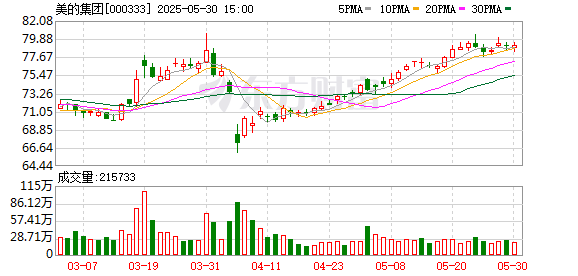
美的方洪波最新发声!信息量很大
Zhong Guo Ji Jin Bao· 2025-05-31 16:08
Core Viewpoint - The chairman of Midea Group, Fang Hongbo, stated that the home appliance industry lacks a competitive moat and cannot produce great companies, indicating that Xiaomi has strategically lost in this sector [2][8]. Group 1: Company Strategy and Financials - Midea Group plans to continue increasing its dividend and share buyback ratio, with a significant rise in the dividend payout ratio expected for 2024 [5][6]. - The company currently has a cash reserve of nearly 40 billion yuan, which is increasing annually, but there are concerns that low capital expenditure may lower return on equity (ROE) [6][7]. - Midea's revenue has surpassed 400 billion yuan, and the company is focusing on both B2B and B2C business models to adapt to the declining growth in the home appliance sector [7][9]. Group 2: Market Dynamics and Competition - The home appliance market is characterized as a mature market with limited growth potential, and Midea is working to slow the decline of its core business while exploring new growth avenues [7][9]. - The company acknowledges the increasing concentration in the home appliance industry, with a notable rise in market share despite the entry of new competitors [7]. - Fang Hongbo emphasized that the home appliance industry is highly competitive and that any new entrants are strategically at a disadvantage, as the market is saturated and efficiency gains are minimal [8][9]. Group 3: Future Prospects and Medical Sector - Midea Group is exploring opportunities in the medical sector, particularly in imaging diagnostic equipment, and is considering establishing a dedicated medical division [9]. - The company believes there is significant growth potential in the medical equipment market, with a target of reaching 50 billion yuan in revenue, as the current largest domestic player, Mindray, has revenues of just over 30 billion yuan [9].