商品市场

Search documents
中信建投期货:1月27日能化早报
Xin Lang Cai Jing· 2026-01-27 01:22
Group 1 - Domestic natural rubber price is 15,950 CNY/ton, down 50 CNY/ton from the previous day; Thai 20 mixed rubber price is 15,150 CNY/ton, also down 50 CNY/ton [4][31] - Thai rubber water price reported at 57.7 THB/kg, up 0.1 THB/kg from the previous day; cup rubber price remains stable at 53.0 THB/kg [5][32] - As of January 25, 2026, Qingdao's total inventory of natural rubber is 584,500 tons, a decrease of 0.04 million tons, or 0.07% [5][32] Group 2 - The global rubber market is expected to transition from dynamic pricing based on supply-demand balance to static pricing based on inventory levels as the Northern Hemisphere enters the low production season [5][32] - Despite a projected moderate growth in global tire and rubber product demand by 2026, growth will take time and may be limited by ongoing global trade barriers [5][32] - The rebound in rubber prices is not expected to exceed the levels seen in late July 2025 before the Lunar New Year in 2026 [5][32] Group 3 - PX industry load in China decreased by 0.4 percentage points to 89.0%, while Asia's load increased by 0.4 percentage points to 81.0%, indicating a stable supply [6][33] - The PX supply-demand balance is expected to shift to a loose state in the first quarter due to numerous maintenance plans in downstream PTA facilities [6][33] - The price of PX is expected to fluctuate in the short term, with a support range of 7,200-7,300 CNY [6][33] Group 4 - PTA industry load decreased by 0.3 percentage points to 76.6%, indicating a low level compared to historical data, with expected supply tightening due to maintenance plans [8][35] - The overall demand for PTA is weak, with a decline in new orders and a decrease in factory operating rates in the Jiangsu-Zhejiang region [8][35] - PTA price is expected to fluctuate in the short term, with a support range of 5,200-5,300 CNY [8][35] Group 5 - The EG industry load decreased by 0.8 percentage points to 73.7%, with domestic supply remaining ample despite potential import reductions from North America and the Middle East [10][37] - The price of EG is expected to fluctuate strongly in the short term, with a support range of 3,900-3,950 CNY [10][37] Group 6 - The PR industry load decreased by 2.0 percentage points to 66.4%, with ongoing maintenance expected to support processing fees [12][42] - The demand for PR is weak due to the traditional off-season for beverage consumption, limiting production recovery [12][42] - PR price is expected to fluctuate in the short term, with a support range of 6,100-6,200 CNY [12][42] Group 7 - The glass industry shows weak supply and demand, with inventory increasing by 10,000 tons to 266,100 tons, a year-on-year increase of 22.7% [18][45] - The glass production rate remains stable, but downstream purchasing activity is generally weak [18][45] - Glass prices are expected to fluctuate in the short term, with a reference range of 1,060-1,100 CNY [18][46]



Gold Rises Over 2%; US Durable Goods Orders Jump In November
Benzinga· 2026-01-26 17:15
Market Performance - U.S. stocks experienced an upward trend, with the Nasdaq Composite increasing by over 150 points on Monday [1] - The Dow Jones Industrial Average rose by 0.36% to 49,276.58, while the Nasdaq gained 0.77% to 23,682.70, and the S&P 500 increased by 0.64% to 6,959.60 [1] Sector Performance - Communication services stocks saw a gain of 1.8% on Monday [1] - Consumer discretionary stocks experienced a decline of 0.3% [1] Economic Indicators - U.S. durable-goods orders increased by 5.3% month-over-month in November, following a revised 2.1% decline in October, surpassing market expectations of a 3.7% increase [2][10] Commodity Prices - Oil prices decreased by 0.4% to $60.85, while gold prices rose by 2.2% to $5,087.80 [5] - Silver prices surged by 12.8% to $114.325, and copper prices increased by 0.8% to $5.994 [5] European Market Performance - European shares showed mixed results, with the eurozone's STOXX 600 rising by 0.20% and Spain's IBEX 35 Index increasing by 0.78% [6] Asian Market Performance - Asian markets closed mixed, with Japan's Nikkei falling by 1.79%, while Hong Kong's Hang Seng Index gained 0.06% and China's Shanghai Composite declined by 0.09% [7] Company-Specific Movements - Battalion Oil Corp shares surged by 235% to $4.29 after changing its gas processing partner and increasing production [9] - Brand Engagement Network Inc shares rose by 105% to $33.72 following a strategic partnership announcement [9] - Lands' End Inc shares increased by 40% to $19.72 after announcing a joint venture with WHP Global [9] - Revolution Medicines Inc shares dropped by 17% to $97.92 after reports indicated that Merck is no longer pursuing an acquisition [9] - CN ENERGY GROUP Inc shares fell by 43% to $0.46 due to a Nasdaq delisting determination [9] - Satellogic Inc shares decreased by 14% to $4.51 after announcing a $35 million registered direct offering of common stock [9]

市场环境因子跟踪周报(2026.01.16):市场降温整固,成长优势延续-20260122
HWABAO SECURITIES· 2026-01-22 11:17
- The report tracks quantitative factors in the equity market, highlighting that the market style remains tilted towards small-cap and growth-oriented stocks, with increased volatility in style performance and widened return differences between styles[10][11] - In terms of market structure, the dispersion of excess returns across industries has risen, while industry rotation speed has decreased. The proportion of rising constituent stocks in indices like CSI 300 and CSI 500 has declined. Additionally, the concentration of trading in the top 100 stocks remained stable, while the top 5 industries saw a slight increase in trading concentration[10][11] - Market activity indicators show a decline in market volatility across most indices except CSI 1000, while turnover rates have continued to rise[10][11] - In the commodity market, the trend strength of precious metals and energy chemicals has increased, while other sectors have seen a decline. Basis momentum for precious metals and agricultural products has risen, whereas other sectors have declined. Volatility remains high for precious metals and base metals, with slight decreases in energy chemicals and black metals. Liquidity has decreased for precious metals and energy chemicals but increased for other sectors[23][28] - In the options market, implied volatility for SSE 50 and CSI 1000 has decreased from previous highs. The skewness of call options has declined, while that of put options has increased. Despite this, the skewness of CSI 1000 put options remains negative, indicating that market participants perceive a low risk of significant declines in small-cap stocks in the short term[31][32] - In the convertible bond market, the market experienced wide fluctuations. The premium rate for bonds convertible at par value has stabilized with slight adjustments, while the pure bond premium rate for debt-oriented groups has continued to rise. The proportion of low-conversion-premium bonds has also increased. However, trading volume in the market remains high and has not weakened[33][39]
中信建投期货:1月14日能化系早报
Xin Lang Cai Jing· 2026-01-14 01:31
Group 1: Rubber Market - Domestic all-latex rubber price is 15,700 yuan/ton, down 100 yuan/ton from the previous day; Thai No. 20 mixed rubber price is 15,050 yuan/ton, down 80 yuan/ton [4] - As of January 11, 2026, the total inventory of natural rubber in Qingdao is 568,200 tons, an increase of 1,980 tons, or 3.62% from the previous period [4][17] - With the arrival of winter in the Northern Hemisphere, the pricing framework is expected to shift from dynamic pricing based on supply and demand to static pricing based on inventory levels, leading to high volatility in rubber prices [5][18] Group 2: PX Market - The PX industry load in China increased by 0.3 percentage points to 90.9%, while the Asian industry load also increased by 0.3 percentage points to 81.2%, indicating stable supply and demand [6][19] - The demand side is supported by the restart of downstream PTA facilities, which is expected to boost PX demand [19] - The overall supply of PX is expected to remain high in January, with inventory accumulation expected to narrow [19] Group 3: PTA Market - The PTA industry load increased by 0.1 percentage points to 78.2%, remaining at a low level compared to previous years [7][20] - New order sentiment is weak, and the operating rate of terminal factories in Jiangsu and Zhejiang is declining [20] - PTA inventory is expected to face accumulation pressure in January due to seasonal demand weakness [20] Group 4: EG Market - The domestic ethylene glycol (EG) industry load increased by 0.5 percentage points to 74.2%, indicating stable supply and demand [21] - Despite rising shipping costs and potential import reductions, domestic supply remains ample, leading to significant supply pressure [21] - January is expected to see inventory accumulation, with February potentially being the peak period for inventory pressure in the first half of the year [21] Group 5: Soda Ash Market - Soda ash futures experienced a slight decline, with the latest production increasing by 57,000 tons to 754,000 tons, indicating rising supply pressure [24] - Downstream demand has slightly decreased, with the latest inventory at 156,500 tons, down 800 tons from the previous week [24] - The overall market sentiment is weak, with short-term soda ash prices expected to fluctuate [24] Group 6: Glass Market - Glass futures saw a significant decline, while spot prices remained stable [25] - Recent production has decreased, and downstream purchasing activity has improved, leading to a reduction in inventory [25] - The latest glass inventory decreased by 67,000 tons to 2,776,000 tons, indicating a seasonal demand weakness [25]
硅铁:商品市场情绪不减,盘面宽幅震荡,锰硅:海外矿企报价抬升,盘面宽幅震荡
Guo Tai Jun An Qi Huo· 2026-01-13 02:07
1. Report Industry Investment Rating - No information provided 2. Core Viewpoints - The sentiment in the commodity market for ferrosilicon remains strong, with the futures price fluctuating widely. For silicomanganese, the price quotes of overseas mining companies have increased, also leading to wide - range fluctuations in the futures price [1] 3. Summary by Relevant Catalogs 3.1 Fundamental Tracking - **Futures Data**: - Ferrosilicon 2603 has a closing price of 5698, up 66 from the previous trading day, with a trading volume of 201,430 and an open interest of 224,722. Ferrosilicon 2605 has a closing price of 5674, up 62, a trading volume of 37,475, and an open interest of 65,353 [1] - Silicomanganese 2603 has a closing price of 5930, up 26, a trading volume of 144,766, and an open interest of 257,314. Silicomanganese 2605 has a closing price of 5942, up 16, a trading volume of 80,236, and an open interest of 247,341 [1] - **Spot Data**: - The aggregated price of ferrosilicon FeSi75 - B in Inner Mongolia is 5350 yuan/ton, up 50 yuan from the previous trading day. The price of silicomanganese FeMn65Si17 in Inner Mongolia is 5700 yuan/ton. The price of manganese ore Mn44 lump is 43.0 yuan/ton - degree, and the price of semi - coke small material in Shenmu is 760 yuan/ton [1] - **Price Difference Data**: - The spot - futures price difference for ferrosilicon (spot - 03 futures) is - 348 yuan/ton, down 16 yuan; for silicomanganese, it is - 230 yuan/ton, down 26 yuan [1] - The near - far month price difference for ferrosilicon 2603 - 2605 is 24 yuan/ton, up 4 yuan; for silicomanganese 2603 - 2605 is - 12 yuan/ton, up 10 yuan [1] - The cross - variety price difference for silicomanganese 2603 - ferrosilicon 2603 is 232 yuan/ton, down 40 yuan; for silicomanganese 2605 - ferrosilicon 2605 is 268 yuan/ton, down 46 yuan [1] 3.2 Macro and Industry News - **Ferrosilicon and Silicomanganese Spot Price**: - On January 12, the price of 72 ferrosilicon in Shaanxi is 5250 - 5300 yuan/ton (down 25 yuan), in Ningxia is 5350 - 5400 yuan/ton (down 25 yuan), etc. The price of 75 ferrosilicon in Shaanxi is 5800 - 5850 yuan/ton (down 25 yuan), in Inner Mongolia is 5750 - 5800 yuan/ton (down 50 yuan). The FOB price of 72 ferrosilicon is 1050 - 1070 dollars/ton (up 10 dollars), 75 is 1100 - 1130 dollars/ton (up 10 dollars). The northern quote of silicomanganese 6517 is 5700 - 5750 yuan/ton, and the southern quote is 5800 - 5850 yuan/ton [2] - **Manganese Ore Price**: - Jupiter announced the February 2026 shipment price of manganese ore to China: the price of South African semi - carbonate lump with Mn36.5% (typical value) is 4.32 dollars/ton - degree, up 0.17 dollars/ton - degree month - on - month. South32's offer of South African semi - carbonate lump (typical value Mn36.9%) in February 2026 is 4.4 dollars/ton - degree, up 0.25 dollars/ton - degree; the offer of Australian lump (typical value Mn42%) is 5.1 dollars/ton - degree, up 0.25 dollars/ton - degree. Comilog's offer of Gabonese lump to China in February 2026 is 4.9 dollars/ton - degree, up 0.2 dollars/ton - degree. United Mining (CML)'s offer to China in February 2026 for Australian lump with Mn > 46%, Fe < 6%, SiO2 < 18% is 5.2 dollars/ton - degree, up 0.2 dollars/ton - degree [2][3] - **Steel Mill Procurement**: - A steel mill in Jiangsu set the price of silicomanganese in early January at 5935 yuan/ton, up 125 yuan/ton from the end - December price; another steel mill in Jiangsu set the price at 5940 yuan/ton in January, with a procurement volume of 6000 tons, up 192 yuan/ton from the December price. On January 9, a steel mill in Jiangsu set the price of ferrosilicon at 5800 - 5830 yuan/ton, with a volume of 1500 tons [3] 3.3 Trend Intensity - The trend intensity of ferrosilicon is 0, and that of silicomanganese is 0 [3]
光大期货:1月12日软商品日报
Xin Lang Cai Jing· 2026-01-12 01:34
Sugar Market - Raw sugar prices continue to fluctuate, with Thailand's cumulative sugarcane crushing volume for the 2025/26 season reaching 16.98 million tons as of January 7, a decrease of 5.77 million tons or 25.35% compared to the same period last year [2][15] - The sugar content of the cane is 11.54%, down 0.08% from last year, while the sugar production rate is 9.017%, a decrease of 0.209% year-on-year [2][15] - Sugar production is reported at 1.53 million tons, down 567,300 tons or 27.03% from last year [2][15] - Domestic sugar prices in Guangxi range from 5,320 to 5,380 yuan per ton, while in Yunnan, prices are between 5,140 and 5,230 yuan per ton [2][15] - The market sentiment is generally positive due to rising prices in the financial markets and commodities, although the market is expected to face pressure post-Spring Festival as it enters a sales lull [3][15] Cotton Market - The new cotton planting area is expected to be strongly regulated, with the current cotton inspection volume at approximately 6.7 million tons, an increase of 827,000 tons year-on-year [16][17] - As of January 4, the comprehensive operating rate for yarn production is 49.65%, down 0.45 percentage points week-on-week, indicating a slight decrease in demand from textile enterprises [17][19] - In November, China's cotton imports reached 120,000 tons, an increase of 30,000 tons month-on-month and 10,000 tons year-on-year, while cotton yarn imports were 150,000 tons, also showing an increase [18][19] - Commercial cotton inventory in China as of the end of December was 5.78 million tons, up 435,700 tons month-on-month and 996,000 tons year-on-year [19][20] - The market is experiencing divergence, with cotton prices rising due to various factors, including anticipated adjustments in planting areas and overall market sentiment, but the increase in raw material costs is compressing profit margins for textile companies [21][20]

如何决定“谁得到什么”
Xin Lang Cai Jing· 2026-01-09 16:41
Core Insights - The article emphasizes that market design is crucial for achieving effective matching in various sectors, particularly in education and other critical areas where price mechanisms alone are insufficient [8][10][16] Group 1: Market Design in Education - The traditional college admission process in China has evolved from a sequential preference system to a parallel preference system, which reduces the risk of high-scoring students being left out [5][6] - The efficiency of college admissions is not determined by tuition fees but rather by the design of the admission system, which can lead to various market failures if not properly structured [5][6][10] - The article draws parallels between college admissions and train ticket purchasing, illustrating how market design can improve fairness and efficiency in resource allocation [6][10] Group 2: Market Failures and Solutions - The article identifies four types of market failures: premature collapse, speed competition, congestion, and insecurity, which can hinder effective matching [9][10] - Nobel laureate Alvin E. Roth's work highlights that market failures often arise not from human greed but from flaws in market mechanisms, necessitating thoughtful design [8][9] - Roth's research suggests that economists should act as market designers, proposing practical solutions to improve market functionality [12][16] Group 3: Real-World Applications - The article discusses the matchmaking market in arranged marriages, noting its inefficiencies due to lack of depth, congestion, insecurity, and premature commitments [13][14] - The doctoral admission process in the U.S. is presented as a well-functioning market, yet it faces challenges such as "explosive offers" that disrupt established rules [14][15] - The need for continuous maintenance and adaptation of market designs is emphasized, as changing environments and technologies can lead to new challenges [15][16]

商品日报(1月9日):原油燃料油反弹超3% 多晶硅重挫超8%
Xin Lang Cai Jing· 2026-01-09 11:29
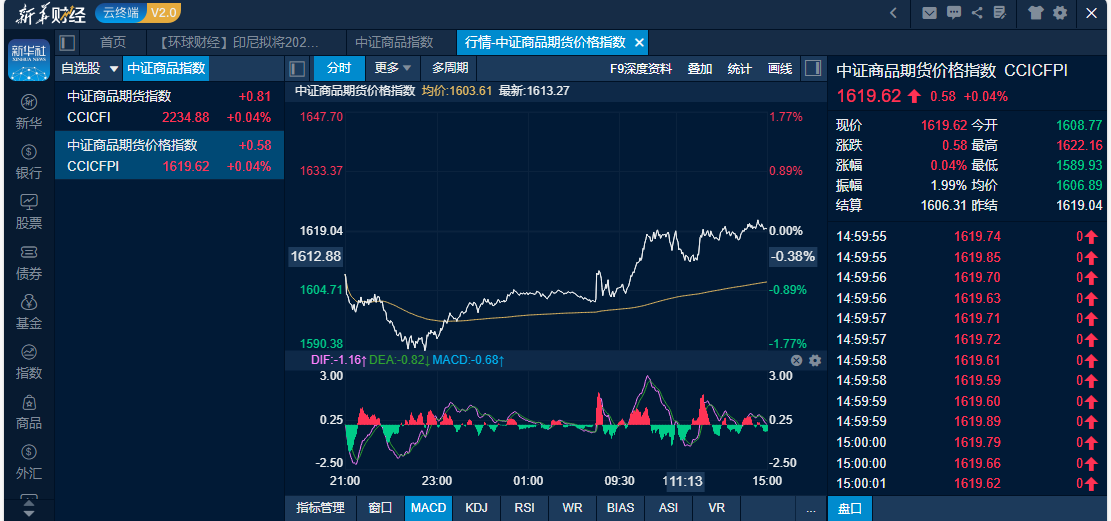
Group 1: Commodity Market Overview - The commodity futures market experienced a rebound on January 9, driven by strong performance in precious metals and oil and gas sectors, with the China Securities Commodity Futures Price Index closing at 1619.62 points, up 0.04% from the previous trading day [1] - The China Securities Commodity Futures Index also rose to 2234.88 points, reflecting a similar increase of 0.04% [1] Group 2: Precious Metals Performance - Precious metals showed strong recovery, with palladium leading the market with a rise of over 6%, while platinum and gold also rebounded significantly from their intraday lows [3] - The market for palladium is shifting from a supply shortage to a surplus, influenced by the concentration of demand in automotive catalysts and the rise of electric vehicles, although short-term bullish sentiment may provide some price support [3] Group 3: Oil Market Dynamics - International oil prices surged, with SC crude oil and low-sulfur fuel oil both rising over 3%, driven by geopolitical tensions, particularly in Iran, which raised concerns about potential disruptions in oil production and exports [4] - The market remains focused on the oversupply issue, with expectations that OPEC may increase production in response to rising prices [4] Group 4: Silicon Market Decline - The silicon market faced a sharp decline of over 8% due to regulatory changes and expectations of a return to marginal cost pricing, leading to weakened market sentiment [5] - The shift in regulatory guidance has altered expectations for future silicon capacity clearing, contributing to a significant drop in bullish sentiment previously supported by capacity control [5] Group 5: Nickel Market Trends - Nickel prices continued to decline, with the main contract down 2.67%, primarily due to easing concerns over production cuts from Indonesia [6] - Despite a weak fundamental outlook for nickel, the uncertainty surrounding Indonesian policies may provide some support, leading to expectations of continued price volatility [6] Group 6: Other Commodity Movements - The rubber sector faced downward pressure, with both butadiene rubber and 20 rubber closing down over 2% and 1% respectively [7] - The black series commodities also saw a decline in bullish sentiment, with various products like coking coal, silicon iron, rebar, and hot-rolled coil experiencing different degrees of decrease [7]
《黑色》日报-20260108
Guang Fa Qi Huo· 2026-01-08 02:10
1. Report Industry Investment Ratings - There is no information about industry investment ratings in the provided reports. 2. Core Views Steel Industry - Black metals rose strongly, with coking coal hitting the daily limit and steel futures rising 80 - 90 yuan/ton, the largest daily increase since August. Steel continued to cut production and reduce inventory. Rebar maintained a large supply - demand gap and good de - stocking, while hot - rolled coil de - stocking was still slow. Apparent demand declined seasonally, and demand was weak. Production cuts supported steel prices, and raw materials were expected to drive steel prices up within a range. Rebar was expected to fluctuate in the 3000 - 3200 range, and hot - rolled coil in the 3150 - 3350 range [1]. Iron Ore Industry - The iron ore main contract rose significantly due to news - driven factors and a strong commodity market influenced by macro news. Spot prices followed the increase. Supply: global iron ore shipments declined this period, and future focus was on Southern Hemisphere weather. Demand: hot metal production increased slightly, and January's hot metal production was expected to rise slightly. The steel mill profit rate improved, and the hot - rolled coil inventory problem improved. Inventory: iron ore inventory was at a high level, while steel mill inventory remained low. Future inventory was expected to continue to accumulate. Iron ore was expected to shift from loose supply - demand to weak supply - demand, and prices were expected to fluctuate strongly in a high - level range, with a short - term reference range of 770 - 840 [4]. Coke and Coking Coal Industry - Coke futures rose strongly. The fourth round of coke price cuts was implemented on January 1st. The coke market was weakly stable. Supply: coke production declined due to pressure on coking profits. Demand: steel mills increased maintenance due to losses, hot metal production declined, and steel prices fluctuated at a low level. Inventory: overall inventory increased slightly. Coking coal futures rose strongly, with the main contract hitting the daily limit. Supply: coal mine production increased slightly, but sales were poor, and inventory accumulated. Import coal inventory continued to accumulate, and Mongolian coal prices fluctuated downward. Demand: steel mill maintenance decreased, hot metal production was stable with a slight increase, and coking profits declined. Inventory: overall inventory increased slightly. Policy - related information needed verification. For both, unilateral trading was advised to wait for policy verification, and the arbitrage strategy was to go long on coking coal and short on coke [6]. Ferrosilicon and Ferromanganese Industry - Ferrosilicon: The main contract continued to rise, driven by macro news and cost - side coal news. Supply: production increased slightly last week and was expected to continue to grow. Demand: hot metal production was expected to increase slightly in January, and the demand from the metal iron and magnesium industries supported ferrosilicon. Cost: power prices were stable or slightly decreased, and cost differences among regions widened. The supply - demand contradiction was alleviated, and prices were expected to fluctuate strongly in the 5600 - 6300 range. Ferromanganese: Prices fluctuated upward, affected by macro news. The news of increased export tariffs on South African manganese ore was false. Supply: production was basically flat, and the reduction amplitude continued to narrow. Demand: hot metal production was expected to increase slightly, supporting ferromanganese demand. Cost: manganese ore prices were stable, providing strong support. The market was in a state of self - supply surplus but overall balance of manganese elements. Prices were expected to fluctuate widely, with a reference range of 5800 - 6400 [7]. 3. Summary by Relevant Catalogs Steel Industry Steel Prices and Spreads - Rebar and hot - rolled coil spot and futures prices in different regions all increased. For example, rebar spot prices in East China rose from 3280 to 3320 yuan/ton, and hot - rolled coil 05 contract prices rose from 3248 to 3332 yuan/ton [1]. Cost and Profit - Steel billet prices rose by 50 to 2980 yuan/ton. The profits of hot - rolled coils in different regions decreased, such as in East China, where it decreased from - 20 to - 56 yuan/ton [1]. Production - The daily average hot metal production remained at 226.5 tons. The production of five major steel products increased by 18.4 to 815.2 tons, with a growth rate of 2.3%. Rebar production increased by 3.8 to 188.2 tons, and hot - rolled coil production increased by 11.0 to 304.5 tons [1]. Inventory - The inventory of five major steel products decreased by 25.8 to 1232.2 tons, a decrease of 2.1%. Rebar inventory decreased by 12.2 to 422.0 tons, and hot - rolled coil inventory decreased by 6.3 to 371.0 tons [1]. Transaction and Demand - Building material trading volume increased by 2.9 to 12.5 tons, a growth rate of 29.7%. The apparent consumption of five major steel products increased by 7.4 to 841.0 tons, a growth rate of 0.9%. The apparent consumption of rebar decreased by 2.2 to 200.4 tons, and that of hot - rolled coil increased by 3.7 to 310.8 tons [1]. Iron Ore Industry Iron Ore - Related Prices and Spreads - The warehouse receipt costs of various iron ore powders increased, such as the warehouse receipt cost of PB powder increasing by 24.2 to 867.7 yuan/ton, a growth rate of 2.8%. The 5 - 9 spread increased by 2.5 to 23.5 yuan/ton, and the 1 - 5 spread decreased by 14.0 to 11.0 yuan/ton [4]. Supply - The 45 - port arrival volume increased by 155.0 to 2756.4 tons, a growth rate of 6.0%. The global shipment volume decreased by 463.4 to 3213.7 tons, a decrease of 12.6%. The national monthly import volume decreased by 76.9 to 11054.0 tons, a decrease of 0.7% [4]. Demand - The 247 - steel - mill daily average hot metal production increased by 0.8 to 227.4 tons, a growth rate of 0.4%. The 45 - port daily average ore removal volume increased by 10.2 to 325.2 tons, a growth rate of 3.2%. The national monthly pig iron production decreased by 320.6 to 6234.3 tons, and the national monthly crude steel production decreased by 212.6 to 6987.1 tons [4]. Inventory - The 45 - port inventory increased by 41.8 to 15970.89 tons, a growth rate of 0.3%. The 247 - steel - mill imported ore inventory increased by 86.4 to 8946.5 tons, a growth rate of 1.0%. The 64 - steel - mill inventory available days increased by 1.0 to 20.0 days, a growth rate of 5.3% [4]. Coke and Coking Coal Industry Coke - Related Prices and Spreads - The prices of coke in different regions and contracts increased. For example, the price of the coke 05 contract increased by 118 to 1773 yuan/ton, a growth rate of 7.1%. The coking profit decreased from - 43 to - 54 yuan/ton (weekly) [6]. Coking Coal - Related Prices and Spreads - The prices of coking coal in different regions and contracts increased. For example, the price of the coking coal 05 contract increased by 68 to 1164 yuan/ton, a growth rate of 6.2%. The sample coal mine profit decreased from 515 to 510 yuan/ton (weekly) [6]. Supply - Coke production was stable, with the daily average production of all - sample coking plants remaining at 62.7 tons. Coking coal production decreased slightly, with raw coal production decreasing by 2.7 to 853.4 tons [6]. Demand - The 247 - steel - mill hot metal production remained stable at 226.6 tons. The demand for coke was affected by steel mill production [6]. Inventory - Coke total inventory increased by 3.0 to 915.7 tons, a growth rate of 0.3%. Coking coal inventory in different sectors had different changes, such as the Fenwei coal mine clean coal inventory increasing by 13.6 to 148.5 tons [6]. Ferrosilicon and Ferromanganese Industry Spot Prices and Spreads - Ferrosilicon and ferromanganese spot prices in different regions increased. For example, the price of 72% FeSi in Inner Mongolia increased from 5280 to 5350 yuan/ton. The ferrosilicon main contract price increased by 84 to 5860 yuan/ton, and the ferromanganese main contract price increased by 224 to 6000 yuan/ton [7]. Cost and Profit - The production cost of ferrosilicon in Inner Mongolia increased slightly, and the production profit increased slightly. The price of manganese ore in Tianjin Port was relatively stable [7]. Supply - Ferrosilicon production increased slightly, and ferromanganese production was basically flat. The manganese ore shipment volume increased by 32.2 to 117.4 tons, a growth rate of 37.8% [7]. Demand - The demand for ferrosilicon and ferromanganese was supported by the expected increase in hot metal production. The ferrosilicon demand (calculated by Steel Union) remained at 1.8 tons, and the ferromanganese demand was 11.3 tons [7]. Inventory - The inventory of ferrosilicon in 60 - sample enterprises increased by 0.1 to 6.4 tons, a growth rate of 1.2%. The inventory of ferromanganese in 63 - sample enterprises increased by 0.8 to 39.4 tons, a growth rate of 1.9% [7].
商品日报(1月7日):能化黑色系商品普涨 沪镍双焦不锈钢强势涨停
Sou Hu Cai Jing· 2026-01-07 12:39
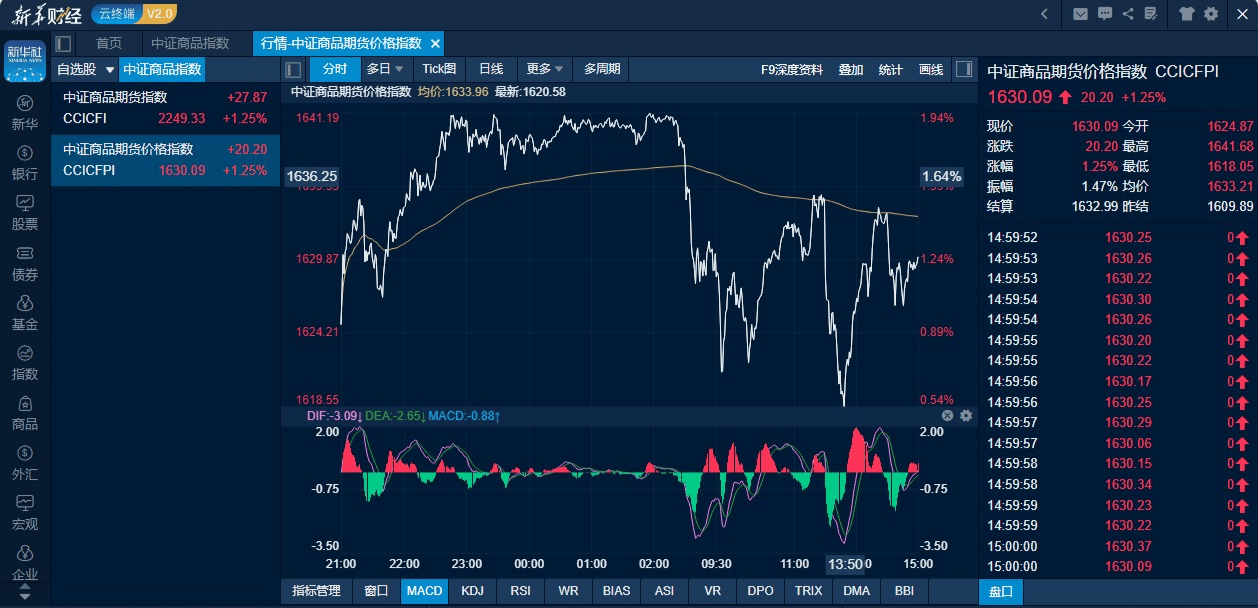
Group 1 - The domestic commodity futures market is experiencing a bullish sentiment, driven by the strong performance of the metal sector, with significant gains in various commodity indices [1][3] - As of January 7, the China Securities Commodity Futures Price Index closed at 1630.09 points, up 20.20 points (1.25%), while the China Securities Commodity Futures Index closed at 2249.33 points, up 27.87 points (1.25%) [1] - Major industrial metals showed a general increase, with nickel hitting the limit up, tin rising over 5%, while copper saw a slight increase of less than 0.2% after reaching a historical high [1][3] Group 2 - Nickel prices are supported by tightening export policies from Indonesia, which has led to expectations of improved supply-demand dynamics for nickel [3][4] - The Indonesian Nickel Mining Association has revised its 2026 nickel ore production target down by 34% to approximately 250 million tons, which is a significant reduction from the previous target of 379 million tons for 2025 [3] - The domestic market for nickel and stainless steel is experiencing a tightening supply, with rising prices leading to accelerated inventory depletion [4] Group 3 - Despite the bullish sentiment in the commodity market, certain sectors like SC crude oil are still facing downward pressure due to an oversupply situation [5][6] - The SC crude oil market saw a decline of over 2.57%, reflecting ongoing concerns about supply exceeding demand [5][6] - Precious metals faced profit-taking, with platinum dropping over 2% and Shanghai gold retreating below 1000 yuan per gram [6]