政策底

Search documents
A股:将要起飞!迹象非常明显,周五是大涨还是大跌?老手这么看!
Sou Hu Cai Jing· 2025-11-13 16:37
Core Viewpoint - The recent surge in A-shares is driven not only by domestic funds but also by significant cross-market interactions, particularly influenced by the A50 index futures and the Hang Seng Index, alongside global macroeconomic expectations [1][2]. Group 1: Market Performance - As of November 13, A-share indices closed strongly, with the Shanghai Composite Index at 4029.50 points, up 0.73%, marking a ten-year high; the Shenzhen Component Index rose 1.78% to 13476.52 points; and the ChiNext Index increased by 2.55% to 3201.75 points [1]. - Over 3900 stocks in the market experienced gains, indicating a broad-based rally [1]. Group 2: Cross-Market Effects - The A50 index futures showed a strong upward trend, particularly with significant contributions from major stocks like CATL, which surged 7.51%, driving the ChiNext and Shenzhen indices higher [1]. - The Hang Seng Index also turned positive in sync with the A-share market's late rally, suggesting a short-term linkage between domestic and foreign capital through derivative markets [1][2]. Group 3: Monetary Policy Expectations - The probability of a 25 basis point rate cut by the Federal Reserve in December rose to 59.4%, reflecting increasing market expectations for monetary easing [2]. - A potential rate cut could enhance dollar liquidity and increase the attractiveness of global risk assets, leading to greater foreign investment in Chinese equities [2]. Group 4: Domestic Policy Signals - Domestic authorities have been signaling a commitment to maintaining market stability and investor confidence, with a focus on appropriate liquidity management [4]. - This suggests that the lower boundary of the A-share market has shifted from 3980 points to around 4000 points, providing a stronger short-term support level [5]. Group 5: Short-term and Mid-term Trends - Short-term technical indicators suggest that the Shanghai Composite Index may experience a narrow range of fluctuations or slight pullbacks, maintaining a consolidation pattern above 4000 points [6]. - In the mid-term, if the Fed's rate cut occurs alongside continued domestic easing policies, A-shares are expected to maintain high-level fluctuations and gradually increase, particularly benefiting sectors aligned with the A-share market [7]. Group 6: Conclusion - The recent high in A-shares reflects both internal fund dynamics and external market resonance, particularly driven by the A50 index futures, with supportive factors from Fed rate cut expectations and domestic stabilization policies [8].



午评:沪指跌0.24%,半导体、化工等板块走低,银行、保险板块逆市拉升
Zheng Quan Shi Bao Wang· 2025-11-12 05:40
Market Performance - Major stock indices in the two markets showed weakness, with the Shanghai Composite Index falling below the 4000-point mark again, and the ChiNext and Sci-Tech 50 indices dropping over 1% [1] - As of the midday close, the Shanghai Composite Index decreased by 0.24% to 3993.35 points, the Shenzhen Component Index fell by 1.07%, the ChiNext Index dropped by 1.58%, and the Sci-Tech 50 Index declined by 1.65% [1] - The total trading volume in the Shanghai and Shenzhen markets reached 12,704 billion yuan [1] Sector Performance - Sectors such as semiconductors, chemicals, automobiles, non-ferrous metals, brokerages, and steel experienced declines, while insurance, banking, oil, and pharmaceuticals saw gains [1] - Concepts related to brain engineering and innovative pharmaceuticals were active in the market [1] Investment Outlook - Long-term trends for technology growth stocks show insufficient cost-effectiveness, with increasing short-term fundamental concerns [2] - There is a lack of established structures to lead the market breakout, suggesting that the A-share market may continue to experience a volatile phase [2] - The spring of 2026 is projected to be a potential peak, but it is unlikely to represent the peak for the entire year or the current bull market [2] - Three areas of mid-term returns are anticipated: cyclical improvement in fundamentals, asset allocation shifts towards equities leading to valuation reassessment, and increased global influence of China enhancing economic conditions and valuation [2] - The effective return of the framework of "policy bottom, market bottom, economic bottom" is expected by mid-2026, coinciding with a potential start of a new bull market phase [2]
A股:最后的洗盘?准备好麻袋!周二或迎新行情,大盘可能这样走
Sou Hu Cai Jing· 2025-11-10 23:02
Core Viewpoint - The A-share market is experiencing a consolidation phase with strong performance in the consumer and securities sectors, while technology stocks are showing signs of recovery after a period of adjustment. There is speculation about a potential multi-sector rally in the near future, possibly indicating a final washout phase before a new uptrend [1]. Group 1: Market Performance - On Monday, the consumer and securities sectors led the market, with significant inflows into several brokerage stocks, contributing to a positive index performance. Technology stocks, however, did not participate in the rally but showed signs of stabilization in the afternoon [2]. - The consumer sector was driven by a slight rebound in CPI data, interpreted as manageable inflation and signs of improved consumption. Despite limited growth in food and beverage segments, the liquor sector emerged as a leader in the rebound, supported by institutional buying ahead of the year-end consumption peak [4]. Group 2: Sector Analysis - The technology sector has faced significant pressure over the past two weeks, but some semiconductor and computer stocks began to stabilize on Monday afternoon. This adjustment is seen as a way to clear out short-term speculative positions, potentially paving the way for future capital inflows [5]. - The securities sector is at a critical breakout point after a period of low consolidation, while the real estate sector is supported by stable policy expectations, with increasing capital accumulation at lower levels. A coordinated effort from these two sectors could significantly boost the index [6]. Group 3: Market Sentiment and Signals - The trading volume exceeded 1 trillion, indicating that institutional investors are reallocating rather than withdrawing from the market. The valuation gap between sectors is notable, with consumer PE at 65% and technology at 35%, suggesting differing potential for explosive growth [12]. - Key sectors to watch for potential upward movement include technology (specifically semiconductor equipment and AI chips), consumer (focusing on mid-tier liquor and smart home appliances), and heavyweight stocks (brokerage ETFs and leading state-owned real estate companies) [12].

经济学家李稻葵为全球财富管理论坛赋能|房地产领域专家邀约
Sou Hu Cai Jing· 2025-10-10 10:58
Core Viewpoint - The 2025 macroeconomic outlook presented by Li Daokui emphasizes a recovery in nominal GDP and stabilization in key city real estate markets, providing certainty for the real estate and capital markets still in a policy observation phase [1]. Group 1: Nominal GDP and Economic Projections - Li Daokui estimates that the nominal GDP growth rate for the first three quarters of 2024 will be only 4.02%, with a gap of over 2.5 percentage points from the potential level of 7%. A recovery in prices and a positive Producer Price Index (PPI) could push nominal GDP back above 5% in 2025 [3]. - The nominal GDP target of 5% has been quantified for the first time, becoming a benchmark for investment strategies among various brokerage firms [3]. Group 2: Real Estate Market Dynamics - A significant prediction is that major cities like Beijing, Shanghai, Guangzhou, and Chengdu will largely lift purchase restrictions next year, indicating that the market bottom may appear before the policy bottom [4]. - Following this announcement, the A-share real estate index surged by 2.8%, and offshore real estate stocks rebounded by 3.1%, reflecting market confidence in this turning point [4]. Group 3: Stock Market and Corporate Profitability - Li Daokui notes that a 1 percentage point increase in nominal GDP could enhance overall profitability of listed companies by approximately 80 billion yuan, leading to a 5%-6% expansion in the price-to-earnings ratio across the market, thus providing a "profit floor" model for long-term investors [5]. - This upward adjustment in profit expectations is expected to reduce the likelihood of passive sell-offs by institutional investors [5]. Group 4: Domestic Demand and Global Economic Role - In response to potential tariff impacts from the U.S., Li Daokui proposes a three-pronged approach involving local debt repayment, household registration reforms, and housing plans, which could unleash around 2 trillion yuan in consumer demand, offsetting a 1.2 percentage point decline in exports [6]. - He emphasizes that understanding China's economic adjustments is crucial for global investors, integrating China's economic policy spillover effects into international macroeconomic models [6]. Group 5: Policy Coordination and Market Stability - Li Daokui's insights aim to align expectations across regulatory bodies, financial institutions, and developers, creating a cohesive policy framework [7]. - This framework supports timely monetary easing measures, facilitates the lifting of purchase restrictions in first-tier cities, stabilizes market valuations, and provides a methodology for international investors to reassess Chinese assets [7]. Conclusion - The presentation by Li Daokui at the conference serves as a pivotal moment for managing economic expectations, transitioning from reactive explanations to proactive guidance, which could mark a turning point for global capital reallocation towards Chinese assets [8].
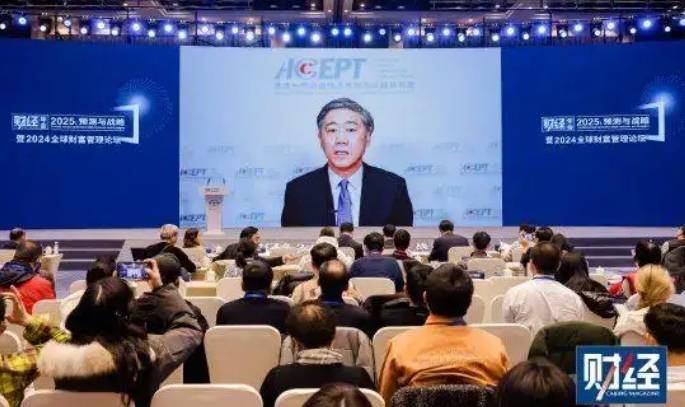
经济学家张燕生赋能中国住交会|房地产领域专家赋能
Sou Hu Cai Jing· 2025-10-10 10:58
Core Viewpoint - The speech by Zhang Yansheng at the CIHAF highlighted the integration of "real estate fundamentals" into the macroeconomic framework, marking a shift in industry policy for 2022 [1][3]. Group 1: Policy Framework - The concept of "stabilizing real estate" is now part of the macroeconomic strategy, positioning real estate alongside small and medium enterprises, manufacturing, and risk mitigation as one of the "four pillars" [3]. - The framework proposed by Zhang Yansheng has been adopted by multiple brokerages as the core investment logic for the real estate sector in 2022, leading to a 3.4% increase in the Shenwan Real Estate Index the following day [3]. Group 2: Fiscal Measures - Zhang suggested "appropriately advancing infrastructure investment" along with new tax reductions to synchronize the supply and demand sides [4]. - The Ministry of Finance announced an additional 1.2 trillion yuan in special bond limits in the 2022 budget, prioritizing investments in affordable rental housing and urban renewal, which is expected to boost industry investment by 8-10 percentage points [4]. Group 3: Monetary Policy - The monetary policy is characterized as "flexible, moderate, and reasonably ample," with specific measures for distressed enterprises and ensuring loan availability for first-time homebuyers and green buildings [5][6]. - This framework supported the People's Bank of China's decision to lower the 5-year Loan Prime Rate (LPR) by 35 basis points and establish a 200 billion yuan special loan for ensuring housing delivery [6]. Group 4: Long-term Mechanisms - Emphasis was placed on transitioning from "market rescue" to a "high-quality development path," with a focus on sustainable and healthy development mechanisms [7]. - The Ministry of Housing and Urban-Rural Development, along with other ministries, introduced an upgraded version of the "three lines and four categories" policy, incorporating quality improvement standards for green buildings and smart homes [7]. Group 5: Expectation Management - Zhang proposed that policies should be "forward-looking, quantifiable, and verifiable," with specific timelines for fiscal tools and the expansion of Real Estate Investment Trusts (REITs) [8]. - The successful implementation of these measures in 2022 transformed industry expectations from uncertainty to a more predictable framework, significantly reducing policy uncertainty premiums [9].

申万宏源:调整后就是红十月,2026年春季可能是A股阶段性高点
Ge Long Hui· 2025-09-28 15:01
Core Viewpoint - After the adjustment in the A-share market, October is likely to be a favorable month for capital market expectations to stabilize and rise, with key policy layout opportunities emerging [1] Group 1: Market Outlook - The adjustment in the A-share market is expected to lead to a "red October," which is a period of potential recovery and growth [1] - The cyclical catalysts are anticipated to be limited in Q4 2025, while the focus on demand will shift towards the new round of policy and economic bottoming in 2026 [1] Group 2: Industry Trends - The technology sector continues to show upward trends, with the overseas AI industry still on the rise and not yet reaching its limits, while the domestic AI industry is also making continuous progress [1] - The current period is characterized by increasing highlights in the technology sector, with structural highlights emerging since the adjustment in September [1] Group 3: Future Projections - October is expected to see a resonance between industry highlights and long-term policy layouts, potentially reigniting structural enthusiasm [1] - The spring of 2026 may represent a phase peak, but it is unlikely to be the peak for the entire year or the peak of the current bull market, as conditions for a comprehensive bull market will continue to strengthen over time [1]

见证历史!A股,里程碑!
中国基金报· 2025-09-24 03:30
Core Viewpoint - The "9·24" policy has significantly reshaped the A-share market, enhancing investor confidence and leading to a substantial increase in market capitalization and stock prices over the past year [2][5][15]. Market Performance - A-share total market capitalization grew from approximately 70 trillion yuan to over 100 trillion yuan, an increase of over 30% [2][6]. - More than 1,400 stocks have doubled in price, with the ChiNext Index and the Sci-Tech Innovation 50 Index both rising over 100% [2][6]. Policy Impact - The "9·24" policy, introduced on September 24, 2024, included measures to boost medium- and long-term capital inflows, reform mergers and acquisitions, and support technological innovation [2][4]. - Following the policy announcement, the Shanghai Composite Index surged by 4.15% in a single day, while the ChiNext Index soared by 5.54% [4]. Structural Changes - The A-share market has seen a profound transformation, with a focus on sustainable growth and a "slow bull" market trajectory following initial rapid responses to policy changes [5][6]. - The volatility of the market has decreased, with the annualized volatility of the Shanghai Composite Index at 15.9%, down 2.8 percentage points from the previous five-year period [6]. Mergers and Acquisitions - Over 230 major asset restructurings have been disclosed since the implementation of the "9·24" policy, marking a recent high [9]. - Innovative merger tools such as targeted convertible bonds and acquisition loans have revitalized market activity, facilitating a clearer direction for industrial integration [9][10]. Investor Sentiment - The investor base has evolved, with a significant increase in new accounts, totaling 30.57 million, an 83.86% increase compared to the previous period [13]. - Long-term capital, including insurance and social security funds, has also increased its presence in the market, with insurance funds' stock investments reaching 3.06 trillion yuan, a net increase of about 1 trillion yuan [14]. Future Outlook - The ongoing reforms are expected to further enhance market quality and foster a culture of long-term investment, with a focus on improving the quality of listed companies and refining foundational systems [14][15].


房价连续跌了四年,涨回来只用了三天,房价拐点真的到了吗?
Sou Hu Cai Jing· 2025-09-11 23:41
Core Viewpoint - The Chinese real estate market is experiencing a significant turnaround after four years of decline, with high-end residential prices in first-tier cities increasing by 15% overnight, contrasting sharply with previous years of price drops [2] Market Overview - The real estate market has faced a prolonged downturn since late 2021, with a cumulative inventory of over 700 million square meters of unsold properties, requiring an estimated seven years to digest at the current pace [2] - The second-hand housing market has seen a dramatic increase in listings, with cities like Chongqing and Wuhan exceeding 200,000 listings, and a conservative estimate of 120 million vacant homes nationwide [2] Contributing Factors - The slowdown in urbanization has led to a significant reduction in the annual increase of urban population from 20 million to 10 million, and a notable decrease of 60 million in the key home-buying age group (25-44 years) since 2015 [3] - Social trends indicate a "low desire" environment, with marriage registrations expected to fall below 5 million and a birth rate of 1.09, lower than Japan [3] Policy Impact - A series of unprecedented "rescue" policies aimed at revitalizing the market were introduced in September 2025, including the relaxation of purchase restrictions in first-tier cities and increased loan limits [3] - First-tier cities have adopted a more nuanced approach to policy adjustments, implementing differentiated strategies based on geographic zones [3] Market Reactions - Initial effects of policy stimulus are evident, with new home purchases in policy-initiated areas like Beijing's Tongzhou and Shanghai's outer ring increasing by over 50%, and some properties selling out on the first day of listing [4] - However, long-term challenges remain, particularly in third and fourth-tier cities facing high inventory and population outflows, which may delay market recovery despite policy relaxations [4] Future Outlook - A cautious optimism is suggested for the future of the real estate market, with a clear "policy bottom" emerging and a gradual formation of a "market bottom" [8] - The market is expected to exhibit significant differentiation, with core urban areas likely to recover faster than non-core regions lacking industrial support and population inflow [8] - For genuine homebuyers, current conditions may present a favorable entry point due to substantial policy incentives and lower loan rates, while investors should exercise caution as speculative opportunities have diminished [8]

降息意浓,绿稀红稠-20250911
申银万国期货研究· 2025-09-11 00:43
Group 1: Economic Indicators - China's August CPI decreased by 0.4% year-on-year, while core CPI rose by 0.9%. PPI's year-on-year decline narrowed to 2.9% [1] - In the U.S., August PPI fell by 0.1% month-on-month, marking the first decline in four months, with a year-on-year growth rate of 2.6%, which was below expectations [1] Group 2: Market Overview - The U.S. stock indices showed mixed results, with the communication sector leading gains and the electric equipment sector lagging. The market turnover was 2 trillion yuan [2] - As of September 9, the financing balance increased by 5.952 billion yuan to 2.303495 trillion yuan. The domestic liquidity is expected to remain loose, with potential incremental policies to boost the real economy in the fourth quarter [2][9] Group 3: Commodity Insights - In the dual焦 (coke and coal) market, the main contracts showed strong performance, with a slight decrease in coking coal positions. The overall demand remains weak, but policy expectations may provide support [3][20] - The palm oil market is under pressure, with Malaysia's August palm oil production at 1.85 million tons, a month-on-month increase of 2.35%, while exports decreased by 0.29% [22] Group 4: Industry News - The Ministry of Industry and Information Technology, along with five other departments, launched a special campaign to address online chaos in the automotive industry, focusing on self-inspection by companies and reporting channels [6] - The automotive industry is under scrutiny for online misconduct, with measures to correct violations and expose problematic accounts [6] Group 5: International Relations - Wang Yi, China's Foreign Minister, spoke with U.S. Secretary of State Rubio, emphasizing the need for stable U.S.-China relations and cooperation on global challenges [4]

V型反弹-20250829
申银万国期货研究· 2025-08-29 00:31
Market Overview - The three major A-share indices experienced a "V-shaped" rebound, with the Shanghai Composite Index rising by 1.14% to 3843.6 points, the Shenzhen Component Index increasing by 2.25%, and the ChiNext Index climbing by 3.82%. The STAR 50 surged by 7.23%. The total market turnover was 3 trillion yuan, down from 3.2 trillion yuan the previous day [1] - In the first half of 2025, mergers and acquisitions (M&A) in the A-share market continued to heat up, becoming a "strong engine" for listed companies to drive performance growth and a core path for optimizing strategic layout and achieving industrial upgrades. There were 1113 domestic M&A transactions this year, with a total transaction amount of 509.214 billion yuan, representing a 62.75% increase compared to the same period last year. The most popular sectors for completed M&A transactions were traditional industries, intelligent manufacturing, and energy and electricity [1] Financial Market Insights - The U.S. stock indices rose, with significant gains in the communication and electronics sectors, while the coal sector declined. The market turnover was 3 trillion yuan. As of August 26, the financing balance increased by 20.194 billion yuan to 22,123.54 billion yuan. It is anticipated that domestic liquidity will remain loose, and more incremental policies may be introduced in the second half of the year to boost the real economy. The probability of a rate cut by the Federal Reserve in September has increased, enhancing the attractiveness of RMB assets. The market is currently in a "policy bottom + liquidity bottom + valuation bottom" resonance period, with a high probability of continued market performance, although sector rotation and structural differentiation need to be adapted to [2][8] Commodity Market Analysis - Soybean meal showed weak fluctuations in the night session, while rapeseed meal saw a slight increase. The optimistic outlook for U.S. soybean production has strengthened market expectations for high yields in the new season. Ongoing trade talks between China and the U.S. have boosted confidence in U.S. soybean exports. In the domestic market, the announcement of the auction of 164,000 tons of imported soybeans by the China Grain Reserves Corporation has strengthened expectations for improved domestic raw material supply, leading to a bearish outlook for soybean meal in the short term [3][24] - Precious metals, particularly gold and silver, continued to strengthen. Concerns arose from Trump's attempts to challenge the independence of the Federal Reserve. The dovish stance indicated by Powell at the Jackson Hole meeting has increased expectations for a rate cut in September, benefiting precious metals. However, rising inflation data and geopolitical risks have limited the upward potential for gold. The long-term drivers for gold remain supportive, with the overall trend for gold and silver expected to be strong as the rate cut approaches [3][16] Industry News - The National Bureau of Statistics announced plans to accelerate the construction of data industry clusters and introduce several industrial policies this year, predicting that the added value of the digital economy will reach approximately 49 trillion yuan by the end of the year, accounting for about 35% of GDP [6] - The Ministry of Finance reported that in July, the issuance of new local government bonds reached 703.2 billion yuan, including 86.3 billion yuan in general bonds and 616.9 billion yuan in special bonds [5]