电动化与智能化

Search documents
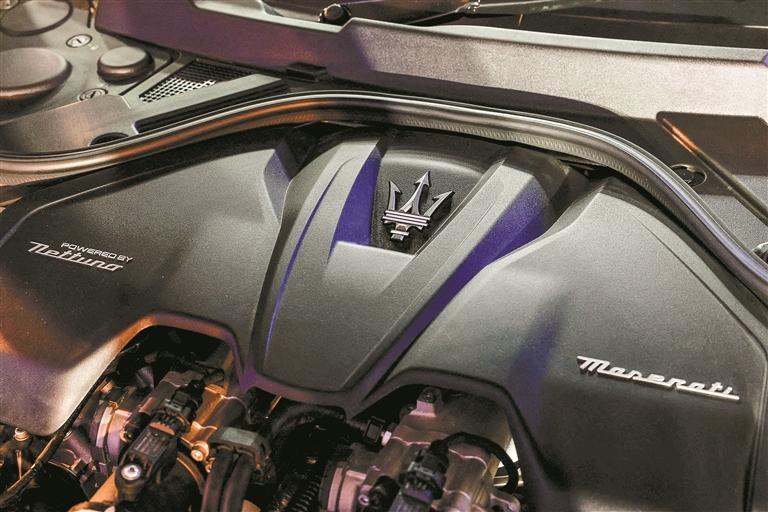
玛莎拉蒂“骨折价”仍难挽销量颓势 “海神三叉戟”折戟中国市场
Shen Zhen Shang Bao· 2025-12-17 17:41
Core Insights - Maserati has significantly reduced the prices of its Grecale SUV models, with the gasoline version dropping from 650,800 RMB to 388,800 RMB, and the electric version from 898,800 RMB to 358,800 RMB, representing discounts of approximately 40% and 60% respectively [2][3] - Despite the price cuts generating buzz on social media, actual sales activity in Maserati's Shenzhen flagship store has been lackluster, indicating that the "buying frenzy" may be more of a marketing gimmick than reality [3] - The drastic price reductions are seen as a desperate measure to clear out inventory, particularly of 2022 models, raising concerns about the long-term viability of these vehicles due to potential parts shortages and high maintenance costs [3][5] Sales Performance - Maserati's sales in China have plummeted from over 14,400 units in 2017 to just 1,228 units in 2024, with only 1,023 units sold in the first three quarters of 2025, averaging less than 100 units per month [5][7] - The brand's entry-level model, which used to start at over 2.46 million RMB, now competes in the 400,000 to 500,000 RMB range, facing competition from advanced domestic electric vehicle brands [5][6] Competitive Landscape - Domestic electric vehicles, such as the AITO M8 and NIO ES8, offer superior technology and features at similar price points, making Maserati's Grecale appear less attractive in comparison [6] - The Grecale's actual range is around 400 kilometers, and its technology lags behind competitors, lacking features like online updates and advanced driving capabilities [6] Brand Strategy and Market Position - Maserati's strategic direction in China has been inconsistent, with frequent changes in leadership and marketing focus, which has diluted its luxury brand image and alienated core customers [7] - The brand's product development has stagnated, with its first electric model, the Grecale Folgore, being launched in 2024 on an outdated platform, while its gasoline models have not seen significant updates in years [7] - The decline in imported luxury car sales in China reflects a broader trend affecting brands like Mercedes-Benz and BMW, with a reported 32% drop in sales for imported vehicles in the first half of 2025 [7]

董事长专访 | 威博液压马金星:争做电动液压引领者
Sou Hu Cai Jing· 2025-11-29 01:14
Core Viewpoint - The company is undergoing a critical transformation from components to intelligent systems, with a focus on the integration of electrification and intelligence technologies, which will enhance product performance and establish a competitive advantage in hydraulic products [1][3]. Company Development - Founded in 2003 by borrowing 1.3 million yuan, the company introduced the concept of hydraulic power units, enabling a leap from mechanical components to parts, and successfully listed on the stock market [3][4]. - The company became one of the first to be listed on the Beijing Stock Exchange under the new registration system in 2021, marking a significant milestone in its growth trajectory [3][4]. Innovation and Market Position - The company emphasizes innovation as a key driver of development, with plans to issue convertible bonds in 2025 to support the electrification and intelligent upgrade of hydraulic power equipment [5][6]. - The company has achieved a leading market position in low-noise hydraulic power units, reducing noise levels by 10 decibels through innovative design [6][7]. Technological Advancements - The company has developed a bidirectional gear hydraulic pump that generates electricity, enhancing energy efficiency and increasing product gross margins by 10% [7]. - The company is actively working on intelligent systems that integrate electric control and hydraulic technologies, aiming to leverage AI for improved operational precision and cost reduction [7][8]. Financing and Future Outlook - The company plans to issue 84 million yuan in convertible bonds to fund high-end intelligent hydraulic systems and core component development, while also considering shareholder interests [8]. - The company anticipates that the next five years will be a golden era for the growth of Chinese technology enterprises, aiming to become a global leader in electric hydraulic systems through technological investment [8].

国泰海通|汽车:广州国际车展召开,机器人成“新主角”
国泰海通证券研究· 2025-11-25 13:04
Core Insights - The 2025 Guangzhou International Auto Show opened on November 21, focusing on the latest achievements in electrification and intelligence, showcasing 1,085 vehicles, of which 629 are new energy vehicles, accounting for 58% of the total [2][4] - The event highlighted the emergence of humanoid robots as a new focal point, with companies like Xpeng, Changan, and GAC demonstrating their latest advancements in embodied intelligence [2][4] Group 1: Electric and Intelligent Vehicles - The auto show featured multiple new energy models, including Xpeng's first super-range model X9, which was launched on November 20, priced between 309,800 and 329,800 yuan, equipped with a 1.5T range extender system and a 63.3 kWh battery, offering a pure electric range of 452 km and a comprehensive range exceeding 1,600 km [3][4] - Leap Motor showcased its ABCD series, with the A10 model making its debut, designed with a focus on "technological natural aesthetics 2.0," featuring a body length exceeding 4,200 mm and a wheelbase over 2,600 mm, with a space utilization rate of 88.1% [3][4] Group 2: Robotics and Future Technologies - Xpeng introduced the humanoid robot IRON, designed with a "skeleton-muscle-skin" structure, featuring an AI chip with a computing power of 2,250 TOPS and a solid-state battery, with plans for mass production by the end of 2026 [2][4] - Changan plans to release its first vehicle-mounted robot by 2026, focusing on four scenarios: factory, store, home, and special applications, while GAC Group unveiled its fourth-generation GoMate Mini humanoid robot, expected to be mass-produced by 2027 [2][4] Group 3: Industry Trends - The concentration of new energy vehicles and cutting-edge technologies like humanoid robots and flying cars at the auto show reflects the ongoing commitment of automakers to electrification and intelligence [4] - As the industry moves towards standardization and high-quality development, the competitive focus is shifting towards product definition, technological self-research, and systematic capabilities [4]



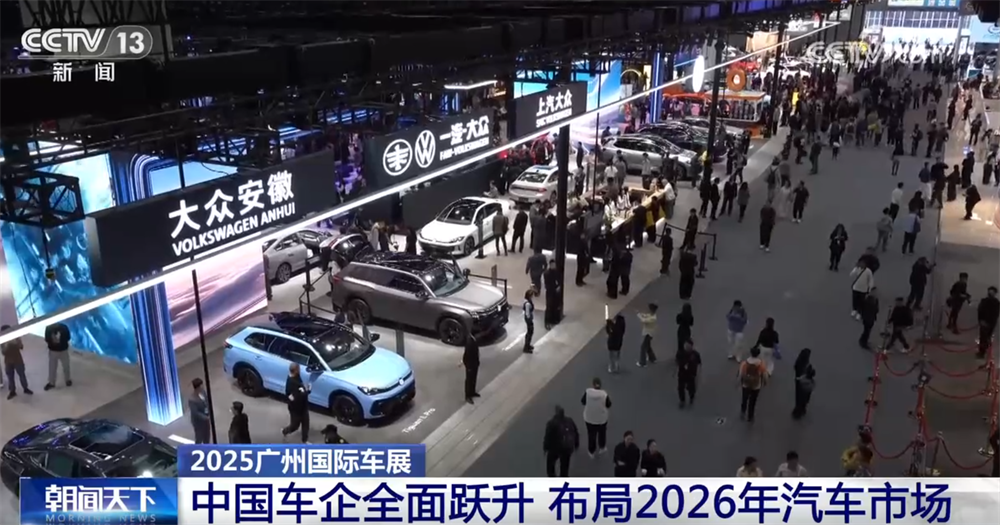
向“智”向“新”成为增长新引擎 中国汽车工业正从“规模引领”迈向“技术引领”
Yang Shi Wang· 2025-11-22 02:32
Core Insights - The 2025 Guangzhou International Auto Show is showcasing over 1,000 vehicles, with more than 60% being new energy vehicles, indicating a significant shift towards electric mobility in China's automotive market [1][3] - The new tax policy for new energy vehicles, effective January 1, 2026, will halve the purchase tax and raise the technical standards for subsidy-eligible models, prompting automakers to focus on high-value models [1] - The integration of AI technology across the automotive industry is driving innovation, with a notable collaboration between Huawei and GAC to launch a high-end smart new energy vehicle in the first half of next year [3][5] Industry Trends - China's new energy vehicle market penetration has surpassed 50%, marking a transition from "catching up" to "leading" in the global automotive industry, with a focus on technological leadership [5][11] - Chinese automakers are increasingly expanding into international markets, with exports accounting for 55% of Jiangqi Group's business during the 14th Five-Year Plan, and plans to deepen international engagement in the upcoming 15th Five-Year Plan [5][9] - The automotive industry is moving from merely exporting products to exporting entire supply chains, with a focus on creating globally adaptable vehicle models [7][9] Export Dynamics - New energy and high-end smart vehicles are becoming the mainstay of exports, gaining rapid recognition in markets such as Europe, Southeast Asia, and Latin America [11] - The push for global presence is not just about brand recognition but also about enhancing the influence of Chinese manufacturing on a global scale [9][11]
长安汽车在印尼举办品牌发布会
人民网-国际频道 原创稿· 2025-11-20 07:00
Core Viewpoint - Changan Automobile officially entered the Indonesian market with a brand launch event in Jakarta, showcasing its latest achievements in electrification and intelligence through its three smart new energy brands: Avita, Deep Blue, and Changan Qiyuan [1][3]. Group 1: Market Entry and Strategy - Indonesia is one of the largest automotive markets in Southeast Asia, with a population exceeding 280 million and rapid growth in vehicle ownership, making it a key hub for global automotive companies [3]. - In February, Changan Automobile established a strategic partnership with Indomobil, one of Indonesia's most influential automotive groups, laying the foundation for its market entry [3]. - Changan Automobile's Executive Vice President, Ye Pei, emphasized the principle of "in Indonesia, for Indonesia," focusing on localizing product development, manufacturing, and service systems driven by green development and technological innovation [3]. Group 2: Future Plans and Contributions - Changan Automobile plans to establish a comprehensive after-sales service system in Indonesia and is considering local production to support technology transfer, local supply chain development, and talent cultivation [3]. - The company aims to contribute to Indonesia's goal of achieving net-zero emissions by 2060 by promoting the development of new energy and intelligent products and technologies, facilitating a transition to low-carbon and sustainable mobility [3].
松鼠动力获融资;OpenAI或明年启动IPO;Maison Margiela打造住宅
Sou Hu Cai Jing· 2025-11-02 14:30
Capital Dynamics - Smart electric RV company "Squirrel Power" completed Pre-A round financing led by a well-known industrial investment institution, with existing shareholders continuing to invest [3] - The company, founded in 2022 by former Anker Innovation product line general manager, aims to promote the mass production of its first product and expand into the North American market [3] IPO Dynamics - OpenAI completed a restructuring deal valued at $500 billion, laying the groundwork for an upcoming IPO [7] - During negotiations, OpenAI's valuation surged from $100 billion to $500 billion, with a potential maximum valuation of $1 trillion and fundraising exceeding $60 billion [8] Brand Dynamics - Meituan Flash Purchase announced plans to collaborate with over 10,000 brands to establish "official lightning warehouses," enhancing brand presence in instant retail [15] - PepsiCo unveiled a new global brand identity, including a refreshed logo and color scheme, aimed at emphasizing its commitment to sustainability and innovation [20]


他们曾嘲笑我们,如今沉默得震耳欲聋
3 6 Ke· 2025-10-31 02:09
Core Insights - The article discusses the evolution of the global automotive industry, highlighting China's rise as a dominant player in car manufacturing and exports, particularly in the electric vehicle (EV) sector [3][4][12]. Group 1: Historical Context - The automotive industry began in Germany in the mid-1880s, but large-scale commercialization occurred in the early 20th century in the United States, with major manufacturers like Ford and GM emerging [1]. - By 1950, over 75% of the world's cars were produced in the U.S., establishing Detroit as the automotive capital [1]. - Post-World War II, Germany and Japan became significant automotive producers, with Japan surpassing the U.S. in production by 1990 [1]. Group 2: China's Emergence - Since 2000, China has been the primary growth engine for the global automotive industry, contributing nearly all growth in production and sales [3]. - In 2023, China surpassed Japan to become the world's largest car exporter, with exports reaching approximately 5.86 million vehicles [3][4]. - The growth in China's automotive sector is attributed to the production of affordable vehicles and the expansion of electric vehicle exports [3]. Group 3: Globalization and Strategy - The globalization of Chinese automotive companies began in 2008, with a focus on emerging markets like Russia and Africa, using a "rural encirclement of cities" strategy [6][8]. - By 2021, Chinese automotive exports broke the million-unit barrier, marking a significant turning point in their global presence [8]. - Geopolitical factors, such as the Russia-Ukraine conflict, allowed Chinese companies to fill market gaps left by Western brands, leading to a surge in exports [9][11]. Group 4: Quality and Reputation Shift - Historically, Chinese cars were viewed as low-quality and imitative, but significant improvements in design and safety have transformed this perception [12][16]. - Collaborations with international design experts and a focus on quality have helped Chinese brands shed their "copycat" image [16][19]. - Recent performance in international safety tests and racing events has further established Chinese vehicles as competitive in quality and performance [20][22]. Group 5: Technological Leadership - China has developed a comprehensive electric vehicle supply chain, positioning itself as a leader in the EV market [28][30]. - The shift from a trade-focused mindset to a globalized approach has enabled Chinese companies to establish local production and supply chains in various markets [30][32]. - The agility and adaptability of Chinese brands allow them to respond quickly to market changes, enhancing their competitive edge [32][33].



联合动力:以技术领先构建产品护城河 提升规模打造全球产业链核心供应商
Sou Hu Cai Jing· 2025-10-28 10:00
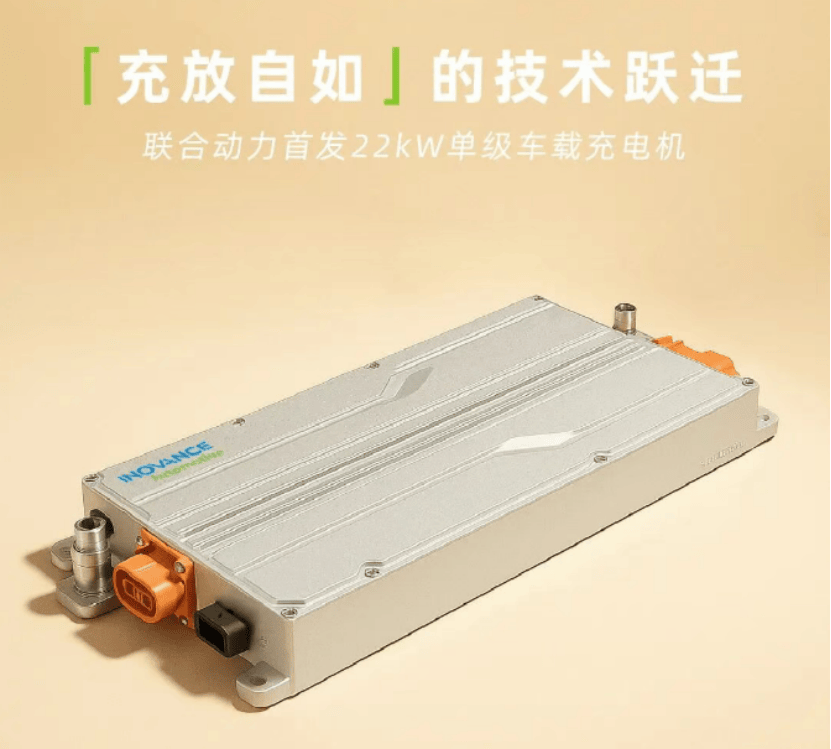
Core Viewpoint - The company, a leading player in the A-share new energy vehicle (NEV) electric drive and power systems sector, reported a revenue of 14.525 billion yuan for the first three quarters of 2025, reflecting a year-on-year growth of 35.52%, and a net profit of 792 million yuan, up 38.38% year-on-year, indicating continued growth despite industry challenges [1][2]. Financial Performance - In Q3, the company's revenue reached 5.377 billion yuan, a year-on-year increase of 15.32%, although net profit faced pressure due to intensified competition within the industry [2]. - Cumulatively, the company has invested 959 million yuan in R&D this year, surpassing the total for the entire year of 2024, demonstrating a commitment to maintaining R&D investment despite performance pressures [3]. Product Development and Innovation - The company has launched the fifth-generation hybrid dual-control product PD59, which features a 50% reduction in component count and size, and a 40% reduction in overall volume, enhancing power density and meeting the spatial demands of hybrid vehicles [3]. - A new 22kW onboard charger (OBC) weighs only 7 kg, reducing weight by over 50% compared to traditional products, and achieves peak efficiency of over 98.3% [4]. Strategic Expansion and Capacity Building - The company is expanding its production capacity with a total investment of 3.8 billion yuan in new manufacturing bases in Suzhou and Changzhou, aimed at alleviating current capacity constraints and meeting growing order demands [10][12]. - Following a successful IPO, the company raised approximately 3.625 billion yuan to support rapid capacity expansion, with projected revenue growth from 21.5 billion yuan in 2025 to 36.7 billion yuan by 2027, reflecting an annual growth rate of over 30% [10][12]. Globalization and Market Positioning - The company is actively pursuing international expansion, establishing factories in Thailand and Hungary to adapt to global market demands and local regulations, while also enhancing its supply chain stability [12]. - Collaborations with international automotive giants such as Volvo, Stellantis, and Volkswagen have transitioned the company from component sales to providing comprehensive solutions, significantly increasing overseas revenue from less than 100 million yuan in 2022 to 769 million yuan in 2024 [12]. Shareholder Engagement - The company has attracted significant investment from various industry players, including Chery and Xiaomi, as well as international investment banks, indicating strong market confidence in its future growth [13][15].
第三季度汽车品牌影响力指数发布:乘用车格局生变 商用车头部稳固
Zheng Quan Ri Bao Wang· 2025-10-26 10:56
Core Insights - The report indicates a significant shift in the automotive brand landscape, highlighting intense evolution in the passenger car market and stable consolidation in the commercial vehicle market [1][5] Passenger Car Market - Domestic brands occupy seven out of the top ten positions in brand influence, with BYD leading at 784.54 points, followed by Tesla at 780.22 points, showcasing strong local brand performance [2][5] - The new player, AITO, made a remarkable entry into the top five with a score of 767.19, reflecting explosive growth in online presence [2] - Traditional joint venture brands are facing challenges as they maintain sales but experience high complaint volumes, indicating a decline in user satisfaction compared to local brands [2][5] Commercial Vehicle Market - The commercial vehicle sector shows a clearer competitive landscape, with China FAW leading the heavy truck market at 728.99 points, followed closely by China National Heavy Duty Truck and Dongfeng [3] - In the pickup segment, Great Wall maintains a strong lead with 699.74 points, while Changan and SAIC Maxus follow [3] - The light truck market is highly competitive, with Changan leading at 718.38 points, and JAC and Beiqi Foton closely trailing [3] Brand Influence and User Engagement - The report emphasizes the importance of synergy between media presence and user reputation in enhancing brand influence, particularly in the passenger car sector [4] - AITO's rise exemplifies the effective combination of technology, ecosystem, and user satisfaction, supported by a low complaint volume [4] - In the commercial vehicle sector, brand influence is built on reliability and long-term professional credibility, with China FAW showcasing a unique advantage in policy-driven markets [4] Industry Evolution - The third-quarter index indicates a transition in the Chinese automotive industry from scale competition to lifecycle value competition, driven by electrification and intelligence [5] - The focus on brand building has shifted from mere volume growth to a comprehensive competitive strength that includes communication breadth, user reputation, technical capability, and market performance [5]


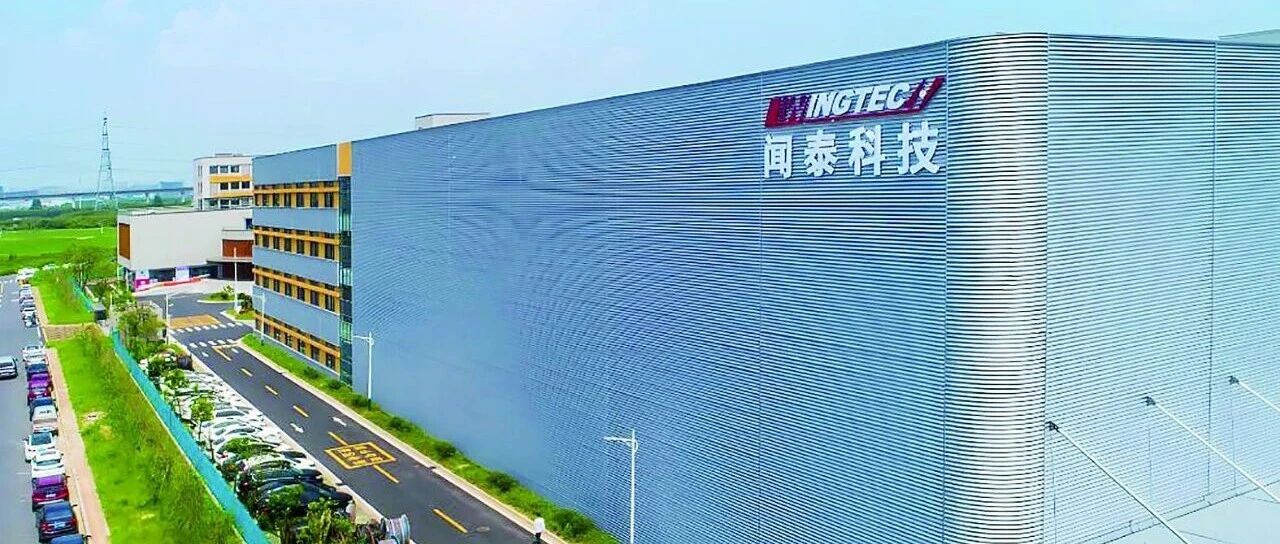
闻泰财报:安世半导体营收占比超97%!
是说芯语· 2025-10-26 08:46
Core Viewpoint - The financial report of Wentai Technology (600745.SH) for Q3 2025 shows a significant divergence between revenue decline and profit growth, indicating a strategic shift in business focus towards high-value semiconductor sectors [1][3]. Revenue and Profit Analysis - For the first three quarters, the company achieved a revenue of 29.769 billion yuan, a year-on-year decrease of 44%, while the net profit attributable to shareholders surged by 265.09% to 1.513 billion yuan [1]. - In Q3 alone, revenue was 4.427 billion yuan, down 77.38% year-on-year, but net profit increased by 279.29% to 1.04 billion yuan [1]. Strategic Business Adjustments - The significant revenue drop is attributed to a strategic adjustment in business structure, focusing on high-margin semiconductor products and divesting low-margin product integration businesses [1][7]. - By Q3, revenue from product integration had fallen to 110 million yuan, accounting for only 2.5% of total revenue, while semiconductor business revenue exceeded 97% [1]. Key Subsidiary Performance - Nexperia, a core subsidiary, was pivotal in profit growth, contributing 4.3 billion yuan in Q3 revenue, a year-on-year increase of 12.2%, with a gross margin of 34.56% and a net profit of 724 million yuan [3]. - The sales net profit margin improved from -3.88% in 2024 to 5.05% in 2025, reflecting enhanced profitability [3]. Market and Product Growth - Nexperia's growth is characterized by comprehensive regional coverage and product expansion, with the Chinese market achieving a record high revenue in Q3, up approximately 14% year-on-year, accounting for 49.29% of global revenue [5]. - The automotive sector saw a revenue increase of over 26%, while AI-related computing devices also experienced significant growth [5]. Technological Advancements - Technological iterations in products have opened new growth avenues, with MOSFET product revenue increasing by over 13%, and new 80V and 100V products entering mass production [6]. - Revenue from logic and analog chips grew by over 15%, with several new AI power and automotive applications launched [6]. Control and Governance Risks - Despite strong short-term performance, Wentai Technology faces uncertainties regarding control over its core assets, particularly Nexperia, due to recent legal and governmental developments in the Netherlands [6]. - If control is not restored by the end of 2025, the company may face risks of revenue, profit, and cash flow adjustments [6]. Strategic Outlook - The Q3 report indicates the initial success of the strategic transformation from a "scale-oriented" to a "profit-oriented" model, with a significant increase in semiconductor gross margins [7]. - Long-term benefits are anticipated from the global electrification and intelligentization trends, provided that control issues over Nexperia are resolved [7].