
长期资金入市

Search documents
三重动力助推ETF规模突破6万亿元
Zheng Quan Ri Bao· 2025-12-30 16:12
Group 1 - The total number of ETFs in the market reached 1,391, with a total scale exceeding 6 trillion yuan, marking historical highs in both quantity and scale [1] - Among all ETFs, stock ETFs account for 77.71% of the total number and 63.78% of the total scale, with 1,081 stock ETFs totaling 3.85 trillion yuan [1] - Passive index ETFs have become the market mainstream, with 1,208 such ETFs representing 86.84% of the total number and 5.06 trillion yuan, which is 83.91% of the total scale [1] Group 2 - Bond and commodity ETFs showed remarkable growth, with bond ETFs increasing from 173.91 billion yuan at the end of 2024 to 804.56 billion yuan, a growth rate of 362.62% [2] - Technology-themed ETFs are highly favored, with 134 ETFs containing "technology" or "innovation" in their names, totaling 1.05 trillion yuan, which is 17.41% of the total ETF scale [2] - The rapid growth of bond ETFs and innovative products like technology bond ETFs are key drivers of market expansion, alongside the popularity of commodity and cross-border ETFs [2] Group 3 - The "Matthew Effect" is increasingly evident among fund managers, with 16 leading institutions managing ETFs exceeding 100 billion yuan, collectively accounting for 89.55% of the total ETF scale [3] - The growth of the ETF market is supported by policy guidance, product innovation, and the influx of long-term capital, with new policies creating favorable conditions for rapid development [3] - The variety of ETFs covering multiple asset classes, including broad-based, thematic, bond, cross-border, and commodity ETFs, effectively meets investors' needs for capturing structural opportunities [3]
收评:创业板指涨近1%,半导体板块拉升,核电概念等活跃
Zheng Quan Shi Bao Wang· 2025-12-12 07:32
Market Performance - The stock indices showed strong gains in the afternoon, with the ChiNext Index rising nearly 1% and the Sci-Tech 50 Index increasing by nearly 2% [1] - By the close, the Shanghai Composite Index rose by 0.41% to 3889.35 points, the Shenzhen Component Index increased by 0.84%, the ChiNext Index was up by 0.97%, and the Sci-Tech 50 Index gained 1.74% [1] - The total trading volume in the Shanghai and Shenzhen markets exceeded 2 trillion yuan, reaching 21,193 billion yuan [1] Sector Performance - Sectors such as retail, real estate, banking, and pharmaceuticals experienced declines, while the semiconductor sector saw a rally in the afternoon [1] - Insurance, electricity, and brokerage sectors showed upward movement, with active participation in nuclear power, ultra-high voltage, and commercial aerospace concepts [1] Investment Outlook - According to Xiangcai Securities, the market is expected to maintain a state of oscillation and recovery in the context of relatively eased China-US trade relations after previous adjustments [1] - Recommendations include focusing on dividend sectors related to long-term capital entry, traditional sectors related to "anti-involution," and consumer areas supported by policy for domestic demand [1] - Looking ahead, 2026 marks the beginning of the "14th Five-Year Plan," which will drive the development of new productive forces in technology and environmental protection, with the recent Central Economic Work Conference affirming a positive policy tone for 2026, laying a solid foundation for a continued "slow bull" market in A-shares [1]

稳中有进 未来可期
Jing Ji Ri Bao· 2025-12-09 22:14
Group 1 - The A-share market has shown strong performance in 2025, with major indices experiencing upward fluctuations, indicating sustained market resilience characterized by "low volatility and stable growth" [1] - The A-share market possesses multi-dimensional valuation advantages, and with the macroeconomic stabilization and continuous policy benefits in China, a value reassessment process based on fundamentals is expected to commence [1] - Long-term capital inflow is reshaping the market ecosystem, supported by policies aimed at fostering a "long money, long investment" framework, leading to a stable trend of long-term capital entering the market [1] Group 2 - Despite the market having risen for over a year, the outlook remains positive from multiple dimensions including valuation, fundamentals, and capital flow [2] - The current valuation of the CSI 300 index is around 14 times earnings, significantly lower than the over 20 times earnings of major overseas indices, highlighting the valuation gap in the A-share market [2] - The net profit of listed companies in China grew by 5.5% year-on-year in the first three quarters of this year, with a quarterly growth rate of 11.45% in Q3, indicating a solid foundation for future market performance [2]
长期资金入市通道打开,4000点附近ETF如何应对
Xin Lang Cai Jing· 2025-12-09 00:09
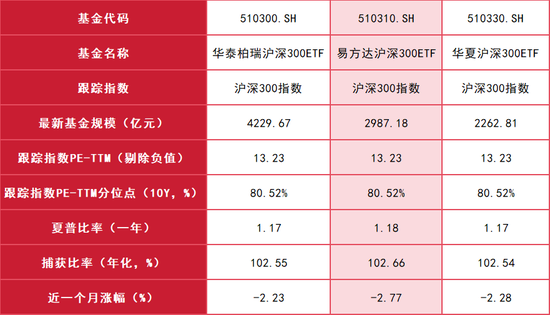
Core Viewpoint - The market experienced a strong rebound in the first week of December, with the Shanghai Composite Index fluctuating around the 3900-point mark, driven by positive news and increased trading activity [1][11]. Market Performance - The market saw a "good start" with a rebound on Friday after some adjustments earlier in the week, indicating a mixed sentiment among investors but a notable increase in trading volume [1][11]. - The technology sector, particularly consumer electronics and semiconductors, showed rapid rotation alongside resource sectors, with financial stocks leading the index's upward movement [1][11]. Key Upcoming Events - The Federal Reserve's interest rate decision is expected on December 11, with strong market expectations for a rate cut, which could lead to significant market fluctuations [1][12]. - The Central Economic Work Conference is also set to take place, which may provide policy direction for the upcoming year [1][12]. Investment Strategy - Given the current market conditions, a balanced investment approach is recommended, focusing on both dividend and growth styles to navigate potential short-term volatility [2][12]. - The recent adjustment by the financial regulatory authority to lower risk factors for insurance companies is expected to enhance their investment capacity, particularly in high-quality assets and technology sectors [3][13]. Sector Insights - The adjustment of risk factors for insurance companies includes a reduction from 0.3 to 0.27 for stocks held over three years in the CSI 300 Index, and from 0.4 to 0.36 for stocks in the Sci-Tech Innovation Board held over two years, promoting long-term investment [3][13]. - The financial sector, particularly insurance and brokerage firms, is anticipated to act as a stabilizing force in the market, with potential for significant capital inflow due to regulatory support [3][13]. Consumer Electronics Sector - The consumer electronics market is showing positive trends driven by new consumption policies and AI advancements, with leading companies in the sector currently undervalued, providing a safety margin for investors [8][17].

A股周一放量上涨 能源金属板块走强
Zhong Guo Xin Wen Wang· 2025-12-08 10:34
Core Viewpoint - The A-share market in China experienced a significant increase on December 8, with major indices rising and the energy metal sector leading the gains [1][2]. Market Performance - The Shanghai Composite Index closed at 3924 points, up by 0.54% - The Shenzhen Component Index closed at 13329 points, up by 1.39% - The ChiNext Index closed at 3190 points, up by 2.6% - The total trading volume in the Shanghai and Shenzhen markets was approximately 20.366 billion yuan, an increase of about 3.109 billion yuan compared to the previous trading day [1]. Sector Performance - The energy metal sector rose by over 3%, leading all industry sectors in the A-share market - Notable individual stocks in this sector included Tianhua New Energy, Zhongmin Resources, Ganfeng Lithium, and Shengxin Lithium Energy, all of which saw stock price increases of over 5% [2]. Regulatory Impact - The China National Financial Supervision Administration announced a reduction in risk factors for various insurance company business operations - The risk factor for insurance companies holding stocks in the CSI 300 Index and the CSI Dividend Low Volatility 100 Index for over three years was lowered from 0.3 to 0.27 - The risk factor for insurance companies holding ordinary shares listed on the Sci-Tech Innovation Board for over two years was reduced from 0.4 to 0.36 - This regulatory change is expected to enhance the capital efficiency and potential allocation capabilities of insurance companies, providing substantial benefits to the investment side of insurance capital and significantly boosting market sentiment [1].
风险因子调降释放红利,300红利低波ETF(515300)有望持续受益
Xin Lang Cai Jing· 2025-12-08 03:11
Group 1 - The core viewpoint of the news is the adjustment of risk factors for insurance companies' holdings in certain indices, which is expected to encourage long-term capital investment in the market [1][2] - The Financial Regulatory Authority announced a reduction in the risk factor for stocks held by insurance companies for over three years in the CSI 300 Index and the CSI Dividend Low Volatility 100 Index from 0.3 to 0.27 [1][2] - The adjustment is based on a weighted average holding period over the past six years, indicating a trend towards strengthening long-term capital in the market [1][2] Group 2 - As of November 28, 2025, the top ten weighted stocks in the CSI 300 Dividend Low Volatility Index include China Shenhua, Shuanghui Development, Sinopec, Gree Electric Appliances, and others, accounting for a total of 35.7% of the index [1] - The CSI 300 Dividend Low Volatility ETF (515300) closely tracks the CSI 300 Dividend Low Volatility Index, highlighting its advantages in a volatile market [2] - Investors without stock accounts can access investment opportunities through the corresponding CSI 300 Dividend Low Volatility ETF linked fund (007606) [3]
风险因子下调或可释放千亿入市资金,红利低波ETF天弘(159549)上周持续“吸金”累超1.1亿元居同标的第一
2 1 Shi Ji Jing Ji Bao Dao· 2025-12-08 02:09
Core Viewpoint - The adjustment of risk factors for insurance companies' investments in certain indices is expected to release significant capital into the market, potentially enhancing the performance of low-volatility dividend stocks [1][2]. Group 1: Market Performance - On December 8, major indices opened higher, with the CSI Low Volatility 100 Index rising by 0.06% [1]. - Among the constituent stocks, Fujian Expressway increased by over 2%, with other stocks like Central South Media, Yili, Solar Energy, and Guizhou Tire also showing gains [1]. - The Tianhong Low Volatility ETF (159549) experienced a net inflow of over 110 million yuan last week, ranking first among similar funds [1]. Group 2: Regulatory Changes - On December 5, the Financial Regulatory Authority announced a reduction in risk factors for insurance companies holding stocks from the CSI 300 and CSI Low Volatility 100 indices for over three years, from 0.3 to 0.27 [1][2]. - This adjustment is based on the weighted average holding period over the past six years [1][2]. Group 3: Capital Market Implications - According to estimates, the reduction in risk factors could release approximately 100 billion yuan into the market, with a static release of at least 32.6 billion yuan in capital if insurance funds increase their allocation to stocks [2]. - If this capital is fully allocated to CSI 300 stocks, it could correspond to an influx of 108.6 billion yuan into the stock market [2]. - The adjustment is expected to strengthen the trend of long-term capital entering the market, benefiting patient capital growth [2].

【申万宏源策略】周度研究成果(12.1-12.7)
申万宏源研究· 2025-12-08 01:39
Group 1 - The insurance sector is encouraged to increase equity allocations due to a reduction in risk factors for long-term holdings in the CSI 300 and the Low Volatility 100 indices, potentially releasing over 1 trillion yuan in equity investment capacity [6][11][12] - The spring market is expected to be a small-scale rebound within a high-level fluctuation, with policy layouts starting mid-December potentially triggering this seasonal rally [6] - The market style for 2026 is anticipated to shift from a "bull market 1.0" characterized by cyclical and value stocks in the first half to a "bull market 2.0" dominated by technology and advanced manufacturing in the second half [6] Group 2 - A-share valuations as of December 5, 2025, show the CSI All Share Index at a PE of 21.1 and PB of 1.8, indicating it is at the 77% and 39% historical percentiles respectively [8] - The real estate, retail, pharmaceutical, and IT services sectors are currently at or above the 85% historical percentile for PE valuations, indicating high valuation levels [8][9] - The healthcare services sector is noted to be below the 15% historical percentile for both PE and PB valuations, suggesting potential undervaluation [9] Group 3 - The "14th Five-Year Plan" identifies ten key investment opportunities, including artificial intelligence, robotics, aerospace, and innovative pharmaceuticals, which are expected to drive future growth [11][13] - A-share companies' overseas revenue growth is projected to outpace overall revenue growth, with overseas revenue expected to increase by 10.1% in 2024, compared to a decline of 0.8% in overall revenue [16] - The PPI price increase chain in the upstream sector is expected to continue, with specific industries like automotive manufacturing and energy showing signs of improvement [19][20] Group 4 - In November 2025, stock buybacks and increased loan applications surged by 55%, primarily driven by a nearly 18-fold increase in buyback applications [22] - The overall market sentiment is leaning towards a recovery, with various sectors showing signs of reversal and supply clearing opportunities [20][24]

政策窗口临近,市场反弹动能有望延续
Haitong Securities International· 2025-12-07 12:05
[Table_Title] 研究报告 Research Report 7 Dec 2025 中国策略 China Strategy 政策窗口临近,市场反弹动能有望延续 Policy Window Approaching, Market Rebound Momentum Likely to Continue 周林泓 Amber Zhou 李加惠 Jiahui Li, CFA [Table_yemei1] 观点聚焦 Investment Focus [Table_summary] (Please see APPENDIX 1 for English summary) 上周我们认为市场整固后有望延续反弹,科技修复仍有空间。本周港股与 A 股市场缩量震荡后于周五拉升,市场开 始关注中国政策窗口;有色金属受国际金属价格大涨带动表现最强,科技中以算力为代表的相关个股也表现相对 活跃。 下周市场将面临三大关键事件:政治局会议、中央经济工作会议以及美联储议息会议,市场波动可能加大。周五 市场已开始提前交易政治局会议释放宽松货币政策与积极财政政策信号的预期。同时,市场对政策支持长期资金 入市的预期进一步升温,周五金管总局正式下 ...
——申万宏源策略《关于调整保险公司相关业务风险因子的通知》点评:鼓励长期资金入市的方向延续
Shenwan Hongyuan Securities· 2025-12-07 02:38
Core Insights - The report discusses the adjustment of risk factors for insurance companies' investments, specifically the reduction of risk factors for stocks held for over three years in the CSI 300 and the low-volatility dividend index from 0.3 to 0.27, and for stocks held for over two years in the Sci-Tech Innovation Board from 0.4 to 0.36 [3][4][17] - The adjustment is seen as a marginal impact, with the potential for a significant increase in equity allocation by insurance funds in the long term [17][21] Quantitative Assessment of Risk Factor Adjustment - The report provides three scenarios for the proportion of stocks held for over three years in the CSI 300 and low-volatility dividend index: current situation at 13.0%, mid-term neutral at 42.1%, and optimistic at 50.3% [7][15] - For stocks held for over two years in the Sci-Tech Innovation Board, the current situation is at 0.6%, mid-term neutral at 1.9%, and optimistic at 2.9% [7][15] - The minimum capital released from the risk factor adjustment is estimated at 141 billion, 457 billion, and 554 billion under the three scenarios, respectively, with potential increases in stock investment of 514 billion, 1669 billion, and 2015 billion [15][17] Encouragement of Long-term Capital Market Entry - The adjustment is viewed as a supportive policy for encouraging long-term capital entry into the market, particularly for state-owned insurance companies that have already increased their equity investment ratios [17][21] - The report emphasizes the importance of increasing the equity allocation ratio of insurance funds as the main source of potential market entry space, estimating a potential increase of 32,431 billion if the equity and fund investment ratio reaches the regulatory cap of 30% [17][20] Market Dynamics and Future Outlook - The report notes that the spring market's economic and industrial catalysts are yet to be clarified, with supply-demand logic becoming a primary concern [21] - The adjustment of risk factors may lead to a favorable environment for insurance companies to engage in high-dividend stock investments while maintaining a focus on cost-effectiveness [21]