
AI发展

Search documents
中广核矿业20260122
2026-01-23 15:35
Summary of China General Nuclear Power Corporation Mining Conference Call Company Overview - China General Nuclear Power Corporation Mining (CGN Mining) operates under the China General Nuclear Power Group and is listed on the Hong Kong Stock Exchange with the code 1164. The company focuses on overseas uranium resource development, financing, investment, and operations management due to limited domestic uranium resources in China. The business model is primarily "investment plus off-take" to acquire overseas mines and expand resources [3][4]. Industry Insights - The global nuclear power sector is experiencing a resurgence, driven by the need for energy security and carbon neutrality, leading to increased demand for natural uranium. The demand for natural uranium is expected to grow by 4-5% annually until 2030 due to new reactor constructions [9][10]. - The uranium market is currently facing a supply shortage due to insufficient capital expenditures over the past decade, with existing production capacity unable to meet current demand [12][13]. Key Financial Highlights - In 2025, CGN Mining's total production is projected to reach 2,699 tons, with approximately 1,300 tons from off-take agreements. The company holds stakes in several overseas mines, including four in Kazakhstan [2][4]. - A new three-year sales agreement effective from January 1, 2026, sets a base price of $94 per pound, increasing by 4.1% annually, significantly enhancing profitability and market competitiveness [2][7]. - The company reported a loss of HKD 68 million in mid-2026, primarily due to accounting methods that resulted in paper losses amid rising market prices and the execution of low-price contracts signed between 2021-2025 [2][8]. Production and Growth Expectations - CGN Mining anticipates an increase in off-take volumes to over 1,400 tons in 2026 and 1,600 tons in 2027, driven by the recovery of existing mines to full capacity and the ramp-up of the Zhabak mine in Kazakhstan [6]. - The company is actively participating in the global spot market, contributing significantly to trade volumes through partnerships with trading firms [6]. Market Dynamics - The nuclear power industry's revival post-Fukushima has led to a renewed focus on uranium, with countries like France relying heavily on nuclear energy for stable power supply, contrasting with Germany's reliance on natural gas [9][10]. - AI technology's growth is expected to increase demand for stable energy sources like natural uranium, further driving nuclear energy development plans globally [11]. Challenges and Risks - The uranium market is expected to experience significant volatility, but the long-term outlook remains bullish due to solid fundamentals [18]. - The industry faces challenges such as a lack of new mining projects and the lengthy ramp-up periods for new mines, which can take 8-12 years to reach full production capacity [16][15]. Financial Market Influence - Financial institutions, including Sprott Physical Uranium Trust (SPUT), have entered the uranium market, providing liquidity and driving prices upward. This financialization has created new investment channels for both retail and institutional investors [22]. - Rising capital costs since 2022 have led to reduced industry activity, but investor interest remains strong, with CGN Mining planning a $2 billion offering to enhance financing flexibility [23]. Conclusion - CGN Mining is positioned to benefit from the increasing demand for uranium driven by nuclear power's resurgence and AI technology's energy needs. However, the company must navigate challenges related to production capacity and market volatility while capitalizing on new sales agreements and financial market dynamics [2][7][18].

王遥:绿色发展进入新阶段,绿色消费成为经济发展的内生动力
Di Yi Cai Jing· 2026-01-22 09:19
中央财经大学绿色金融国际研究院院长王遥受邀出席,并围绕"从绿色生产到绿色消费——中国"十五五"时期绿色发展新动向"主题发表演讲。她认为,"十 五五"时期中国的绿色发展将从生产主导转向生产与消费双轮驱动的新阶段,绿色消费成为经济发展的内生动力和未来可持续发展的重要领域。 中央财经大学绿色金融国际研究院院长王遥并围绕"从绿色生产到绿色消费——中国"十五五"时期绿色发展新动向"主题发表演讲。 瑞士时间1月21日,在达沃斯举办的世界经济论坛2026年年会召开期间,由腾讯新闻、腾讯财经主办、第一财经Yicai Global作为独家英文合作媒体的2026冬 季达沃斯愿景晚宴在达沃斯当地举行。来自国内外30余位著名学者、商业精英和政界人士,围绕"智绘新局,对话共赢"这一主题,共同探讨AI发展新趋势, 寻找经济发展新动能。 在王遥看来,未来金融支持绿色消费方面有四大发了方向。 第一是强化政策引导与协同,弥补消费端金融支持短板,推动金融政策与其他政策(如产业、消费)结合。 第二是完善标准与定义(Taxonomy),明确"绿色消费金融"范畴,明确金融支持绿色消费的范围、场景、建立健全相关标准,引导资金精准流向。其次, 利用金融科 ...


金银价格再创新高 还能涨多久?
Guo Ji Jin Rong Bao· 2026-01-19 17:39
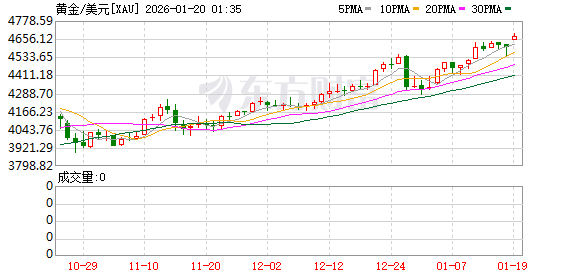
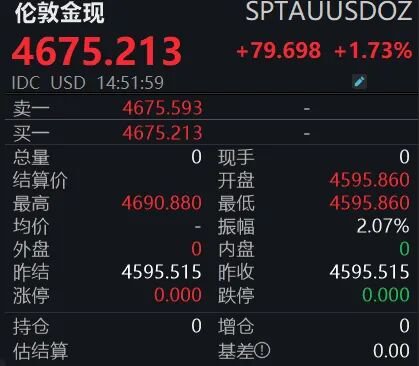
Core Viewpoint - Gold and silver prices have reached historical highs, driven by geopolitical tensions and market uncertainties, particularly following the announcement of punitive tariffs by the U.S. on several European countries [3][4][5]. Group 1: Market Performance - As of January 19, gold prices surged by 1.73% to $4,675.213 per ounce, with an intraday high of $4,690 per ounce [3]. - Silver prices increased by 3.75%, reaching $93.514 per ounce, with a peak of $94.12 per ounce during the day [3]. - COMEX gold futures rose by 1.81% to $4,678.4 per ounce, while COMEX silver futures jumped by 5.44% to $93.35 per ounce [3]. Group 2: Factors Behind the Surge - The price increase was triggered by U.S. President Trump's announcement of a 10% tariff on goods from eight European countries, which could rise to 25% if disputes continue [4][5]. - This geopolitical move has heightened market fears and increased demand for safe-haven assets like gold and silver [5][6]. Group 3: Market Sentiment and Future Outlook - Analysts suggest that the recent price surge reflects both immediate reactions to geopolitical risks and underlying structural trends in the precious metals market [6]. - The long-term outlook for gold remains bullish due to ongoing geopolitical tensions and central bank gold purchases, despite potential short-term volatility [7]. - Silver's price dynamics are more complex, influenced by industrial demand and potential supply constraints, which may support higher prices in the long run [7][8].
“铜博士”熄火!英伟达乌龙事件,影响有多大
Zhong Guo Zheng Quan Bao - Zhong Zheng Wang· 2026-01-19 14:29
Group 1 - The core viewpoint of the article is that the recent correction in copper prices is significantly influenced by a data error from Nvidia regarding copper demand for AI data centers, which has led to a reassessment of market expectations [1][3][5] - The main copper futures contract on the Shanghai Futures Exchange fell by 0.68%, while leading copper stocks such as Jiangxi Copper, Yunnan Copper, and Tongling Nonferrous Metals also experienced declines [1][3] - Analysts believe that the correction in Nvidia's copper demand estimate from 50,000 tons to approximately 200 tons will have limited short-term impact on the copper market, as the industry had already been cautious about the initial figure [2][5] Group 2 - The recent rise in copper prices was primarily driven by macroeconomic inflation expectations and supply constraints, rather than a tight supply-demand balance [2][7] - Analysts noted that the copper price increase in the past two months was influenced by two main factors: the pursuit of gold prices and the siphoning effect from the U.S., which has secured over half of the global copper inventory [8] - Looking ahead, industry experts expect copper prices to remain high in the first half of the year, with potential risks of correction in the second half due to increasing social inventory and weak downstream orders [9][6] Group 3 - The long-term outlook for copper consumption is optimistic, particularly due to the anticipated expansion of power grids driven by AI development, with the International Energy Agency projecting a 20% increase in grid length by 2030 [6] - Citibank estimates that copper demand from the data center sector will only account for 1.4% of global copper consumption by 2025, increasing to 2.4% by 2027, indicating a modest growth trajectory [5] - Goldman Sachs maintains a bullish long-term outlook for copper, predicting a price of $15,000 per ton by 2035 due to constrained supply and sustained demand growth [9]




金银价格再创新高,还能涨多久?
Xin Lang Cai Jing· 2026-01-19 14:02
Core Viewpoint - Gold and silver prices reached historical highs on January 19, with London gold rising 1.73% to $4,675.213 per ounce and London silver soaring 3.75% to $93.514 per ounce, marking significant market movements [1][10]. Market Performance - London gold spot price increased by 1.73%, closing at $4,675.213 per ounce, with an intraday high of $4,690 per ounce [2][10]. - London silver spot price surged by 3.75%, reaching $93.514 per ounce, with a peak of $94.12 per ounce during the day [2][10]. - COMEX gold futures rose by 1.81% to $4,678.4 per ounce, hitting a high of $4,698 per ounce [3][12]. - COMEX silver futures experienced a significant increase of 5.44%, closing at $93.35 per ounce, with a maximum of $94.365 per ounce [4][13]. Factors Driving Price Increase - The surge in gold and silver prices was primarily triggered by geopolitical tensions, particularly the announcement by U.S. President Trump regarding punitive tariffs on eight European countries opposing the U.S. acquisition of Greenland [5][14]. - The tariffs, set to begin at 10% on February 1, 2026, and potentially rising to 25% by June 1, were seen as a direct challenge to international norms and increased market uncertainty, leading to heightened demand for safe-haven assets like gold and silver [5][14]. - The combination of geopolitical risks and concerns over the independence of the Federal Reserve, amid ongoing investigations into its chairman, further weakened the dollar's credibility, prompting a shift towards precious metals [6][16]. Market Sentiment and Future Outlook - Analysts suggest that the recent price increases reflect a robust underlying demand for gold and silver, driven by both defensive buying due to geopolitical risks and structural factors such as low silver inventories and strong industrial demand [7][16]. - The long-term outlook for gold remains bullish, supported by ongoing geopolitical tensions and central bank purchases, while silver's trajectory may be more volatile due to its dual role as an industrial metal and a safe-haven asset [8][17]. - Investors are advised to remain cautious of short-term volatility, as any easing of geopolitical tensions or unexpected strength in the dollar could lead to rapid profit-taking and price corrections [8][18].
有色牛市难结束,有色金属ETF基金(516650)今年规模增幅108.7%
Sou Hu Cai Jing· 2026-01-19 06:08
Core Viewpoint - The prices of gold, copper, and aluminum are rising, indicating a strong performance in the precious and industrial metals sector, with expectations of a super cycle similar to 2006-2007 driven by AI and industrial metal demand [1] Group 1: Market Performance - As of January 19, gold ETF Huaxia (518850) increased by 1.4%, and the industrial metals ETF (516650) rose by 0.94% [1] - The copper price has reached a historical high, although the London copper market may not see significant upward movement [1] Group 2: Supply and Demand Dynamics - Global major mines are experiencing frequent accidents, leading to an expected reduction of 200,000 tons in supply by Q4 2025, translating to a quarterly decrease of approximately 3%-4% in copper production [1] - The macroeconomic environment, including potential interest rate cuts by the Federal Reserve, is expected to support copper prices, with a forecasted continued depreciation of the US dollar [1] Group 3: Investment Opportunities - Copper is identified as a key metal for energy transition, holding strategic value under the "14th Five-Year Plan" policy guidance [1] - The strong supply-demand fundamentals, along with ongoing macro policy support in China, are likely to stimulate sectors such as electric infrastructure, new energy vehicles, and home appliance consumption [1] Group 4: ETF Fund Performance - The industrial metals ETF (516650) tracks the CSI segmented industrial metals theme index, with a combined gold, copper, and aluminum content of 61.29%, the highest in the market [2] - The fund has seen significant capital inflow, with its latest scale reaching 13.77 billion, an increase of over 71.7 billion from the end of 2025, representing a year-to-date growth rate of over 108.7%, leading the sector [2]
财通基金唐家伟:周期品景气迎“朦胧复苏”,2026年供需紧平衡下涨价渐行渐近
Xin Lang Cai Jing· 2026-01-15 06:55
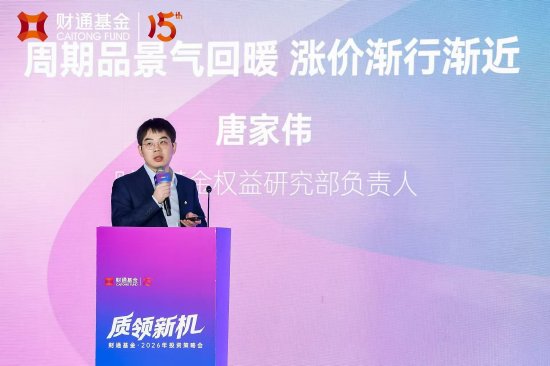
Core Viewpoint - The current cycle industry is at the bottom of the economic cycle, showing signs of recovery driven by various factors such as overseas interest rate cuts, AI infrastructure, emerging market construction, and domestic fiscal stimulus [1][5]. Group 1: Economic Cycle and Market Dynamics - The supply side is constrained due to low long-term returns and environmental restrictions, while the demand side is expected to improve [1][5]. - The supply-demand balance for cyclical products is anticipated to remain tight, with a price uptrend approaching, driven by a rebound in corporate profits [1][5]. - The cyclical stock market can be divided into three phases: price expectation, price surge, and performance realization [1][5][6]. Group 2: AI and Material Demand - The development of AI is expected to significantly increase the demand for upstream raw materials, particularly copper and aluminum [6]. - AI power system construction is projected to contribute a 0.7% compound annual growth rate to copper demand from 2026 to 2030, while supply growth for copper is expected to be only 1% by 2026 [6]. Group 3: High-Growth Industries - Several high-growth upstream sectors are highlighted, including lithium carbonate driven by unexpected energy storage demand, and organic silicon boosted by new AI applications [2][6]. - Industries such as cement and construction machinery are opening new growth curves through overseas expansion, showcasing strong profitability in international markets [2][6].
2026中国经济定调,内需加科技双轮驱动,这三大领域将迎来爆发?
Sou Hu Cai Jing· 2026-01-12 17:09
Economic Growth Target - The GDP growth target for 2026 is set at around 5%, which is considered a significant figure given the current economic challenges [3][30] - The target is primarily driven by the need to create jobs, as failing to meet growth expectations could lead to employment issues [5][30] - Structural constraints such as aging population and diminishing returns on capital are evident, but advancements in AI may help boost potential economic growth [5][30] Policy Measures - A coordinated approach between fiscal and monetary policies is essential, with an emphasis on active fiscal measures and reasonable debt arrangements [9] - Monetary policy is expected to be moderately accommodative, with potential interest rate cuts and liquidity support for key sectors [9] - Stability in the RMB exchange rate is crucial to avoid significant fluctuations [9] Domestic Demand Challenges - There is a notable lack of consumer confidence, leading to reduced spending by households and investment hesitance from businesses [11][30] - The real estate market is facing weakened demand, with changing demographics affecting purchasing power and urbanization slowing down [11][30] - Local government debt poses a significant constraint on growth, necessitating careful management of fiscal resources [11][30] Consumer Spending Dynamics - The marginal propensity to consume among Chinese residents is relatively low compared to international standards, with significant disparities across income groups [14][16] - Addressing income distribution and improving social security systems are critical to enhancing consumer spending [16][17] - Reducing mortgage interest rates could significantly release consumer spending potential [17] Technological Focus - The global competition in technology underscores the importance of self-sufficiency and domestic substitution [20][30] - There are substantial opportunities in AI infrastructure, including demand for servers, semiconductors, and optical technologies [21][23] - The advancement of new technologies is expected to enhance total factor productivity, which is vital for economic growth [24][30] Investment Opportunities - Key areas for investment include expanding domestic demand, technological self-reliance, and sectors experiencing a rebound in supply-demand dynamics [28][30] - The economic growth trajectory is anticipated to show a pattern of lower growth in the early quarters, followed by gradual recovery [28][30]

行业研究|行业周报|金属、非金属与采矿:继续布局春季攻势,地缘波动下关注贵金属-20260105
Changjiang Securities· 2026-01-04 23:30
Investment Rating - The industry investment rating is "Positive" and is maintained [7] Core Insights - Geopolitical fluctuations are driving safe-haven demand, with a focus on upcoming economic data and adjustments to the Bloomberg Commodity Index. Short-term gold and silver may experience wide fluctuations, but it is recommended to increase equity allocation during corrections. The recent increase in metal futures margin requirements by the CME has led to significant price volatility in gold and silver, with short-term forced liquidation sentiment easing. The outlook for Q1 2026 suggests that the inflation and liquidity resonance window remains unchanged, with silver leading the continued upward trend in precious metals [3][4][5] Summary by Sections Precious Metals - Geopolitical tensions are creating a demand for safe-haven assets, while upcoming economic data and the Bloomberg Commodity Index adjustments are being monitored. Short-term fluctuations in gold and silver prices are expected, but equity allocation should be increased during corrections. The recent margin hikes by the CME have caused significant price volatility, and the forced liquidation sentiment has eased. The inflation and liquidity resonance window is expected to remain unchanged through Q1 2026, with silver leading the upward trend in precious metals [3][4] Industrial Metals - The overall performance of industrial metals remains strong, driven by increased expectations of interest rate cuts and copper accumulation in the U.S. Recent data shows a week-on-week increase in copper inventory by 5.73% and a year-on-year increase of 86.11%. Aluminum inventory also saw a week-on-week increase of 2.93% and a year-on-year increase of 1.96%. The core logic for the strength in copper and aluminum prices is linked to interest rate cut expectations and U.S. copper accumulation [4][5] Energy and Minor Metals - Lithium is expected to see a supply inflection point and a new demand cycle. The price of lithium carbonate futures has surpassed 120,000 yuan/ton, reaching a new high. The recovery in rare earth demand is anticipated to initiate a new upward trend, with significant improvements in the performance of rare earth companies. Tungsten prices are also on the rise, with a long-term bullish outlook. The cobalt market is expected to face shortages from 2025 to 2027, with prices likely to rise due to supply constraints [5][6]
盐和铝-电解铝行业2026年度投资策略
2025-12-31 16:02
Summary of Key Points from the Conference Call Industry Overview - The conference call focuses on the aluminum industry, particularly the electrolytic aluminum sector, and its investment strategy for 2026, highlighting the impact of various macroeconomic and geopolitical factors on aluminum supply and demand [1][2]. Core Insights and Arguments - **Supply Constraints**: China's electrolytic aluminum production capacity is limited by dual carbon policies, power shortages, and technological constraints, leading to a long-term tight supply situation that supports high aluminum prices [1][2]. - **Global Manufacturing Recovery**: The global manufacturing PMI has remained above 50 for four consecutive months, indicating a recovery in manufacturing activity, particularly in Europe and emerging industrialized countries, which is expected to drive aluminum demand [4]. - **Geopolitical Risks**: Increased geopolitical risks and environmental uncertainties are raising the demand for strategic resource reserves, leading to more conservative mineral investments and stricter export controls, which further exacerbate supply uncertainties [1][5]. - **Interest Rate Impact**: A declining interest rate cycle typically boosts industrial metal prices. With low global inventory levels, a sustained decline in interest rates is expected to stimulate restocking, positively impacting aluminum prices [6]. - **North American Supply Issues**: Energy supply constraints in North America, exacerbated by AI development, may lead to further production cuts in the U.S. and Canada, affecting global supply-demand balance [12]. - **Recycling Challenges**: Progress in aluminum recycling is slow, with reduced subsidies for scrap aluminum and a lack of significant increases in scrap supply, maintaining a tight balance in domestic and international supply [15]. Additional Important Insights - **Historical Price Comparisons**: The aluminum market shows similarities to historical salt price trends, where both commodities have abundant reserves but face price pressures due to technological and regulatory constraints [3]. - **Future Demand Trends**: The demand for industrial metals, including aluminum, is expected to steadily increase in the coming years, driven by developments in AI, renewable energy, and infrastructure upgrades [4][8]. - **Valuation and Investment Outlook**: The aluminum sector has undergone debt repair, with an average dividend yield of 5%, making it attractive for long-term investments. The sector's valuation is currently around 8-9 times earnings, with potential to rise to 13-15 times [16][18]. - **Company Recommendations**: For companies with strong resilience, recommendations include Tianshan, Hongchuang, and Nanshan Aluminum, which are noted for their cost advantages and integrated operations [20]. For companies with flexibility, Yun Aluminum and Zhongfu are highlighted due to their benefits from marginal changes [19]. Conclusion - The aluminum industry is poised for growth due to a combination of supply constraints, recovering demand, and favorable macroeconomic conditions. Investment opportunities exist in companies with strong fundamentals and strategic positioning within the sector [21][22].