
AI竞赛

Search documents
AI能帮助你改善工作生活平衡?大厂CEO不乐观
财富FORTUNE· 2025-12-26 13:10
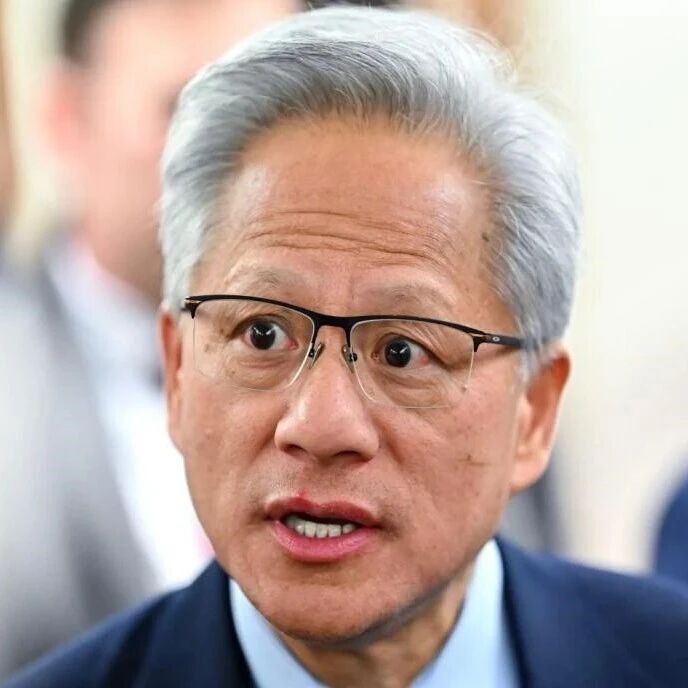
Core Viewpoint - The article discusses the increasing demand for work-life balance among Generation Z, yet highlights a paradox where many CEOs, including Jensen Huang of Nvidia, are reinforcing a culture of overwork in the face of AI advancements. Group 1: Work-Life Balance Expectations - By 2025, 74% of Generation Z will prioritize "work-life balance" when choosing jobs, surpassing any other generation, according to Randstad's data [1] - This marks the first time in over 20 years of Randstad's Workmonitor report that "work-life balance" has overtaken salary as the most valued factor by employees [1] Group 2: CEO Perspectives on Work Culture - Jensen Huang, CEO of Nvidia, works seven days a week, including holidays, driven by the intense AI competition and a persistent fear of failure [3] - Eric Yuan, CEO of Zoom, believes that the concept of work-life balance is a myth, stating "work is life" and prioritizing work over personal hobbies [4] - TIAA CEO Thasunda Brown Duckett refers to "work-life balance" as a "lie," advocating for a diversified approach to life where energy is allocated based on current priorities [6][7] Group 3: Success and Sacrifice - Alex Karp, CEO of Palantir, warns young professionals that achieving success often requires sacrificing aspects of their personal lives, emphasizing focus on career in youth [7][8] - Jeff Bezos, former CEO of Amazon, prefers the term "harmony" over "balance," arguing that both work and family can enhance each other rather than being in conflict [9][10] Group 4: Corporate Responsibility and Employee Well-being - Jamie Dimon, CEO of JPMorgan Chase, emphasizes that maintaining balance is ultimately the individual's responsibility, not the company's [11]


美联储降息25基点,9比3的分裂投票,暴露了比通胀更危险的危机
Sou Hu Cai Jing· 2025-12-15 17:16
Group 1 - The Federal Reserve announced a 25 basis point interest rate cut, marking the third cut of the year, with Wall Street's reaction being relatively calm [1] - The voting results showed a significant division with 9 votes in favor and 3 against, indicating a potential end to the Fed's era of consensus [3][5] - The dissenting votes came from the Chicago and Kansas City Fed presidents, who expressed concerns about premature rate cuts potentially reigniting inflation [3][5] Group 2 - The current division within the Fed is notable as it openly displays disagreements, contrasting with previous meetings where differences were typically unified [5][8] - The Fed's decision-making is complicated by a lack of reliable economic data due to a 43-day government shutdown, leading to reliance on less comprehensive private data sources [10][12] - The Fed's Chairman Powell acknowledged that the employment market might be "overestimated," indicating uncertainty in the current economic indicators [15][17] Group 3 - The nature of inflation has evolved, with new challenges such as "tech inflation" arising from competition for resources in the AI sector, complicating traditional monetary policy responses [21][23] - The competition among tech companies for GPUs and data centers is driving up costs, which may not be effectively managed through interest rate adjustments [25][27] - The Fed is caught in a dilemma between raising rates to control inflation and supporting technological investments deemed critical for national security [28][30] Group 4 - The recent rate cut appears to be a cautious compromise amid internal disagreements and unreliable data, reflecting a "walking a tightrope" approach by the Fed [32] - The evolving nature of inflation and the internal conflicts within the Fed suggest that future policy decisions may be increasingly challenging [34]

一场终极博弈!美国芯片或将会输给中国算力?
Sou Hu Cai Jing· 2025-12-12 10:34
Core Viewpoint - The article discusses the potential for China to surpass the United States in the AI race due to its superior energy infrastructure, particularly in electricity generation and distribution, which is crucial for powering AI technologies [1][6][12]. Energy Power Dynamics - Historically, energy resources have dictated global power dynamics, with the UK leveraging coal during the Industrial Revolution and the US establishing dominance through oil post-World War II [3][4]. - The control of essential energy resources has consistently allowed nations to shape global economic rules and maintain hegemony [4]. Current AI and Energy Landscape - The development of artificial intelligence is accelerating industrial productivity, with AI capable of enhancing manufacturing efficiency by over 30% and significantly reducing drug development timelines [6]. - Electricity has become the core energy resource in the AI era, as the computational power required for AI applications is heavily reliant on substantial electricity supply [6][10]. China's Strategic Advantages - China has implemented forward-looking strategies, such as the Renewable Energy Law in 2005, leading to a significant increase in renewable energy capacity, with a projected total of 2.22 billion kilowatts by October 2025 [8]. - The establishment of a high-capacity power transmission network (UHV) has enabled efficient long-distance electricity distribution, addressing energy shortages in eastern regions while utilizing western renewable resources [9][10]. Data and Computational Power - The "East Data West Computing" initiative allows for the transfer of data from energy-rich western regions to data-intensive eastern cities, enhancing computational efficiency and reducing costs [9][10]. - This system not only alleviates energy shortages in major cities but also optimizes the use of renewable resources, positioning China as a leader in energy and computational power [10]. Comparison with the United States - The US faces challenges with an aging and fragmented energy infrastructure, which hampers its ability to compete effectively in the AI and energy sectors [12]. - The reliance on private sector solutions has led to disparities in energy access, particularly affecting vulnerable communities during extreme weather events [12]. Future Implications - China's advancements in energy and computational power may lead to a new global economic landscape where computational services become a major export, enhancing China's influence in global trade [13]. - The Belt and Road Initiative could evolve to include integrated solutions that combine computational power and industry knowledge, further solidifying China's position in the global technology sector [13]. - The shift in economic power dynamics may result in new rules of engagement, with computational power becoming a critical factor in international relations and economic negotiations [14].
400亿机器人、6万亿参数的Grok 5:马斯克访谈中的AI终局与人类意义
混沌学园· 2025-12-05 09:07
Group 1 - The future global quantity of humanoid robots is expected to reach 30-40 billion, with each person in industrial settings potentially corresponding to three to four robots [7] - The manufacturing cost of the Optimus robot is projected to be between $20,000 to $30,000 once annual production stabilizes at one million units, with the complexity of its hand being a significant factor [8] - The precision of Optimus's hand is expected to surpass that of human hands, enabling it to perform complex medical tasks, thus providing a pathway to universal access to quality healthcare [9] Group 2 - Elon Musk's new venture, xAI, aims to fulfill the original mission of OpenAI, focusing on creating a non-profit, open-source AI that prioritizes human safety [11][12] - xAI's Grok 5 model is being trained with 60 trillion parameters, marking a significant step towards achieving Artificial General Intelligence (AGI), with a 10% chance of success [14][15] - Grok 5 will feature real-time video understanding capabilities, which are crucial for AGI, and aims to create an open-source knowledge repository akin to a modern-day Library of Alexandria [16][17] Group 3 - Tesla's upcoming AI5 chip is designed to achieve performance levels 2-3 times that of NVIDIA's chips while reducing costs to one-tenth, focusing on low-power AI inference for robots and vehicles [24][25] - The production efficiency of Tesla's factories is being optimized to potentially reduce vehicle production time to as little as 5 seconds per unit, a radical departure from traditional manufacturing practices [22][23] Group 4 - Musk envisions a future where traditional applications and operating systems are replaced by AI-driven interactions, predicting that AI will generate most content consumed by users within five to six years [29] - The ideal future scenario includes universal high income, where individuals can access any product or service without the need for traditional labor, leading to a redefinition of human purpose and value [32][34]


美政府“关门”进入第39天 美股上演“周五惊魂” “AI八巨头”单周蒸发8000亿美元;“次贷预言家”年内第二次做空英伟达;比特币一个月跌掉18% | 一周国际财经
Mei Ri Jing Ji Xin Wen· 2025-11-08 05:43
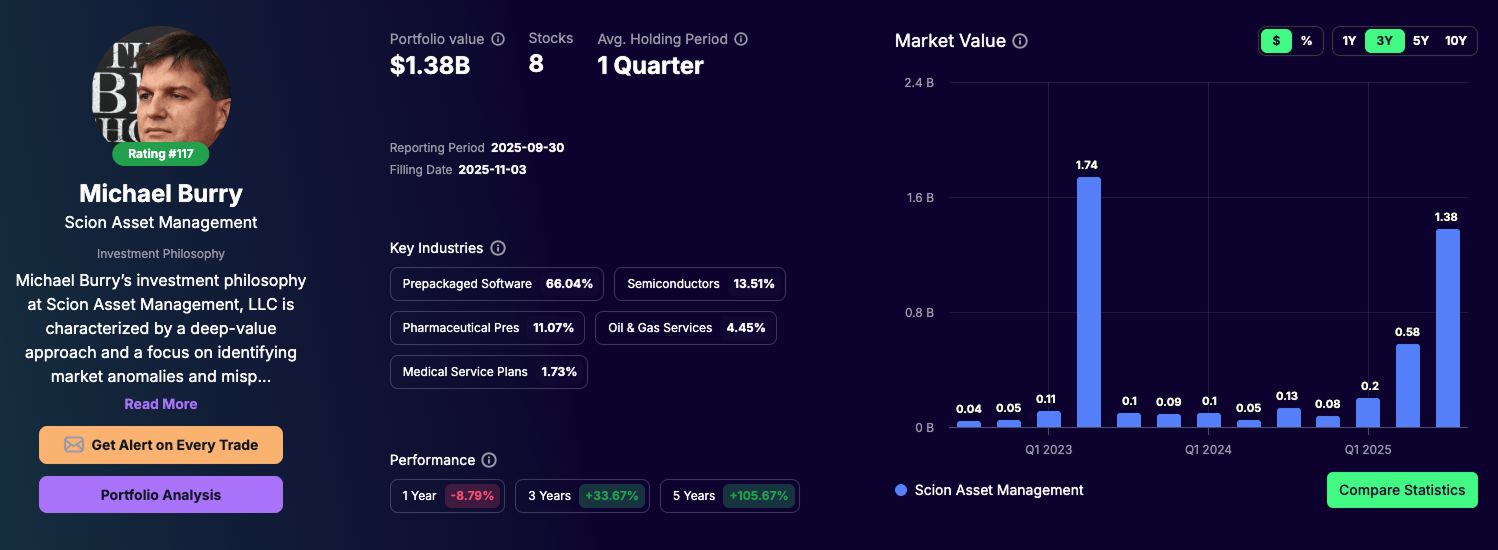
Group 1 - Michael Burry, known as the "Big Short," has again shorted Nvidia, with his fund Scion Asset Management revealing that approximately 80% of its assets are allocated to short positions on Nvidia and Palantir, amounting to over $1 billion in nominal value [1][3][5] - Following the disclosure of Burry's short positions, Nvidia's market value has dropped by approximately $455.1 billion (around 3.24 trillion RMB) over four trading days, with Nvidia's stock price falling by 9% [1][5][29] - Despite the significant drop in Nvidia's stock price, market interest in shorting Nvidia appears to be declining, with short positions decreasing from about 315 million shares to approximately 211 million shares between June 2024 and October 2025 [21][23] Group 2 - Burry's fund holds approximately $9.12 million in Palantir put options and about $1.87 million in Nvidia put options, indicating a strong bearish stance on these AI companies [5][6] - Palantir's CEO has publicly criticized Burry's actions, asserting that the company is genuinely profitable in the AI sector, and emphasized their commitment to delivering strong performance despite being targeted for shorting [18][19] - The broader market sentiment has been cautious, with major investment banks adopting a dual strategy of supporting AI investments while simultaneously preparing for potential downturns by shorting stocks [24][25] Group 3 - The U.S. government shutdown has entered its 39th day, causing significant volatility in the stock market, with major indices experiencing sharp declines before recovering slightly [26][35] - The Nasdaq index recorded its worst weekly performance since April, with a cumulative drop of 3.04%, and major AI-related companies collectively losing about $800 billion in market value [32][48] - Bitcoin's price has also seen significant fluctuations, dropping 18% over the past month, with a brief dip below $100,000 [47][49] Group 4 - The demand for electricity from AI companies is surging, with reports indicating that data centers are driving a significant increase in electricity demand in the UK, which has doubled compared to peak demand levels [44][45] - Major tech companies, including Microsoft, are facing challenges in securing sufficient power for their operations, highlighting the growing strain on energy resources due to the rapid expansion of AI infrastructure [44][45] - Analysts predict that by 2027, the electricity consumption of AI servers will be 50 times that of cloud servers five years ago, indicating a substantial increase in energy requirements for the AI sector [45]
X @外汇交易员
外汇交易员· 2025-11-07 00:45
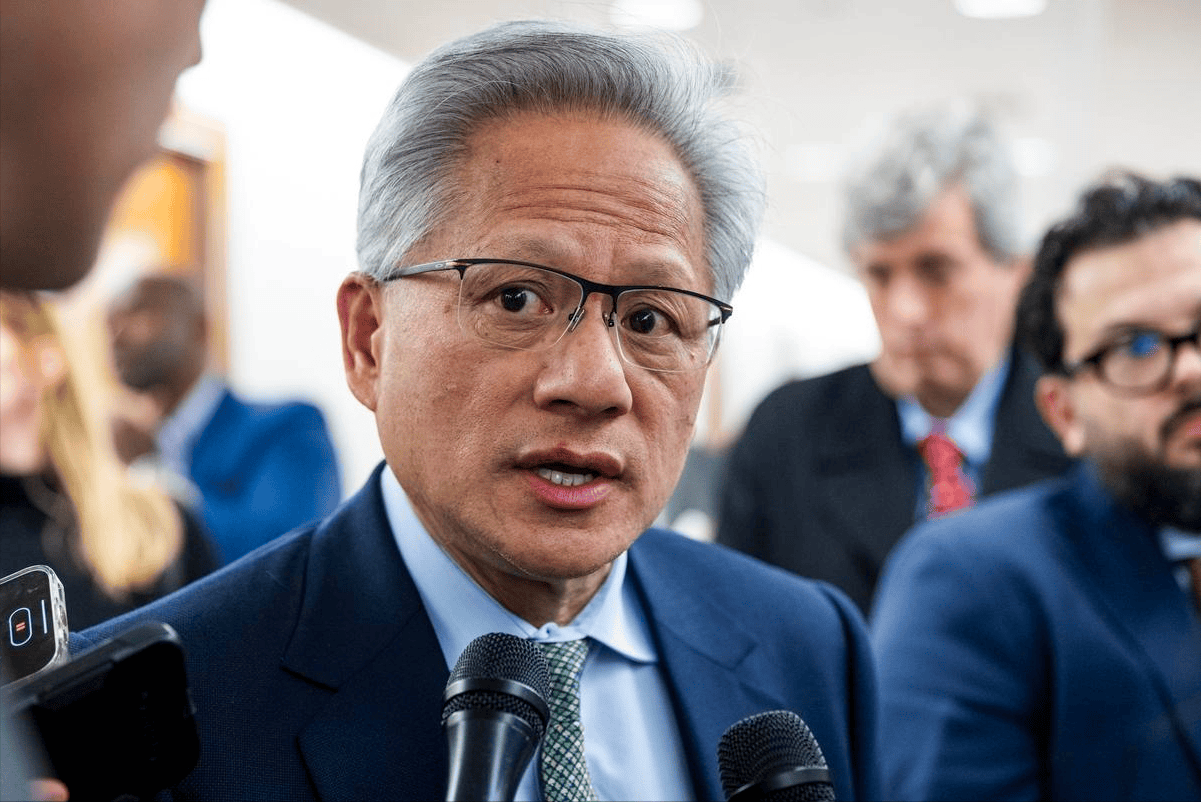
AI Competition Landscape - Nvidia CEO Huang Renxun adjusted his statement, emphasizing that China is only "a few nanoseconds" behind the US in AI, while the US is accelerating its progress [1] - The key is for the US to accelerate and win the support and adoption of global developers [1] - Huang Renxun previously stated that China would win the AI race due to lower energy costs and relaxed regulations [1] Regulatory Environment - Huang Renxun criticized the "cynicism" of Western countries, including the US and the UK, and called for more "optimism" [1] - He specifically pointed out that the implementation of AI rules by individual US states could bring a potential burden of "50 new regulations" [1]
信号出现?超3600亿跨国资金开始回流
Sou Hu Cai Jing· 2025-10-27 08:00
Market Overview - The A-share market has seen a significant surge, with the Shanghai Composite Index reaching a new high for the year, peaking at 3999.07 points, just shy of the 4000-point mark [1] - The Asia-Pacific markets have collectively strengthened, with the Nikkei 225 index breaking the 50,000-point barrier for the first time in history, driven by optimism regarding the new Prime Minister's stimulus policies and positive trade negotiations involving the U.S. [3] Currency and Capital Flows - Recent data indicates a notable return of cross-border capital, with the State Administration of Foreign Exchange reporting a bank settlement and sales surplus of $51 billion (approximately 362.7 billion RMB) in September, the highest monthly level since December 2020 [4] - The surplus reflects a growing demand for converting foreign exchange into RMB, with September's bank settlement reaching $264.7 billion and sales at $213.6 billion, resulting in a significant surplus [4] - The shift in corporate behavior, with companies accelerating the sale of U.S. dollars in response to the Federal Reserve's interest rate cuts, has contributed to this trend [6] Foreign Investment Sentiment - There is an increasing willingness among both domestic and foreign entities to hold RMB-denominated assets, as evidenced by a net inflow of $93.1 billion in foreign securities investment into China over the first three quarters, marking four consecutive quarters of net inflows [7][5] - The strong settlement surplus of $51 billion indicates rising optimism towards the RMB, with offshore RMB reaching its strongest level since November of the previous year [7][9] Upcoming Economic Events - The upcoming week is critical for global markets, with the Federal Reserve's meeting on October 30 expected to result in another 25 basis point rate cut [13] - The Bank of Japan and the European Central Bank will also announce their interest rate decisions on the same day, with market expectations leaning towards a potential rate hike from Japan and a hold from Europe [14] - The market is closely monitoring the Federal Reserve's communications for signals regarding future rate adjustments and the potential end of quantitative tightening [16][17] Earnings Reports - The end of October will see a concentrated wave of earnings reports from major tech companies, including Microsoft, Meta, and Alphabet, with Apple and Amazon following shortly after [18] - Analysts expect a profit growth of 16.6% for the "Tech Seven" this quarter, compared to 8.1% for other S&P 500 companies, indicating strong performance in the tech sector [19]

美股高处不胜寒 韩国散户杠杆押注波动率
Huan Qiu Wang· 2025-10-20 05:17
Core Insights - Korean retail investors, known for their aggressive investment strategies, are increasingly turning to complex leveraged VIX products to hedge against risks in the U.S. stock market or for speculative purposes amid growing concerns over valuation bubbles [1][3]. Group 1: Investment Trends - The 2x long VIX futures ETF (UVIX) has attracted approximately $130 million in inflows from Korean investors this year, making it one of the most favored U.S.-listed ETFs among them [3]. - These inflows account for about 20% of the global inflows into the UVIX ETF, highlighting the unique risk appetite of Korean retail investors [3]. Group 2: Motivations Behind Investment - Investors are motivated by dual factors: some are buying VIX-related products to hedge their substantial long positions in U.S. stocks, while others are engaging in high-risk speculation, betting on an imminent market correction [3]. - Analysts warn that these leveraged VIX products carry significant risks, and Korean retail investors may not fully understand the complexities involved [3][4]. Group 3: Market Sentiment and Risks - The Korean retail trading community, referred to as the "ant army," is known for embracing risk, with many discussing VIX or leveraged products in public groups on platforms like Kakao Talk [4]. - Despite ongoing risk warnings, the aggressive bets by the "ant army" on market volatility have become a unique barometer for market sentiment and risk perception [4].

金融工程周报:又一次TACO交易,但不会是再一次解放日-20251012
Huaxin Securities· 2025-10-12 11:34
- The report does not contain any specific quantitative models or factors for analysis or construction[1][2][3] - The content primarily focuses on macroeconomic strategies, asset allocation, and tactical trading recommendations, without detailing quantitative models or factor-based methodologies[5][6][34] - No quantitative backtesting results or specific factor performance metrics are provided in the report[1][2][3]
全球资产配置每周聚焦(20250905-20250912):全球资金大幅流出美国股市,恒科领涨全球资产-20250914
Shenwan Hongyuan Securities· 2025-09-14 12:45
Economic Indicators - The US CPI data met expectations while PPI unexpectedly weakened, reinforcing Fed rate cut expectations[3] - The unemployment rate in the US rose to 4.3% in August, with non-farm payrolls adding only 22,000 jobs, significantly below the expected 75,000[3] Market Performance - The Hang Seng Technology Index surged by 5.3%, leading global stock markets[3] - The S&P 500 closed at 6584.29, showing a weekly increase of 1.59%[8] Fund Flows - Over the past week, domestic funds significantly flowed into the Chinese stock market, with a net inflow of $8.32 million, while foreign funds saw a net outflow of $0.14 million[19] - US equity markets experienced a notable outflow of $172 billion, while US government bonds saw an inflow of $129.2 billion[16] Valuation Metrics - The Shanghai Composite Index's PE ratio has dropped to the historical 39th percentile, indicating potential undervaluation compared to US markets[3] - The PE ratio percentiles for the S&P 500 and DAX are at 93.2% and 90.7% respectively, suggesting high valuations in developed markets[3] Risk Sentiment - The put-call ratio for the S&P 500 increased to 1.13, indicating a more cautious market sentiment[3] - The implied volatility for the CSI 300 options has shown a significant decline, reflecting reduced optimism for upward movement[3]