HALO交易

Search documents
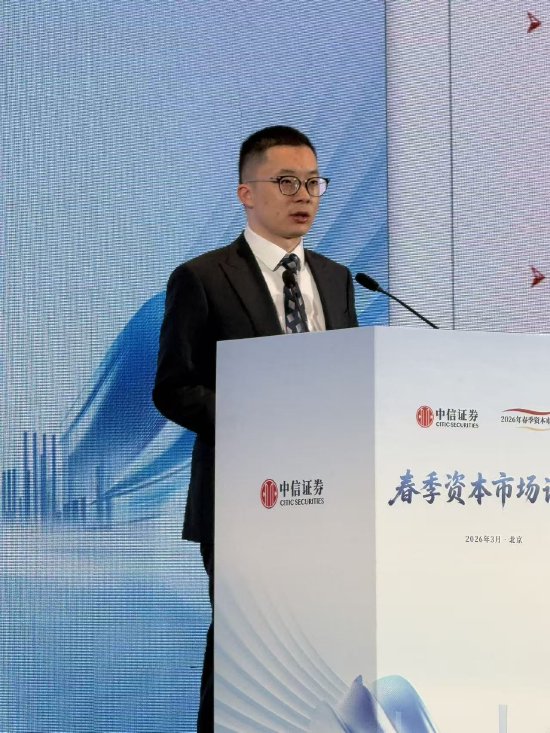
中信证券裘翔:利润率回升是A股接续牛市的关键
Xin Lang Zheng Quan· 2026-03-19 07:50
Group 1 - The core viewpoint is that the second quarter is a critical window for rebuilding confidence in the A-share market, with a focus on the stabilization and recovery of corporate profit margins as a necessary condition for the continuation of the bull market [1] - The Middle East conflict is seen as a catalyst for style switching this year, providing an opportunity to test the pricing power of China's advantageous manufacturing sector amid global supply chain disruptions [1] - Trends in the industry indicate that code inflation and physical scarcity are enhancing the pricing power of advantageous manufacturing in China, accelerated by disruptive innovation in AI and global energy supply chain disturbances [1] Group 2 - The re-evaluation of Chinese assets should not be centered around the HALO concept, as the logic differs from overseas markets; the focus should be on companies with market share and competitive advantages that can actively manage future capital expenditure [2] - The current bottom-line recommendation emphasizes industries in China with share advantages, where the cost of overseas capacity reset is high and supply elasticity is easily influenced by policy, particularly in chemicals, non-ferrous metals, power equipment, and new energy [2]


2026年二季度策略报告:蓄势而为,更上层楼-20260319
ZHESHANG SECURITIES· 2026-03-19 07:47
Market Outlook - The report maintains a neutral to optimistic view on the market, considering various factors such as international conditions, economic cycles, domestic policies, capital flows, market sentiment, and broad valuations. The Shanghai Composite Index is expected to stabilize gradually after mid-March, with growth indices potentially stabilizing by the end of April. A "systematic slow bull" market is anticipated, with the index likely to challenge the 5178-2440 range in the second half of Q2 2026 [5]. Style Rotation - The report indicates that mid to large-cap stocks will outperform, with a balanced approach between growth and value stocks. Public fund pricing power remains stable, and global liquidity is still relatively loose, supporting the dominance of mid to large-cap styles [10]. Industry Allocation - The industry allocation strategy focuses on both new and traditional energy sectors, with a particular emphasis on cyclical consumption. Key directions include: 1. Strong performers in new energy, particularly benefiting from "computing power and electricity synergy" and supply clearing in power equipment (solar, wind, lithium batteries). 2. Traditional industries are expected to undergo value reassessment, with a focus on "heavy asset" sectors such as electricity, communication services, fiberglass, steel, coke, gas, and coal mining. 3. Within cyclical products, attention should be given to relatively underperforming sectors like basic chemicals and agriculture. 4. In consumer goods, sectors such as pharmaceuticals (innovative drugs) and consumer services are highlighted due to policy support and potential for increased service consumption [7]. Thematic Investment - The report emphasizes the transformative impact of AI on value creation, highlighting investment opportunities in "HALO" trading and the overseas expansion of tokens. It suggests focusing on AI agents, embodied intelligence, and solid-state batteries as key thematic investment opportunities [8]. Economic Analysis - The report notes an improvement in economic conditions at the beginning of the year, driven by policies such as the "old-for-new" initiative and increased consumer demand during the holiday season. The issuance of special bonds and new financial tools is expected to support investment growth, while exports have shown significant strength, contributing positively to the economy [25][26]. Price Trends - The report indicates a positive trend in prices, with CPI and PPI showing signs of recovery. The core CPI reached a new high since 2019, driven by strong demand for gold and services. The PPI is also expected to turn positive sooner than anticipated, influenced by rising international oil prices and ongoing demand in the AI sector [30][34]. Policy Insights - The report outlines a shift in policy focus from quantity to quality, with a moderate expansion in fiscal policy and a continued emphasis on structural monetary policy. The GDP growth target for 2026 has been adjusted to a range of 4.5%-5%, reflecting a more pragmatic approach to economic development [37][38]. Capital Flow Analysis - The report highlights a "residential deposit migration" as a significant source of incremental capital, which may drive the index upward. The balance of margin financing and various equity funds has shown a balanced increase since July 2025, indicating a stable market environment [41][45]. Valuation Assessment - The report notes that major broad-based valuations are currently high, with the Shanghai Composite Index and other indices showing elevated price-to-earnings ratios compared to historical averages. This suggests that further market gains will require earnings growth to support high valuations [63][68].
“HALO”交易是否能带来价值红利回归:美日欧篇
Changjiang Securities· 2026-03-18 11:25
Group 1: Global Market Overview - In 2025, global capital markets experienced significant differentiation and restructuring, driven by macroeconomic narratives and strong profitability in the AI industry[4] - The "HALO" trading strategy emerged, indicating a return to value amidst strong growth expectations in certain regions[4] Group 2: European Market Performance - In Europe, the dividend value style outperformed growth style for 11 out of 12 months in 2025, with a notable absolute return in the dividend index exceeding double digits[7] - The MSCI Europe high dividend index recorded a remarkable increase of 35.91%, significantly outperforming the MSCI Europe growth index[25] - The European Central Bank implemented eight interest rate cuts from mid-2024 to mid-2025, reducing the deposit facility rate from 4.00% to 2.00%, alleviating pressure on high-leverage traditional enterprises[8] Group 3: Japanese Market Dynamics - Japan's stock market reached historical highs in 2025, with the Nikkei 225 index rising by 26.18% and the MSCI Japan high dividend index increasing by 23.79%[22] - The Japanese market exhibited a balanced performance between growth and dividend styles, with both achieving double-digit increases[22] - Significant share buybacks in Japan reached approximately 12 trillion yen in the first five months of 2025, marking a 20% increase year-on-year[22] Group 4: U.S. Market Insights - In the U.S., despite the long-term effectiveness of dividend aristocrat strategies, growth expectations driven by major tech companies posed challenges for dividend value strategies[23] - The "HALO" assets, including sectors like energy and utilities, saw a substantial increase in relative returns, particularly in early 2026[23] - The S&P 500 growth index rose by 22.18%, driven by strong earnings from the "Magnificent 7" tech giants, contributing significantly to the overall market gains[25]





财信证券晨会纪要-20260316
Caixin Securities· 2026-03-15 23:30
Financial Insights - The A-share market shows resilience, with a focus on dividend stocks as a potential investment direction [4][6] - The overall A-share index fell by 0.94%, closing at 6750.45 points, with the Shanghai Composite Index down 0.82% at 4095.45 points [6][7] - The market is experiencing a shift from technology-focused investments to dividend-oriented strategies due to increased geopolitical tensions and economic uncertainties [6][8] Company Dynamics - Eddie Pharmaceuticals (688488.SH) received approval for the drug registration of Dolutegravir Sodium Tablets, which will enhance its product offerings in the HIV treatment sector [36] - Shenzhen South Circuit (002916.SZ) reported a revenue of 23.647 billion yuan for 2025, marking a year-on-year growth of 32.05%, with a net profit increase of 74.47% [39][40] - Victory Technology (300476.SZ) achieved a revenue of 19.292 billion yuan in 2025, reflecting a significant year-on-year growth of 79.77%, with net profit soaring by 273.52% [42] Industry Trends - China joined the "Triple Nuclear Energy Declaration," aiming to enhance global nuclear energy sustainability and support low-carbon transitions [32][33] - Apple announced a reduction in the App Store commission rate in mainland China from 30% to 25%, effective March 15, 2026, which may impact the app development ecosystem [34][35]




中信证券:全球能化供应链扰动 中国优势制造业定价权迎重估
智通财经网· 2026-03-15 11:37
Group 1 - The core viewpoint is that the recovery of corporate profit margins is crucial for the continuation of the A-share bull market, with global supply chain disruptions providing an opportunity to test the pricing power of China's advantageous manufacturing sector [1][4] - The report emphasizes that the second quarter is a critical window for rebuilding confidence in the A-share market, as the Shanghai Composite Index is at a significant resistance level, and most major indices have valuations above the 80th percentile of the past decade [3][4] - The long-term stabilization and recovery of corporate profit margins are necessary prerequisites for the A-share market to reach new heights, as the core depends on the ability of China's advantageous manufacturing sector to convert market share advantages into sustained profit margin improvements [4][5] Group 2 - The report identifies several structural opportunities arising from rising oil prices due to geopolitical tensions, including chemical products that can serve as alternative raw materials and those with significant supply disruptions from the Middle East and Western Europe [2][13] - The pricing power of China's advantageous manufacturing sector is expected to improve, particularly in industries such as chemicals, non-ferrous metals, electric equipment, and new energy, as the market seeks to validate this narrative through sustained performance [5][12] - The report suggests that low valuations and pricing power are the two most important factors in the current market environment, with historical data indicating that low valuations serve as a strong defense during periods of geopolitical conflict and oil supply disruptions [7][8] Group 3 - The report highlights that the impact of AI-driven innovation on employment in China is expected to be less severe compared to the US and Europe, due to differences in employment structures [9] - The focus of investment strategies in China is on sectors with established market shares and competitive advantages, aiming to convert these into improved pricing power and profit margins, particularly in the context of rising global energy costs [10][12] - The report indicates that the current market environment may expose structural mispricing issues, as the A-share market has seen a significant divergence in the performance of small-cap and large-cap stocks, with a shift expected towards undervalued sectors [8][12]
财信证券宏观策略周报(3.16-3.20):A股市场仍有韧性,适当关注红利方向-20260315
Caixin Securities· 2026-03-15 10:36
Group 1 - The A-share market shows resilience despite increasing macro uncertainties overseas, with a shift in market style from technology to dividend-focused investments [5][8] - The short-term outlook suggests a wide fluctuation in index movements, with a focus on controlling positions and waiting for index-level opportunities [5][8] - Key factors influencing the market include escalating overseas tensions, diminishing calendar effects, and breakthroughs in global AI technology [5][8] Group 2 - Recent CPI data for February indicates a significant increase, with a year-on-year rise from 0.2% to 1.3%, marking the highest level in three years [9] - Export data for January-February exceeded expectations, with a year-on-year growth of 21.8%, driven by factors such as the Spring Festival effect and resilient overseas demand [10][11] - The OpenClaw AI technology has gained attention in the A-share market, representing future trends in AI applications, although concerns about security risks and high usage costs remain [12] Group 3 - Investment recommendations include focusing on high-dividend assets such as coal, oil, and transportation, as well as sectors benefiting from "HALO trading" and favorable policies from the Two Sessions [16][18] - The market valuation levels indicate a need for careful monitoring of the PE and PB ratios of the overall A-share index [33][34] - Recent trends in market funding show fluctuations in margin trading balances, indicating varying investor sentiment [36][37]
逻辑仍在,周期和先进制造仍占优
Guotou Securities· 2026-03-15 10:36
- The report discusses the "HALO trading" strategy, which is linked to cyclical and resource sectors, suggesting that these sectors are likely still in the "residual phase" with macroeconomic and trading factors providing support[1][9][10] - The report highlights that cyclical sectors experienced a slight decrease in crowding due to significant crude oil price fluctuations, while advanced manufacturing sectors, such as new energy, saw an increase in crowding[9] - The "Four-Wheel Drive Industry Rotation Model" is mentioned, which tracks industry signals like "low golden cross" and "profit effect anomalies" to identify potential opportunities in sectors such as non-bank finance, communication, and power equipment[18]
2026年春季港股及海外中资股投资策略:分化与回归
Shenwan Hongyuan Securities· 2026-03-15 06:58
Group 1 - The report highlights a significant divergence in the Hong Kong stock market, with a clear distinction between growth and value sectors, leading to a valuation drop that has reached historical extremes [4][10][40] - The Hang Seng Index's performance reflects a stark contrast between the technology growth sector and traditional value stocks, with the return difference nearing historical lows [10][11] - The report suggests that the current valuation of high dividend yield stocks is supported by a shift in investor preferences, moving from US Treasury yields to Chinese bond yields as the valuation anchor [18][21] Group 2 - The liquidity in the Hong Kong market remains healthy, with active trading levels increasing faster than market size growth, despite changes in investor structure [5][72] - The report indicates that the influx of capital from mainland investors has shifted, with a notable increase in ETF investments by individual investors rather than institutional buyers [62][65] - The potential unlocking of shares in 2026 is projected to be around HKD 1.8 trillion, but the impact is expected to be limited to specific companies rather than the overall market [78] Group 3 - The investment focus should be on cyclical sectors that show fundamental advantages, as well as consumer and technology sectors that have not been fully priced in [5][40][84] - The report emphasizes the importance of selecting stocks based on free float and global competitiveness, particularly in cyclical sectors that are influenced by strategic resource management and geopolitical risks [84] - The consumer sector in Hong Kong is highlighted as a significant area for investment, particularly in service consumption, which is expected to grow as the economy transitions from goods to services [85][86]
策略周报:战略资源品还有多大空间?-20260314
Guoxin Securities· 2026-03-14 13:13
Core Conclusions - The recent surge in strategic resource products is driven by concerns over AI substitution and escalating geopolitical conflicts, with frequent industry rotations observed this week, particularly in petrochemicals and non-ferrous metals [1] - The market for strategic resource products is supported not only by short-term shocks but also by long-term supply-demand changes that elevate price levels, indicating a potential continuation of the upward trend in the medium term [1][2] - Despite short-term market fluctuations, the overall bullish market trend for the year remains intact, with a focus on strategic resources under safety considerations and domestic demand-related assets, while AI technology remains a key theme for the medium term [1][3] Supply and Demand Dynamics - The current market for strategic resource products is influenced by supply constraints and rigid demand, which are driving price levels higher in the medium to long term [2][14] - Long-term capital expenditure is insufficient, resource nationalism is rising, and operational risks are increasing, all of which constrain the supply of strategic resource products [16] - The demand for strategic resources is being shaped by industrial trends and macro geopolitical changes, with AI and new energy sectors accelerating demand growth [17] Geopolitical Influences - The worsening geopolitical situation in the Middle East has catalyzed a rapid increase in oil prices, further stimulating the market for strategic resource products [13][14] - The ongoing geopolitical tensions are expected to suppress market risk appetite until the situation clarifies, although the underlying logic driving the stock market is anticipated to prevail in the medium term [25][26] Investment Focus - There is a strong emphasis on strategic resource products and a focus on domestic demand-related assets, with AI technology remaining a central theme for medium-term investments [3][27] - The report highlights the importance of safety considerations in the current complex external environment, with policies aimed at expanding domestic demand likely to benefit undervalued assets in real estate and consumer sectors [27] - The report suggests that the AI technology sector will continue to evolve, with a focus on applications and upstream energy and power sectors, as global energy supply tightens [27]
AI时代的“HALO交易”爆火,投资者如何借助公募基金参与?市场观察
私募排排网· 2026-03-12 12:00
Group 1 - The core concept of the article revolves around the emergence of HALO trading, which stands for Heavy Assets, Low Obsolescence, indicating a shift in investment logic on Wall Street since 2026 [4][5]. - HALO trading emphasizes investing in heavy asset companies that are less likely to be replaced by technological advancements, particularly in the context of rapid AI development [5][22]. - The performance of HALO asset portfolios has significantly outperformed light asset industries since 2025, highlighting a renewed focus on real assets in the AI era [5][22]. Group 2 - HALO investment fundamentally seeks long-term cash flow assets, characterized by stable and sustainable free cash flow [6][9]. - Heavy asset industries typically have high entry barriers, making them difficult to replicate quickly, thus ensuring a stable cash flow once established [7][8]. - The market is increasingly valuing companies with stable cash flow capabilities due to the uncertainties introduced by AI technologies [9]. Group 3 - For ordinary investors, systematically screening for HALO assets can be challenging; utilizing a free cash flow index can provide a more efficient method for identifying quality assets [10][11]. - The Guozheng Free Cash Flow Index focuses on free cash flow capability, stability, profitability quality, and asset quality to identify companies that generate long-term cash flow [11][12]. - The index's performance aligns well with the current HALO investment philosophy, indicating its effectiveness in identifying quality investments [12]. Group 4 - Investors interested in HALO logic can consider passive index funds like the Huaxia Guozheng Free Cash Flow ETF, which diversifies investments across companies with stable cash flow [16][18]. - This ETF approach helps mitigate industry-specific risks and focuses on companies with strong profitability and cash flow stability [16][18]. - In the rapidly changing AI landscape, companies with real assets and stable cash flows are likely to become core assets of long-term market interest [18]. Group 5 - The article suggests that asset pricing may be returning to "real value" as the market reassesses which assets are truly irreplaceable in light of rapid AI advancements [22]. - The emergence of HALO trading reflects a new investment trend where capital is shifting back to real assets and cash flow itself [22]. - For investors seeking long-term asset allocation strategies in uncertain environments, focusing on companies with stable cash flow capabilities is recommended [22].