
代币化

Search documents
《香港数字资产发展政策宣言2.0》发布,“LEAP”策略框架助力创新发展 | 政策与监管
清华金融评论· 2025-07-08 10:00
Core Viewpoint - The Hong Kong government has launched the "Digital Asset Development Policy Declaration 2.0," marking a significant step in establishing a systematic regulatory framework for digital assets, aiming to position Hong Kong as a global leader in the digital asset sector [1][2]. Group 1: LEAP Framework - The "LEAP" framework proposed in the declaration systematically outlines the development path for Hong Kong's digital asset industry, focusing on optimizing legal and regulatory measures [3]. - A unified and comprehensive regulatory framework for digital asset service providers is being developed, covering trading platforms, stablecoin issuers, and custodial service providers, with the Securities and Futures Commission as the main regulatory body [3]. Group 2: Tokenization and Innovation - The government plans to regularize the issuance of tokenized government bonds and explore other innovative options to provide stable and high-quality digital bonds [4]. - There is an emphasis on expanding the types of tokenized products, including traditional financial products and real-world asset cash flows, as well as precious metals and renewable energy [4]. Group 3: Application Scenarios and Talent Development - The government supports stablecoin and other tokenization projects, implementing a regulatory framework for stablecoin issuers starting August 1 [6]. - There is a focus on talent development in the digital asset industry, particularly in blockchain applications and AI integration, promoting strategic collaborations between universities and the industry [6]. Group 4: Commitment to Digital Asset Leadership - The declaration reflects Hong Kong's commitment to becoming a leader in the global digital asset space through a unified regulatory framework and the promotion of tokenization and stablecoin applications [7]. - The framework aims to provide a clear path for enterprises and investors to thrive in a secure and vibrant digital asset market, ensuring Hong Kong maintains its leading position in the digital transformation wave [7].

国际清算银行:2025年度经济报告(英文版)
Sou Hu Cai Jing· 2025-07-08 03:52
Group 1 - The global economy is facing uncertainty and fragmentation challenges, with growth forecasts being revised down due to increased trade policy uncertainty and tariff announcements [1][26][30] - Structural vulnerabilities include low productivity growth, high public debt levels, and increased reliance on non-bank financial institutions (NBFIs) [1][37][42] - The financial system is undergoing significant changes, with a shift from bank lending to government bond markets and NBFIs playing a larger role in cross-border transactions [2][48][50] Group 2 - The next-generation monetary and financial system is focusing on tokenization, which aims to integrate financial assets and transaction rules on a programmable platform [2][55][58] - Stablecoins are growing but fail to meet key monetary criteria, limiting their role in the monetary system [2][57] - Central banks are expected to play a catalytic role in driving innovation while maintaining trust in the monetary system [2][59]

总资产激增80%!投资者涌入代币化美债基金
Hua Er Jie Jian Wen· 2025-07-07 07:55
加密市场的玩家正大举涌入代币化美债基金,寻找比稳定币更好的"停泊地",既能安全存放闲置资金, 又能获得利息回报。 目前代币化美债基金的买家主要分为三类。 第二,交易更快、更便宜、更便捷。 周一,数据集团RWA.xyz报告称,代币化美债产品的总资产今年迄今激增80%至74亿美元,这类产品包 括将传统基金份额转换成数字代币的货币市场基金,以及部分直接代币化的美债。 代币化美债基金就是把传统债券或货币市场基金的份额发行成区块链上的代币。本质上还是投资美债、 短期票据、回购协议等低风险资产,只是换了持有形式。 例如,贝莱德、富兰克林邓普顿、Janus Henderson等传统资管巨头都已发行了这类产品,且他们管理的 代币化基金资产规模今年已增长两倍。 代币化基金为什么火爆? 代币化美债基金的火爆主要源于以下原因。 第一,代币化美债基金可以提高资产收益。稳定币是锚定美元的,不给利息,二代币化美债基金持有短 期美债和回购协议,能赚利息。 目前,交易信息处理得很快,但资金结算速度却还很慢,传统基金要等银行营业时间,结算要几天。而 区块链能解决"钱转账慢"的老问题,代币化基金可在区块链上"几分钟内"完成结算,这样能降低资本占 ...
许正宇:香港完善数字资产监管 稳定币发牌制度助力行业腾飞
智通财经网· 2025-07-04 11:00
Core Viewpoint - Hong Kong is actively promoting the development of digital assets, establishing a regulatory framework that balances risk management and investor protection, aiming to position itself as a leading digital asset center in Asia [1][2][7] Regulatory Framework - The Hong Kong government has implemented a licensing system for stablecoin issuers, which will take effect next month, enhancing the regulatory environment for digital assets [1][2] - A comprehensive regulatory framework for digital asset service providers is being developed, covering trading platforms, stablecoin issuers, and custodians [3][4] Tokenization and Product Expansion - The government has issued tokenized green bonds and plans to regularize the issuance of tokenized government bonds, providing incentives for the tokenization of real-world assets [4] - The framework aims to expand the variety of tokenized products, including potential exemptions from stamp duty for tokenized ETFs [4] Use Cases and Collaboration - The stablecoin licensing system is expected to facilitate practical applications and address challenges faced by the real economy [5] - Hong Kong is leading discussions on the use of stablecoins as a cost-effective alternative in financial markets, with a focus on enhancing their stability and reliability [5] AI Integration - Hong Kong's financial institutions have the highest usage rate of generative AI (38%) among global markets, indicating a strong trend towards AI integration in financial services [6] - The "LEAP" framework includes a focus on talent and partnership development to foster AI expertise and collaboration between industry and academia [6][7] Support for Startups - The Digital Port has launched a pilot funding scheme for blockchain and digital asset startups, providing financial support to encourage innovative solutions that integrate with the real economy [7]
美元稳定币:市场叙事背后的真相
Guan Cha Zhe Wang· 2025-07-03 03:25
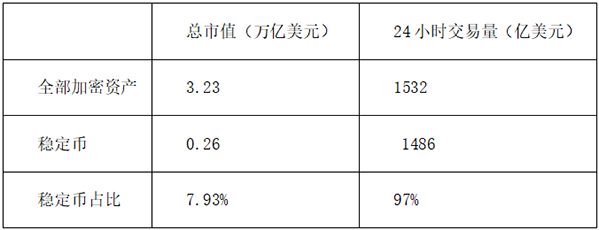
Core Insights - The seminar highlighted the transformative role of USD stablecoins in reshaping the global monetary landscape, emphasizing the need to address challenges from multiple dimensions including technology, market impact, and regulatory responses [1][2][3] Group 1: Market Dynamics of Stablecoins - The current market capitalization of stablecoins is nearly $260 billion, accounting for approximately 8% of the total cryptocurrency market, with stablecoin trading volume representing 97% of total cryptocurrency trading volume [4][5] - 99% of stablecoins are pegged to the US dollar, and over 99% of stablecoin trading volume is derived from cryptocurrency transactions, indicating their primary use case in the crypto market [7][8] - The largest stablecoin, USDT, holds a market share of 62%, followed by USDC, which has recently gained traction [8] Group 2: Regulatory and Economic Implications - The US has adopted a "let it be" approach towards stablecoin regulation, allowing commercial entities to lead the way in promoting dollarization through stablecoins before tightening compliance frameworks [2][32] - The rapid growth of USD stablecoins poses risks for China, including capital flight and challenges to existing foreign exchange management and anti-money laundering systems [2][37] - The issuance of stablecoins is heavily reliant on US Treasury securities, with significant investments in these assets, which raises questions about the sustainability of this model [34][36] Group 3: Global Dollarization and Financial Sovereignty - USD stablecoins are driving a digital form of dollarization globally, which could undermine the monetary sovereignty of other nations and exacerbate economic imbalances [30][31] - The use of stablecoins in regions with economic instability, such as Latin America and Africa, highlights their role in providing financial services but also raises concerns for local governments [31] Group 4: Future Outlook and Strategic Recommendations - The potential for USD stablecoins to enhance financial accessibility in underdeveloped regions must be balanced against the risks posed to national monetary policies [31] - China is advised to monitor the circulation of USD stablecoins and regulate them as foreign currency payment instruments to safeguard its monetary sovereignty [37]
国泰海通 · 晨报0703|代币化、钢铁、建筑
国泰海通证券研究· 2025-07-02 14:16
每周一景: 湖南永州九嶷山风景名胜区 点击右上角菜单,收听朗读版 【宏观】 代币化:货币、金融的历 史性变革 ——全球货币变局研究九 需求环比下降,总库存由降转升。 上周(本报告中的上周均指2025年6月23日至6月27日当周)五大品种钢材表观消费量879.85万吨,环比下降4.33万吨; 其中,建材表观消费量305.18万吨,环比下降2.71万吨;板材表观消费量574.67万吨,环比下降1.62万吨。上周五大品种钢材产量为880.99万吨,环比上 升12.48万吨;总库存为1340.03万吨,环比上升1.14万吨,维持近年同期最低位水平。上周247家钢厂高炉开工率为83.82%,环比持平;高炉产能利用率 为90.83%,环比上升0.04个百分点;电炉开工率为61.54%,环比持平;电炉产能利用率为52.36%,环比下降0.09个百分点。短期来看,行业已进入传统 淡季阶段,我们预期钢铁需求将维持震荡趋弱态势,总库存或逐步转入累库通道。 盈利率环比持平。 上周45港进口铁矿库存13930万吨,环比升36万吨,维持偏高位水平。上周螺纹模拟平均吨毛利145.6元/吨,环比降20.6元/吨,热卷模 拟平均吨毛利91. ...

全球货币变局研究九:代币化,货币、金融的历史性变革
GUOTAI HAITONG SECURITIES· 2025-07-02 08:41
Group 1: Macro Trends - The global monetary and financial systems may undergo significant changes in the next 5 to 10 years, driven by the development of stablecoins and Real World Assets (RWA) [2] - Stablecoins and RWA could create a parallel, decentralized monetary and financial system outside the current centralized frameworks [2] - The transformation brought by stablecoins and RWA may be as impactful as the advancements in AI on the global economy [2] Group 2: Stablecoins - The trust in centralized accounting systems is declining due to excessive issuance of fiat currencies, particularly after the 2008 financial crisis [16] - Stablecoins, primarily backed by fiat currencies like the US dollar, account for 99% of the stablecoin market since 2014 [17] - The emergence of stablecoins addresses the volatility of cryptocurrencies, allowing for decentralized circulation while maintaining a degree of stability [19] Group 3: RWA (Real World Assets) - RWA represents the tokenization of real-world assets on the blockchain, similar to Asset-Backed Securities (ABS) but utilizing decentralized platforms [24] - The development of RWA could establish a new financial market on the blockchain, allowing investors to manage wealth without reverting to centralized financial systems [25] - RWA can function as a form of currency, enabling transactions without the need to convert assets into fiat currency [30]
Robinhood欧洲落地代币股权业务,CEO:散户也能进入一级市场
3 6 Ke· 2025-07-02 07:50
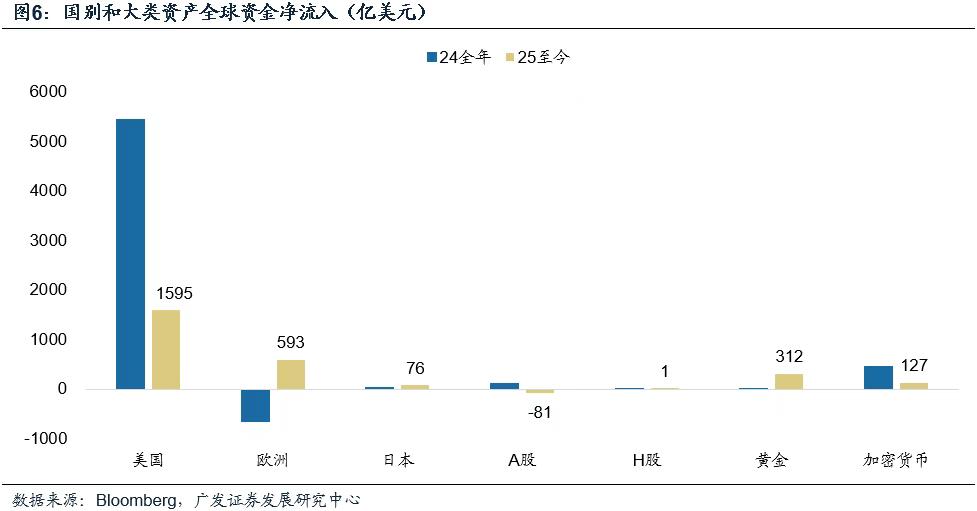
Core Insights - Robinhood has launched a tokenized stock and ETF service in the EU, allowing eligible users to trade over 200 US stocks and ETFs, including major companies like Nvidia, Microsoft, Apple, and Amazon [1] - The service includes tokenization of private companies like SpaceX and OpenAI, attributed to the EU's more flexible regulatory environment [1] - Robinhood's CEO, Vlad Tenev, views this as a step towards "financial equity," enabling broader access to investments that were previously limited to high-net-worth individuals [3] Group 1: Robinhood's Tokenization Service - The tokenized stocks represent contracts that track the underlying company's stock price and are recorded on the blockchain [1] - Users can only trade these tokens on Robinhood's platform, which acts similarly to an exchange, and transactions are conducted in USD with a 0.10% foreign exchange fee for Euro conversions [2] - The service is regulated under MiFID II, with underlying assets held by licensed US institutions, and Tenev anticipates future SEC oversight for these tokenized stocks [4] Group 2: Market Dynamics and Trends - The trend of private companies remaining unlisted is highlighted, with significant valuations making it difficult for ordinary investors to participate in their growth [3] - The regulatory landscape is evolving, with Chinese brokers like Guotai Junan International obtaining licenses to offer virtual asset trading, indicating a shift in asset allocation strategies [5] - Institutional interest in cryptocurrencies is increasing, with reports showing a net inflow trend for both cryptocurrencies and gold in the near future [5] Group 3: Market Performance - Following the announcement, Robinhood's stock price rose by 12.8%, although it experienced a slight decline of 1.39% the following day, with a market capitalization of $81.48 billion [7] - The stock has seen significant gains, with a 41.5% increase in June and a 34.7% rise in May [7]

香港发表数字资产发展政策宣言2.0 稳定币成重点
Zheng Quan Shi Bao Wang· 2025-06-29 10:18
Core Viewpoint - The Hong Kong Special Administrative Region government has released the "Hong Kong Digital Asset Development Policy Declaration 2.0," aiming to establish Hong Kong as a global innovation center in the digital asset sector, with a focus on stablecoins and tokenized real-world assets (RWA) as core pillars of the policy [1][2][4] Group 1: Policy Upgrades - The new declaration represents a systematic upgrade from the 2022 version, transitioning from a "testing ground" for digital assets to a more institutionalized, scaled, and global approach [1] - The declaration is structured around the "LEAP" strategy, focusing on compliance regulation, asset tokenization, scenario expansion, and talent development [1] Group 2: Terminology Shift - A significant change in terminology from "virtual assets" to "digital assets" reflects a broader regulatory perspective and a shift in focus, encompassing cryptocurrencies, stablecoins, and various forms of tokenized real assets [2] Group 3: Stablecoin Regulation - The declaration emphasizes support for stablecoins and other tokenized projects, particularly exploring the use of stablecoins as payment tools, which could revolutionize payment systems, supply chain management, and capital market activities [2] - A regulatory framework for stablecoin issuers will be implemented starting August 1, 2025, establishing requirements for reserve asset management, stability mechanisms, redemption processes, and prudent risk management [2][4] Group 4: Tokenization of Assets - The Hong Kong government plans to regularize the issuance of tokenized government bonds and promote the tokenization of a wider range of assets and financial instruments, including precious metals and renewable energy [3] - The declaration positions the tokenization of RWA as a key industry development direction, aiming to bridge the gap between the virtual economy and the real economy [4] Group 5: Institutional Innovations - The declaration outlines a clear timeline for stablecoin regulation, with Hong Kong set to become one of the few jurisdictions to provide a "landing pass" for stablecoins, facilitating their legalization and standardization [4] - Tokenized ETFs and digital asset funds, if legislated, will enjoy the same stamp duty and profits tax exemptions as traditional ETFs, significantly reshaping financial market rules and attracting international capital to Hong Kong [4]
万联晨会-20250627
Wanlian Securities· 2025-06-27 00:56
Market Overview - The A-share market experienced fluctuations with the Shanghai Composite Index down by 0.22% to 3448.45 points, the Shenzhen Component down by 0.48% to 10,343.48 points, and the ChiNext Index down by 0.66% to 2114.43 points. The total trading volume in the A-share market was 1.58 trillion RMB, with net purchases from southbound funds amounting to 5.285 billion HKD. Over 3400 stocks in the A-share market declined [1][6] - In terms of industry performance, the banking, telecommunications, and defense industries led the gains, while the automotive and non-bank financial sectors saw the largest declines. Concept sectors such as military restructuring and electronic ID concepts showed significant gains, while sectors like photolithography and shared bicycles faced declines [1][6] - Internationally, the US stock indices collectively rose, with the Dow Jones up by 0.94% to 43,386.84 points, the S&P 500 up by 0.8% to 6141.02 points, and the Nasdaq up by 0.97% to 20,167.91 points. European and major Asia-Pacific indices generally rose [1][6] Important News - The National Development and Reform Commission announced that the third batch of funds for the consumption upgrade program will be distributed in July 2025. The focus will be on ensuring the sustainable and balanced implementation of the program throughout the year [2][6] - The Bank for International Settlements reported that stablecoins have not met the three key tests required to become a pillar of the monetary system, despite showing some potential in the tokenization landscape [2][7] Retail Sales Data - In May 2025, China's total retail sales of consumer goods reached 413.26 billion RMB, showing a year-on-year increase of 6.4%, with growth rates improving both year-on-year and month-on-month. Retail sales of goods and catering services both saw increases compared to the previous month [8][12] - Online retail sales from January to May 2025 totaled 604.02 billion RMB, reflecting a year-on-year increase of 8.5%, with physical goods online retail sales growing by 6.3% [11] Solid-State Battery Equipment - The solid-state battery industry is entering a rapid development phase, driven by national policy support and accelerated enterprise layouts. Solid-state batteries are seen as a key direction for upgrading lithium battery technology due to their high safety and energy density [15][19] - The market structure for lithium battery equipment shows that the front-end and mid-stage equipment hold significant value, with coating and winding machines being core components. The front-end equipment market accounts for 44.05%, while mid-stage equipment accounts for 35.71% of the total market [16][19] - The introduction of dry electrode technology in the front-end process is expected to enhance efficiency and reduce costs, while the use of isostatic presses in the mid-stage process can improve material density and performance [17][18] Home Appliance Industry - The home appliance industry is benefiting from the consumption upgrade policy, with sales expected to continue growing. The real estate sector's recovery is also contributing to increased demand for home appliances as the market stabilizes [21][22] - The industry has seen a decline in performance due to tariff wars, but the valuation of home appliance stocks is currently at a historical low, presenting a good investment opportunity [21][22] - The export of home appliances is expected to remain resilient despite tariff uncertainties, supported by the growing demand in emerging markets [23]