
促消费政策

Search documents
2025年6月CPI、PPI数据点评——基数效应叠加外贸预期不稳,PPI降幅扩张
Jing Ji Guan Cha Bao· 2025-07-23 09:36
Group 1: CPI Analysis - In June 2025, the CPI increased by 0.1% year-on-year, up 0.2 percentage points from the previous month, while it decreased by 0.1% month-on-month, an increase of 0.1 percentage points from the previous month [2][4] - In the first half of 2025, the CPI decreased by 0.1% year-on-year, down 0.2 percentage points compared to the same period in 2024, indicating a persistent low growth due to insufficient consumer demand [2][9] - The core CPI, excluding food and energy prices, showed a year-on-year increase of 0.7% in June, up 0.1 percentage points from May, reflecting a gradual recovery in consumer demand [2][4] Group 2: PPI Analysis - In June 2025, the PPI fell by 3.6% year-on-year, with the decline expanding by 0.3 percentage points compared to the previous month, and a month-on-month decrease of 0.4% [6][9] - The PPI for the first half of 2025 decreased by 2.8% year-on-year, down 0.7 percentage points from the same period in 2024, influenced by high base effects and external pressures [6][7] - The decline in industrial product prices is attributed to insufficient demand, exacerbated by external environmental pressures and domestic economic structural adjustments [6][7][9] Group 3: Food and Non-Food Prices - Food prices decreased by 0.3% year-on-year in June, with a notable decline in pork prices due to high base effects from the previous year, while other food prices showed an upward trend [3][4] - Non-food prices increased by 0.1% year-on-year, indicating a slight recovery but still remaining in a low growth range, primarily due to oversupply in the market [4][5] - Service prices saw the largest year-on-year increase of 8.1%, reflecting a diverse performance across different non-food categories [5][9]
促消费政策发力显效 上半年我国汽车产销量均超1500万辆
Yang Shi Wang· 2025-07-23 03:28
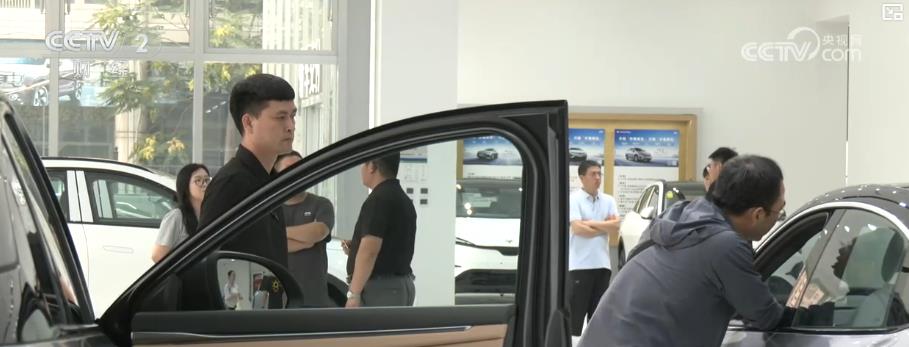
Group 1 - In the first half of the year, China's total retail sales of consumer goods increased by 5% year-on-year, with consumption contributing 52% to economic growth, becoming the main driver of economic expansion [1] - The automotive sector saw significant growth, with production and sales exceeding 15 million units, marking a historical high for the same period [1] - The "trade-in" policy and various promotional activities have led to a noticeable increase in consumer traffic and sales at automotive dealerships [3] Group 2 - In May, Beijing issued an additional 20,000 new energy vehicle (NEV) license plates, increasing the annual quota by 60,000, all aimed at families without cars [5] - A local car manufacturer in Chongqing implemented a subsidy plan for trade-ins, resulting in over 140,000 NEV sales in the first half of the year, a year-on-year increase of over 70% [5] - As of May 31, the number of applications for the national trade-in subsidy reached 4.12 million, effectively boosting domestic demand for automobiles [7]

社服与消费视角点评6月国内宏观数据:经济表现稳步修复,消费信心仍待进一步提振
Bank of China Securities· 2025-07-17 09:11
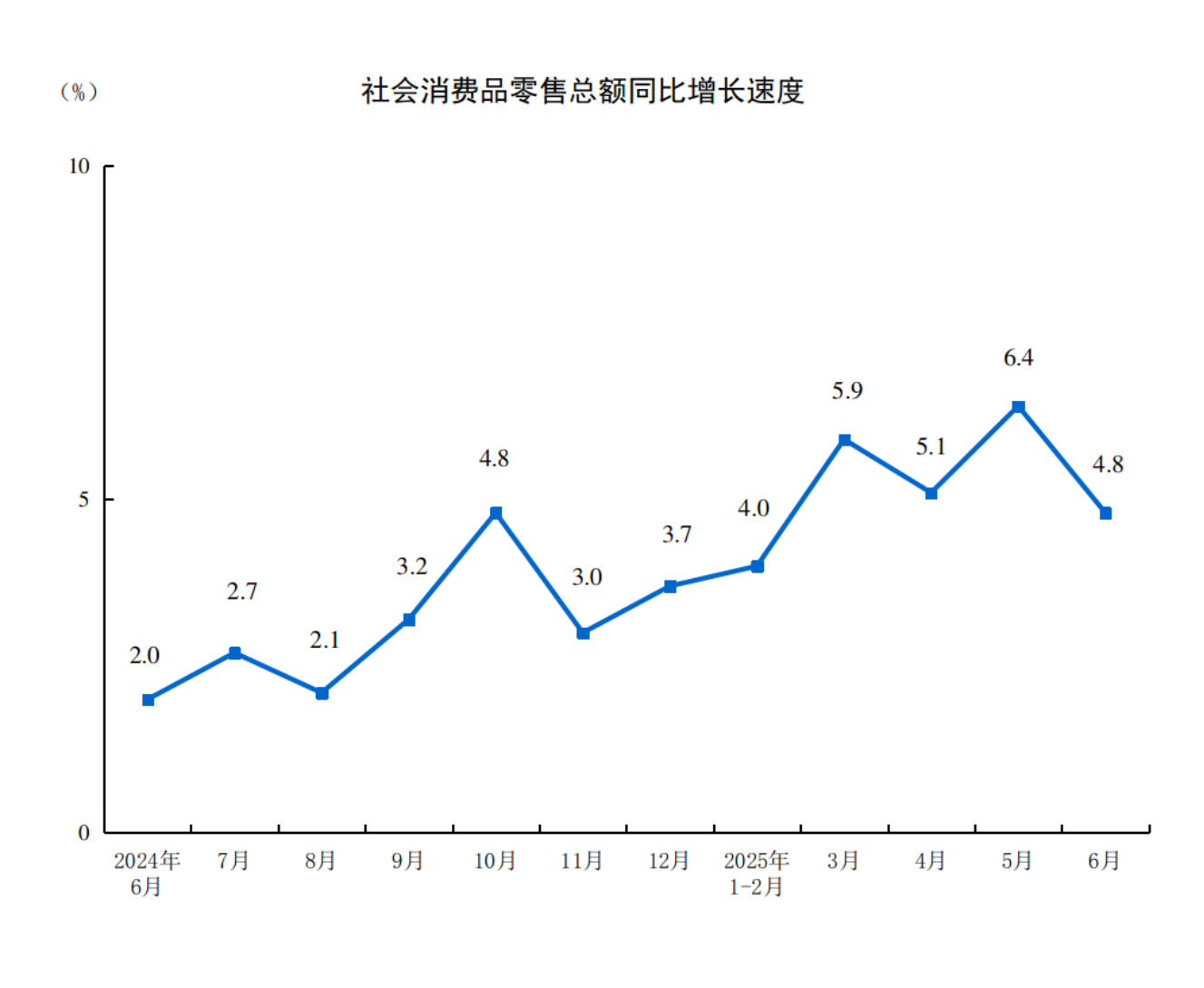
Investment Rating - The industry investment rating is "Outperform the Market" [1][36] Core Viewpoints - Economic performance is steadily recovering, but consumer confidence still needs further boosting. In June 2025, the total retail sales of consumer goods reached 4.2 trillion yuan, with a year-on-year increase of 4.8%. The GDP for the first half of 2025 was 66.05 trillion yuan, reflecting a year-on-year growth of 5.3% [1][3] - The overall economic operation in the first half of 2025 was stable, with consumption playing a significant supporting role. The total retail sales for the first half of 2025 reached 24.55 trillion yuan, a year-on-year increase of 5.0% [3][4] Summary by Sections Economic Performance - The GDP growth for the first half of 2025 was 5.3%, with contributions from the primary, secondary, and tertiary industries at 3.6%, 36.2%, and 60.2% respectively. The growth pace aligns with the annual target of 5% [3][4] - The retail sales of goods increased by 5.1%, while restaurant income grew by 4.3% in the first half of 2025. The service retail sales also saw a year-on-year growth of 5.3% [3][4] Consumer Confidence - The average urban unemployment rate in the first half of 2025 was 5.2%, showing stability, but consumer confidence has not significantly improved. The consumer confidence index was at 88.0 in May, indicating a low level of confidence [3][4] Investment Recommendations - The report suggests focusing on companies likely to benefit from the recovery in tourism and travel demand, such as Lingnan Holdings and Tongcheng Travel. Other recommended companies include those in the business and exhibition sectors, as well as various hospitality and entertainment firms [3][4]
“促消费”政策和新兴消费叠加利好 沪零售物业市场租赁需求边际改善
Zhong Guo Jing Ying Bao· 2025-07-16 10:50
Core Insights - The primary goal of lease restructuring is to reduce costs, with rental prices in Shanghai showing a downward trend due to adjustments in the international economic environment and increased supply [1][3] - Major enterprises with long-term leases are reassessing current rental levels, leading to negotiations for alternative solutions such as extending lease terms in exchange for lower prices [1][4] Retail Property Market - The retail property market in Shanghai is experiencing marginal improvements in leasing demand, driven by "promoting consumption" policies and emerging consumer trends [2] - In Q2 2025, the average rent in core retail areas decreased by 1.1% to 43.1 yuan/sqm/day, while non-core areas saw a 1.8% decline to 15.0 yuan/sqm/day [7] - The overall rental market remains competitive, with landlords offering attractive rental terms and incentives to attract brands [7] Office Market - The office market is primarily driven by cost-sensitive tenants seeking favorable lease terms, with net absorption recorded at approximately 57,300 sqm in Q2 2025 [3][4] - The vacancy rate in the central business district (CBD) rose to 16.9%, while the overall market vacancy rate increased to 24.6% due to significant supply in non-CBD areas [4] - Rental prices for Grade A office buildings continued to decline, with CBD rents down 2.4% to 6.9 yuan/sqm/day and non-CBD rents down 2.7% to 4.5 yuan/sqm/day [4] Industrial Park Demand - Demand in industrial parks remains cautious, with net absorption of 23,600 sqm in Q2 2025, primarily driven by artificial intelligence and integrated circuits [5] - The overall vacancy rate in industrial parks increased to 25.1%, with market rents declining by 5.0% to 3.6 yuan/sqm/day [5] Investment Market - In Q2 2025, the Shanghai commercial real estate market recorded 23 transactions totaling 8.2 billion yuan, with an average transaction size of 360 million yuan [8][9] - Investment demand remains dominant, accounting for 66% of the market, with core area assets contributing significantly to transaction volumes and values [9] - The retail property sector was the most active, representing 35% of transaction counts, particularly in street-level commercial assets [9]

上半年消费对经济贡献率过半,刺激消费补贴政策已陆续出台
2 1 Shi Ji Jing Ji Bao Dao· 2025-07-15 06:39
Group 1 - The core viewpoint of the articles emphasizes the need for continued strengthening of consumption policies to support economic growth, as consumer spending is showing signs of recovery [1][2][3] - In the first half of the year, the total retail sales of consumer goods reached 24,545.8 billion yuan, with a year-on-year growth of 5.0%, indicating a gradual acceleration compared to the first quarter [1][2] - The contribution rate of consumption to economic growth reached 52% in the first half of the year, with the second quarter showing a growth rate of 5.4%, up 0.8 percentage points from the first quarter [2][3] Group 2 - The growth rate of commodity consumption was 5.1% in the first half of the year, supported by policies encouraging the replacement of old goods, with significant increases in sales of essential and upgraded goods [4][6] - The restaurant sector saw a steady growth in revenue, reaching 27,480 billion yuan with a growth rate of 4.3% in the first half of the year, although June experienced a notable decline in growth to 0.9% [8][9] - The service retail sector grew by 5.3% year-on-year, slightly outpacing the growth of goods consumption, indicating a shift in consumer preferences [6][7] Group 3 - The articles highlight the importance of improving employment and income expectations to fundamentally drive consumption and investment, suggesting that current policies need to be more robust to achieve desired outcomes [6][7] - The restaurant industry is undergoing a transformation, with a shift from business dining to family consumption, reflecting changing consumer behavior and preferences [11] - The competitive landscape in the restaurant sector is intensifying, with a rise in popularity for high-value, unique dining experiences, particularly among family-oriented establishments [11]
货币政策、汇率、促消费……央行回应金融领域热点问题
Sou Hu Cai Jing· 2025-07-14 12:22
Core Viewpoint - The People's Bank of China (PBOC) has reported significant growth in social financing and monetary supply, indicating effective monetary policy support for the real economy in the first half of 2025 [1][2]. Group 1: Financial Data Overview - As of June 30, 2025, the total social financing stock reached 430.22 trillion yuan, a year-on-year increase of 8.9% [1]. - The broad money supply (M2) stood at 330.29 trillion yuan, growing by 8.3% year-on-year, while the narrow money supply (M1) was 113.95 trillion yuan, up 4.6% [1]. - The cash in circulation (M0) amounted to 13.18 trillion yuan, reflecting a 12% increase [1]. - The net cash injection in the first half of 2025 was 363.3 billion yuan [1]. Group 2: Monetary Policy Measures - The PBOC has adopted a moderately loose monetary policy to support the economy, with a focus on enhancing financial services for the real economy [2][3]. - A comprehensive set of financial support measures was implemented in May 2025, aimed at boosting market confidence and stabilizing expectations [2]. - The PBOC has emphasized the importance of policy coordination and the use of structural monetary policy tools to support key sectors and address weaknesses [3]. Group 3: Support for Technological Innovation - The PBOC has introduced two key measures to support technological innovation: optimizing re-loans for technology innovation and establishing a "technology board" in the bond market [4][5]. - By the end of May 2025, loans for technology innovation and technological transformation reached 1.7 trillion yuan, 1.9 times the amount at the end of 2024 [5]. - The bond market has seen 288 entities issue approximately 600 billion yuan in technology innovation bonds since May 2025, with over 400 billion yuan issued in the interbank market [5][6]. Group 4: Currency Exchange and Economic Stability - The PBOC maintains that China does not seek to gain international competitive advantages through currency devaluation, emphasizing a stable and flexible exchange rate policy [7][8]. - The recent appreciation of the yuan against the dollar is attributed to a stable domestic economic environment, despite fluctuations in the dollar's value [7]. - The PBOC aims to keep the yuan's exchange rate stable while enhancing market-driven mechanisms and managing expectations [8]. Group 5: Consumer Support Initiatives - The PBOC has prioritized boosting consumption as a key economic task for 2025, issuing guidelines to enhance financial support for consumption [9][10]. - Financial institutions are encouraged to strengthen services on both supply and demand sides to meet diverse financing needs [9]. - A 500 billion yuan re-loan facility has been established to support service consumption and elderly care, aiming to improve the quality of supply in these sectors [10].
主要消费ETF(159672)实现4连涨,夏季高温叠加政策利好,啤酒饮料消费有望迎来双重驱动
Xin Lang Cai Jing· 2025-07-11 07:46
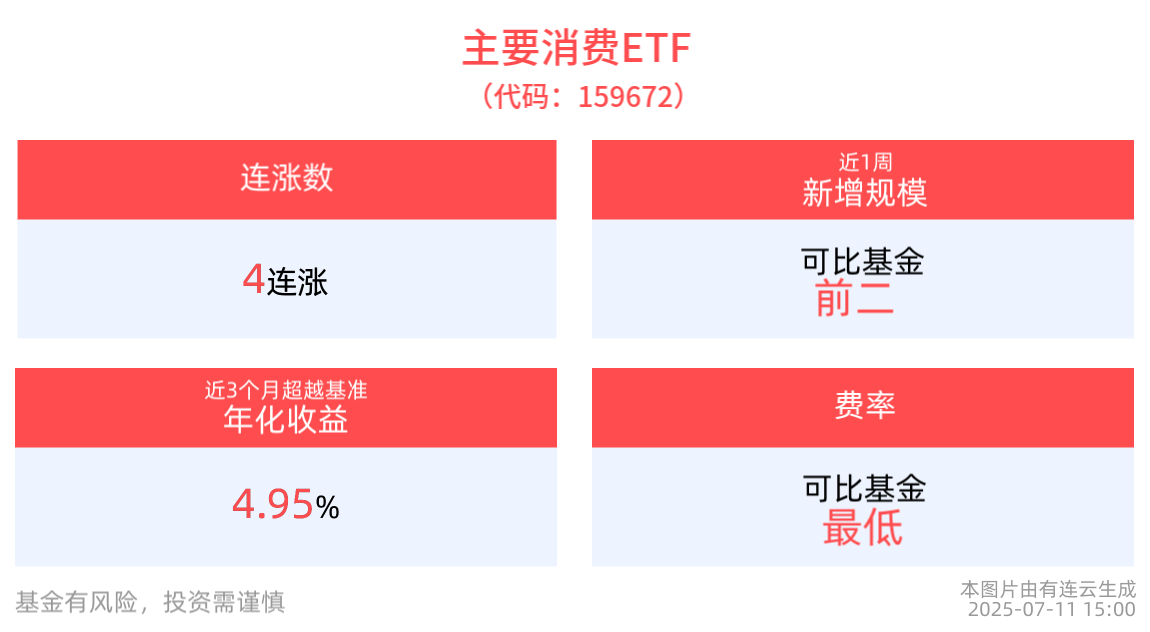
Group 1 - The main consumption index (000932) increased by 0.44% as of July 11, 2025, with significant gains from stocks like Luzhou Laojiao (000568) up 2.09% and Wuliangye (000858) up 1.40% [3] - The major consumption ETF (159672) achieved a four-day consecutive increase, rising 0.53% and reporting a latest price of 0.77 yuan, with a weekly cumulative increase of 0.79% [3] - The liquidity of the major consumption ETF showed a turnover rate of 4.44% with a transaction volume of 3.36 million yuan, and the average daily transaction volume over the past year was 4.96 million yuan [3] Group 2 - Tianfeng Securities noted that higher summer temperatures across China are expected to boost beer consumption, with long-term growth anticipated from consumer policies and adjustments to alcohol regulations [4] - The major consumption ETF saw a scale increase of 112.25 million yuan over the past week, ranking second among comparable funds [4] - As of July 10, 2025, the major consumption ETF's net value increased by 5.19% over the past year, with a maximum monthly return of 24.35% since inception [4] Group 3 - The management fee for the major consumption ETF is 0.50%, and the custody fee is 0.10%, which are the lowest among comparable funds [5] - The latest price-to-earnings ratio (PE-TTM) for the major consumption index is 18.86, indicating a valuation below 92.49% of the historical data over the past year [5] - As of June 30, 2025, the top ten weighted stocks in the major consumption index accounted for 67.93% of the total, including companies like Yili (600887) and Kweichow Moutai (600519) [5]
家居行业再迎政策利好:鼓励定制化整装,推进全智能装配一体化
Bei Ke Cai Jing· 2025-07-10 11:31
Group 1 - The Beijing Municipal Government has released the "Beijing Deepening Reform to Boost Consumption Special Action Plan," which includes multiple initiatives related to the home furnishing industry, such as encouraging home renovation design and promoting fully intelligent indoor assembly integration [1] - The action plan consists of 24 measures aimed at optimizing new housing consumption supply, including support for customized home decoration and smart home products and services, as well as the development of smart communities [1] - The plan also emphasizes the expansion of green consumption paradigms, encouraging the development and introduction of green low-carbon technologies and improving the green standards and labeling system across various sectors, including home decoration [1] Group 2 - Recent national policies have continuously promoted consumption, benefiting the home furnishing industry, with initiatives like the "Two New" policy and appliance replacement programs driving market growth [2] - In May, the sales revenue of large-scale building materials and home furnishing markets reached 125.118 billion, a month-on-month increase of 15.16%, while the cumulative sales from January to May amounted to 571.408 billion, reflecting a year-on-year increase of 3.32% [2]
6月CPI同比由降转涨
Zhong Guo Zheng Quan Bao· 2025-07-09 20:47
Group 1: Consumer Price Index (CPI) Trends - In June, the Consumer Price Index (CPI) turned from a decline to an increase of 0.1% year-on-year after four consecutive months of decline [1][2] - The core CPI, excluding food and energy prices, rose by 0.7% year-on-year, marking a 14-month high [1][2] - The increase in CPI is attributed to the recovery in industrial consumer goods prices, which saw a narrowing decline from 1.0% to 0.5% year-on-year [1][2] Group 2: Producer Price Index (PPI) Trends - The Producer Price Index (PPI) decreased by 0.4% month-on-month and 3.6% year-on-year [1][2] - The decline in PPI is influenced by seasonal price drops in certain raw materials and the impact of high temperatures and rainfall on construction projects [2][3] - The year-on-year decline in PPI expanded by 0.3 percentage points compared to the previous month, reflecting pressures in export-oriented industries [3] Group 3: Policy Implications and Future Outlook - Experts suggest that macroeconomic policies should continue to promote domestic demand and improve supply-demand relationships to facilitate a reasonable price recovery [4] - The implementation of consumption-boosting measures, such as trade-in programs, is expected to support price levels in the second half of the year [4] - The potential for service consumption growth is anticipated to positively impact prices in sectors like dining, accommodation, and cultural tourism [4]
瑞达期货铝类产业日报-20250709
Rui Da Qi Huo· 2025-07-09 08:51
Report Summary 1. Report Industry Investment Rating No information provided. 2. Report's Core View - The alumina fundamentals may be in a stage of relatively sufficient supply and stable demand, with the cost side supporting the spot price. It is recommended to conduct light - position short - term long trades at low prices, paying attention to rhythm and risks [2]. - The fundamentals of Shanghai aluminum may be in a situation of relatively stable supply, seasonal decline in demand, and increased inventory. Due to the support of the macro - environment, the industry outlook remains positive. It is recommended to conduct light - position range - bound trading, paying attention to rhythm and risks [2]. - The fundamentals of cast aluminum alloy may be in a situation of weak supply and demand, with seasonal inventory accumulation. The long - term industry outlook and the firm cost side may provide some support for the cast aluminum price. It is recommended to conduct light - position range - bound trading, paying attention to rhythm and risks [2]. 3. Summary by Related Catalogs Futures Market - **Aluminum Futures**: The closing price of the Shanghai aluminum main contract is 20,515 yuan/ton, down 10 yuan; the main contract position is 250,099 lots, down 19,098 lots; the net position of the top 20 in Shanghai aluminum is 16,703 lots, up 2,441 lots; the Shanghai - London ratio is 7.96, down 0.05 [2]. - **Alumina Futures**: The closing price of the alumina futures main contract is 3,130 yuan/ton, up 20 yuan; the main contract position is 248,656 lots; the LME aluminum cancelled warehouse receipts are 8,225 tons, unchanged [2]. - **Cast Aluminum Alloy Futures**: The closing price of the cast aluminum alloy main contract is 19,830 yuan/ton, down 20 yuan; the main contract position is 8,571 lots, down 114 lots [2]. Spot Market - **Aluminum Spot**: The average price of Shanghai Non - ferrous Network A00 aluminum is 20,660 yuan/ton, up 60 yuan; the average price of Yangtze River Non - ferrous Market AOO aluminum is 20,590 yuan/ton, up 120 yuan; the Shanghai Wumaotrade aluminum premium/discount is - 50 yuan/ton, up 10 yuan [2]. - **Alumina Spot**: The alumina spot price of Shanghai Non - ferrous is 3,100 yuan/ton, up 10 yuan; the alumina basis is - 30 yuan/ton, down 10 yuan [2]. Upstream Situation - **Alumina**: The alumina production is 748.80 million tons, up 16.50 million tons; the alumina import volume is 6.75 million tons, up 5.68 million tons; the alumina export volume is 21.00 million tons, down 5.00 million tons [2]. - **Aluminum Scrap**: The average price of crushed raw aluminum in Foshan metal scrap is 16,200 yuan/ton, unchanged; the average price in Shandong metal scrap is 15,750 yuan/ton, down 50 yuan; China's import volume of aluminum scrap and fragments is 159,700.92 tons, down 30,651.64 tons; the export volume is 72.44 tons, up 35.90 tons [2]. Industry Situation - **Aluminum Production and Trade**: The primary aluminum import volume is 223,095.59 tons, down 27,381.21 tons; the export volume is 32,094.07 tons, up 18,421.29 tons; the aluminum product production is 576.20 million tons, down 0.20 million tons; the export volume of unwrought aluminum and aluminum products is 55.00 million tons, up 3.00 million tons [2]. - **Capacity and Utilization**: The total production capacity of electrolytic aluminum is 4,520.70 million tons, up 0.50 million tons; the electrolytic aluminum production capacity utilization rate is 97.68%, up 0.03% [2]. Downstream and Application - **Automobile and Real Estate**: The automobile production is 264.20 million vehicles, up 3.80 million vehicles; the National Housing Prosperity Index is 93.72, down 0.13 [2]. Option Situation - The 20 - day historical volatility of Shanghai aluminum is 8.08%, down 1.16%; the 40 - day historical volatility is 9.10%, down 0.05%; the implied volatility of the Shanghai aluminum main contract at - the - money is 8.28%, down 0.0041; the call - put ratio is 1.15, up 0.0349 [2]. Industry News - In June, the production and retail of passenger cars reached 2.419 million and 2.084 million respectively, with year - on - year increases of 13.3% and 18.1%. Among them, the production and retail of new energy vehicles reached 1.2 million and 1.111 million respectively, with year - on - year increases of 28.3% and 29.7% [2]. - From January to June, the production and retail of passenger cars reached 13.246 million and 10.901 million respectively, with year - on - year increases of 13.5% and 10.8%. Among them, the production and retail of new energy vehicles reached 6.457 million and 5.468 million respectively, with year - on - year increases of 38.7% and 33.3% [2].