
哑铃策略

Search documents
市场震荡期,ETF投资如何布局?
Sou Hu Cai Jing· 2025-09-08 00:23
Group 1 - Recent market style has shown a high-low switch, with previous hot sectors experiencing local adjustments while some tracks, such as AI and semiconductors, are performing strongly against the trend [2] - The ETF's diversified nature reduces single investment risks, as it typically holds a basket of stocks, limiting the impact of individual stock volatility on the overall ETF value [2] - Despite short-term market fluctuations and profit-taking needs, the medium to long-term trend remains a "systematic slow bull" [2] Group 2 - The "packaging" attribute of ETFs increases the probability of successful wave trading opportunities, allowing investors to focus on market, industry, or thematic growth without needing to analyze individual stock fundamentals [3] - In the current uncertain short-term market, ETFs provide a clearer holding logic, facilitating investor decision-making and reducing multi-asset allocation costs [3] - High liquidity of mainstream broad-based ETFs or industry-themed ETFs enhances trading and risk management, allowing for efficient operations similar to stock trading [3] Group 3 - Historical data since 2007 indicates that market styles have briefly switched before and after adjustments in bull market phases, with a tendency to return to previously strong styles post-adjustment [4] - The current high-low switching market resembles healthy trading behavior, with no significant large-scale sell-offs from heavily positioned institutional funds [4] - In a context of declining market risk appetite, maintaining flexible positions is advisable, with a focus on sectors with marginal fundamental improvements or policy support on the defensive side, while considering low-entry opportunities in previously adjusted sectors on the elastic side [4]


揭秘农行如何登顶A股
Hu Xiu· 2025-09-05 10:09
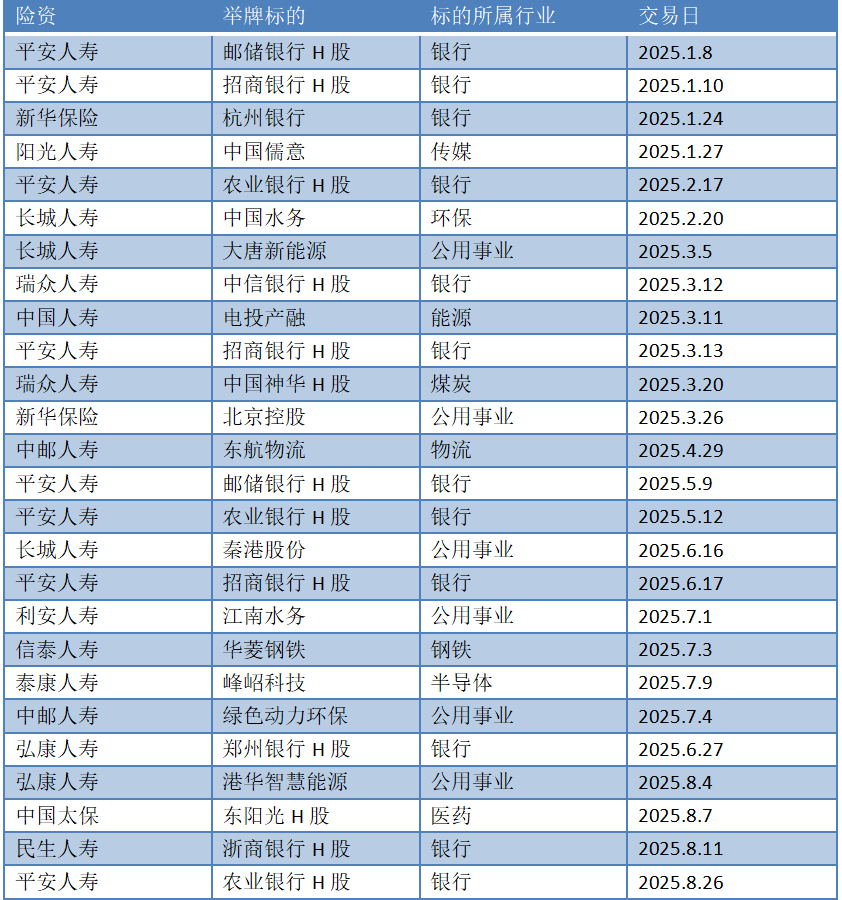
Core Viewpoint - Agricultural Bank of China (ABC) has surpassed Industrial and Commercial Bank of China (ICBC) in total market value, becoming the highest valued bank in A-shares, reflecting a significant shift in the banking sector's market dynamics [2][4]. Group 1: Market Dynamics - On September 4, ABC's total market value exceeded that of ICBC, marking a notable change in the A-share market [2]. - The rise of ABC's market value is attributed to a surge in insurance capital investments, with Ping An Life announcing a stake of 15% in ABC's H-shares, marking its third acquisition within six months [3][4]. Group 2: Investment Strategies - The preference for ABC by insurance funds highlights a strategy focused on high dividend yields, as ABC has consistently shown revenue and net profit growth from 2022 to H1 2025, unlike ICBC and China Construction Bank, which experienced revenue declines [4][15]. - Insurance capital has been a major driving force in the recent bullish trend in bank stocks, with significant investments in high-dividend assets and selective high-growth stocks to enhance portfolio resilience [5][19]. Group 3: Performance Metrics - In H1 2023, major insurance companies reported substantial increases in investment income, with New China Life achieving 18.76 billion yuan, a year-on-year growth of 1842.3%, and China Life reporting 63.68 billion yuan, up 317% [7]. - ABC's asset scale reached 46 trillion yuan, surpassing China Construction Bank's 44 trillion yuan, indicating strong asset expansion capabilities [16]. Group 4: Sector Preferences - Insurance funds have shown a strong preference for bank stocks, which accounted for 45.5% of their holdings, while also diversifying into sectors like transportation and utilities [22]. - The investment strategy of insurance funds includes a balanced approach, with a focus on high dividend stocks while also exploring high-growth opportunities in sectors aligned with national strategies, such as telecommunications and renewable energy [32].

债券策略月报:2025年9月中债市场月度展望及配置策略-20250905
Zhe Shang Guo Ji· 2025-09-05 09:19
1. Report Industry Investment Rating No relevant content provided. 2. Core Viewpoints of the Report - In August 2025, most economic data showed a slowdown. Against the backdrop of credit - easing policies, the market risk appetite continued to improve, driving the Shanghai Composite Index to break through the high of the past 10 years. The "stock - bond seesaw" affected the bond market, with different - term bond yields generally rising. Looking forward to September, the bond market faces greater adjustment pressure, but if the 10Y Treasury bond rate breaks through 1.8%, the allocation portfolio may gradually enter the market [2][3][5]. - The economic fundamentals in July showed a slowdown trend, with only exports accelerating among the six major indicators. The divergence between domestic and foreign demand became more obvious, and the GDP reading weakened significantly compared with the second quarter. The Fed is likely to start cutting interest rates in September, and the RMB may appreciate in the second half of the year [4][28][72]. 3. Summary by Relevant Catalogs 3.1 2025 August China Capital Market Review 3.1.1 China Capital Market Trend Review - In August, most economic data weakened. Under the influence of credit - easing policies, the market risk appetite improved, and the Shanghai Composite Index broke through the high of the past 10 years. The bond market was affected by factors such as the "stock - bond seesaw" and the unexpected convergence of the capital market around the tax period, with the yields of different - term bonds rising. The yield of the 1 - year Treasury bond active bond decreased by 1.75BP to 1.35%, the 10 - year increased by 7.45BP to 1.78%, and the 30 - year increased by 10.4BP to 2.0180% [2][3][10]. 3.1.2 Bond Market Primary Issuance Situation - In August, the pressure of government bonds increased significantly. The net issuance of local bonds was 977.6 billion yuan, less than the planned amount by 183.2 billion yuan, mainly due to the shortfall in new special bonds. The net issuance of national bonds was 593.3 billion yuan, and that of policy - financial bonds was 771 billion yuan. The supply pressure of government bonds in September may decline month - on - month, and the pressure on the capital market may ease [18]. 3.1.3 Capital Market Tracking - In August, the central bank continued to make large - scale capital injections. The monthly central values of DR001 and R001 decreased. Looking forward to September, the pressure on the capital market may increase, and attention should be paid to the central bank's incremental monetary policies [23]. 3.2 China Bond Market Macroeconomic Environment Interpretation 3.2.1 Economic Fundamentals and Monetary Policy - In July, most economic data showed a slowdown. Industrial, service, consumption, investment, and real - estate sales growth rates were lower than the previous values, and the GDP reading weakened. The central bank continued to inject funds in August, and the Politburo meeting had a more positive attitude towards loose monetary policies [28][66]. 3.2.2 Overseas Economy - In July, the global de - dollarization process slowed down, but the downward pressure on the US economy began to emerge. The Fed is likely to start cutting interest rates in September. The US economic downward pressure is greater than the inflation upward momentum, and the RMB may appreciate in the second half of the year [68][72][79]. 3.3 2025 September China Bond Market Outlook and Allocation Strategy - In September, although it is very likely that economic data will continue to weaken, the bond market still faces great adjustment pressure. If the 10Y Treasury bond rate breaks through 1.8%, the allocation portfolio can gradually enter the market. Some local bonds with a spread of 30bp higher than national bonds have allocation value [80][81].
中邮陈晶晶:短期资金要沉淀成中长期资金 投资体验成关键
Bei Ke Cai Jing· 2025-09-05 09:08
Core Insights - The recent salon hosted by the Beijing News Shell Finance Capital Market Research Institute focused on how patient capital can stabilize the market, coinciding with the Shanghai Composite Index reaching a ten-year high of 3800 points, driven by sustained inflows of medium to long-term funds [1][2] Group 1: Market Dynamics - The Shanghai Composite Index has recently stabilized at 3800 points, marking a ten-year high, attributed to the continuous influx of medium to long-term capital [1] - Key contributors to this trend include the acceleration of long-term investment trials by insurance funds, the initiation of public fund long-term assessment reforms, and the optimization of the national social security fund investment management mechanism [1] Group 2: Fund Management Strategies - According to Chen Jingjing from China Post Fund, the potential for investment funds to enter the market is significant, with the transformation of short-term funds into medium to long-term funds dependent on their duration and overall experience regarding returns, volatility, and drawdowns [3] - Fund companies are encouraged to provide high-quality products that balance returns and drawdowns to attract long-term capital, as evidenced by the success of China Post Fund's "steady fixed income plus" strategy [3][4] Group 3: Investment Focus Areas - Fund companies should enhance their product offerings by focusing on sectors with long-term sustainability, such as artificial intelligence, clean energy, and consumer healthcare, while employing strategies that emphasize stable, absolute returns [4] - The performance evaluation of fund managers should prioritize long-term stable returns over short-term rankings to better accommodate the influx of medium to long-term capital [4] Group 4: Institutional Investment Trends - Social security funds and insurance capital are becoming the primary sources of medium to long-term institutional capital entering the market, with public equity funds serving as key allocation tools [5] - Institutional investors show a preference for passive equity funds due to their convenience, liquidity, and low-cost attributes, while active management funds are evaluated based on their ability to generate excess returns [6] Group 5: Fund Performance Metrics - As of the end of 2024, the scale of active equity funds is approximately 33.817 billion yuan, with institutional holdings accounting for about 17.5% [7] - Funds with an average institutional holding of over 30% typically exhibit a five-year annualized return greater than 10% or a 2024 return exceeding 20%, indicating that fund companies can attract institutional investors by demonstrating stock-picking capabilities in high-growth sectors or maintaining performance across market cycles [7]
大盘突然大跌,基金公司火线解读
Zhong Guo Ji Jin Bao· 2025-09-04 23:03
Market Overview - The three major indices all declined on September 4, with the Shenzhen Component Index down 2.83%, the Shanghai Composite Index down 1.25%, and the ChiNext Index down 4.25% [1] - Fund companies believe that the recent market adjustment is mainly influenced by profit-taking from previous gains, changes in market fund flows, and adjustments in policy expectations [1][2] Market Sentiment and Fund Flows - Market volatility is attributed to multiple factors, including profit-taking, marginal changes in investor sentiment, and differentiated fund flows [2] - Continuous inflow of funds and increased risk appetite have led to some stocks' valuations deviating from fundamentals, creating short-term correction pressure [2] - There is a rotation of funds between sectors, with some moving from high-volatility growth sectors to undervalued and defensive areas [2] Short-term Market Outlook - The current market adjustment is considered normal, and there is no need for panic, as valuations have not reached bubble levels [3] - The market is expected to remain in a state of fluctuation, with structural differentiation among hot sectors likely to continue [3] - As profit-taking behavior gradually releases, overall selling pressure in the market is expected to weaken, making indicators like trading volume and fund flows important for future trends [3] Economic and Policy Support - Despite short-term correction pressures, the backdrop of "asset scarcity" continues, with expectations for the Federal Reserve to lower interest rates becoming clearer [4] - The ongoing "anti-involution" policies are expected to improve corporate earnings, providing support for the market [4] Investment Strategies - In the current market environment, flexibility and foresight in strategies are essential, with a recommendation to adopt a "barbell strategy" [5] - On the offensive side, investors are encouraged to look for opportunities in sectors like AI, robotics, and innovative pharmaceuticals during corrections [5][6] - On the defensive side, focusing on dividend-paying and cash flow-stable industries is advised, along with tracking broad market indices like the A500 and CSI 300 [6] Sector Focus - Key areas of interest include AI-related industries, domestic brand competitiveness, and resource products [6] - The technology growth sector, particularly in TMT, advanced manufacturing, and biopharmaceuticals, is expected to remain a market focus [6]
突然大跌!火线解读
中国基金报· 2025-09-04 14:27
Core Viewpoint - The recent market adjustment is primarily driven by profit-taking from previous gains, changes in market sentiment, and shifts in capital flow, with a lower likelihood of significant further declines due to policy support and performance validation [2][4][5]. Market Adjustment Factors - The market volatility is attributed to multiple factors, including profit-taking by investors, changes in risk appetite, and capital rotation among different sectors. Some funds have moved from high-volatility growth sectors to lower valuation and defensive areas [4][6]. - The market's recent upward momentum has slowed, prompting some investors to seek short-term safety, leading to a pullback in indices [4][6]. Market Outlook - The current market adjustment is viewed as normal, with no signs of bubble formation. The turnover rate in the A-share market has increased but has not yet surpassed the peak from October 2022 [6]. - The market is expected to remain in a state of fluctuation in the short term, with structural differentiation among sectors likely to continue. High-quality industries and leading companies are anticipated to stabilize due to their solid fundamentals and growth potential [6][7]. Investment Strategies - In the current market environment, a flexible and forward-looking strategy is recommended. Investors are advised to adopt a "barbell strategy," focusing on both offensive and defensive positions [8]. - On the offensive side, investors should consider sectors like AI, robotics, and innovative pharmaceuticals during market pullbacks, while also identifying undervalued stocks that have not yet gained market attention [8][9]. - On the defensive side, maintaining a focus on dividend-paying and cash flow-stable industries is suggested, along with tracking broad market indices like the A500 and CSI 300 [9][10]. Key Investment Themes - The AI-related industries are expected to see increased capital expenditure, with a focus on domestic computing power and consumer electronics [9][10]. - The improvement in competitiveness of Chinese brands, particularly in sectors like automotive, innovative pharmaceuticals, and military trade, is highlighted as a significant opportunity [10].

债券策略月报:2025年9月中债市场月度展望及配置策略-20250902
Zhe Shang Guo Ji Jin Rong Kong Gu· 2025-09-02 08:59
Group 1 - The report indicates that the economic data for August shows signs of weakness, with most indicators such as industrial output, services, consumption, investment, and real estate sales falling below previous values, while only exports accelerated [3][5][85] - The Shanghai Composite Index has surpassed a nearly 10-year high, driven by improved market risk appetite under the influence of wide credit policies [3][4] - The report highlights a "look at stocks, do bonds" strategy as the main logic in the bond market, with the 10-year government bond yield reaching a peak of 1.7925% during the month [3][4][11] Group 2 - The macroeconomic environment analysis reveals that the manufacturing PMI for July marginally increased to 49.4%, indicating a potential slowdown in the economy for the third quarter [5][29] - The report notes that the central bank's monetary policy has been relatively supportive, with significant net injections of funds in August, including a net injection of 0.3 trillion yuan [24][71] - The bond market strategy suggests adopting a barbell strategy to balance liquidity and yield, especially if the 10-year government bond yield breaks the 1.8% resistance level [6][85] Group 3 - The report discusses the government bond issuance situation, indicating that local government bond issuance in August was 977.6 billion yuan, which is lower than planned by 183.2 billion yuan [19] - It is projected that the supply pressure of government bonds in September may decrease compared to August, with an expected net financing scale of 1.3 trillion yuan [19][20] - The report emphasizes that the bond market's performance is influenced by the dynamics of the stock market, with the "stock-bond seesaw" effect expected to weaken in September [85] Group 4 - The analysis of the overseas economic environment indicates that the process of de-dollarization has slowed, while downward pressure on the US economy has begun to emerge [73][84] - The report highlights that foreign investment in China's bond market has been on the rise, with foreign holdings reaching 4.39 trillion yuan by June [73][76] - The report suggests that the Federal Reserve's potential interest rate cuts in September could impact the Chinese bond market, necessitating close monitoring of overseas economic data [77][84]
创金合信基金魏凤春:平台期的基础因子分析
Xin Lang Ji Jin· 2025-09-01 05:31
Market Overview - The market has shown significant divergence in asset performance, with the ChiNext Index and STAR 50 leading gains, while the Northbound 50 has seen notable declines, indicating a shift in investment strategies [2] - The performance of various sectors has varied, with telecommunications, non-ferrous metals, and electronics showing strong gains, while textiles, coal, banking, and transportation have lagged [2] - The current market is at a crossroads, entering a period of platform adjustment after a previous upward trend [2] Industry Trends - By 2025, China is expected to enter a new phase of risk asset revaluation, driven by increased economic pressure in the U.S. and internal changes in China that alter market participants' expectations [3] - The structure of the market is influenced by capital market ecology and industrial policies, particularly in the context of the "PRINCE" characteristics that future dominant industries should possess [3][6] - The profitability of industrial enterprises has shown a decline overall, with state-owned enterprises experiencing a 7.5% drop in profits, while private enterprises have seen a slight increase of 1.8% [5][6] Profitability Insights - The overall decline in profits among industrial enterprises suggests insufficient support for risk assets, which is a key reason for the lack of a complete shift in asset allocation trends [6] - The disparity in profitability between state-owned and private enterprises indicates a potential shift in the effectiveness of the "barbell strategy" in investment [6] Economic Indicators - The Citi Economic Surprise Index has turned negative since mid-August, indicating a divergence between actual economic performance and market expectations, which could affect investor confidence [7] - The nominal GDP comparison between China and the U.S. shows a widening gap, influenced by low prices and demand, which is critical for global asset allocation [8] - The manufacturing PMI for August was reported at 49.4%, slightly below expectations, indicating a modest improvement in manufacturing activity but still reflecting underlying economic challenges [9] Future Outlook - The focus on corporate profitability is essential as the market transitions into the next phase, with particular attention on leading companies as indicators of market changes [10] - The analysis will consider various factors, including entrepreneurial spirit, global supply chains, and growth cycles, to assess future profitability scenarios [10]
快来一起抄作业!平安和中国人寿中期业绩发布会透露2个投资重点
Mei Ri Jing Ji Xin Wen· 2025-08-28 11:15
Group 1 - China Ping An plans to increase equity allocation in the second half of the year, focusing on growth sectors and high-dividend value stocks [1] - The "dumbbell strategy" of balancing growth and dividend stocks is favored by insurance funds, indicating a dynamic balance between risk preference and return objectives [1] - Investment strategies may include low-volatility dividend ETFs in A-shares and similar combinations in Hong Kong stocks [1] Group 2 - China Life's Chief Investment Officer expressed optimism about A-share investments, citing reasonable valuations and a solid market bottom [2] - China Life has received approval for QDII investment quotas, which will be directed towards Hong Kong stocks, focusing on new economy and high-dividend sectors [2]


没有不切风格的大牛市
水皮More· 2025-08-28 10:37
Core Viewpoint - The article discusses the investment strategy known as the "dumbbell strategy," which combines dividend stocks with either small-cap or technology stocks, and evaluates its success in the current market environment [4][5]. Group 1: Market Dynamics - The stock market often follows the "dark forest" principle, where participants are competitors rather than allies, leading to a competitive environment [4]. - In a bull market, the initial rise typically starts from assets that were previously overlooked by institutional investors or new assets, benefiting from light trading volumes and lack of profit-taking pressure [6][7]. - The article emphasizes that no investment strategy can consistently perform well throughout a bull market, as asset rotation and style shifts are inevitable [5][6]. Group 2: Investment Strategies - The success of an investment strategy often leads to a self-fulfilling prophecy, where increased buying activity drives up asset prices, attracting more investors [8]. - The article warns that if a strategy becomes too popular, it may signal an impending decline, as the influx of participants can create a bubble [9]. - The need for rotation among different asset classes is crucial for sustaining a bull market; otherwise, the market may only experience a structural rally rather than a historical bull market [7][9]. Group 3: Risk and Timing - The timing of strategy shifts is critical; early exits can yield profits, while late exits may result in losses, akin to the fate of a eunuch trying to enter the palace [9][10]. - The article suggests that the market's momentum can quickly reverse, and participants must be vigilant about market signals to avoid significant losses [9].
