
美国通胀

Search documents
美联储官员不支持12月降息_发现频道_中国青年网
Sou Hu Cai Jing· 2025-11-16 01:57
Core Insights - The U.S. government shutdown has resulted in the potential permanent loss of the October Consumer Price Index (CPI) and employment data reports, which may hinder the Federal Reserve's ability to make informed decisions [2] Group 1: Federal Reserve's Position - Dallas Federal Reserve Bank President Logan stated that she does not support another rate cut in December unless there is clear evidence of a faster decline in U.S. inflation levels [2] - Logan emphasized that the current inflation levels in the U.S. are still on an upward trend, and returning to the 2% target will take time [2] - Chicago Federal Reserve Bank President Goolsbee expressed caution regarding further rate cuts due to the lack of economic data caused by the government shutdown [2] Group 2: Economic Outlook - Federal Reserve Governor Lisa Cook indicated uncertainty about a potential rate cut in December, citing dual risks from inflation and the labor market outlook [2]

中资离岸债风控周报(11月10日至14日 ):一级市场发行平稳 二级市场涨跌不一
Xin Hua Cai Jing· 2025-11-15 06:40
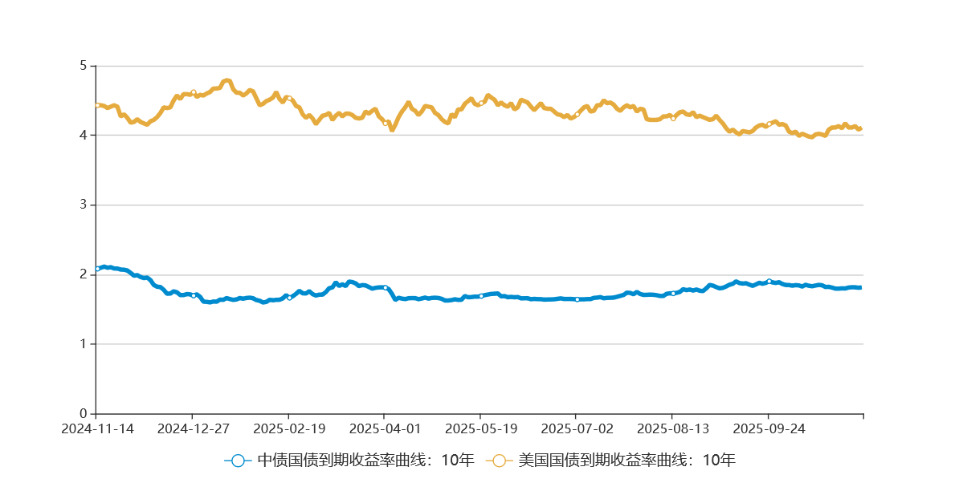
Primary Market - A total of 23 offshore bonds were issued by Chinese entities this week, including 7 RMB bonds, 11 USD bonds, 3 HKD bonds, and 2 EUR bonds, with issuance scales of 10.796 billion RMB, 1.825 billion USD, 3.2 billion HKD, and 700 million EUR respectively [1] - The largest single issuance in the offshore RMB bond market was 4.3 billion RMB by China Resources Land Limited, while the highest coupon rate for RMB bonds was 6.6% issued by Shouguang City Urban Construction Investment and Development Co., Ltd [1] - In the USD bond market, the largest single issuance was 500 million USD by Agricultural Bank of China International Holdings Limited, with the highest coupon rate at 5.2% issued by the Asian Development Bank [1] Secondary Market Overview - The yield on Chinese USD bonds showed mixed results this week, with the Markit iBoxx Chinese USD Bond Composite Index remaining flat at 251.02, while the investment-grade USD bond index increased by 0.02% to 243.69 [2] - The high-yield USD bond index decreased by 0.08% to 244.22, with the real estate USD bond index dropping by 0.34% to 183.66, while the city investment USD bond index rose by 0.18% to 153.23 [2] Benchmark Spread - As of November 14, the spread between the 10-year benchmark government bonds of China and the U.S. widened to 231.67 basis points, an increase of 2.87 basis points from the previous week [3] Credit Rating Changes - Moody's placed the long-term issuer rating of Yuanta Financial Holding Co., Ltd. at "A2" under review for downgrade on November 12 [6] - China Chengxin International downgraded the issuer and "Huangtu Convertible Bond" credit rating of Aerospace Hongtu Information Technology Co., Ltd. from BB+ to BBB, maintaining a negative outlook [6] Defaults and Extensions - Baolong Industrial announced on November 12 that it failed to pay the principal of 721 million RMB and interest of 41.39 million RMB on its "H19 Baolong A and H19 Baolong B" bonds due to underperformance of underlying assets [7] - R&F Properties reported that 66.6% of creditors have agreed to a restructuring plan for its USD bonds as of November 14, with the deadline for creditor participation extended to November 28 [13] - The hearing for the liquidation application of Baolong Properties' subsidiary has been postponed to December 15 [14] Domestic News - In September, the interbank market issued 986 debt financing instruments totaling 841.8 billion RMB, with a cumulative issuance of panda bonds reaching 824.3 billion RMB by the end of September [9] - The Deputy Governor of the People's Bank of China emphasized the need to actively develop direct financing through equity and bonds to enhance market infrastructure and investor protection [10] Overseas News - Federal Reserve Governor Lisa Cook indicated that U.S. inflation is expected to remain above the 2% target for the next 2 to 3 years, stressing the need for restrictive monetary policy to maintain credibility [12] Offshore Debt Alerts - Evergrande Auto's bankruptcy and liquidation petition for its Tianjin subsidiary has been accepted by the court, with the registered capital of the subsidiary being 4.1 billion RMB [16]
美联储官员:美国通胀水平呈上行趋势 不支持12月降息
Yang Shi Xin Wen· 2025-11-15 06:20
14日,美联储下属的达拉斯联邦储备银行行长洛根表示,除非看到美国通胀水平更快回落的明确证据,否则她不支持美联储在12月再次降息。洛根指出,美 国目前的通胀水平仍呈上行趋势,回到2%的目标需要时间。 此前,芝加哥联邦储备银行行长古尔斯比表示,美政府"停摆"导致经济数据缺失,这让他对进一步降息更加持谨慎态度。美联储理事莉萨·库克也表示,鉴 于通胀和劳动力市场前景的双重风险,目前并不能确定12月会再度降息。(总台记者 张颖哲) 美国白宫新闻秘书日前表示,由于此前政府"停摆",今年10月份美国消费者价格指数(CPI)和就业数据统计报告"可能永远不会"发布。这将导致美国联邦 储备委员会(美联储)在信息不完整的情况下被迫进行重要决策。 ...
【深度分析】花旗:10月CPI或存失真,美联储降息节奏或将提前?
Sou Hu Cai Jing· 2025-11-14 02:56
近期,美国通胀数据再次成为全球金融市场关注的焦点。花旗银行(Citigroup)在最新报告中指出,由于10月受政府停摆影响,统计部门的数据采集工作受 阻,导致10月CPI(消费者物价指数)数据可能存在一定偏差。这意味着市场依据该数据作出的政策预期,或需谨慎看待。 与此同时,花旗经济学家还预测,美国劳动力市场正在持续走弱,这可能强化市场对美联储在2024年末至2025年初进一步降息的预期。本文将结合宏观数据 与政策趋势,从通胀、就业、货币政策三个角度,深入解析这一事件对全球经济与跨境企业的潜在影响。 一、10月CPI数据或"失真":通胀放缓信号仍需验证 根据花旗的报告,美国10月CPI数据的可靠性可能低于往期。主要原因在于,政府停摆期间,美国劳工统计局(BLS)部分工作人员无法按计划开展实地价 格采样与问卷调查。虽然统计机构后续通过"回溯提问"和"模型估算"补充数据,但样本完整性与时间准确性均受影响。 这意味着—— 即使CPI显示"通胀下降",也未必反映真实物价走势。 美联储的货币政策变化不仅影响美国本土,也将对全球资本流动与汇率政策产生连锁反应。 一旦美联储降息,短期内可能带来以下三点影响: 美元可能出现阶段 ...
多位美联储官员为降息预期“泼冷水”
第一财经· 2025-11-13 23:43
Core Viewpoint - Federal Reserve officials have expressed caution regarding the rising expectations for interest rate cuts, indicating that the current interest rate levels are closer to neutral rather than overly tight, suggesting limited room for significant rate cuts in the near future [2][4]. Group 1: Federal Reserve Officials' Statements - St. Louis Fed President Alberto Musalem stated that after two rate cuts this year, the policy rate is now closer to neutral, with inflation around 3% still above the 2% target, necessitating continued efforts to combat high inflation while supporting the labor market [4]. - Other Fed officials echoed similar sentiments, with Cleveland Fed President Beth Hammack emphasizing the need to maintain restrictive rates to apply downward pressure on inflation, and Minneapolis Fed President Neel Kashkari noting that approximately 3% inflation remains high [4]. - San Francisco Fed President Mary Daly mentioned that after two rate cuts this year, the balance between the goals of full employment and price stability has returned to a more balanced state, but service sector inflation has not shown sustained decline, warranting a more restrained market expectation for further easing [4][5]. Group 2: Market Reactions and Economic Indicators - Following the cautious remarks from Fed officials, futures market pricing adjusted, with traders' bets on a December rate cut dropping from over 60% to around 50%, indicating a cooling confidence in the prospect of a rate cut [2]. - The labor market is showing signs of cooling, with ADP reporting a private sector job increase of only 42,000 in October, while Challenger reported a significant rise in announced layoffs to 153,000, the highest for October since 2003 [6]. - Consumer sentiment is also weakening, with the University of Michigan's preliminary consumer confidence index falling to 50.3, the lowest since 2022, reflecting deteriorating expectations regarding job and income prospects [6]. Group 3: Challenges Faced by the Federal Reserve - The Federal Reserve is navigating a complex situation with incomplete data due to prolonged government shutdowns, relying more on private and survey data to assess economic conditions [7][8]. - Musalem acknowledged the importance of restoring credible and sustainably updated official data, but noted that the Fed can still form reasonable judgments about economic conditions through financial market rates and other indicators [8].
美元债双周报(25年第45周):美国政府重启在即,美元流动性压力有望缓解-20251110
Guoxin Securities· 2025-11-10 08:08
Report Industry Investment Rating - The industry investment rating is "Underperform the Market" [1][5] Core Viewpoints - The US service sector activity rebounded significantly in October, with inflation pressure rising. The ISM Services PMI reached 52.4, a new eight - month high, and the price index soared to 70, a three - year high. The employment index is still in the contraction range, but the decline rate has slowed [1] - There is a growing divergence among Fed voting members on the future path of interest rate cuts. There are sharp differences between "doves" and "hawks", and the probability of a 25bp rate cut in December is 67% [2] - The US government is about to end the shutdown, and the liquidity pressure is expected to ease. Once the government restarts, the frozen fiscal expenditure will be released, and nearly $1 trillion in the TGA account will flow back into the market [3] - The current market features economic resilience, inflation pressure, and policy uncertainty. It is recommended to use a short - to - medium - duration strategy to capture returns, while guarding against long - term interest rate risks and maintaining portfolio flexibility. The investment strategy for US Treasuries is still mainly defensive and secondarily aggressive [4] Summary by Directory US Treasury Benchmark Interest Rate - Figures include 2 - year and 10 - year US Treasury yields, the Treasury yield curve, bid - to - cover ratios for various maturities of Treasuries, issuance winning bid rates for 2 - 30 - year Treasuries, monthly Treasury issuance, and the implied interest rate cut expectations in the federal funds futures market [12][16][18] US Macroeconomic and Liquidity - Figures cover US inflation year - on - year trends, the US federal government's annual cumulative fiscal deficit (fiscal year), the US economic surprise index, ISM PMI, consumer confidence index, financial conditions index, housing rent growth rate, number of unemployment benefit claimants, hourly wage year - on - year growth rate, non - farm payroll data, new housing approvals, starts, and sales year - on - year growth rates in the real estate market, personal consumption expenditure year - on - year growth rate, break - even inflation expectations, and new ADP employment [24][26][28] Exchange Rates - Figures show the one - year trend of non - US currencies, the two - week changes in non - US currencies, the Sino - US sovereign bond yield spread, the US dollar index and the 10 - year US Treasury yield, the US dollar index and the RMB index, and the one - year locked - in exchange cost changes of the US dollar against the RMB [50][55][57] Chinese - Issued US Dollar Bonds - Figures display the return trends of Chinese - issued US dollar bonds since 2023 (by rating and industry), the yield and spread trends of investment - grade and high - yield Chinese - issued US dollar bonds, and the two - week returns (by rating and industry) [64][66][69] Rating Actions - In the past two weeks, the three major international rating agencies took 12 rating actions on Chinese - issued US dollar bond issuers, including 5 rating withdrawals, 3 initial ratings, 2 rating downgrades, and 2 rating upgrades [72]
美联储理事库克:通胀可能居高不下 12月未必降息
Sou Hu Cai Jing· 2025-11-03 23:59
Core Insights - Federal Reserve Governor Lisa Cook anticipates persistent high inflation in the U.S. over the next year due to the impact of tariff policies on the economy [1][3] - The uncertainty surrounding tariffs is affecting corporate pricing strategies, with some companies reducing inventory at lower prices before cost increases [3] - The recent 25 basis point interest rate cut by the Federal Reserve is seen as appropriate, but the balance between rising inflation risks and a weakening labor market is a concern [5] Group 1 - Cook indicated that tariffs are increasing costs for U.S. businesses, which may keep inflation elevated in the coming year [3] - She noted that interactions with business leaders suggest that the impact of tariffs on consumer prices has not fully materialized [3] - Cook is prepared to take strong action if the effects of tariffs are larger or more prolonged than expected [3] Group 2 - The ongoing federal government shutdown is expected to exert pressure on economic activity this quarter and may have spillover effects on the private sector [3] - The Federal Reserve's decision to cut rates again reflects a belief that the downside risks to employment outweigh the upside risks to inflation [5] - Cook emphasized that future monetary policy is not on a predetermined path, leaving the December rate decision uncertain [5]
美国9月海运集装箱吞吐量暴跌,是关税还是需求放缓?|全球贸易观察
Di Yi Cai Jing· 2025-11-01 11:42
Core Insights - The U.S. container import volume continued to decline in September, with an 8.4% year-over-year drop, marking the largest monthly decline in recent years [1] - The downward trend in container throughput is expected to persist and become more pronounced until 2026, according to industry analysts [1][6] Container Import Trends - In September, the top 10 U.S. ports saw a 6.6% year-over-year decrease in container throughput, contrasting with previous months' trends [1] - The decline in imports is attributed to seasonal demand weakness and cautious sentiment related to tariffs [1][3] - The National Retail Federation (NRF) anticipates a 5.6% decrease in import cargo volume at major U.S. ports in 2025 due to new tariffs [3] Tariff Impact - The implementation of new tariffs has led to a rush to ports in previous months, with September showing a 12.8% drop in empty container imports at the Port of Oakland [3] - The uncertainty surrounding U.S. tariff policies is causing significant economic unpredictability, affecting market demand [4] - The Drury East-West Contract Rate Index fell by 3% year-over-year, indicating a decline in shipping rates [4] Future Projections - The NRF predicts that the last four months of 2025 will see a 15.7% decline in container volume compared to the same period in 2024 [6] - Analysts expect to see double-digit percentage declines in cargo volumes at most U.S. ports in the coming months, continuing into 2026 [6] Global Supply Chain Adjustments - Global supply chain adjustments are occurring faster than anticipated, with manufacturers in countries facing high U.S. tariffs finding alternative markets more attractive [8] - Despite the decline in U.S. container throughput, global container throughput reached record highs in recent months [8] Economic Conditions - High inflation levels and a continuous decline in the manufacturing PMI in the U.S. are suppressing consumer spending, directly impacting container shipping demand from Asia [9] - The Federal Reserve Chairman indicated that additional tariffs could lead to a temporary increase in inflation, affecting consumer prices [9]

再度降息、停止缩表,鲍威尔却为何更鹰?:——美联储FOMC会议点评(25.10)
Huafu Securities· 2025-10-30 12:17
Monetary Policy Actions - The Federal Reserve has lowered the federal funds rate by 25 basis points to a target range of 3.75%-4.0%, totaling a 50 basis point reduction for the year[3] - The Fed will stop balance sheet reduction starting December 1, allowing MBS to mature and reinvesting in short-term Treasury securities[12] Economic Outlook - Powell indicated that inflation risks are skewed to the upside while employment risks are skewed to the downside, creating a challenging situation[3] - Current economic indicators suggest moderate expansion, but the government shutdown has delayed the release of various economic data[3] Inflation Analysis - Powell highlighted three factors affecting inflation: tariffs pushing up goods prices, declining housing services, and stable core non-housing services due to slightly restrictive monetary policy[4] - The impact of tariffs on inflation is expected to persist until spring 2026, with potential for a rebound in core inflation due to tariff transmission and base effects[4] Labor Market Insights - The weakening labor market is attributed to a significant decline in labor supply and a decrease in labor demand, influenced by tighter immigration policies and previous tariff impacts[4] - Recent tax cuts from the Inflation Reduction Act and recent rate cuts may help restore labor demand over time[4] Balance Sheet Management - The Fed's balance sheet reduction pace has slowed to $5 billion per month since March, with Powell stating further reductions are not meaningful[12] - The decision to stop balance sheet reduction aims to avoid upward pressure on long-term Treasury yields and alleviate government debt burdens[16] Risks and Uncertainties - There is uncertainty regarding the extent and speed of future rate cuts by the Fed, which may be less than market expectations[16] - The potential for inflationary pressures from tariffs may limit the Fed's ability to cut rates aggressively in the short term[16]
10月美联储议息会议点评:降息如期落地,美联储“放鹰”后宽松路径存疑
Dongguan Securities· 2025-10-30 09:29
Monetary Policy Changes - The Federal Reserve lowered the federal funds rate target range by 25 basis points to 3.75% to 4.00%, marking the fifth rate cut since September 2024[3] - The decision to cut rates was influenced by moderate economic expansion, a slight increase in unemployment, and rising inflation rates[3] - The FOMC plans to end its balance sheet reduction on December 1, 2025[3] Internal Disagreements - There were dissenting votes from two committee members: Stephen Milan advocated for a 50 basis point cut, while Jeffrey Smith preferred to maintain the current rate[3] - Chairman Powell indicated significant internal disagreement regarding future rate cuts, stating that December's decision is not guaranteed[3] Economic Outlook - Recent CPI data showed lower-than-expected inflation, which may facilitate further rate cuts[3] - The focus remains on employment data, with expectations that the Fed may continue to cut rates if the job market continues to weaken[3] Market Reactions - Following Powell's comments, market expectations for a December rate cut dropped from 90% to around 60%[3] - Short-term impacts on asset performance are anticipated, with potential negative effects on gold and U.S. equities due to reduced rate cut expectations[3] Risks and Considerations - Risks include global economic uncertainties, trade tensions, and the potential for inflationary pressures to re-emerge in 2026[4] - The domestic market may face challenges from the Fed's hawkish stance, affecting equity market performance[4]