悦己消费

Search documents
从买商品到买服务 提振消费有哪些新的做法和思路?
Sou Hu Cai Jing· 2025-08-30 23:39
Group 1 - The core theme of 2024 in China is to boost consumption, with a significant shift towards service consumption, which now accounts for 46.1% of per capita service consumption expenditure, contributing over 60% to consumption growth [1][5][10] - The Ministry of Commerce plans to introduce policies in September aimed at expanding service consumption, addressing the supply-demand gap in quality service offerings [1][5][10] - The "Su Chao" football league phenomenon highlights the insufficient supply of quality service consumption, as evidenced by high attendance and ticket scarcity [3][5][10] Group 2 - The "Su Chao" league has revitalized the domestic sports market, with service revenue from related sectors reaching 379.6 billion yuan, a 42.7% year-on-year increase [7][10] - The government is focusing on enhancing service supply through policies that include interest subsidies for personal consumption loans and service industry loans [5][7][10] - The rise of "Yue Ji Consumption," characterized by immersive and interactive experiences, is becoming a significant driver of consumer spending among younger demographics [15][19] Group 3 - The Shanghai concert case illustrates the importance of optimizing service offerings, with measures taken to enhance safety and convenience for attendees, resulting in a 75% increase in hotel revenue around the venue [19][20][30] - The introduction of consumption subsidies for elderly care in Chongqing aims to stimulate the elderly service market, potentially unlocking nearly 10 billion yuan in service consumption [27][28][30] - The overall strategy emphasizes the need for improved public services and income support to enhance consumer confidence and spending power, particularly in essential sectors like healthcare and education [30][31]


毕马威中国:消费成经济增长“主引擎”
Zheng Quan Shi Bao Wang· 2025-08-29 12:26
Core Insights - The report indicates that the Chinese consumer retail market is showing strong resilience, becoming the "main engine" of economic growth, with a focus on enhancing consumer capacity and optimizing the consumption environment [1][2] Group 1: Market Performance - In the first half of 2025, the total retail sales of consumer goods achieved a 5% year-on-year growth, driven by various factors including effective government consumption policies and the "trade-in" program [1] - The per capita disposable income of residents increased by 5.3% nominally compared to the same period last year, while the urban survey unemployment rate remained stable, slightly decreasing from the previous year [1] Group 2: Consumer Trends - The consumption market is evolving with a focus on "self-satisfaction consumption," as outdoor activities gain popularity, injecting vitality into the outdoor goods market [2] - The health and cosmetics market is showing strong resilience, with the younger generation, particularly Generation Z, becoming the main force in beauty consumption, emphasizing sensory design and emotional wellness [2] Group 3: Industry Dynamics - Companies need to innovate and transform to meet changing consumer demands, establishing differentiated competitive advantages in a fragmented market [3] - E-commerce platforms are transitioning towards a "quality + brand" dual-driven model, moving away from the previous low-price competition strategy [3] - Capital markets are reshaping the consumer landscape, favoring companies with robust cash flow, strong branding, and high levels of digitalization, particularly in the luxury sector where hard luxury items are gaining traction [3]
新消费系列报告一:国内70后-00后消费特征代际复盘及情绪消费相关思考
CMS· 2025-08-29 07:32
Investment Rating - The report maintains a recommendation for the industry [3] Core Insights - The consumption focus in China has shifted from family-oriented spending to individual-oriented spending across generations from the 70s to the 00s, with a notable increase in self-indulgent consumption [1][53] - Emotional consumption is on the rise, with over 90% of young consumers willing to pay a premium for emotional value, leading to the emergence of multiple billion-dollar markets [1][57][63] - The report highlights the importance of product value evolution, emphasizing that emotional, social, and asset values are increasingly prioritized over functional value [2][57] Summary by Sections 1. Generational Consumption Characteristics - The consumption center has gradually shifted from family to individual, with each generation displaying self-indulgent characteristics [1][53] - The 70s generation is characterized by compensatory consumption after initial wealth accumulation, while the 80s and 90s generations are the main consumer forces, with the 90s generation showing stronger growth potential [1][24][53] 2. Emotional Consumption Insights - The demand side is expanding, with a significant portion of young consumers willing to pay for emotional premiums, leading to a market where monthly interest consumption accounts for 27.6% of their spending [1][57] - The supply side sees domestic brands learning from Japanese product innovation to enhance their global market adaptability [1][57] 3. Product Value Evolution - As generations evolve, the emphasis on emotional, social, and asset values in product offerings is increasing, while functional value is experiencing deflation [2][57] - The report suggests focusing on high emotional engagement sectors and those with significant potential for per capita consumption growth, such as pet food and health products [2][57] 4. Brand and Channel Development - The report stresses the need for brands to enhance their platform capabilities and reduce reliance on single products to mitigate market volatility [2][57] - Emotional pricing strategies are crucial, as emotional intensity and duration affect product premium pricing and consumption frequency [2][57] 5. Market Size and Performance - The industry comprises 144 stocks with a total market value of 500.34 billion, indicating a significant presence in the market [3] - The industry has shown strong performance, with absolute returns of 48.5% over 12 months [5]
连续4日获资金净流入,港股消费ETF(159735)盘中翻红,海尔智家涨超6%
2 1 Shi Ji Jing Ji Bao Dao· 2025-08-29 02:00
Group 1 - The Hong Kong stock market opened higher on August 29, with the consumer sector showing mixed performance, particularly strong gains in food and beverage stocks while daily retail and durable goods consumption declined [1] - The Hong Kong Consumer ETF (159735) opened up 0.24% and fluctuated before rising 0.12% with a trading volume exceeding 13 million, showing a premium trading rate of 0.46% [1] - Notable stocks in the Consumer ETF included Haier Smart Home, which rose over 6%, along with other companies like Shenzhou International, Smoore International, Bosideng, Li Ning, Budweiser APAC, Li Auto-W, and Uni-President China [1] Group 2 - According to a press conference by the State Council Information Office on August 27, China's consumption pattern is shifting towards a balance between goods and service consumption, with upcoming policies aimed at boosting service consumption [2] - Dongguan Securities noted that the increase in broad fiscal spending in China could support consumption and infrastructure policies, which are expected to play a crucial role in stabilizing domestic demand and boosting confidence [2] - GF Securities highlighted that service consumption is likely to become a fundamental direction for China's macro economy, with a shift in consumer preferences towards emotional and quality-driven spending as the Z generation matures [2]

周大生营收降44%净关店512家 毛利率升至30.34%对冲盈利压力
Chang Jiang Shang Bao· 2025-08-28 23:47
Core Viewpoint - The international gold price remains high, significantly impacting Zhou Dasheng's performance, with a notable decline in revenue and store count [1][2][7]. Financial Performance - Zhou Dasheng reported a revenue of 4.597 billion yuan for the first half of 2025, a year-on-year decrease of 43.92% [2][5]. - The net profit for the same period was 594 million yuan, reflecting a slight decline of 1.27% year-on-year [2][8]. - The overall gross profit margin improved to 30.34%, an increase of 11.96 percentage points compared to the previous year, partially offsetting the revenue decline [1][6]. Sales Breakdown - The revenue from franchise operations was 2.425 billion yuan, down 59.12% year-on-year, with gold product sales dropping 65.16% [2][4]. - Self-operated offline business revenue was 890 million yuan, a decrease of 7.56% year-on-year, while e-commerce revenue was 1.168 billion yuan, down 1.94% [3][4]. - The sales of embedded products in self-operated channels increased by 46.71%, while gold product sales decreased by 11.39% [3][4]. Store Count and Strategy - As of mid-2025, the total number of Zhou Dasheng stores was 4,718, a net decrease of 512 stores from the previous year [1][7]. - The company closed 494 stores in the first half of 2025, impacting revenue by approximately 288 million yuan, which accounted for 6.27% of total revenue [7]. - Zhou Dasheng plans to continue monitoring gold price trends and consumer sentiment to adjust product offerings and marketing strategies accordingly [7]. Dividend Policy - Despite the decline in net profit, Zhou Dasheng proposed a mid-term dividend of 2.71 billion yuan, distributing 2.5 yuan per 10 shares (including tax) [8].
“七夕+周末”,传统文化景区预订热度环比增长超5成
Yang Zi Wan Bao Wang· 2025-08-28 12:20
Group 1 - The "romantic economy" combined with the back-to-school season is boosting the summer travel market, particularly for the upcoming Qixi Festival in 2025 [1] - High-quality hotel bookings are experiencing a nearly 40% year-on-year increase on Qixi Festival, with themed hotel packages and unique room types being particularly popular [2] - The user demographic for hotel bookings on Qixi Festival shows that nearly 70% are from the post-90s and post-00s generations, with male users favoring audiovisual rooms and female users preferring family rooms and cost-effective packages [2] Group 2 - Flight bookings for destinations like Chengdu, Chongqing, Guangzhou, and Shenzhen are seeing a 15% week-on-week increase on Qixi Festival, driven by the need for couples in long-distance relationships to meet [3] - Major cultural and sporting events, such as the 2025 Ping Pong Super League and the Urumqi Marathon, are contributing to the rise in long-distance travel during this period [3] - Traditional cultural attractions are also seeing a significant increase in bookings, with a 52% week-on-week rise for cultural sites and a 79% increase for night tour products from August 29 to 31 [3] Group 3 - Various scenic spots are launching themed activities for Qixi Festival, such as the "Jin Yi Night Walk" event in Luozhi Ancient Town, which includes tickets, accommodation, and dining [4] - Other locations like Wuzhen and Luoyang are also offering diverse Qixi-themed events to attract visitors [4]
周大生(002867):单二季度归母净利润增长31%,“悦己”趋势带动饰品增长
Guoxin Securities· 2025-08-28 01:44
Investment Rating - The investment rating for the company is "Outperform the Market" [6][17][20] Core Views - The company experienced a significant decline in revenue due to high gold prices and cautious terminal demand, with a 43.29% year-on-year decrease in revenue for the first half of 2025, amounting to 4.597 billion yuan. However, the net profit attributable to the parent company showed resilience, with a slight decrease of 1.27% year-on-year to 594 million yuan [2][8] - The second quarter saw a notable improvement in net profit, which increased by 31.32% year-on-year to 342 million yuan, benefiting from improved gross margins and optimized advertising and marketing expenses [2][4][8] - The company plans to distribute a cash dividend of 2.5 yuan per 10 shares, totaling 271 million yuan, which represents 46% of the net profit for the period [2][8] Revenue and Profit Performance - For the first half of 2025, the company reported a revenue of 4.597 billion yuan, down 43.29% year-on-year, while the net profit was 594 million yuan, down 1.27% year-on-year [2][8] - In the second quarter, revenue decreased by 38.47% to 1.924 billion yuan, but net profit increased by 31.32% to 342 million yuan, indicating a significant improvement compared to the first quarter [2][4][8] Business Segments - Revenue from self-operated offline stores was 890 million yuan, down 7.56% year-on-year, while e-commerce revenue was 1.168 billion yuan, down 1.94% year-on-year. Franchise business revenue fell sharply by 59.12% to 2.425 billion yuan due to reduced replenishment frequency by franchise clients in a high gold price environment [3][11] - By product type, revenue from plain gold products dropped by 50.94% to 3.415 billion yuan, while embedded products decreased by 23.08% to 286 million yuan. In contrast, fashion silver jewelry grew by 11.11% to 320 million yuan, benefiting from the "self-indulgence" and "light jewelry" consumption trends [3][11] Financial Metrics - The company's gross margin increased by 11.96 percentage points to 30.34%, driven by product structure optimization and pricing benefits from rising gold prices [4][13] - Total sales expenses decreased by 6.19% year-on-year to 496 million yuan, with a sales expense ratio of 10.8% [4][13] - The company reported a net operating cash flow of 403 million yuan, down 68.83% year-on-year [4][15] Future Outlook - The company is expected to benefit from the release of pent-up demand as gold prices stabilize and from innovative high-quality product offerings, leading to a gradual recovery in revenue [4][17] - Profitability is anticipated to improve with an increased proportion of high-margin jewelry products and continued optimization of advertising and marketing expenses [4][17]
菜百股份:2025年半年度核心指标稳中有进 差异化产品精准契合市场趋势
Zheng Quan Shi Bao Wang· 2025-08-27 11:32
Group 1 - The core viewpoint of the articles highlights the strong performance of Caibai Co., Ltd. in the first half of 2025, with a revenue of 15.248 billion yuan, representing a year-on-year growth of 38.75%, and a net profit attributable to shareholders of 459 million yuan, up 14.75% year-on-year [1] - The report indicates that the increase in disposable income among residents, which reached 21,840 yuan per capita, provides a solid economic foundation for gold and jewelry consumption, driven by rising consumer purchasing power and various demand factors such as weddings and self-gifting [1] - Caibai Co., Ltd. is recognized as a "Chinese Time-honored Brand" and has developed a comprehensive product system that includes gold, diamond, and jade jewelry, aiming to meet diverse consumer needs through differentiated products and personalized services [1] Group 2 - The company focuses on enhancing product value and brand recognition through three main strategies: craftsmanship breakthroughs, packaging upgrades, and exhibition empowerment, aligning with the trend of personalized and emotional consumption [2] - By integrating advanced craftsmanship into new product lines, such as "Floating Light Butterfly Shadow" and "2025 Eastern Garden," the company aims to build a core competitive function for its products and create unique brand identifiers [2] - Looking ahead, the company plans to deepen its product differentiation strategy, focusing on emotional consumption needs and enhancing its design capabilities to increase the market competitiveness of its jewelry products [2]

爆单了!爆单了!全球订单涌来~
Ren Min Ri Bao· 2025-08-25 08:16
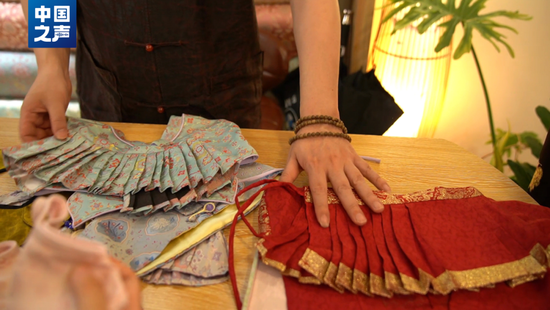
Core Insights - The market for "doll clothes" is rapidly expanding as part of the growing trend in the collectible toy industry, with young consumers showcasing personalized outfits on social media [1][6] - Traditional clothing companies are increasingly entering the "doll clothes" sector, responding to rising demand and a surge in overseas orders [6][10] Market Trends - The "doll clothes" segment is experiencing a new wave of interest, driven by the popularity of brands like LABUBU, which offer a variety of styles from basic to high-end custom designs [1][5] - Sales of "doll clothes" have surged, with reports indicating a nearly 50% increase in sales during the summer compared to the previous year [5] - E-commerce platforms have reported a year-on-year sales growth of over 117.08% for "doll clothes" in 2024, with monthly sales exceeding 10 million yuan in May [5] Consumer Behavior - The primary consumers of "doll clothes" are young families and individuals, with a growing trend towards personalized and unique designs [5][7] - The demand for customization is leading to more frequent updates in product offerings, with some stores shifting from weekly to daily releases [3][7] Global Market Dynamics - The global market for collectible toys is projected to grow from $20.3 billion in 2020 to $41.8 billion by 2024, with a compound annual growth rate of 19.8% [14] - Chinese manufacturers are capitalizing on this trend, with significant increases in orders from regions such as Southeast Asia, North America, and Japan [10][12] Industry Impact - The rise of "doll clothes" is prompting traditional apparel companies to enhance their design and manufacturing capabilities, reflecting a shift in consumer preferences towards emotional and self-expressive purchases [7][12] - The competitive edge of Chinese companies in the global market is attributed to their strong supply chain, design, and manufacturing capabilities, positioning them favorably in the "doll clothes" export market [12][14]
2025年第33周:服装行业周度市场观察
艾瑞咨询· 2025-08-25 00:06
Group 1: Industry Environment - The fragrance business is becoming an important area for fashion brands to expand their lifestyle offerings, with the global fragrance market expected to grow from $53 billion in 2025 to $77.53 billion by 2032, driven by high-end segments [3][4] - Luxury brands are investing in upgrading their stores in China despite a slowdown in the luxury market, with new store openings down 38% year-on-year in the first half of 2025 [5] - Sports and outdoor brands are increasingly capturing market share from luxury brands by appealing to high-end consumers through design innovation and upgraded retail experiences [6] Group 2: Market Trends - The outdoor running shoe market is rapidly growing in China, with brands like HOKA and Salomon leading the charge, driven by a surge in events and consumer interest [7] - Chinese domestic sports brands are facing challenges with growth slowing to 5.9%, as they struggle with brand power and market concentration [8] - The shift in brand slogans among sports brands reflects a change in consumer focus towards personal experience and inclusivity, particularly among Gen Z [9] Group 3: Luxury Market Challenges - The luxury goods sector is facing significant challenges, with the global market potentially experiencing zero growth for two consecutive years, largely due to a decline in spending from Gen Z consumers [10] - The beauty segment within luxury brands is one of the few bright spots, but it is not substantial enough to offset declines in core luxury business [10] Group 4: Fashion Industry Dynamics - The Chinese lingerie market is undergoing a transformation, with traditional brands struggling while new brands focusing on comfort and innovation are gaining traction [11] - The fashion industry is seeing a return to conservative and retro styles, with niche brands gaining attention for their craftsmanship and authenticity [12] Group 5: Brand Performance and Strategies - The "Luxury Brand China Vitality List 2025H1" was released, covering 86 luxury brands and their commercial dynamics in China, providing valuable insights for industry leaders [13] - The retail market for clothing and textiles in China reached 742.6 billion yuan in the first half of the year, with natural materials like linen becoming increasingly popular [15] - The sunscreen clothing market is projected to exceed 80 billion yuan in 2024, driven by rising consumer awareness and demand for outdoor activities [16] Group 6: Corporate Developments - Lao Pu Huang Jin expects to report revenue of 12 to 12.5 billion yuan for the first half of 2025, a year-on-year increase of 241%-255%, driven by product optimization and channel expansion [26] - The fashion brand La Chapelle has successfully transformed from bankruptcy to becoming a top seller on Douyin through a brand authorization model [21] - Bosideng is focusing on ESG practices and aims for net-zero emissions by 2038, showcasing its commitment to sustainable development [22]