
扩大内需

Search documents
进入两会时间 多地晒出经济发展“路线图”
Zhong Guo Zheng Quan Bao· 2026-01-28 21:09
● 本报记者熊彦莎连润 1月28日,云南、重庆进入两会时间。近日,多地陆续召开地方两会,纷纷定下各自的2026年经济发 展"路线图"。 中国证券报记者梳理发现,多地将2026年GDP增长预期目标定在5%左右。从重点目标任务看,扩大内 需,强化科技创新支撑引领、构建现代化产业体系等居于重要位置。各地对人工智能的部署更加注重数 据集建立、场景应用。 扩大内需潜力 "进一步深化消费能力,尤其是服务消费领域,需从三方面发力。"苏商银行特约研究员付一夫告诉中国 证券报记者,一方面,应推动服务消费品质升级,培育定制化、智能化服务产品;另一方面,应完善消 费支撑体系,优化交通网络与支付便利度,释放县域与农村服务消费潜力。此外,应强化收入与保障支 撑,最终形成"场景吸引人、品质留住人、保障激励人"的生态。 此外,各地结合自身特色提出具体举措。河南表示,加快郑州、新乡全国零售业创新提升试点城市建 设,推广胖东来经验。河北提出,创新举办省旅发大会,不断提升"这么近,那么美,周末到河北"影响 力。青海明确,拓展"青品好物"供需产业链,做强"青海拉面"产业平台。 打造新兴支柱产业 站在"十五五"新的发展起点,多地在加快产业转型升级、 ...
假日消费 四大新趋势升温
Xin Lang Cai Jing· 2026-01-28 21:00
Core Insights - The article highlights the increasing trends in holiday consumption as the New Year approaches, with a focus on the importance of domestic demand for economic growth [3] Group 1: Consumption Trends - Holiday travel in China saw over 140 million domestic trips and nearly 85 billion yuan in spending during the recent New Year holiday, with a rise in popularity for ice and snow tourism and warm-weather getaways [3] - There is a growing emphasis on quality in consumption, with health-conscious food options like low-sugar pastries and organic vegetables gaining traction [3] - The diversity of consumption scenarios is increasing, with "county tourism" becoming popular due to its cost-effectiveness and unique cultural experiences [3][4] Group 2: Technological Integration - The application of digital and intelligent technologies in holiday consumption is expanding, with platforms like Ctrip and Fliggy using AI for travel planning and product booking [4] - Tourist attractions are utilizing AI and AR technologies to enhance visitor experiences and reduce wait times [4] Group 3: Policy Impact - The first holiday after the operation of Hainan Free Trade Port saw a significant increase in duty-free shopping, with spending up nearly 130% and visitor numbers up nearly 61% [4] - The article suggests that the government should focus on implementing paid leave policies and exploring regional holiday breaks to enhance consumer spending [4][5] Group 4: Recommendations for Improvement - There is a call for innovation in consumption scenarios by integrating local cultural resources and creating new experiences such as virtual tours and digital heritage experiences [5] - Encouragement for the development of unique holiday products, including local specialties and cultural creations, is emphasized [6] - The article advocates for the use of digital technology to improve the tourism experience, including better reservation systems and enhanced visitor guidance [7]


地方两会时间开启 谋划2026年稳增长“施工图”
Xin Hua She· 2026-01-28 13:51
Core Insights - Local governments in regions such as Zhejiang, Beijing, and Guangdong are outlining their development plans for the next five years, focusing on technology innovation, modern industrial systems, and effective demand potential [1][2] Economic Growth Targets - Various regions have set their economic growth targets for 2026, with Tianjin and Guangdong aiming for 4.5%, Beijing and Henan around 5%, Hebei above 5%, and Zhejiang between 5% and 5.5% [1] Consumer Spending and Service Sector - Key strategies include promoting consumption upgrades, enhancing service consumption potential, and fostering new growth points in consumption. Beijing plans to support education, health, and elderly care services, while Tianjin aims to improve service supply in areas like health and home care [2] Technology Innovation and Industrial Development - Strengthening technology innovation and building a modern industrial system are priorities. Guangdong aims to create a globally influential industrial technology innovation center, while Beijing focuses on accelerating the application of major technological achievements [2][3] Artificial Intelligence Development - Several regions are emphasizing the promotion of artificial intelligence applications. Zhejiang targets a revenue growth of over 20% in its AI core industry, projecting revenues to exceed 800 billion yuan by 2026 [3] Emerging Industries - Regions are working to enhance their modern industrial systems by developing new emerging industries such as new materials, renewable energy, and biomedicine. Zhejiang and Guangdong are both focused on expanding these sectors [4] Policy Support and Economic Growth - Local governments are committed to expanding domestic demand and accelerating the development of new productive forces, combining policy support with innovation to stimulate new economic growth [5]
地方两会时间开启 谋划2026年稳增长“施工图”
Xin Hua She· 2026-01-28 13:41
地方两会时间开启 谋划2026年稳增长"施工图" 经济参考报记者汪子旭、叶健 强化科技创新支撑引领、构建现代化产业体系也在各地2026年重点工作中居于重要位置。其中,多地重 点提及"科技成果应用转化"。 广东着眼打造具有全球影响力的产业科技创新中心,提出要大力推进新技术、新产品、新业态、新模式 的创新应用,完善首台套首批次首版次应用支持政策。北京强调加快重大科技成果高效转化应用,提升 概念验证、中试孵化等平台服务能力。 值得注意的是,多地重点提及了加快推动人工智能推广应用。浙江省今年的政府工作报告不仅提及"阿 里千问、DeepSeek等通用模型性能全球领先",还提出推动人工智能创新发展,特别是推动场景资源开 放和大规模应用,并明确人工智能核心产业营收增长20%以上。数据显示,2025年浙江省人工智能核心 产业营收6800亿元左右,按此目标计算,2026年将有望超8000亿元。广东也强调加快推进人工智能全域 全时全行业高水平应用,在芯片、算力、算法、数据、应用等领域固本强基、培优增效,加快做强产业 全链条。 "如今,芯片、操作系统、数据库、基础大模型等核心技术,日益成为未来竞争的决定性因素。在研发 投入强度上实 ...
热卷日报:震荡偏弱-20260128
Guan Tong Qi Huo· 2026-01-28 12:23
1. Report Industry Investment Rating - The report maintains a bullish view on hot-rolled coils [5] 2. Core View of the Report - Currently, the supply of hot-rolled coils is contracting while demand is resilient, resulting in an overall tight balance between supply and demand. Pre-holiday winter stocking is an important support for current demand. The social inventory of total inventory has decreased month-on-month, and the pressure on mill inventory is controllable, with the overall inventory risk improving marginally but still relatively high year-on-year. Attention should be paid to the impact of the post-holiday resumption of work and production on supply and demand. In summary, the tight balance between supply and demand and inventory reduction support prices, and subsequent attention should be paid to raw material costs and the strength of post-holiday demand recovery. Currently, the market sentiment is cautious with low volatility due to the tug-of-war between macro loose expectations and pre-holiday weak demand [5] 3. Summary by Relevant Catalogs Market行情回顾 - **Futures Price**: On Wednesday, the open interest of the main hot-rolled coil futures contract increased by 9,222 lots, with a trading volume of 283,776 lots, which was lower than the previous trading day. The intraday low was 3,275 yuan, and the high was 3,290 yuan. It showed a weak intraday oscillation, breaking below the 5-day moving average in the short term and closing at 3,280 yuan/ton near the 30-day moving average, a decrease of 13 yuan or 0.39% [1] - **Spot Price**: The price of hot-rolled coils in Shanghai, a major region, was reported at 3,280 yuan/ton, a decrease of 10 yuan from the previous trading day [2] - **Basis**: The basis between futures and spot was 0 yuan, basically at par [3] Fundamental Data - **Supply**: As of January 22nd, the weekly output of hot-rolled coils decreased by 29,500 tons month-on-month to 3.0541 million tons, and decreased by 172,300 tons year-on-year. The output decline may be affected by factors such as maintenance arrangements and profit fluctuations, which supports prices [3] - **Demand**: As of January 22nd, the weekly apparent consumption decreased by 42,000 tons month-on-month to 3.0996 million tons, and increased by 73,900 tons year-on-year. Although demand declined slightly month-on-month, it maintained year-on-year growth. Pre-holiday stocking supported demand, indicating strong overall demand resilience [3] - **Inventory**: As of January 22nd, the total inventory decreased by 45,500 tons week-on-week to 3.5778 million tons (social inventory decreased by 46,600 tons week-on-week, and mill inventory increased by 1,100 tons). Year-on-year, the total inventory increased by 212,700 tons (social inventory increased by 241,800 tons year-on-year, and mill inventory decreased by 29,100 tons year-on-year). The month-on-month decrease in total inventory alleviated inventory pressure marginally, while the year-on-year increase indicated that the inventory accumulation rate this year was slightly faster than last year, but the overall risk was controllable [3] - **Policy**: The new regulations on the management of steel export licenses will cause short-term export fluctuations, increase supply, and put downward pressure on prices. In the long term, they will promote industrial upgrading, structural optimization, and competitiveness improvement. The Central Economic Work Conference in December proposed a positive fiscal policy and a moderately loose monetary policy in the macro aspect, and listed in - depth rectification of involution - type competition as a key task for 2026, which is beneficial to prices and industry profitability. Efforts are also being made to stabilize the real estate market and expand domestic demand [4] Market Driving Factor Analysis - **Bullish Factors**: Decrease in supply output, expectation of winter storage demand start, export rush, policy support ("15th Five-Year Plan", infrastructure investment), and strong iron ore as a furnace charge [5] - **Bearish Factors**: Unexpected resumption of production by steel mills in January, seasonal weakening of demand, insufficient manufacturing orders, and inventory accumulation suppressing prices [5]
调味品行业深度报告:BC端共振,期待改善
Dongguan Securities· 2026-01-28 09:33
Investment Rating - The report maintains an "Overweight" rating for the food and beverage industry, specifically focusing on the condiment sector [4][75]. Core Insights - The condiment industry in China is experiencing steady market expansion, with the market size projected to grow from 408.1 billion RMB in 2019 to 498.1 billion RMB by 2024, reflecting a compound annual growth rate (CAGR) of 4.07% [4][11]. - The competitive landscape of the condiment industry is characterized by a "one strong, many strong" structure, with Haitian Flavor Industry leading the market. The market concentration is expected to increase as the industry evolves towards more complex, convenient, and healthier products [4][24][29]. - The investment strategy emphasizes the potential for growth in the condiment sector driven by recovery in the restaurant industry, increased chain restaurant rates, and a growing demand for health-oriented products among consumers [4][75]. Summary by Sections Market Growth - The condiment market in China is projected to grow steadily, with a market size increase from 408.1 billion RMB in 2019 to 498.1 billion RMB by 2024, achieving a CAGR of 4.07% [4][11]. - The growth of compound condiments is outpacing that of the overall condiment industry, with a CAGR of 8.12% from 85.7 billion RMB in 2019 to 126.6 billion RMB in 2024 [4][17]. Competitive Landscape - The condiment industry is dominated by a few key players, with Haitian Flavor Industry being the largest, generating over 20 billion RMB in revenue, while the overall market remains relatively fragmented [4][24][25]. - The market concentration in China is lower than in the US and Japan, indicating potential for increased market share for leading companies as the industry evolves [4][26][29]. Demand Drivers - The consumption structure is primarily driven by the restaurant sector, which accounts for approximately 49% of the market, with household and food processing making up 34% and 17%, respectively [4][32]. - Factors such as the recovery of the restaurant sector, rising chain restaurant rates, and the growth of the takeout market are expected to boost demand for condiments [4][39][53]. Consumer Trends - There is a growing consumer preference for health-oriented products, with 90.8% of consumers expressing demand for zero-additive condiments and significant interest in low-sugar and low-salt options [4][56][59]. - Changes in population structure, including an increase in single-person households and an aging population, are driving the demand for smaller, more diverse condiment products [4][62][67]. Raw Material Analysis - The primary raw materials for condiment production include soybeans, sugar, and packaging materials, with soybeans accounting for approximately 17.6% of procurement costs [4][68]. - The report indicates that raw material prices are expected to remain manageable, with current prices for soybeans and other materials showing some fluctuations [4][71]. Investment Strategy - The report suggests maintaining an "Overweight" rating for the food and beverage sector, highlighting key companies such as Haitian Flavor Industry (603288), Zhongju High-tech (600872), and Qianhe Flavor Industry (603027) as potential investment targets [4][75].



瑞达期货国债期货日报-20260128
Rui Da Qi Huo· 2026-01-28 09:13
国债期货日报 2026/1/28 3、国家统计局:2025年,全国规模以上工业企业实现利润总额73982亿元,比上年增长 0.6%;12月份,规模以上工业企业利润同比增长5.3%。国家统计局称,2025年,各地区各部 门加紧实施更加积极有为的宏观政策,加快推进新型工业化,推动工业经济稳定向好运行;全 年工业企业利润实现增长,扭转了连续三年下降态势,其中装备制造业、高技术制造业等新动 能支撑作用明显,传统产业利润结构持续优化,工业经济发展质效不断提升。 行业消息 | | 周三国债现券收益率多数下行,到期收益率2-7Y下行0.5-1.3bp左右,10Y、30Y到期收益率分 | | --- | --- | | | 别下行1.7、1.1bp左右至1.82%、2.25%。周三国债期货集体走强,TS、TF、T、TL主力合约 | | | 上涨0.01%、0.06%、0.05%、0.07%%。资金面边际宽松,DR007加权利率回落至1.55%附 | | | 近震荡。国内基本面端,我国2025年第四季度GDP同比增长4.5%,全年GDP增速达5.0%,圆 | | | 满实现预期增长目标。12月工增高于市场预期,固投规模持续收敛 ...

权威解读·2025中国经济关键词|潜力释放,超大规模市场优势更加彰显
Xin Hua Wang· 2026-01-28 06:18
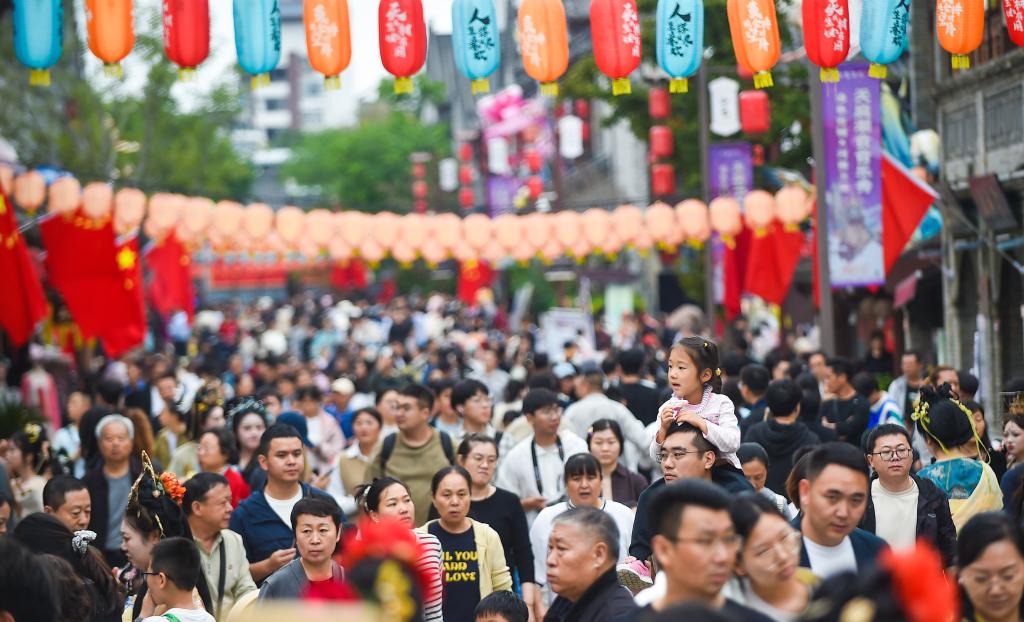
2025年,应对外部环境复杂变化,中国始终坚持立足国内、依托国内大市场优势,充分挖掘内需潜力,全国统一大市场建设向纵深推进。 从"两新"政策加力扩围,到提振消费专项行动深入实施,再到19条措施扩大服务消费,一系列政策顺应消费新需求,引导产业创新供给。 2025年社会消费品零售总额突破50万亿元,比上年增长3.7%。全年服务零售额比上年增长5.5%,最终消费支出对经济增长的贡献率达52%。 2025年10月1日,市民在2025第46届中国(福州)国际汽车博览会现场观看车商的促销活动。新华社记者 魏培全 摄 2025年10月2日,游客在河南省洛阳市老城区历史文化街区洛邑古城景区休闲游玩。新华社发(黄政伟 摄) "2025年,我国采取一系列政策来推动消费增长,并取得积极效果。"上海交通大学上海高级金融学院金融学教授朱宁说,在国际贸易环境不 确定、我国经济增长模式转型升级的背景下,我国宏观政策对于消费增长起到很大的促进作用。 对外经济贸易大学国家对外开放研究院研究员刘斌说,2025年我国消费市场呈现出服务领跑、商品升级、绿色智能等特征。新的消费场景不 断涌现,政策与市场产生共振,线上线下深度融合,零售模式加速迭代升级 ...
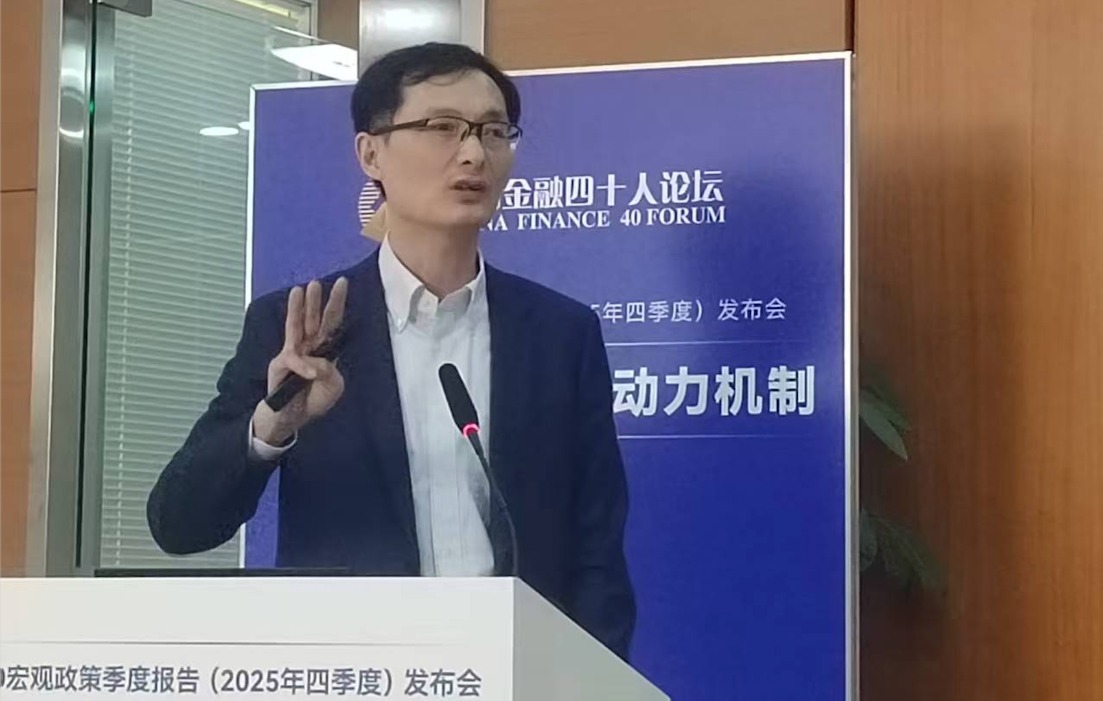
张斌:货币政策发力,激活内需新动能
Zhong Guo Jing Ying Bao· 2026-01-28 06:01
Core Viewpoint - The 2025 Central Economic Work Conference prioritizes expanding domestic demand, emphasizing the need to "build a strong domestic market" for 2026 [2] Group 1: Characteristics of the New Domestic Demand Strategy - The national emphasis on expanding domestic demand has significantly increased, with counter-cyclical policies placing greater focus on this area [2] - Policy responses to economic data have become more sensitive, as seen in the dynamic adjustments throughout 2025, where proactive fiscal policies were implemented in response to economic pressures [2] - Fiscal policy operations have become more refined, with specific measures like including elevator upgrades in the support for equipment renewal in the livelihood sector [3] Group 2: Monetary Policy Actions - Confidence must be strengthened through clear policy positions to stabilize expectations and calibrate price signals, enhancing the transmission effect of monetary policy [4] - The central bank should set clear and singular policy goals, such as a 2% core CPI inflation target, to avoid conflicting objectives and ensure market confidence [4] - Total policy tools, particularly policy interest rates, are crucial for expanding domestic demand, with current rates at approximately 1.4% indicating room for further reductions [4] Group 3: Economic Recovery Indicators - The macroeconomic landscape in 2025 shows early signs of recovery, with improvements in stock markets, RMB exchange rates, and corporate profitability, although the recovery foundation remains fragile [5] - The average mortgage rate from 2018 to 2021 was 5.5%, with a 4.1% annual increase in second-hand housing prices, resulting in a near purchase cost of 1.4%, which is lower than the average rental yield of 2.2% [5] - From 2022 to 2025, the average mortgage rate decreased to 3.9%, but the annual growth rate of second-hand housing prices fell to -4.8%, leading to an increased purchase cost of 8.7%, making buying less advantageous compared to renting [6]
北京市政协委员黄轶:建议扩大内需与“好房子”建设范围,推动城市高质量发展
Zhong Guo Jing Ying Bao· 2026-01-28 06:01
Group 1: Economic Development and Consumer Demand - The core viewpoint emphasizes that expanding consumption is essential for high-quality economic development in Beijing, with "good housing" being a key step towards achieving urbanization [1] - A comprehensive, multi-layered plan for boosting consumption is proposed, focusing on innovative consumption scenarios and the integration of culture, commerce, tourism, and sports [2] - The plan includes promoting successful events like "Zhuangchao Consumption Festival" and "Old Brand Carnival" to convert foot traffic into sales [2] Group 2: Investment and Infrastructure - The proposal highlights the need for increased investment in new infrastructure to support digital consumption, including the construction of a "light network city" and green low-carbon computing centers [2] - Major projects such as the second phase of Universal Studios and the "Two Parks and One River" initiative are identified as key drivers for linking commercial development [2] Group 3: Policy Mechanisms and Support - Recommendations include establishing a platform for "investment-consumption" alignment and improving income and security mechanisms to enhance consumer confidence [3] - Adjustments to minimum wage standards and expanding channels for property income are suggested to bolster consumer spending [3] Group 4: Housing and Urbanization - The focus on housing addresses the shortcomings of current resettlement housing policies, which are driven by price rather than quality, failing to meet public expectations for living standards [4] - A shift from a "price-driven" to a "quality-driven" framework for resettlement housing is proposed, emphasizing the need for a new evaluation system that prioritizes quality [5][6] - The new evaluation system should incorporate external factors like aesthetics and noise, ensuring that housing meets both urban design standards and residents' quality of life [5][6]