
滞胀

Search documents
美国会预算办公室下调美国今年经济增长预测 上调通货膨胀和失业率预测
Yang Shi Wang· 2025-09-14 01:22
Core Insights - The U.S. Congressional Budget Office (CBO) has revised its economic growth forecast for 2025 down to 1.4% from an earlier prediction of 1.9%, while also increasing inflation and unemployment rate forecasts [3] - The inflation rate is now expected to rise to 3.1%, up from the previous estimate of 2.2% [3] - The unemployment rate is projected to reach 4.5% by the fourth quarter of 2025, higher than the earlier forecast of 4.3% [3] Economic Conditions - Recent reports indicate that the U.S. economy may be entering an early stagflation phase, characterized by simultaneous economic growth slowdown and rising prices [5] - The Consumer Price Index (CPI) rose by 0.4% in August, leading to an annual inflation rate of 2.9%, the highest level since January [7] - Initial jobless claims surged to a four-year high, with approximately 263,000 people filing for unemployment insurance in the week ending September 6 [7] Federal Reserve Response - Signs of stagflation are becoming increasingly evident, and the Federal Reserve currently lacks an ideal response strategy [9] - The Federal Reserve is set to hold a policy meeting on September 16, with market attention focused on potential interest rate cuts due to recent labor market weakness [9]


共和党,不会搞经济!经济学家预警:特朗普政府正将美国推向滞涨
Sou Hu Cai Jing· 2025-09-13 23:03
Economic Outlook - Weak economic data raises concerns among analysts about the potential for the U.S. economy to slide into stagflation or even recession, with consumer confidence declining for two consecutive months, job creation falling significantly short of expectations, and inflation levels continuing to rise [1][12] - The current economic situation is reminiscent of the stagflation crisis that plagued the Western world in the 1970s and 1980s, indicating a re-emergence of this long-dormant risk [3] Stagflation Definition - Stagflation is defined as a unique economic phenomenon where production stagnation coexists with inflation, leading to rising unemployment, sluggish corporate production, and soaring prices, creating a dilemma for macroeconomic policy [4] Labor Market and Inflation - Recent data shows a sharp decline in hiring activities in August, with the labor market remaining weak, while inflation has reached its highest point since January, slightly below the Federal Reserve's 2% target [4] - Consumer expectations for inflation over the next year remain high at 4.8%, significantly above the current actual rate of 2.9%, indicating a potential self-fulfilling prophecy that could further elevate actual inflation [4] Political Economic Policies - The economic governance model of the Republican Party, particularly during the Trump administration, is criticized for its large-scale tariff policies that have led to increased prices for imported goods, exacerbating inflationary pressures [6] - In contrast, the Democratic Party traditionally emphasizes balanced economic policies, with historical data showing that GDP growth rates under Democratic presidents have been higher than those under Republican presidents since 1945 [8] Long-term Economic Strategies - The Biden administration's infrastructure investment plan aims to inject $1.2 trillion over the next decade to modernize infrastructure, which is expected to create numerous jobs and enhance long-term economic growth potential [8] - Democratic policies focus on structural reforms and long-term investments rather than short-term stimulus, promoting inclusive and sustainable economic growth [11] Inflation Control Measures - The Democratic approach to controlling inflation includes a multi-faceted strategy, such as releasing strategic oil reserves to stabilize energy prices and implementing the Inflation Reduction Act to lower prescription drug and healthcare costs [9] - The Republican reliance on monetary tools like interest rate hikes is seen as a one-size-fits-all approach that risks leading to economic hard landings [9] Consumer Confidence and Economic Risks - The current economic landscape is precarious, with consumer spending accounting for two-thirds of U.S. economic activity, and declining consumer confidence, a weak job market, and rising inflation signals warrant close attention [12] - If policymakers fail to adjust economic strategies effectively, the U.S. economy may indeed face the unsettling prospect of returning to a stagflation era, impacting living costs, job opportunities, and real income for ordinary Americans [13][15]
下周,全球市场的超级“靴子”将落下
Sou Hu Cai Jing· 2025-09-13 12:47
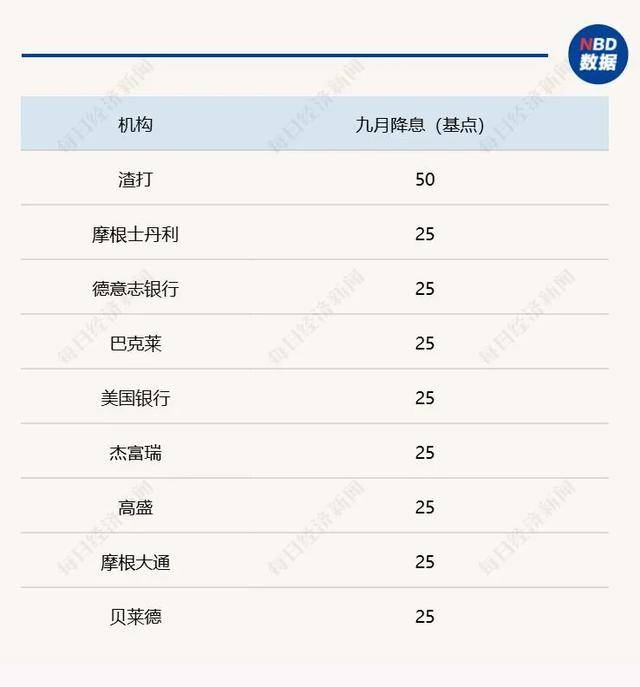
Group 1 - The Federal Reserve is expected to lower interest rates next week, with debates intensifying over whether to cut by 25 or 50 basis points due to weak economic data [1][2] - Political pressures and economic concerns are influencing the Fed's decision, with analysts suggesting a higher likelihood of a 50 basis point cut [1][3] - Historical data indicates that every time the Fed has initiated a rate cut cycle with a 50 basis point reduction since 1987, the U.S. has entered a recession [1][10] Group 2 - Recent employment data has been revised down significantly, indicating a potential weakening labor market, which may justify a larger rate cut [2][3] - Various financial institutions have differing predictions for the rate cut, with Standard Chartered predicting a 50 basis point cut, while others like Deutsche Bank and Barclays expect a 25 basis point cut [3][4] - The CME FedWatch Tool shows a 90% probability for a 25 basis point cut and a 10% probability for a 50 basis point cut [4] Group 3 - Fed Chair Jerome Powell's recent shift towards a more dovish stance has raised expectations for a larger rate cut, influenced by political pressures from the Trump administration [5][7] - The relationship between the Trump administration and the Fed has become increasingly tense, with potential implications for future monetary policy decisions [7][8] - Some economists argue that a 50 basis point cut could signal severe economic distress, while others view it as a proactive measure to support employment growth [10][11] Group 4 - Historical analysis shows that rate cuts do not guarantee a bull market for U.S. stocks, with past cycles indicating mixed outcomes for equity markets [15] - The dollar typically faces downward pressure during rate cut cycles, while gold prices often rise due to lower opportunity costs for holding non-yielding assets [15][16] - The upcoming Fed meeting is anticipated to be a critical event for global financial markets, influencing various asset classes and revealing the Fed's policy direction under economic and political pressures [16]
金价大涨!今年以来涨幅已接近40%
Sou Hu Cai Jing· 2025-09-13 09:22
Group 1: Gold Price Surge - Gold prices reached a record high of $3,674.27 per ounce, surpassing the previous peak of $850 per ounce (adjusted for inflation) [1] - The price of gold has increased approximately 5% this month and nearly 40% year-to-date, highlighting its status as a safe-haven asset amid macroeconomic uncertainties [1] - Factors such as rising unemployment claims and persistent high core CPI contributed to the recent surge in gold prices, with analysts suggesting a constructive outlook for gold in the coming months [1] Group 2: Economic Indicators and Market Sentiment - Recent economic data indicates a cooling U.S. economy, with the August CPI rising 2.9%, the largest increase in seven months, and a decline in the PPI [2] - Non-farm payrolls added only 22,000 jobs in August, with the unemployment rate rising to 4.3%, raising concerns about stagflation [2] - Market expectations for a 25 basis point rate cut by the Federal Reserve have increased, with traders fully pricing in this possibility [2] Group 3: Factors Driving Gold Prices - U.S. tax cuts and tariffs, along with challenges to the independence of the Federal Reserve, have diminished the attractiveness of the dollar and U.S. Treasuries, leading to increased investment in gold [3] - Historical perspectives on gold as a hedge against inflation and currency devaluation are being reinforced by current economic conditions and geopolitical uncertainties [3] - Goldman Sachs projects gold prices could reach $3,700 by the end of 2025 and potentially $4,000 by mid-2026, with scenarios suggesting prices could even hit $4,500 to $5,000 if there is a significant outflow from dollar assets [3] Group 4: Central Bank Trends and Future Outlook - Central banks are diversifying their foreign reserves, with gold's share in reserves rising since the Russia-Ukraine conflict, making it the second-largest reserve asset globally [4] - The future trajectory of gold prices will depend on Federal Reserve policy and global risk events, with historical trends indicating that rate-cutting periods enhance gold's appeal [4] - The ongoing gold market rally is supported by a broad investor base and policy uncertainties, positioning gold as both an inflation hedge and a beneficiary of global asset reallocation [4]
突发!金价,彻底爆了!
Sou Hu Cai Jing· 2025-09-13 07:53
Group 1 - Gold prices reached a historic high of $3674.27 per ounce, surpassing the previous peak of $850 per ounce (adjusted for inflation) from January 1980, with a cumulative increase of approximately 5% in September and nearly 40% year-to-date [1] - The rise in gold prices is attributed to macroeconomic uncertainties, with significant factors including a surge in initial jobless claims to 263,000, the highest in three years, and a core CPI increase of 0.3% [1] - Analysts suggest that despite some short-term buyer fatigue, the outlook for gold remains constructive with limited room for significant pullbacks in the coming months [1] Group 2 - Recent economic data indicates a cooling U.S. economy, with the August CPI rising by 2.9%, the largest increase in seven months, and non-farm payrolls adding only 22,000 jobs, leading to a rise in the unemployment rate to 4.3% [2] - The market is increasingly concerned about stagflation, with traders fully pricing in a 25 basis point rate cut by the Federal Reserve in the upcoming meeting [2] - The combination of a weakening labor market and persistent inflation signals has heightened expectations for a gradual resumption of rate cuts by the Federal Reserve [2] Group 3 - Factors such as tax cuts and tariffs from the Trump administration, along with challenges to the independence of the Federal Reserve, have diminished the attractiveness of the U.S. dollar and Treasury bonds, driving funds into gold [3] - Gold is viewed as a unique hedge against inflation and currency devaluation, with historical precedence reinforcing its role as a safe haven during economic uncertainty [3] - Analysts note that the current volatility in gold prices is lower compared to the sharp spikes seen in 1980, attributed to increased market liquidity and the accessibility of gold through ETFs [3] Group 4 - Central banks are diversifying their foreign reserves, with gold's share in reserves rising since the Russia-Ukraine conflict, making it the second-largest reserve asset globally, surpassing the euro [4] - The future trajectory of gold prices will depend on the Federal Reserve's policy direction and global risk events, with historical trends indicating that rate-cutting periods enhance gold's appeal [4] - The ongoing relationship dynamics between the Trump administration and the Federal Reserve are considered a significant variable influencing gold prices [4]
美国非农数"爆雷"!40万亿国债利息压垮经济 全球14万亿资金要变天?
Sou Hu Cai Jing· 2025-09-13 07:50
Core Insights - The recent revision of the U.S. non-farm payroll data, which erased 910,000 jobs, indicates potential manipulation, suggesting that half of the 1.8 million jobs added last year may have been fabricated [2][4] - Employment and the Consumer Price Index (CPI) are identified as the two most critical indicators of the U.S. economy, with the recent data revision raising concerns about a possible recession [4][11] - Historical patterns show that the U.S. often engages in global interventions during economic downturns, with past examples including military actions and financial crises [5][7] Economic Indicators - The non-farm payroll data is crucial as it reflects the ability of Americans to consume, which is foundational to the U.S. economy [4] - The recent downward revision of employment data suggests a significant deterioration in economic conditions, potentially leading to a recession [2][4] Federal Reserve Actions - The upcoming Federal Reserve meeting on September 17 is anticipated to result in interest rate cuts, a common response to signs of recession [4][8] - The U.S. Treasury Secretary's call for the Fed to include long-term interest rates in its responsibilities indicates a shift towards Yield Curve Control (YCC) to manage national debt interest payments [8][10] Global Implications - The potential for the U.S. to print an additional $4 trillion to purchase government bonds could lead to a significant increase in global liquidity, impacting international markets [8][10] - The relationship between U.S. economic policies and Japan's financial strategies is highlighted, suggesting that Japan may be pressured to buy U.S. debt following recent agreements [10] Market Reactions - The revision of employment data and anticipated Fed actions have contributed to a surge in international gold prices, reflecting investor concerns over U.S. economic stability [8][10] - The potential for a "stagflation" scenario in the U.S. could open up opportunities for other markets, particularly in real estate and monetary policy adjustments in China [11][13]

港股通科技30ETF(159636)最新规模突破350亿元,机构:港股科技板块仍具长期投资价值
2 1 Shi Ji Jing Ji Bao Dao· 2025-09-13 02:05
Group 1 - The core viewpoint of the news highlights the significant growth and performance of the Hong Kong Stock Connect Technology 30 ETF (159636), which has seen a year-to-date share growth rate of 215.96% and a net inflow of 3.836 billion yuan over the past 20 trading days [1] - As of September 12, 2025, the Hong Kong Stock Connect Technology Index (987008) has achieved a one-year increase of 94.06%, outperforming similar indices such as the Hang Seng Technology Index (72.34%) and the Hang Seng Internet Technology Index (66.59%) [1] - The index's TTM price-to-earnings ratio stands at 25.72 times, indicating a valuation in the lower range compared to the historical five-year average [1] Group 2 - The index consists of 30 leading companies in the technology sector, with the top ten stocks accounting for 75.68% of the total weight, including major players like Tencent, Xiaomi, and Alibaba [1] - The index underwent a revision in March 2025, removing the "new energy equipment" sector and adding "smart cars" and "artificial intelligence," enhancing its focus on high-growth areas such as internet, semiconductors, innovative pharmaceuticals, and smart driving [1] - The news also mentions the performance of the Hong Kong Stock Connect Technology 30 ETF's associated off-market funds, which facilitate investment for external investors [2]
美国8月CPI数据点评:CPI超预期反弹,而降息预期升温
Great Wall Securities· 2025-09-12 12:32
Inflation Data - The US August CPI increased by 2.9% year-on-year, exceeding the previous value of 2.7% and market expectations of 2.84%[2] - The seasonally adjusted CPI rose by 0.4% month-on-month, compared to a previous increase of 0.2% and market expectations of 0.3%[2] - Core CPI increased by 3.1% year-on-year, matching the previous value and exceeding market expectations of 3.05%[2] Economic Indicators - The unemployment rate in the US rose from 4.2% to 4.3%, reaching a nearly four-year high[8] - Initial jobless claims surged to the highest level in nearly four years as of the week ending September 6[8] - The Michigan University one-year inflation expectation increased by 0.3 percentage points to 4.8% in August, while the five-year expectation rose by 0.1 percentage points to 3.5%[3] Market Implications - The rise in inflation has led to increased expectations for interest rate cuts, with the probability of three cuts within the year significantly rising[2] - Despite the overall CPI exceeding expectations, core CPI growth was in line with market predictions, indicating potential inflation persistence[3] - The combination of high inflation, slowing economic growth, and rising unemployment signals a risk of stagflation in the US economy[8]
DWS:9月美联储减息25个基点理由已相当充分 但路径选择或更为审慎
Zhi Tong Cai Jing· 2025-09-12 11:18
Group 1 - The chief U.S. economist at DWS, Christian Scherrmann, indicates that there is sufficient reason for a 25 basis point rate cut in the September meeting due to a cooling labor market and lack of significant price transmission pressure from tariffs [1] - The focus of the Federal Reserve meeting will not only be on interest rates but also on the clarity of the dovish stance from officials and how economic forecasts will reflect this position [1] - There are concerns about future inflation risks despite recent favorable inflation data, as companies may choose to raise prices to maintain profit margins, and labor shortages could push prices higher if major investment projects are realized [1] Group 2 - The Federal Reserve faces challenges in maintaining a balanced tone amid risks, with market expectations suggesting rates will drop to neutral or lower levels by 2026 [2] - It is anticipated that Powell will adopt a more cautious approach, relying on data due to the uncertain outlook and increased risk of policy missteps [2] - Discussions regarding Powell's successor are ongoing, and there may be internal disagreements within the Federal Reserve, with some officials advocating for a rate cut larger than 25 basis points [2]
跑赢通胀!金价,彻底爆了!
Sou Hu Cai Jing· 2025-09-12 08:03
多重因素推升金价 特朗普政府的减税与关税政策,加之对美联储独立性的挑战,削弱了美元与美债的吸引力,推动资金加 速流入黄金。马拉松资源顾问公司投资组合经理罗伯特·马林(Robert Mullin)表示:"黄金在数百甚至 上千年的历史中,一直扮演着对冲通胀和货币贬值的独特角色。" 世界银行前首席经济学家卡门·莱因哈特(Carmen Reinhart)也认为,黄金上涨不仅反映通胀担忧,还 折射出全球经济与地缘政治的不确定性。"黄金在上世纪七八十年代已被视为有效的对冲工具,如今这 种作用再次被强化。" 9月12日,现货黄金一度升至3674.27美元/盎司,创下新的历史纪录,并首次突破1980年1月21日创下的 850美元/盎司峰值(按通胀调整约为3590美元)。本月以来金价累计上涨约5%,今年以来涨幅已接近 40%。市场普遍认为,这一突破再次凸显黄金在持续的宏观不确定性中作为避险资产的地位。 在美国经济数据公布前,金价曾一度下跌多达0.6%。随着数据出炉,价格迅速扭转跌势并刷新高位。 独立金属交易员黄泰(Tai Wong)评论称:"上周初请失业金人数大幅攀升至26.3万,创三年来新高, 而核心CPI环比增幅仍维持在0 ...