
自动驾驶

Search documents
何小鹏:小鹏第二代VLA开启自动驾驶DeepSeek时刻;知情人士:鸿蒙智行已对违规营销门店进行处罚丨汽车交通日报
创业邦· 2026-03-02 10:05
Group 1 - Hongmeng Zhixing has penalized stores involved in a "short video marketing violation" incident, requiring them to rectify issues, deduct performance scores, and hold responsible parties accountable [2] - Pony.ai announced that its seventh-generation Robotaxi will achieve monthly operational profitability in Shenzhen by February 2026, with an average daily net income of 338 yuan per vehicle and 23 orders per day as of February 28 [2] - Didi Autonomous Driving has established the DiDi Voyager Labs in collaboration with Tsinghua University to focus on cutting-edge research in multimodal large models and reinforcement learning, aiming to advance autonomous driving technology [2] - Xiaopeng Motors unveiled its second-generation VLA, marking a significant step towards fully autonomous driving, with plans for nationwide test drives and public road testing of its Robotaxi [2]


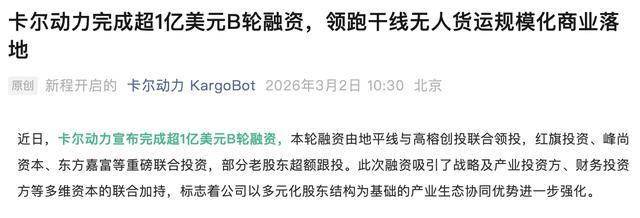
卡尔动力完成超1亿美元B轮融资,CEO韦峻青曾任滴滴自动驾驶CTO
Sou Hu Cai Jing· 2026-03-02 06:41
Core Insights - Karl Power has completed a Series B financing round exceeding $100 million, led by Horizon and Gao Rong Capital, with participation from Red Flag Investment, Peak Capital, and Dongfang Jiafu, along with significant follow-on investments from existing shareholders [1][2] Company Overview - Karl Power was incubated by Didi Autonomous Driving and was established in February 2021, becoming an independent entity in 2023 [2] - The company is the first in the industry to achieve a commercial closed loop for trunk unmanned freight, successfully validating the entire chain from technology to business [2] - Karl Power has achieved a cumulative freight volume of 12 billion ton-kilometers and has successfully closed the first profitable case of unmanned trunk transportation [2] Leadership - The CEO of Karl Power, Wei Junqing, holds a bachelor's degree in automation from Tsinghua University and a Ph.D. in vehicle driving behavior and trajectory planning from Carnegie Mellon University [2] - Wei Junqing has nearly 20 years of experience in the autonomous driving industry, having previously served as CTO of Didi Autonomous Driving and Global Vice President of Autonomous Driving at Aptiv [2]

规范货运平台 批量建重卡超充站 3月起又一批新规将实施! | 头条
第一商用车网· 2026-03-02 05:21
National Policies - The Ministry of Transport has adjusted the age requirement for certain road transport personnel to a maximum of 63 years, effective from March 20, 2026 [2] - The Ministry of Transport and the State Administration of Taxation have issued new management regulations for online freight platforms, focusing on driver rights protection and digital supervision [4] - New technical standards for hydrogen transportation have been released, effective from March 1, 2026, detailing equipment conditions and emergency procedures for hydrogen transport [7] Local Policies - In Henan, 134 driver service stations have been equipped with navigation features to enhance accessibility for truck drivers, providing essential services like rest areas and hot meals [11] - Qinghai plans to build heavy-duty truck battery swap stations along major highways to reduce logistics costs [12] - Guangdong has initiated the construction of 20 heavy-duty truck supercharging stations, aiming to create a green energy supply hub in the Guangdong-Hong Kong-Macao Greater Bay Area [14] - In Hunan, the province will enhance highway service areas and establish 14 "Driver Homes" to provide free services for truck drivers, including rest and charging facilities [19] - Sichuan is implementing a safety risk management system for passenger and hazardous goods transport companies, utilizing big data for enhanced regulatory oversight [21][22]

国元证券2026年3月金股组合及投资逻辑
Guoyuan Securities· 2026-03-02 04:41
Stock Recommendations - Kingsoft Office (688111.SH) is positioned to benefit from AI developments despite recent stock price adjustments, with an expected EPS growth from 3.56 in 2024 to 4.57 in 2026[5] - Shengyi Technology (600183.SH) anticipates significant growth driven by server PCB upgrades and new AI customer acquisitions, with EPS projected to rise from 0.74 in 2024 to 2.37 in 2026[5] - Tuojing Technology (688072.SH) maintains a leading position in thin film deposition equipment, with EPS expected to increase from 2.48 in 2024 to 5.96 in 2026[5] Automotive Sector Insights - Bertly (603596.SH) is expected to benefit from the focus on autonomous driving, with an EPS forecast of 2.85 in 2026, reflecting a growth trajectory[6] - Yinlun (002126.SZ) is projected to see EPS growth from 0.96 in 2024 to 1.49 in 2026, supported by economic recovery in construction machinery and heavy trucks[6] Market Performance Overview - The weighted return of the gold stock portfolio in February 2026 was 6.47%, outperforming the Shanghai Composite Index, which rose by 1.09%[12] - Silver Wheel (002126.SZ) had the highest monthly increase at 32.15%, while Hongyuan Electronics (603267.SH) rose by 22.52%[12] Risk Factors - Potential risks include overseas policy changes and individual company operational risks, which could affect performance and earnings volatility[8]



卡尔动力获超1亿美元B轮融资:在Robotruck万亿级赛道率先跑通商业化闭环
IPO早知道· 2026-03-02 03:07
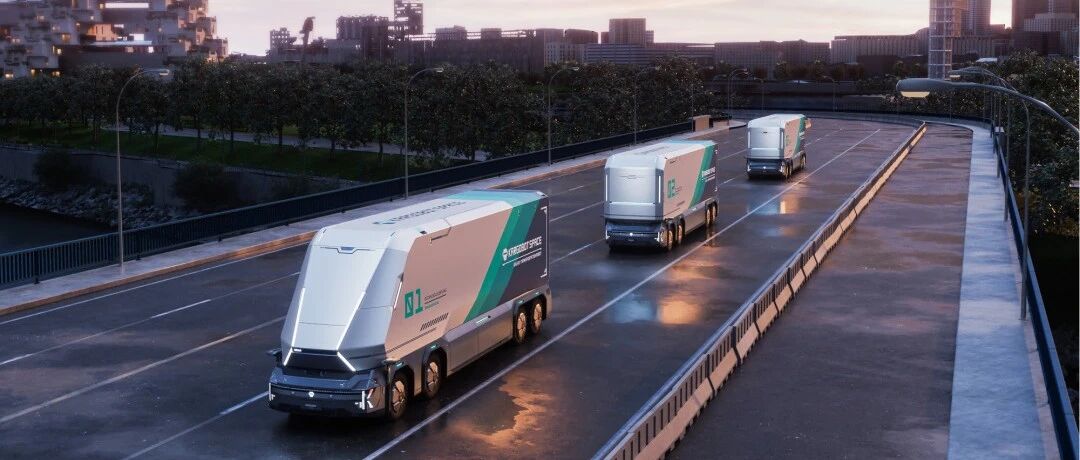
Core Viewpoint - The article highlights the significant advancements and milestones achieved by Kaal Power in the autonomous freight transportation sector, emphasizing its leadership in commercializing unmanned logistics solutions and the recent funding round aimed at scaling operations. Group 1: Company Achievements - Kaal Power has completed a B-round financing of over $100 million, led by Horizon Robotics and Gao Rong Capital, with participation from other investors and existing shareholders [3] - The company has achieved a cumulative freight volume of 1.2 billion ton-kilometers and has successfully closed the first profitable case of unmanned trunk transportation [3] - Kaal Power operates over 400 autonomous trucks, with a total mileage exceeding 35 million kilometers, and has conducted operations in more than 10 provinces [5] Group 2: Technological Innovations - Kaal Power has developed an autonomous driving technology platform centered on "end-to-end + reinforcement learning," offering a comprehensive solution for unmanned freight transportation [6] - The company’s innovative mixed fleet model allows for significant operational efficiency improvements, with labor efficiency increasing by 83% to 300% and overall operational efficiency improving by over 50% [6] - Kaal Power has designed and developed transportation robots with a modular structure to enhance automation across the logistics chain [6] Group 3: Market Position and Future Plans - The company is positioned as a leader in the open-road autonomous freight market, with plans to deploy 1,000 autonomous trucks this year and 10,000 Robotrucks in the coming years [3][8] - Kaal Power aims to accelerate the commercialization of AI and logistics applications, focusing on creating a safer, more efficient, and economical logistics capacity system [8] - The autonomous freight sector is expected to enter a rapid growth phase within the next 1-2 years, with Kaal Power establishing a significant first-mover advantage in this trillion-dollar market [7]
首发|清华师兄,刚刚融资超1亿美金
投资界· 2026-03-02 02:48
Core Viewpoint - The article highlights the significant financing event for KargoBot, a global L4 autonomous driving freight company, which has raised over $100 million in Series B funding, marking a pivotal moment for the commercialization of autonomous freight logistics [2][10]. Company Overview - KargoBot was founded by Dr. Wei Junqing, who has nearly 20 years of experience in the autonomous driving industry and previously led projects at Carnegie Mellon University [3][5]. - The company focuses on L4 autonomous heavy trucks and has developed a full-stack autonomous driving system, with its core product being a mixed-intelligence platooning system [6]. Financing and Investment - The recent Series B funding round was led by Horizon Robotics and Gao Rong Capital, with participation from several other investors, indicating strong interest in the autonomous freight sector [2][10]. - KargoBot has previously secured significant funding, including a $450 million angel round and a $60 million Series A round, demonstrating a robust investment trajectory [6][10]. Market Potential - The autonomous freight market is projected to be a trillion-dollar industry, with KargoBot targeting the logistics sector that accounts for over 70% of cross-regional goods circulation in China [5][10]. - The article notes that KargoBot has already operated over 400 autonomous trucks, covering more than 35 million kilometers across over 10 provinces, indicating a strong operational presence [8][10]. Industry Trends - The autonomous driving freight sector is experiencing a surge in investment and interest, with other companies like Xidi Zhijia and DeepWay also making headlines with significant funding rounds [9][10]. - There is a growing consensus that the commercialization of autonomous trucks is reaching a critical turning point, with expectations for rapid growth in the next 1-2 years [10][11].

小马智行第七代自动驾驶出租车深圳单车盈利转正
Bei Jing Shang Bao· 2026-03-02 02:12
Core Insights - The company, Xiaoma Zhixing, announced that its seventh-generation Robotaxi will achieve monthly single-vehicle operational profitability in Shenzhen by February 2026 [1] - The company reached this profitability milestone in Guangzhou by November 2025 [1] Financial Performance - As of February 28, the average net income per single Robotaxi per day was 338 yuan, with an average of 23 orders per vehicle daily [1] - During the Spring Festival holiday, the average daily paid orders per vehicle reached 26, compared to a national average of 15 orders per vehicle per day from the beginning of the year until the company's Hong Kong listing in November 2025 [1] Cost Structure - The operational costs for each Robotaxi include depreciation of vehicles and autonomous driving kits, charging fees, daily maintenance, remote operational assistance, insurance costs, ground staff labor costs, and expenses for parking and network infrastructure [1] - The material cost (BOM) of the seventh-generation autonomous driving system has been reduced by approximately 70% compared to the previous generation, utilizing 100% automotive-grade components [1] Market Performance - By February 16, 2026, the number of paid orders for Robotaxi in Shenzhen exceeded the total for the entire year of 2025 [1]
揭秘长城智驾自研:元戎、Momenta「抬轿」与千人自研团队
雷峰网· 2026-03-02 00:43
Core Viewpoint - Great Wall Motors is adopting a dual strategy in the autonomous driving sector, focusing on both self-research and collaboration with external suppliers to enhance its technological capabilities and market position [2][5][11]. Group 1: Autonomous Driving Strategy - The competition in autonomous driving is intensifying, with Great Wall Motors planning to release a VLA (Vision-Language-Action) model by the end of 2025, positioning itself as one of the few companies to implement this technology [2][5]. - Great Wall Motors is expanding its supplier network to cover vehicle price ranges from 100,000 to 400,000 yuan, with plans to implement three major computing platforms starting in 2025 [5][9]. - The ADC 2.0 platform targets mainstream models like Haval, utilizing TI chips and Qualcomm platforms, and aims to enhance capabilities in high-speed scenarios [6][7]. Group 2: Research and Development - Great Wall Motors has established a self-research team of over 1,000 people, focusing on both autonomous driving and cockpit technologies, with a significant emphasis on self-research despite ongoing collaborations [10][11]. - The company has been investing heavily in R&D, with autonomous driving research expenses accounting for 50% of total R&D investments, amounting to 1 billion yuan annually [12][13]. - The establishment of the 九州超算中心 (Jiuzhou Supercomputing Center) aims to provide substantial computational support for the development of large models, with a total computing power of 5 EFLOPS [15]. Group 3: Market Performance - The sales of the Haval Shuanglong Max, which features autonomous driving capabilities, show a balanced order structure between smart and non-smart versions, indicating a growing consumer interest in smart features [9]. - The sales of the Wey brand reached 102,000 units in 2025, marking an 86% year-on-year increase, attributed to the successful implementation of end-to-end models and VLA technology [9].

文远知行20260226
2026-03-01 17:23
Summary of the Conference Call for 文远知行 Company Overview - **Company**: 文远知行 (Wenyan Zhixing) - **Industry**: Autonomous Driving, specifically focusing on Robotaxi services - **Current Fleet Size**: Over 1,000 Robotaxi vehicles in operation, with a target of several tens of thousands by 2030 [2][5] Key Points and Arguments Fleet Expansion and Operations - The Robotaxi fleet has surpassed 1,000 vehicles, with operations concentrated in cities like Beijing, Guangzhou, and Abu Dhabi [2][5] - The company aims to deploy 1,200 vehicles in the Middle East by 2027, representing a sixfold expansion [2][18] - Currently, operations are in 11 countries and over 40 cities, holding licenses in 8 countries [3] Revenue Model and Financial Projections - Revenue is generated from vehicle sales and operational income. For example, selling 10,000 Robotaxis could yield $1.5 billion in revenue, with a net profit of approximately $450 million at a 30% profit margin [6][31] - The gross margin is maintained at over 30%, with net losses controlled at reasonable levels [4][17] - Cash reserves post-Hong Kong IPO are approximately 7 billion RMB, indicating strong financial health [4][17] Cost Structure and Profitability - The main model, GXR, has a cost of about $40,000 per vehicle, with a target to reduce costs by approximately 25% through scale effects and procurement strategies [2][13][22] - Profitability is heavily reliant on vehicle utilization rates, with domestic profit margins expected to be slightly above 30%, while margins in the UAE exceed 50% [9][19] Market Challenges and Regulatory Environment - Domestic commercialization is primarily constrained by policy factors, with gradual openings expected rather than sudden full-scale releases [4][19] - The company is focusing on expanding operations in Guangzhou, with expectations for clearer progress by 2026 [4][20] Technological Aspects - The L4 Robotaxi requires high-definition maps, with city coverage taking about two weeks to establish [2][16] - The vehicle's lifecycle is estimated at 600,000 kilometers, with a depreciation model based on a five-year span [7] International Collaboration - A partnership with Uber is crucial for rapid expansion in overseas markets, particularly in the Middle East [4][17] - The company has signed agreements to deploy at least 1,200 vehicles in the Middle East by 2027, focusing on Abu Dhabi, Dubai, and Riyadh [4][10] Future Outlook - The company anticipates reaching a fleet size of 2,000 to 3,000 vehicles by 2026, with a balanced focus on domestic and international growth [19][20] - The overall market for Robotaxi services is expected to grow significantly, with projections of several million vehicles by 2030 [28] Additional Important Insights - The company is exploring various international markets, including Europe and Asia, with plans for commercial operations in Switzerland by 2026 [12][21] - The competitive landscape in the U.S. features major players like Waymo and Tesla, with differing operational scales and strategies [23] - The company’s strategy emphasizes leveraging local partnerships and operational data to maintain a competitive edge in international markets [27][28] This summary encapsulates the key points discussed in the conference call, highlighting the company's strategic direction, financial health, and market challenges.

禾赛-W(02525):公司深度报告:乘具身智能之东风,激光雷达由上车走向泛机器人
Guohai Securities· 2026-03-01 15:36
Investment Rating - The report assigns a "Buy" rating for Hesai Technology (02525.HK) as it initiates coverage [1]. Core Insights - The report highlights the transition of LiDAR technology from traditional mechanical optical devices to chip-based components, indicating a trend of lower prices and enhanced performance [8]. - The report identifies key drivers for the increasing penetration of LiDAR, including its safety features, the rise of L3 and L4 autonomous vehicles, and the continuous reduction in LiDAR costs [63][64]. - Hesai's strategic decisions are noted for their foresight, having shifted from air quality detection to the LiDAR market, capturing significant market share in the L4 autonomous driving segment [11][81]. Summary by Sections Current LiDAR Industry Characteristics - The LiDAR market is highly concentrated, with the top four suppliers holding over 99% market share as of 2025 [7]. - LiDAR technology is evolving rapidly, with a shift towards chip integration and lower costs, enhancing performance [8][48]. - The report emphasizes the increasing importance of LiDAR as a safety component in vehicles, with projections indicating that L3 vehicles may require 3-6 LiDAR units per vehicle [63]. Market Competition Landscape - The competitive landscape is dominated by major players like Huawei and Hesai, with Hesai's ATX product offering superior performance at comparable prices [77][78]. - The report notes that the LiDAR market is characterized by strong economies of scale, making it difficult for new entrants to compete effectively [77]. Hesai Company Overview - Hesai has transitioned from an air quality detection company to a leading global LiDAR manufacturer, launching several successful products since its inception in 2014 [81][84]. - The company has strategically positioned itself in the automotive market, with significant revenue contributions from its LiDAR products [85]. - The management team is noted for its balanced ownership and strong technical background, contributing to the company's innovative capabilities [11][84]. Long-term Growth Potential and Current Stock Price - The report forecasts significant revenue growth for Hesai, projecting revenues of 34.09 billion, 49.16 billion, and 60.56 billion RMB for 2025, 2026, and 2027 respectively, with corresponding Non-GAAP net profits of 5.05 billion, 6.91 billion, and 9.53 billion RMB [12]. - Given the company's leadership position in a high-growth sector, a price-to-earnings ratio of 50 is applied, resulting in a target market capitalization of 394 billion HKD [12].