即时零售

Search documents
顺丰同城再涨超7% 月内累涨近两成 平台竞争利好第三方物流服务商
Zhi Tong Cai Jing· 2026-01-21 01:51
Core Viewpoint - SF Express City (09699) has seen a significant stock price increase of over 7%, with a cumulative rise of nearly 20% within the month, indicating strong market performance and investor confidence [1] Group 1: Market Performance - As of the report, SF Express City shares are trading at 12.92 HKD, with a transaction volume of 27.99 million HKD [1] - The company has experienced a daily average of over 50% year-on-year growth in same-city delivery orders during the "Double Eleven" shopping festival [1] Group 2: Industry Insights - The State Council's Anti-Monopoly and Anti-Unfair Competition Committee is conducting an investigation into the competitive landscape of the food delivery platform service industry, which may lead to more regulated competition in the instant retail sector [1] - According to Shenwan Hongyuan, the shift towards more compliant competition in the instant retail sector is expected to drive the development of higher-priced categories beyond food and beverages, providing more growth opportunities for logistics [1] Group 3: Order Growth by Category - The report highlights strong growth in various order categories, with beverage orders increasing by over 160% and fast food orders by over 110% year-on-year [1] - Non-food categories such as supermarket goods and beauty products also saw double-digit year-on-year growth in order volume [1] Group 4: Business Outlook - As a neutral third-party platform, SF Express City has shown impressive performance in multi-channel orders during promotional periods, with significant growth in orders from platforms like Douyin, Meituan, Taobao Flash Purchase, JD Seconds, and merchants' own platforms [1] - The growth and profitability expectations for the food delivery business remain positive through 2026 [1]
港股异动 | 顺丰同城(09699)再涨超7% 月内累涨近两成 平台竞争利好第三方物流服务商
智通财经网· 2026-01-21 01:48
Core Viewpoint - SF Express City (09699) has seen a significant stock price increase of over 7%, with a cumulative rise of nearly 20% within the month, indicating strong market performance and investor confidence [1] Group 1: Market Performance - As of the latest report, SF Express City shares are trading at 12.92 HKD, with a transaction volume of 27.99 million HKD [1] - The company has experienced a daily average of over 50% year-on-year increase in same-city delivery orders during the "Double Eleven" shopping festival [1] Group 2: Industry Insights - The State Council's Anti-Monopoly and Anti-Unfair Competition Committee is conducting an investigation into the competitive landscape of the food delivery platform service industry, which may lead to more compliant competition in the instant retail sector [1] - The growth in the instant retail sector is expected to drive a shift from lower-priced categories like food and beverages to higher-priced categories, providing more growth opportunities for logistics [1] Group 3: Order Growth by Category - Within the food delivery segment, beverage orders have seen a year-on-year increase of over 160%, while fast food orders have increased by over 110% [1] - Non-food categories such as supermarket goods and beauty products have also experienced double-digit year-on-year growth in order volume [1] Group 4: Future Outlook - As a neutral third-party platform, SF Express City has shown strong performance in multi-channel orders during promotional periods, with significant growth in orders from platforms like Douyin, Meituan, Taobao Flash Purchase, and JD Instant Delivery [1] - The growth and profitability expectations for the food delivery business remain positive through 2026 [1]
李宁(02331.HK):期待2026产品及运营向上
Ge Long Hui· 2026-01-20 14:29
Group 1 - The core viewpoint of the news is that Li Ning is experiencing a decline in retail sales and is actively expanding its product offerings and retail channels to enhance brand presence and sales performance [1][2][3] Group 2 - As of December 31, 2025, Li Ning's retail sales (excluding Li Ning YOUNG) recorded a low single-digit decline year-on-year, with offline channels experiencing a medium single-digit decline [1] - The number of Li Ning sales points in China (excluding Li Ning YOUNG) totaled 6,091, a net decrease of 41 from the previous quarter, with retail business seeing a net decrease of 59 and wholesale business a net increase of 33 [1] - Li Ning YOUNG sales points increased by 38 to a total of 1,518 as of December 31, 2025 [1] Group 3 - Li Ning opened its first "Dragon Store" in Beijing, launching the new "Honor Gold Standard" product series, which is expected to create a strong synergy for brand development and retail channel upgrades [2] - The new outdoor store "COUNTERFLOW" aims to connect urban life with nature, showcasing a blend of rugged and urban aesthetics [2] Group 4 - Li Ning announced a partnership with Taobao Flash Sale to enhance instant retail experiences, marking a significant step in expanding its multi-channel strategy [3] - The company has raised its profit forecasts for 2025-2027, expecting revenues of 29.1 billion RMB, 30 billion RMB, and 31.1 billion RMB, with net profits of 2.66 billion RMB, 2.74 billion RMB, and 2.94 billion RMB respectively [3]

2025年12月中国快递发展指数为466.8 服务质效与基础保障双提升
Zheng Quan Ri Bao Wang· 2026-01-20 12:55
中央财经大学副教授刘春生对《证券日报》记者表示,快递行业的良好表现是我国经济韧性的微观印 证,其增速与实物商品网上零售高度关联。快递业务量峰值、下沉市场增速等数据,可直观检验促消费 政策效果,单票收入回升也反映出消费品质升级趋势,成为观察宏观经济与消费活力的高频窗口。 国家邮政局1月19日发布《2025年12月中国快递发展指数报告》(以下简称《报告》)。根据报告公布的 数据,经测算,2025年12月中国快递发展指数为466.8。其中发展规模指数、服务质量指数、发展能力 指数和发展趋势指数分别为631.6、650.8、253.1和61.7。12月份,行业运行平稳安全,服务质效持续提 升,基础网络稳步拓展,全年业务规模与业务收入再创新高。 苏商银行特约研究员付一夫告诉记者,当前快递行业已从规模扩张转向高质量发展,并依托政策赋能与 数智化升级来有效对冲宏观压力,实现稳健增长。 作为连接生产与消费的重要环节,快递物流运行情况往往被视为观察消费活跃度与经济流转效率的"晴 雨表"。 展望未来,《报告》称,2026年,在提振消费专项行动的有力推进下,行业将继续保持稳中有进良好态 势,推动实现质的有效提升和量的合理增长。 付 ...
叮咚买菜开到盐城,“小城消费”有多大想象力?
3 6 Ke· 2026-01-20 09:35
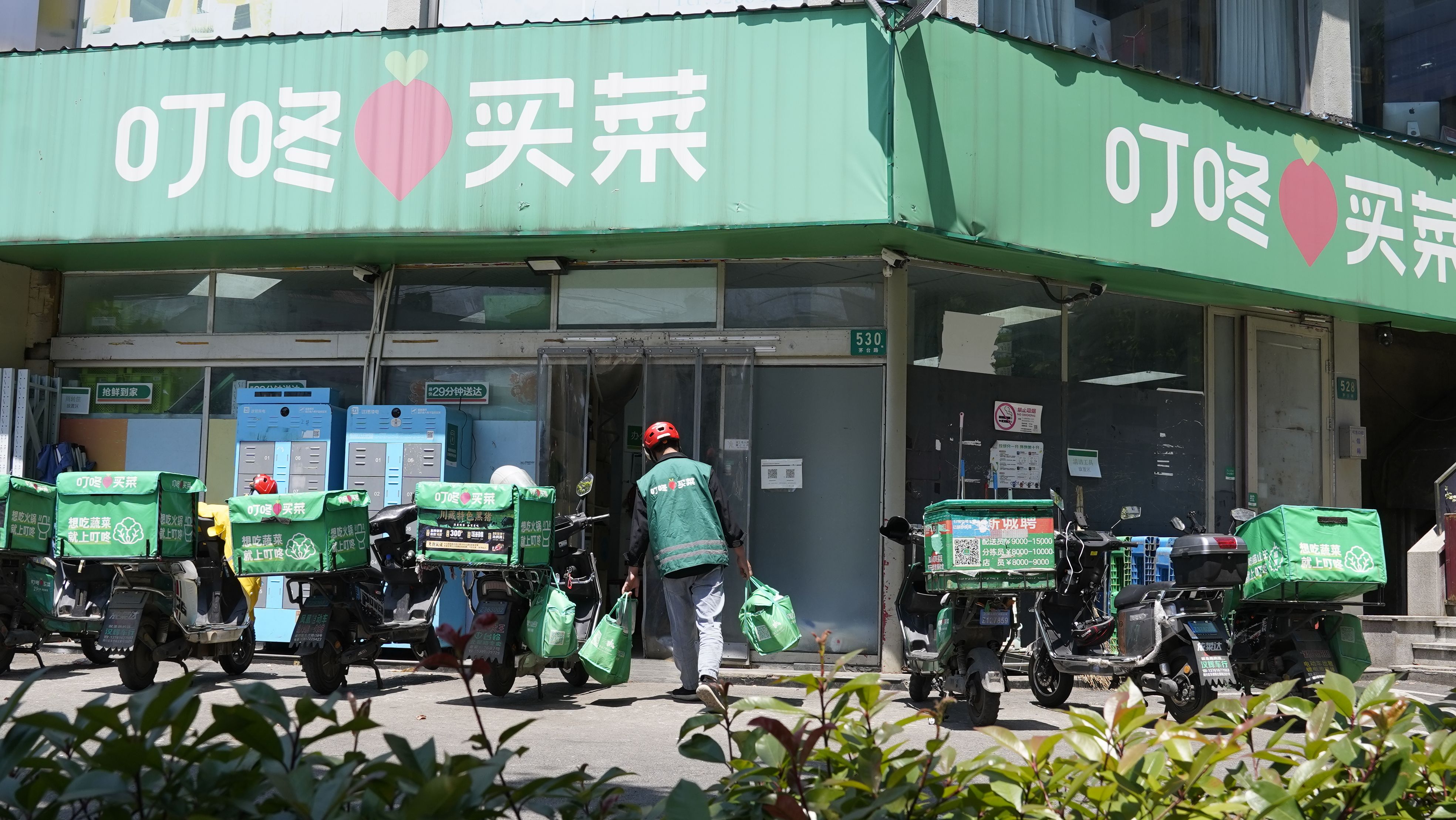
Core Insights - The future of instant retail in China is expected to rely heavily on consumption from lower-tier cities, with the market projected to exceed 1 trillion yuan by 2026 [1] - The growth rate of users and transaction volume in lower-tier cities has already surpassed that of higher-tier cities, making these markets crucial for achieving performance growth in the instant retail sector [1][5] Group 1: Market Potential - The retail sales in county and rural areas accounted for 38.7% of the total social retail sales in the first 11 months of 2025, indicating a robust growth in small-town consumption [4] - Major brands in hospitality and retail are accelerating their entry into county markets to capture this emerging consumer base [4] - The demand for high-quality products in lower-tier cities is significant, driven by young people returning from larger cities [7] Group 2: Company Strategies - Dingdong Maicai has opened a new warehouse in Yancheng, Jiangsu, as part of its strategy to deepen its presence in the Jiangsu market, following its entry into Taizhou [1][8] - The company has established over 130 new warehouses in small cities over the past two years, leveraging its extensive supply chain network developed in the Jiangsu region [8][10] - Dingdong Maicai's operational efficiency is highlighted by a stock turnover period of 2.1 days and a product loss rate of 1.5%, significantly better than the industry average [15] Group 3: Competitive Landscape - The instant retail sector is becoming a battleground for major internet companies, with a shift in consumer behavior and spending patterns in lower-tier cities [5][12] - Dingdong Maicai's strategy focuses on cautious expansion and product differentiation, aiming to maintain a competitive edge amid price wars among larger players [12][13] - The company's "4G strategy" emphasizes quality products, which has led to a 37.2% increase in SKUs meeting quality standards, contributing to 44.7% of overall GMV [12][13]


新华都:公司长期积累跨区域、跨品类电商数据及GMV归因模型
Zheng Quan Ri Bao Wang· 2026-01-20 08:41
Core Viewpoint - The company, Xinhua Du (002264), is actively exploring the commercialization of GEO technology through its newly launched "MaiDian AI Intelligent Matrix" annual strategic AI product, leveraging its accumulated e-commerce data and GMV attribution model [1] Group 1: Strategic Partnerships - The company has established deep strategic partnerships with major domestic e-commerce platforms including JD.com, Tmall, Taobao, and Douyin [1] - These partnerships are aimed at enhancing the company's competitive position in the evolving online and offline retail landscape [1] Group 2: Market Trends and Focus Areas - The company is closely monitoring the competitive dynamics and industry trends, particularly in niche segments such as live e-commerce, interest-based e-commerce, and instant retail [1] - It aims to respond effectively to consumer demands for experiential and immediate emotional consumption through a combination of technology, content, and supply chain [1] Group 3: Logistics and Consumer Demand - The company has expanded its services to include instant delivery options such as Douyin's "Xiaoshi Da," JD's "Miaosong," Meituan's "Waimai," and Taobao's "Shangou" [1] - It operates five major warehouses and 22 retail collaborative warehouses across cities to meet the immediate consumption needs of consumers [1]

新华都(002264.SZ):近期发布“麦点AI智能体矩阵”年度战略级AI产品,积极探索GEO技术在客户端的商业化落地
Ge Long Hui A P P· 2026-01-20 07:34
Core Viewpoint - Xinhua Dou (002264.SZ) is leveraging its accumulated cross-regional and cross-category e-commerce data along with GMV attribution models to launch the "MaiDian AI Intelligent Matrix," a strategic AI product aimed at commercializing GEO technology on client platforms [1] Group 1: Strategic Partnerships and Collaborations - The company has established deep strategic partnerships with major domestic e-commerce platforms including JD.com, Tmall, Taobao, and Douyin [1] - Continuous monitoring and analysis of the competitive landscape in online and offline retail, particularly in niche segments such as live e-commerce, interest-based e-commerce, and instant retail [1] Group 2: Technology and Consumer Demand - The company is focusing on integrating "technology + content + supply chain" to effectively merge traffic, inventory, and marketing resources [1] - The company has launched services on platforms like Douyin Xiaoshida, JD.com Seconds Delivery, Meituan Waimai, and Taobao Flash Purchase to meet consumer demand for instant consumption [1] Group 3: Infrastructure and Logistics - The company has set up five major warehouses and 22 retail collaborative warehouses across cities to adequately fulfill the immediate consumption needs of consumers [1]
阿里巴巴-W(09988):FY2026Q3业绩前瞻:闪购投入延续加码,AI云保持快速增长
Soochow Securities· 2026-01-19 23:40
Investment Rating - The investment rating for Alibaba-W (09988.HK) is "Buy" (maintained) [1] Core Insights - The report anticipates that Alibaba's total revenue for FY2026Q3 will reach 292.9 billion yuan, representing a year-on-year growth of 4.6%, primarily due to a slowdown in e-commerce revenue growth. The company is expected to continue investing in flash sales, which will pressure profits, with an adjusted EBITA forecast of 30.61 billion yuan and an EBITA margin of 10.5% for the quarter [7] - Alibaba Cloud is projected to achieve a revenue of 42.85 billion yuan in the same quarter, reflecting a robust year-on-year growth of 35.0%, driven by strong demand for AI computing power and services. The EBITA margin for Alibaba Cloud is expected to remain stable at around 9.0% [7] - The report maintains Non-GAAP net profit forecasts for FY2026, FY2027, and FY2028 at 101.53 billion yuan, 141.56 billion yuan, and 184.65 billion yuan, respectively, with corresponding PE ratios of 28.4, 20.4, and 15.6 times [7] Financial Projections - Total revenue projections for Alibaba are as follows: - FY2024A: 941.17 billion yuan - FY2025A: 996.35 billion yuan - FY2026E: 1,068.58 billion yuan - FY2027E: 1,158.75 billion yuan - FY2028E: 1,269.02 billion yuan - Year-on-year growth rates for total revenue are expected to be: - FY2024A: 8.34% - FY2025A: 5.86% - FY2026E: 7.25% - FY2027E: 8.44% - FY2028E: 9.52% [1][8] - The projected net profit figures are: - FY2024A: 80.01 billion yuan - FY2025A: 130.11 billion yuan - FY2026E: 82.64 billion yuan - FY2027E: 122.87 billion yuan - FY2028E: 166.01 billion yuan [1][8]

中产为什么还没放弃山姆?
创业家· 2026-01-19 10:29
Core Viewpoint - The article discusses the competitive landscape of the food delivery and instant retail market in China, focusing on Sam's Club's rapid expansion and the challenges it faces amid rising consumer expectations and scrutiny [4][5][12]. Group 1: Market Competition and Expansion - The food delivery market in China is experiencing a cooling phase, with the State Administration for Market Regulation investigating the competitive status of delivery platforms [4]. - Major players in the instant retail sector, including Meituan, Taobao Shanguo, and JD, are heavily investing in this space, indicating a shift from traditional food delivery to broader instant retail opportunities [5][6]. - Sam's Club, a subsidiary of Walmart, has significantly contributed to Walmart China's growth, achieving strong performance with double-digit growth in transaction volume in 2025 [9][12]. Group 2: Consumer Trust and Brand Image - Despite facing multiple controversies, including product quality issues and negative media coverage, Sam's Club has maintained a strong brand image and consumer loyalty among the middle-class demographic [11][22]. - The willingness of consumers to pay membership fees reflects their trust in Sam's product selection and quality assurance, with annual fees ranging from 260 to 680 yuan [15][17]. - The article highlights that the middle-class consumers' attachment to Sam's Club is reinforced by its ability to meet their quality and identity needs, making it difficult for them to switch to competitors [18][23]. Group 3: Challenges of Rapid Expansion - Sam's Club has accelerated its expansion, opening 10 new stores in 2025, a significant increase compared to previous years [9][32]. - The rapid growth has led to quality control issues, as the supply chain struggles to keep pace with the increased demand, resulting in product quality concerns [32][34]. - The management changes, including the appointment of a former Alibaba executive as CEO, are part of a strategy to achieve scale, but they also bring scrutiny and challenges in maintaining quality standards [33][34].

严筱磊旗开得胜,盒马“游向”下一个战场
Sou Hu Cai Jing· 2026-01-19 07:13
Core Insights - Hema's CEO Yan Xiaolei outlined ambitious goals for 2025, including entering 40 new cities, opening over 200 new stores for Super Hema, achieving a 40% year-on-year revenue growth, and surpassing 100 million users across its two main business formats [1][4]. Group 1: Financial Performance - Hema has achieved profitability for nine consecutive months under Yan Xiaolei's leadership, with a projected GMV of over 100 billion by March 2026 [4][5]. - The company has streamlined its business from 12 formats to focus on Hema Fresh and Super Hema, which has led to improved financial performance [9][10]. - The transition from a focus on business innovation to financial prioritization has been a key factor in Hema's recent profitability [7][12]. Group 2: Strategic Changes - Yan Xiaolei's appointment as CEO marked a shift towards a more financially driven approach, moving away from the exploratory phase of multiple business formats [6][8]. - The brand and supply chain assets accumulated during the previous leadership under Hou Yi are now being monetized effectively [13][15]. - The strategic direction of Hema is closely tied to Alibaba's broader corporate strategy, which has influenced the timing and necessity of achieving profitability [21][22]. Group 3: Competitive Landscape - Hema faces increasing competition from local players like Meituan and JD, who are rapidly expanding their presence in the offline retail space [28][33]. - The competitive environment is intensifying as these companies leverage their existing infrastructure to reduce costs and improve efficiency in the retail sector [32][34]. - Hema's ability to maintain its market position will depend on its performance in the two core business areas against these emerging competitors [35]. Group 4: Internal Challenges - Hema's integration with Alibaba's larger consumer strategy presents both opportunities and challenges, particularly regarding resource allocation and operational independence [36][37]. - The reliance on Alibaba's traffic and fulfillment capabilities could impact Hema's operational autonomy and strategic direction moving forward [36][38]. - The future of Hema's leadership and operational structure may be influenced by its integration with Alibaba's broader business ecosystem [37][38].